
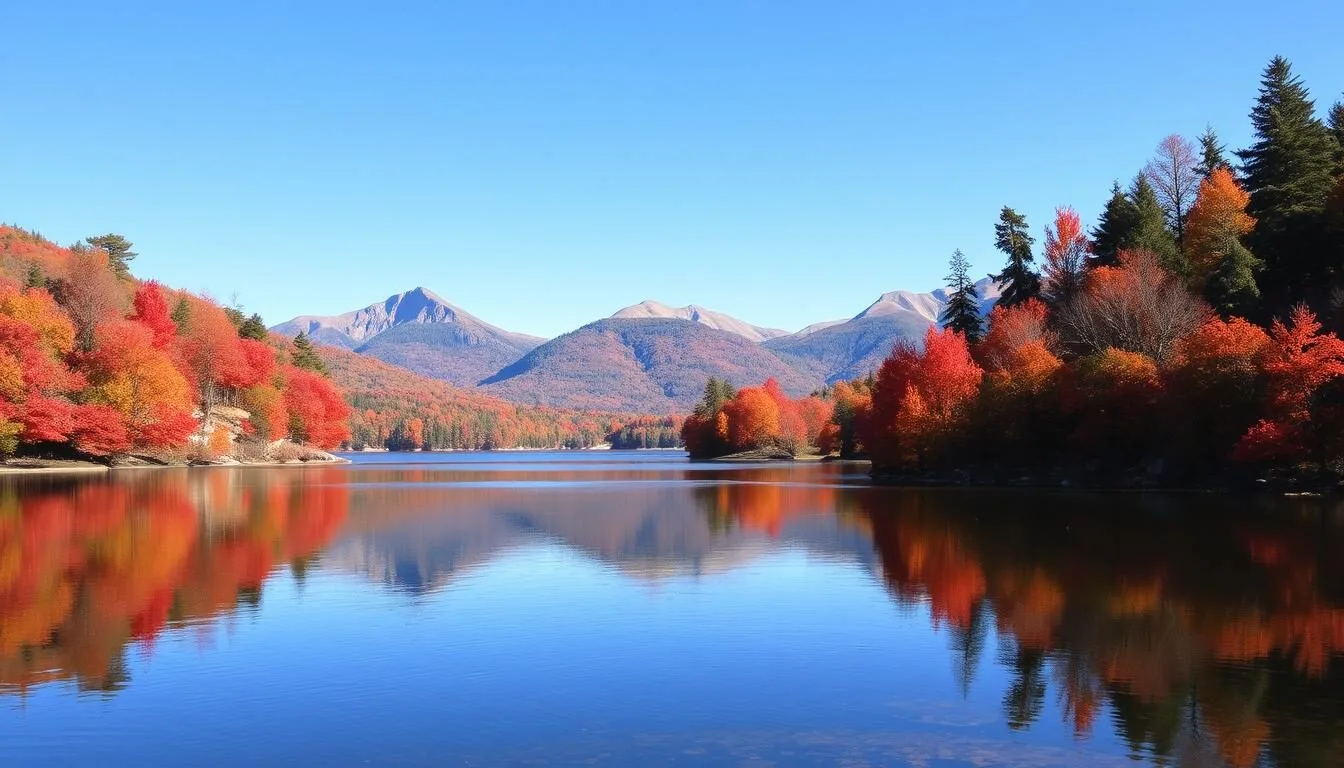
Spanning an impressive 7,653 square kilometers (2,955 square miles), Algonquin Provincial Park is larger than the entire province of Prince Edward Island, making it a vast wilderness playground in the heart of Ontario. As Canada’s oldest provincial park, established in 1893, Algonquin has been captivating visitors for over 125 years with its pristine lakes, dense forests, and abundant wildlife. Whether you’re planning a day trip or an extended stay, this iconic natural treasure offers endless opportunities for outdoor adventure and peaceful communion with nature.
Best Time to Visit Algonquin Provincial Park
Algonquin Park transforms dramatically with each season, offering unique experiences throughout the year. Understanding the seasonal patterns will help you plan the perfect visit based on your interests and preferences.
Algonquin’s world-famous fall colors typically peak in late September to early October
Summer (June to August)
Summer brings warm temperatures ranging from 15-25°C (59-77°F), making it ideal for swimming, canoeing, and camping. This is the busiest season, with all facilities and campgrounds open. Wildlife is active, and the forests are lush and green. If you’re planning a summer visit, book accommodations well in advance, especially for weekends.
Fall (September to October)
Fall showcases Algonquin’s spectacular foliage as the maple trees transform into brilliant shades of red, orange, and gold. Peak colors typically occur from late September to mid-October. Temperatures range from 5-15°C (41-59°F), perfect for hiking. This is the second busiest season, particularly on weekends during the color peak, so plan accordingly.
Winter (November to March)
Winter transforms Algonquin into a serene snow-covered wonderland with temperatures from -20 to -5°C (-4 to 23°F). It’s the quietest season, offering excellent opportunities for cross-country skiing, snowshoeing, and wildlife tracking. Only Mew Lake Campground remains open for winter camping, along with some yurts and cabins.
Spring (April to May)
Spring brings renewal to the park as ice melts and wildlife becomes more active. Temperatures range from 5-15°C (41-59°F), but conditions can be wet and muddy. This shoulder season offers fewer crowds and the chance to see migratory birds returning. Some facilities may be limited in early spring.
Getting There & Planning Your Journey
Algonquin Provincial Park is conveniently located about 300 km north of Toronto and 260 km west of Ottawa, making it accessible for weekend trips from either city.
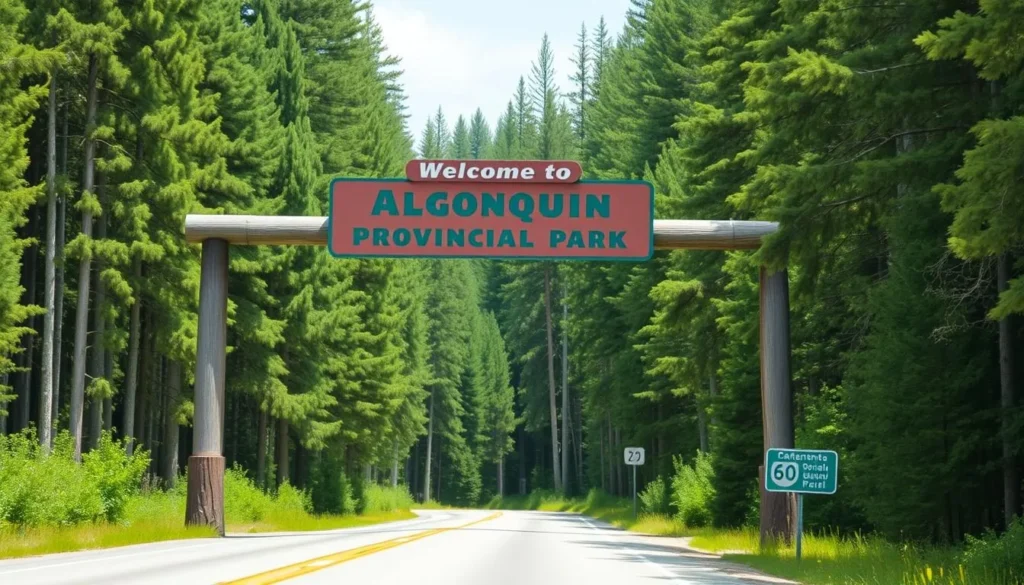
The Highway 60 corridor is the main access route through the southern portion of Algonquin Park
By Car
The most convenient way to access and explore Algonquin Park is by car. Highway 60 runs east-west through the southern portion of the park for about 56 km, providing access to most visitor facilities, trailheads, and campgrounds.
- From Toronto: Take Highway 400 north to Highway 11, then east on Highway 60 at Huntsville. The drive takes approximately 3-3.5 hours.
- From Ottawa: Take Highway 417 west to Highway 60, then continue west through Renfrew and Barry’s Bay. The drive takes approximately 2.5-3 hours.
By Bus
If you don’t have access to a car, Parkbus offers transportation services from Toronto to various points in Algonquin Park during the summer and fall seasons. This service is particularly useful for backpackers and canoeists, as it can drop you at specific access points.
Park Permits
All visitors to Algonquin Park require a valid permit. Day-use permits can be purchased at the East and West Gates, while camping permits should be reserved in advance through Ontario Parks’ reservation system, especially during peak seasons.
Where to Stay in Algonquin Park
Algonquin offers a range of accommodation options from rustic camping to comfortable lodges, catering to all preferences and budgets.
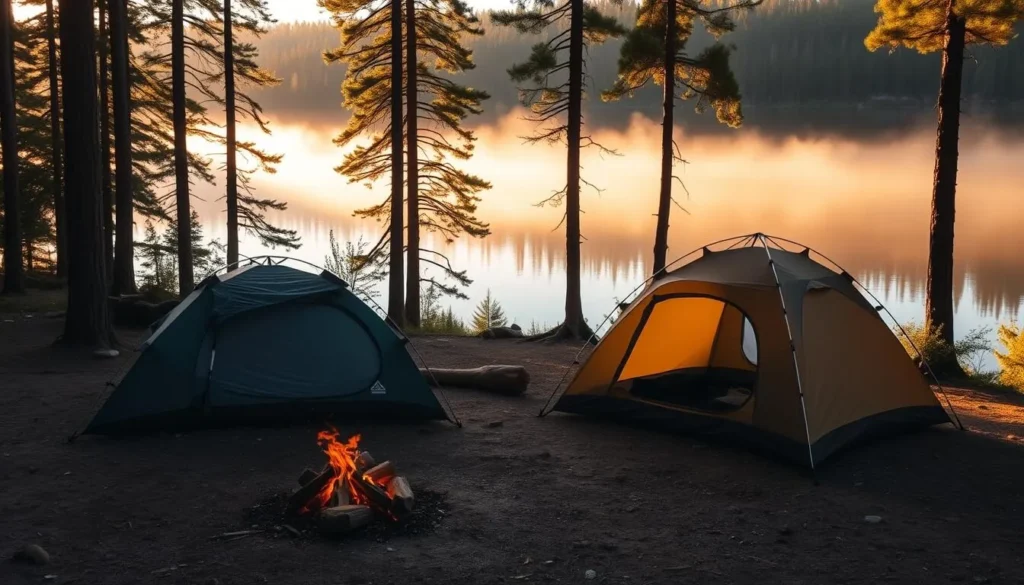
Mew Lake Campground is the only campground open year-round in Algonquin Park
Campgrounds
The park features 12 developed campgrounds along the Highway 60 corridor, each with its own character and amenities. The most popular include:
Lake of Two Rivers
One of the largest and most popular campgrounds, featuring a beautiful sandy beach, playground, and comfort station with showers. Ideal for families.
Mew Lake
The only campground open year-round, offering electrical sites and seven yurts for winter camping. Located centrally in the park with access to hiking and skiing trails.
Canisbay Lake
A quieter option with a mix of electrical and non-electrical sites. Features two beaches and is known for its beautiful sunsets.
Backcountry Camping
For a more immersive wilderness experience, Algonquin offers over 1,900 backcountry campsites accessible by canoe or hiking trails. These sites require a backcountry permit and should be reserved in advance during peak seasons.
Roofed Accommodations
If camping isn’t your style, several options provide more comfort:
- Yurts and Cabins: Available at select campgrounds, these provide a comfortable “glamping” experience with beds, electricity, and heating.
- Lodges: Several historic lodges operate within or near the park, including Arowhon Pines and Killarney Lodge, offering all-inclusive packages with meals and activities.
- Nearby Accommodations: The communities of Whitney, Dwight, and Huntsville offer motels, B&Bs, and cottages within driving distance of the park.
Hiking Trails in Algonquin Provincial Park
With 14 interpretive hiking trails along the Highway 60 corridor, Algonquin offers options for every fitness level and interest, from easy boardwalks to challenging day-long hikes.
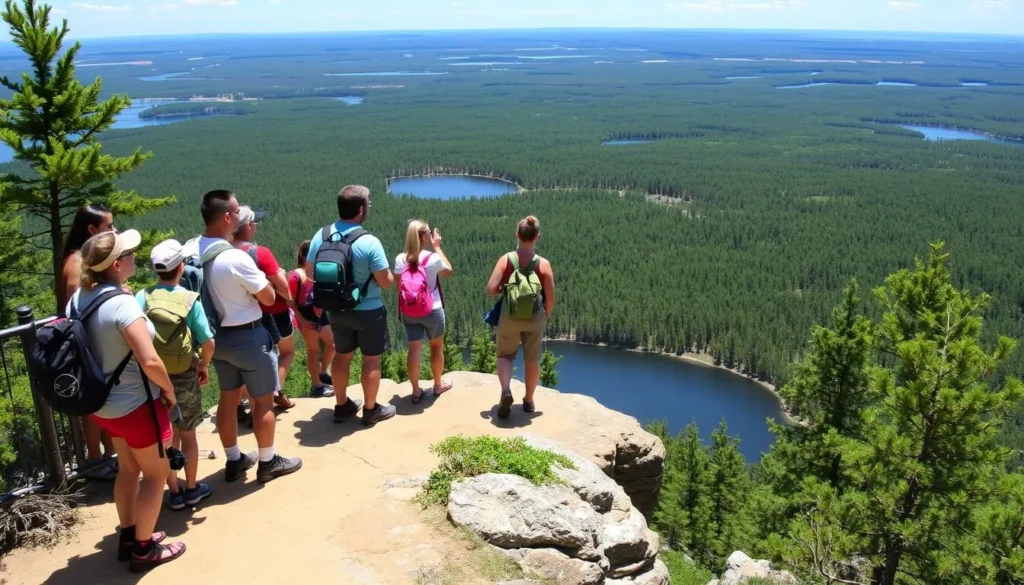
The Lookout Trail offers one of the most spectacular views in Algonquin Park
Easy Trails (1-2 km)
Spruce Bog Boardwalk
Length: 1.5 km (0.9 mi) loop
Location: km 42.5 on Highway 60
Highlights: This wheelchair-accessible boardwalk trail takes you through a typical northern black spruce bog ecosystem. It’s excellent for bird watching and features interpretive signs explaining the unique bog environment.
Whiskey Rapids Trail
Length: 2.1 km (1.3 mi) loop
Location: km 7.2 on Highway 60
Highlights: This trail follows the Oxtongue River to the scenic Whiskey Rapids. Interpretive signs explain the ecology and history of an Algonquin river system.
Moderate Trails (2-5 km)
Lookout Trail
Length: 1.9 km (1.2 mi) loop
Location: km 39.7 on Highway 60
Highlights: Though relatively short, this trail includes a steep climb that rewards hikers with a spectacular panoramic view from a cliff-top lookout over hundreds of square kilometers of Algonquin Park.
Beaver Pond Trail
Length: 2 km (1.2 mi) loop
Location: km 45.2 on Highway 60
Highlights: This trail provides excellent views of two beaver ponds and opportunities to learn about these industrious ecosystem engineers.
Challenging Trails (5+ km)
Track and Tower Trail
Length: 7.7 km (4.8 mi) loop
Location: km 25 on Highway 60
Highlights: This popular trail features a spectacular lookout over Cache Lake and follows portions of an abandoned railway. An optional 5.5 km side trip extends to Mew Lake.
Centennial Ridges Trail
Length: 10 km (6.2 mi) loop
Location: km 37.6 on Highway 60
Highlights: One of the most challenging and rewarding trails in the park, offering spectacular views from two high ridges. Allow 4-5 hours to complete this strenuous hike.
Canoeing and Kayaking in Algonquin Park
With over 2,000 km of canoe routes and 1,500 lakes, Algonquin is a paddler’s paradise and one of North America’s premier canoeing destinations.
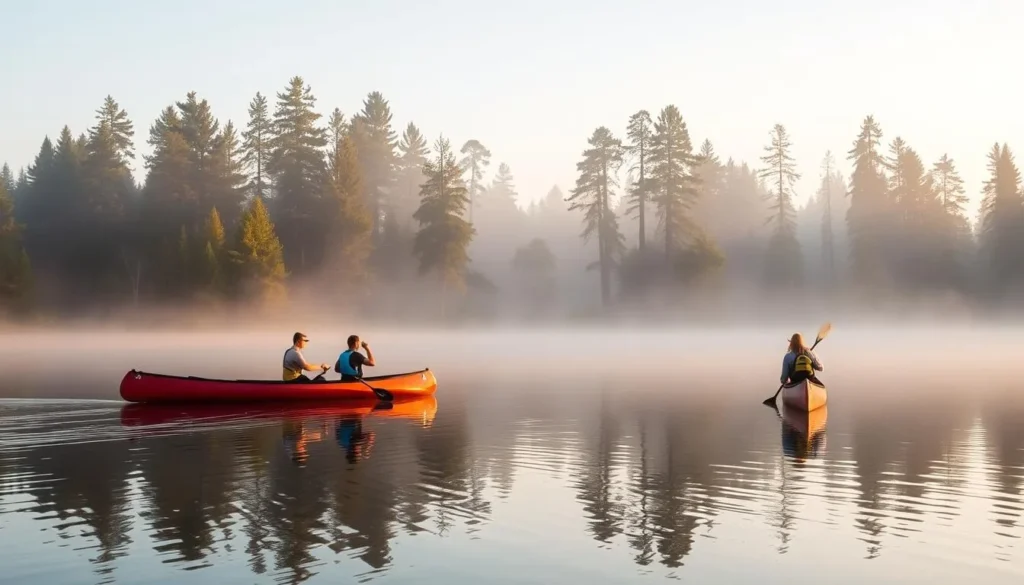
Early morning paddling offers peaceful lake conditions and the best wildlife viewing opportunities
Day Paddling
For beginners or those looking for a shorter experience, several lakes along Highway 60 offer excellent day paddling opportunities:
- Lake of Two Rivers: A beautiful lake with a beach and rental facilities nearby.
- Canoe Lake: Home to the Portage Store, which offers rentals and easy access to several routes.
- Tea Lake: A smaller, quieter option with less boat traffic.
Canoe Camping
For a true wilderness experience, plan a multi-day canoe trip through Algonquin’s interior. Popular routes include:
- Canoe Lake to Tom Thomson Lake: A beginner-friendly overnight trip.
- Smoke Lake to Ragged Lake: Another accessible route for novices.
- Tim River to Rosebary Lake: Known for excellent wildlife viewing.
- Opeongo Lake: The park’s largest lake, offering multiple route options.
Rentals and Outfitters
Several outfitters in and around the park offer canoe, kayak, and paddleboard rentals, along with all necessary equipment:
- The Portage Store: Located at Canoe Lake (km 14.1).
- Algonquin Outfitters: Multiple locations including Oxtongue Lake and Lake Opeongo.
- Opeongo Outfitters: Located at Lake Opeongo (km 46.3).
Many outfitters also offer guided trips, instruction, and shuttle services for one-way paddling routes.
Wildlife Viewing in Algonquin Provincial Park
Algonquin is home to over 53 species of mammals, 272 species of birds, and countless other wildlife, making it one of Ontario’s premier wildlife viewing destinations.
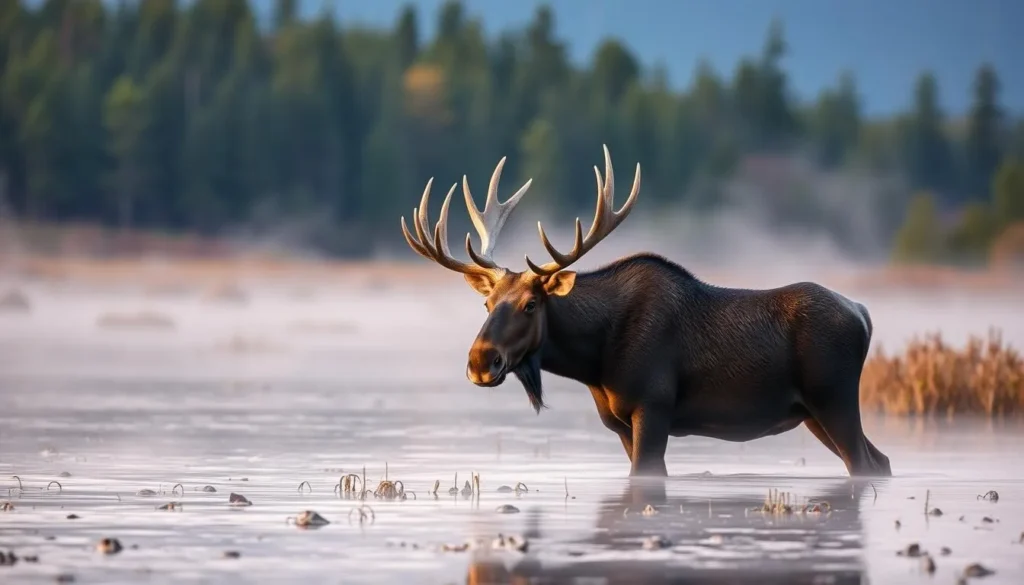
Moose are most commonly spotted along Highway 60 in May and June when they visit roadside ditches for salt
Iconic Mammals
The park’s most sought-after wildlife sightings include:
- Moose: Best spotted in early morning or evening along Highway 60, particularly in May and June.
- Black Bears: Occasionally seen near trails or in blueberry patches in late summer.
- Wolves: Rarely seen but sometimes heard howling at night, particularly in August during the Public Wolf Howl events.
- Beavers: Active at dawn and dusk around ponds and lakes.
- Pine Martens: Sometimes spotted around Mew Lake Campground in winter.
Birdwatching
Algonquin is a birder’s paradise with species including:
- Common Loon: The iconic sound of Algonquin’s lakes.
- Gray Jay (Canada Jay): A friendly year-round resident.
- Spruce Grouse: Found in coniferous forests.
- Barred Owl: Listen for their distinctive “who-cooks-for-you” call.
- Various Warblers: Abundant during spring and summer.
Best Wildlife Viewing Locations
- Mizzy Lake Trail: Known as one of the best wildlife viewing trails, this 11 km loop visits nine ponds and small lakes.
- Beaver Pond Trail: Excellent for beaver activity and wetland birds.
- Spruce Bog Boardwalk: Great for boreal bird species.
- Opeongo Road: A popular spot for moose sightings, especially in spring.
- Visitor Centre: Features feeders that attract various bird species year-round.
Wildlife Viewing Tips: The best times for wildlife viewing are early morning (dawn to 9 AM) and evening (7 PM to dusk). Be patient, quiet, and bring binoculars. Always maintain a safe distance from all wildlife and never feed animals.
Winter Activities in Algonquin Park
When snow blankets the landscape, Algonquin transforms into a winter wonderland offering unique recreational opportunities in a serene setting.
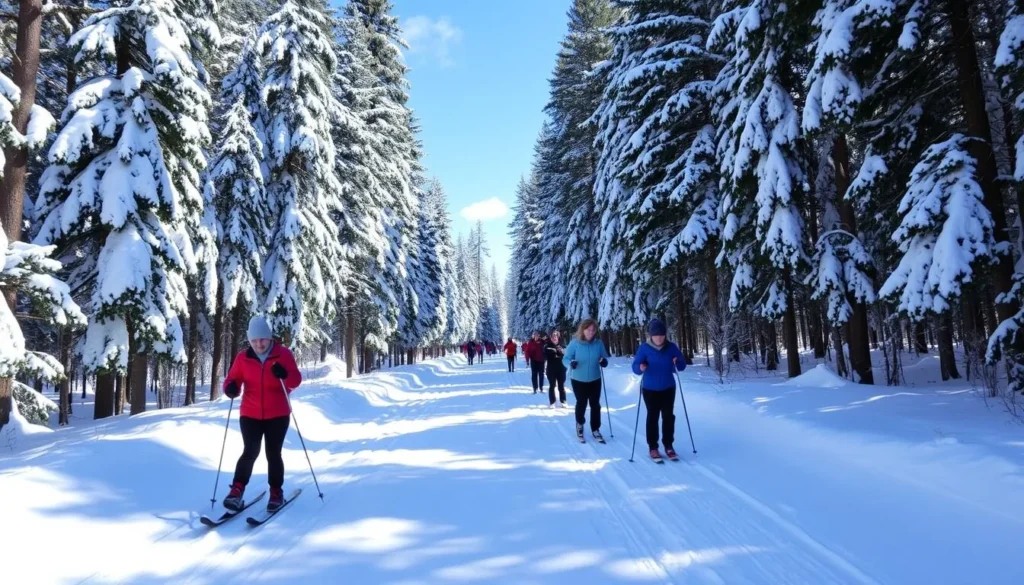
Algonquin’s groomed cross-country ski trails offer some of Ontario’s most scenic winter recreation
Cross-Country Skiing
Algonquin maintains three trail networks for cross-country skiing:
- Fen Lake Ski Trail: Located at the West Gate, offering loops of 1.25 to 13 km through hardwood forest.
- Leaf Lake Ski Trail: Near the East Gate, with loops ranging from 5 to 51 km and some of the most beautiful vistas in the park.
- Minnesing Trail: Located at km 23, offering wilderness skiing on ungroomed trails with loops from 4.7 to 23.4 km.
Snowshoeing
Snowshoeing is permitted throughout the park except on groomed ski trails. Popular snowshoeing destinations include:
- Spruce Bog Boardwalk: An easy, scenic trail that’s beautiful in winter.
- Logging Museum Trail: A 1.3 km loop with historical exhibits.
- Backpacking Trails: The Western Uplands and Highland trails offer more challenging options.
Winter Camping
For the adventurous, Mew Lake Campground remains open year-round with electrical sites, yurts, and a heated comfort station. Winter camping requires proper equipment and preparation for extreme conditions.
Other Winter Activities
- Ice Skating: A maintained rink is available at Mew Lake Campground.
- Dog Sledding: Commercial operators offer dog sledding experiences in designated areas of the park.
- Fat Biking: Permitted on the Old Railway Bike Trail when groomed in winter.
- Wildlife Tracking: Fresh snow makes animal tracks easy to spot and identify.
Winter Safety: Always check weather conditions before heading out. Dress in layers, carry emergency supplies, and inform someone of your plans. Ice conditions on lakes can be unpredictable, so avoid ice travel when possible.
Cultural Attractions and Learning Experiences
Beyond outdoor recreation, Algonquin offers several facilities where visitors can learn about the park’s natural and cultural history.
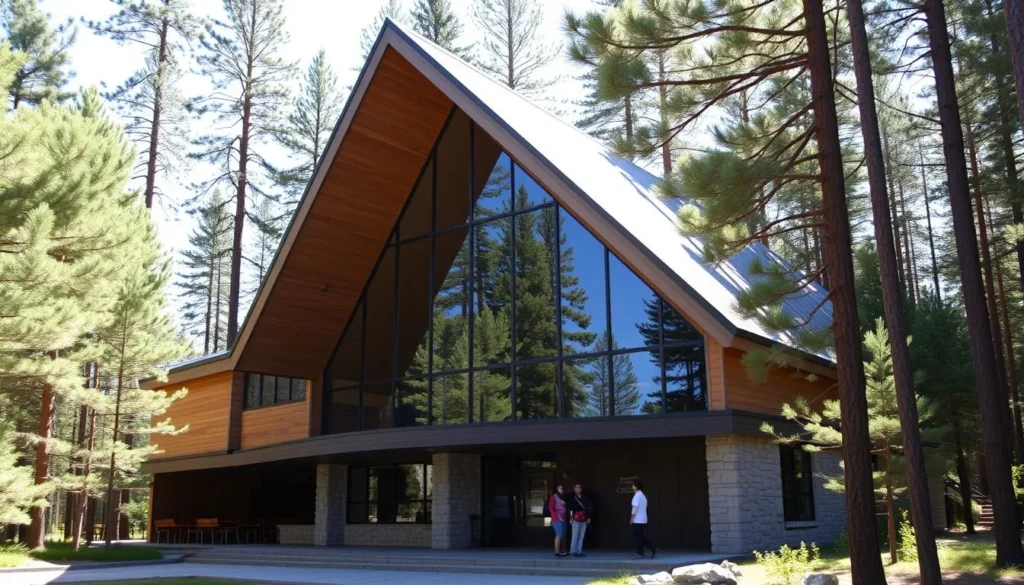
The Algonquin Visitor Centre offers interactive exhibits about the park’s ecology and history
Algonquin Visitor Centre
Located at km 43, this world-class facility features:
- Extensive museum exhibits on park ecology, wildlife, and human history
- A resource room with books and videos
- The Algonquin Room restaurant with panoramic views
- A bookstore operated by The Friends of Algonquin Park
- An observation deck overlooking Sunday Creek
Algonquin Logging Museum
Located at km 54.5, this fascinating outdoor museum includes:
- A 1.3 km trail with recreated logging camp buildings and equipment
- Interpretive displays explaining the park’s logging history
- A recreated camboose camp where loggers lived
- A steam-powered amphibious tug called an “alligator”
Algonquin Art Centre
Located at km 20, this gallery showcases works by Canadian artists inspired by Algonquin Park. Open from June to mid-October, it features changing exhibitions, artist demonstrations, and workshops.
Discovery Programs
During summer months, park naturalists offer various interpretive programs:
- Guided Walks: 1.5-hour explorations of various park environments.
- Children’s Programs: “Algonquin for Kids” activities at the Visitor Centre.
- Evening Programs: Presentations at the Outdoor Theatre on park wildlife and ecology.
- Special Events: Including the Thursday evening Wolf Howl in August (weather permitting).
Day Use Areas and Beaches
If you’re visiting Algonquin for just a day, several designated areas offer facilities for picnicking, swimming, and relaxation.
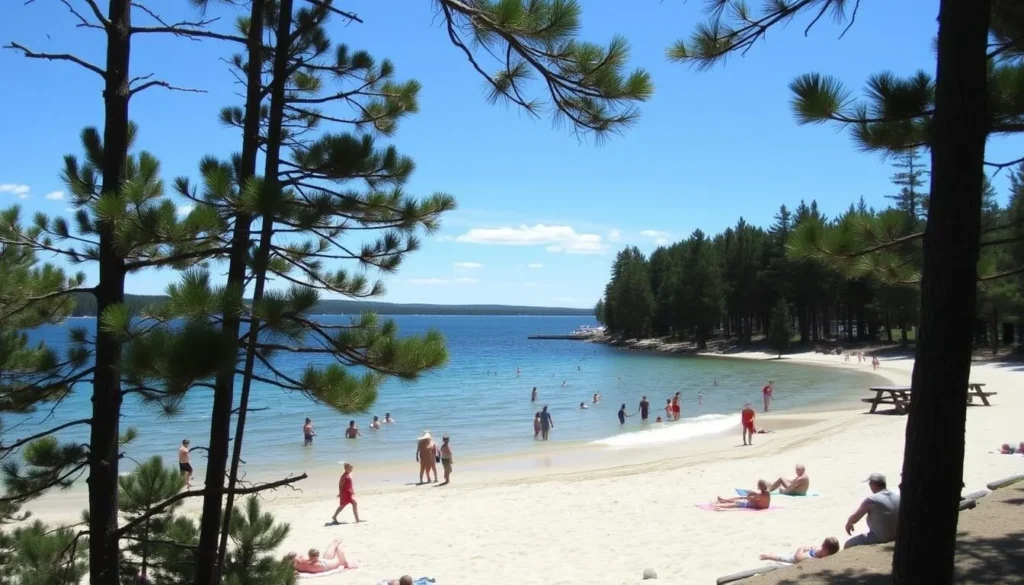
Lake of Two Rivers Beach is one of the most popular swimming spots in Algonquin Park
Popular Day Use Areas
Lake of Two Rivers Picnic Ground and Beach
Location: km 33.8 on Highway 60
Facilities: Sandy beach, picnic tables, vault toilets, parking
Highlights: One of the park’s largest and most popular beaches with beautiful clear water and a gradual sandy bottom, ideal for families.
East Beach Picnic Ground
Location: km 35.4 on Highway 60
Facilities: Beach, covered picnic shelter, flush toilets, outdoor theatre
Highlights: Features a large covered pavilion that can accommodate up to 110 people, with electricity, running water, and stone fireplaces.
Tea Lake Dam and Picnic Ground
Location: km 8 on Highway 60
Facilities: Picnic tables, vault toilets, small waterfall
Highlights: A scenic spot with views of Tea Lake, the dam, and a small waterfall/rapids, popular for photography.
Swimming Areas
Every campground in Algonquin has designated swimming areas, but these beaches are also accessible to day visitors:
- Lake of Two Rivers Beach: The largest and most popular swimming area.
- Canisbay Lake: Features two beaches, one for campers and one for day use.
- Rock Lake: Includes the park’s only wheelchair-accessible beach with a Mobi-mat and all-terrain wheelchair available to borrow.
Day Use Tips: A valid day-use permit is required to park at any of these areas. Arrive early on summer weekends as parking lots can fill quickly. There are no lifeguards at any Algonquin beaches, so swim at your own risk and supervise children closely.
Practical Travel Tips for Algonquin Park
Make the most of your Algonquin adventure with these essential tips and recommendations.
Trail maps and guides are available at park gates and the Visitor Centre
Park Permits and Fees
All visitors require a valid permit to use park facilities:
- Day Use: Permits cost approximately $18 per vehicle and can be purchased at the East and West Gates.
- Camping: Reservations are strongly recommended, especially for summer weekends and fall color season. Book through .
- Backcountry: Permits are required for all interior camping and can be reserved up to five months in advance.
Weather Preparation
Algonquin’s weather can be unpredictable, so come prepared:
- Summer: Pack lightweight clothing, rain gear, sun protection, and bug repellent.
- Fall: Bring layers for cool mornings and evenings, and warm clothing for chilly nights.
- Winter: Dress in multiple layers, with moisture-wicking base layers and waterproof outer layers. Don’t forget insulated boots, gloves, and a warm hat.
- Spring: Be prepared for mud, rain, and variable temperatures with waterproof footwear and rain gear.
Wildlife Safety
Bear Safety: Store all food, toiletries, and scented items in your vehicle or in designated bear-proof containers. Never approach or feed wildlife. If you encounter a bear, speak calmly, back away slowly, and give it plenty of space.
Cell Coverage and Connectivity
Cell service is limited throughout the park, with the best reception typically found near the Highway 60 corridor and at the Visitor Centre. Download maps and information before your visit, and consider bringing a physical map.
Accessibility
Several facilities in Algonquin are wheelchair accessible:
- Visitor Centre and Logging Museum: Fully accessible buildings and exhibits.
- Spruce Bog Boardwalk: Accessible trail with level boardwalks.
- Rock Lake Beach: Features a Mobi-mat and all-terrain wheelchair.
- Comfort Stations: Many campgrounds have accessible washrooms and showers.
Leave No Trace
Help preserve Algonquin’s natural beauty by following Leave No Trace principles:
- Pack out all trash and recyclables
- Stay on designated trails
- Respect wildlife by observing from a distance
- Use established fire pits and follow fire regulations
- Use biodegradable soap and dispose of wastewater properly
Nearby Attractions and Side Trips
While Algonquin offers enough activities to fill multiple visits, the surrounding region features additional attractions worth exploring.
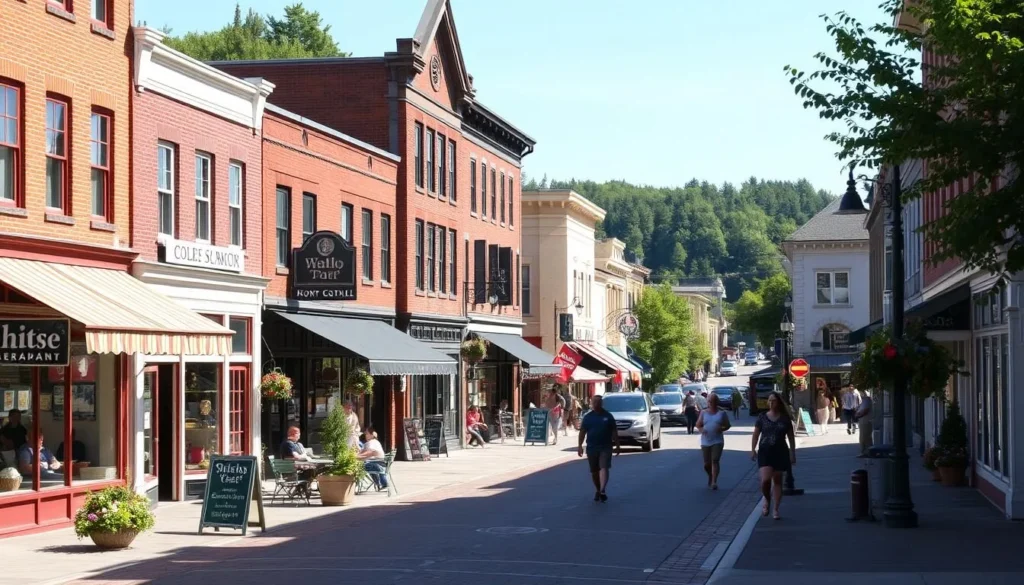
Huntsville is a popular gateway town to Algonquin Park with shops, restaurants, and accommodations
Gateway Communities
Huntsville
Located about 40 minutes west of Algonquin’s West Gate, this charming town offers restaurants, accommodations, and shopping. Visit the Muskoka Heritage Place or take a cruise on the Steamship RMS Segwun.
Whitney
Just east of the park’s East Gate, this small community provides basic services including gas, groceries, and dining options. The Mad Musher Restaurant is popular with park visitors.
Barry’s Bay
About 30 minutes east of Whitney, this larger town offers more extensive services and access to Kamaniskeg Lake for boating and fishing.
Nearby Natural Attractions
- Arrowhead Provincial Park: Located near Huntsville, featuring hiking trails, beaches, and a spectacular skating trail in winter.
- Oxtongue River-Ragged Falls Provincial Park: Just west of Algonquin, offering views of the impressive Ragged Falls.
- Silent Lake Provincial Park: South of Algonquin, known for its pristine lake and motorboat-free environment.
Scenic Drives
The roads surrounding Algonquin offer beautiful driving routes, particularly during fall color season:
- Highway 60: The main corridor through Algonquin is itself a spectacular drive.
- Highway 35: Running north from Dorset, offering lovely views of lakes and forests.
- Highway 518: A winding route through the hills between Kearney and Sprucedale.
Experience the Magic of Algonquin Provincial Park
From paddling across misty lakes at dawn to hiking ridge-top trails with panoramic views, Algonquin Provincial Park offers experiences that connect visitors with the wild heart of Ontario. Whether you come for a day trip or an extended wilderness adventure, the park’s pristine beauty and abundant wildlife create memories that last a lifetime.
As you plan your visit, remember that each season brings its own unique character to Algonquin – the lush greenery and swimming opportunities of summer, the breathtaking colors of fall, the serene snow-covered landscapes of winter, or the renewal and wildlife activity of spring. Whenever you choose to visit, Algonquin’s timeless wilderness awaits, offering a perfect escape from the hustle of everyday life.
Pack your hiking boots, grab your camera, and prepare for an unforgettable journey into one of Canada’s most beloved natural treasures. The lakes, forests, and trails of Algonquin Provincial Park are calling – it’s time to answer.
The above is subject to change.
Check back often to TRAVEL.COM for the latest travel tips and deals.



0 Comments