Hotels by Trip.com
Flights by Trip.com
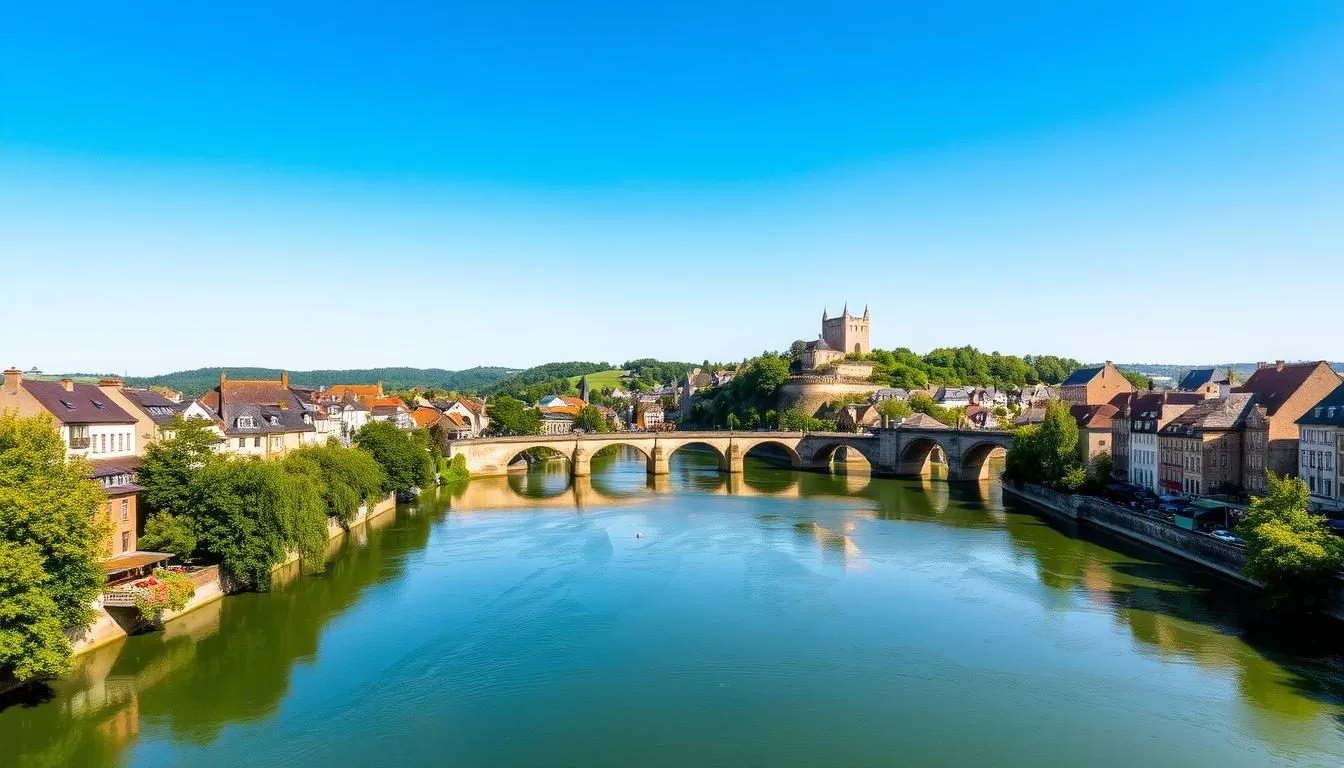
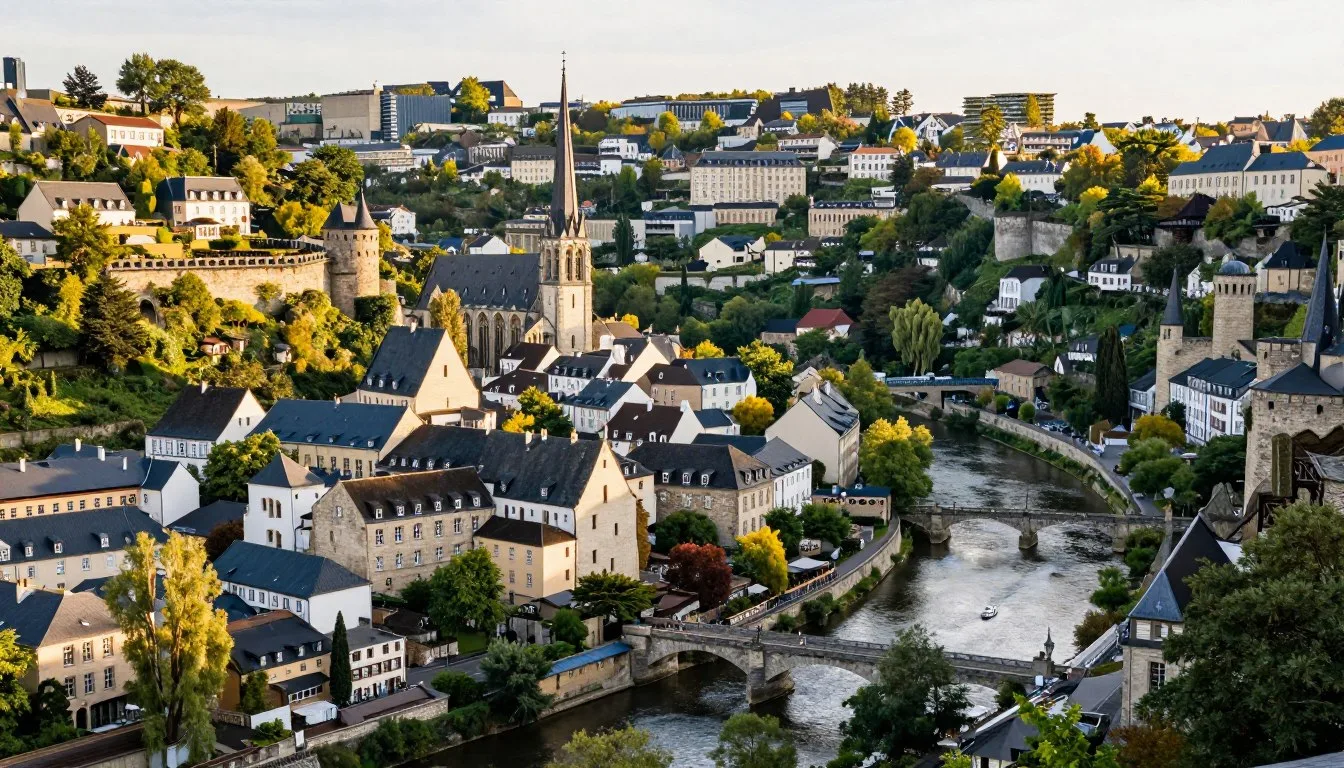
Did you know that Luxembourg City boasts more Michelin-starred restaurants per capita than any other city in the world? This remarkable statistic reveals just one facet of this captivating European capital that seamlessly blends medieval charm with modern sophistication. Perched dramatically on rocky cliffs with ancient fortifications cascading down to verdant valleys below, Luxembourg City is also known for being named after the Celtic fortress Lucilinburhuc, meaning “little fortress,” which stood on the Bock promontory as early as 963 AD.
Welcome to your comprehensive Luxembourg City travel guide. Whether you’re drawn by its UNESCO World Heritage fortifications, world-class museums, or vibrant culinary scene, this small capital packs an outsized punch for travelers seeking authentic European experiences without overwhelming crowds.
Getting There & Planning Your Journey
Reaching Luxembourg City proves remarkably straightforward thanks to its central European location. The compact country sits at the crossroads of France, Germany, and Belgium, making it easily accessible by multiple transportation modes.
Air Travel Options
Luxembourg Airport (LUX), officially known as Luxembourg Findel Airport, serves as the primary gateway. Located just 6 km (3.7 miles) east of the city center, this modern facility handles flights from major European hubs and select international destinations. The airport connects seamlessly to downtown via bus line 16, with departures every 10 to 15 minutes during daytime hours.
For travelers seeking more flight options, several nearby international airports provide excellent alternatives. Frankfurt Airport (FRA) in Germany sits approximately 200 km (124 miles) away and offers one of Europe’s most extensive flight networks. Brussels Airport (BRU) in Belgium lies about 220 km (137 miles) distant, while Paris Charles de Gaulle (CDG) in France is roughly 370 km (230 miles) from Luxembourg City.
Train Connections
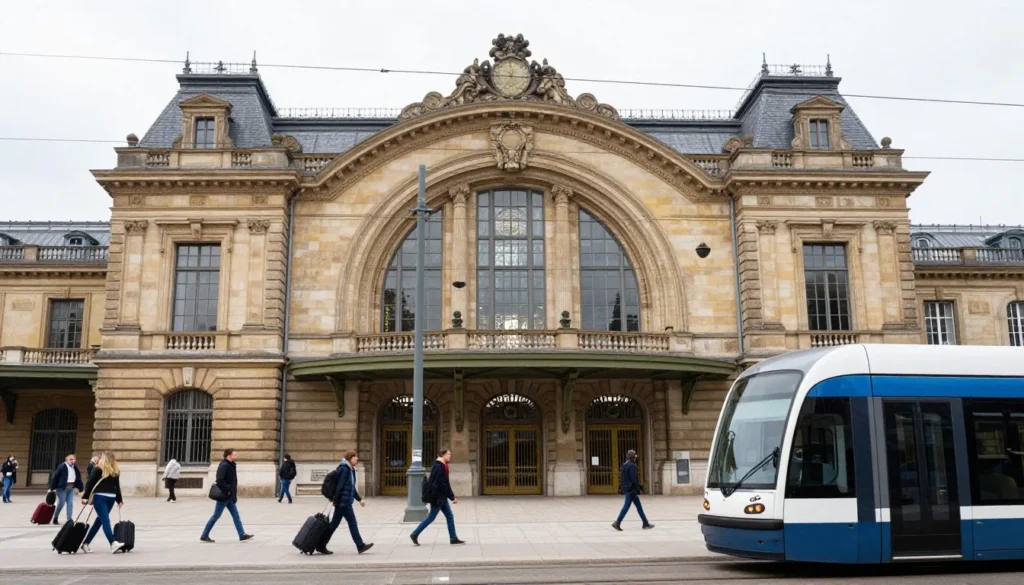
Luxembourg’s main railway station, Gare de Luxembourg, welcomes trains from across Europe. Direct services run regularly from Paris (approximately 2 hours), Brussels (3 hours), and various German cities. The station itself underwent extensive renovation and now features modern amenities alongside convenient connections to local transport networks.
High-speed TGV trains link Paris to Luxembourg multiple times daily, making a weekend trip from the French capital entirely feasible. German ICE trains provide comfortable connections from Frankfurt, Trier, and Koblenz. Belgian services through SNCB offer regular departures from Brussels.
Driving to Luxembourg City
Road access couldn’t be simpler thanks to excellent highway networks. The A1 motorway connects to Trier in Germany, the A3 leads to Metz in France, and the A6 links to Arlon in Belgium. Driving within the city requires patience during rush hours, but numerous parking facilities accommodate visitors throughout the downtown area.
International car rentals operate from the airport and train station. Keep in mind that fuel prices vary considerably between Luxembourg and neighboring countries, so plan your refueling accordingly.
Distance from Major Cities
- Brussels: 220 km (137 miles) – 2.5 hours by car
- Paris: 370 km (230 miles) – 3.5 hours by car
- Frankfurt: 200 km (124 miles) – 2 hours by car
- Amsterdam: 400 km (249 miles) – 4 hours by car
- Cologne: 210 km (130 miles) – 2.5 hours by car
Entry Requirements
- Schengen visa rules apply for most visitors
- US citizens can stay 90 days within 180-day period visa-free
- Valid passport required with 6 months validity
- Travel insurance recommended but not mandatory
- No COVID-19 restrictions as of 2024
Best Time to Visit & Weather Tips
Luxembourg City experiences a temperate oceanic climate with distinct seasons, each offering unique advantages for visitors. Understanding weather patterns helps you pack appropriately and plan activities around optimal conditions.
Best Time to Visit Luxembourg City
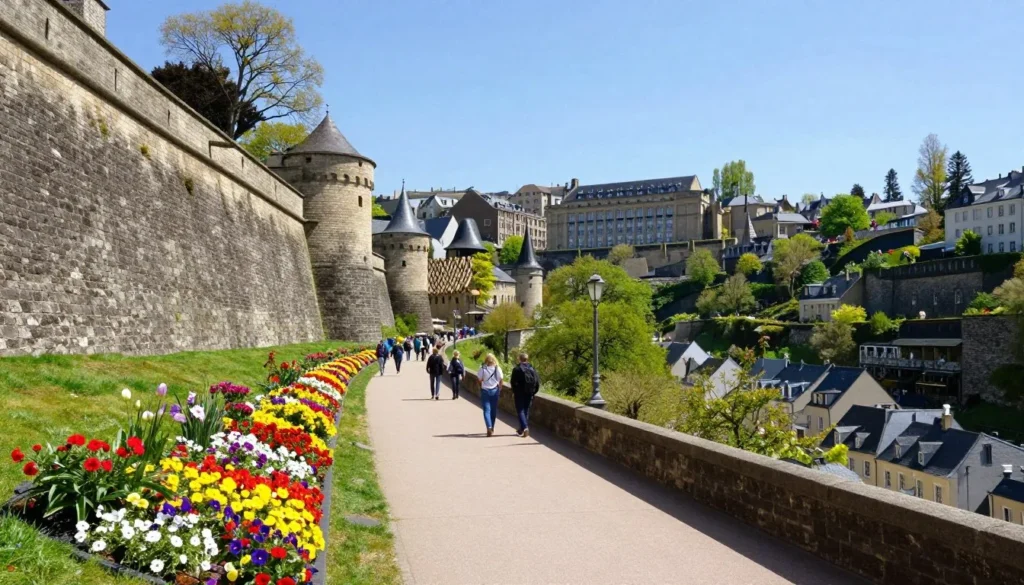
Late spring through early autumn delivers the most pleasant weather for exploring this compact capital. May through September brings warm temperatures ranging from 15°C to 25°C (59°F to 77°F), ideal for walking tours of the old town and outdoor café dining.
Prime Visiting Months: May, June, and September offer the best combination of pleasant weather and fewer crowds. Hotels become more affordable outside peak summer months, and major attractions remain fully accessible without summer tourist congestion.
✓ Check 30,000+ Local Sightseeing Tours Worldwide
Summer months of July and August see peak tourism. Temperatures occasionally climb to 30°C (86°F), though humidity remains manageable. This period coincides with school holidays across Europe, resulting in busier attractions and higher accommodation prices. However, summer also brings extended daylight hours, allowing more time for sightseeing each day.
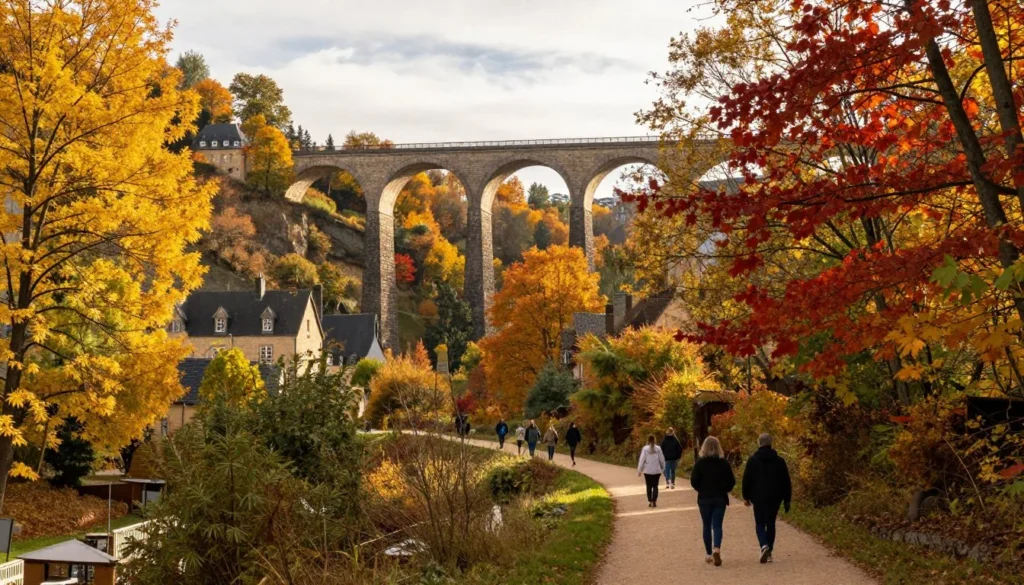
Autumn transforms the city’s numerous parks and valleys into stunning displays of red, orange, and gold foliage. September and October maintain mild temperatures between 12°C and 18°C (54°F to 64°F). This season appeals to photographers and those seeking a more contemplative travel experience.
Months to Avoid
Winter months from December through February bring cold temperatures averaging 0°C to 5°C (32°F to 41°F), frequent rain, and occasional snow. While the Christmas markets create festive atmosphere in December, January and February can feel dreary with short daylight hours and persistent gray skies.
March remains unpredictable with rapidly changing conditions. One day might bring spring sunshine, the next cold rain or even snow. Hotels offer attractive rates during this shoulder season, but weather uncertainty makes detailed planning challenging.
Seasonal Weather Overview
- Spring (March-May): 8°C to 18°C (46°F to 64°F), moderate rainfall
- Summer (June-August): 15°C to 25°C (59°F to 77°F), occasional showers
- Autumn (September-November): 8°C to 18°C (46°F to 64°F), increasing rain
- Winter (December-February): 0°C to 5°C (32°F to 41°F), cold and damp
Packing Essentials by Season
- Spring/Autumn: Layered clothing, waterproof jacket, comfortable walking shoes
- Summer: Light clothing, sunscreen, sunglasses, umbrella for sudden showers
- Winter: Warm coat, scarf, gloves, waterproof boots
- Year-round: Good walking shoes (cobblestone streets throughout old town)
Notable Annual Festivals
Luxembourg City’s festival calendar spans throughout the year, with events celebrating everything from music and art to national traditions and international culture.
Schueberfouer (August-September)
Luxembourg’s largest funfair takes over the Glacis square for three weeks each late summer. Dating back to 1340, this traditional fair combines modern rides with classic carnival games, food stalls, and evening entertainment. The event attracts locals and visitors alike, creating a festive atmosphere throughout the city center.
Contact: Luxembourg City Tourist Office +352 22 28 09
National Day (June 23)
Grand Duke’s official birthday celebration transforms the city into one massive party. Military parades march through downtown streets, followed by concerts, fireworks over the old town fortifications, and open-air celebrations lasting well into the night. The evening before features the spectacular Feierwon torchlight procession.
Contact: Ministry of Culture +352 247 86 686
Christmas Markets (Late November-December)
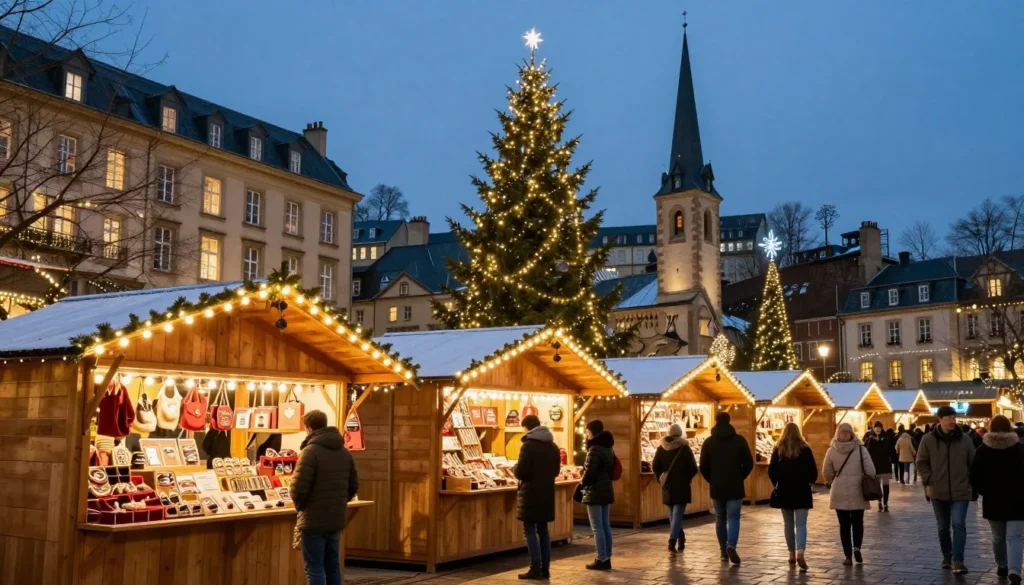
Multiple Christmas markets pop up across the city from late November through New Year’s Eve. The main market occupies Place d’Armes, featuring wooden chalets selling handcrafted gifts, traditional foods, and mulled wine. Ice skating rinks, light displays, and holiday concerts create magical winter atmosphere despite cold temperatures.
Contact: Luxembourg City Events Office +352 47 96 27 09
Blues ‘n’ Jazz Rallye (July)
This free outdoor music festival brings international and local jazz musicians to venues throughout the old town. Concerts take place in squares, courtyards, and along atmospheric streets, creating an impromptu party atmosphere. The event showcases Luxembourg’s thriving jazz scene alongside international headliners.
Contact: Blues ‘n’ Jazz Rallye Office +352 29 12 81
Springbreak Festival (May)
Electronic music fans descend on Luxembourg City for this multi-day festival featuring international DJs and producers. Various venues across the city host daytime and nighttime events, creating a week-long celebration of electronic music culture.
Contact: Rockhal Concert Venue +352 24 55 51
Cultural Events Calendar
- Winter Lights Festival (February)
- Luxembourg Art Week (May)
- City Theater Season (September-June)
- Organ Festival (Monthly concerts year-round)
- European Film Festival (November)
Sports & Recreation Events
- ING Night Marathon (May)
- Tour de Luxembourg Cycling (September)
- Luxembourg Open Tennis (October)
- City Trail Running Series (Various dates)
- Swimming Competitions at Coque (Year-round)
Getting Around Locally
One of Luxembourg City’s greatest advantages for visitors is its completely free public transport system. Since March 2020, buses, trams, and trains within the country operate at no cost, making exploration both convenient and budget-friendly.
Free Public Transport
The public transport free policy extends to everyone regardless of residency status. Simply board any bus or tram without purchasing tickets. This progressive initiative transformed how both residents and tourists navigate the city, eliminating concerns about correct fares or ticket validation.
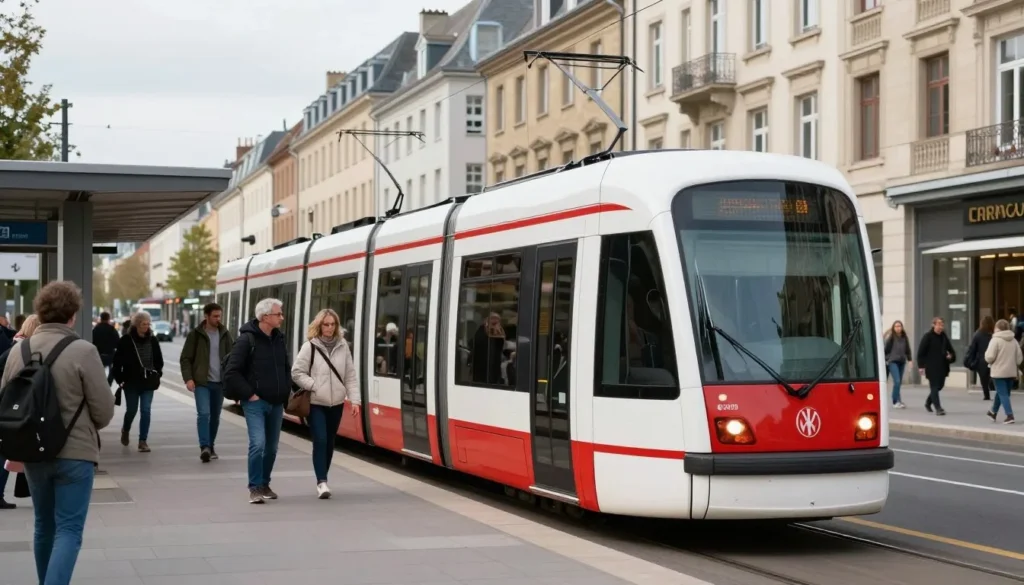
The modern tram system connects the train station to the Kirchberg district, home to European Union institutions and contemporary architecture. Trams run every few minutes during peak hours, providing fast connections across the city center. Clean, punctual, and equipped with real-time information displays, the tram represents urban public transport at its finest.
Bus Network
An extensive bus network covers areas the tram doesn’t reach. Routes connect all major attractions, neighborhoods, and surrounding suburbs. Buses feature comfortable seating, USB charging ports, and electronic displays showing upcoming stops in multiple languages.
Night buses operate on weekends, ensuring safe transport after evening entertainment. Routes run until approximately 3 AM on Friday and Saturday nights, particularly valuable for those enjoying the city’s nightlife scene in the Grund or Clausen districts.
Walking the City
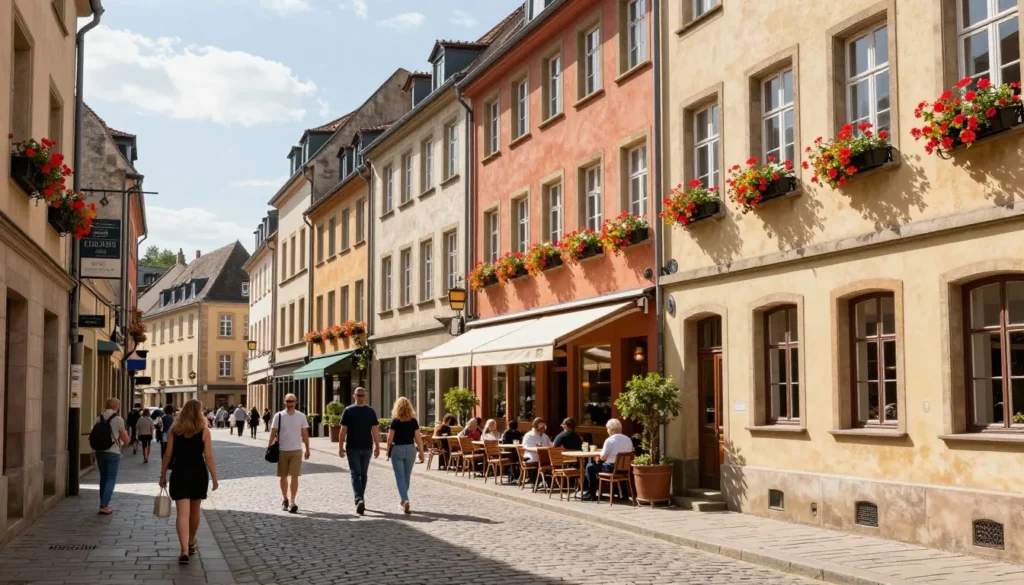
Luxembourg City’s compact center makes walking an excellent option. Most major attractions lie within 30 minutes’ walk of each other. The UNESCO World Heritage fortifications, old town squares, and valley neighborhoods all connect through scenic pedestrian paths.
The Chemin de la Corniche, often called Europe’s most beautiful balcony, offers a stunning walking route along ancient city walls. This elevated promenade provides spectacular views down to the Grund district and across the Alzette valley. Staircases and elevators connect the upper town with lower neighborhoods, though some paths challenge visitors with mobility limitations.
Cycling Options
Bike-sharing system Vel’OH offers convenient two-wheel exploration. Stations dot the city center and major attractions, allowing one-way trips between locations. The first 30 minutes cost nothing after initial registration, making short hops between sights economical.
However, Luxembourg City’s hilly terrain presents challenges for casual cyclists. Steep inclines connecting different city levels require good fitness. Dedicated bike lanes exist on major roads, though some routes through the old town share space with pedestrians on narrow medieval streets.
Taxi and Ride Services
Licensed taxis operate throughout the city with stands at the train station, airport, and major hotels. Fares follow regulated meters, though rates increase during nighttime hours and weekends. Ride-sharing services like Uber function in Luxembourg City, providing alternatives to traditional taxis.
For short distances within the city center, the free public transport typically proves faster than taxis given traffic congestion during business hours. Taxis become more practical for trips to outlying areas or late-night returns to accommodations.
Public Transport Tips
- Download Mobiliteit.lu app for real-time schedules
- Tram Line 1 connects major tourist areas
- Buses accept strollers and wheelchairs
- Service frequency reduces on Sundays
- Transport runs until midnight on weekdays
Walking Route Highlights
- Old Town to Grund: 15-minute descent via stairs
- Chemin de la Corniche: 30-minute scenic walk
- Kirchberg to Center: 20 minutes via Red Bridge
- Clausen to Pfaffenthal: 10-minute valley stroll
- Petrusse Valley circuit: 45-minute park loop
Car Rentals and Parking
Renting a car makes sense only for day trips beyond the city. Within Luxembourg City itself, a car creates more hassle than convenience. Narrow medieval streets, limited parking, and excellent public transport make driving unnecessary for urban exploration.
If you do drive, several multi-story car parks serve the center. Parking rates average 2 to 4 euros per hour, with some facilities offering daily maximum rates around 20 euros. Park-and-ride facilities at city edges allow free parking combined with public transport into the center.
Where to Stay
Luxembourg City offers diverse accommodation options across various price ranges. From luxury hotels in historic buildings to budget-friendly hostels, the compact city center keeps most lodging within walking distance of major attractions.
Luxury Hotels
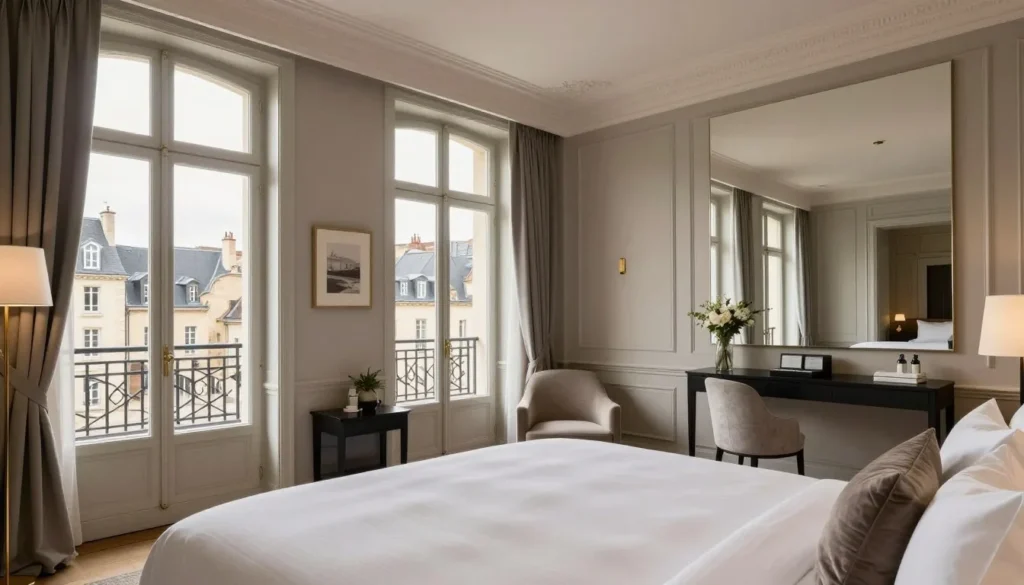
Upscale properties cluster around the old town and train station area. Le Royal Hotels & Resorts Luxembourg occupies a prestigious address on Boulevard Royal, offering five-star amenities and Michelin-starred dining. Historic buildings house several boutique luxury hotels, combining period architecture with contemporary comfort.
Hotel Le Place d’Armes sits directly on the city’s central square, providing prime location and elegant rooms in a restored 18th-century building. Rates for luxury accommodations typically range from 250 to 450 euros per night, with prices peaking during EU summit weeks and major festivals.
Mid-Range Options
Comfortable three and four-star hotels provide excellent value throughout the city. Parc Hotel Alvisse perches on a hill overlooking the old town, offering modern rooms, extensive breakfast buffets, and free parking. Its location requires short bus rides to the center, but public transport free policy makes this negligible.
Hotel Simoncini near the train station combines convenient location with reasonable rates around 120 to 180 euros per night. Many mid-range hotels include breakfast, though quality varies considerably between properties. Book directly with hotels rather than third-party sites to secure best rates and potential upgrades.
Budget Accommodations
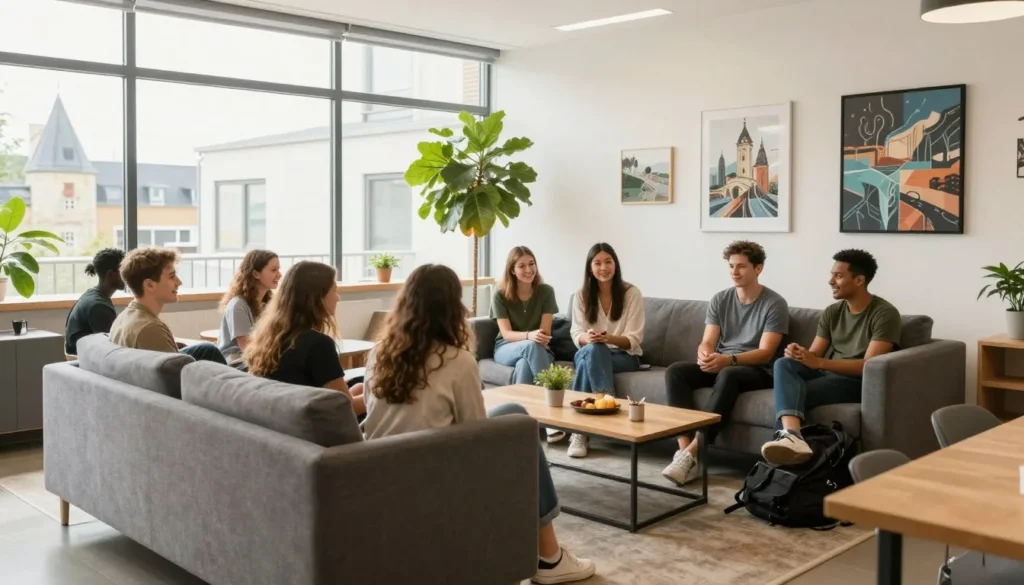
Youth Hostel Luxembourg offers one of the city’s best budget options. Located in the Grund district at the valley floor, this modern hostel provides both dormitory beds and private rooms. Facilities include communal kitchen, lounge areas, and a pleasant terrace overlooking the Alzette River. Rates start around 30 euros for dorm beds and 80 euros for private rooms.
Several independent hostels operate in Clausen and near the train station, catering to younger travelers and those prioritizing budget over luxury. These typically offer basic but clean rooms, shared facilities, and opportunities to meet fellow travelers.
Apartment Rentals
Short-term apartment rentals suit families or groups seeking more space and cooking facilities. Properties range from studio flats to multi-bedroom apartments in both historic old town buildings and modern developments. Weekly rates often provide better value than nightly hotel costs.
Apartments in the Grund or Clausen offer authentic neighborhood experiences, though keep in mind these areas become lively on weekend evenings. Upper town apartments provide quieter surroundings and closer proximity to main attractions.
Neighborhood Guide
Old Town (Ville Haute)
The historic heart offers unbeatable location near major sights, restaurants, and shopping. Cobblestone streets and medieval architecture create atmospheric surroundings, though noise from bars and restaurants can disturb light sleepers on weekends.
- Walking distance to everything
- Most expensive accommodation area
- Limited parking options
- Vibrant day and night
Gare (Station District)
Convenient for train arrivals and departures, this area provides good value hotels with modern amenities. The neighborhood lacks old-world charm but compensates with practical benefits and easy transport connections.
- Excellent transport access
- More affordable rates
- Modern hotel facilities
- Less atmospheric setting
Grund & Clausen
Valley neighborhoods offer unique character with riverside settings and thriving nightlife. Steeper walk to upper town attractions, but charming atmosphere and local restaurants provide authentic experiences away from tourist crowds.
- Scenic valley locations
- Excellent restaurant scene
- More stairs and hills
- Lively weekend evenings
Booking Strategy: Reserve accommodations several months ahead for visits during National Day (June), Schueberfouer (August-September), or EU summit periods when hotels fill quickly and prices surge. Spring and autumn offer best availability and rates.
Dining & Local Cuisine
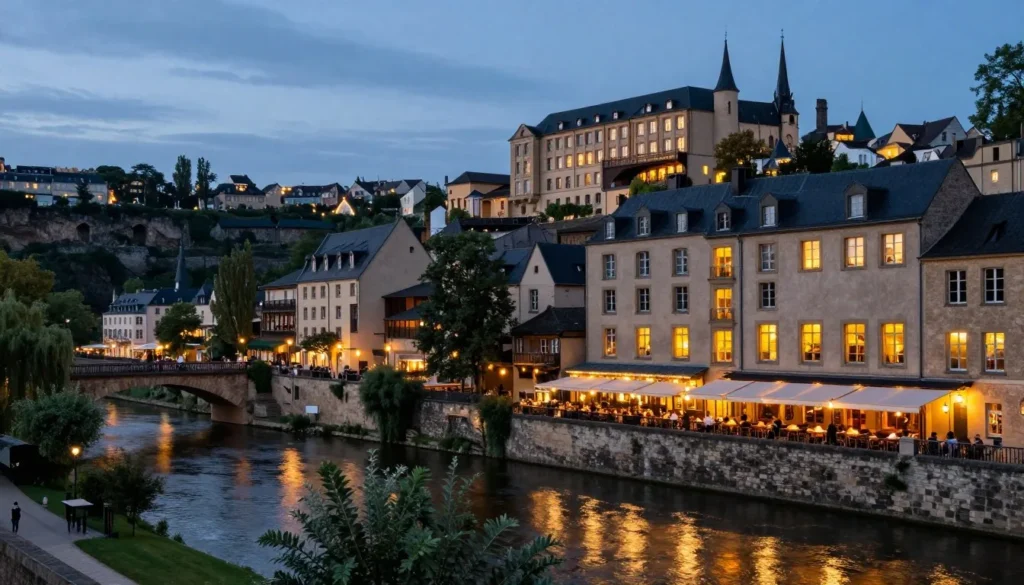
Luxembourg City’s dining scene reflects its multicultural character, blending French sophistication with German heartiness and Portuguese influences. The city boasts an impressive concentration of Michelin-starred restaurants alongside traditional bistros serving hearty Luxembourgish specialties.
Traditional Luxembourgish Dishes
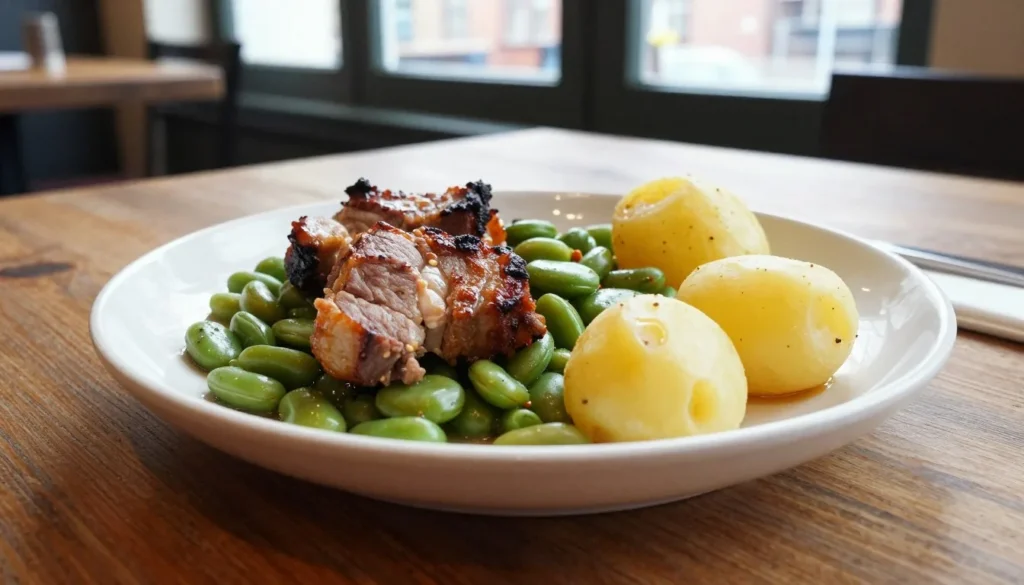
Judd mat Gaardebounen stands as the national dish. This hearty combination features smoked pork collar with broad beans, potatoes, and thick cream sauce. Restaurants throughout the old town serve this comfort food classic, particularly during cooler months.
Bouneschlupp, a traditional green bean soup with potatoes, bacon, and cream, appears on most authentic Luxembourgish menus. F’rell am Rèisleck showcases local trout in Riesling sauce, highlighting the country’s wine-making tradition. These dishes demonstrate Luxembourg’s agricultural heritage and connection to seasons.
Fine Dining Experiences
Luxembourg City’s Michelin-starred establishments rival those of much larger cities. Mosconi on Rue Münster earned two Michelin stars for its exceptional Italian cuisine crafted by chef Ilario Mosconi. The elegant dining room provides intimate atmosphere for special occasion meals, with tasting menus showcasing seasonal ingredients.
Clairefontaine combines French haute cuisine with modern techniques in a refined 17th century setting. Chef Tony Tintinger creates innovative dishes that earned the restaurant consistent Michelin recognition. Expect to pay 150 to 250 euros per person for multi-course tasting menus at top establishments.
Ma Langue Sourit in Moutfort, just outside the city, holds two Michelin stars and offers perhaps Luxembourg’s most elevated dining experience. Chef Cyril Molard creates dishes that blend French techniques with Asian influences in surprising combinations.
Casual Restaurants and Bistros
Um Dierfgen serves authentic Luxembourgish cuisine in a cozy medieval cellar setting. This family-run establishment near the Grand Ducal Palace specializes in traditional recipes passed through generations. Portions prove generous, prices reasonable around 20 to 35 euros per main course.
Brasserie Guillaume in Grund offers French-inspired bistro fare alongside Luxembourg classics. The riverside terrace becomes a prime spot during warm months, perfect for leisurely lunches watching valley activity. Their Friday fish specials showcase fresh seafood at excellent value.
International Flavors
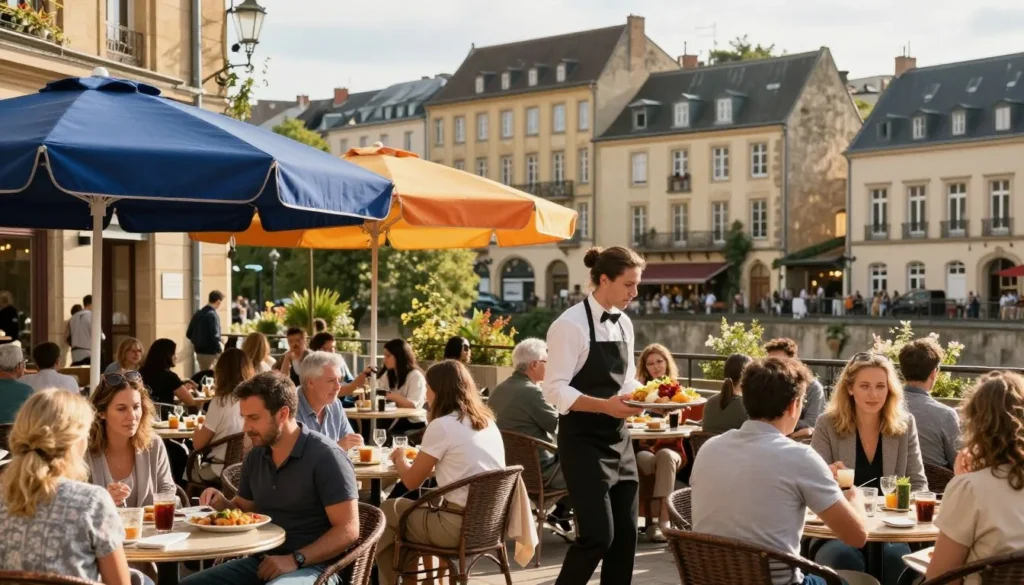
Luxembourg’s multicultural population supports diverse international cuisine. Portuguese restaurants cluster in Gare district, offering excellent value bacalhau and grilled meats. Italian trattorias dot the old town, serving authentic pasta and pizza.
Asian cuisine ranges from Vietnamese pho shops to upscale Japanese restaurants. Yamayu Santatsu near the palace specializes in yakitori and sake, while several Thai restaurants offer fragrant curries and noodle dishes. Indian, Lebanese, and Turkish establishments provide additional global flavors.
Markets and Food Shops
Saturday morning market in Place Guillaume II brings local farmers, bakers, and specialty food producers together. Arrive early for best selection of fresh vegetables, artisanal cheeses, and homemade pastries. The market operates year-round regardless of weather, with covered stalls protecting vendors and shoppers.
Oberweis patisserie on Grand Rue creates exquisite cakes, pastries, and chocolates using traditional methods. Their fruit tarts showcase seasonal berries and stone fruits, while elaborate celebration cakes demonstrate true pastry craftsmanship. Stop here for gifts or personal indulgence.
Must-Try Local Specialties
- Judd mat Gaardebounen (smoked pork with beans)
- Bouneschlupp (green bean soup)
- Gromperekichelcher (potato pancakes)
- Quetschentaart (plum tart)
- Kachkéis (cooked cheese spread)
- Riesling wine from Moselle region
Dining Price Ranges
- Budget meals: 10-15 euros (cafes, quick lunch)
- Mid-range: 20-40 euros (bistros, casual restaurants)
- Upscale: 50-80 euros (quality restaurants)
- Fine dining: 100-250 euros (Michelin-starred)
- Coffee: 2.50-4 euros
- Beer: 4-7 euros
Cafes and Bakeries
Chocolate House Nathalie Bonn on Rue du Fossé combines cafe with chocolate workshop. Watch chocolatiers craft truffles and pralines while enjoying hot chocolate made from single-origin cocoa. The aroma alone justifies a visit.
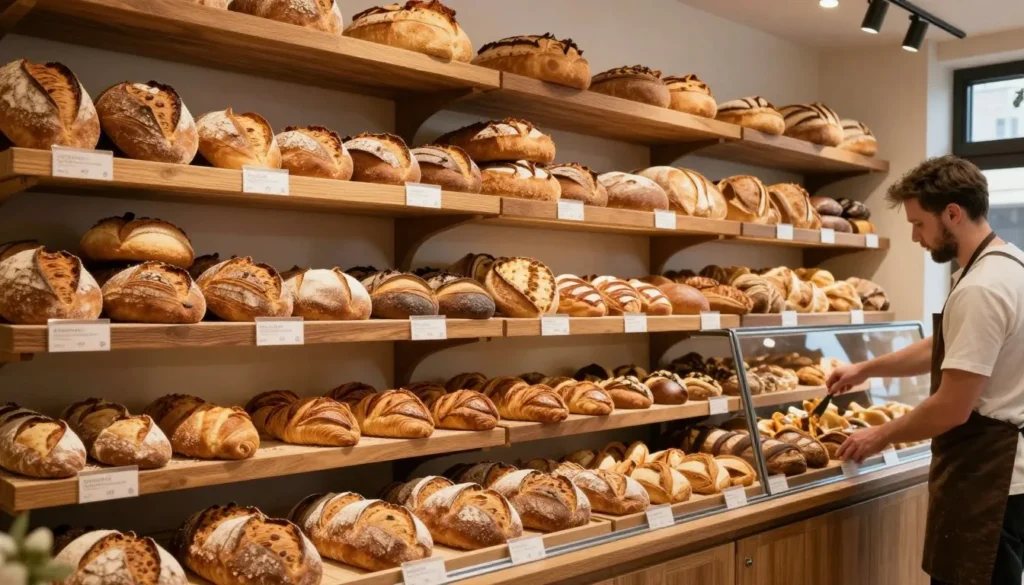
Namur bakery, a Luxembourg institution since 1937, produces traditional breads and pastries. Their pain paillasse, a rustic country bread, pairs perfectly with local cheeses. Multiple locations across the city make stopping for fresh-baked goods convenient throughout the day.
Wine and Bars
Luxembourg’s Moselle Valley produces excellent white wines, particularly Riesling, Pinot Gris, and Auxerrois. Urban Bar on Rue de la Loge offers extensive Luxembourg wine selection by the glass, allowing tastings of different producers and vintages. Knowledgeable staff guide selections based on preferences.
Grund and Clausen districts concentrate the city’s bar scene. These valley neighborhoods come alive Thursday through Saturday nights with music venues, cocktail bars, and traditional pubs. Liquid Bar in Clausen crafts inventive cocktails using seasonal ingredients, while Scott’s Pub offers over 200 whisky varieties.
Dining Tip: Many restaurants close Sunday evenings and Mondays. Make reservations for popular establishments, especially weekends and during festivals. Lunch menus often provide similar food to dinner at significantly lower prices, typically 15 to 25 euros for two or three courses.
Attractions, Sightseeing & Activities
Luxembourg City’s compact size belies its wealth of attractions. The UNESCO World Heritage fortifications form the backbone of sightseeing, but modern architecture, peaceful parks, and vibrant neighborhoods offer diverse experiences for every interest.
Old Town and Upper Town
The historic center, designated a UNESCO World Heritage Site in 1994, preserves over 1,000 years of European military architecture. Ancient stone walls, bastions, and gates wind through and around the old town, creating a unique urban landscape where medieval fortifications integrate with daily city life.
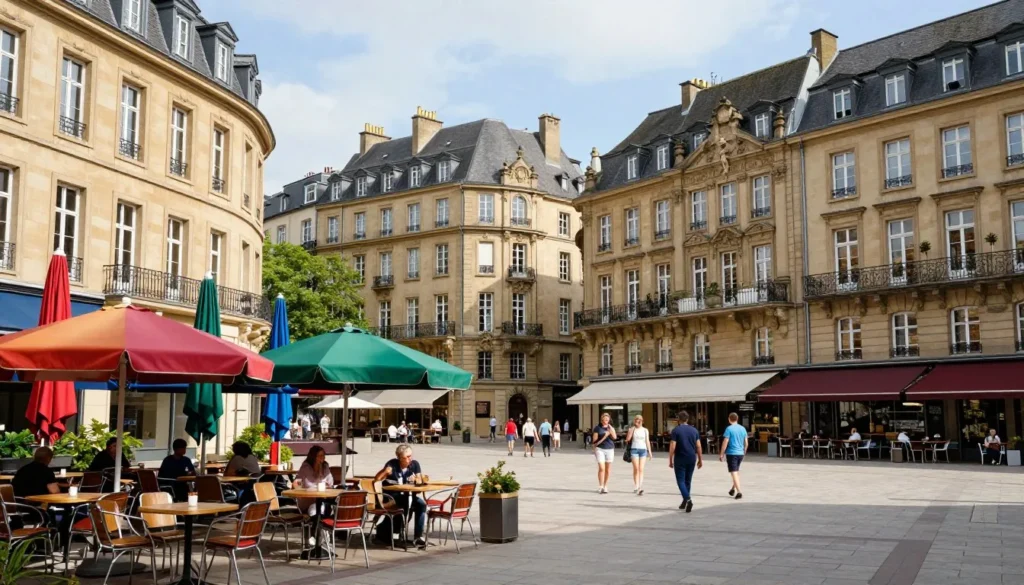
Place d’Armes serves as the central square, surrounded by outdoor cafes perfect for people-watching. Free concerts fill the bandstand during summer months, transforming the square into an open-air salon. Grand Rue, the main shopping street, connects Place d’Armes to the palace, lined with boutiques and restaurants in historic buildings.
Grand Ducal Palace
The Grand Duke’s official city residence dominates Rue du Marché-aux-Herbes with its Renaissance facade. Built in 1574, the palace showcases intricate stonework and elegant proportions. Guards in ceremonial uniform stand watch during business hours, creating popular photo opportunities.
✓ Check 30,000+ Local Sightseeing Tours Worldwide
Guided tours run daily during summer months, allowing visitors inside to see state rooms, the throne room, and ceremonial halls. Tours must be booked in advance through the Luxembourg City Tourist Office. The palace closes to public visits when official functions take place.
Chemin de la Corniche
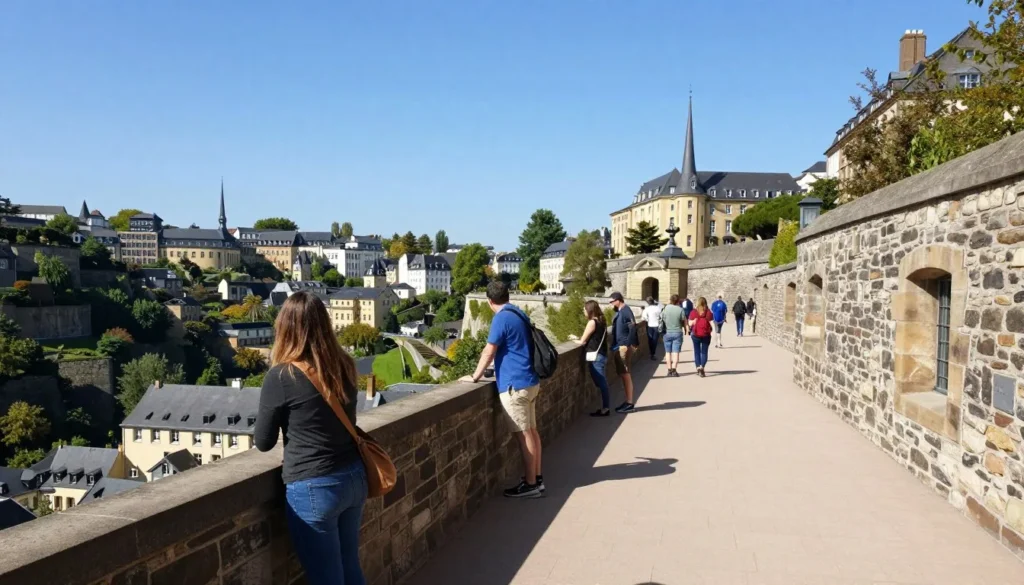
This elevated promenade follows the line of 17th century Vauban fortifications, offering spectacular panoramic views. Stretching from the Bock promontory to Citadelle du St-Esprit, the walkway provides constantly changing perspectives of the Alzette valley, Grund district, and distant hills.
Midday brings harsh light for photography, but early morning or late afternoon bathes the scene in warm golden tones. The Corniche remains accessible year-round, though winter brings fewer visitors and occasional icy conditions on stone walkways.
Bock Casemates
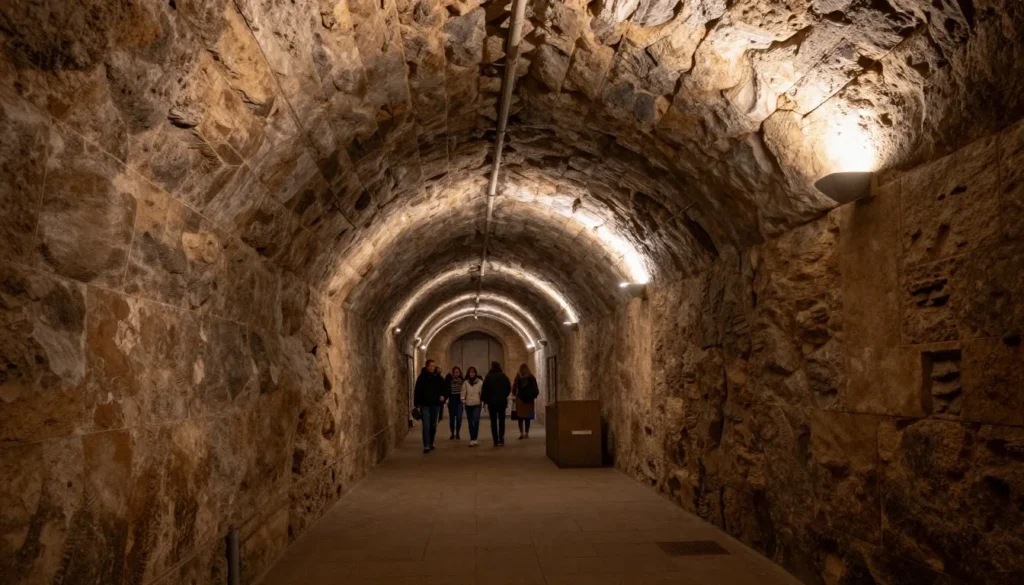
These underground passages carved into solid rock date to 1644, expanded repeatedly until the 19th century to create a vast defensive network. Twenty-three kilometers of tunnels once existed, though only portions remain open to visitors today. The casemates sheltered soldiers, horses, and supplies during sieges, and protected thousands of civilians during both World Wars.
Guided and self-guided tours descend into the cool tunnels, exploring galleries, cannon ports, and ammunition stores. Stone staircases connect different levels, with some passages requiring bending to navigate. The experience brings military history to life, demonstrating the fortress’s strategic importance over centuries.
Opening hours: March to October, daily 10 AM to 5 PM. Admission: 7 euros adults, reduced rates for students and seniors.
Pfaffenthal Lift
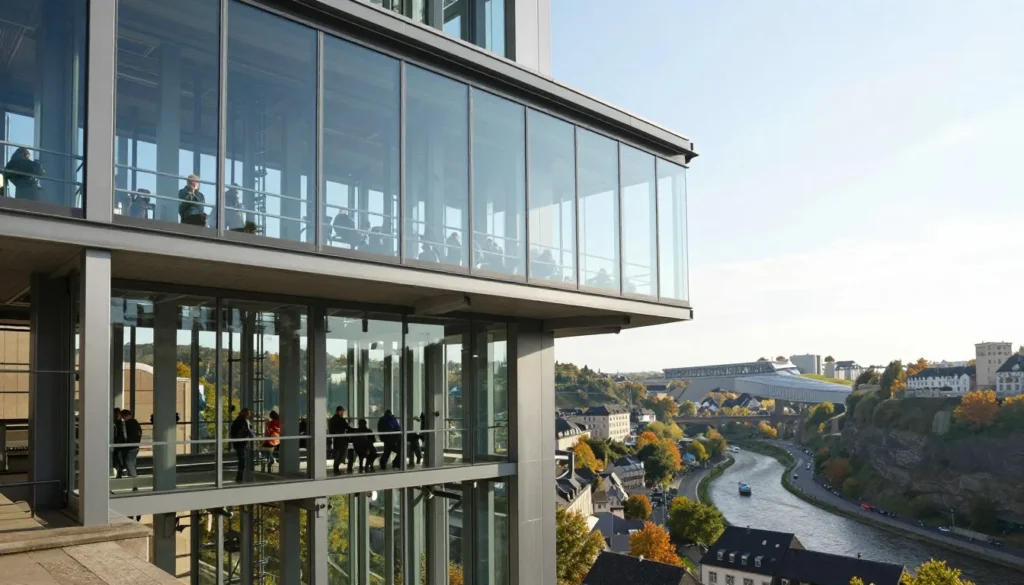
This stunning glass elevator connects the Ville Haute with the Pfaffenthal neighborhood 71 meters (233 feet) below. Opened in 2016, the panoramic lift accommodates 60 passengers and provides spectacular 360-degree views during the minute-long descent. At ground level, a bridge crosses to neighborhoods on the opposite valley side.
The lift operates free as part of public transport, running continuously from 6 AM until 1 AM. Evening rides offer magical perspectives of the illuminated old town suspended above the darkened valley.
Grund District
At the valley floor, this charming neighborhood follows the Alzette River with narrow cobblestone streets, historic houses, and numerous restaurants and bars. Once home to craftsmen and millers using water power, Grund transformed into a trendy dining and nightlife destination while retaining authentic character.
The Neumünster Abbey, a 17th century Benedictine monastery, now serves as a cultural center hosting exhibitions, concerts, and theater performances. Its peaceful courtyard cafe provides respite from urban bustle. Free admission allows exploring the renovated complex and attending many events.
Adolphe Bridge
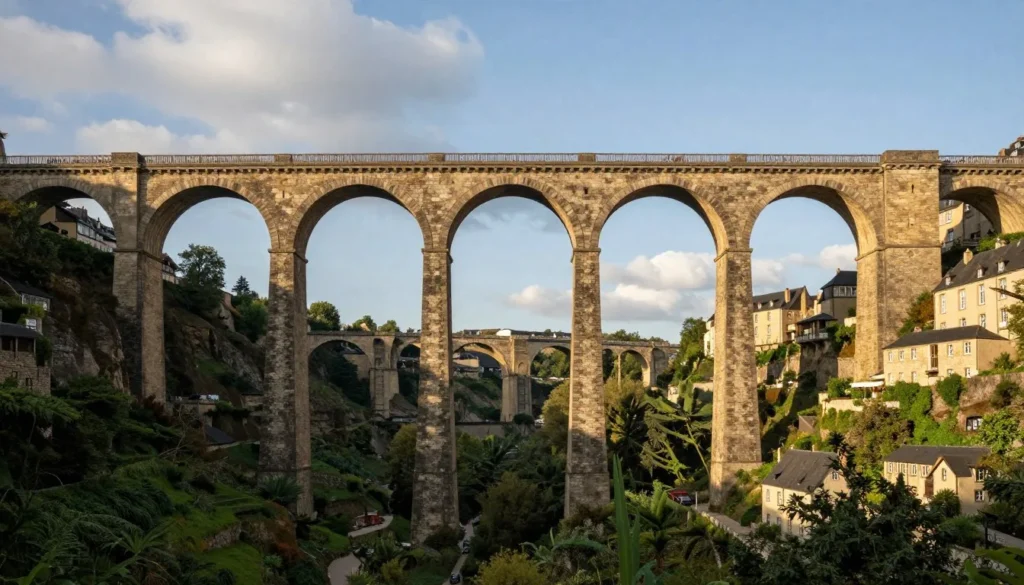
Completed in 1903, this stone arch bridge spans the Petrusse Valley, connecting city center to train station and southern neighborhoods. At the time of construction, its 84-meter (276-foot) main arch represented the world’s largest stone arch. The elegant double-deck structure carries vehicle traffic on the upper level and pedestrian walkway below.
Walking across provides excellent valley views and appreciation for early 20th century engineering. The bridge appears in countless Luxembourg City photographs, particularly striking when illuminated after dark.
European Quarter (Kirchberg)
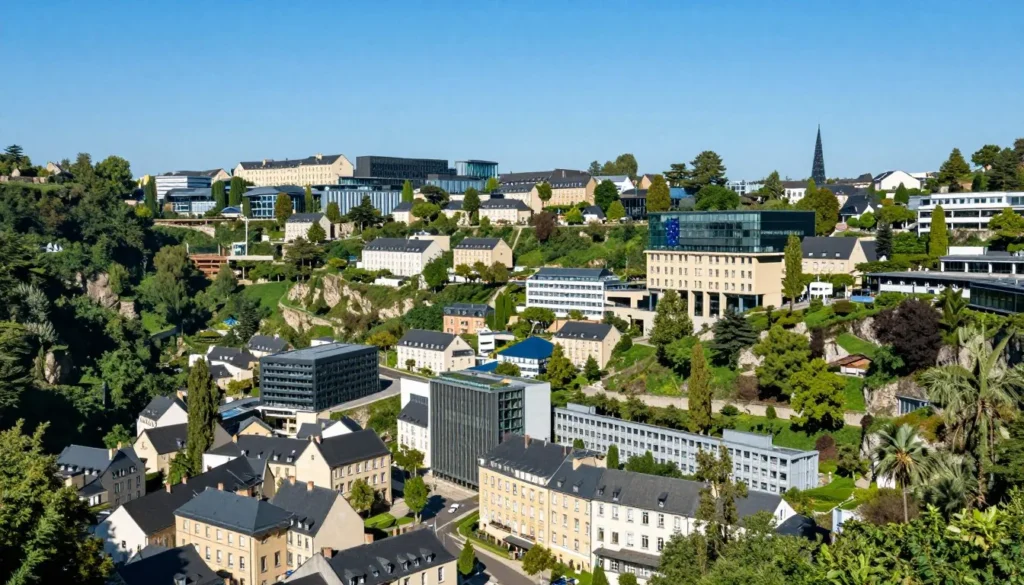
Luxembourg’s role as European Union seat created a modern district on the Kirchberg plateau. Contemporary architecture contrasts sharply with the old town, showcasing buildings by internationally renowned architects. The European Court of Justice, Court of Auditors, and European Investment Bank cluster together in striking steel and glass structures.
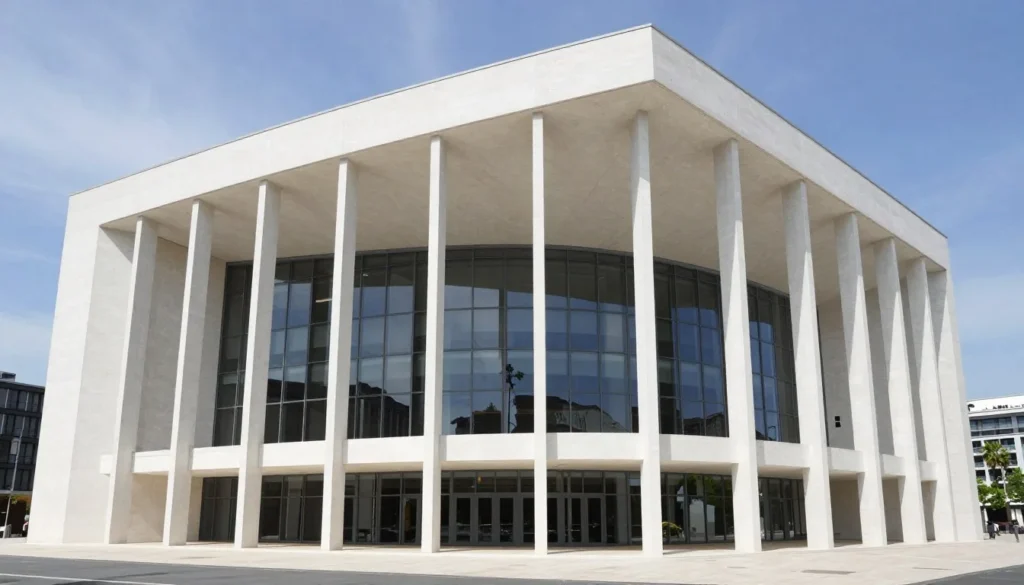
Philharmonie Luxembourg, designed by French architect Christian de Portzamparc, resembles a cluster of white columns rising from the landscape. The concert hall hosts world-class orchestras and musicians throughout the year. Public areas remain open for viewing even without attending performances.
Villa Vauban Museum
This 19th century mansion houses Luxembourg’s art collection spanning the 17th to early 20th centuries. Dutch Golden Age paintings, French Impressionist works, and Luxembourg artists receive equal attention in elegant galleries. Temporary exhibitions feature international artists and specific movements or periods.
The museum occupies a peaceful park setting, with sculpture gardens and walking paths surrounding the building. Admission costs 7 euros for adults, with combination tickets available including other city museums. Free entry on first Thursday of each month.
Cathedral of Notre-Dame
Luxembourg’s only cathedral combines late Gothic architecture with Renaissance and Baroque elements added during centuries of construction and renovation. The interior features beautiful stained glass, intricate stone vaulting, and the crypt containing Grand Duke tombs.
Free to enter, the cathedral welcomes visitors outside service times. Respectful attire expected, with shoulders and knees covered. The organ, one of Luxembourg’s finest, features in regular concerts, particularly during the summer organ festival.
Top Photo Spots
- Chemin de la Corniche at sunset
- Grund viewed from Neumünster terrace
- Adolphe Bridge from Petrusse park
- Bock promontory panoramas
- Grand Ducal Palace facade
Hidden Gems
- Trois Glands park and rose garden
- Clausen valley neighborhood
- Spanish Turret viewpoint
- Petrusse Casemates
- Pfaffenthal riverside walk
Rainy Day Activities
- Bock Casemates underground tour
- National Museum of History and Art
- Grand Duke Palace tour
- Shopping covered galleries
- Villa Vauban art collection
Museums, Cultural Spots & Festivals
Luxembourg City’s museums punch above the country’s weight, offering world-class collections and innovative exhibitions. The compact city concentrates cultural venues within walking distance, making museum hopping practical even on short visits.
National Museum of History and Art (MNHA)
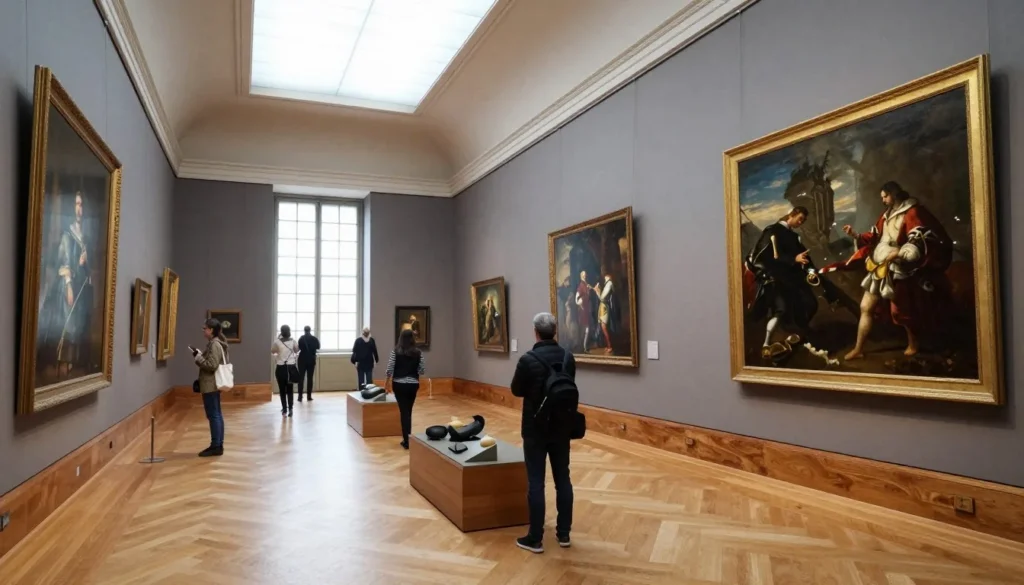
Occupying several connected historic buildings in the old town, MNHA traces Luxembourg’s story from prehistoric times through the modern era. Archaeological finds from Celtic and Roman periods demonstrate the region’s ancient importance. Medieval artifacts, Renaissance art, and 19th century paintings fill chronologically arranged galleries.
The museum particularly excels in presenting Luxembourg’s unique position at the crossroads of European powers. Temporary exhibitions bring international collections to Luxembourg, with recent shows featuring Egyptian antiquities and contemporary Asian art. Free admission on Thursdays. Otherwise 7 euros for adults.
MUDAM (Museum of Modern Art)
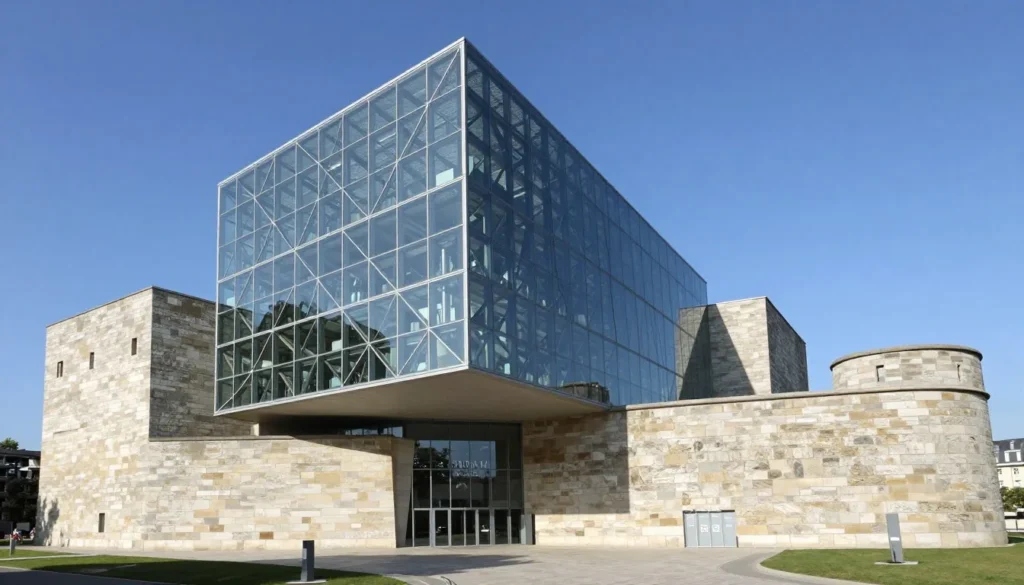
Chinese-American architect I.M. Pei designed this striking contemporary art museum on the Kirchberg plateau. The building itself represents a work of art, with dramatic angles, skylights flooding galleries with natural light, and integration with Fort Thüngen’s historic bastions.
Permanent collections feature post-1960s art with emphasis on photography, installation, and new media. Rotating exhibitions showcase emerging and established international artists. The rooftop terrace provides panoramic city views. Wednesday admission free, otherwise 7 euros.
National Museum of Natural History
This family-friendly museum explores Luxembourg’s geology, ecology, and natural heritage. Interactive exhibits explain plate tectonics, showcase mineral collections, and demonstrate evolution through fossil displays. The planetarium presents shows about astronomy and space exploration, particularly popular with children.
Temporary exhibitions address current environmental issues and conservation efforts. Free admission makes this excellent rainy-day option for families. Open Tuesday through Sunday, 10 AM to 6 PM.
Casino Luxembourg – Forum of Contemporary Art
Despite its name, no gambling occurs here. The 1882 building originally functioned as a bourgeois meeting hall before transformation into a contemporary art space. Casino Luxembourg focuses on experimental and emerging artists, hosting exhibitions, performances, and events that push artistic boundaries.
The venue champions risk-taking and innovation, making each visit unpredictable. Some exhibitions challenge viewers, others delight, but all provoke thought and conversation. Free admission Wednesday and Sunday, 5 euros other days.
National Library of Luxembourg
Beyond its function as repository of Luxembourg’s published works, the library hosts exhibitions about books, manuscripts, and printing history. The reading rooms feature stunning architecture with vaulted ceilings and natural light. Visitors can explore freely during opening hours, experiencing the tranquil atmosphere of this cultural institution.
City Museums and Historical Sites
Luxembourg City History Museum occupies four restored houses in the old town, telling the capital’s story through models, paintings, and interactive displays. The building itself demonstrates architectural evolution, with medieval foundations, Renaissance additions, and contemporary interventions coexisting.
Three Towers Museum within the Bock fortifications presents the military history of Luxembourg’s defenses. Scale models show how the fortress grew over centuries, while period weapons and uniforms bring soldier life into focus.
Cultural Venues and Performance Spaces
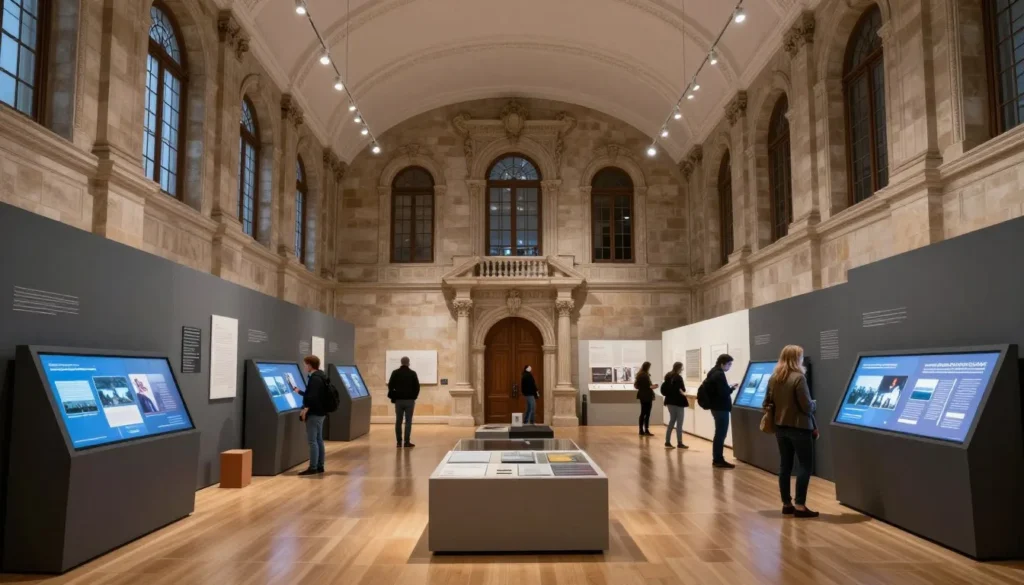
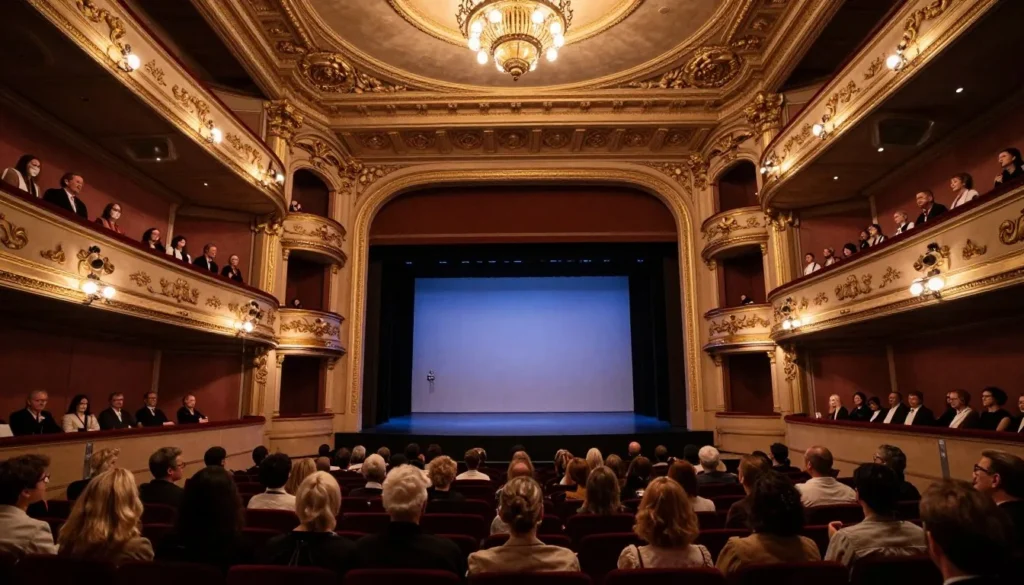
Grand Théâtre de Luxembourg presents opera, ballet, and orchestral concerts in an elegant 19th century theater. The venue underwent extensive renovation, updating technical facilities while preserving historic decorative elements. Season runs September through June, with occasional summer performances.
Philharmonie Luxembourg brings world-renowned musicians and orchestras to its acoustically superb concert hall. The resident Luxembourg Philharmonic Orchestra performs regularly, joined by international soloists and conductors. Even those unfamiliar with classical music appreciate the stunning architecture and welcoming atmosphere.
Theatrical and Cinema Options
Théâtre des Capucins in Grund occupies a former monastery, creating intimate atmosphere for drama, dance, and experimental performances. Productions often feature multiple languages, reflecting Luxembourg’s multilingual character. The theater’s cafe-bar becomes popular gathering spot before and after shows.
Cinémathèque de la Ville de Luxembourg screens art house films, classic cinema, and documentary programming. Frequent retrospectives explore specific directors, movements, or national cinemas. Utopia Cinema in Limpertsberg offers commercial and independent releases in their original languages with subtitles.
Museum Pass Benefits
- Unlimited access to all municipal museums
- Valid for one year from purchase
- Cost: 20 euros for adults
- Skip ticketing lines at busy times
- Discounts at museum shops
- Priority booking for special events
Cultural Event Resources
- Luxembourg Times cultural listings
- City tourist office event calendar
- Museum websites for exhibitions
- Philharmonie season program
- Theater advance booking recommended
- Many free events throughout year
Libraries and Reading Rooms
Beyond the National Library, municipal libraries throughout the city welcome visitors. Bibliothèque municipale on Avenue Emile Reuter provides quiet study spaces, extensive book collections in multiple languages, and free WiFi. The children’s section makes rainy afternoons with kids manageable.
Nature & Outdoor Experiences
Luxembourg City’s dramatic topography creates surprising natural spaces within urban boundaries. Deep valleys, flowing rivers, and extensive forests provide outdoor recreation just minutes from city center, making this one of Europe’s greenest capitals.
Petrusse Valley
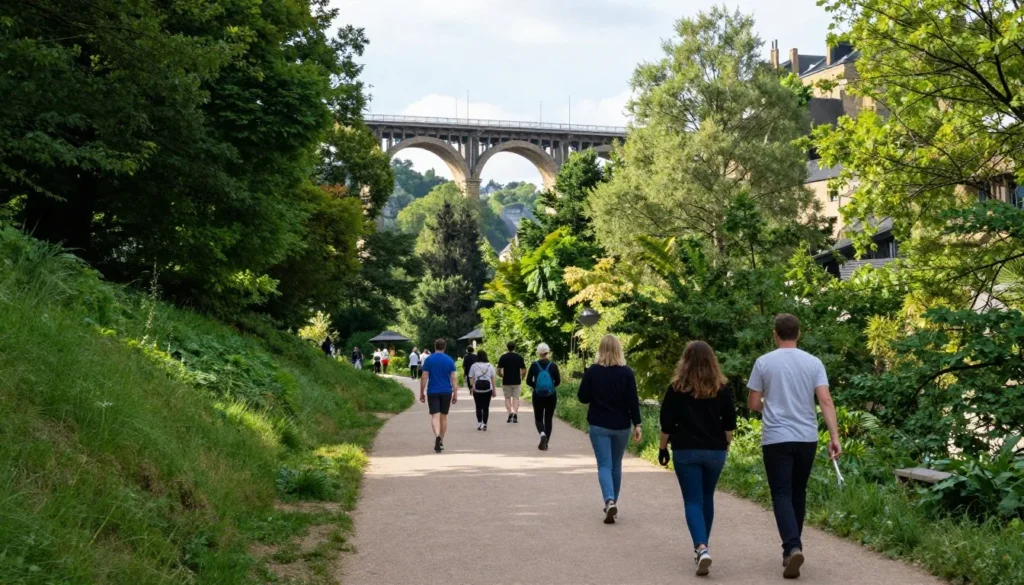
This verdant valley cuts through the southern city, creating a green corridor where nature dominates despite surrounding urban development. Walking and cycling paths follow the Petrusse stream, passing under the Adolphe Bridge’s soaring arches and through peaceful wooded sections.
The valley transforms into open-air theater venue during summer festivals, with concerts and events taking advantage of natural amphitheater-like setting. Multiple access points allow short strolls or extended walks depending on time and energy. Early morning brings joggers and dog walkers, while evenings attract couples and families enjoying sunset colors.
Alzette River Trail
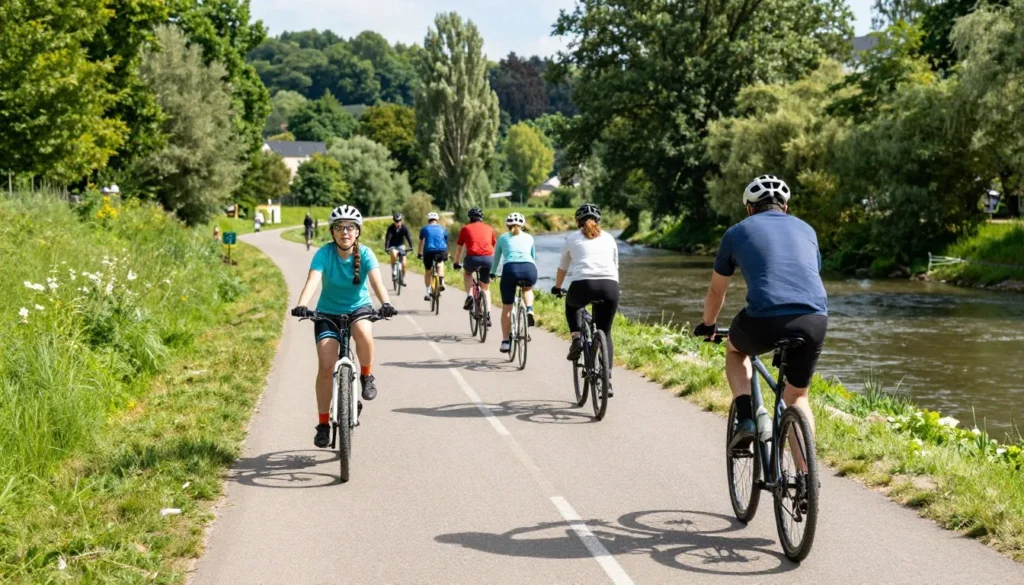
Following the Alzette River from Grund through Clausen and beyond creates a scenic route showcasing Luxembourg’s natural beauty. The trail alternates between paved paths and packed earth, passing former mills, waterfalls, and rocky outcroppings. Benches at strategic viewpoints invite pauses to watch ducks, spot herons, or simply enjoy flowing water.
Spring brings wildflowers to riverbanks, while autumn colors reflected in water create mirror-like effects. The flat terrain suits all fitness levels, though some sections narrow where cliffs crowd the river. Approximately 5 km (3 miles) one way from city center to Cents district.
Municipal Parks and Gardens
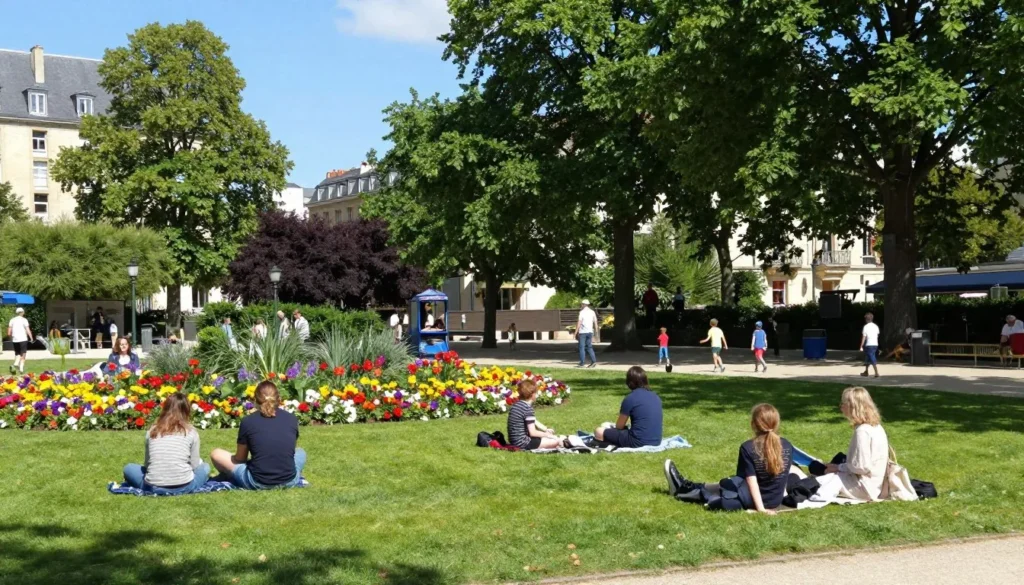
Parc Municipal stretches across 11 hectares (27 acres) east of the old town, offering manicured lawns, formal gardens, and natural woodland areas. Children’s playgrounds, duck ponds, and extensive walking paths make this popular with families. The park hosts summer concert series, with jazz and classical performances in the bandstand.
Rose Garden within the park explodes with color and fragrance from June through September. Over 700 rose varieties bloom in carefully tended beds, creating one of the city’s most photogenic and romantic spots. Benches throughout encourage lingering among the blooms.
Bambësch Forest
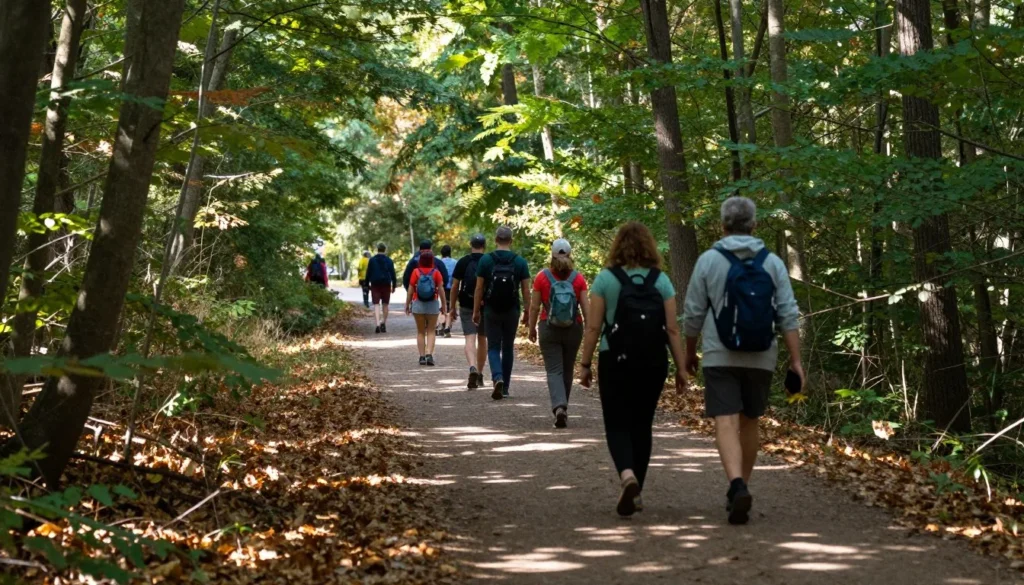
Just beyond northern city limits, this extensive forest provides genuine wilderness experience accessible via short bus ride. Marked hiking trails range from easy hour-long loops to more challenging routes of several hours. Dense beech and oak trees create cathedral-like atmosphere, particularly magical when morning mist hangs among trunks.
Mountain bike trails attract cyclists seeking single-track challenges. Trail difficulty varies from beginner-friendly routes to technical descents requiring advanced skills. Trail maps available online and at forest entrances. Remember that Luxembourg’s free public transport extends to forest-area buses, making car-free adventures entirely feasible.
Rock Climbing at Bockfiels
Luxembourg’s sandstone cliffs attract rock climbers from across the region. Bockfiels area near the city offers numerous bolted sport routes ranging from beginner to expert grades. The soft sandstone requires careful technique, making this popular training ground for improving footwork and balance.
Climbing shops in the city rent equipment and provide information about current conditions. Several local clubs welcome visitors joining their outings. Most routes remain accessible year-round, though winter cold and wet conditions reduce sandstone friction.
Cycling Routes
PC1 cycling route follows the Alzette River valley through Luxembourg City and beyond, connecting to national cycling network. The dedicated bike path offers safe, scenic riding suitable for families with children. Minimal elevation changes make this accessible even for casual cyclists.
More ambitious riders tackle routes into the Ardennes hills north of the city, where challenging climbs reward with panoramic views. Luxembourg’s commitment to cycling infrastructure means most roads feature bike lanes or dedicated paths. The hilly terrain builds fitness quickly for those willing to embrace the climbs.
Outdoor Sports Facilities
Public sports facilities scattered throughout the city offer tennis courts, soccer fields, and running tracks. Many facilities allow walk-up use during non-reserved hours. The Coque sports complex on Kirchberg plateau features Olympic swimming pools, ice rinks, and indoor climbing walls open to public during designated times.
Running clubs organize group runs several evenings weekly, welcoming visitors to join. Routes typically start from Parc Municipal or the Adolphe Bridge, heading into valleys or forests depending on distance and difficulty. Check local running stores for schedule information.
Seasonal Outdoor Activities
Winter occasionally brings enough snow for cross-country skiing in Bambësch Forest, though reliable conditions prove rare. Ice skating at Kinnekswiss outdoor rink operates December through February when temperatures cooperate. The rink occupies a scenic plateau location with forest backdrop and warming hut serving hot drinks.
Spring wildflower walks through valleys reveal surprising botanical diversity. Guided nature walks organized by environmental groups help identify plants, birds, and insects. Summer extends daylight until nearly 10 PM, allowing after-work hikes and bike rides. Autumn mushroom foraging attracts knowledgeable locals, though visitors should never pick fungi without expert identification.
Top Hiking Routes
- Wenzelweg circuit: 5 km (3 miles), 2-3 hours, moderate
- Pfaffenthal to Dommeldange: 7 km (4.3 miles), flat, easy
- Bambësch Forest loop: 10 km (6.2 miles), rolling, moderate
- Petrusse Valley walk: 3 km (1.9 miles), flat, easy
- Mullerthal Trail (day trip): various distances, moderate to challenging
Outdoor Essentials
- Waterproof jacket year-round (sudden showers common)
- Sturdy walking shoes with good tread
- Water bottle and snacks for longer routes
- Trail map or GPS app with offline maps
- Sunscreen and hat for summer hikes
- Insect repellent for forest walks May-September
Travel With Children
Luxembourg City welcomes families with numerous child-friendly attractions, excellent public facilities, and compact size that prevents excessive walking. The city’s safe environment, clean streets, and multilingual population create stress-free family travel experiences.
Top Attractions for Children
Natural History Museum tops most families’ lists with interactive exhibits, live animals, and hands-on science activities. Children particularly enjoy the planetarium shows explaining stars, planets, and space exploration. Shows run in multiple languages, with English presentations several times weekly. Free admission removes financial pressure to stay longer or leave sooner.
Dracula Club indoor play center in Bertrange offers rainy-day salvation with climbing structures, slides, trampolines, and ball pits. Different zones cater to toddlers through pre-teens, allowing siblings various ages to play safely. Parents relax in the cafe area while maintaining visual supervision. Admission around 8 euros per child for all-day play.
Park Playgrounds
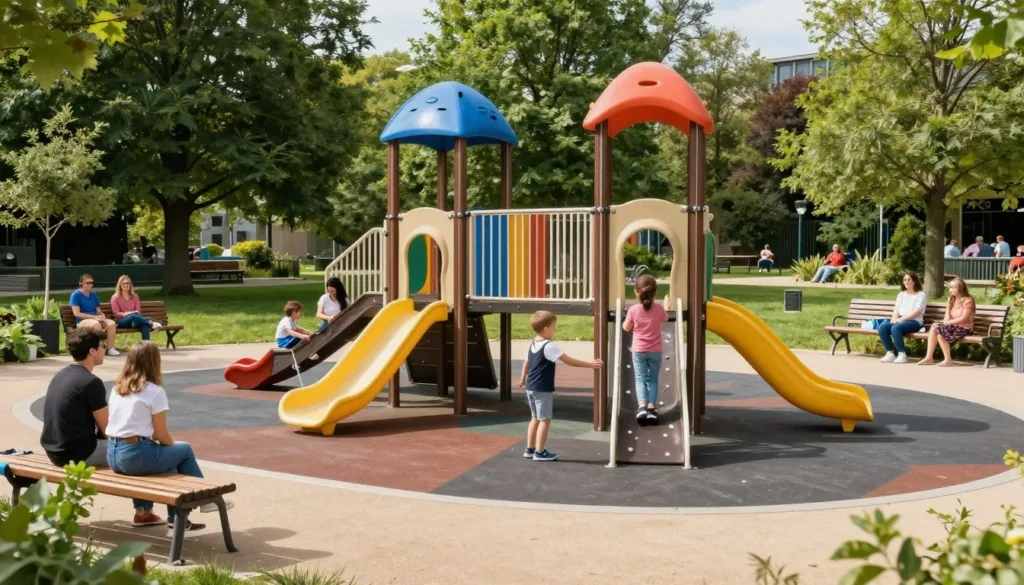
Municipal parks throughout the city feature well-maintained playgrounds with equipment for different age groups. Parc Municipal’s central playground includes swings, climbing structures, and sandbox areas. Older children challenge themselves on zip lines and adventure courses nearby.
Petrusse Valley offers playground areas combined with open grass spaces perfect for running, ball games, and picnics. The natural setting provides different atmosphere than formal parks, with rocky outcroppings becoming impromptu climbing challenges and streams offering stick-racing opportunities.
Family-Friendly Museums
Luxembourg City History Museum provides tablets with interactive games guiding children through exhibitions. Scavenger hunt style activities teach local history while keeping young visitors engaged. Family workshops on weekends allow hands-on craft projects related to current exhibitions.
MUDAM contemporary art museum runs children’s workshops exploring artistic techniques and creative expression. Sunday morning sessions welcome families to create together, with materials and instruction provided free. These programs book quickly, so reserve online in advance.
Dining With Kids
Most Luxembourg restaurants welcome children, with many offering dedicated kids’ menus. Traditional dishes like Gromperekichelcher (potato pancakes) appeal to less adventurous young eaters, while pizzerias throughout the city provide familiar options.
Several cafes in Parc Municipal and other parks feature outdoor seating where children can move around without disturbing other diners. Quick-service restaurants near major attractions provide convenient meals when time or patience runs short.
Transportation Tips
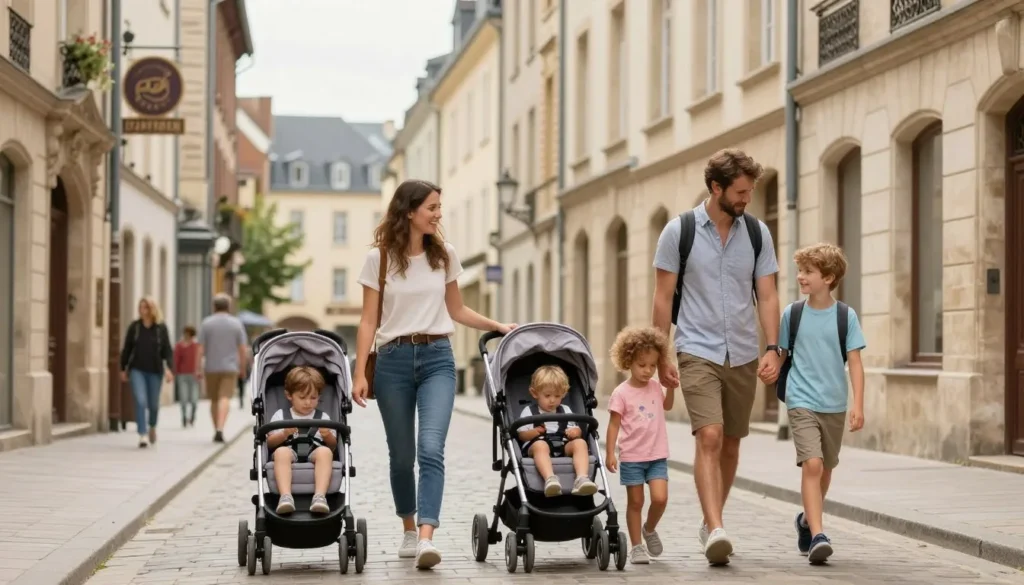
Free public transport extends to children of all ages, making getting around with families economical. Buses and trams accommodate strollers easily, with designated spaces and low-floor access. Drivers typically wait patiently while parents manage children and equipment.
✓ Check 30,000+ Local Sightseeing Tours Worldwide
The Pfaffenthal panoramic elevator fascinates children with glass walls showing the dramatic descent. Making multiple elevator trips becomes entertainment itself, much to the amusement of understanding local passengers.
Baby-Friendly Facilities
- Changing tables in most public restrooms
- Department stores with nursing rooms
- Pharmacies stock formula and baby supplies
- Stroller-friendly sidewalks and ramps
- High chairs available in most restaurants
Activities by Age
- Toddlers: playgrounds, park walks, short tram rides
- Ages 5-10: casemates tour, natural history museum, Grund exploring
- Tweens: MUDAM workshops, cycling, rock climbing
- Teens: shopping, cinema, sports activities
Practical Considerations
- Many cobblestone streets challenge strollers
- Baby carriers useful for old town exploration
- Afternoon rest time reduces meltdowns
- Supermarkets provide budget-friendly snacks
- Evening restaurants welcome families until 8 PM
Emergency and Medical Care
Centre Hospitalier de Luxembourg provides emergency services with English-speaking staff. Pediatric specialists available 24/7 for urgent situations. Pharmacies throughout the city stock children’s medications, with night pharmacies rotating coverage.
European Health Insurance Card holders receive treatment at reduced or no cost. Travel insurance covering children recommended for non-EU visitors. Emergency number 112 works throughout Luxembourg for police, fire, or medical assistance.
Money Saving Tips
Luxembourg City’s reputation as an expensive destination contains truth, but savvy travelers discover numerous ways to experience the capital without breaking budgets. Strategic planning and local knowledge unlock affordable or free experiences throughout the city.
Free Public Transport
This remains Luxembourg’s greatest money-saving advantage for visitors. Free buses, trams, and trains eliminate transportation costs entirely, allowing unlimited movement around the city and country. Families save particularly significant amounts compared to paying per-person fares in other European capitals.
The free transport extends throughout Luxembourg, making day trips to Vianden Castle, Echternach, or Moselle Valley wine country entirely cost-free for getting there. This policy alone can save visitors 50 to 100 euros or more during a week-long visit.
Free Attractions and Activities
Walking the Chemin de la Corniche, exploring the old town, and discovering valley neighborhoods costs nothing but provides memorable experiences. Neumünster Abbey offers free entry to its cultural spaces, courtyards, and frequent exhibitions. Cathedral of Notre-Dame welcomes visitors without charge, as do many church concerts throughout the year.
Municipal parks provide entertainment for all ages without admission fees. Summer brings free outdoor concerts in Place d’Armes and various squares, featuring jazz, classical, and contemporary music. Blues ‘n’ Jazz Rallye in July offers multiple free concerts across the city.
Budget Dining Strategies
Lunch menus at quality restaurants typically cost 40 to 60 percent less than dinner while offering similar food quality. Take advantage of midday prix fixe menus ranging from 15 to 25 euros for multiple courses. Evening meals shift to casual bistros or ethnic restaurants where main courses rarely exceed 15 to 20 euros.
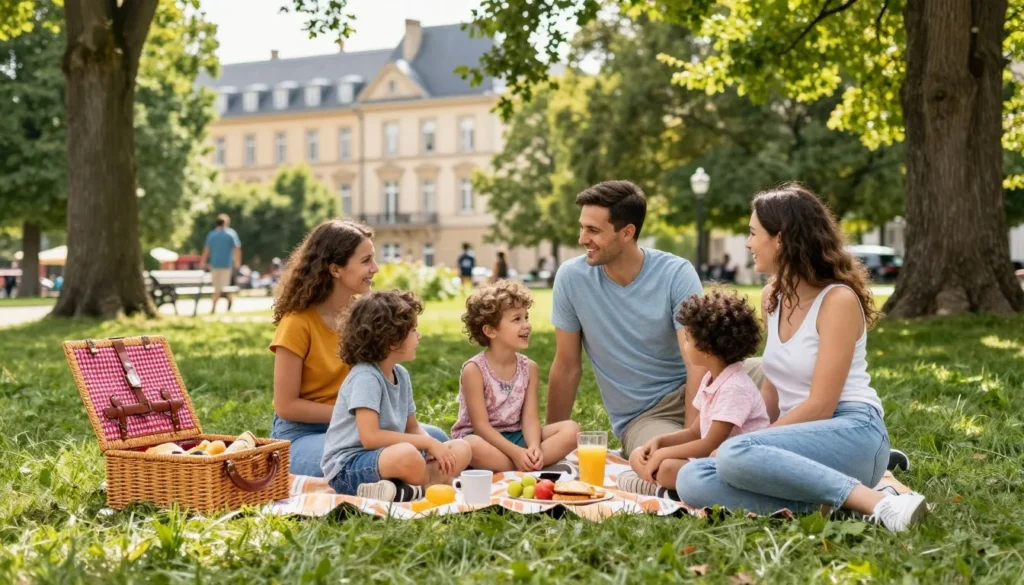
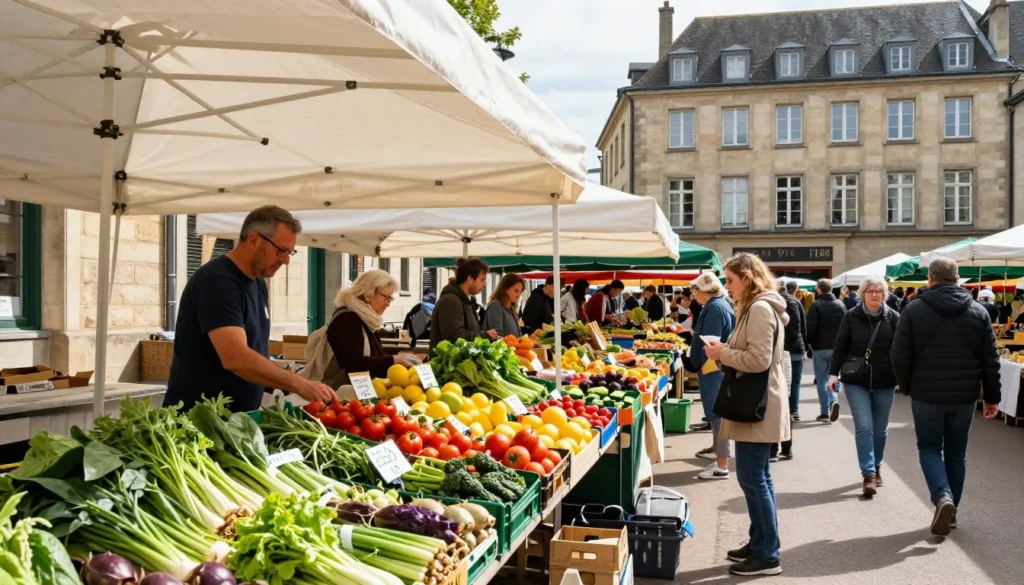
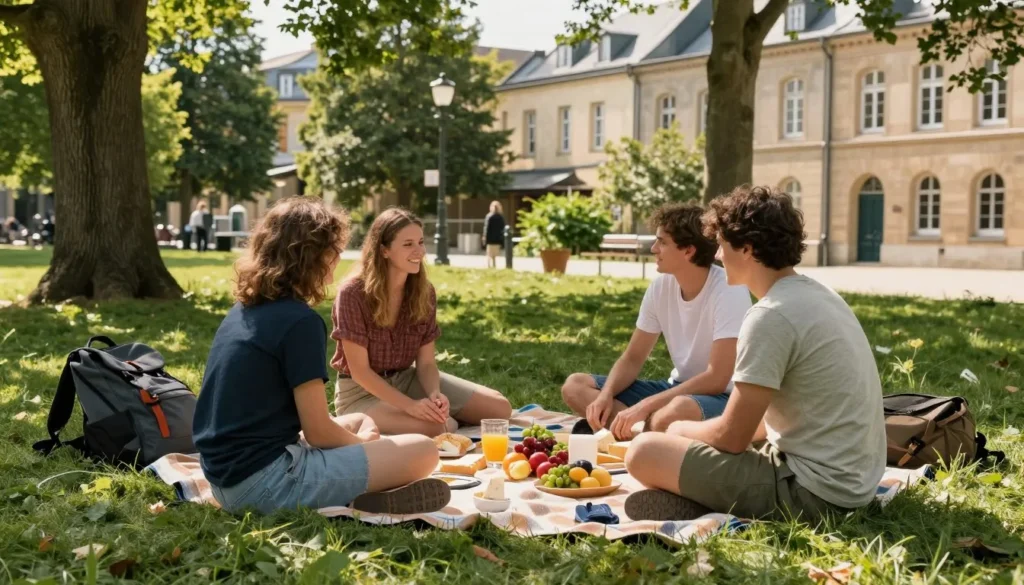
Saturday market at Place Guillaume II provides fresh bread, cheese, fruit, and prepared foods perfect for picnic meals. Supermarkets like Cactus or Delhaize stock sandwich supplies and snacks at fraction of restaurant costs. Many hotels include breakfast, eliminating one daily meal expense.
Accommodation Savings
Book directly with hotels rather than through third-party sites to secure best rates and possible upgrades. Shoulder seasons of April-May and September-October offer significantly lower rates than peak summer months, sometimes 30 to 50 percent less for identical rooms.
Youth Hostel Luxembourg provides excellent value even for couples and families, with private rooms available alongside dormitory beds. Apartments rented for week-long stays typically cost less per night than hotels, plus cooking facilities enable additional meal savings.
Free Activities List
- Walking Chemin de la Corniche
- Exploring Grund and Clausen neighborhoods
- Neumünster Abbey grounds and exhibitions
- Cathedral visits and organ concerts
- Municipal park walks and rose garden
- Petrusse and Alzette valley trails
- Place d’Armes summer concerts
- Window shopping Grand Rue
Money-Saving Hacks
- Refill water bottles at public fountains
- Museum free days (first Thursday monthly)
- Happy hour drink specials 5-7 PM many bars
- Pharmacy prices lower than other EU countries
- ATM withdrawals avoid currency exchange fees
- Grocery stores cheaper than convenience shops
- Walking instead of taxis (compact city)
Museum and Attraction Discounts
Luxembourg Card provides free entry to over 60 attractions nationwide, plus unlimited public transport. One-day cards cost 13 euros individual or 28 euros family, two-day 20 euros individual, three-day 28 euros individual. For visitors planning multiple museum visits and day trips, the card pays for itself quickly.
Many museums offer free admission on first Thursday of each month. Plan museum days accordingly to maximize this benefit. Students, seniors, and children receive reduced rates at most paid attractions, so always carry identification proving eligibility.
Shopping Smart
Luxembourg’s low VAT rates make certain goods cheaper than neighboring countries. Alcohol, tobacco, and fuel all cost significantly less, though these items appeal more to residents than short-term visitors. Bookstores stock multilingual titles at prices lower than France or Germany.
Avoid currency exchange bureaus charging high commission. ATMs provide best exchange rates, though check your home bank’s foreign transaction fees. Many shops and restaurants accept credit cards without minimum purchase requirements, making cards convenient for tracking spending.
Budget Summary: A couple visiting for three days can comfortably experience Luxembourg City for approximately 400-600 euros total, including hostel/budget hotel accommodation, mixture of picnic and restaurant meals, free attractions, and paid museum entries. Luxury travelers spending 1,000-1,500 euros enjoy upscale hotels, fine dining, and guided experiences while exploring the same compact city.
Safety & Local Customs
Luxembourg City ranks among Europe’s safest capitals, with low crime rates and well-maintained infrastructure. Understanding local customs and basic etiquette enhances interactions with residents while demonstrating respect for Luxembourg’s unique culture.
Personal Safety
Violent crime remains exceptionally rare in Luxembourg City. Visitors can walk throughout the city center, valleys, and parks at any hour without significant concern. Police maintain visible presence in tourist areas and respond quickly to any incidents.
Petty theft occasionally occurs in crowded areas, particularly the train station and busy restaurants. Standard precautions apply: secure bags in view, avoid displaying expensive jewelry or electronics unnecessarily, and remain aware of surroundings in crowds. Pickpocketing remains far less common than in Paris, Barcelona, or Rome.
Emergency Services
Dial 112 for any emergency requiring police, fire, or medical response. Operators speak English, French, and German. This universal European emergency number works from any phone, including mobiles without SIM cards or credit.
Centre Hospitalier de Luxembourg provides emergency medical care at 4 Rue Nicolas Ernest Barblé. Pharmacies display green cross signs, with night pharmacy locations rotating and posted at each pharmacy. Staff typically speak English alongside French and German.
Language and Communication
Luxembourg’s trilingual character means most residents speak Luxembourgish, French, and German fluently, with English widespread particularly among younger people and in tourist-facing businesses. Attempting basic French or German phrases shows respect, though defaulting to English rarely creates problems.
Simple greetings smooth interactions: “Moien” (MO-yen) means hello in Luxembourgish, “Bonjour” in French, “Guten Tag” in German. Staff in shops, restaurants, and hotels typically greet customers before conversing further. Responding in kind establishes polite tone for interactions.
Dining Etiquette
Luxembourg dining customs blend French refinement with German practicality. Restaurants expect patrons to wait for seating rather than choosing tables independently. Service includes attention without hovering, with servers checking back after initial courses arrive.
Tipping customs remain flexible. Service charges appear in bill totals, making additional tips optional rather than expected. Rounding up bills or adding 5 to 10 percent shows appreciation for excellent service. Credit card machines typically don’t prompt for tip amounts, requiring cash for this purpose.
Shopping and Business Hours
Shops typically open 9 or 10 AM and close around 6 or 7 PM on weekdays, with shorter Saturday hours and Sunday closures for most retailers. Supermarkets often stay open until 8 PM, providing convenient grocery access. Restaurants close between lunch and dinner service, roughly 3 to 6 PM, though cafes and fast-food establishments maintain continuous hours.
Greet shop staff upon entering and leaving. This courtesy applies even in larger stores where personal service seems less relevant. Brief eye contact and smile accompany greetings naturally.
Cultural Do’s
- Greet people when entering shops or restaurants
- Wait for seating in restaurants
- Keep voices moderate in public spaces
- Queue orderly at bus stops and shops
- Respect quiet hours in residential areas
- Remove hats in churches and museums
Cultural Don’ts
- Don’t assume everyone speaks English first
- Don’t cross streets against signals
- Don’t litter or leave picnic waste
- Don’t enter bike lanes on foot
- Don’t photograph people without permission
- Don’t compare Luxembourg unfavorably to neighbors
Dress Code Expectations
Luxembourg City maintains relatively formal standards compared to many European cities. Business casual suits most situations, with smart casual appropriate for dining and cultural events. Very casual athletic wear, though acceptable for outdoor activities, looks out of place in restaurants and museums.
Churches expect modest dress covering shoulders and knees. Shorts and tank tops, while acceptable in parks and cafes, should be avoided in more formal settings. The compact city means carrying a light jacket or cardigan allows adapting to different venues and temperatures.
Photography Permissions
Photographing buildings, streets, and public spaces causes no issues. However, request permission before photographing individuals, particularly military guards at the Grand Ducal Palace. Some museums prohibit flash photography to protect delicate artworks, with signs indicating restrictions.
Public Behavior Norms
Luxembourgers value personal space and quiet public environments. Loud conversations on phones or between groups draw disapproving looks. Public drunkenness, though rarely seen, receives social condemnation beyond legal consequences.
Smoking restrictions apply in all enclosed public spaces, including restaurants, bars, and public transport. Designated smoking areas exist outside some venues. Dispose of cigarette butts properly rather than dropping them on historic streets.
Visitor Comments About Luxembourg City
“The free public transport made exploring so easy with our two kids. We rode the tram repeatedly just for fun, and it never got old watching their faces as we descended in the glass elevator to Pfaffenthal. The Bock Casemates fascinated our seven-year-old who pretended to be a medieval soldier. We expected an expensive trip but found plenty of free activities and reasonable restaurants outside the tourist center. The city felt incredibly safe even walking back to our hotel after evening concerts in the park.”
“I visited during the Schueberfouer festival and the city was absolutely electric. The combination of medieval fortifications and modern architecture creates such unique atmosphere. Every corner revealed another stunning view, another interesting alley to explore. I particularly loved the Chemin de la Corniche at sunset watching light change across the valley. The restaurant scene exceeded expectations with everything from traditional Luxembourgish food to world-class fine dining. Already planning my return trip to explore the Mullerthal region.”
“What surprised me most was how walkable everything is despite the dramatic elevation changes. The old town’s UNESCO heritage status is completely justified – those fortifications are absolutely spectacular. I spent hours just wandering the valleys photographing historic buildings and bridges from different angles. The people were friendly and everyone spoke perfect English, making navigation easy. My only regret was not staying longer to properly explore the museums and surrounding countryside. Luxembourg City makes an excellent long weekend destination and deserves more recognition as a European capital worth visiting.”
Additional Nearby Destinations
Luxembourg City’s central location makes it an ideal base for day trips throughout the Grand Duchy and into neighboring countries. The combination of free national public transport and compact distances enables exploring multiple regions during a single visit.
Vianden
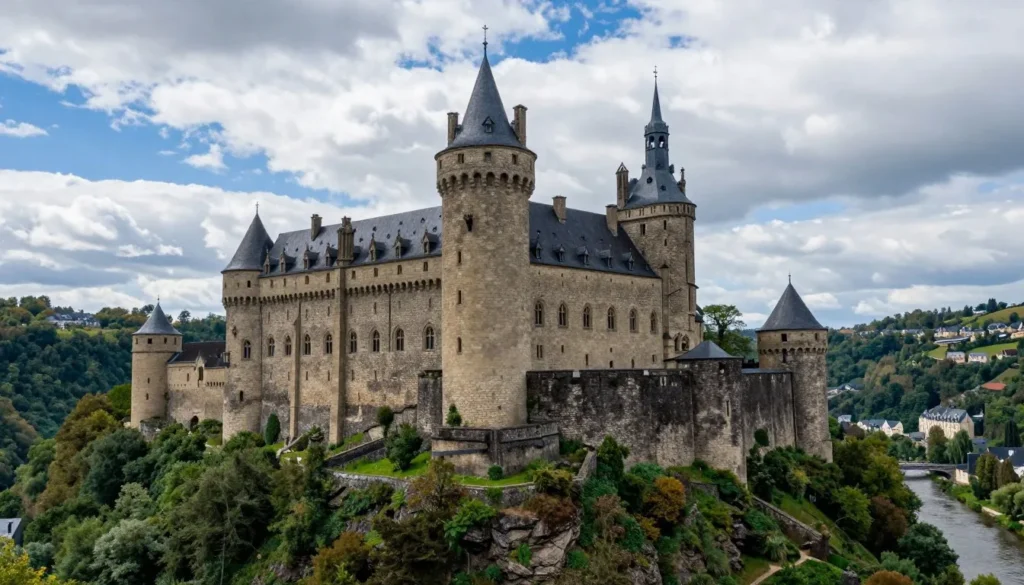
This medieval town 50 km (31 miles) north of Luxembourg City centers on one of Europe’s most impressive restored castles. Vianden Castle perches dramatically on rocky heights above winding streets and the Our River. Interior rooms showcase period furnishings, weapons, and tapestries across multiple centuries of occupation.
The town itself retains authentic medieval character with half-timbered houses, cobblestone streets, and Gothic church. Chair lift carries visitors from town to hilltop viewpoint overlooking castle and valley. Victor Hugo lived here during political exile, with his former residence now a small museum. Train to Ettelbruck, then bus to Vianden, approximately 90 minutes total.
Mullerthal (Little Switzerland)
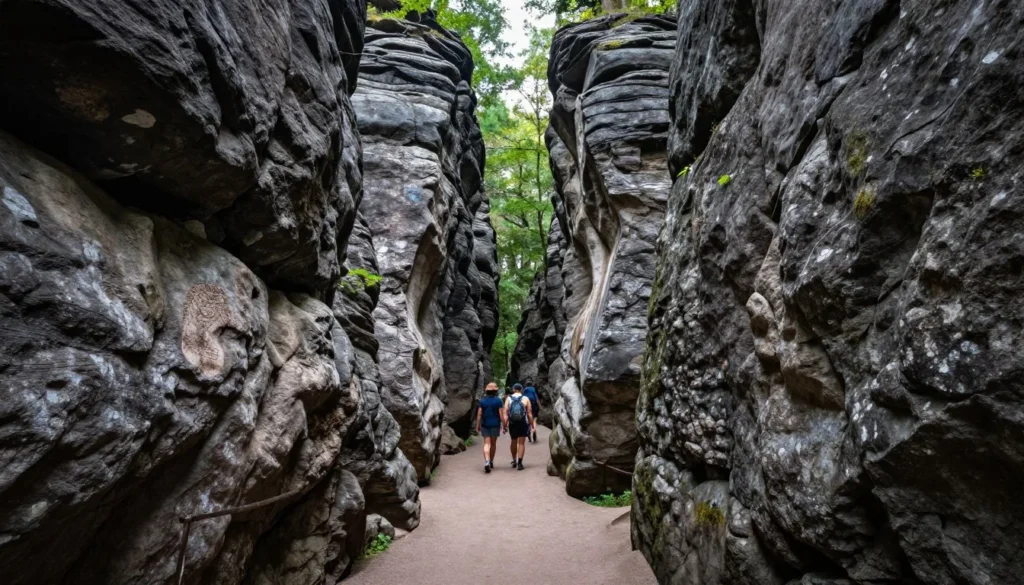
Luxembourg’s most dramatic natural landscape lies 30 km (19 miles) east of the capital. Bizarre rock formations, dense forests, and rushing streams create hiking paradise nicknamed Little Switzerland for its rugged terrain. The Mullerthal Trail network offers routes from easy family walks to challenging day hikes.
Echternach, the region’s main town, preserves medieval charm with Benedictine abbey, old city walls, and cobblestone market square. The town serves as logical base for exploring surrounding trails. Bus 110 from Luxembourg City reaches Echternach in about 45 minutes, with trails accessible directly from town.
Moselle Valley
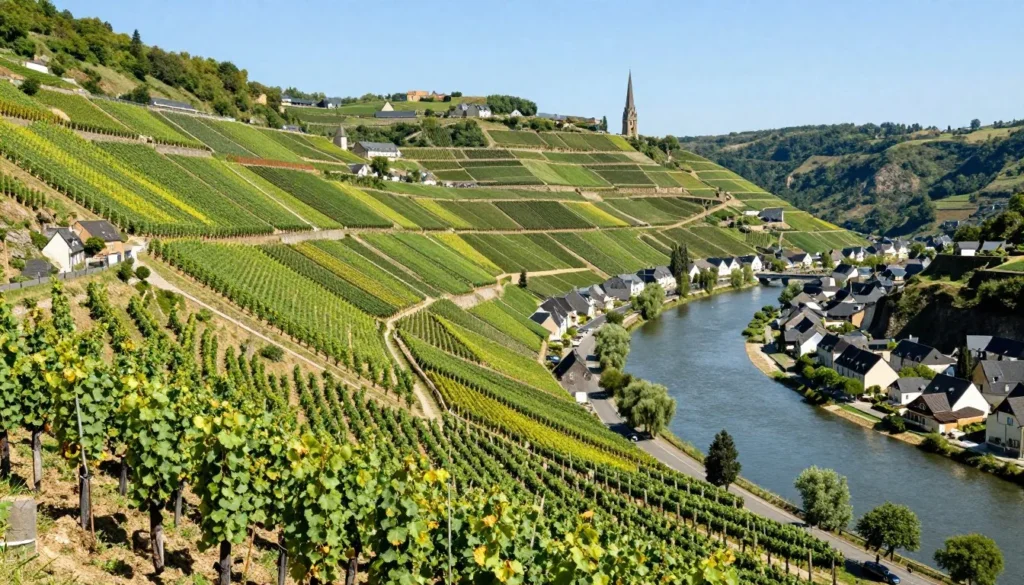
Luxembourg’s wine country follows the Moselle River along the German border, approximately 40 km (25 miles) southeast of the capital. Steep vineyard slopes produce excellent white wines, particularly Riesling and Pinot Gris. Charming villages like Remich and Grevenmacher offer wine tastings at family-run domaines.
River cruises operate between villages during warmer months, providing scenic transportation while sampling local vintages. Cycling the riverside path connecting villages makes excellent alternative to driving. Bus services from Luxembourg City reach all major villages in under an hour.
Beaufort
Two castles make this small town worth visiting despite being slightly off main tourist routes. Medieval ruins occupy a valley position, while Renaissance chateau sits on opposite hillside. The area produces Luxembourg’s only fruit liqueurs, with distillery offering tastings of blackcurrant cassis and other regional specialties.
Beaufort lies within Mullerthal region, surrounded by hiking trails and rock formations. The town makes quieter alternative to busy Echternach while providing similar access to natural attractions. Combination bus and walking route from Luxembourg City takes approximately 90 minutes.
Clervaux
Northern Luxembourg’s most significant town clusters around impressive hilltop castle housing permanent photography exhibition “The Family of Man.” This UNESCO Memory of the World collection features 503 photographs by masters like Ansel Adams and Henri Cartier-Bresson, exploring universal human experiences.
The surrounding Ardennes landscape provides excellent hiking and cycling through forests and valleys. Clervaux makes good base for exploring northern regions less visited by tourists. Train service from Luxembourg City takes about 90 minutes, running hourly throughout the day.
Day Trip Essentials
- All destinations accessible via free public transport
- Pack lunch or plan restaurant stops (limited options some villages)
- Comfortable walking shoes essential for most destinations
- Check return bus/train schedules before departing
- Download CFL mobile app for real-time transport info
Border Crossing Options
- Trier, Germany: 45 minutes by train, Roman ruins and cathedral
- Metz, France: 60 minutes by train, Gothic cathedral and museums
- Arlon, Belgium: 30 minutes by bus, archaeological museum
- Schengen: 40 minutes by bus, museum of European Agreement
Practical Travel Tips
These final practical considerations help ensure smooth Luxembourg City visits, covering logistics, technology, and other details that enhance travel experiences.
Money and Banking
Luxembourg uses the Euro, sharing currency with most EU nations. ATMs throughout the city accept international cards, typically providing best exchange rates. Notify your bank of travel dates to prevent security blocks on overseas transactions.
Credit cards see widespread acceptance in hotels, restaurants, and larger shops, though some small establishments prefer cash. Contactless payment works for most purchases under 50 euros. Keep some cash for markets, small cafes, and public restrooms requiring coins.
Mobile Connectivity
Free WiFi appears throughout the city in hotels, cafes, museums, and many public spaces. Network “City_WiFi” provides complimentary access in central areas, though connection quality varies. European mobile plans include Luxembourg in roaming-free zones. North American visitors should verify international plan costs or purchase local SIM cards.
Luxembourg’s country code is +352. Calling within Luxembourg requires no area code, just the local number. Emergency number 112 works from any phone regardless of credit or SIM card status.
Tourist Information Resources
Luxembourg City Tourist Office operates locations at Place Guillaume II in the old town and at the train station. English-speaking staff provide maps, attraction information, accommodation assistance, and event schedules. Free city maps prove adequate for navigation, though detailed neighborhood maps help for serious exploration.
Contact Luxembourg City Tourist Office: +352 22 28 09, open Monday through Saturday 9 AM to 6 PM, Sunday 10 AM to 6 PM during summer, reduced winter hours.
Weather Preparedness
Luxembourg’s changeable weather requires layered clothing year-round. Brief rain showers occur even during summer, making compact umbrella or waterproof jacket essential packing items. Comfortable, waterproof walking shoes handle cobblestones and occasional wet conditions better than fashion footwear.
Winter visits require substantial cold weather gear, as temperatures frequently drop below freezing and wind cutting through valleys feels especially harsh. Summer rarely brings extreme heat, though sunny days require sunscreen for outdoor activities.
Accessibility Considerations
Luxembourg City’s hilly terrain and historic cobblestone streets present challenges for visitors with mobility limitations. However, modern infrastructure improvements include elevators connecting different city levels, wheelchair-accessible trams and buses, and ramps at many historic sites.
The Pfaffenthal panoramic elevator provides mobility-friendly access between upper and lower city levels. Major museums feature wheelchair access, though some historic buildings maintain architectural barriers. Contact specific venues in advance to confirm accessibility arrangements.
Useful Apps and Websites
- Mobiliteit.lu: Public transport schedules and maps
- Visit Luxembourg: Official tourism information
- CFL Mobile: National railway and bus times
- WeatherPro: Detailed local forecasts
- Google Maps: Navigation and business information
Essential Phrases
- Moien (MO-yen): Hello (Luxembourgish)
- Äddi (EH-dee): Goodbye (Luxembourgish)
- Merci: Thank you
- Wann ech gelift: Please
- Pardon: Excuse me
Packing Checklist
Beyond standard travel items, Luxembourg-specific considerations include European power adapters (Type C/F, 230V), comfortable walking shoes with good tread for cobblestones, waterproof jacket for sudden showers, small daypack for carrying purchases and picnic items, and basic French or German phrasebook though English suffices in most situations.
Reusable water bottle saves money and reduces waste, with public fountains throughout the city providing potable water. Small binoculars enhance valley views and architectural details. Camera or smartphone with good low-light capability captures atmospheric old town scenes.
Time Zone and Business Hours
Luxembourg follows Central European Time (CET), UTC+1 in winter and UTC+2 during daylight saving time from late March to late October. This places Luxembourg 6 hours ahead of US Eastern Time, 9 hours ahead of Pacific Time.
Government offices and businesses typically operate Monday through Friday, 8 AM to 5 or 6 PM. Restaurants close between lunch and dinner, approximately 3 to 6 PM. Shops open around 9 or 10 AM, closing 6 or 7 PM on weekdays, earlier on Saturdays, with most closed Sundays.
Length of Stay Recommendations
Two full days allow covering major attractions, walking fortification walls, exploring valley neighborhoods, and enjoying several meals. Three days enable more leisurely pace plus one substantial day trip to Vianden or Mullerthal. A week provides thorough city exploration combined with multiple regional excursions.
Weekend visits work well given compact size, though arriving Friday evening and departing Sunday afternoon feels rushed. Adding Monday creates more relaxed three-day itinerary. Luxembourg City combines effectively with Brussels, Trier, or Metz for multi-city European itineraries.
Final Planning Advice: Book accommodation well in advance for visits during National Day (late June), Schueberfouer (late August/early September), and when European Union summits occur. Otherwise, Luxembourg City handles visitors comfortably without overwhelming crowds. The compact geography means mistakes in planning rarely prove disastrous – everything lies within walking distance or short tram ride.
Embrace the Fortress City
Luxembourg City captivates visitors with its unique blend of medieval fortifications and modern sophistication, dramatic valleys and elegant squares, intimate scale and international outlook. This small capital delivers outsized experiences, from world-class museums and Michelin-starred dining to peaceful forest hikes and romantic valley walks, all accessible through generous free public transport.
The city’s multicultural character welcomes travelers with warmth and multilingual ease, while UNESCO World Heritage fortifications provide constant reminders of fascinating history. Whether you’re drawn by European Union institutions, seeking authentic castle experiences, or simply craving a distinctive European city break, Luxembourg City rewards curiosity with memorable discoveries around every cobblestone corner.
Start planning your Luxembourg City adventure today. Pack comfortable walking shoes for those ancient ramparts, bring an appetite for culinary excellence, and prepare to be surprised by how this compact capital punches well above its weight in delivering unforgettable European travel experiences. The little fortress awaits your exploration.