

Hidden in the mountains of northern Ethiopia, Lalibela’s 11 monolithic churches were carved entirely from solid rock in the 12th century—not built upward like traditional structures, but excavated downward, some reaching depths of 15 meters (50 feet), creating what many call the ‘Eighth Wonder of the Ancient World.’ These remarkable structures, still active places of worship today, represent one of humanity’s most astonishing architectural achievements and form the centerpiece of a destination unlike any other.
Getting There & Planning Your Journey
Reaching Lalibela requires some planning, but the journey is well worth the effort. The most convenient way to arrive is via Lalibela Airport (LLI), which offers daily connections from Addis Ababa, the capital of Ethiopia. Ethiopian Airlines operates regular flights, with the journey taking approximately 1 hour.
For travelers already exploring Ethiopia’s northern circuit, Lalibela can be reached by road from cities like Bahir Dar (5-6 hours) or Gondar (5-6 hours). The roads have improved significantly in recent years, though some stretches remain unpaved and challenging during the rainy season.
When planning your trip, consider spending at least two full days in Lalibela to properly explore the rock churches and surrounding attractions. Three days would be ideal if you want to include hiking in the highlands or visiting more remote monasteries.
Best Time to Visit Lalibela

The ideal time to visit Lalibela is during the dry season from October to March, when clear skies and minimal rainfall create perfect conditions for exploring the rock-hewn churches and hiking in the surrounding highlands. Daytime temperatures typically range from 20°C to 25°C (68°F to 77°F), though the high altitude (2,500 meters/8,200 feet) means evenings can be quite cool.
January is particularly special as it coincides with Ethiopian Christmas (Genna) on January 7th, when thousands of white-robed pilgrims gather for vibrant celebrations. Similarly, Timkat (Ethiopian Epiphany) on January 19th offers another extraordinary cultural experience.
The rainy season from June to early September brings heavy downpours that can make travel challenging, especially on unpaved roads. However, visiting during this “green season” means fewer tourists and lush, verdant landscapes.
Recommended Months to Visit:
- October to November: Pleasant temperatures, clear skies, and landscapes still green from the recent rains
- December to January: Ideal weather and chance to experience Ethiopian Christmas celebrations
- February to March: Dry conditions perfect for hiking and exploring
Months to Avoid:
- July to August: Peak of the rainy season with potential for travel disruptions
Getting Around Locally

Lalibela is a compact town that’s best explored on foot. The rock-hewn churches are clustered in three main groups within walking distance of each other. Walking from one end of town to the other typically takes about 25 minutes, allowing you to absorb the daily rhythms of local life along the way.
For those who prefer not to walk or have mobility concerns, tuk-tuks (locally called “Bajaj”) are readily available and provide an affordable way to navigate the town. A typical ride within Lalibela costs between 50-100 Ethiopian Birr (approximately $1-2 USD).
To reach more distant attractions like Asheton Maryam Monastery or Yemrehanna Krestos Church, you’ll need to arrange transportation. Options include:
- Hiring a local taxi for half or full-day excursions
- Joining organized tours that include transportation
- Renting a vehicle with driver (recommended over self-driving)
Many hotels can arrange transportation to outlying sites, often with the added benefit of an English-speaking driver familiar with the area.
Where to Stay in Lalibela

Lalibela offers a range of accommodation options to suit different budgets and preferences. While you won’t find international luxury chains here, the town has several quality hotels and lodges that provide comfortable stays with authentic Ethiopian hospitality.
Luxury & Mid-Range Options
For those seeking more comfort, Lalibela has several excellent options:
- Mezena Lodge – One of Lalibela’s finest accommodations, featuring spacious bungalows with private terraces and panoramic mountain views. The property includes a restaurant, bar, and beautiful gardens.
- Maribela Hotel – Offers comfortable rooms with balconies overlooking the valleys. Located just a 10-minute walk from the churches, it features a restaurant serving both Ethiopian and international cuisine.
- Top Twelve Hotel – Perched on a cliffside with stunning valley views, especially at sunset. The friendly staff and locally-inspired décor create a welcoming atmosphere.
Budget-Friendly Stays
Travelers on a tighter budget have several good options:
- Lalibela Hudmo Cozy Place – Traditional tukul-style round huts with modern amenities, run by a welcoming local family.
- Asheton Hotel – Basic but clean accommodations in the center of town, ideal for those prioritizing location over luxury.
- Lalibela Hotel – Simple rooms with hot showers and helpful staff, within walking distance of the rock churches.
Unique Stays
For a truly memorable experience, consider:
- Hudad Lodge – An eco-lodge perched on the escarpment at 3,300 meters (10,800 feet), offering breathtaking views and a chance to disconnect from modern life. The simple stone and thatch tukuls provide basic but comfortable accommodation.
- Community Guesthouses – Several villages in the highlands around Lalibela offer community-run guesthouses where you can experience rural Ethiopian life firsthand.
Dining & Local Cuisine

Ethiopian cuisine is a highlight of any visit to Lalibela, offering unique flavors and communal dining experiences that form an essential part of the cultural journey. Most meals center around injera, a sourdough flatbread with a slightly tangy flavor that serves as both plate and utensil.
Must-Try Local Dishes
- Doro Wat – A spicy chicken stew considered Ethiopia’s national dish, often prepared for special occasions
- Shiro – A comforting, creamy stew made from ground chickpeas or broad beans
- Tibs – Sautéed meat (usually beef or lamb) with vegetables and aromatic spices
- Beyainatu – A vegetarian platter featuring a colorful array of lentil, vegetable, and chickpea dishes
- Ethiopian Coffee – Don’t miss experiencing a traditional coffee ceremony, where beans are roasted, ground, and brewed right before you
Where to Eat in Lalibela
Lalibela offers several excellent dining options:
- Ben Abeba – This Scottish-Ethiopian restaurant with extraordinary architecture offers panoramic views and a fusion menu. Their Ethiopian Shepherd’s Pie is famous, and it’s an ideal spot to watch the sunset.
- Seven Olives Hotel Restaurant – Serves reliable Ethiopian and international dishes in a pleasant garden setting.
- Torpedo Tej House – A local favorite for authentic Ethiopian food and traditional honey wine (tej).
- Unique Restaurant – Despite the generic name, this place offers excellent local cuisine at reasonable prices.
- Alem Cooking Class Bar and Restaurant – Combines dining with the opportunity to learn about Ethiopian cooking techniques.
For an immersive culinary experience, consider taking a cooking class to learn the secrets of Ethiopian cuisine. Several establishments in Lalibela offer classes where you’ll shop for ingredients at the local market, prepare traditional dishes, and participate in a coffee ceremony.
Attractions, Sightseeing & Activities
The Rock-Hewn Churches of Lalibela

The 11 rock-hewn churches of Lalibela represent the pinnacle of ancient Ethiopian architectural ingenuity. Carved in the 12th century during the reign of King Lalibela, these structures were created to form a “New Jerusalem” after Muslim conquests blocked Christian pilgrimages to the Holy Land.
The churches are divided into three main groups:
Northern Group
- Bete Medhane Alem – The largest monolithic church in the world, resembling a Greek temple with its impressive colonnades
- Bete Maryam – Believed to be the oldest of Lalibela’s churches, featuring beautiful frescoes and intricate carvings
- Bete Meskel – A small chapel dedicated to the True Cross
- Bete Golgotha – Contains what’s said to be the tomb of King Lalibela himself
Southern Group
- Bete Gabriel-Rufael – A fortress-like structure that may have originally served as a royal palace
- Bete Abba Libanos – Legend claims it was built overnight by King Lalibela’s wife with the help of angels
- Bete Lehem – The “House of Holy Bread,” connected to other churches by tunnels and passages
Western Group
- Bete Giyorgis (Church of St. George) – The most iconic and perfectly preserved of all Lalibela’s churches, carved in the shape of a cross
A single ticket grants access to all 11 churches for five days, costing $100 USD. While expensive, this fee helps preserve these irreplaceable treasures. Hiring a local guide (around $20-30 per day) is highly recommended to understand the historical and religious significance of these remarkable structures.
Highland Monasteries

Beyond the famous rock churches in town, Lalibela is surrounded by ancient monasteries perched high in the mountains. These less-visited sites offer a glimpse into Ethiopia’s religious heritage and reward visitors with spectacular highland scenery.
Yemrehanna Krestos Church
Located about 40 km (25 miles) from Lalibela, this remarkable church predates the rock-hewn churches by nearly a century. Unlike Lalibela’s monolithic structures, Yemrehanna Krestos was built in the Axumite style with alternating layers of wood and stone inside a large cave. The church houses ancient manuscripts and religious artifacts, while the cave behind contains the remains of pilgrims who traveled here to die in this holy place.
Asheton Maryam Monastery
Perched at 3,150 meters (10,300 feet) on Mount Abuna Yoseph, this monastery offers breathtaking views of Lalibela and the surrounding countryside. The steep 2-3 hour hike to reach it is challenging but rewarding. Alternatively, you can drive part of the way and complete a shorter 30-minute hike. The monastery itself is relatively simple but houses some interesting religious artifacts.
Nakuta La’ab Monastery
Just 7 km (4 miles) from Lalibela, this monastery was founded by King Lalibela’s nephew and successor. Built around a cave with natural spring-fed holy pools, it houses an impressive collection of ancient crosses, illuminated manuscripts, and other religious treasures. The site offers spectacular sunset views over the Lalibela valley.
Hiking the Escarpments
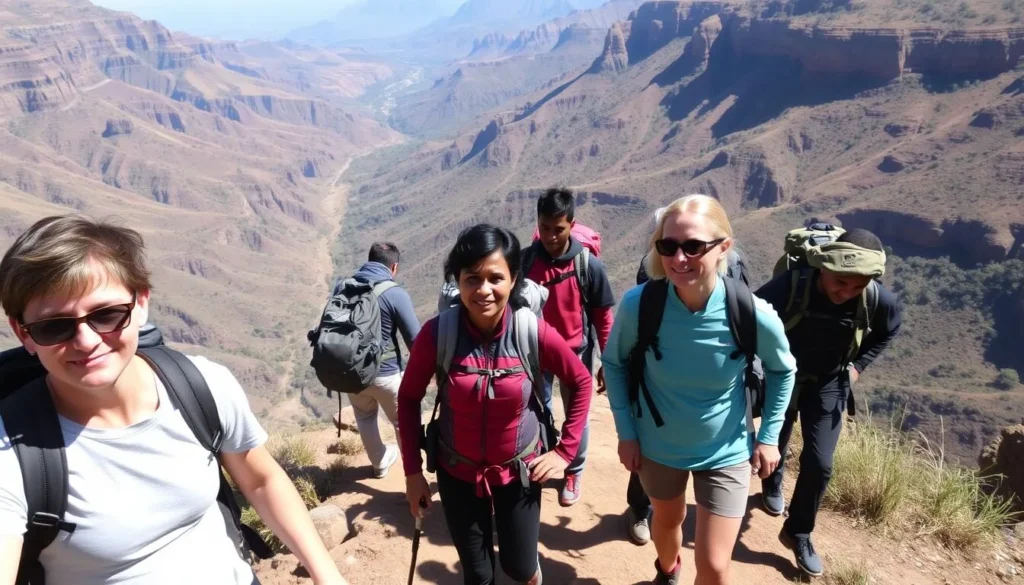
The dramatic escarpments surrounding Lalibela offer some of Ethiopia’s most spectacular hiking opportunities. Trails wind through rural villages, across high plateaus, and along cliff edges with panoramic views that stretch for miles.
Community Trekking
Lalibela pioneered Ethiopia’s community trekking initiative, which allows visitors to hike between villages while staying in community-run guesthouses. These multi-day treks provide authentic cultural experiences and directly benefit local communities, with 55% of the cost going to host communities.
Popular community trekking routes include:
- The two-day trek from Lalibela to Hudad Lodge
- The three-day circuit through Mequat Mariam, Wajela, and Aterow
- The challenging four-day trek to Abuna Yosef peak
Hudad Lodge Experience
Even if you’re not up for a multi-day trek, the hike to Hudad Lodge makes for an unforgettable overnight excursion. Perched at 3,300 meters (10,800 feet) on the edge of a cliff, this community-run ecolodge consists of traditional stone tukuls with breathtaking views. The 3-4 hour hike from Lalibela takes you through rural villages and across stunning highland landscapes.
Mount Abuna Yosef
For serious hikers, the trek to Mount Abuna Yosef (4,284 meters/14,055 feet) offers a challenging adventure. This multi-day expedition takes you through Afro-alpine meadows where you might spot rare wildlife like the Ethiopian wolf and gelada baboons. The summit rewards with panoramic views across Ethiopia’s northern highlands.
Markets & Local Life

To experience everyday life in Lalibela beyond the tourist sites, head to the local markets where farmers, artisans, and traders gather to sell their goods.
Saturday Market
Saturday is the main market day in Lalibela, when people from surrounding villages descend on the town to buy and sell everything from livestock to handcrafted goods. The market offers a fascinating glimpse into rural Ethiopian life and economy. You’ll see farmers selling teff (the grain used to make injera), merchants displaying colorful textiles, and artisans offering traditional crafts.
Shopping for Souvenirs
Lalibela is an excellent place to purchase authentic Ethiopian handicrafts, including:
- Hand-woven scarves and traditional white cotton “shamma” garments
- Religious paintings and icons in the distinctive Ethiopian Orthodox style
- Handcrafted wooden and metal crosses
- Mesobs (traditional woven tables used for serving food)
- Ethiopian coffee and spices
Most shops are concentrated around the town square and along the road between the major hotels. Bargaining is expected but should be done respectfully.
Museums, Cultural Spots & Festivals

Lalibela Cultural Museum
While small, the Lalibela Cultural Museum offers valuable context for understanding the town’s religious and historical significance. Displays include ancient manuscripts, ceremonial crosses, and historical artifacts that help tell the story of Lalibela’s development as a religious center. The museum provides a good introduction to the churches and is worth visiting before exploring them.
Religious Festivals
Experiencing a religious festival in Lalibela offers an unforgettable glimpse into Ethiopia’s living spiritual traditions. Major celebrations include:
- Ethiopian Christmas (Genna) – Celebrated on January 7th with all-night vigils, processions, and chanting
- Timkat – The Ethiopian Epiphany (January 19th) features processions of tabots (replicas of the Ark of the Covenant) and ritual baptism ceremonies
- Meskel – September festival celebrating the finding of the True Cross, marked by the burning of large bonfires
- Fasika – Ethiopian Easter, following a 55-day fasting period and culminating in joyous celebrations
During these festivals, thousands of white-robed pilgrims fill Lalibela’s streets and churches, creating an atmosphere of profound spiritual devotion. If your travel dates coincide with any of these celebrations, you’ll witness Ethiopian Orthodox Christianity at its most vibrant.
Traditional Music and Dance
Ethiopian music features unique scales, rhythms, and instruments not found elsewhere. In Lalibela, you might encounter traditional performances featuring instruments like the masenqo (single-stringed fiddle), kebero (drum), and begena (large ten-stringed lyre). Some restaurants and cultural centers offer evening performances of traditional music and eskista, the distinctive shoulder-dancing style of Ethiopia’s highlands.
Sports, Nature & Outdoor Experiences

Wildlife Viewing
The highlands around Lalibela are home to unique wildlife species adapted to Ethiopia’s high-altitude environments. During hikes in the Abuna Yosef area, you might encounter:
- Gelada baboons – Endemic to the Ethiopian highlands, these grass-eating primates are known for their distinctive red chest patches
- Ethiopian wolves – The world’s rarest canid, occasionally spotted in the highest reaches of the mountains
- Lammergeiers (bearded vultures) – Massive birds of prey that soar along the escarpments
- Klipspringers and other mountain antelope species
- Numerous endemic bird species that attract birdwatchers from around the world
Photography
Lalibela offers extraordinary photography opportunities, from the architectural marvels of the rock churches to the dramatic landscapes and vibrant cultural scenes. The best light for photographing the churches is typically in the early morning or late afternoon when the sun casts a warm glow on the reddish volcanic tuff.
When photographing inside churches, be aware that flash photography is prohibited to protect ancient paintings and artifacts. A camera fee (approximately 300 Birr) is required in addition to the entrance ticket if you’re using a professional camera, though smartphone photography is generally included in the standard ticket.
Stargazing
Lalibela’s high altitude and minimal light pollution create ideal conditions for stargazing. The clear mountain air reveals a dazzling night sky, particularly during the dry season. The highlands around Hudad Lodge offer especially spectacular stargazing opportunities, with the Milky Way clearly visible on moonless nights.
Safety, Etiquette & Local Customs

Cultural Respect
Lalibela is a deeply religious place where faith shapes daily life. Showing respect for local customs will enrich your experience:
- Dress modestly when visiting churches – shoulders and knees should be covered
- Women should bring a scarf to cover their heads when entering churches
- Remove shoes before entering any church (slip-on footwear is practical)
- Speak quietly inside churches, especially during services
- Ask permission before photographing people, particularly priests and monks
- Follow your guide’s instructions about where you can and cannot go within churches
Health Considerations
Lalibela sits at 2,500 meters (8,200 feet) above sea level, which means visitors should be aware of potential altitude effects. Give yourself time to acclimatize before attempting strenuous hikes, stay hydrated, and protect yourself from the strong highland sun.
Other health tips include:
- Drink only bottled or purified water
- Be cautious with raw vegetables and unpeeled fruits
- Bring basic medications, including rehydration salts
- Consider typhoid vaccination before your trip
- Malaria is not a concern at Lalibela’s altitude, but may be if you’re visiting lower-lying areas of Ethiopia
Safety
Lalibela is generally safe for visitors, with low crime rates and a community accustomed to tourism. Standard travel precautions apply:
- Keep valuables secure and be discreet with expensive cameras or jewelry
- Carry only the cash you need for the day
- Be prepared for limited ATM access – bring sufficient cash in Ethiopian Birr
- Use a flashlight when walking at night, as street lighting is minimal
- Check current travel advisories before your trip, as regional situations can change
Visitor Comments About Lalibela
“The moment I descended into the first rock-hewn church, I felt like I’d stepped into another world entirely. Watching priests conduct ancient ceremonies by candlelight in these 900-year-old structures was profoundly moving. Don’t miss hiking to Asheton Maryam for views that will stay with you forever.”
“We timed our visit for Ethiopian Christmas, and it was absolutely worth it. Thousands of pilgrims in white robes, drumming, singing, and dancing through the night. The rock churches are incredible on their own, but experiencing them during a major festival was truly once-in-a-lifetime. Hire a local guide – they’ll share insights you’d never get otherwise.”
“Beyond the famous churches, I found the community trekking experience to be the highlight of my time in Lalibela. Staying in village guesthouses, sharing meals with local families, and waking up to those incredible mountain views – it gave me a much deeper understanding of Ethiopia than just visiting the tourist sites.”
Practical Travel Tips

Money Matters
The Ethiopian Birr (ETB) is the local currency, and cash is king in Lalibela. Credit cards are rarely accepted, and ATMs can be unreliable. Tips for managing money include:
- Bring enough cash in USD or EUR to exchange
- Exchange money at banks or your hotel for better rates
- Carry small denominations for purchases, tips, and donations
- The entrance fee for the rock churches ($100 USD) can usually be paid in major foreign currencies
Communication
While Amharic is Ethiopia’s official language, many people in Lalibela’s tourism sector speak basic English. Learning a few Amharic phrases will be appreciated:
- “Selam” (Hello)
- “Ameseginalehu” (Thank you)
- “Dehna neh?” (How are you?)
Mobile coverage is generally good in town, though it may be limited in the highlands. Local SIM cards can be purchased with identification documents, providing an affordable way to stay connected.
Electricity
Ethiopia uses 220V electricity with Type C and F sockets (European standard). Power outages are common, so it’s advisable to:
- Bring a universal adapter
- Pack a portable power bank for charging devices
- Carry a small flashlight or headlamp
Tipping
Tipping is customary in Ethiopia’s tourism sector:
- Guides: $10-15 per day
- Drivers: $5-10 per day
- Restaurant service: 10% is standard
- Hotel staff: $1-2 per bag for porters, $1-2 per day for housekeeping
Photography Etiquette
Photography is permitted in most churches with the appropriate camera fee, but be mindful of these guidelines:
- No flash photography inside churches
- Ask permission before photographing priests, monks, or religious ceremonies
- Be respectful during active worship services
- Some churches restrict photography of certain religious artifacts
Answer the Call of Ancient Wonders
Lalibela stands as a testament to human faith, ingenuity, and perseverance—a place where ancient traditions remain vibrantly alive and where architectural marvels continue to inspire awe nearly a millennium after their creation. Whether you’re descending into the cool silence of a rock-hewn church, sharing coffee with locals in a highland village, or watching the sun set over vast escarpments, Lalibela offers experiences that transcend ordinary travel.
This remarkable corner of Ethiopia invites you not just to witness its wonders but to connect with them—to feel the smooth stone worn by centuries of faithful hands, to hear the ancient chants echoing through rock corridors, and to understand how a profound spiritual vision shaped both stone and community. As you plan your journey to Lalibela, prepare not just to see extraordinary sights, but to be transformed by them.
The above is subject to change.
Check back often to TRAVEL.COM for the latest travel tips and deals.


0 Comments