

Did you know that Lalibela’s 11 monolithic churches were carved entirely from solid volcanic rock in the 12th century, with some structures reaching 11 meters (36 feet) deep into the ground? These architectural marvels were commissioned by King Lalibela of the Zagwe dynasty and created without modern tools—just hammers and chisels. Today, they remain active places of worship and pilgrimage for Ethiopian Orthodox Christians, drawing tens of thousands of visitors annually to witness what many consider the “Eighth Wonder of the World.”
Getting There & Planning Your Journey
Lalibela is located in the northern highlands of Ethiopia, approximately 645 kilometers (400 miles) from Addis Ababa. The most convenient way to reach Lalibela is by air, with daily flights from Ethiopia’s capital city.
Flight Options
Ethiopian Airlines operates daily flights from Addis Ababa to Lalibela Airport (LLI), which is situated about 25 kilometers (15.5 miles) from the town center. The flight takes approximately 1 hour. Connecting flights are also available from other Ethiopian cities like Gondar and Axum.
Overland Travel
For adventurous travelers, reaching Lalibela by road is possible but challenging. The journey from Addis Ababa takes approximately 2 days, with an overnight stop recommended. Roads have improved in recent years, but parts of the journey remain rough, especially during the rainy season.
Tour Packages
Many visitors opt for organized tour packages that include transportation, accommodation, and guided visits to the churches. These packages often combine Lalibela with other Ethiopian historical sites like Axum, Gondar, and the Simien Mountains.
Best Time to Visit Lalibela

The climate in Lalibela is generally mild year-round, but certain seasons offer better visiting conditions than others.
Recommended Months (October-March)
The dry season from October to March provides the most pleasant weather for exploring Lalibela. Temperatures typically range from 15°C to 25°C (59°F to 77°F), with clear skies and minimal rainfall. This period offers optimal conditions for photography and comfortable exploration of the churches.
Festival Seasons (January and September)
Ethiopian Orthodox festivals bring the churches to life with colorful ceremonies and pilgrimages. The most significant celebrations include:
- Timkat (Ethiopian Epiphany) in January
- Meskel (Finding of the True Cross) in September
- Ethiopian Christmas (Genna) on January 7
These festivals offer a unique opportunity to witness the living traditions of Ethiopian Orthodox Christianity, though accommodations book up quickly during these periods.
Months to Avoid (July-August)
The heavy rainy season from July to August can make travel challenging. Roads may become impassable, and the constant rainfall can limit visibility and photography opportunities. If you must visit during this period, be prepared for potential travel disruptions and bring appropriate rain gear.
Getting Around Locally
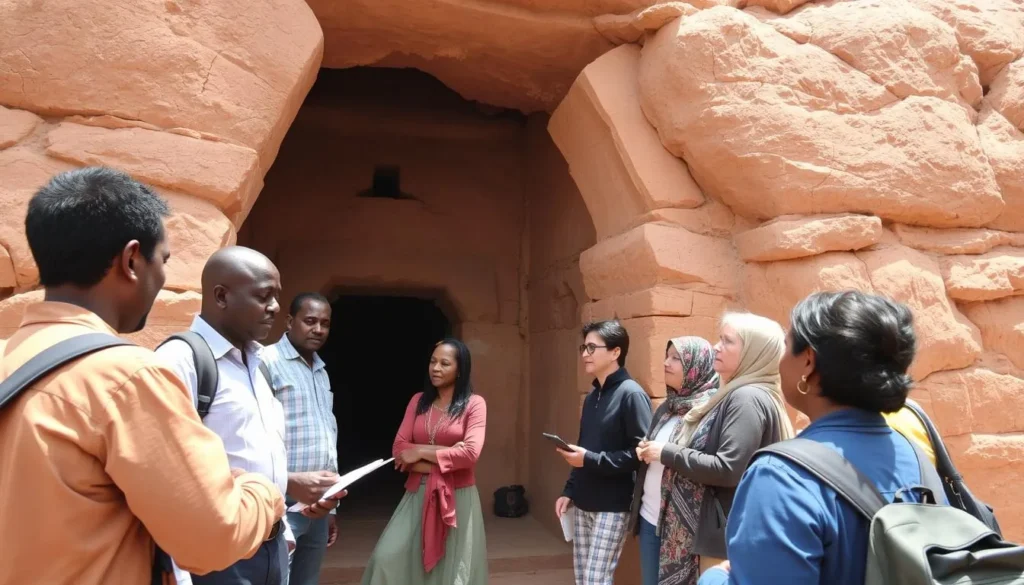
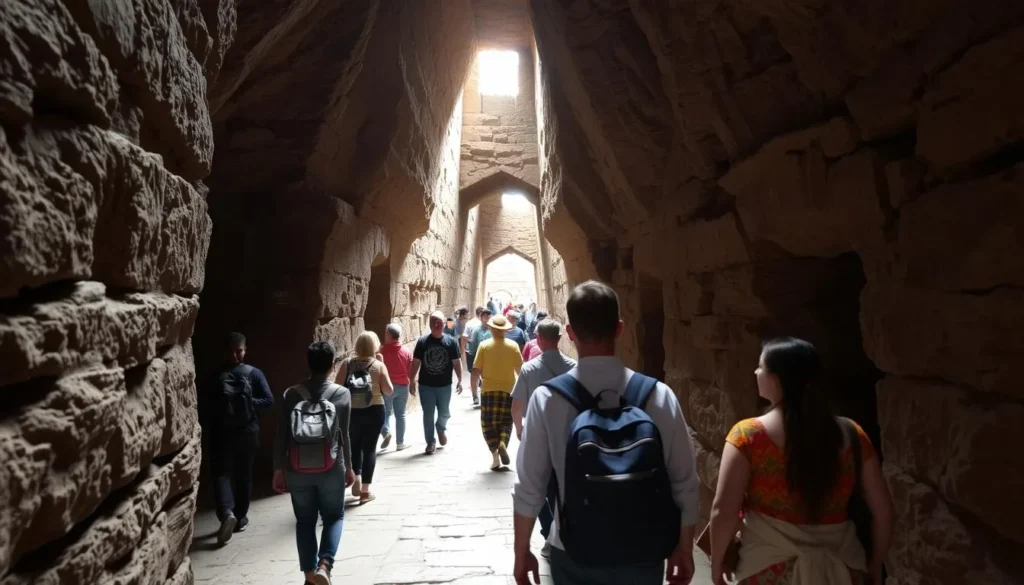
Lalibela town is relatively small and compact, making it easy to navigate on foot. Most of the rock churches are within walking distance of each other, connected by a network of pathways and tunnels.
Walking
The most common and authentic way to experience Lalibela is on foot. The churches are divided into two main groups (northern and southeastern) plus the standalone Church of St. George (Beta Giyorgis). Walking between these groups takes approximately 15-20 minutes.
Tuk-tuks and Taxis
For longer distances or when tired from exploring, tuk-tuks (locally called “Bajaj”) and taxis are available. These can be hired for short trips within town or for the journey between the airport and town center.
Guided Tours
Local guides are essential for understanding the historical and religious significance of the churches. Official guides can be hired at the ticket office or arranged through your hotel. A guide will not only explain the history and architecture but also help navigate the complex layout of tunnels and passages connecting the churches.
Rental Vehicles
For exploring the surrounding countryside and more distant churches like Yemrehanna Kristos (about 42 kilometers/26 miles from Lalibela), renting a vehicle with a driver is recommended. The terrain is rough, and local knowledge is invaluable.
Where to Stay
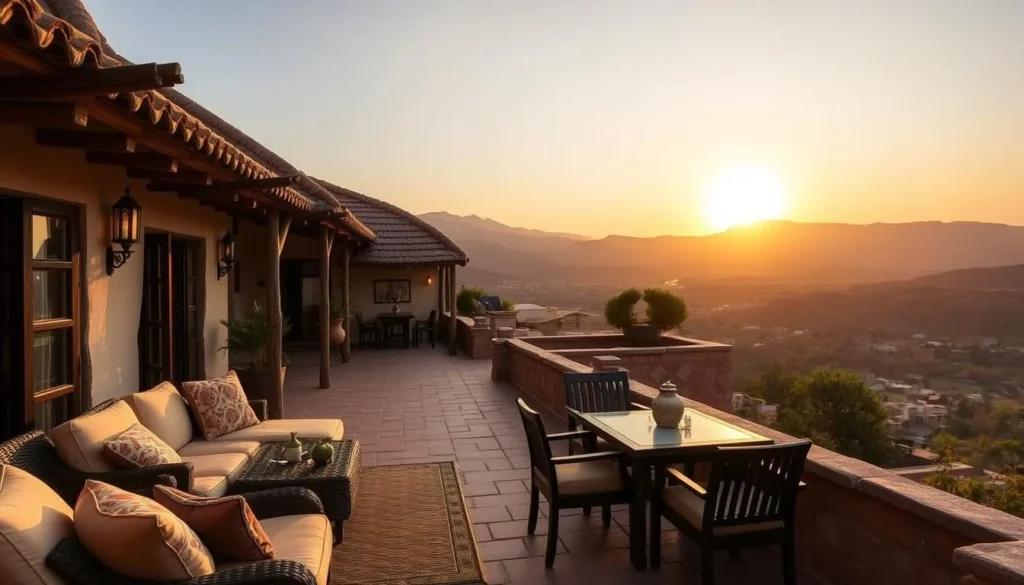
Lalibela offers a range of accommodation options from basic guesthouses to more upscale lodges. Most properties are located within walking distance of the churches.
Luxury Options
- Maribela Hotel – Offers panoramic views of the mountains, comfortable rooms, and excellent dining options
- Mountain View Hotel – Features spacious rooms with balconies overlooking the valley
- Mezena Lodge – Provides traditional-style bungalows with modern amenities in a peaceful setting
Mid-range Options
- Tukul Village – Traditional round hut accommodations with modern comforts
- Lalibela Lodge – Centrally located with good amenities and restaurant
- Seven Olives Hotel – One of the oldest establishments in town with a convenient location
Budget Options
- Asheton Hotel – Simple but clean rooms at affordable rates
- Red Rock Lalibela Hotel – Budget-friendly option with basic amenities
- Jerusalem Guest House – Family-run accommodation with a homely atmosphere
Dining & Local Cuisine

Ethiopian cuisine offers unique flavors and dining experiences. In Lalibela, you’ll find restaurants serving traditional dishes, often accompanied by cultural performances.
Must-Try Ethiopian Dishes
- Injera – Sourdough flatbread that serves as both plate and utensil
- Doro Wat – Spicy chicken stew considered Ethiopia’s national dish
- Tibs – Sautéed meat dishes (beef, lamb, or goat) with vegetables and spices
- Shiro – Pureed chickpea stew, a staple in Ethiopian cuisine
- Ethiopian Coffee – Participate in a traditional coffee ceremony, an important cultural ritual
Recommended Restaurants
- Ben Abeba – Unique spiral-shaped restaurant with panoramic views and fusion cuisine
- Seven Olives Restaurant – Traditional Ethiopian food in a garden setting
- Unique Restaurant – Local favorite serving authentic dishes at reasonable prices
- Torpedo Tejbet – Experience traditional honey wine (tej) with local food
Dining Tips
Ethiopian dining is communal, with everyone eating from the same large platter. It’s customary to eat with your right hand, using pieces of injera to scoop up the various stews and dishes. Many restaurants offer cultural shows with traditional music and dancing in the evenings, providing a complete cultural experience.
Attractions, Sightseeing & Activities

The Northern Cluster of Churches
This group contains six interconnected churches, each with unique architectural features:
- Bete Medhane Alem – The largest monolithic church in the world, resembling a Greek temple with 36 pillars
- Bete Maryam – The oldest church in Lalibela, dedicated to the Virgin Mary and containing beautiful interior decorations
- Bete Golgotha Mikael – Houses replicas of the tomb of Christ and Adam, with impressive bas-reliefs
- Bete Meskel – A small chapel dedicated to the Cross
- Bete Denagel – Dedicated to the martyred virgins
The Southeastern Cluster of Churches
This group includes five churches connected by tunnels and trenches:
- Bete Gabriel-Rufael – An imposing structure that may have initially served as a royal palace
- Bete Abba Libanos – Legend says it was built overnight by King Lalibela’s wife with the help of angels
- Bete Amanuel – Possibly the royal chapel, featuring precise and elegant stonework
- Bete Mercoreus – Contains faded but impressive artwork
- Bete Lehem – A small chapel used for preparing the holy bread
Bete Giyorgis (Church of St. George)
Standing alone and separated from both clusters, Bete Giyorgis is the most iconic and well-preserved church in Lalibela. Carved in the shape of a Greek cross, it descends 15 meters (49 feet) into the ground. Its perfect symmetry and excellent state of preservation make it the most photographed of all Lalibela’s churches.
Beyond the Main Churches
While the 11 main churches are the primary attraction, several other sites around Lalibela are worth exploring:
- Yemrehanna Kristos – An older church built inside a cave, located about 42 kilometers (26 miles) from Lalibela
- Asheton Maryam – A monastery perched high in the mountains above Lalibela, offering spectacular views
- Na’akuto La’ab Monastery – Founded by King Lalibela’s successor, housing ancient treasures
- Lalibela Market – Experience local life at the weekly market (Saturdays)
Museums, Cultural Spots & Festivals
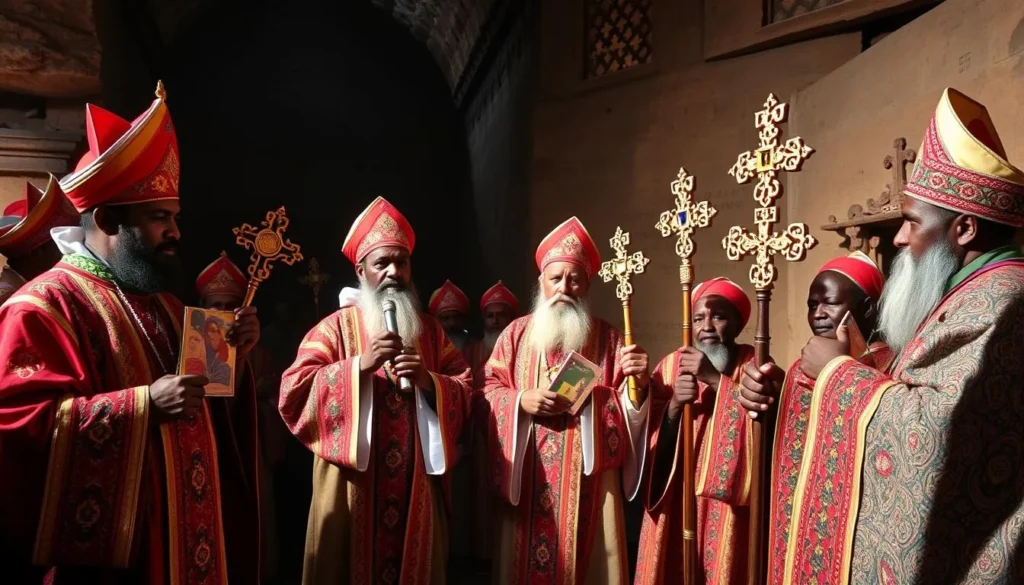
Museums and Cultural Centers
- Lalibela Museum – Located near the church complex, displaying religious artifacts, ancient manuscripts, and historical items
- Cultural Centers – Several establishments offer demonstrations of traditional music, dance, and crafts
- Church Treasuries – Many churches house their own collection of ancient crosses, illuminated manuscripts, and ceremonial objects
Major Festivals
Experiencing a religious festival in Lalibela provides insight into the living traditions of Ethiopian Orthodox Christianity:
- Timkat (January 19) – The most colorful celebration of Epiphany, featuring processions with replicas of the Ark of the Covenant
- Ethiopian Christmas (January 7) – Celebrated with all-night church services and daytime processions
- Meskel (September 27) – Commemorating the finding of the True Cross with bonfires and processions
- Fasika (Ethiopian Easter) – The end of the 55-day fasting period, celebrated with special church services
Cultural Experiences
Beyond the churches and festivals, Lalibela offers several cultural experiences:
- Traditional Music Performances – Experience Ethiopian music with instruments like the masenqo (single-stringed violin) and kebero (drum)
- Coffee Ceremonies – Participate in Ethiopia’s traditional coffee ceremony, a social ritual that can last hours
- Traditional Cooking Classes – Learn to prepare Ethiopian dishes like injera and various wats (stews)
- Craft Demonstrations – Watch local artisans create traditional crafts, including weaving and metalwork
Sports, Nature & Outdoor Experiences
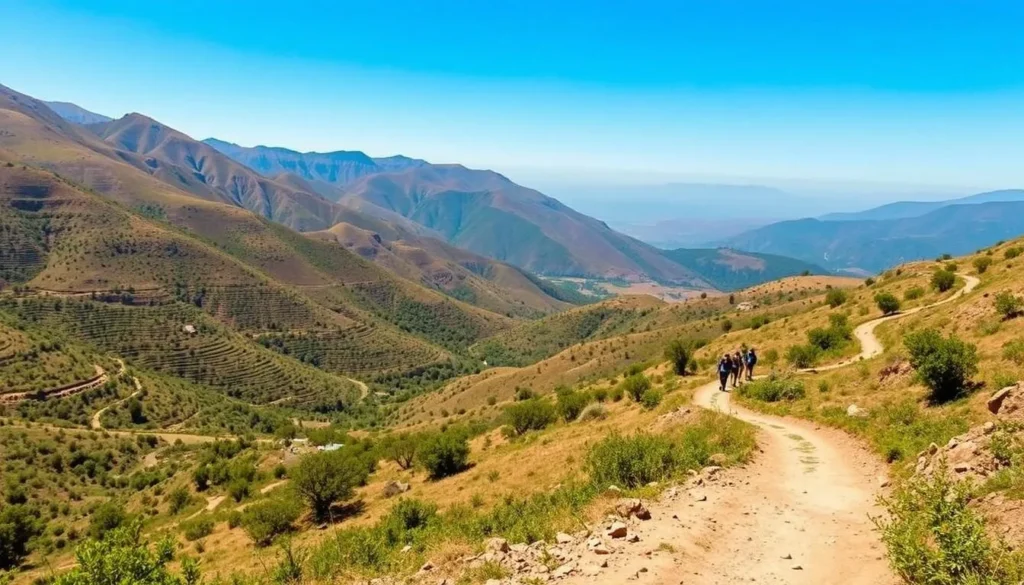
Hiking and Trekking
The mountainous terrain around Lalibela offers excellent hiking opportunities:
- Asheton Maryam Trek – A half-day hike to a monastery at 3,150 meters (10,335 feet) with panoramic views
- Hudad Eco-Lodge Trek – A full-day trek through rural landscapes to a remote eco-lodge
- Village Walks – Guided walks through surrounding villages to experience rural Ethiopian life
Wildlife and Nature
While Lalibela itself is not known for wildlife viewing, the surrounding areas offer natural attractions:
- Birdwatching – The varied habitats around Lalibela support numerous bird species
- Plant Life – The region features unique highland flora, including giant lobelia and wild herbs
- Tekeze Valley – A dramatic landscape with deep gorges and diverse ecosystems
Adventure Activities
- Mule Trekking – Traditional way to access remote churches and monasteries
- Mountain Biking – Emerging activity with routes through the highlands
- Photography Expeditions – Guided tours focusing on capturing the churches and landscapes
Safety, Etiquette & Local Customs
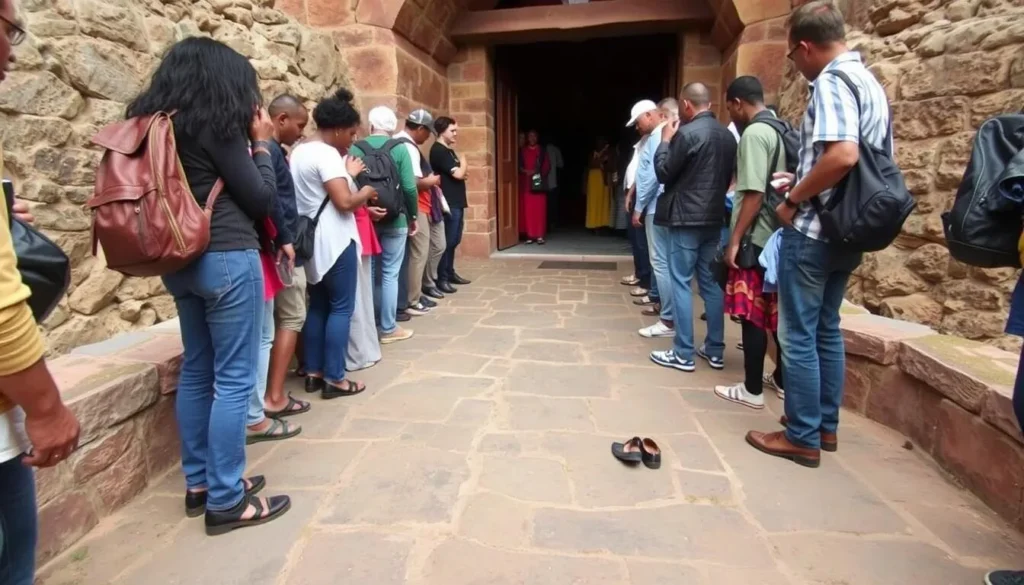
Church Etiquette
- Remove Shoes – Always remove your shoes before entering any church
- Modest Dress – Both men and women should dress modestly, covering shoulders and knees
- Photography – Permission is required for photography inside churches, and flash photography is prohibited
- Respect Services – Be quiet and respectful during religious services
- Gender Restrictions – Some areas may be restricted to men only, particularly in Bete Golgotha
Safety Considerations
Lalibela is generally a safe destination for tourists, but standard precautions apply:
- Health – Bring necessary medications, use sunscreen, and stay hydrated at the high altitude (2,500 meters/8,200 feet)
- Valuables – Keep valuables secure, especially in crowded areas during festivals
- Walking Surfaces – Church complexes have uneven surfaces and can be slippery when wet
- Altitude – Allow time to acclimatize to the high altitude
Local Customs
- Greetings – Ethiopians typically greet with a handshake and shoulder bump
- Ethiopian Time – Ethiopia follows a unique time system based on sunrise, with 1:00 corresponding to 7:00 AM in the Western system
- Calendar – Ethiopia uses the Julian calendar, which is approximately seven years behind the Gregorian calendar
- Tipping – Customary for guides, drivers, and in restaurants (10-15%)
Visitor Comments About Lalibela
“The rock churches of Lalibela left me speechless. Standing inside structures completely carved from solid rock, with their perfect symmetry and intricate details, was a profound experience. The local guides are incredibly knowledgeable and passionate about sharing their heritage. Don’t miss the sunrise service at Bete Giyorgis—hearing the ancient chants echo through the stone chambers is something I’ll never forget.”
“Visiting during Timkat festival was the highlight of my travels in Africa. Thousands of white-robed pilgrims, colorful processions, and the joyful celebration created an atmosphere unlike anything I’ve experienced. The churches themselves are engineering marvels, but it’s the living faith that makes Lalibela truly special. Be prepared for basic accommodations, but the cultural richness more than compensates.”
“The journey to Lalibela is challenging but absolutely worth it. Beyond the famous churches, take time to hike in the surrounding mountains and visit local villages. The people are incredibly welcoming, and the landscapes are stunning. I recommend spending at least three full days to properly explore all the churches and nearby attractions without rushing.”
Practical Travel Tips
Essential Information
- Entrance Fee – The church complex requires a ticket (currently around $50 USD) valid for 5 days
- Guide Services – Official guides charge approximately $20-30 USD per day
- Opening Hours – Churches are generally open from 8:00 AM to 12:00 PM and 2:00 PM to 5:00 PM
- Currency – Ethiopian Birr (ETB) is the local currency; limited ATMs are available in Lalibela
- Language – Amharic is the official language, though many guides speak English
Packing Essentials
- Comfortable walking shoes with good grip for uneven surfaces
- Modest clothing that covers shoulders and knees
- Hat, sunscreen, and sunglasses for sun protection
- Light jacket or sweater for cool mornings and evenings
- Flashlight or headlamp for dimly lit church interiors
- Toilet paper and hand sanitizer
Communication
- Internet – Wi-Fi is available at most hotels but can be slow and unreliable
- Mobile Service – Local SIM cards can be purchased for better connectivity
- Electricity – Ethiopia uses 220V with Type C and F sockets; power outages are common
Begin Your Pilgrimage to Ethiopia’s Living Wonder
The Rock-Hewn Churches of Lalibela represent not just architectural marvels frozen in time, but a living, breathing spiritual center where ancient traditions continue uninterrupted. As you walk through the tunnels connecting these monolithic wonders, you’ll be following in the footsteps of countless pilgrims who have made this journey over the centuries. Whether you’re drawn by the architectural achievement, the religious significance, or the cultural richness, Lalibela offers an experience that transcends ordinary travel. In a world of increasingly commercialized tourism, Lalibela remains authentic—a place where history, faith, and daily life intertwine in a tapestry as rich and complex as Ethiopia itself. Begin planning your journey to this remarkable UNESCO World Heritage site, and prepare to be transformed by what many consider to be the “Eighth Wonder of the World.”
The above is subject to change.
Check back often to TRAVEL.COM for the latest travel tips and deals.


0 Comments