Ruaha National Park, Tanzania: Best Things to Do – Top Picks

Ruaha National Park, Tanzania: Best Things to Do - Top Picks
Book reservations in numerous Languages + World Currencies.

Hotels by Trip.com

Flights by Trip.com

Imagine yourself on an exclusive safari adventure in one of Africa’s most untouched wilderness areas. Located in southern Tanzania, Ruaha National Park is named after the Hehe word for ‘river’, due to the Great Ruaha River that runs through it.

This vast expanse is home to a diverse array of wildlife species, making it a unique game viewing destination. With remarkably low visitor numbers, you can experience a secluded and exclusive safari like no other.

The park’s landscape transforms with the seasons, from golden savannahs dotted with baobab trees during the dry season to lush green grasslands after the annual rains. This dynamic environment, combined with its diverse wildlife, makes Ruaha a must-visit destination for wildlife enthusiasts and adventure seekers.

Discovering Tanzania’s Largest National Park

Ruaha National Park, sprawling across approximately 20,226 square kilometers, is a true gem of Tanzania’s conservation efforts. As the largest national park in Tanzania, it offers a vast and diverse landscape that is home to a wide range of wildlife.

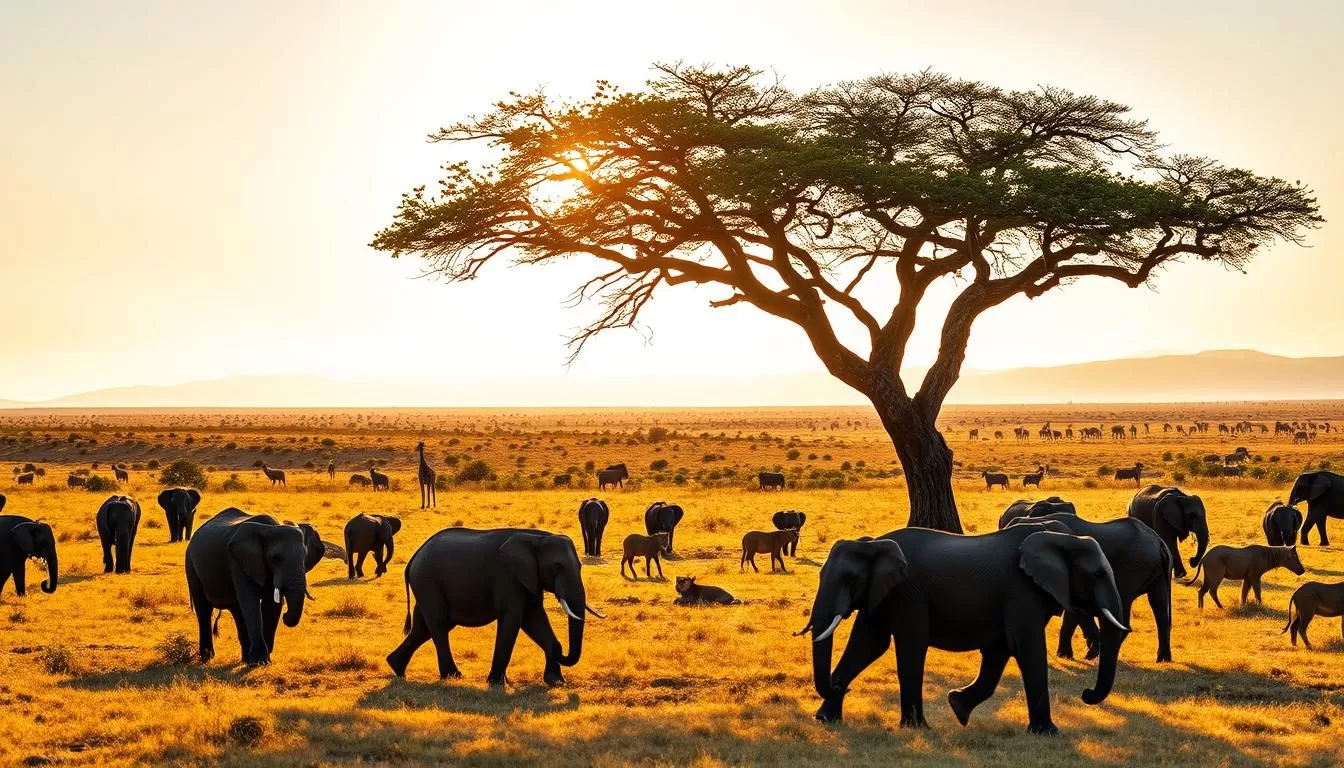
A dramatic landscape unfolds in Ruaha National Park, Tanzania's largest wildlife haven. In the foreground, a herd of elephants majestically roams across the sun-dappled savanna, their trunks swaying in the gentle breeze. The middle ground reveals a meandering river, its waters reflecting the azure sky dotted with fluffy white clouds. Towering baobab trees stand sentinel, their twisted branches silhouetted against the horizon. In the distance, rugged mountains rise, their peaks casting long shadows over the vast, untamed wilderness. Warm, golden light bathes the scene, imbuing it with a sense of tranquility and timelessness. This is Ruaha, a place where nature's grandeur and resilience are on full display.

The Untamed Wilderness of Ruaha

The untamed wilderness of Ruaha features dramatic landscapes, including rolling hills and ancient baobab trees, all sustained by the life-giving Great Ruaha River. This creates diverse habitats throughout the Ruaha National Park, making it a paradise for nature lovers and wildlife enthusiasts.

Unique Ecosystem and Wildlife Crossover

Ruaha’s unique geographical position creates a fascinating crossover zone where wildlife from both southern and eastern Africa converge. The park’s varied ecosystem includes savannah plains, miombo woodlands, and riverine forests, supporting different wildlife communities and contributing to its remarkable biodiversity.

You’ll explore a vast area that remains largely untouched and uncrowded, offering an immersive experience. The park is a haven for bird enthusiasts with over 570 species recorded, and it hosts one of Tanzania’s largest elephant populations, along with other iconic species like cheetah, lion, and leopard.

Game Drives: The Ultimate Ruaha Experience

Image of a game drive in Ruaha National Park, Tanzania, showcasing diverse wildlife and landscapes.

Discover the thrill of game drives, a quintessential Ruaha experience. Our expert guides will lead you on a safari game drive adventure through the Ruaha wilderness in search of magnificent herbivores, predators, and the diverse array of plains game that inhabit the park.

Morning and Afternoon Safari Adventures

You’ll experience the distinct advantages of morning game drives when animals are most active after dawn, offering excellent opportunities to witness predators returning from nighttime hunts. Afternoon safari adventures provide different wildlife viewing experiences as animals emerge from midday rest, culminating in spectacular sunset moments when the savannah is bathed in golden light.

Wildlife Highlights on Game Drives

During game drives, you’ll encounter wildlife highlights including large elephant herds, prides of lions, elusive leopards, and if lucky, endangered African wild dogs hunting across the plains. The dry season (June to October) offers optimal game viewing conditions as animals congregate around shrinking water sources.

Our game-drive vehicles are open-sided and equipped with power points and fridges, ensuring comfort during your time in the bush. With expert guides navigating you through diverse landscapes, you’ll have an unforgettable experience in Ruaha National Park.

✓  Check 30,000+ Local Sightseeing Tours Worldwide

Click Here

Walking Safaris: Exploring Ruaha on Foot

Image of a guided walking safari in Ruaha National Park, Tanzania

Embark on an unforgettable adventure with walking safaris in Ruaha National Park, where the African wilderness comes alive under your feet. With an experienced and friendly guide, you’ll learn about the ecology and the smaller fascinating creatures that make up this ecosystem. While surrounded by nature, revel in the silence of the bush, blissfully away from vehicle noise.

Guided Nature Walks with Expert Rangers

You’ll be accompanied by expert rangers who prioritize your safety while sharing their extensive knowledge about tracks, droppings, insects, plants, and the intricate relationships within the ecosystem. These guided nature walks allow you to experience the bush with all your senses—hearing bird calls, smelling wild herbs, and feeling the textures of different plants while moving quietly through the landscape.

Key Highlights of Guided Walks:

  • Intimate, immersive experience connecting you with the African wilderness.
  • Expert rangers sharing knowledge on ecosystem details.
  • Experiencing the bush with all senses.

Best Seasons for Walking Safaris

September and October represent the best seasons for walking safaris in Ruaha, when temperatures are moderate, visibility is excellent, and wildlife concentrates around water sources. Walking safaris can be tailored to different fitness levels and interests, from short morning walks to more extended adventures, always conducted in designated areas to ensure both your safety and minimal environmental impact.

The dry season offers a unique advantage as animals gather around waterholes, making them easier to spot. This, combined with the pleasant weather, makes the dry season an ideal time for walking safaris.

Spectacular Wildlife Viewing Opportunities

With its vast, untouched landscapes, Ruaha National Park provides a unique setting for observing a wide variety of wildlife, including some of Africa’s most iconic species. The park’s dramatic terrain features rolling hills, large baobab trees, and the Great Ruaha River, creating a diverse backdrop for wildlife viewing.

A majestic landscape of Ruaha National Park in Tanzania, captured under a warm, golden afternoon sun. In the foreground, a herd of elephants peacefully grazes, their massive bodies creating a striking contrast against the lush, verdant grasslands. In the middle ground, a pride of lions rests in the shade of an acacia tree, their regal presence commanding attention. Beyond, a winding river reflects the vibrant colors of the sky, with a diverse array of wildlife, from graceful giraffes to nimble impalas, congregating along its banks. The scene exudes a sense of harmony and abundance, showcasing the spectacular wildlife viewing opportunities that Ruaha National Park has to offer.

Elephant Herds and Big Cats

Ruaha National Park is renowned for its impressive elephant herds, hosting one of Tanzania’s largest elephant populations. Visitors can observe these majestic creatures in their natural habitat, often in large numbers. The park is also a haven for big cats, including healthy lion populations, elusive leopards that lurk in riverine forests, and cheetahs that hunt across the open plains.

Rare Species: African Wild Dogs and Greater Kudu

Among the park’s most special wildlife experiences is the chance to spot rare species like endangered African wild dogs (painted wolves) and the greater kudu with its magnificent spiral horns. These unique animals add to the park’s rich variety of wildlife, making Ruaha National Park a true gem for wildlife enthusiasts.

The Great Ruaha River: Wildlife Magnet

The Great Ruaha River creates a lifeline through the park, attracting a multitude of wildlife to its waters. During the dry season, the river becomes a focal point for animals seeking water, offering exceptional viewing opportunities of hippos, crocodiles, and various other species that come to drink. This concentration of wildlife makes the Ruaha River a highlight of any visit to Ruaha National Park.

Beyond the Ordinary: Unique Ruaha Experiences

For the intrepid traveler, Ruaha National Park presents a range of unforgettable experiences that go beyond the ordinary. With its diverse landscapes and rich wildlife, the park is a treasure trove of adventures waiting to be discovered.

Bird Watching Paradise: 570+ Species

Ruaha National Park is a haven for bird enthusiasts, boasting over 570 recorded species. From majestic raptors to colorful kingfishers, the park’s diverse avifauna is a spectacle to behold. The varied habitats, ranging from the Great Ruaha River to the baobab-studded landscapes, support a wide range of birdlife, making it a paradise for bird watchers.
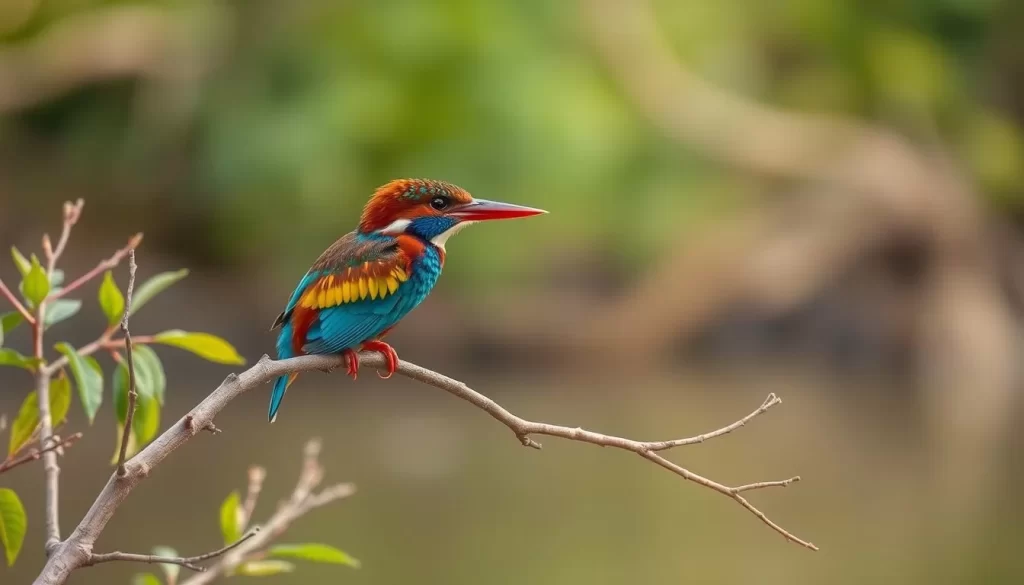
An image of a colorful kingfisher perched on a branch near the Great Ruaha River.

Night Game Drives: Nocturnal Adventures

Experience the thrill of Ruaha after dark with a night game drive. As the sun sets, the park transforms, and nocturnal creatures emerge. Witness the hunting activities of leopards, genets, and civets, and catch a glimpse of bush babies and nocturnal birds like nightjars and owls.

An image of a leopard on a night game drive in Ruaha National Park.

Boating Safaris in the Usangu Wetlands

The Usangu Wetlands offer a unique perspective on Ruaha’s wildlife, with boating safaris available in the intricate waterways. Best enjoyed from June to August, before the waterways become too shallow, this adventure allows you to observe elephants and abundant birdlife from a different vantage point.
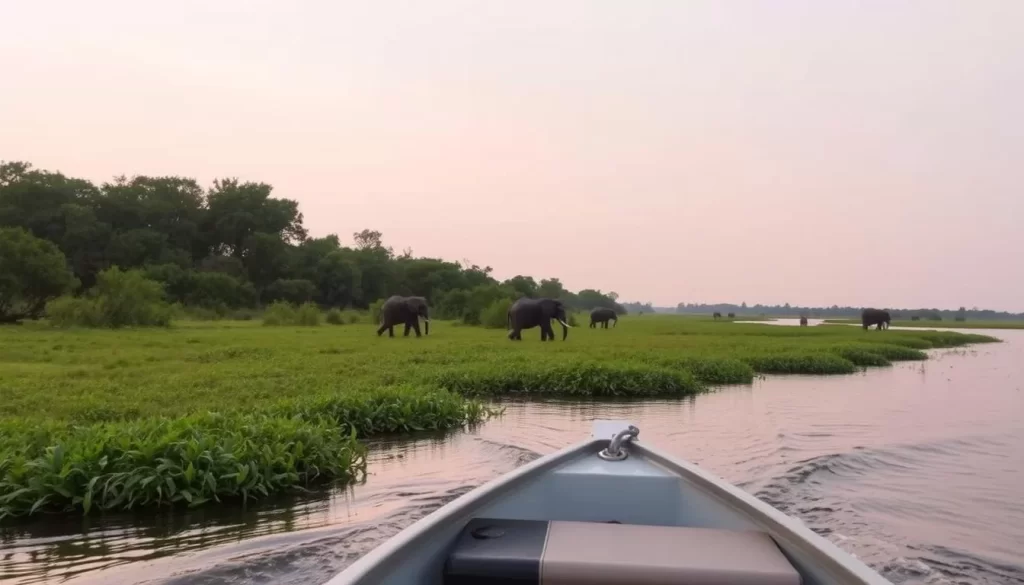
An image of a boating safari in the Usangu Wetlands, with elephants in the distance.

Cultural Visits to Local Communities

Ruaha National Park is not just about wildlife; it’s also a gateway to understanding the local culture and traditions of the surrounding communities. Visit nearby villages to interact with the Gogo and Hehe tribes, gaining insights into their traditional ways of life and creating meaningful connections between conservation and cultural heritage.

An image of a cultural visit to a local village near Ruaha National Park.

These unique experiences, from bird watching and night game drives to boating safaris and cultural visits, allow you to experience Ruaha’s many facets—its abundant wildlife, stunning landscapes, and rich cultural context—creating a more comprehensive and memorable safari experience.

Conclusion

Experience the untamed magic of Ruaha National Park, one of Tanzania’s greatest wildlife treasures. As you plan your visit in 2025 or 2026, consider the seasonal variations that offer unique experiences. The dry season provides excellent wildlife viewing around the Great Ruaha River, while the wet season brings migratory birds. With improved accessibility via flights from Dar es Salaam, Ruaha remains an authentic safari destination. Enjoy game drives, walking safaris, and bird watching, immersing yourself in the park’s natural wonders and cultural heritage.

When booking a cruise stateroom, you face one final choice after picking your deck and room category: Port or Starboard?

For decades, maritime tradition has designated the left side of the ship as Port (think of how both words have four letters) and the right side as Starboard when facing forward toward the bow.

Many first-time cruisers stress over this choice, worried they will spend a week staring at the empty ocean while passengers on the opposite side enjoy stunning postcard views. Let’s clear up the myths and look at how to choose the ideal side of the ship for your next vacation.

The Sunset Myth: Can You Guarantee a View?

The single most common reason travelers agonize over port vs. starboard is wanting to watch the sunset from their private balcony.

  • The Reality: Unless your cruise is a straight line going in one direction for seven days, the ship will be constantly changing heading. It snakes around islands, navigates twisting fjords, and turns around completely to head home.

  • The Math: If you are sailing south, the starboard side faces west (sunset) and the port side faces east (sunrise). When you turn around to sail north back to your home port, those views swap completely.

3 Scenarios Where the Side of the Ship Matters

While general ocean crossings make the side of the ship mostly irrelevant, there are three specific travel scenarios where your choice will drastically impact your experience.

1. One-Way Landfall Itineraries (e.g., Alaska or Europe Northbound)

If you are taking a cruise that begins in one city and ends in another without turning back, the side of the ship is critical.

  • Northbound Alaska: If you are sailing north from Vancouver or Seattle up to Seward or Whittier, the starboard side will face the dramatic mountain ranges, coastal forests, and passing wildlife for the majority of the trip. The port side will face the open Pacific Ocean.

  • Southbound Alaska: If you are starting up north and sailing south, you want the port side to stay facing the coastline.

2. Scenic Cruising Days (Glaciers and Fjords)

Some itineraries feature dedicated days where the ship sails deep into a narrow bay or fjord strictly for sightseeing, such as Glacier Bay in Alaska or the Geirangerfjord in Norway.

  • The Reality: Captains want everyone to get their money's worth. When entering a scenic area, the ship will typically slow down or spin a full 360 degrees in front of major landmarks so both sides of the vessel get a view.

  • The Catch: While both sides get a view eventually, one side will get it while you are getting ready in the morning, and the other will get it while you are at lunch.

3. Iconic Harbor Departures

Sailing out of certain world-famous ports offers spectacular sights right from your balcony—if you choose correctly.

  • Sailing out of New York City: If you want a close-up, unobstructed view of the Statue of Liberty as the ship heads out to the Atlantic, you need to be on the port side.

What About Docking at the Pier?

A common belief is that the port side always faces the cruise terminal or town dock. After all, it's called the "port" side for a reason.

In the modern cruising world, this is completely false. How a ship docks depends entirely on:

  1. Coast Guard or Local Regulations: Marine traffic safety dictates how a ship must enter a harbor.

  2. Ship Maintenance: Ships often dock with a specific side facing the pier so crew members can paint the hull or perform safety drills on the lifeboats.

  3. Port Availability: If multiple ships are docked side-by-side, the captain will park whichever way fits safely.

You have a 50/50 chance of facing the bustling town or the open water on either side of the ship when tied up at a pier.

Summary Checklist: How to Choose

If you are still undecided, use these guidelines to make your final choice:

  • Choose Port If: You are taking a one-way southbound itinerary, love watching the sunrise while heading south, or want a view of the skyline when departing certain eastern ports.

  • Choose Starboard If: You are taking a one-way northbound itinerary, prefer watching the sunset while heading south, or enjoy seeing the coast while sailing north.

  • Choose Mid-Ship (Regardless of Side) If: You are prone to motion sickness. Staying low and centered on the ship matters significantly more for stability than being on the left or right side.

When booking a cruise, it is incredibly easy to get swept up in the excitement of choosing between an interior, oceanview, or balcony room. Cruise lines make every cabin look like a pristine, peaceful sanctuary in their brochure photos.

But seasoned cruisers know a hard truth: A cabin’s location on the deck plan matters significantly more than the room type itself.

If you choose the wrong spot, you could find yourself sleeping directly beneath a pounding nightclub subwoofer, or waking up at 5:00 AM to the sounds of metal lounge chairs scraping across a deck. To ensure your next vacation is actually relaxing, pull up your ship’s deck plan and ensure you aren’t accidentally booking one of these five problematic cabin locations.

1. The "Lido Deck Victim" (Directly Under the Pool or Buffet)

This is arguably the most common mistake first-time cruisers make. They see a cabin on a high deck just one floor below the pool and think, "Perfect! I’m only steps away from the action."

  • The Reality: The deck directly above you isn't just a place to swim; it is a high-traffic service zone. At 5:30 AM every single morning, the crew begins dragging hundreds of heavy, metal-framed lounge chairs across the deck to set up for the day, creating a loud, screeching noise that radiates straight through your ceiling.

  • How to avoid it: Always look at the deck plan for the level directly above your cabin. If it's the pool deck, the buffet, or a sports court, change your room.

2. The Late-Night Noise Trap (Above Nightclubs and Bars)

Conversely, you also have to look at what is directly below your feet. Many modern mega-liners place passenger cabins directly above the ship's main promenade, theater, or entertainment district.

  • The Reality: If your room sits over the main theater, a busy piano bar, or the nightclub, you are going to experience intense ambient noise. Even if a ship has great soundproofing, bass frequencies travel effortlessly through steel hulls. If the nightclub thumps until 2:00 AM, your cabin walls will likely vibrate right along with it.

  • The Worst Culprit: Cabins located near the aft (rear) elevator banks on lower passenger decks are notorious for sitting right over the ship's loudest late-night lounges.

3. The "Early Morning Wake-Up Call" (Lower Forward Cabins)

If you are trying to save money, the lowest passenger decks at the very front (bow) of the ship often look like an incredible bargain.

  • The Reality: These rooms face two major issues: motion and mechanics. The front of the ship acts like a teeter-totter; it pitches up and down far more dramatically than the middle of the ship, making it a nightmare if you are prone to seasickness.

  • The Hidden Noise: When the ship arrives at a port early in the morning, the captain will fire up the bow thrusters to maneuver, causing the entire front of the ship to vibrate violently. If the ship is dropping anchor rather than docking at a pier, the massive, clanging anchor chains are housed right next to these forward walls.

4. The Elevator Bank Bottleneck

Being close to the elevators seems like a great accessibility hack to cut down on walking down those incredibly long cruise ship corridors.

  • The Reality: Elevator lobbies are the primary meeting points on the ship. You will have to deal with the constant "ding" of the elevator doors opening and closing all night. Worse, you will hear crowds of high-energy passengers talking, laughing, and shouting as they return to their rooms after a few drinks at the bar.

5. Connecting Cabins (When You Don't Know the Neighbors)

Connecting cabins have a physical interior door that links two adjacent rooms—perfect for families traveling together. But if you are a solo traveler or a couple booking a standard room, cruise lines will frequently assign you a connecting room if it’s the last one available.

  • The Reality: An interior wooden connecting door provides significantly less sound insulation than a solid steel wall. Even when locked, you will likely hear your neighbors' television, their morning conversations, and the sound of their suitcases slamming around.

🛑 The Golden Rule of Cruise Booking

If you want a guaranteed quiet night of sleep, use the Sandwich Rule. Only book a cabin that is "sandwiched" safely between two other full decks of passenger cabins. If there are rooms above you and rooms below you, you are virtually guaranteed to avoid the ship's worst acoustic nightmares.

What About "Guarantee" Cabins?

When booking, you might see an option to book a "Guarantee Balcony" or "Guarantee Interior" at a steep discount. This means you pay a lower rate, but you let the cruise line pick your specific cabin number close to sail date.

While it's a great way to save money, keep in mind that cruise lines use this system to fill the rooms that nobody else wanted to pick. If you are a light sleeper or sensitive to motion, it is always worth paying a fraction more to hand-select your own room number safely away from the noise.

You’ve booked your cabin, picked your excursions, and now you’re staring at your cruise planner screen, facing one of the most hotly debated questions in travel: Should you buy the cruise drink package?

Cruise lines heavily market these unlimited packages, tempting you with the peace of mind that comes with a truly "all-inclusive" vacation. But at prices frequently soaring past $80 to $100+ per guest, per day (plus an automatic 18%–20% gratuity), a drink package can easily add over $1,400 to a 7-night vacation for a couple.

Let’s skip the marketing fluff and look at the actual math. Here is exactly how many drinks you need to consume per day to break even on major cruise lines right now, along with the hidden rules you need to know before you buy.

The Baseline: What Do Drinks Cost A La Carte?

To know if a package saves you money, you have to know what you’d spend without one. Across mainstream lines like Royal Caribbean, Carnival, and Celebrity, average a la carte prices generally sit within these ranges:

  • Cocktails & Mixed Drinks: $12 – $15

  • Glass of Wine: $10 – $14

  • Draft or Bottled Beer: $7.50 – $9.50

  • Specialty Coffee (Lattes, Espresso): $4.50 – $5.50

  • Bottled Water / Sodas: $3.00 – $4.00

Cruise Line Break-Even Math

Most lines require every adult sharing a cabin to purchase the package if one person does. This rule is designed to prevent couples from sharing a single package, and it drastically changes the financial math for a lot of travelers.

Here is what the daily math looks like based on average pre-cruise booking discounts:

1. Royal Caribbean (Deluxe Beverage Package)

  • Average Onboard Price: $75 to $105 per day (varies heavily by ship and sail date)

  • The Break-Even Number: 5 to 7 alcoholic drinks per day.

  • The Catch: If you use your package for morning specialty coffees, bottled waters to take to port, and fresh-squeezed juices, that break-even number drops to about 4 cocktails and 3 non-alcoholic premium drinks per day.

2. Carnival Cruise Line (CHEERS! Beverage Program)

  • Pre-Cruise Price: $64.95 per day (+18% gratuity)

  • The Break-Even Number: 5 to 6 alcoholic drinks per day.

  • The Catch: Carnival enforces a strict 15-alcoholic-drink limit per 24-hour period. While most people don't hit this cap, the package also includes unlimited sodas, energy drinks, and milkshakes.

3. Celebrity Cruises (Classic vs. Premium Package)

  • Average Price: Classic sits around $89/day; Premium sits around $109/day.

  • The Break-Even Number: 6 to 8 drinks per day.

  • The Catch: Celebrity’s Classic package only covers individual drinks up to $10. If you like premium spirits or high-end wine, you'll be charged the difference out of pocket unless you upgrade to the Premium package (which covers up to $17 drinks).

The "Hidden" Value: Non-Alcoholic Add-Ons

People often forget that these packages aren't just for alcohol. If you are someone who drinks a lot of fluids throughout the day, the non-alcoholic options can quickly push you into the profit zone.

Pro-Tip: If you drink two specialty lattes in the morning ($10), grab two large bottled waters for a shore excursion ($8), and have a Red Bull or soda by the pool ($5), you’ve already knocked $23 off your daily break-even target before ever touching a drop of alcohol.

When the Drink Package is WORTH It

  • You Love Peace of Mind: If you hate looking at your running balance on the ship's app and want to walk off the ship on the final morning with a $0 balance, buy the package.

  • You Spend a Lot of Time at Sea: On sea days, you are steps away from a bar 24/7. It is incredibly easy to hit your break-even point when you're lounging by the pool all day.

  • You're Visiting Private Islands: If your itinerary includes Perfect Day at CocoCay (Royal Caribbean) or Labadee, your drink package actually works on the island. This adds a massive amount of value to your purchase.

When the Drink Package is a WASTE of Money

  • Your Itinerary is Port-Intensive: If you are on a European or Alaskan cruise where you are off the ship from 8:00 AM to 5:00 PM almost every day, you won't have enough time on board to drink your money's worth.

  • One of You Doesn't Really Drink: Because of the "all adults in the cabin must buy it" rule, if you drink 8 cocktails a day but your spouse only drinks water, you are paying for two packages while only utilizing one. You will lose money overall.

  • You Only Drink Beer: Because beer is significantly cheaper than cocktails, you have to drink almost double the volume to break even. If you're a beer-only cruiser, paying a la carte is usually the smarter play.

The Verdict

Before hitting "purchase" in your cruise planner, look at your itinerary and your daily habits. If you honestly see yourself having a specialty coffee in the morning, a few beers by the pool, wine at dinner, and a cocktail during the evening theater show, the package will likely save you money.

If that sounds like exhausting work just to break even, save your cash, pay a la carte, and spend that money on a fantastic shore excursion instead.

The above is subject to change. Check back often to TRAVEL.COM for the latest travel information and deals.

Related Posts

Coming Soon: Clickable Maps