
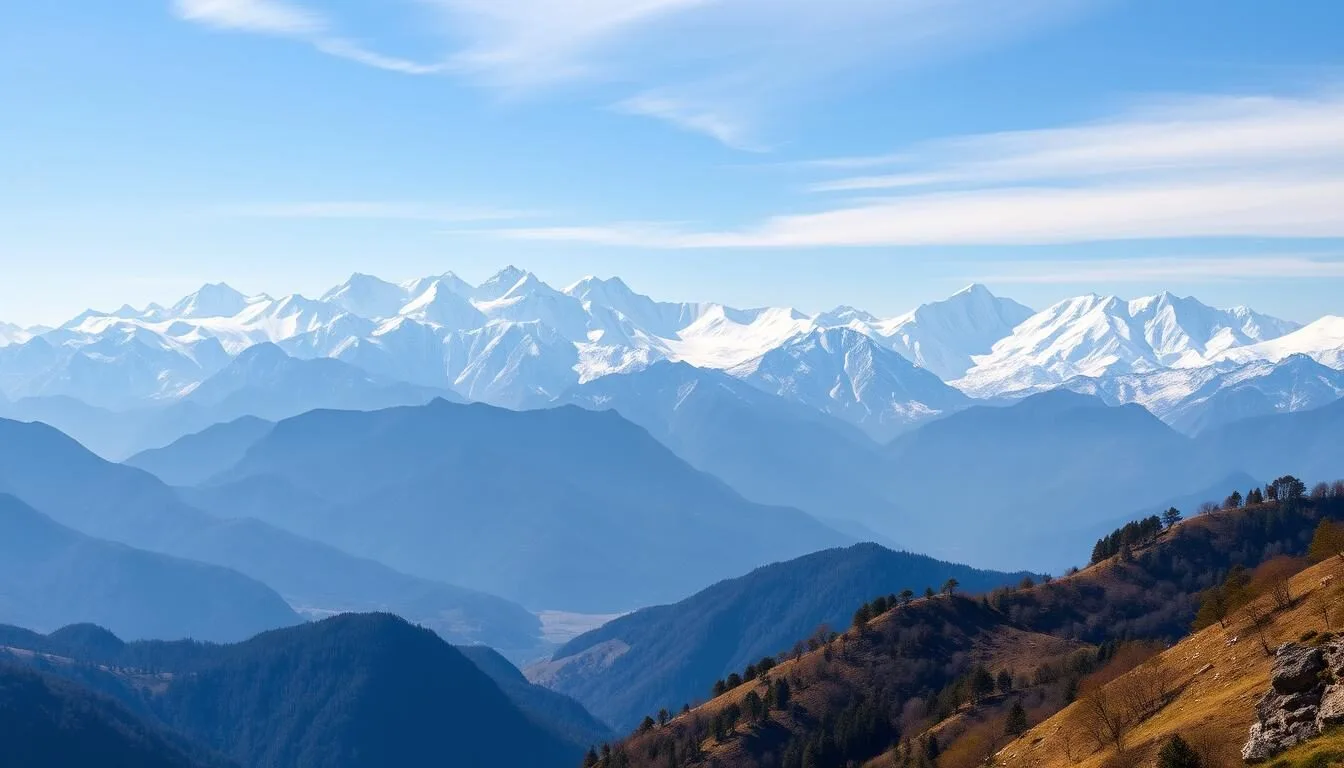
Did you know that Bhutan’s Lunana Range hosts Gangkhar Puensum (7,570 m/24,836 ft), the world’s highest unclimbed mountain? Protected by both treacherous conditions and local spiritual beliefs, this majestic peak stands as a testament to Bhutan’s commitment to preserving its sacred landscapes. The Lunana region, often called “the most remote corner of the remote kingdom,” is home to fewer than 1,000 people spread across just four main settlements, making it one of the least populated areas in an already sparsely populated country.
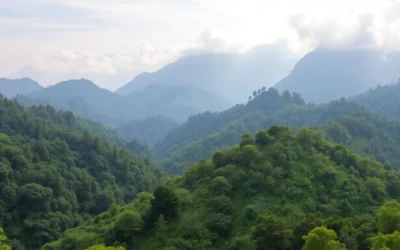
The majestic Lunana Range in Bhutan offers some of the most pristine mountain landscapes in the world
Exploring the Hidden Gem of the Bhutanese Himalayas
Nestled in the northernmost reaches of Bhutan along the Tibetan border, the Lunana Range represents one of the last truly untouched regions on Earth. This remote area is characterized by towering peaks, pristine alpine lakes, and isolated villages where traditional Bhutanese culture thrives in its purest form. For adventurous travelers seeking extraordinary experiences off the beaten path, Lunana offers unparalleled trekking opportunities, cultural immersion, and natural beauty that few outsiders have witnessed.
While challenging to access, the rewards of visiting this region are immeasurable. From the legendary Snowman Trek that traverses multiple high-altitude passes to encounters with semi-nomadic yak herders who maintain centuries-old traditions, Lunana provides a glimpse into a way of life largely unchanged by modern influences. This comprehensive guide will help you plan an unforgettable journey to one of Bhutan’s most spectacular yet least-visited regions.
Getting There & Planning Your Journey
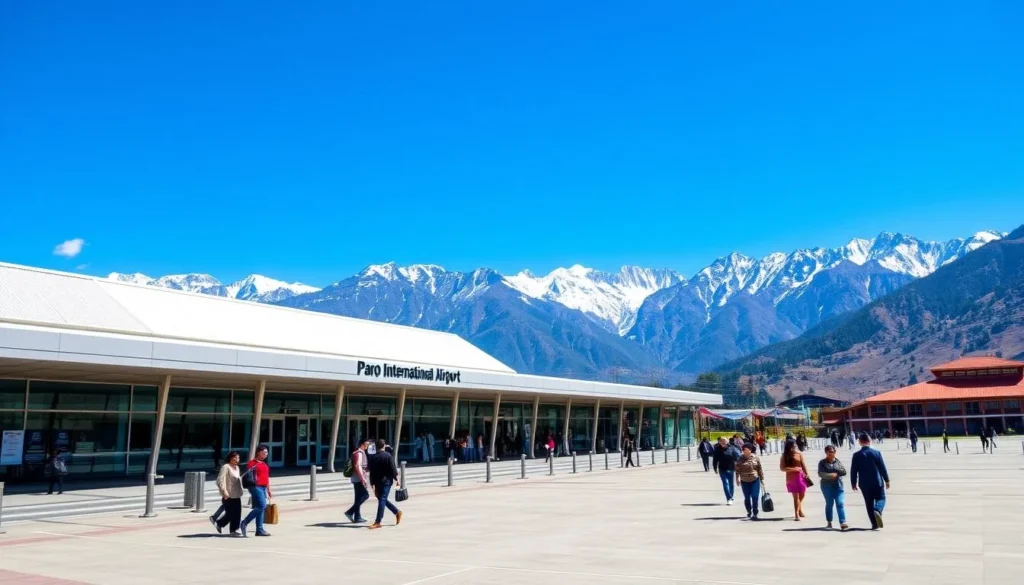
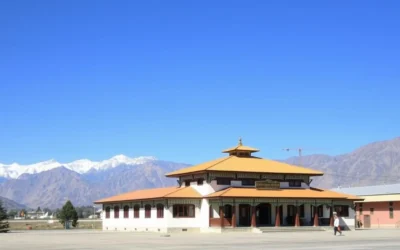
Paro International Airport is your gateway to beginning the Lunana adventure
Reaching the Lunana Range requires careful planning and preparation. The journey begins with a flight to Paro International Airport, Bhutan’s only international airport. Druk Air and Bhutan Airlines operate flights from regional hubs including Bangkok, Delhi, Singapore, and Kathmandu.
Permit Requirements
All visitors to Bhutan require:
- A visa arranged through a licensed Bhutanese tour operator
- The Sustainable Development Fee (SDF) of $200 USD per person per night
- Special permits for the Lunana region (arranged by your tour operator)
For the Lunana Range specifically, you’ll need additional trekking permits that your tour operator will arrange. Independent travel is not permitted in this region due to its remoteness and protected status.
Journey to Lunana
After arriving in Paro, the journey to Lunana typically involves:
- Acclimatization in Paro (2,200 m/7,218 ft) for 1-2 days
- Drive to Punakha and potentially Gasa
- Begin trekking from either Gasa or Drukgyel Dzong (depending on your route)
- Multiple days of trekking through increasingly remote terrain
The complete journey to reach the heart of Lunana can take 7-10 days of trekking, depending on your starting point and pace. This gradual approach is essential for proper acclimatization to the high altitudes.
Best Time to Visit Lunana Range
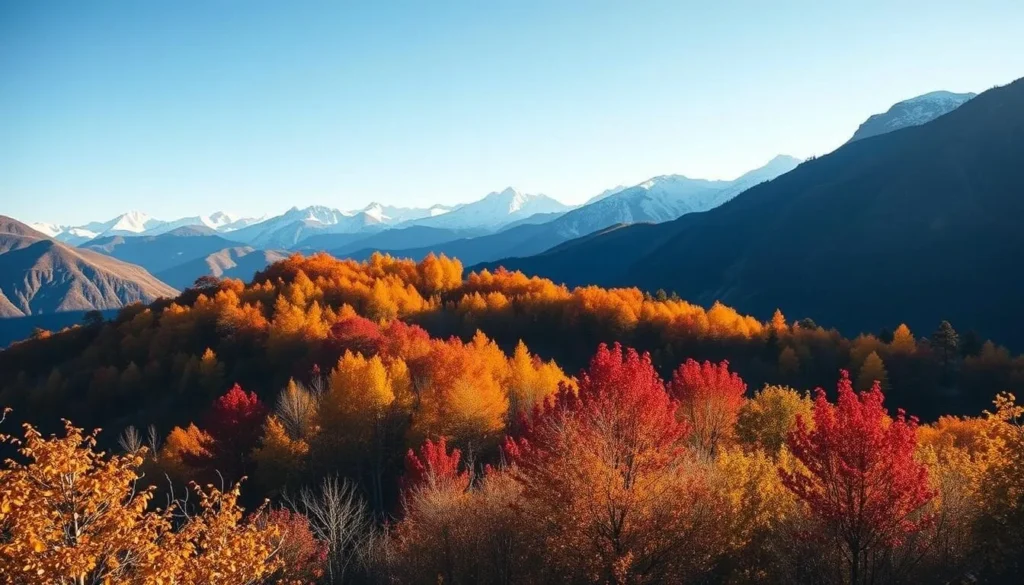
Autumn (September-October) offers ideal trekking conditions with clear skies and spectacular views
Timing is crucial when planning a trip to the Lunana Range. The region’s extreme altitude and remote location mean that weather conditions significantly impact accessibility and safety.
Recommended Seasons
- Spring (April-May): Temperatures range from 5-15°C (41-59°F). Beautiful rhododendron blooms, but occasional afternoon showers.
- Autumn (September-October): Temperatures range from 10-20°C (50-68°F) during the day, dropping to near freezing at night. Clear skies offer the best mountain views and most stable weather.
Seasons to Avoid
- Summer/Monsoon (June-August): Heavy rainfall causes landslides and makes trails dangerous. Many passes become impassable.
- Winter (November-March): Extremely cold with temperatures well below freezing. Heavy snowfall blocks high passes, making the Lunana region effectively inaccessible.
Local Insight: October is widely considered the absolute best month for the Snowman Trek and other Lunana expeditions. The monsoon has ended, skies are typically crystal clear, and temperatures are still manageable before winter sets in.
Getting Around Locally

4WD vehicles are essential for reaching trailheads in the Lunana region
Transportation in and around the Lunana Range is limited by the extreme terrain and lack of infrastructure. Here’s what you need to know about getting around:
Road Transport
Roads only extend to the outer edges of the Lunana region. To reach trailheads, you’ll need:
- 4WD vehicles capable of handling rough mountain roads
- Experienced local drivers familiar with the challenging terrain
- Patience for long drives on winding mountain roads
On Foot
Once you reach the trailheads, the only way to explore Lunana is on foot:
- All villages are connected by hiking trails rather than roads
- Distances between settlements can take multiple days of trekking
- Trails vary from well-defined paths to barely visible tracks across alpine terrain
- River crossings are common, with varying levels of difficulty depending on the season
Pack Animals
For extended treks, pack animals are essential:
- Yaks are commonly used at higher elevations (above 3,500 m/11,483 ft)
- Horses or mules may be used at lower elevations
- Local guides arrange for these animals and their handlers
Trekking Tip: When planning your trek, build in buffer days for unexpected weather or trail conditions. The remoteness of Lunana means that evacuation is extremely difficult, so safety margins are essential.
Where to Stay in Lunana Range
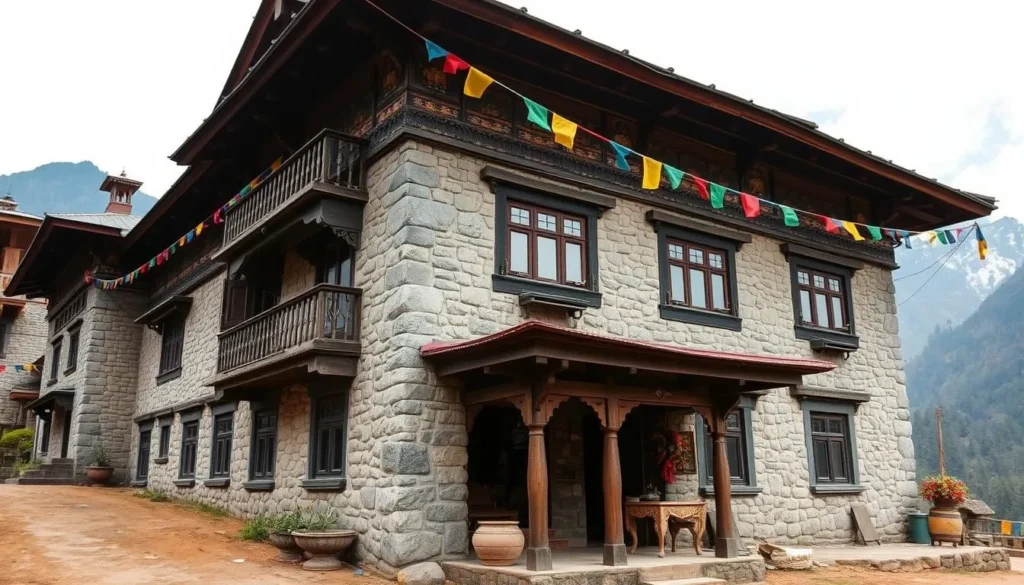
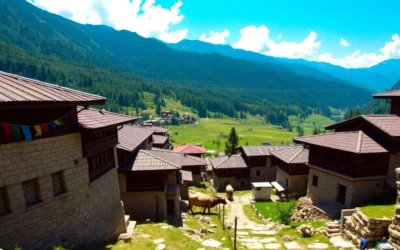
Traditional homestays offer an authentic glimpse into local Lunana culture
Accommodation in the Lunana Range is limited by the region’s remoteness, but offers unique opportunities to experience authentic Bhutanese mountain culture. Here are your options:
Camping
For most of the Lunana trek, camping is your primary accommodation:
- Organized treks provide all camping equipment
- Established campsites exist near villages and along major trekking routes
- Temperatures can drop below freezing at night, even in summer
- Quality camping gear is essential for comfort and safety
Village Homestays
In some Lunana villages, basic homestays may be available:
- Simple accommodations in traditional Bhutanese homes
- Shared sleeping areas on floor mats
- Basic facilities with no electricity or running water in most cases
- Authentic cultural experience with local families
- Meals typically include rice, buckwheat, and yak-based products
Pre and Post-Trek Accommodations
Before and after your Lunana trek, you’ll stay in more comfortable accommodations:
- Paro and Thimphu offer hotels ranging from comfortable 3-star to luxury 5-star options
- Punakha and Gasa have more limited but still comfortable hotel options
- Many hotels feature traditional Bhutanese architecture and design elements
Dining & Local Cuisine
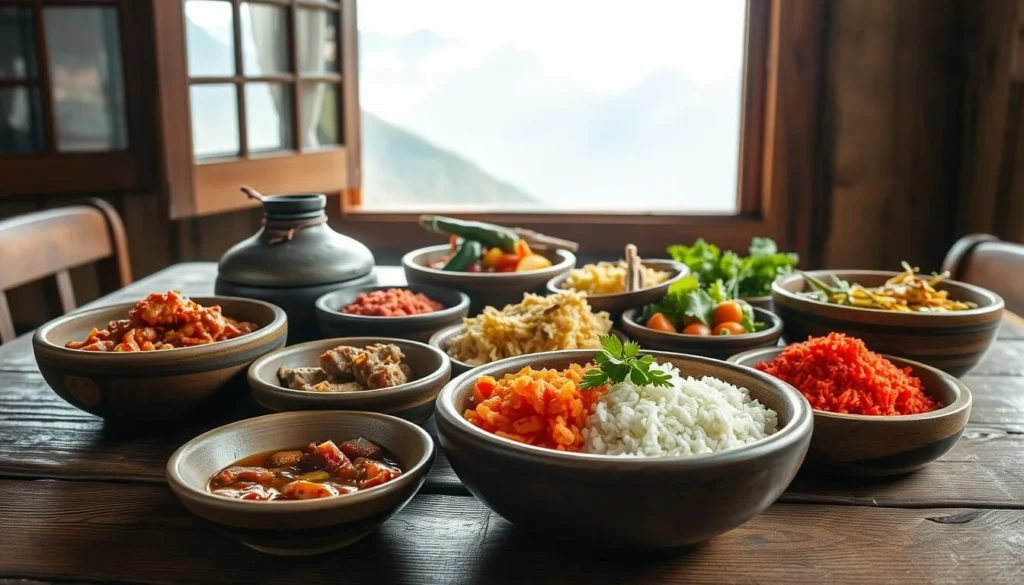
Ema datshi (chili cheese) is Bhutan’s national dish and a staple in the Lunana region
Cuisine in the Lunana Range reflects the region’s harsh climate, isolation, and self-sufficient lifestyle. Food options are limited but authentic, offering a true taste of traditional Bhutanese mountain fare.
Local Specialties
- Ema Datshi: Bhutan’s national dish of chili peppers and cheese, often fiery hot
- Kewa Datshi: Potatoes cooked with cheese and chili
- Shakam Datshi: Dried beef with cheese and chili
- Red Rice: A nutty, mineral-rich staple grown in high-altitude fields
- Momos: Dumplings filled with vegetables, cheese, or yak meat
- Suja: Butter tea made with yak butter, salt, and tea
- Ara: Local rice or wheat wine, often home-brewed
Dining During Treks
On organized treks, your experience will typically include:
- Camp cooks preparing a mix of Bhutanese and international dishes
- Breakfast often featuring porridge, eggs, and bread
- Packed lunches for trail days
- Hot dinners with soup, rice, vegetables, and occasionally meat
- Tea and hot drinks available throughout the day
Village Dining
If staying in villages, expect:
- Simple, hearty meals centered around locally grown ingredients
- Limited variety but authentic preparation
- Meals often shared communally with host families
- Yak products including cheese, butter, and occasionally meat
- Foraged herbs and vegetables when in season
Food Tip: Dietary restrictions can be accommodated on organized treks but should be communicated well in advance. In villages, options may be more limited, so flexibility is helpful.
Attractions, Sightseeing & Activities
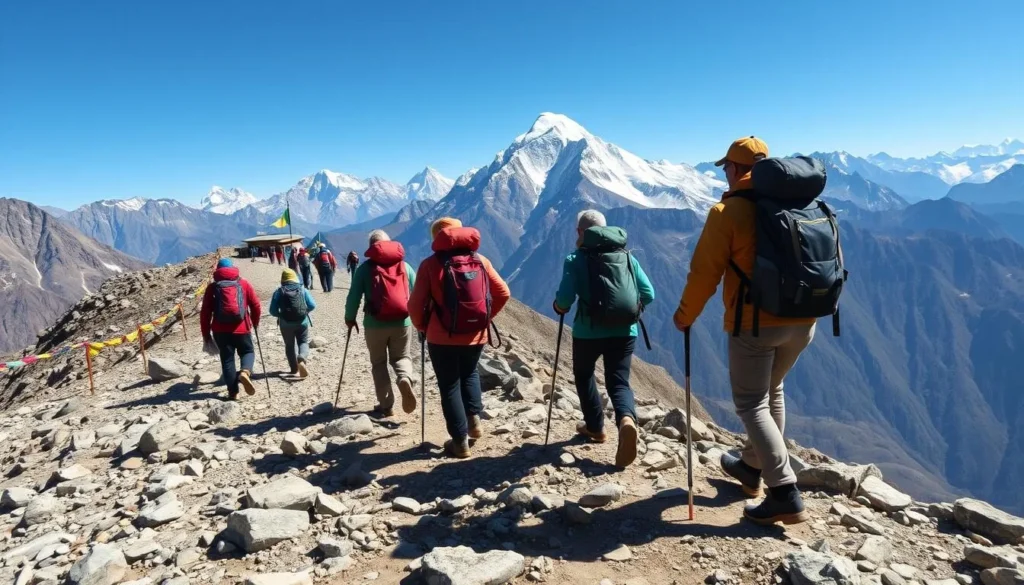
The legendary Snowman Trek crosses multiple high passes in the Lunana Range
The Legendary Snowman Trek
The crown jewel of Bhutanese trekking, the Snowman Trek is considered one of the most challenging and beautiful treks in the world:
- Spans approximately 28 days (full route)
- Crosses 11 passes over 4,500 m (14,764 ft)
- Highest point at Rinchen Zoe La pass at 5,326 m (17,474 ft)
- Traverses the entire Lunana region from west to east
- Requires excellent fitness and previous high-altitude trekking experience
Alternative Treks
If the full Snowman Trek is too demanding, consider these alternatives:
- Laya-Gasa Trek: 8-10 days, covers the western approach to Lunana
- Lunana Snowman Trek (Shortened Version): 14-18 days, covers key highlights
- Bumthang Cultural Trek: Can be combined with eastern sections of Lunana
Natural Wonders
The Lunana Range offers spectacular natural attractions:
- Gangkhar Puensum: The world’s highest unclimbed mountain
- Thanza Valley: Wide glacial valley with stunning mountain views
- Alpine Lakes: Numerous sacred and pristine high-altitude lakes
- Glaciers: Several major glaciers, though receding due to climate change
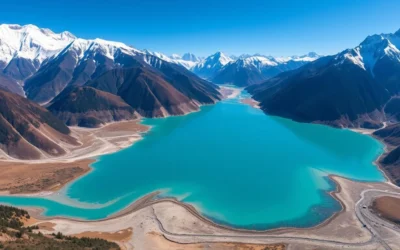
- Rapten Tsho: A stunning turquoise glacial lake
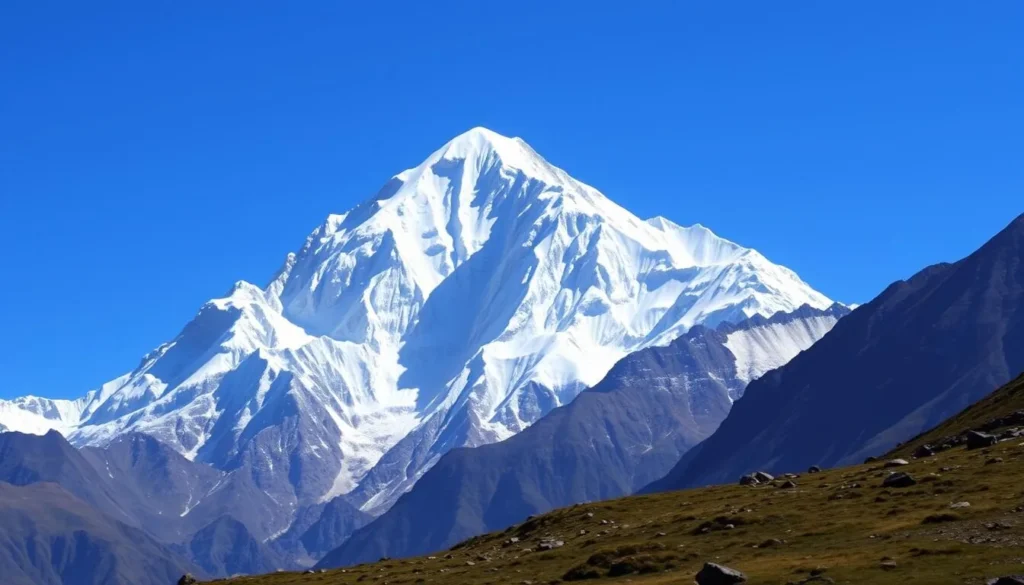
Gangkhar Puensum (7,570 m/24,836 ft) remains unclimbed due to local spiritual beliefs
Cultural Experiences & Festivals
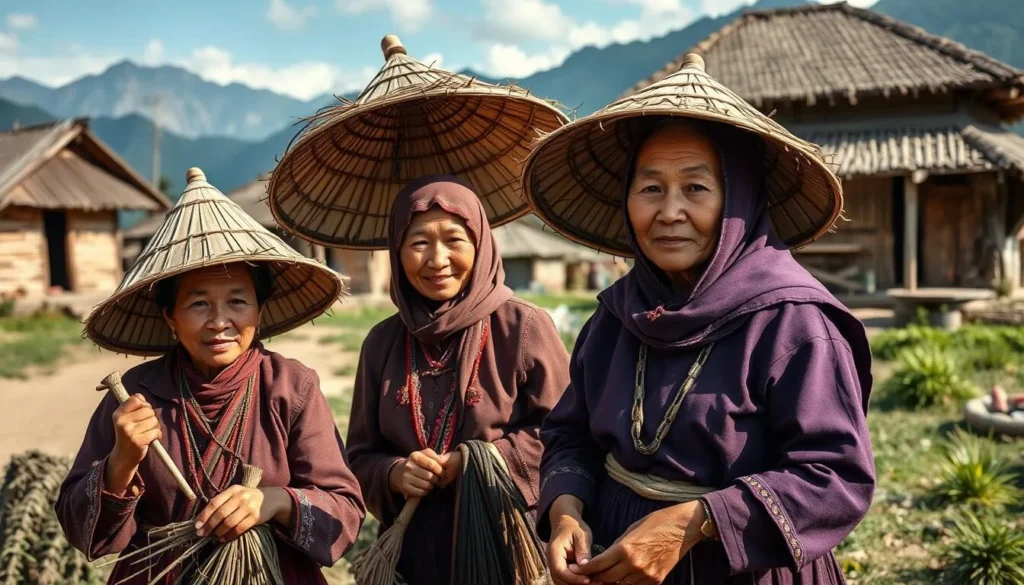
Layap women are known for their distinctive conical hats and unique cultural traditions
Unique Cultural Groups
The Lunana Range is home to some of Bhutan’s most distinctive cultural groups:
- Layaps: Indigenous people of Laya, known for their unique dress and conical bamboo hats
- Lunaps: The people of Lunana proper, with distinct dialect and customs
- Semi-nomadic Yak Herders: Follow traditional seasonal migration patterns
Village Visits
Key villages to visit include:
- Laya: Largest settlement on the western approach to Lunana
- Thanza: Principal village in the heart of Lunana
- Woche: First village encountered when entering Lunana from the west
- Tshochena: Remote settlement with traditional architecture
Religious Sites
Despite its remoteness, Lunana has important Buddhist sites:
- Chezo Dzong: Small fortress monastery near Thanza
- Sacred Lakes: Several lakes considered holy in local tradition
- Prayer Flag Sites: High mountain passes adorned with colorful prayer flags
- Meditation Caves: Remote caves used by Buddhist practitioners
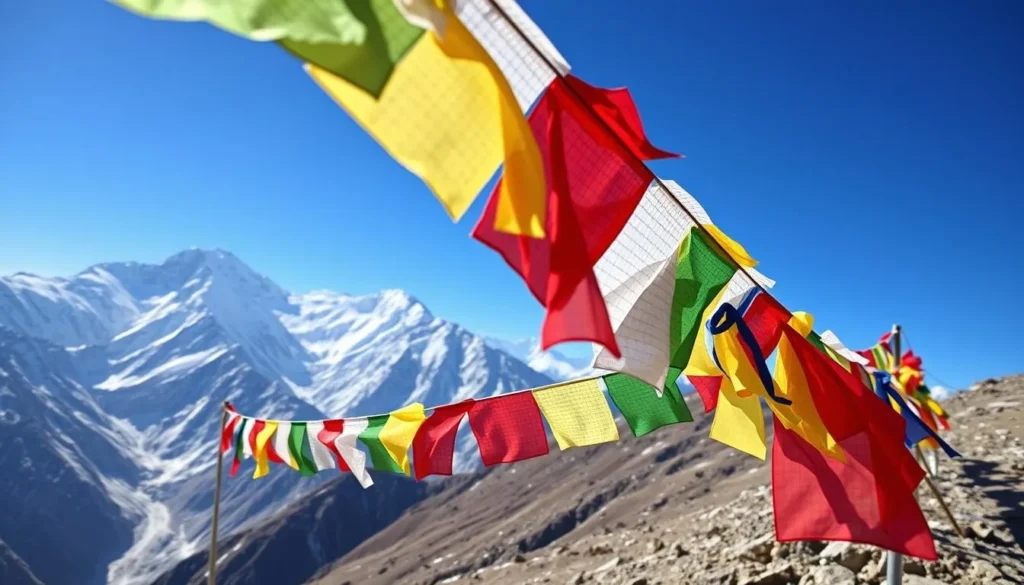
Prayer flags at mountain passes carry blessings on the wind throughout the sacred landscape
Local Festivals
If your timing aligns, these cultural celebrations are worth experiencing:
- Laya Tshechu: Annual religious festival in Laya (October)
- Seasonal Ceremonies: Marking agricultural cycles and Buddhist holy days
- Yak Hair Tent Ceremonies: Traditional rituals when nomads move camps
Outdoor Experiences & Wildlife
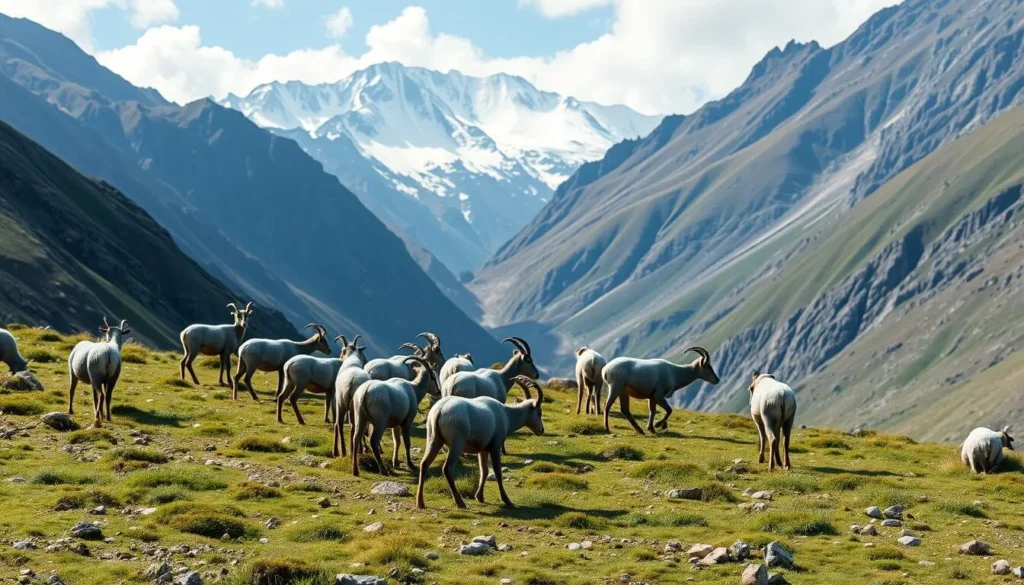
Blue sheep (bharal) are commonly spotted on the alpine slopes of Lunana
Wildlife Encounters
The Lunana Range hosts remarkable Himalayan wildlife:
- Snow Leopard: Elusive and rare, but present in the region
- Blue Sheep (Bharal): Commonly seen on high rocky slopes
- Himalayan Musk Deer: Shy forest dwellers
- Himalayan Black Bear: In lower forested areas
- Takin: Bhutan’s national animal occasionally spotted in summer
- Himalayan Griffon: Massive vultures soaring on thermal currents
- Blood Pheasant: Colorful alpine bird
Photography Opportunities
Photographers will find endless subjects:
- Dramatic mountain landscapes at dawn and dusk
- Traditional villages with distinctive architecture
- Cultural portraits (always ask permission first)
- Alpine flowers during spring and summer
- Night sky photography with minimal light pollution
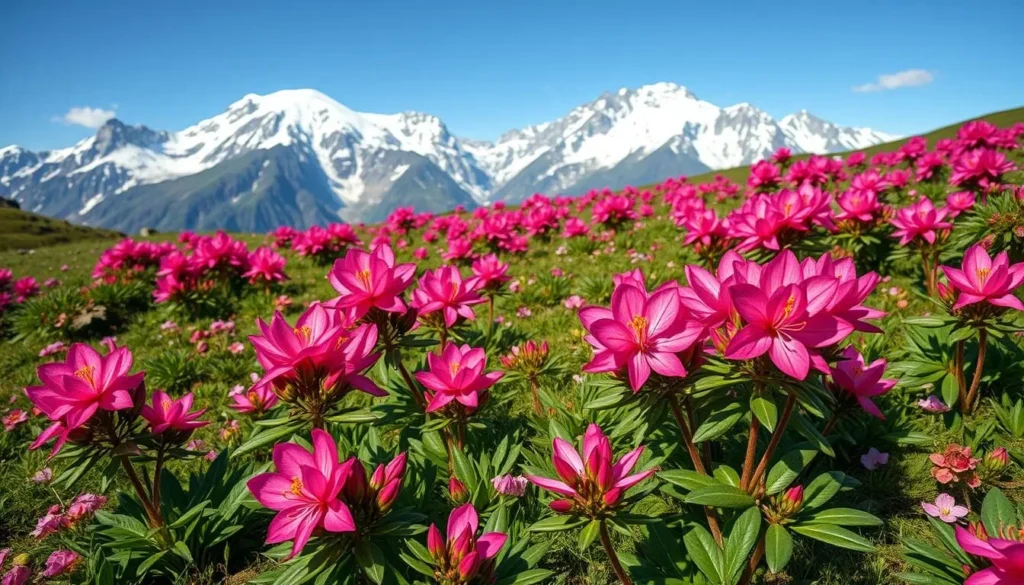
Spring brings spectacular rhododendron blooms to the lower elevations of Lunana
Other Outdoor Activities
Beyond trekking, consider:
- Birdwatching: Over 40 Himalayan species inhabit the region
- Botanical Exploration: Diverse alpine plants including medicinal herbs
- Hot Springs: Natural hot springs at Duer Tsachu on some trek routes
- Fishing: With proper permits in certain rivers (catch and release)
Safety, Etiquette & Local Customs
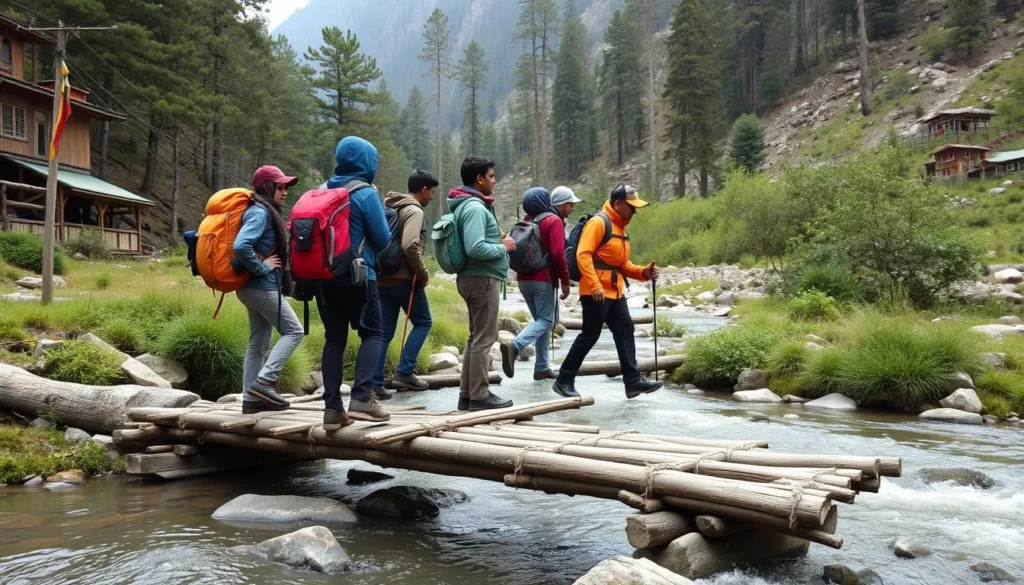
Always follow your guide’s instructions when navigating challenging terrain
Safety Considerations
The remote nature of Lunana presents several safety challenges:
- Altitude Sickness: A serious risk above 3,000 m (9,843 ft)
- Weather Changes: Conditions can deteriorate rapidly
- Limited Communication: No cell service in most areas
- Medical Facilities: Extremely limited or non-existent
- River Crossings: Can be dangerous, especially after rain
Safety Alert: Comprehensive travel insurance with helicopter evacuation coverage is absolutely essential for trekking in the Lunana Range. Standard travel insurance policies often exclude high-altitude activities, so verify your coverage carefully.
Cultural Etiquette
Respect local customs and traditions:
- Ask permission before photographing people
- Remove shoes before entering temples or homes
- Dress modestly, covering shoulders and knees
- Walk clockwise around religious structures
- Don’t point at sacred objects or people
- Accept food or drink offerings with both hands
Environmental Responsibility
Preserve this pristine region:
- Pack out all trash (no disposal facilities exist)
- Use biodegradable soap and shampoo
- Stay on established trails to prevent erosion
- Never remove plants, rocks, or artifacts
- Use established toilet facilities or bury waste properly
- Minimize use of plastic water bottles
Practical Travel Tips
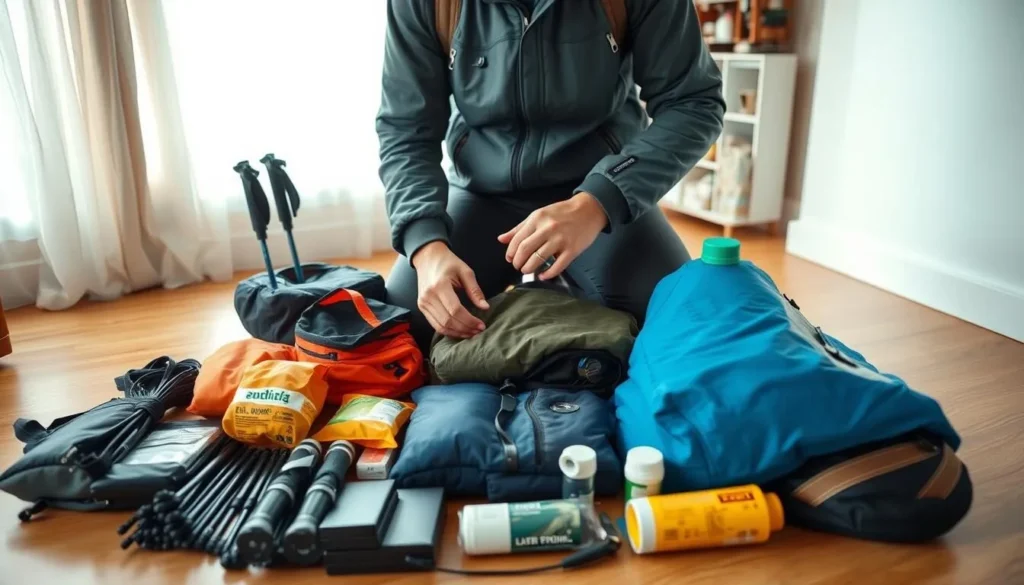
Proper preparation and packing are essential for a successful Lunana expedition
Essential Packing List
- Clothing: Multiple layers, waterproof outer shell, down jacket, thermal underwear
- Footwear: Well-broken-in hiking boots, camp shoes, multiple pairs of wool socks
- Sleeping: Four-season sleeping bag (rated to at least -10°C/14°F)
- Sun Protection: High SPF sunscreen, lip balm, sunglasses, wide-brimmed hat
- First Aid: Personal medications, altitude sickness medication, basic first aid supplies
- Water: Water purification tablets or filter
- Electronics: Camera, spare batteries, solar charger
- Documents: Passport, visa documents, insurance information, emergency contacts
Money Matters
Financial considerations for your journey:
- The Bhutanese currency is the Ngultrum (BTN), pegged to the Indian Rupee
- No ATMs exist in Lunana; bring sufficient cash for the entire trek
- Tipping guides and porters is customary (10-15% of trek cost is standard)
- Most trek costs are pre-paid through your tour operator
- Bring small denominations for purchasing handicrafts in villages
Communication
Staying connected in remote Lunana:
- No cell service throughout most of the region
- Satellite phones carried by guides for emergencies
- Some tour operators provide satellite messaging devices
- Inform family of your itinerary and expected communication blackout
- Government radio stations exist in some villages for emergency communication
The remote Lunana Range is located in northern Bhutan along the Tibetan border
Embrace the Adventure of a Lifetime
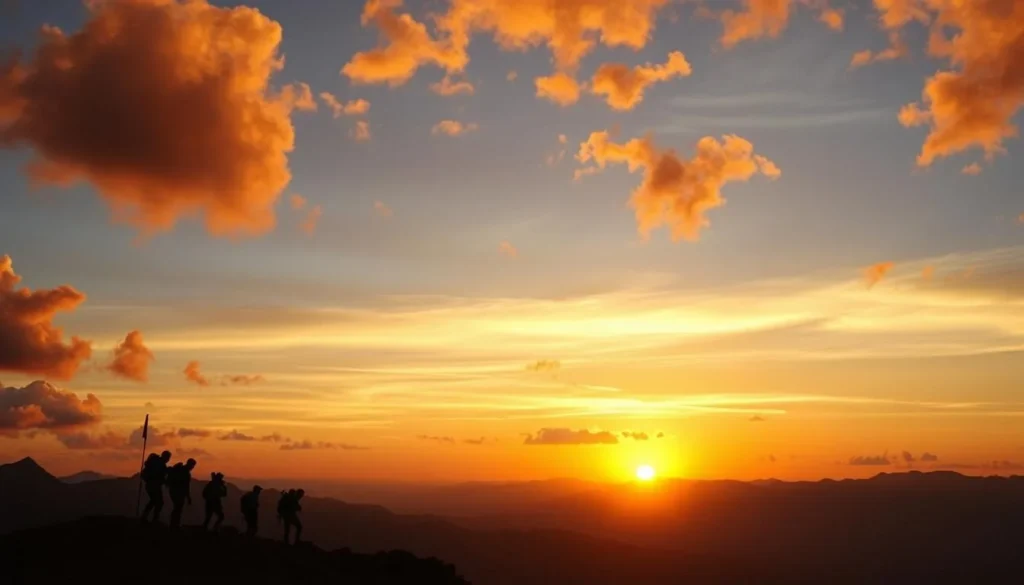
The challenges of reaching Lunana are rewarded with unforgettable experiences
The Lunana Range represents one of the last truly remote frontiers on our increasingly connected planet. Its pristine valleys, towering peaks, and isolated villages offer a glimpse into a way of life that has remained largely unchanged for centuries. While reaching and traversing this region demands significant preparation, physical endurance, and a spirit of adventure, those who make the journey are rewarded with experiences that few outsiders will ever know.
Whether you challenge yourself to complete the legendary Snowman Trek, immerse yourself in the unique culture of the Layap and Lunap people, or simply stand in awe beneath the sacred, unclimbed peak of Gangkhar Puensum, the Lunana Range will leave an indelible mark on your soul. In a world where true wilderness grows increasingly rare, Bhutan’s commitment to preserving this extraordinary landscape ensures that Lunana remains a place where adventure and spiritual connection converge in perfect harmony.
Are you ready to discover one of Earth’s last untouched frontiers? The ancient trails, welcoming villages, and majestic mountains of Lunana await your footsteps.
0 Comments