

Getting There & Planning Your Journey
Reaching Nakai-Nam Theun National Protected Area requires some planning, as it’s located in a remote region of central Laos. The nearest major city is Thakhek in Khammouane Province, which serves as the primary gateway to the protected area.
By Air
The closest international airports are in Vientiane (the capital of Laos) and Nakhon Phanom in Thailand. From either airport, you’ll need to arrange ground transportation to Thakhek.
- From Vientiane: Approximately 350 km (217 mi) to Thakhek, about 6-7 hours by car
- From Nakhon Phanom (Thailand): Cross the Thai-Lao Friendship Bridge III to Thakhek, about 30 minutes
By Road
From Thakhek, you’ll need to travel to Nakai District Town, which serves as the entry point to the protected area. The journey takes approximately 2-3 hours by car on Route 12 and then Route 8B. The road conditions can be challenging during the rainy season (May-October), so a 4WD vehicle is recommended.
For the final leg of the journey into the protected area itself, you’ll need to arrange transportation with local guides or through tour operators in Thakhek or Nakai. This typically involves either:
- Boat transportation along the Nam Theun River
- Hiking with guides on established trails
- 4WD vehicle access on limited logging roads (dry season only)
Best Time to Visit Nakai-Nam Theun National Protected Area
The climate in Nakai-Nam Theun follows Southeast Asia’s monsoon patterns, with distinct wet and dry seasons that significantly impact travel conditions and wildlife viewing opportunities.

Recommended Months (November-April)
The dry season from November to April offers the most favorable conditions for visiting:
- November-February: Cool, dry weather with temperatures ranging from 15-25°C (59-77°F). This is ideal for trekking and wildlife spotting.
- March-April: Warmer but still dry, with temperatures reaching 30-35°C (86-95°F). Good for river activities and exploring the plateau areas.
Months to Avoid (May-October)
The wet season brings heavy rainfall that can make access difficult:
- May-June: Beginning of monsoon with increasing rainfall and humidity.
- July-September: Peak monsoon season with heavy downpours. Many trails become impassable, and river levels rise significantly.
- October: Rainfall begins to decrease, but trails remain muddy and slippery.
| Season | Months | Temperature | Rainfall | Accessibility | Activities |
| Cool Dry | Nov-Feb | 15-25°C (59-77°F) | Minimal | Excellent | Trekking, wildlife viewing, village visits |
| Hot Dry | Mar-Apr | 25-35°C (77-95°F) | Occasional showers | Very Good | River activities, plateau exploration |
| Early Monsoon | May-Jun | 25-30°C (77-86°F) | Increasing | Moderate | Limited trekking, waterfall viewing |
| Peak Monsoon | Jul-Sep | 23-28°C (73-82°F) | Heavy | Poor | Not recommended |
| Late Monsoon | Oct | 20-28°C (68-82°F) | Decreasing | Improving | Limited activities |
Getting Around Locally
Once you’ve reached the Nakai-Nam Theun National Protected Area, getting around requires local knowledge and appropriate transportation methods.

Guided Tours
The most common and recommended way to explore the protected area is with authorized local guides. They provide invaluable knowledge about the ecosystem, wildlife, and safe navigation through the wilderness.
- Tours can be arranged through the Nakai-Nam Theun National Park Protection Authority in Nakai District Town
- Local tour operators in Thakhek also offer guided excursions
- Multi-day treks typically include porters, food, and camping equipment
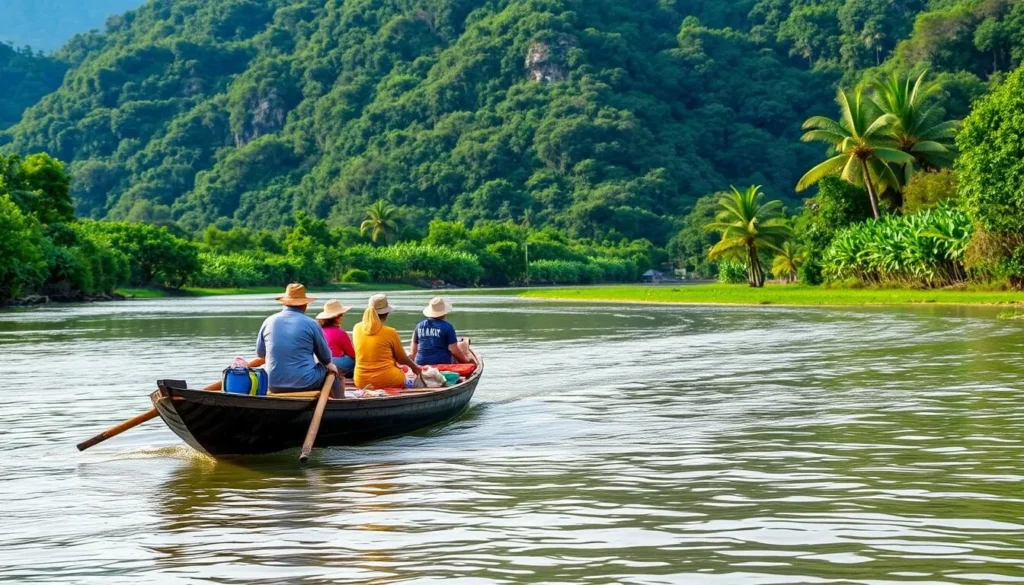
Boat Transportation
The Nam Theun River and its tributaries provide natural waterways for accessing different parts of the protected area:
- Longboat trips can be arranged from villages on the Nakai Plateau
- Boat journeys offer unique perspectives of riverine habitats and wildlife
- Water levels are highest during and shortly after the rainy season
Hiking Trails
Several established hiking trails exist within the protected area, ranging from day hikes to multi-day treks:
- Trails around the Nakai Plateau are generally easier and suitable for day trips
- Paths into the mountainous interior require greater preparation and fitness
- All hiking should be done with local guides who understand the terrain
Where to Stay
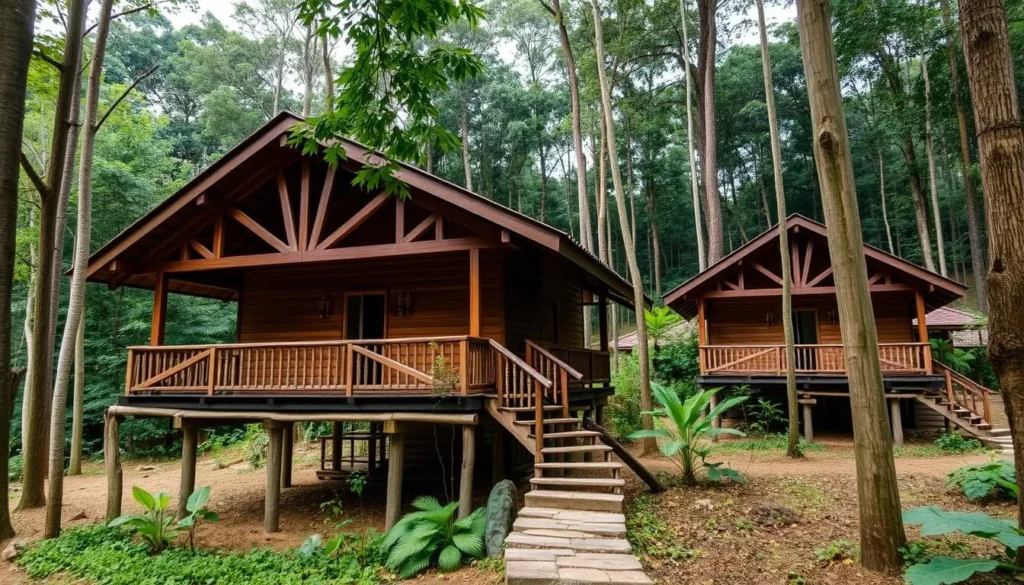
Accommodation options in and around Nakai-Nam Theun National Protected Area are limited but provide authentic experiences for visitors seeking to immerse themselves in the natural environment.
Within the Protected Area
Inside the protected area itself, accommodation is primarily camping-based:
- Designated camping sites are available along trekking routes
- Basic forest ranger stations occasionally offer simple accommodation for visitors
- Homestays in some of the indigenous villages provide cultural immersion
Nakai District
The town of Nakai offers the closest established accommodation to the protected area:
- Several guesthouses provide basic but comfortable rooms
- Prices range from 80,000-150,000 LAK ($8-15 USD) per night
- Limited amenities but authentic local experience
Thakhek
For more comfortable accommodation options, Thakhek (about 2-3 hours from Nakai) offers:
- Mid-range hotels with modern amenities
- Riverside guesthouses with views of the Mekong
- Better dining options and services
Dining & Local Cuisine
Experiencing the local cuisine is an essential part of any visit to Nakai-Nam Theun. The food reflects the cultural diversity of the region, with influences from various ethnic groups living in and around the protected area.

Local Specialties
The cuisine around Nakai-Nam Theun features fresh ingredients sourced from the forests, rivers, and local farms:
- Forest Foods: Wild mushrooms, bamboo shoots, and herbs gathered from the protected area
- Freshwater Fish: Various species from the Nam Theun River, often grilled or in soups
- Sticky Rice: The staple food, served in traditional bamboo containers
- Laap: Minced meat salad with herbs and spices, a Lao specialty
Where to Eat
Dining options vary depending on your location:
- Within the Protected Area: Meals are typically prepared by guides during treks or by homestay families
- Nakai Town: Small local restaurants serve authentic Lao dishes
- Thakhek: Wider variety of restaurants, including some with international options
Dining Etiquette
When dining in local communities, it’s helpful to understand some basic customs:
- Meals are often shared family-style
- Eating with hands (particularly sticky rice) is common, though spoons are provided
- It’s polite to try a little of everything offered
- Leaving a small amount of food indicates you’ve had enough
Traveler Tip: Bring a water purification system if trekking in remote areas. While guides typically provide safe drinking water, having your own backup is recommended.
Attractions, Sightseeing & Activities
Nakai-Nam Theun National Protected Area offers a wealth of natural attractions and activities for visitors interested in exploring one of Southeast Asia’s most pristine ecosystems.
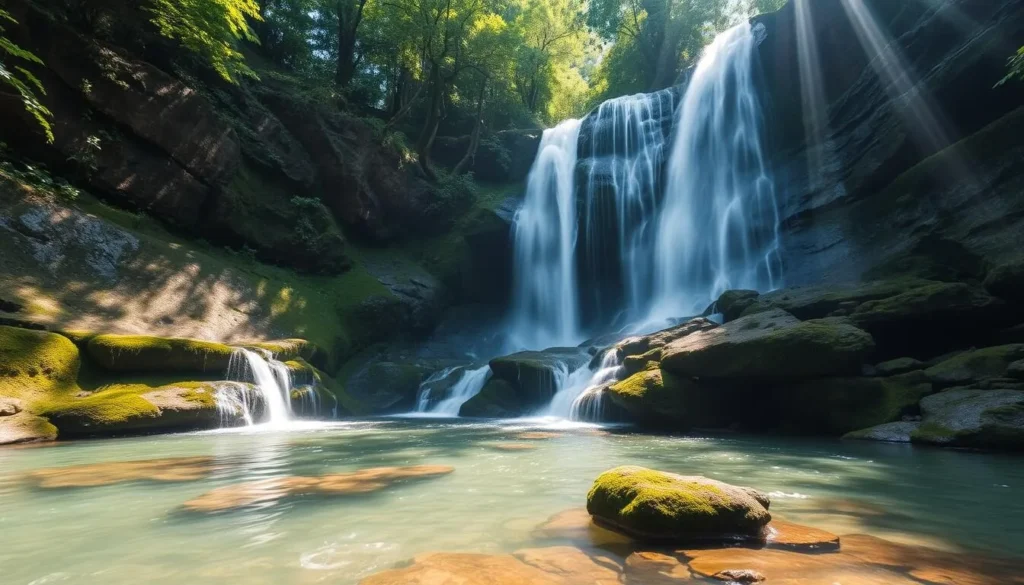
Wildlife Viewing
The protected area is home to remarkable biodiversity, including several rare and endemic species:
- Mammals: Opportunities to spot white-cheeked gibbons, douc langurs, Asian elephants, and if extremely lucky, signs of the elusive saola
- Birds: Over 400 species recorded, including the crested argus, white-winged duck, and various hornbills
- Reptiles and Amphibians: Numerous species, including several discovered only recently

Trekking Routes
Several established trekking routes allow visitors to explore different ecosystems within the protected area:
- Nakai Plateau Trails: Easier day hikes through semi-evergreen forests
- Nam Noy Valley Trek: Multi-day journey through pristine forests with river crossings
- Montane Forest Expedition: Challenging trek to higher elevations with unique flora
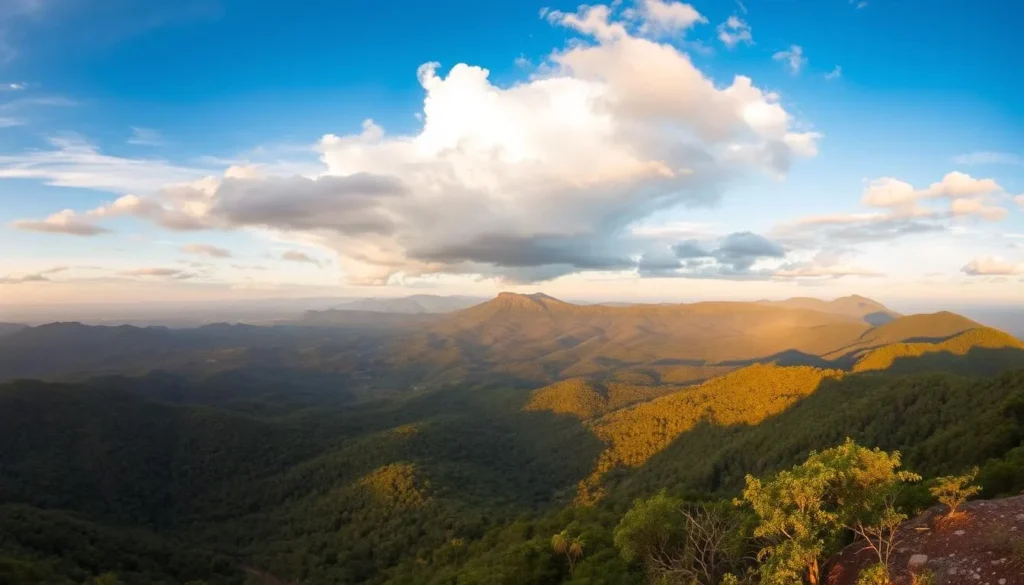
Scenic Viewpoints
Several locations offer breathtaking views of the landscape:
- Phou Ak Escarpment: Panoramic views of the Nakai Plateau
- Nam Theun River Overlook: Stunning vistas of the river valley
- Phou Laoko Summit: The highest point in the area at 2,200 meters, offering expansive views (challenging access)
Museums, Cultural Spots & Festivals
Beyond its natural wonders, Nakai-Nam Theun National Protected Area offers rich cultural experiences through interactions with indigenous communities and their traditions.
Indigenous Communities
The protected area is home to several ethnic groups with distinct cultures:
- Brou: The largest group (about 55% of the area’s population), with distinctive traditions and crafts
- Vietic Speakers: Including some of the most vulnerable indigenous groups in Laos
- Tai-Sek: Communities with historical ties to the region dating back centuries
Cultural Experiences
Visitors can engage with local cultures through:
- Village Homestays: Opportunities to stay with families in traditional houses
- Craft Demonstrations: Weaving, basket-making, and traditional tool production
- Traditional Medicine: Learning about forest plants used for healing
Local Festivals
Seasonal celebrations offer glimpses into traditional life:
- Boun Bang Fai (Rocket Festival): Celebrated in May to request rainfall for crops
- Harvest Ceremonies: Various ethnic groups hold celebrations after the rice harvest
- Boun Khao Padabdin: September festival honoring ancestors
Cultural Respect: When visiting villages, dress modestly (covering shoulders and knees), ask permission before taking photographs, and follow your guide’s advice on appropriate behavior.
Sports, Nature & Outdoor Experiences
Nakai-Nam Theun National Protected Area offers numerous opportunities for outdoor enthusiasts to connect with nature through various activities.
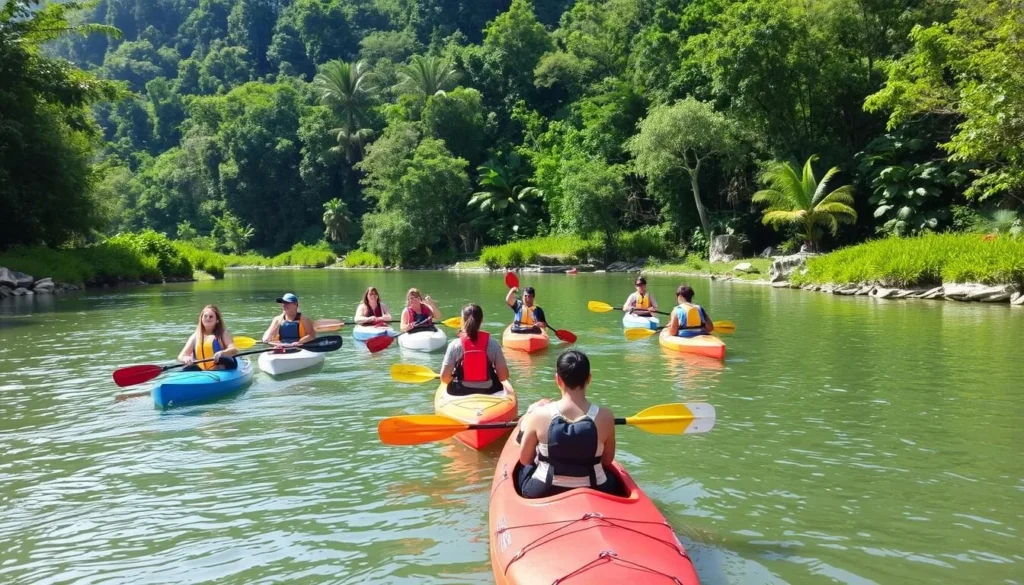
Water Activities
The rivers and streams of the protected area provide venues for water-based adventures:
- Kayaking: Guided kayaking trips on the Nam Theun and its tributaries
- Fishing: Traditional fishing experiences with local guides (catch-and-release encouraged)
- Swimming: Natural pools at certain locations (always check with guides for safety)
Nature Photography
The diverse ecosystems and wildlife make Nakai-Nam Theun a paradise for photographers:
- Bird Photography: Specialized guides can help locate rare species
- Landscape Photography: Dawn and dusk offer magical lighting conditions
- Macro Photography: Incredible diversity of insects, flowers, and fungi

Botanical Exploration
The protected area is home to remarkable plant diversity:
- Rare Conifers: Including the critically endangered Chinese Swamp Cypress
- Orchids: Numerous species bloom seasonally throughout the forests
- Medicinal Plants: Many species used in traditional healing practices
Safety, Etiquette & Local Customs
Understanding safety considerations and respecting local customs are essential for a positive experience in Nakai-Nam Theun National Protected Area.

Safety Considerations
When visiting this remote area, keep these safety tips in mind:
- Always Travel with Guides: Local knowledge is essential for safe navigation
- Health Preparations: Bring basic medications, insect repellent, and sunscreen
- Malaria Prevention: The area has malaria risk; consult a travel doctor before your trip
- Water Safety: Purify all drinking water or use bottled water
- Communication: Cell service is extremely limited; consider satellite communication for emergencies
Cultural Etiquette
Respecting local customs enhances your experience and supports positive tourism:
- Dress Modestly: Cover shoulders and knees, especially when visiting villages
- Remove Shoes: Before entering homes or certain buildings
- Ask Permission: Before photographing people or entering private areas
- Respect Elders: Show particular courtesy to older community members
Environmental Ethics
Help preserve this unique ecosystem by practicing responsible tourism:
- Leave No Trace: Pack out all trash and minimize your impact
- Stay on Trails: To prevent erosion and habitat disturbance
- No Collection: Don’t remove plants, animals, or artifacts
- Wildlife Distance: Observe animals from a respectful distance
Important: Unexploded ordnance (UXO) from the Vietnam War era remains in some remote areas. Never venture off established trails without a guide, and never touch any metal objects you might find in the forest.
Practical Travel Tips
These practical tips will help you prepare for a successful visit to Nakai-Nam Theun National Protected Area.

What to Pack
Essential items for your journey include:
- Clothing: Lightweight, quick-dry clothing; long sleeves and pants for protection
- Footwear: Sturdy hiking boots with good ankle support
- Rain Gear: Even in dry season, be prepared for occasional showers
- Sun Protection: Hat, sunglasses, and high-SPF sunscreen
- First Aid Kit: Basic supplies including blister treatment
- Water Purification: Filter, tablets, or SteriPEN
Permits and Arrangements
Visiting the protected area requires some advance planning:
- Entry permits are required and can be arranged through tour operators or at the park headquarters in Nakai
- Guides are mandatory for most areas within the park
- Book accommodations and transportation in advance, especially during peak season
Money and Costs
Financial considerations for your trip:
- ATMs are available in Thakhek but not in Nakai or within the protected area
- Bring sufficient cash (Lao Kip) for your entire stay in remote areas
- Budget approximately $30-50 USD per day for guided tours, plus accommodation
- Multi-day treks typically cost $80-150 USD per day, including guide, food, and equipment
Communication
Staying connected can be challenging:
- Purchase a local SIM card in Vientiane or Thakhek for basic coverage in Nakai town
- Within the protected area, cell service is extremely limited or non-existent
- Inform someone of your itinerary before heading into remote areas
Experience the Untouched Wilderness
Nakai-Nam Theun National Protected Area represents one of Southeast Asia’s last pristine wilderness frontiers. From its remarkable biodiversity to the rich cultural heritage of its indigenous communities, this special place offers travelers a rare glimpse into an ecosystem largely unchanged by modern development. While visiting requires careful planning and preparation, the rewards are immeasurable – breathtaking landscapes, encounters with rare wildlife, and authentic cultural experiences that few travelers ever witness. By approaching your visit with respect for both the natural environment and local communities, you’ll contribute to the conservation of this extraordinary place while creating memories that will last a lifetime. The journey may be challenging, but those who make the effort to explore Nakai-Nam Theun will discover the true meaning of untouched wilderness.
The above is subject to change.
Check back often to TRAVEL.COM for the latest travel tips and deals.

0 Comments