

You’ve likely heard of Dijon, a charming city in the heart of the Burgundy region. With its rich history as the former capital of the Duchy of Burgundy, Dijon is a must-visit destination in eastern France. As you wander through its walkable streets, you’ll discover a city that’s perfect for a day trip or weekend getaway.
Dijon’s blend of history, culture, and gastronomy is sure to captivate. From historic sites and museums to culinary experiences, there’s something for everyone. Many of Dijon’s attractions are free or low-cost, making it an excellent destination for budget-conscious travelers. You’ll follow the famous Owl Trail, sample authentic Dijon mustard, and explore the city’s jaw-dropping architecture and quaint cafés.
This guide will provide you with a comprehensive overview of the best things to do in this captivating city. Whether you’re a history buff, a foodie, or simply looking for a new adventure, Dijon’s unique charm is sure to leave a lasting impression.
Discovering Dijon: A Historic Gem in Burgundy
Nestled in the heart of the Burgundy region, Dijon is a city that seamlessly blends history with modern charm. As you explore Dijon, you’ll discover its fascinating history as the capital of the powerful Duchy of Burgundy during the 14th and 15th centuries.
The Rich History of Dijon
Dijon’s strategic location in the Burgundy region contributed significantly to its historical importance and cultural development over the centuries. The city’s rich history is still palpable in its well-preserved medieval and Renaissance architecture. In the past, Dijon controlled vast territories across Europe, leaving a lasting legacy in its art, culture, and architecture.
The sumptuous home of the Dukes of Burgundy, now a superb art museum and the city’s Hôtel de Ville, is a testament to Dijon’s historical significance. This blend of history and culture makes Dijon an attractive destination for travelers interested in exploring France’s past.
| Historical Era | Significant Events | Legacy |
|---|---|---|
| 14th-15th centuries | Capital of the Duchy of Burgundy | Art, culture, and architecture |
| Medieval period | Development of trade and commerce | Historic buildings and landmarks |
| Renaissance | Cultural and artistic flourishing | Art museums and cultural heritage |
Why Dijon Should Be on Your Travel Itinerary
Dijon deserves more attention from international travelers, offering a more authentic French experience than some of the more touristy destinations. The city’s compact size and pedestrian-friendly historic center make it ideal for exploration on foot. With its UNESCO World Heritage status, Dijon is a city that offers a perfect balance of historical attractions, cultural experiences, and culinary delights.
As you plan your trip to France, consider adding Dijon to your itinerary. The city’s excellent transportation connections make it easily accessible, and its vibrant atmosphere ensures that you’ll have a memorable experience.

Follow the Owl Trail: Dijon’s Iconic Self-Guided Tour
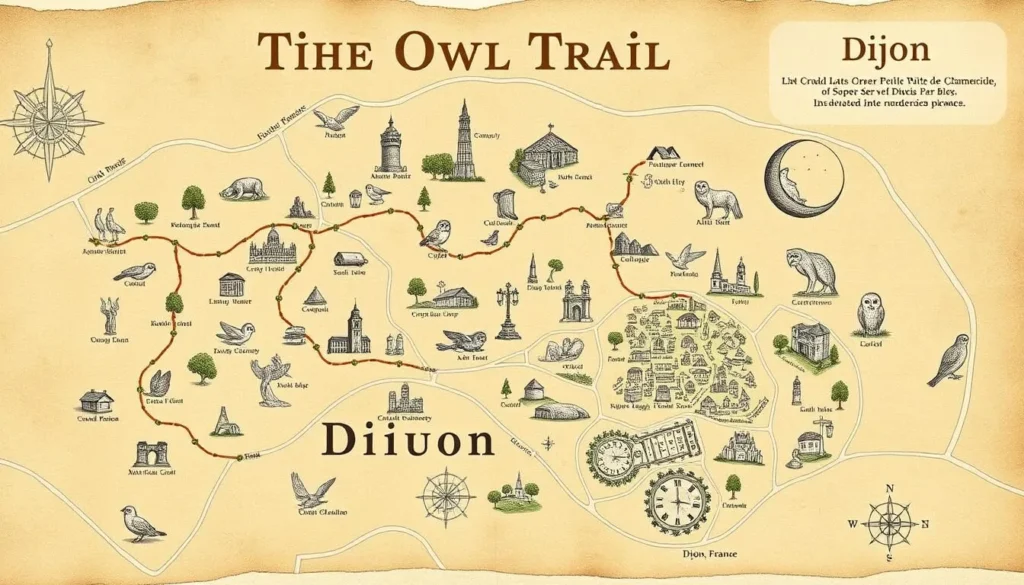
Embark on the Owl Trail, Dijon’s most popular self-guided walking tour, and uncover the city’s secrets and stories. This 22-stop journey takes you through Dijon’s historic center, showcasing its rich history, cultural landmarks, and hidden gems.
The Legend of La Chouette (Dijon’s Lucky Owl)
The Owl Trail is inspired by La Chouette, a small stone owl sculpture on the Church of Notre-Dame. For centuries, visitors have touched the owl with their left hand to make a wish, believing it brings good luck. This charming tradition has made La Chouette a beloved symbol of the city.
To make a wish, simply pass the owl on your left-hand side and touch it with your left hand while making a wish with your right hand over your heart. This unique ritual adds a touch of magic to your tour.
Top Highlights Along the Owl’s Trail
The Owl Trail is marked by brass owl medallions embedded in the sidewalks, making it easy to follow without constantly consulting a map. You can obtain a comprehensive guidebook at the Dijon tourist office for a small fee, available in multiple languages.
As you explore the trail, you’ll discover various thematic routes that showcase Dijon’s heritage and architecture. The complete tour takes about 2-3 hours at a leisurely pace, but you can customize your experience by focusing on specific sections that interest you most.
Some of the key stops along the way include the Church of Notre-Dame, Rue de la Chouette, and other historic landmarks. Each step reveals a new aspect of Dijon’s history and culture, making the Owl Trail an unforgettable experience.
Palace of the Dukes of Burgundy: Dijon’s Crown Jewel

Dijon’s iconic landmark, the Palace of the Dukes of Burgundy, is a treasure trove of history and architecture. This magnificent building, now home to the Dijon City Hall and the renowned Museum of Fine Arts, has been a central part of the city since the 14th and 15th centuries.
The Ducal Palace Architecture and History
The Palace of the Dukes of Burgundy, or Palais des Ducs et des États de Bourgogne, boasts an impressive architectural style that combines medieval elements with classical additions from the 17th and 18th centuries. The building’s history is evident in its design, with the original structure dating back to the 1450s. The Ducal Palace has undergone several transformations over the centuries, with notable contributions from architects like Jules Hardouin-Mansart, who designed the Grand Trianon at Versailles.
The palace’s façade is a blend of medieval and classical styles, with the renaissance Tower of Philip the Good being a prominent feature. This tower, which dates back to the 1450s, is the oldest visible part of the building from Place de la Libération.
Climbing the Philippe le Bon Tower
For a panoramic view of Dijon and its surroundings, climb the Philippe le Bon Tower. This experience involves ascending 316 steps, but the reward is well worth the effort. The tower visit is only available through guided tours, which must be booked in advance through the Dijon tourist office.
Practical Visitor Information
To plan your visit to the Palace of the Dukes of Burgundy, here are some practical details. The palace is open to visitors, with the tower access costing approximately 5€. Visiting hours and ticket prices can be found on the official Dijon tourist office website. It’s advisable to visit during less crowded times to fully appreciate the beauty of the palace and its surroundings.
The elegant Place de la Libération fronts the palace, offering a stunning setting with its semi-circular design and dancing fountains. This public square is a great place to relax and enjoy the atmosphere before or after visiting the palace.
Explore Dijon’s Magnificent Museums
As you explore Dijon, you’ll discover a treasure trove of museums that offer a glimpse into the city’s fascinating past. Dijon’s museums are a must-visit for anyone interested in history, art, and culture.

Musée des Beaux-Arts (Fine Arts Museum)
The Musée des Beaux-Arts is one of France’s oldest and most prestigious museums, housed within the Palace of the Dukes of Burgundy. Founded in 1787, it conveys the wealth and opulence of the Dukes of Burgundy through its impressive collection. You’ll see masterpieces from the Renaissance to the 20th century, including works by Titian, Lorenzo Lotto, and Rubens.
- Explore the museum’s impressive collection, spanning from Egyptian antiquities to 20th-century masterpieces.
- Discover the tombs of John the Fearless and Philip the Bold, featuring masterful early-Renaissance alabaster sculptures.
Musée de la Vie Bourguignonne (Museum of Burgundian Life)
The Musée de la Vie Bourguignonne is located in a former Bernardine monastery and showcases the traditional life, crafts, and costumes of the Burgundy region from the 18th to early 20th centuries. You’ll gain insight into the city’s famous culinary export, Dijon mustard, through the museum’s detailed exhibits.
Musée Magnin and Other Notable Collections
The Musée Magnin is a charming museum housed in a 17th-century mansion, featuring an eclectic collection of paintings, furniture, and decorative arts amassed by two siblings. Most of Dijon’s museums offer free admission to their permanent collections, making them accessible to all visitors.
To experience the diversity of Dijon’s cultural offerings without museum fatigue, consider a museum itinerary that allows you to visit multiple museums in a day.
Dijon, France: Best Things to Do for Architecture Lovers
As you wander through Dijon’s historic center, you’ll discover a treasure trove of architectural gems that span centuries. The city’s rich history is palpable in its buildings, from grand churches to charming half-timbered houses.
Notre-Dame Church and Its Famous Gargoyles
Notre-Dame Church is a masterpiece of Burgundian Gothic architecture, renowned for its unique façade adorned with 51 gargoyles. These intriguing stone carvings, representing monsters, animals, and humans, were replaced during 19th-century renovations. The church’s design is unlike few others in France, with a flat western facade featuring a large porch and rows of columns bordered by gargoyles.

Dijon Cathedral and Saint-Michel Church
Dijon is also home to other architectural treasures, including Dijon Cathedral (Cathédrale Saint-Bénigne) and Saint-Michel Church. The cathedral boasts an impressive Burgundian patterned roof and an ancient crypt dating back to the 11th century. Saint-Michel Church is a stunning example of the transition between Gothic and Renaissance styles, with elaborately carved portals showcasing both architectural movements. As you explore the city‘s historic streets, you’ll uncover numerous other gems, including half-timbered houses and Renaissance mansions, each telling a story of Dijon’s evolution over the years.
By following a suggested walking route, you can appreciate the evolution of building styles throughout Dijon’s long history, making the most of your visit to this architectural haven and experiencing the best things Dijon has to offer.
Culinary Delights: Taste the Flavors of Dijon

As the capital of Burgundy, Dijon’s food scene is a must-experience for any food enthusiast. You will have the opportunity to taste the region’s famous dishes and products, including Dijon mustard, which has been a staple since the Middle Ages.
The Famous Dijon Mustard Experience
You can explore the history and production of Dijon mustard at historic establishments like La Maison Maille, founded in 1747, and Edmond Fallot, the last independent mustard mill in Burgundy. These places offer mustard tasting experiences where you can sample dozens of flavored varieties.
Traditional Burgundian Dishes to Try
Burgundian cuisine is rich and flavorful, featuring dishes like beef bourguignon, coq au vin, and escargots de Bourgogne. You should also try gougères, cheese puffs that are a regional specialty. Wine is an essential ingredient in many of these dishes, reflecting Burgundy’s status as one of France’s premier wine regions.
Where to Eat in Dijon
Dijon offers a range of dining options, from casual bistros serving traditional fare to Michelin-starred establishments offering contemporary interpretations of Burgundian classics. Be sure to visit La Brasserie des Loges for their famous giant gougère, a regional specialty that shouldn’t be missed.
When you visit Dijon, take your time to explore the local food scene, and you’ll discover why this town is a culinary gem in the region.
Explore Dijon’s Charming Streets and Squares
You can experience the best of Dijon’s architectural heritage by strolling through its enchanting streets and historic squares. The city’s layout invites you to wander and discover its hidden gems.
Rue des Forges and Its Historic Mansions
Rue des Forges is one of Dijon’s most picturesque streets, lined with elegant mansions known as hôtels particuliers, dating back to the 15th to 17th centuries. As you walk along this historic street, you’ll come across notable buildings such as Hôtel Morel-Sauvegrain and Hôtel Chambellan. The latter, located at 34-36 Rue des Forges, is particularly noteworthy, with its decorative gate leading to a courtyard featuring a stunning stone spiral staircase and carved wooden gallery.

| Historic Mansions | Location | Notable Features |
|---|---|---|
| Hôtel Morel-Sauvegrain | 52-56 Rue des Forges | Historic significance as the home of Charles the Bold’s nurse |
| Hôtel Chambellan | 34-36 Rue des Forges | Decorative gate, stone spiral staircase, carved wooden gallery |
Place François Rude and Place de la Libération
Dijon’s historic squares are just as captivating as its streets. Place François Rude is a lively square dominated by the colorful half-timbered building “Au Moulin à Vent” and features the fountain “Le Vendangeur,” depicting a winegrower pressing grapes. In contrast, Place de la Libération is a grand, semi-circular square designed by the same architect who worked on Versailles, complete with dancing fountains and elegant café terraces.
Visiting these areas at different times of day can offer distinct experiences, from the morning market atmosphere to the evening ambiance when the buildings are beautifully illuminated.
Markets and Shopping in Dijon
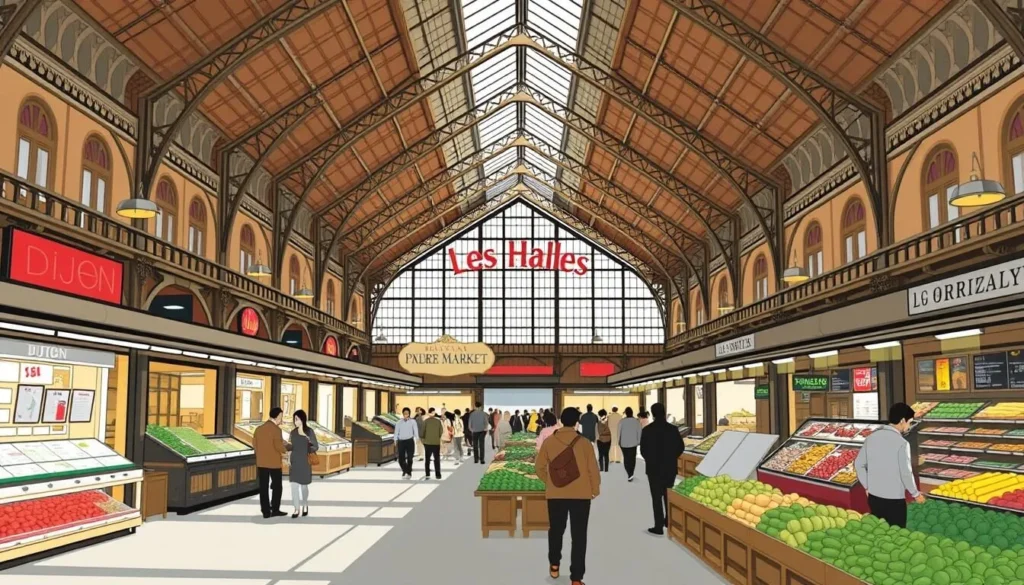
At the heart of Dijon’s shopping district lies a historic covered market that is a must-visit destination. Les Halles, built in the 1870s, is not only an architectural marvel but also a hub for local food and produce.
Les Halles: Dijon’s Historic Covered Market
Les Halles is an official “monument historique” and a testament to Dijon’s rich history. The cast iron and glass building is adorned with decorative elements, including animal motifs and medallions of Ceres and Hermes. As you explore the market, you’ll be surrounded by a vast array of fresh produce, regional cheeses, meats, and seafood.
The market operates primarily on Tuesday, Thursday, Friday, and Saturday mornings, making it easy to plan your visit.
Best Souvenirs to Take Home from Dijon
When it comes to taking a piece of Dijon back home, consider the city’s famous mustard varieties. Specialty shops like La Maison Maille and Fallot offer a range of mustards to take home. You can also pick up some pain d’épices from Mulot & Petitjean, a traditional Burgundian spiced bread. Don’t forget to explore the outdoor markets surrounding Les Halles for additional local products and crafts.
Gardens and Green Spaces in Dijon
If you’re looking for a peaceful retreat in Dijon, the city’s gardens and green spaces are a must-visit, offering a tranquil atmosphere and stunning natural beauty. Dijon’s parks and gardens not only provide a serene escape from the city’s bustling center but also showcase a variety of landscaping styles that reflect the city’s rich history and cultural heritage.
Jardin Darcy and Its Iconic Polar Bear
Jardin Darcy, created in 1880, is a charming 19th-century park that serves as both a popular meeting place for locals and the starting point for the Owl Trail. The garden’s most famous feature is the iconic white polar bear sculpture, which has become one of Dijon’s emblematic monuments since its installation. You can stroll through the garden’s beautifully maintained paths, taking in the vibrant flora and enjoying the serene atmosphere.

Jardin Botanique de l’Arquebuse
The Jardin Botanique de l’Arquebuse has a rich history, evolving from military training grounds in the 18th century to a botanical garden with over 4,000 plant species. As you explore the garden, you’ll discover diverse areas, including formal flower beds, serene ponds, pergolas, and specialized collections that showcase both regional flora and exotic species. The garden also houses the Natural History Museum and planetarium, making it a multi-faceted cultural and educational site. You can spend hours exploring the garden’s many wonders, gaining a deeper appreciation for the natural world and the region’s unique botanical heritage.
Day Trips from Dijon: Exploring Burgundy

You can experience the essence of Burgundy by taking day trips from Dijon, visiting world-famous vineyards, and historic towns. The region is renowned for its wine production, with numerous opportunities to taste some of the world’s finest wines.
Wine Tasting in Côte de Nuits
The Côte de Nuits region, located just south of Dijon, is famous for producing some of the world’s most celebrated Pinot Noir wines. You can visit Gevrey-Chambertin, which boasts nine different Grand Cru vineyards. At the Philippe Leclerc Cave, you can taste a variety of local wines and explore a museum showcasing local viticulture.
Visiting Beaune and Other Nearby Towns
Beaune, the wine capital of Burgundy, is a must-visit destination, located just 30 minutes south of Dijon. You can explore the famous Hospices de Beaune with its colorful tiled roof and enjoy the town’s excellent restaurants. Other charming towns worth visiting include Vézelay, with its UNESCO-listed basilica, and Semur-en-Auxois, known for its medieval fortifications.
To make the most of your day trips, you can book organized wine tours through the Dijon tourist office, which offer transportation and expert guides. Alternatively, you can use regional trains and buses to travel independently to nearby destinations.
Conclusion: Making the Most of Your Visit to Dijon
Dijon is a must-visit destination with its rich history, stunning architecture, and delectable cuisine. Follow the owl trail, sample authentic Dijon mustard, and explore the Palace of the Dukes of Burgundy. With 2-3 days ideal, plan your visit in spring or fall.
The above is subject to change.
Check back often to TRAVEL.COM for the latest travel tips and deals.




0 Comments