
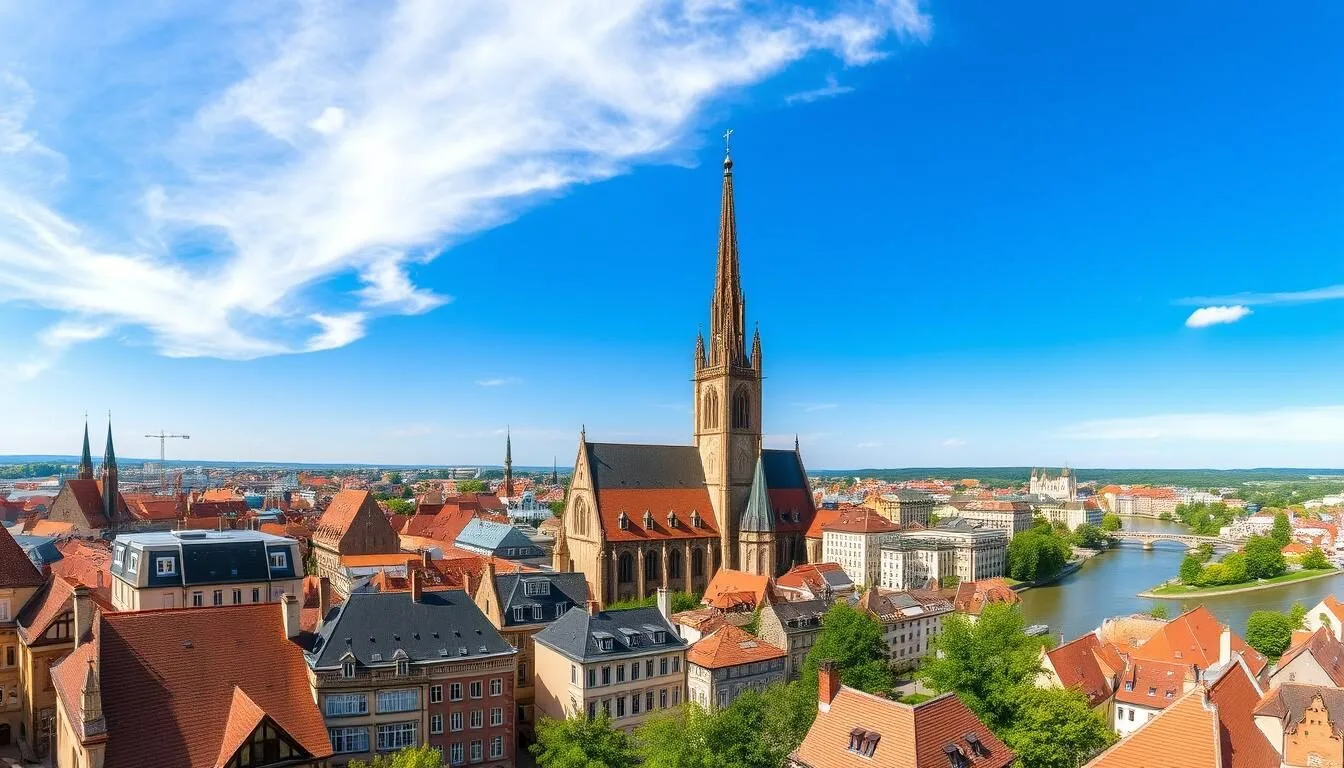
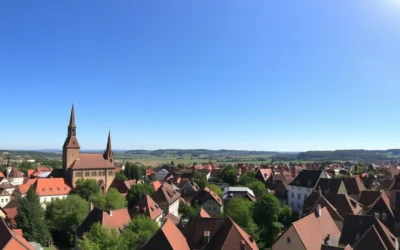
Did you know that Ulm is home to the world’s tallest church spire? Standing at an impressive 161.5 m (530 ft), the Ulm Minster’s magnificent Gothic tower has dominated the city’s skyline since its completion in 1890. This architectural marvel is just one of many fascinating attractions in this charming German city that straddles the Danube River. Whether you’re drawn to historic landmarks, cultural treasures, or scenic riverside walks, Ulm offers a perfect blend of medieval charm and modern appeal that makes it an ideal destination for travelers seeking authentic German experiences.
Getting There & Planning Your Journey
Reaching Ulm is straightforward thanks to its central location in southern Germany. The city sits almost equidistant from Munich and Stuttgart, making it easily accessible by various transportation methods.
Nearest Airports
- Stuttgart Airport (STR) – Approximately 90 km (56 miles) away, with a direct train connection taking about 1 hour
- Munich Airport (MUC) – About 160 km (99 miles) from Ulm, with train connections taking approximately 2 hours
By Train
Ulm is well-connected to Germany’s excellent rail network. The city’s main station (Ulm Hauptbahnhof) serves as a hub for many rail lines, with direct connections to major cities:
- From Stuttgart: 1 hour
- From Munich: 1.5 hours
- From Frankfurt: 2.5 hours
By Car
If you prefer driving, Ulm is accessible via the A8 motorway that crosses southern Germany. The well-maintained roads make for a scenic journey through the German countryside.
Best Time to Visit & Weather Tips
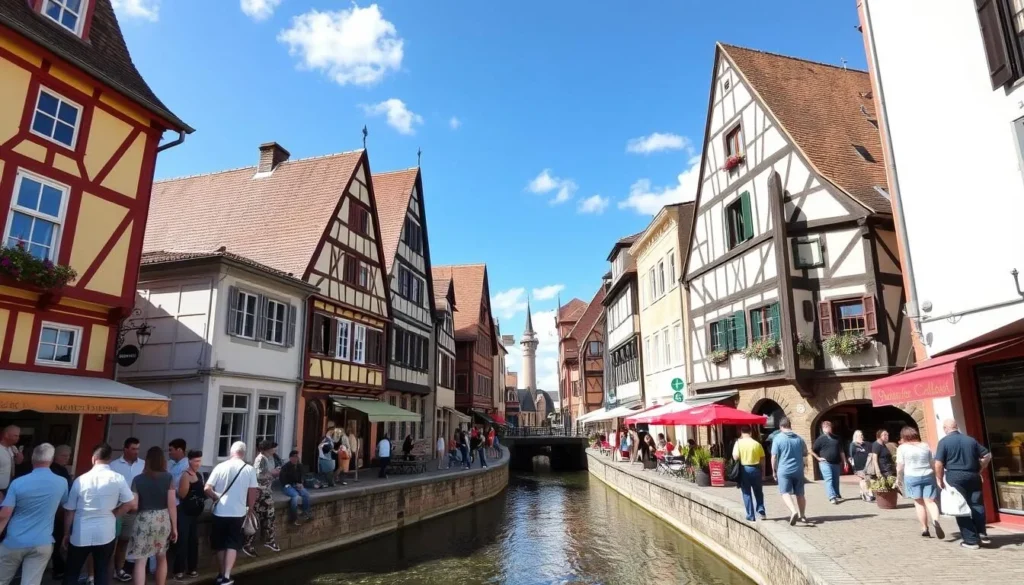
Ulm experiences four distinct seasons, each offering a different perspective on the city’s charms. Your ideal visiting time depends on your preferences for weather, crowds, and activities.
Recommended Seasons
- Late Spring (May-June): Comfortable temperatures between 15-22°C (59-72°F) with blooming flowers and fewer tourists
- Summer (July-August): Peak season with temperatures averaging 18-25°C (64-77°F), perfect for outdoor activities and riverside relaxation
- Early Autumn (September-October): Pleasant weather with temperatures around 10-18°C (50-64°F) and beautiful fall colors
Seasons to Avoid
- Winter (December-February): Temperatures can drop to -5°C (23°F) with occasional snow, though the Christmas market in December is worth experiencing
- November: Often rainy and gray, with shorter daylight hours
Special Events
Consider planning your visit around these local events:
- Ulm Tent Festival (July): A cultural festival with music, theater, and performances
- Schwörwoche (July): A week-long city festival culminating in Schwörmontag (Oath Monday)
- Ulm Christmas Market (late November-December): A traditional German Christmas market in Münsterplatz
Getting Around Locally

Ulm is a compact city with a pedestrian-friendly center, making it easy to explore on foot. Most major attractions are within walking distance of each other, particularly in the Old Town area.
Public Transportation
Ulm has an efficient public transportation system operated by DING (Donau-Iller-Nahverkehrsverbund):
- Buses and Trams: Cover the entire city and connect to nearby areas
- Day Tickets: Available for individuals or groups, offering unlimited travel
- UlmCard: Provides free public transportation and discounts to attractions
Cycling
Ulm is very bicycle-friendly with numerous bike paths. Rental bikes are available at several locations throughout the city, making cycling an excellent option for exploring both the city center and the scenic Danube riverbanks.
Taxis and Ride-Sharing
Taxis are readily available and can be hailed on the street or at designated taxi stands. Ride-sharing services also operate in Ulm, providing another convenient option for getting around.
Where to Stay
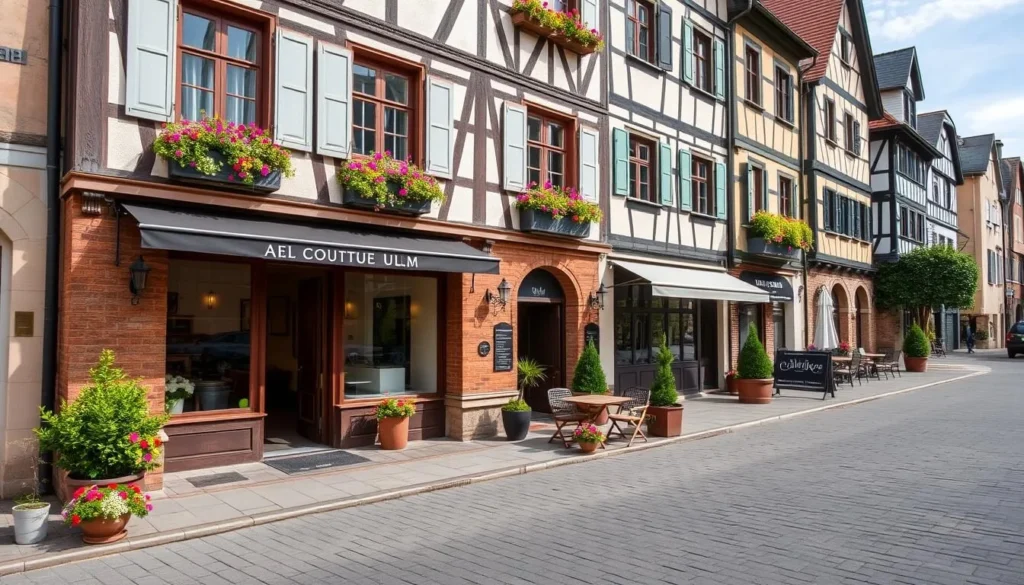
Ulm offers a range of accommodation options to suit various preferences and budgets. The city is divided between Ulm proper (in Baden-Württemberg) and Neu-Ulm (in Bavaria) on the opposite side of the Danube, giving visitors multiple areas to consider.
City Center (Ulm-Mitte)
Staying in the heart of Ulm puts you within walking distance of major attractions like the Ulm Minster and the Fishermen’s Quarter.
- Luxury: Maritim Hotel Ulm – Located near the city center with views of the Danube
- Mid-range: Motel One Ulm – Modern hotel with an excellent location near Münsterplatz
- Budget: Hotel Ulmer Stuben – Charming hotel in a historic building
Neu-Ulm
Staying across the Danube in Neu-Ulm often means slightly lower prices and excellent views of Ulm’s skyline.
- Mid-range: Golden Tulip Parkhotel Neu-Ulm – Riverside location with panoramic views
- Budget: Orange Hotel und Apartments – Modern accommodations with good value
Outer Neighborhoods
If you’re traveling by car, consider staying in one of Ulm’s outer neighborhoods for free parking and lower rates.
- Mid-range: Hotel Garni Lehrertal – Comfortable hotel with free parking and good public transport connections
- Budget: B&B Hotel Ulm – Clean, modern rooms at affordable prices
Dining & Local Cuisine
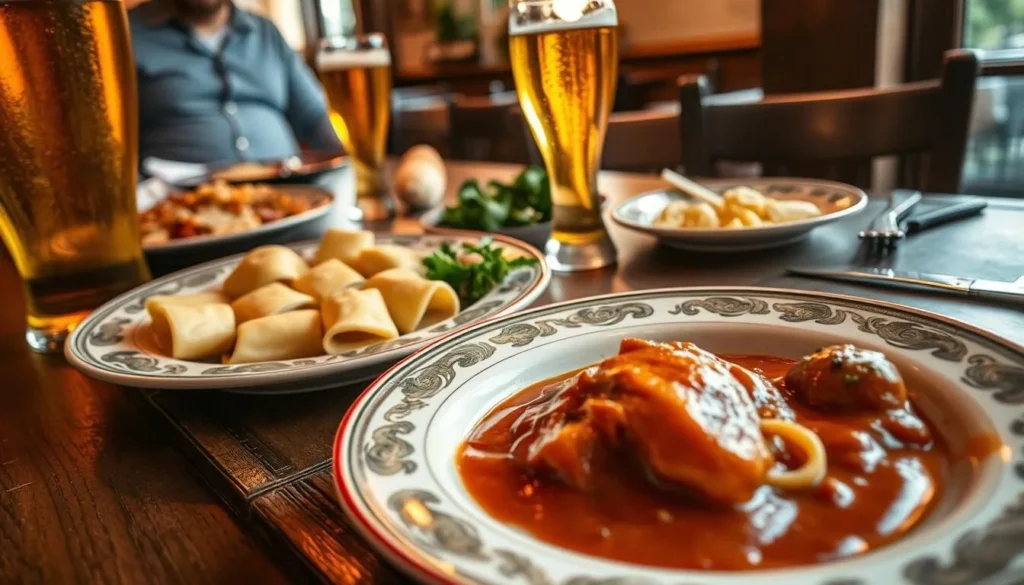
Ulm’s culinary scene reflects its location in the Swabian region of Germany, known for hearty, flavorful dishes. The city offers everything from traditional German fare to international cuisine.
Local Specialties
Don’t miss these traditional Swabian dishes during your visit:
- Maultaschen – Pasta pockets filled with meat, spinach, and herbs, often served in broth
- Spätzle – Egg noodles typically served with cheese (Käsespätzle) or as a side dish
- Schwäbischer Zwiebelrostbraten – Roast beef topped with crispy onions
- Ulmer Zuckerbrot – A sweet bread specialty of Ulm
Recommended Restaurants
Here are some excellent dining options in Ulm:
- Zunfthaus der Schiffleute – Traditional Swabian cuisine in a historic building in the Fishermen’s Quarter
- Gerberhaus – Upscale dining in one of Ulm’s oldest buildings
- Zur Forelle – Excellent fish dishes in a cozy setting
- Barfüßer – Brewery restaurant serving hearty German fare and house-brewed beer
- Café am Münsterplatz – Perfect for coffee and cake with views of the Minster
Dining Tips
A few helpful tips for dining in Ulm:
- Restaurants in popular areas like the Fishermen’s Quarter can get busy; reservations are recommended
- Service charge is typically included in the bill, but rounding up for good service is customary
- Many restaurants offer a “Mittagsmenü” (lunch menu) with special prices on weekdays
- Water is not typically served for free; you’ll need to order and pay for bottled water
Attractions, Sightseeing & Activities
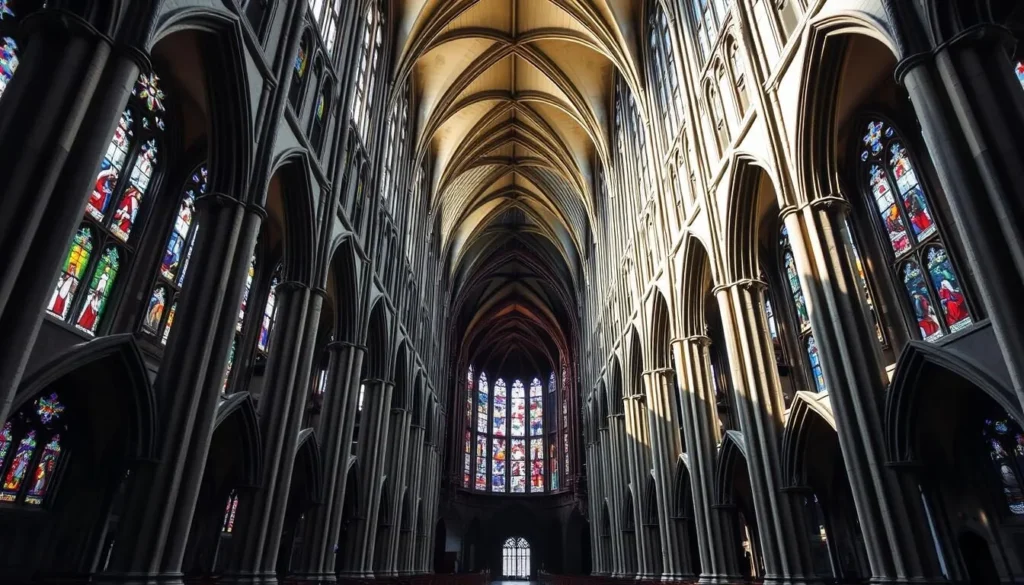
Ulm offers a fascinating mix of historical landmarks, cultural sites, and natural beauty. Here are the top attractions you shouldn’t miss during your visit:
1. Ulm Minster (Ulmer Münster)
The crown jewel of Ulm, this Gothic masterpiece boasts the world’s tallest church steeple at 161.5 m (530 ft). Climb the 768 steps to the viewing platform at 143 m (469 ft) for breathtaking panoramic views extending to the Alps on clear days. The interior features beautiful stained glass windows, an impressive choir, and intricate wood carvings.
2. Fishermen’s and Tanners’ Quarter (Fischerviertel)
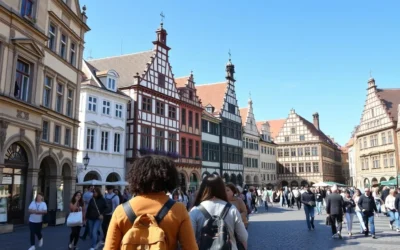
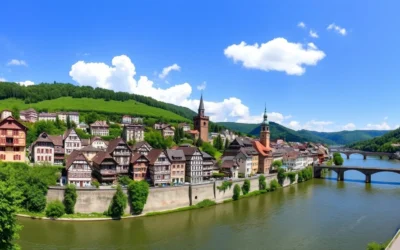
This picturesque medieval neighborhood is one of Ulm’s most charming areas. Wander through narrow cobblestone streets lined with colorful half-timbered houses, cross the small bridges over the Blau River, and enjoy the romantic atmosphere. Don’t miss the Leaning House (Schiefes Haus), recognized by the Guinness Book of Records as the “most crooked hotel in the world.”
3. Old City Hall (Rathaus)
Dating back to the 14th century, Ulm’s City Hall features a stunning Renaissance façade adorned with colorful murals. The astronomical clock from 1520 is a highlight, as is the replica of the “Tailor of Ulm’s” flying apparatus inside.
4. The Old City Walls
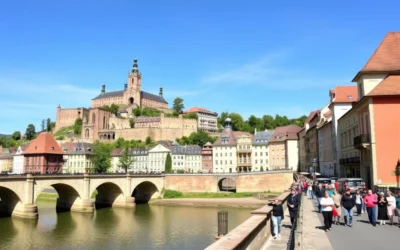
Take a pleasant walk along Ulm’s medieval city walls, which date from 1492. The walls run along the north bank of the Danube and offer lovely views of both the river and the Old Town. The Metzgerturm (Butcher’s Tower) is a notable feature – it leans 2 meters due to its foundation on marshy ground.
5. Albert Einstein Memorial
Ulm is the birthplace of Albert Einstein, and while his birth house was destroyed during WWII, you can visit the memorial fountain nearby. There’s also the quirky Einstein Fountain (Einstein-Brunnen) showing the physicist sticking out his tongue.

6. Berblinger Tower
This spiral viewing tower offers excellent views of the Danube and commemorates Albrecht Ludwig Berblinger, the “Tailor of Ulm,” who attempted to fly across the Danube in 1811.
7. Wiblingen Monastery Library
Located just outside the city center, this Benedictine monastery houses one of the most beautiful libraries in the world. The rococo-style library room features stunning ceiling paintings, sculptures, and ornate decorations that make it look more like a palace than a monastery.
Museums, Cultural Spots & Festivals

Ulm’s rich cultural heritage is reflected in its excellent museums and vibrant festival scene. Here are some cultural highlights to explore:
Museums
- Ulm Museum – Home to the famous Lion Man (Löwenmensch), a 40,000-year-old figurine carved from mammoth ivory, considered one of the oldest examples of figurative art in the world
- Museum of Bread Culture (Museum Brot und Kunst) – A unique museum dedicated to the history and cultural significance of bread, featuring over 1,500 exhibits including art by Salvador Dalí and Pablo Picasso
- Kunsthalle Weishaupt – A modern art gallery housing an impressive collection of contemporary works by artists like Andy Warhol and Max Bill
- Edwin Scharff Museum – Located in Neu-Ulm, featuring works by the sculptor Edwin Scharff and changing exhibitions of modern art
Cultural Spots
- Stadthaus – A modern cultural center designed by Richard Meier, hosting exhibitions and events
- Ulm Theater – Offering a diverse program of plays, operas, and concerts
- Roxy – A cultural center in a former industrial building, featuring concerts, theater performances, and club nights
Festivals & Events
- Schwörwoche & Schwörmontag (July) – Ulm’s most important civic festival, dating back to the 14th century, culminating in the mayor’s oath and the “Nabada” water parade on the Danube
- Ulm Tent Festival (July) – A cultural festival with music, theater, and cabaret performances
- International Danube Festival (every two years) – A celebration of the cultures along the Danube River
- Ulm Christmas Market (late November-December) – A traditional German Christmas market in front of the Ulm Minster
Sports, Nature & Outdoor Experiences
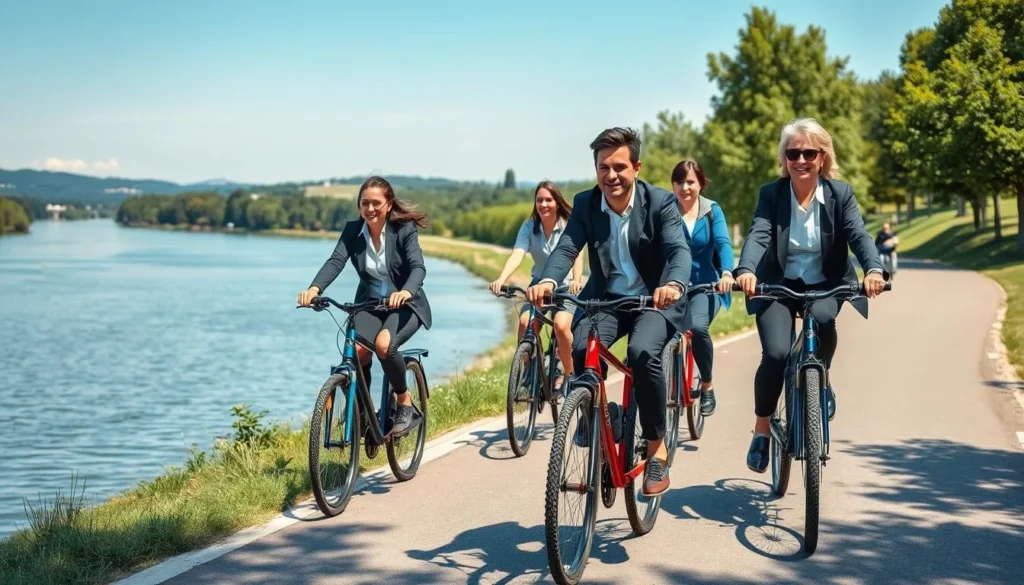
Ulm’s location on the Danube River and its surrounding natural landscapes offer plenty of opportunities for outdoor activities and recreation.
Danube Activities
- Cycling – The Danube Cycle Path (Donauradweg) is one of Europe’s most popular cycling routes. Rent a bike and enjoy a ride along the scenic riverbanks
- Boating – Take a leisurely boat trip on the Danube to see Ulm from a different perspective
- Kayaking – Paddle on the Danube or the smaller Blau River for a more active water experience
Parks and Green Spaces
- Friedrichsau – Ulm’s largest park, offering walking paths, playgrounds, and a small zoo
- Glacis Park – A green belt on the site of former fortifications, perfect for relaxing walks
- Botanical Garden – Part of the University of Ulm, featuring diverse plant collections
Nearby Natural Attractions
- Blautopf – A stunning blue spring in nearby Blaubeuren (about 20 km from Ulm), known for its intense blue color due to limestone particles in the water
- Swabian Alb – A nearby highland region offering hiking trails and beautiful landscapes
- Donauried – A nature reserve along the Danube with diverse flora and fauna
Sports Facilities
- Donaubad – A large aquatic center with indoor and outdoor pools, waterslides, and wellness facilities
- Climbing Center Sparkassendome – One of Europe’s largest indoor climbing facilities
- Ice sports center Neu-Ulm – For ice skating and hockey during the winter months
Safety, Etiquette & Local Customs
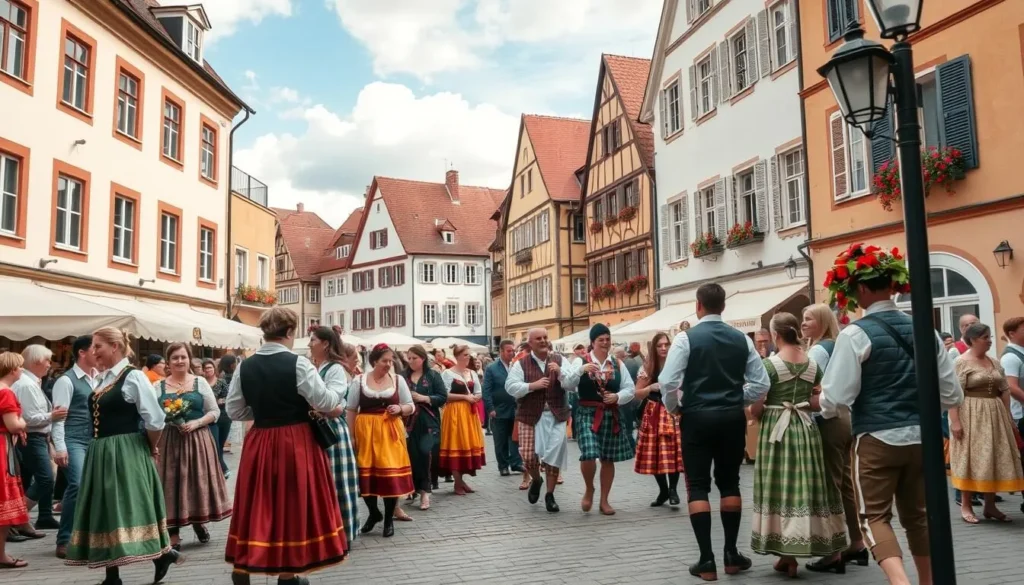
Ulm is generally a safe and welcoming city for visitors. Here are some tips to help you navigate local customs and stay safe during your visit:
Safety
- Ulm has a low crime rate, but standard travel precautions apply
- Keep valuables secure and be aware of your surroundings, especially in crowded tourist areas
- The emergency number in Germany is 112 for medical emergencies and fire, and 110 for police
- Pharmacies (Apotheke) are marked with a red ‘A’ sign and can provide basic medical advice
Etiquette & Customs
- Greetings – A handshake is the common greeting. “Guten Tag” (Good day) is a formal greeting, while “Hallo” is more casual
- Punctuality – Germans value punctuality, so arrive on time for tours, restaurant reservations, and appointments
- Dining – Wait to be seated in restaurants. It’s customary to say “Guten Appetit” before eating
- Tipping – Service is usually included in the bill, but rounding up or adding 5-10% for good service is common
- Recycling – Germany takes recycling seriously. Be mindful of sorting your waste into appropriate bins
Local Customs
- Swabian Dialect – While High German is widely spoken, you might hear the distinct Swabian dialect among locals
- Sunday Closures – Most shops are closed on Sundays, with exceptions for restaurants, cafes, and some tourist attractions
- Bread Culture – Bread holds a special place in German culture, reflected in Ulm’s Museum of Bread Culture
- Beer Tradition – Germany’s beer purity law (Reinheitsgebot) is taken seriously, and local breweries produce excellent beers
Visitor Comments About Ulm
“I was amazed by how much Ulm has to offer! Climbing the 768 steps to the top of the Ulm Minster was challenging but absolutely worth it for the spectacular views. The Fishermen’s Quarter was like stepping back in time, and the Lion Man at the museum was fascinating. Don’t miss the Blautopf spring nearby—that blue water is unbelievable!”
“As someone who loves architecture, Ulm was a dream destination. The contrast between the Gothic Minster and modern buildings like the Stadthaus creates a fascinating urban landscape. The food was delicious too—I couldn’t get enough of the Maultaschen! The locals were friendly and helpful despite my limited German.”
“We visited Ulm with our children and were pleasantly surprised by how family-friendly it is. The Berblinger Tower was a hit with the kids, and they loved watching the boats on the Danube. The bread museum was unexpectedly interesting for all of us! Ulm makes for a perfect stop when traveling through southern Germany.”
Additional Nearby Destinations
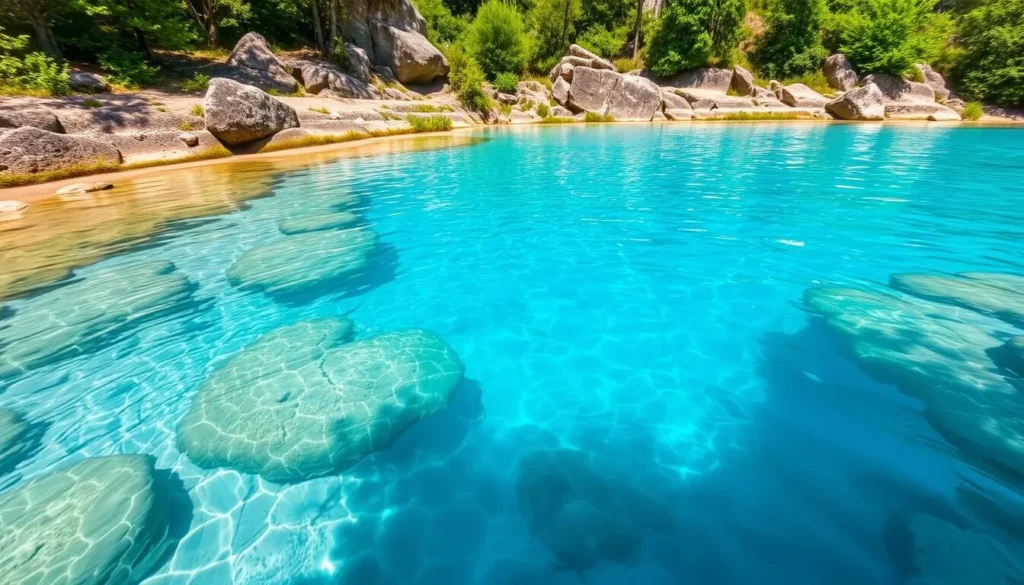
Ulm’s central location in southern Germany makes it an excellent base for exploring nearby attractions. Here are some worthwhile destinations within easy reach:
Day Trips from Ulm
- Blaubeuren (20 km) – Home to the stunning Blautopf, a spring with incredibly blue water, and a well-preserved medieval monastery
- Biberach an der Riß (40 km) – A charming town with a beautiful old center and the Braith-Mali Museum
- Legoland Germany (30 km) – Located in Günzburg, this theme park is perfect for families with children
- Steiff Museum (35 km) – In Giengen an der Brenz, discover the history of the famous teddy bear manufacturer
Larger Cities Nearby
- Stuttgart (90 km) – Baden-Württemberg’s capital, known for its automobile museums (Mercedes-Benz and Porsche) and cultural offerings
- Munich (140 km) – Bavaria’s capital with world-class museums, beautiful parks, and the famous Oktoberfest
- Augsburg (85 km) – One of Germany’s oldest cities with a UNESCO-listed water management system
Natural Attractions
- Swabian Alb – A highland region with hiking trails, caves, and castles
- Lake Constance (Bodensee) – Germany’s largest lake, about 100 km from Ulm, offering water sports and beautiful towns like Lindau and Meersburg
- Danube Valley – Follow the Danube downstream to discover picturesque villages and stunning landscapes
Practical Travel Tips

Here are some practical tips to help you make the most of your visit to Ulm:
Money Matters
- The currency is the Euro (€)
- Credit cards are widely accepted, but it’s good to carry some cash for smaller establishments
- ATMs (Geldautomat) are readily available throughout the city
- Tipping is typically 5-10% in restaurants and for services
Connectivity
- Free Wi-Fi is available in many cafes, restaurants, and public spaces
- The main train station offers free Wi-Fi
- Germany uses type F electrical outlets (230V); bring an adapter if needed
Language
- German is the official language, but many people in the tourism industry speak English
- Learning a few basic German phrases is appreciated by locals
- Useful phrases include “Danke” (Thank you), “Bitte” (Please), and “Sprechen Sie Englisch?” (Do you speak English?)
Visitor Information
- The Tourist Information Center is located at Münsterplatz 50, near the Ulm Minster
- Consider purchasing the UlmCard for free public transportation and discounts on attractions
- Most attractions are closed or have reduced hours on Mondays
Shopping
- Most shops are open Monday to Saturday, typically from 9:00 or 10:00 to 18:00 or 20:00
- Shops are generally closed on Sundays and public holidays
- The main shopping areas are around Bahnhofstraße and Hirschstraße
- For souvenirs, look for Ulmer Spatzen (Ulm sparrows), traditional ceramic figurines
Embrace the Charm of Ulm: Where History Meets Modern Delight
From the soaring spire of the Ulm Minster to the charming cobblestone streets of the Fishermen’s Quarter, Ulm offers a perfect blend of historical significance and contemporary appeal. This gem on the Danube may not be as famous as some of Germany’s larger cities, but its unique attractions, rich cultural heritage, and warm Swabian hospitality make it a destination worth discovering. Whether you’re climbing the 768 steps to the top of the world’s tallest church steeple, admiring the 40,000-year-old Lion Man, or simply enjoying a local beer along the Danube, Ulm promises memorable experiences that will leave you enchanted. As you plan your German adventure, consider giving Ulm the time it deserves—this charming city might just become the unexpected highlight of your journey.
The above is subject to change.
Check back often to TRAVEL.COM for the latest travel tips and deals.
0 Comments