
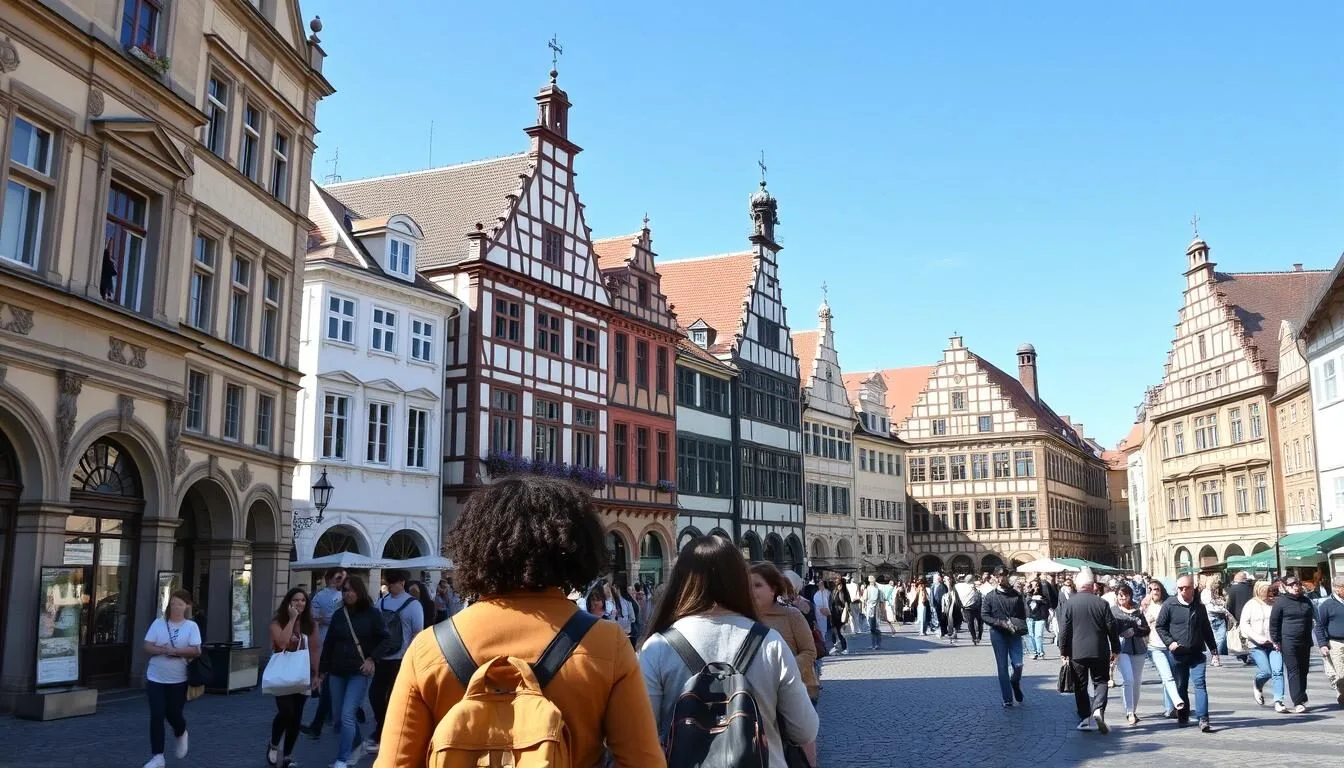
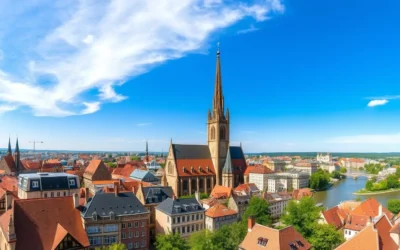
Weimar, a small city of just 65,000 people, produced an astonishing concentration of world-changing thinkers – Goethe, Schiller, Nietzsche, Bach, and Liszt all called this place home, making it arguably the most culturally significant small city in Europe. This cultural powerhouse packs two UNESCO World Heritage sites into its compact center, offering visitors an unparalleled journey through German intellectual history.
Getting There & Planning Your Journey
Weimar is conveniently located in the heart of Germany, making it accessible from major cities. The closest airports are:
- Leipzig/Halle Airport (LEJ) – 90 km (56 miles) away
- Erfurt-Weimar Airport (ERF) – 30 km (19 miles) away
- Frankfurt Airport (FRA) – 280 km (174 miles) away
Most visitors arrive by train, as Weimar has excellent rail connections. Direct trains run regularly from Berlin (2 hours), Leipzig (1 hour), and Frankfurt (2.5 hours). The Deutsche Bahn website offers easy booking for all train connections.
If you’re driving, Weimar is accessible via the A4 autobahn. The city center has several parking garages, though street parking can be limited in the historic areas.
For the most rewarding experience, plan to spend at least two full days in Weimar. This gives you enough time to visit the major cultural sites while also enjoying the city’s charming atmosphere.
Best Time to Visit & Weather Tips
Recommended Months
- May to September – Ideal weather with temperatures between 18-25°C (64-77°F)
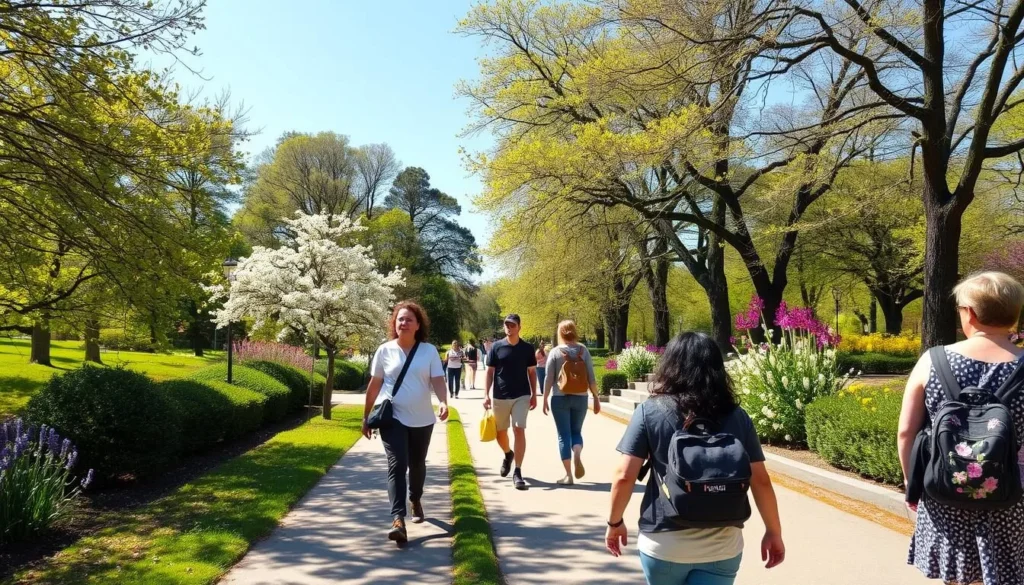
- Late April – Beautiful spring blooms in Park an der Ilm
- Early October – Fall colors and the famous Onion Market festival
Months to Avoid
- November to February – Cold temperatures around 0-5°C (32-41°F)
- January – Many attractions have reduced hours or are closed
- School holidays – More crowded, especially in summer
Summer brings pleasant temperatures and the longest opening hours for attractions, but also the most tourists. Spring and fall offer a nice balance of good weather and fewer crowds. If you visit in winter, be prepared for shorter opening hours at museums and some seasonal attractions being closed entirely.
The annual Onion Market (Zwiebelmarkt) in October is Weimar’s largest festival, attracting thousands of visitors. Book accommodations well in advance if you plan to attend.
Getting Around Locally
Weimar’s compact size makes it perfect for exploring on foot. Most major attractions are within a 15-20 minute walk of each other in the historic center. For longer distances, consider these options:
Public Transportation
- City buses – Comprehensive network covering all areas
- Day tickets – €5.50 for unlimited travel
- WeimararCard – Includes public transport and museum entries
Alternative Options
- Bicycle rentals – Available from €12/day
- Taxis – Readily available but relatively expensive
- Walking tours – Excellent way to learn about the city
The WeimararCard (€32.50 for 48 hours) is highly recommended if you plan to visit multiple museums and attractions. It includes entry to most major sites and unlimited use of public transportation.
For visiting the Buchenwald Memorial, located about 10 km outside the city, take bus #6 from the main train station. The journey takes approximately 25 minutes.
Where to Stay
Weimar offers accommodations for every budget, from luxury hotels to budget-friendly options. Staying in the historic center puts you within walking distance of most attractions.
Luxury
- Hotel Elephant – Historic hotel on the market square where Bach, Goethe, and even Thomas Mann stayed
- Dorint Am Goethepark – Elegant rooms overlooking Park an der Ilm
- Price range: €150-300 per night
Mid-Range
- Amalienhof Hotel – Charming hotel near Goethe’s House
- Hotel Anna Amalia – Boutique hotel in a historic building
- Price range: €80-150 per night
Budget
- Hotel Schillerhof – Simple but comfortable rooms
- Weimar Youth Hostel – Clean, affordable option
- Price range: €30-80 per night
Booking accommodation in advance is essential during the summer months and especially during the Onion Market festival in October. Many smaller hotels don’t have air conditioning, which is rarely needed but worth checking if you’re sensitive to heat.
Dining & Local Cuisine

Weimar offers a delightful mix of traditional Thuringian cuisine and international options. Don’t miss these local specialties:
- Thüringer Rostbratwurst – The famous Thuringian sausage, typically served with mustard
- Thüringer Klöße – Potato dumplings, a regional staple
- Zwiebelkuchen – Onion cake, especially popular during the Onion Market
- Schmandkuchen – Cream cake with a sweet or savory topping
Recommended Restaurants
Traditional
- Gasthaus Zum Weißen Schwan – Goethe’s favorite inn, serving authentic Thuringian dishes
- Alt-Weimar – Historic restaurant with regional specialties
Modern
- Anna Amalia – Refined cuisine in an elegant setting
- Residenz Café – Contemporary dishes with local ingredients
Casual
- Café Frauentor – Excellent cakes and coffee
- 36 Pho Co – Surprising Vietnamese option for a change
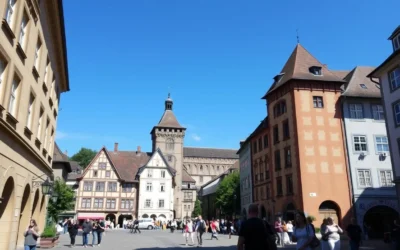
Most restaurants in Weimar are reasonably priced compared to larger German cities. A meal at a mid-range restaurant costs around €15-25 per person. Many places offer outdoor seating in summer, particularly around the market square.
Attractions, Sightseeing & Activities
Weimar’s cultural density is extraordinary, with UNESCO World Heritage sites and historic landmarks at every turn. Here are the must-see attractions:
Top Attractions in Weimar Germany
Duchess Anna Amalia Library
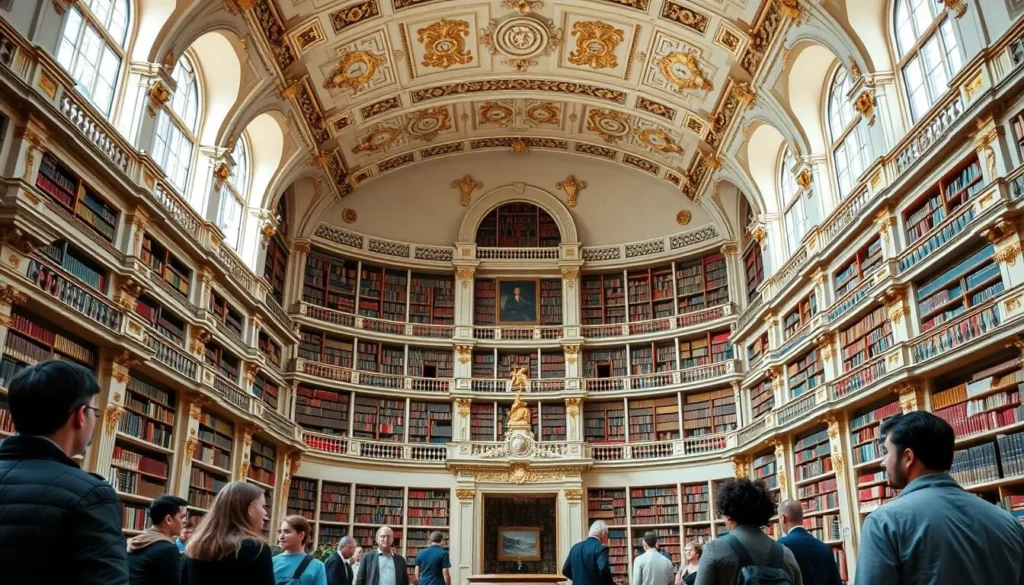
This stunning library houses a remarkable collection of books from the Age of Enlightenment. The Rococo Hall is the highlight, with its three-story oval design holding 40,000 volumes. Advance tickets are essential as only limited visitors are allowed each day.
Opening hours: Tuesday-Sunday, 9:30-18:00
Admission: €8.00
Goethe’s House
Johann Wolfgang von Goethe lived in this house for nearly 50 years. The perfectly preserved rooms contain his extensive collections, personal library, and study where he wrote many famous works including parts of Faust.
Opening hours: Tuesday-Sunday, 9:30-18:00 (summer), 9:30-16:00 (winter)
Admission: €13.00
Schiller’s House
Friedrich Schiller’s residence offers insight into the life of Germany’s other literary giant. Though smaller than Goethe’s house, it contains original furniture including the desk where he wrote “William Tell.”
Opening hours: Tuesday-Sunday, 9:30-18:00 (summer), 9:30-16:00 (winter)
Admission: €8.00
Bauhaus Museum
Opened in 2019, this modern museum showcases the revolutionary Bauhaus movement that was founded in Weimar in 1919. The collection includes furniture, textiles, and design objects that changed 20th-century aesthetics.
Opening hours: Wednesday-Monday, 9:30-18:00
Admission: €10.00
Park an der Ilm
This beautiful English-style park along the Ilm River offers peaceful walking paths, Goethe’s Garden House, and the Roman House. Perfect for a relaxing stroll between museum visits.
Opening hours: Always open
Admission: Free (Garden House: €7.00)
Buchenwald Memorial
Located just outside Weimar, this former concentration camp stands as a sobering reminder of Germany’s dark history. The memorial includes exhibitions, preserved buildings, and educational displays.
Opening hours: Tuesday-Sunday, 10:00-18:00
Admission: Free (guided tours: €7.00)
The WeimararCard (€32.50) provides access to most attractions and is worth purchasing if you plan to visit more than three sites. For the Duchess Anna Amalia Library and Goethe’s House, booking tickets in advance is highly recommended as they often sell out.
Museums, Cultural Spots & Festivals

Additional Museums
Neues Museum Weimar
Housed in a Neo-Renaissance building, this art museum focuses on early modernist works with emphasis on the Weimar Painting School.
Opening hours: Tuesday-Sunday, 10:00-18:00
Nietzsche Archive
The philosopher Friedrich Nietzsche spent his final years in this house, which now displays his personal effects and manuscripts.
Opening hours: Wednesday-Monday, 10:00-18:00 (summer only)
Liszt House
Composer Franz Liszt’s former residence contains his original Bechstein grand piano and personal belongings.
Opening hours: Wednesday-Monday, 10:00-18:00 (summer only)
Cultural Spots
- German National Theater – Historic venue where Germany’s first democratic constitution was adopted in 1919
- Herder Church – Gothic church with an altarpiece by Lucas Cranach the Younger
- Wittumspalais – Duchess Anna Amalia’s residence after the castle fire of 1774
- Belvedere Palace – Baroque summer residence with beautiful gardens
Annual Festivals
Cultural Events
- Bach Weeks – Classical music festival in April/May
- Goethe’s Birthday – City-wide celebration on August 28
- Kunstfest Weimar – Contemporary arts festival in August/September
Traditional Festivals
- Onion Market – Huge folk festival in October with 600+ stalls
- Wine Festival – Held alongside the Onion Market
- Christmas Market – Festive market from late November to January
For classical music lovers, check the schedule at the German National Theater, which hosts regular performances by the Staatskapelle Weimar, one of Germany’s oldest orchestras.
Sports, Nature & Outdoor Experiences
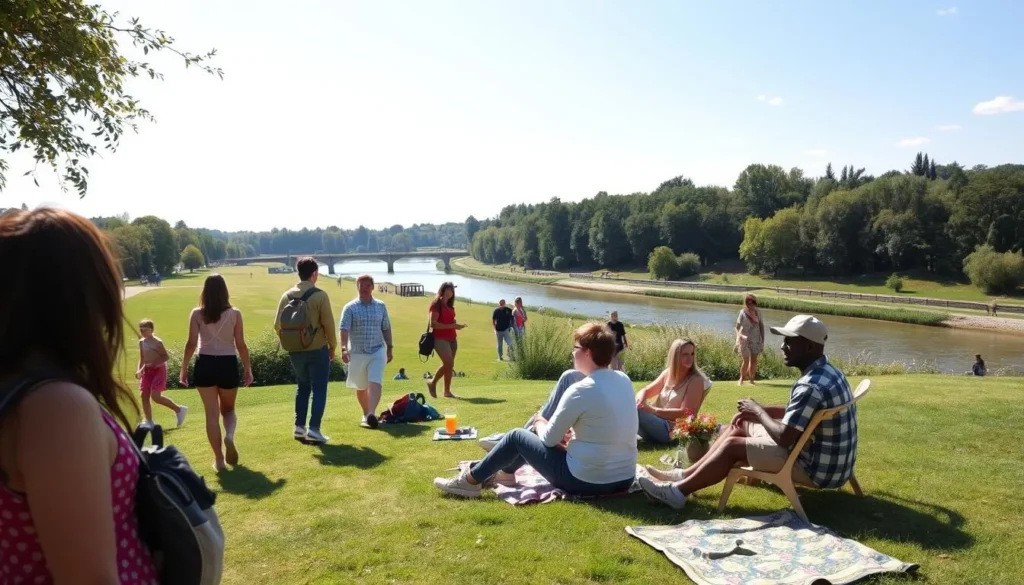
While Weimar is primarily known for its cultural attractions, the city and surrounding area offer plenty of outdoor activities:
Parks & Gardens
- Park an der Ilm – 48 hectares (119 acres) of English-style landscaping
- Belvedere Park – Formal gardens surrounding the palace
- Tiefurt Park – Scenic park along the Ilm River
Active Pursuits
- Cycling – Ilmtal-Radweg bike path follows the river
- Hiking – Trails in the nearby Ettersberg forest
- Swimming – Schwanseebad outdoor pool in summer
Day Trips
- Ettersberg – Forested hill with hiking trails
- Thuringian Forest – Mountain range 50 km away
- Saale Valley – Beautiful river landscape
The Ilm River, though small at just 29 km (18 miles) long, provides a scenic backdrop for walks and picnics. In summer, locals enjoy relaxing on the grassy banks in Park an der Ilm.
For a longer excursion, the Thuringian Forest offers excellent hiking opportunities with well-marked trails ranging from easy walks to challenging day hikes.
Safety, Etiquette & Local Customs
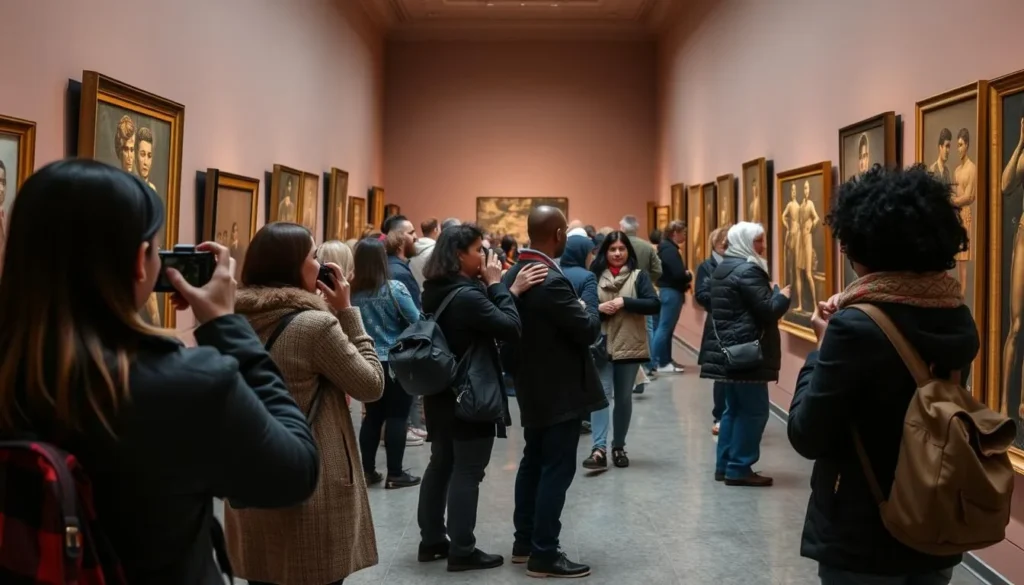
Weimar is generally a very safe city for tourists. Crime rates are low, and most visits are trouble-free. Here are some tips to ensure a smooth experience:
Safety Tips
- Take normal precautions against pickpocketing in crowded areas
- Keep valuables secure, especially in busy tourist spots
- The emergency number in Germany is 112
- Pharmacies (Apotheke) can provide basic medical advice
Etiquette & Customs
- Greet people with a handshake and “Guten Tag” (Good day)
- Be punctual for tours and reservations
- Keep noise levels down, especially in residential areas
- Photography is often restricted in museums and churches
Cultural Considerations
- Museum Etiquette – No flash photography, maintain quiet, don’t touch exhibits
- Tipping – 5-10% is customary in restaurants (tell the server the total amount you wish to pay)
- Buchenwald Memorial – Maintain respectful behavior at this somber historical site
- Sunday Quiet – Many shops are closed on Sundays, and Germans generally expect lower noise levels
When visiting historical sites, particularly those related to Germany’s difficult 20th-century history, maintain appropriate respect. The Buchenwald Memorial, in particular, should be approached with solemnity.
Visitor Comments About Weimar
“The cultural density here is incredible – every street tells a story of genius. Walking the same paths as Goethe and Schiller gave me a profound connection to German literary history.”
“Perfect blend of history, architecture, and beautiful parks. Felt like stepping into a living museum. The Bauhaus Museum was particularly impressive – I never realized how much this movement shaped our modern world.”
“The food scene surprised us – traditional Thuringian dishes with modern twists everywhere. Don’t miss the bratwurst at the market square and definitely try the local beer. Two days wasn’t enough!”
Additional Nearby Destinations
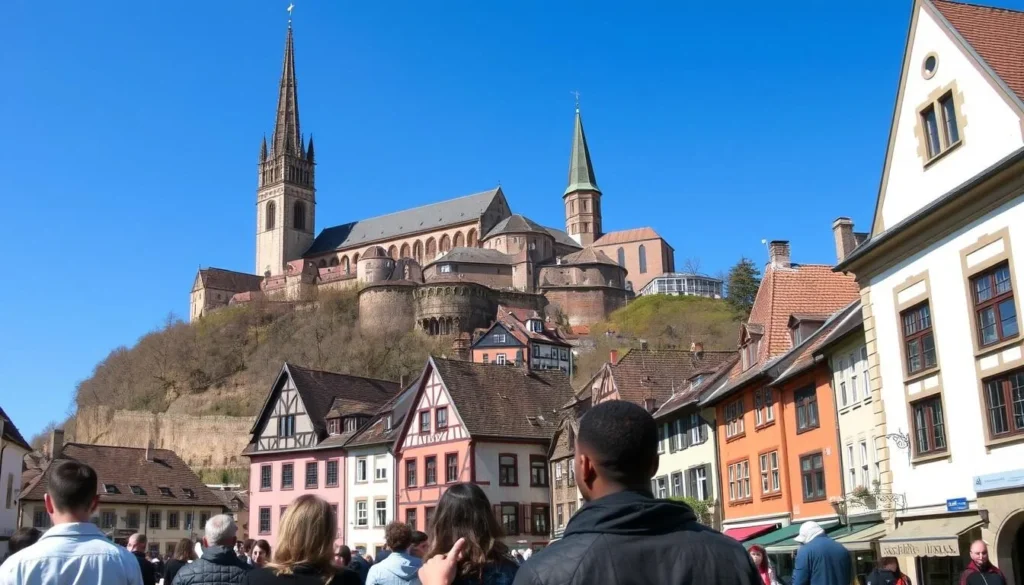
Weimar makes an excellent base for exploring other highlights of Thuringia. Consider these nearby destinations:
Erfurt (25 km)
Thuringia’s capital features a beautifully preserved medieval center with the impressive Cathedral Hill, Merchants’ Bridge (Krämerbrücke), and Old Synagogue. Martin Luther studied and was ordained here.
Travel time: 15 minutes by train
Jena (20 km)
This university city offers a blend of historic and modern architecture. Visit the Optical Museum, the historic Zeiss Planetarium, and enjoy views from the JenTower.
Travel time: 20 minutes by train
Eisenach (85 km)
Home to UNESCO-listed Wartburg Castle where Martin Luther translated the New Testament into German. Also visit Bach’s birthplace and the automobile museum.
Travel time: 1 hour by train
The entire region of Thuringia is rich in cultural heritage and natural beauty. With Weimar as your base, you can easily take day trips to explore medieval towns, castles, and scenic landscapes.
Practical Travel Tips

Money Matters
- Currency is the Euro (€)
- Many smaller shops and cafés prefer cash
- ATMs are widely available
- Tipping 5-10% is customary in restaurants
Communication
- German is the official language
- English is widely spoken in tourist areas
- Free WiFi available in many cafés
- Country code for Germany is +49
Essential Information
- Tourist Information: Located at Markt 10, open daily 9:30-18:00
- WeimararCard: €32.50 for 48 hours, includes public transport and entry to most attractions
- Electricity: 230V, European-style plugs (Type F)
- Drinking water: Tap water is safe to drink
- Opening hours: Most museums are closed on Mondays
- Reservations: Book tickets for the Duchess Anna Amalia Library well in advance
Insider Tip: Many museums offer free or reduced entry during the last hour before closing. If you’re on a budget, plan your visits accordingly.
Your Weimar Adventure Awaits
Weimar may be small in size, but its cultural impact on European history is immeasurable. From the literary giants who shaped German identity to the Bauhaus movement that revolutionized design worldwide, this compact city offers an unparalleled journey through intellectual history. Whether you’re wandering through Goethe’s garden, admiring the treasures of the Anna Amalia Library, or contemplating the lessons of Buchenwald, Weimar provides experiences that resonate long after your visit ends. With its walkable center, excellent museums, and relaxed atmosphere, Weimar deserves its place among Germany’s most rewarding destinations. As you plan your journey to this cultural powerhouse, remember that in Weimar, every street corner tells a story of genius, creativity, and the enduring power of human imagination.
The above is subject to change.
Check back often to TRAVEL.COM for the latest travel tips and deals.
0 Comments