Hotels by Trip.com
Flights by Trip.com
Every year, over 2.5 million people walk through streets where time stopped on a single morning nearly two thousand years ago. Pompeii remains one of the most remarkably preserved ancient Roman city sites on Earth. A catastrophic eruption buried this thriving metropolis under layers of volcanic ash in 79 AD, creating an unprecedented archaeological treasure.
The city takes its name from the Oscan word “pompe,” meaning five, likely referring to the five districts that formed the original settlement. This ancient urban center offers modern visitors an extraordinary window into daily Roman life frozen in a single devastating moment.
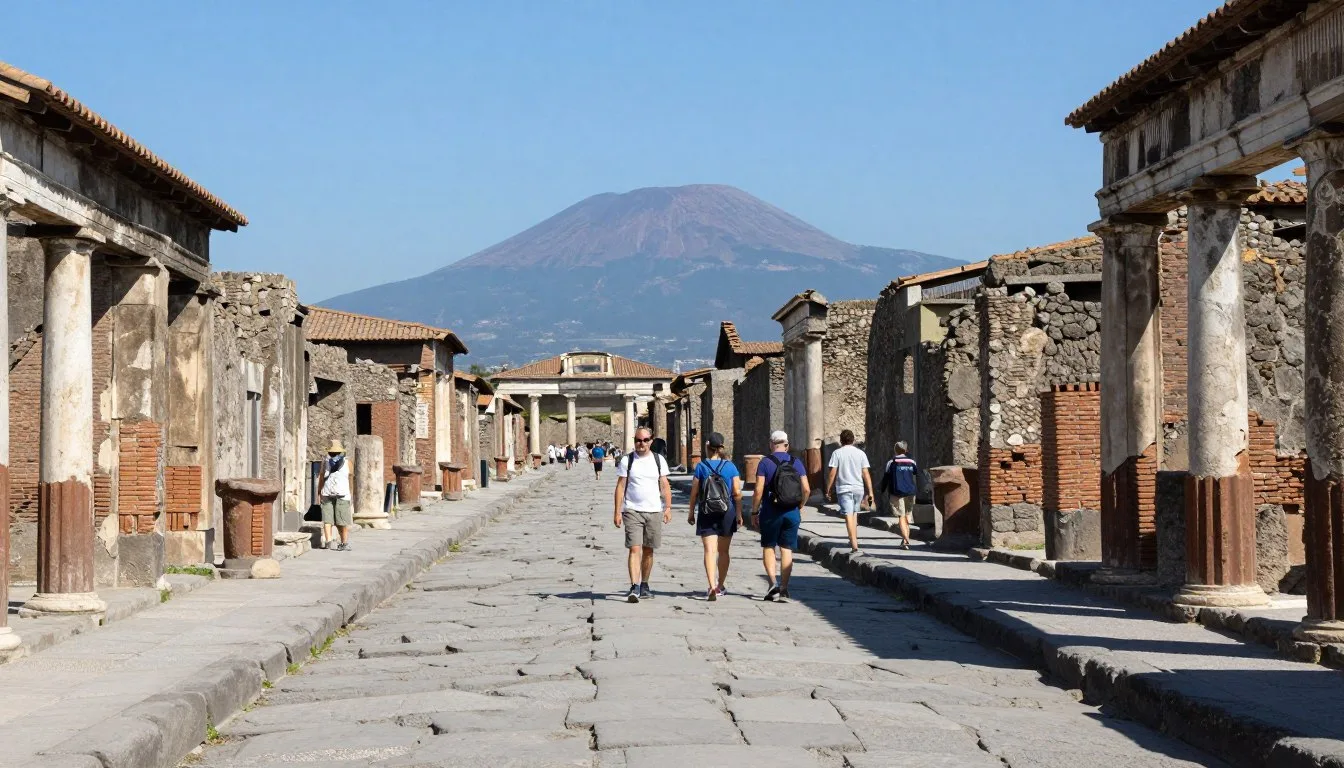
Walking through Pompeii feels like stepping through a portal into the past. Stone streets still bear the marks of chariot wheels. Frescoes display colors that have survived centuries beneath protective ash. Buildings stand as silent witnesses to the lives of people who never imagined their homes would become one of the world’s most visited archaeological sites.
Getting There and Planning Your Journey
Reaching Pompeii requires some planning, but the journey proves straightforward for most travelers. The site sits approximately 25 kilometers (15.5 miles) southeast of Naples in the Campania region of southern Italy.
Nearest Airports
Naples International Airport (Capodichino) serves as the primary gateway. This facility lies just 32 kilometers (20 miles) from Pompeii. Most visitors fly into Naples, then continue by train or car.
Rome Fiumicino Airport offers another option. While further away at 245 kilometers (152 miles), this major international hub provides more flight connections. Travelers can take a high-speed train from Rome to Naples, then continue to Pompeii.
Train Access
The Circumvesuviana railway line connects Naples directly to Pompeii. Trains depart from Naples Porta Nolana station every 30 minutes throughout the day. The journey takes approximately 35 minutes and costs around €3-4 per person.
Exit at “Pompei Scavi-Villa dei Misteri” station. This stop places you within 100 meters of the main entrance. The train passes through less polished neighborhoods, so keep belongings secure during the trip.
Planning Tip: Purchase your entrance ticket in advance online to skip long queues, especially during peak summer months when wait times can exceed two hours.
Driving and Parking
Rental cars provide flexibility for exploring the wider region. Take the A3 motorway from Naples toward Salerno, exiting at “Pompei Ovest.” Parking lots surround the archaeological park, with rates around €5-8 for the day.
Traffic around the site can become congested during peak hours between 10 AM and 2 PM. Arriving early or later in the afternoon helps avoid the worst crowds and heat.
Best Time to Visit and Weather Tips
Recommended Months and Seasons
Spring months from April through May offer ideal conditions. Temperatures hover between 18-24°C (64-75°F), making exploration comfortable. Wildflowers bloom throughout the ruins, adding color to the ancient stone.
✓ Check 30,000+ Local Sightseeing Tours Worldwide
Early autumn, particularly September and October, provides another excellent window. Summer crowds thin while temperatures remain pleasant at 20-26°C (68-79°F). The light during these months creates beautiful photography conditions.
Months to Avoid
July and August bring intense heat and massive crowds. Temperatures regularly exceed 32°C (90°F), with minimal shade across the archaeological site. The combination of heat reflecting off stone surfaces and packed pathways makes summer visits challenging.
Winter months from December through February see reduced hours and occasional closures due to rain. While fewer people visit, cold temperatures around 8-12°C (46-54°F) and wet conditions diminish the experience.
Daily Timing Strategy
The park opens at 9 AM most of the year. Arriving at opening time allows you to explore popular areas before tour groups arrive around 10:30 AM. Alternatively, entering after 3 PM means smaller crowds, though you’ll have less time before closing.
Weather Essential: Bring sun protection regardless of season. The ancient city offers virtually no shade. A wide-brimmed hat, sunglasses, and high-SPF sunscreen prove essential for comfort.
Notable Annual Festivals
Pompeii hosts several cultural events that enhance your visit experience. These celebrations connect the ancient site with living Italian traditions.
- Easter Week Processions (March/April) – Traditional religious ceremonies through modern Pompeii town
- Pompeii Theatrum Mundi (May) – Classical theater performances in the ancient amphitheater
- Archaeological Park Night Openings (May-September) – Extended hours with special lighting
Spring Festivals
- Pompeii Commitment (June-July) – Contemporary art installations throughout the ruins
- Festival of the Madonna del Rosario (First Sunday of October) – Religious celebration with processions
- Classical Music Concerts (July-August) – Performances in the Great Theater
Summer Events
For festival information and schedules, contact the Pompeii Archaeological Park visitor services at +39 081 857 5347. Call between 9 AM and 5 PM Central European Time for current event details.
Getting Around Locally
The archaeological park covers approximately 66 hectares (163 acres). Exploring the entire site requires extensive walking on uneven ancient stone surfaces. Comfortable, sturdy footwear makes an enormous difference in your experience.
Walking the Site
Plan for 3-4 hours minimum to see major highlights. Serious archaeology enthusiasts often spend 6-8 hours exploring thoroughly. The park features three main entrance points, with Porta Marina serving as the primary access.
Streets within Pompeii follow the original Roman grid pattern. Main thoroughfares like Via dell’Abbondanza run east-west, while smaller streets intersect at right angles. Signage appears in Italian and English, though not every street bears markers.
Audio Tour Options
Official audio guides rent for €8 at the entrance. These devices provide detailed commentary for over 60 points of interest throughout the site. The audio tour enhances understanding significantly, explaining historical context and architectural details.
Download the official Pompeii app before arrival. This free resource includes maps, audio content, and augmented reality features that reconstruct how buildings appeared before the eruption.
Guided Tour Services
Professional guides offer 2-3 hour tours covering major highlights. These tours typically cost €15-25 per person for group experiences. Private guides charge €120-180 for personalized tours.
Licensed guides wear official badges. They provide historical context, point out easily missed details, and answer questions. Tours usually cover the Forum, major temples, bath complexes, and several homes with exceptional frescoes.
Accessibility Considerations
Ancient streets present challenges for visitors with mobility limitations. Large stones called “stepping stones” helped Romans cross muddy streets. These same stones create obstacles for wheelchairs and strollers today.
The park offers designated accessible routes covering about 30% of the site. These paths avoid the most difficult terrain. Wheelchairs are available free at the entrance, but reserve in advance during busy periods.
Restroom facilities appear at the main entrance and near the amphitheater. Water fountains provide drinking water at several locations throughout the park. Bring a refillable bottle to stay hydrated.
Where to Stay
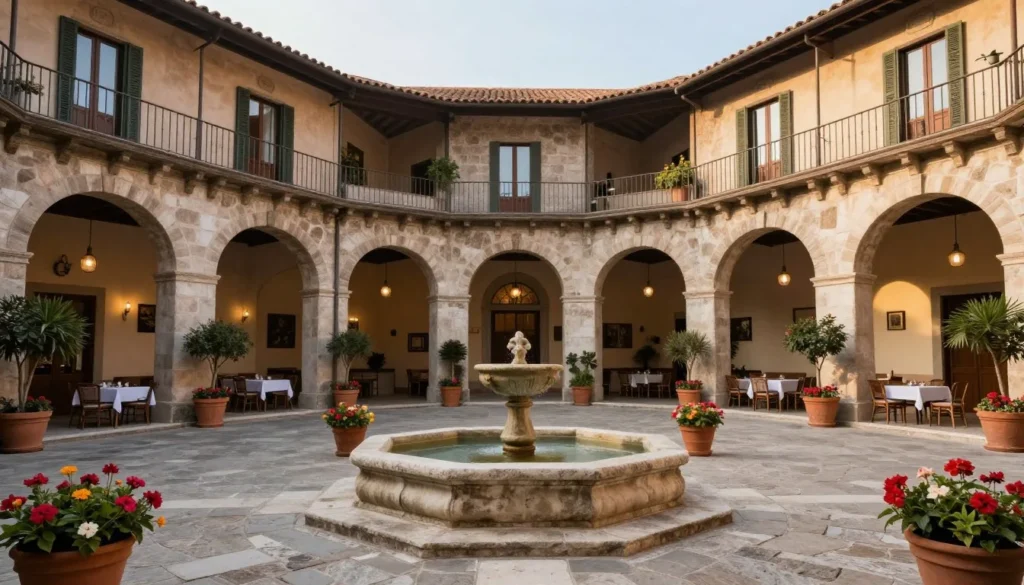
Accommodation options around Pompeii range from budget hostels to luxury hotels. Your choice depends on whether you prefer staying near the ruins or basing yourself in a larger city with evening entertainment.
Staying in Pompeii Town
Modern Pompeii offers convenient access to the archaeological park. Small hotels and bed-and-breakfast establishments cluster within walking distance of the main entrance. Expect to pay €60-120 per night for mid-range options.
The town itself has limited nightlife and dining compared to Naples or Sorrento. However, staying locally means you can enter the park right at opening time and return to your room for afternoon breaks during hot weather.
Budget Options
Hostels and simple guesthouses start around €25-40 per person. These properties provide clean, basic rooms. Some include breakfast. Most cluster near the train station for easy access.
Mid-Range Hotels
Three-star hotels offer comfortable rooms with air conditioning, private bathrooms, and breakfast. Expect amenities like WiFi, small pools, and helpful staff. Prices range €70-130 per night depending on season.
Upscale Properties
Boutique hotels and converted historic buildings provide luxury experiences. These properties feature spa services, fine dining, and elegant rooms. Rates start around €150 and climb above €300 during peak season.
Naples as a Base
The city offers far more accommodation variety, restaurants, and evening activities. Naples provides easy train access to Pompeii while allowing you to experience authentic Italian urban life. The trade-off involves commute time and navigating a large, busy city.
Naples hotels range from international chains to characterful old-town properties. The Chiaia and Vomero districts offer upscale options, while the historic center provides budget-friendly choices near major attractions.
Sorrento and the Amalfi Coast
Sorrento sits about 30 kilometers (19 miles) from Pompeii. This picturesque town on the cliffs combines coastal beauty with easy access to archaeological sites. Many visitors prefer Sorrento’s resort atmosphere and stunning views.
The Circumvesuviana train connects Sorrento to Pompeii in 30 minutes. This location works well for travelers combining Pompeii with Amalfi Coast exploration. Accommodation costs more than Pompeii or Naples, with mid-range hotels starting around €100 per night.
Dining and Local Cuisine

The Campania region produces some of Italy’s most celebrated food. Pompeii and surrounding areas offer exceptional dining experiences ranging from casual pizzerias to refined restaurants showcasing local ingredients.
Regional Specialties
Pizza originated in nearby Naples. The Neapolitan style features a thin, soft crust with slight charring from wood-fired ovens. Toppings remain simple, often just tomato sauce, mozzarella di bufala, basil, and olive oil. This classic combination is called Pizza Margherita.
Buffalo mozzarella comes from water buffalo raised in the region. This cheese tastes sweeter and creamier than cow’s milk mozzarella. It appears in caprese salad, on pizza, and eaten fresh with crusty bread.
Seafood plays a major role in coastal Campanian cuisine. Dishes feature anchovies, clams, mussels, and various fish prepared simply to highlight freshness. Pasta with clams (spaghetti alle vongole) appears on most menus.
Must-Try Dishes
- Parmigiana di Melanzane – Layered eggplant with tomato sauce and cheese
- Pasta alla Genovese – Slow-cooked onion and meat sauce
- Frittatina – Fried pasta croquettes with various fillings
- Sfogliatella – Layered pastry filled with sweet ricotta
- Limoncello – Lemon liqueur made from Amalfi Coast lemons
Dining Tip: Lunch represents the main meal in Italian culture. Many restaurants offer fixed-price lunch menus (menu del giorno) with better value than evening service. Expect lighter, simpler dinner options.
Restaurant Options Around Pompeii
Tourist-focused restaurants cluster near the archaeological park entrance. These establishments offer convenience but often charge premium prices for mediocre food. Walk 10 minutes into the modern town for better value and quality.
Authentic trattorias serve generous portions of home-style cooking. These family-run establishments prepare traditional recipes passed through generations. Expect pasta dishes for €8-12, meat or fish mains for €12-18, and local wine by the carafe.
Pizzerias operating wood-fired ovens produce exceptional pies for €6-10. A pizza makes a complete meal for one person. Sharing is less common in Italy, where each diner typically orders their own pizza or pasta course.
Eating Like a Local
Breakfast in Italy remains minimal. Most people consume a quick espresso and cornetto (croissant) while standing at a bar. Sitting down increases prices significantly. Tourist hotels provide more substantial breakfast buffets.
Lunch typically runs from 12:30 PM to 2:30 PM. Dinner service begins around 7:30 PM and continues late. Restaurants often close between lunch and dinner for a break.
Service charges (coperto) appear on bills as a per-person fee of €1-3. Tipping isn’t expected, though rounding up the bill or leaving a few euros for excellent service is appreciated.
Attractions, Sightseeing and Activities
Pompeii contains countless remarkable structures and artifacts. Prioritizing your visit helps ensure you see the most significant sites within the time available.
The Forum
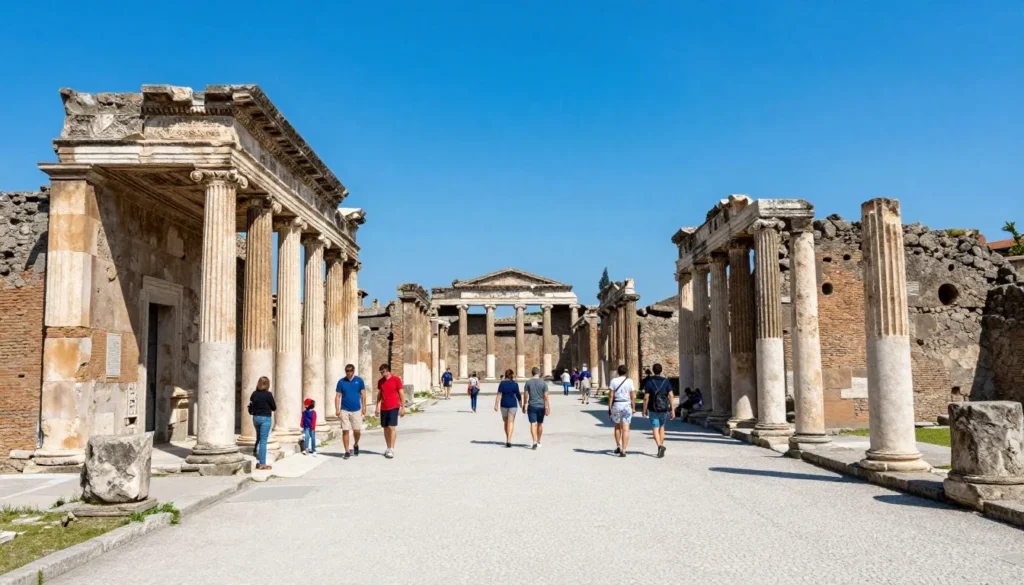
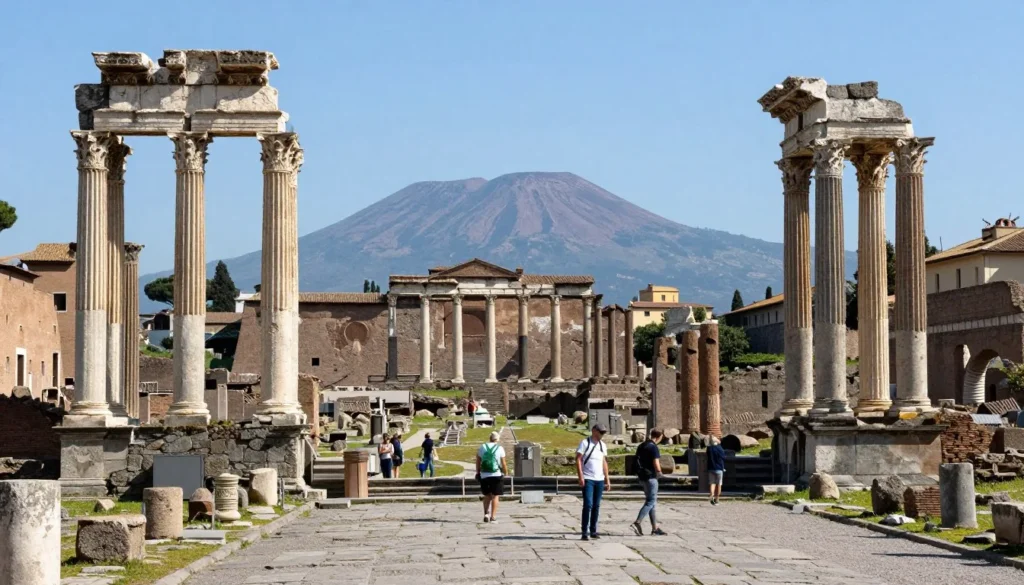
This rectangular plaza served as the center of public life in ancient Pompeii. The Forum hosted markets, political gatherings, and religious ceremonies. Temples dedicated to Jupiter, Apollo, and the imperial cult surrounded the open space.
Columns that once supported grand colonnades still stand around the Forum’s perimeter. Mount Vesuvius rises dramatically in the background, creating one of the park’s most photographed views. The Forum provides excellent orientation for understanding the city’s layout.
House of the Faun
This enormous private residence covered nearly 3,000 square meters (32,300 square feet). The wealthy owner displayed exceptional art, including the famous Alexander Mosaic now housed in Naples Archaeological Museum. A bronze dancing faun statue (now a replica) gives the house its name.
The home features multiple atriums, private baths, and elaborate mosaic floors. The scale and decoration demonstrate the extreme wealth of Pompeii’s upper class. Walking through these rooms offers insight into Roman domestic architecture and daily life for the elite.
Villa of the Mysteries
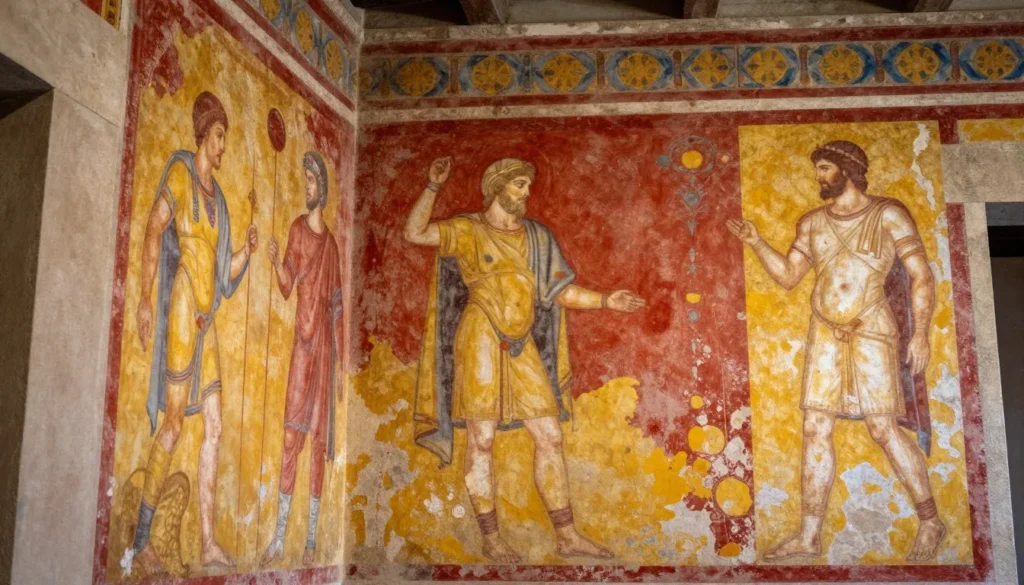
Located outside the main city walls, this suburban villa contains some of Pompeii’s most spectacular frescoes. The Dionysian frieze in the triclinium (dining room) shows life-sized figures engaged in mysterious rituals related to the cult of Dionysus.
The vivid red background and remarkable preservation of the paintings make this site unmissable. Scholars continue debating the exact meaning of the scenes depicted. The villa sits about 800 meters (half a mile) from the main Forum area.
The Amphitheater
Built around 70 BC, this structure ranks among the oldest surviving Roman amphitheaters. The venue seated approximately 20,000 spectators who watched gladiatorial combat and animal hunts. The excellent acoustics and preserved seating arrangements show sophisticated engineering.
Graffiti scratched into the stone walls reveals the names of famous gladiators and messages from spectators. These inscriptions provide direct connection to individual Romans who lived and died here two millennia ago.
Stabian Baths
These public baths showcase the importance of bathing culture in Roman society. The complex includes changing rooms, cold pools (frigidarium), warm rooms (tepidarium), and hot baths (caldarium). Underground furnaces heated water and rooms through an innovative system called hypocaust.
Stucco decorations and frescoes still adorn the walls and ceilings. The baths served as social centers where Romans conducted business, exercised, and relaxed. Both men and women used the facilities, though at separate times or in different sections.
Bakeries and Shops
Commercial buildings throughout Pompeii reveal how the ancient economy functioned. Bakeries feature large millstones for grinding grain and wood-fired ovens. Carbonized loaves of bread found during excavations show the exact shape and size of Roman daily bread.
Thermopolia (ancient fast food restaurants) dot the streets. These establishments served hot food and drinks from large earthenware jars set into marble counters. The setup resembles modern street food vendors, showing continuity across centuries.
Garden of the Fugitives
This site contains plaster casts of 13 victims caught by the eruption while trying to flee. Archaeologists poured plaster into voids left by decomposed bodies in the hardened ash. The casts capture final moments with heartbreaking detail, including facial expressions and body positions.
The display proves emotionally powerful. These aren’t abstract historical figures but real people frozen in their last seconds. The garden provides sobering perspective on the human cost of the disaster that preserved the city.
Museums, Cultural Spots and Festivals
The archaeological site itself functions as an open-air museum. However, several indoor facilities and cultural venues enhance understanding of Pompeii’s history and significance.
Pompeii Antiquarium
This on-site museum displays artifacts found during excavations. The collection includes jewelry, household objects, tools, and plaster casts of victims. Video presentations and models help visitors visualize how the city looked before the eruption.
The Antiquarium underwent extensive renovation and reopened in 2021. The modern displays use interactive elements to engage visitors of all ages. Plan 45-60 minutes to explore the collection thoroughly.
Naples Archaeological Museum
Located 25 kilometers (15.5 miles) away in Naples, this museum houses many treasures removed from Pompeii over centuries of excavation. The Alexander Mosaic, frescoes from the Villa of the Mysteries, and the Secret Cabinet of erotic art reside here.
The museum requires at least 2-3 hours for a thorough visit. Consider dedicating a separate day to Naples rather than trying to combine it with Pompeii. The Circumvesuviana train makes the connection easy.
Great Theater and Odeon
Pompeii’s Great Theater seated 5,000 spectators for plays and performances. The structure follows the Greek semicircular design, built into a natural hillside for acoustics and structural support. Original seating arrangements separated social classes.
The adjacent Odeon (Small Theater) hosted musical performances and poetry readings for about 1,000 people. Both theaters occasionally host modern performances during summer months, creating unique opportunities to experience ancient venues as originally intended.
Temple of Isis
This well-preserved temple demonstrates the religious diversity of Roman Pompeii. The Egyptian goddess Isis attracted followers throughout the Roman Empire. The temple complex includes the main sanctuary, meeting rooms, and areas for ritual purification.
Frescoes depicting Egyptian themes decorated the walls. Most artifacts from the temple now reside in the Naples museum, but the architecture and layout remain intact. The temple shows how Romans absorbed and adapted foreign religions.
Cultural Programs and Events
The archaeological park offers educational programs, workshops, and temporary exhibitions throughout the year. Summer evening openings allow visitors to experience the ruins with different lighting and cooler temperatures.
Special access programs occasionally open buildings normally closed to the public. Check the official park website or call +39 081 857 5347 for current programming and special events during your visit dates.
Nature and Outdoor Experiences

While Pompeii itself focuses on history and archaeology, the surrounding Campania region offers exceptional natural experiences. The combination of mountains, coastline, and volcanic landscapes creates diverse outdoor opportunities.
Mount Vesuvius National Park
The volcano that destroyed Pompeii dominates the skyline from almost every point in the archaeological site. Visiting the crater adds powerful context to your Pompeii experience. The summit sits at 1,281 meters (4,203 feet) above sea level.
A bus service runs from Pompeii to the Vesuvius parking area at 1,000 meters (3,280 feet). From there, a hiking trail climbs to the crater rim. The path covers about 800 meters (half a mile) with an elevation gain of 280 meters (920 feet). Allow 20-30 minutes for the ascent.
Views from the summit span the Bay of Naples, the Amalfi Coast, and on clear days, the island of Capri. Peering into the active crater reminds visitors that Vesuvius still poses potential danger to the millions living nearby.
Path of the Gods
This famous hiking trail (Sentiero degli Dei) runs along the cliffs of the Amalfi Coast. The path connects the villages of Bomerano and Nocelle, covering approximately 7.8 kilometers (4.8 miles). Hikers experience spectacular coastal views, terraced lemon groves, and dramatic mountain scenery.
The trail takes 3-4 hours to complete. Difficulty level ranges from moderate to challenging depending on the specific route chosen. Proper hiking shoes are essential as the path includes rocky, uneven sections.
Many visitors combine Pompeii with this hike over a multi-day trip. The trailhead lies about 45 kilometers (28 miles) from Pompeii, requiring a car or organized tour to access.
Beaches Near Pompeii
The coastal city of Sorrento offers beaches and swimming opportunities 30 minutes from Pompeii. The coastline features dramatic cliffs and clear Mediterranean waters. Most beaches are pebble or rock rather than sand.
Beach clubs provide lounge chairs, umbrellas, and facilities for daily fees of €15-25. Public beach access exists but with fewer amenities. Water temperatures reach 24-26°C (75-79°F) in summer months.
Gardens and Green Spaces
Ancient Pompeii featured numerous gardens. Archaeologists identified planting areas through root cavities and pollen analysis. Some gardens have been replanted with period-appropriate species including grapevines, herbs, and flowers.
These reconstructed gardens show how Romans integrated nature into urban design. Peristyle gardens in wealthy homes provided private outdoor rooms for relaxation and entertainment.
Wine Country Tours
Volcanic soil from Vesuvius creates ideal conditions for wine production. The surrounding region produces distinctive wines including Lacryma Christi and Greco di Tufo. Vineyards carpet the slopes of the volcano.
Several wineries offer tours and tastings. Visitors learn about local grape varieties, volcanic soil influence, and traditional production methods. Tours typically cost €20-40 per person and last 2-3 hours including tastings.
Combining a winery visit with your Pompeii trip creates a full day of contrasting experiences. Many tour operators offer packages that include transportation, archaeological site entry, and winery visits.
Travel With Children
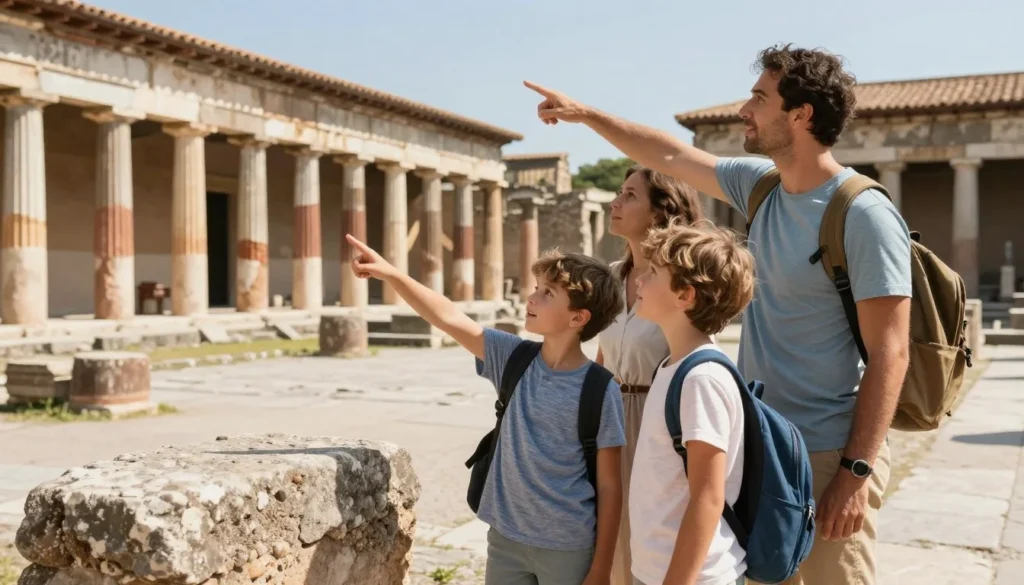
Pompeii can fascinate children when presented appropriately. The site offers tangible connections to history that engage young imaginations. However, the extensive walking and lack of shade require planning for family visits.
Age Considerations
Children under 5 typically find the site overwhelming and exhausting. The long walk on uneven surfaces challenges small legs. Consider whether your youngest family members can handle 2-3 hours of walking in potentially hot weather.
Elementary school age children (6-10) often enjoy Pompeii when visits focus on specific interesting points rather than comprehensive exploration. The plaster casts, brothel, bakeries, and graffiti capture attention. Creating a scavenger hunt keeps them engaged.
Teenagers studying ancient history in school find Pompeii revelatory. Seeing theoretical classroom concepts made real through preserved buildings and artifacts creates powerful learning moments. An audio guide helps maintain interest.
Family-Friendly Strategies
- Read age-appropriate books about Pompeii together
- Watch documentaries showing how the city looked before eruption
- Discuss what daily life meant for Roman children
- Create list of specific things to find (mosaics, fountains, ovens)
Before You Go
- Start early before heat and crowds peak
- Bring plenty of water and snacks
- Plan regular breaks in shaded areas
- Focus on 5-7 key sites rather than everything
During Your Visit
- Let children take photos of favorite discoveries
- Ask them to imagine living in the houses you visit
- Point out details like chariot wheel ruts and graffiti
- Compare ancient life to modern daily routines
Keep Them Engaged
Practical Considerations
Strollers prove nearly impossible to push across Pompeii’s ancient streets. The stepping stones and uneven pavement create constant obstacles. Baby carriers or hiking backpacks work much better for toddlers.
Limited food options exist within the park. A small cafe near the entrance sells sandwiches, drinks, and snacks at inflated prices. Pack your own lunch, water, and snacks for better value and more variety.
Restrooms appear only at the main entrance and near the amphitheater. Plan bathroom breaks accordingly. The facilities can become crowded during peak hours.
Educational Opportunities
The Pompeii Antiquarium offers child-friendly exhibits including touchable replicas and interactive displays. The museum provides air conditioning and seating, offering a welcome break from walking outdoors.
Audio guides designed for children present information in engaging ways. These specialized guides use storytelling and focus on aspects likely to interest younger visitors. Rent them at the entrance for €5.
Some tour companies offer family-specific guided tours. These experiences use activities and storytelling to maintain children’s attention while conveying historical information. Tours typically last 2 hours rather than the standard 3.
Money Saving Tips
Visiting Pompeii and the surrounding region doesn’t require luxury budgets. Strategic planning and local knowledge help minimize costs without sacrificing experience quality.
Entrance and Tour Savings
Standard Pompeii entrance tickets cost €18 per adult. However, several discount options exist. Visitors under 18 from EU countries enter free with identification. Young adults aged 18-25 from EU nations pay reduced rates.
The Campania Artecard provides excellent value for visitors planning multiple sites. The three-day card costs €32 and includes free entry to three attractions plus discounted entry to others. It also covers regional transportation. Calculate whether this card saves money based on your planned activities.
Free admission days occur on the first Sunday of each month from October through March. Expect massive crowds on these days. Arrive at opening time to beat the rush.
Skip the Lines Without Extra Cost: Purchase tickets online in advance through the official park website. This avoids ticket line waits without paying booking fees charged by third-party sellers. The official site charges the standard entrance price with no markup.
Transportation Economies
The Circumvesuviana train from Naples to Pompeii costs just €3-4 each way. Compare this to organized tours charging €60-80 per person for the same route with a guide. Independent travel using public transport saves substantially if you’re comfortable navigating on your own.
Skip expensive taxi rides from the train station to the entrance. The walk takes less than 5 minutes. Taxi drivers often claim the walk is long or difficult to justify their fares.
Food and Beverage Costs
Restaurants immediately adjacent to the park entrance charge tourist prices. Walk 10 minutes into town where locals eat. Prices drop 30-40% for identical food quality. A pizza that costs €12 at the entrance sells for €7-8 in town.
Pack water bottles and fill them at drinking fountains throughout the park. Bottled water at the on-site cafe costs €3-4 versus free from fountains. Bring snacks or sandwiches to avoid overpriced cafe food.
Order house wine by the carafe rather than bottles in restaurants. Local wine served this way costs €8-12 for a liter versus €20-30 for bottled wine. The quality often equals or exceeds moderately priced bottles.
Accommodation Strategies
Budget Lodging
Book accommodations in modern Pompeii town rather than Sorrento or Naples. Comparable quality costs 40-50% less. The slight reduction in surrounding attractions is offset by proximity to the archaeological park.
Consider private room rentals through home-sharing platforms. Entire apartments often cost less than hotel rooms while providing kitchens for preparing your own meals.
Timing Discounts
Travel during shoulder seasons (April-May, September-October) for lower accommodation rates. Hotels charge 30-50% less than peak summer prices while weather remains excellent.
Book midweek stays rather than weekends. Friday and Saturday nights cost significantly more due to weekend tourist demand.
✓ Check 30,000+ Local Sightseeing Tours Worldwide
Free Audio Resources
Download the official Pompeii app before your visit instead of renting an audio guide at €8. The app provides free audio commentary, maps, and augmented reality features. It works offline once downloaded, avoiding international data charges.
YouTube and podcast apps offer free audio tours created by historians and travel experts. Load these onto your phone before arriving. Bring headphones or earbuds to listen as you walk.
Safety and Local Customs
Pompeii and the Campania region generally welcome tourists safely. Understanding local customs and taking basic precautions ensures smooth, respectful travel experiences.
Personal Safety
Pickpocketing represents the primary crime concern. The Circumvesuviana train from Naples sees frequent theft. Keep bags zipped and valuables secured. Avoid displaying expensive cameras, jewelry, or phones unnecessarily.
The archaeological park itself is very safe. Park police and security cameras monitor the grounds. The main risk involves minor injuries from tripping on uneven ancient pavement. Watch your footing constantly.
Dehydration and heat exhaustion pose real dangers during summer months. The site offers minimal shade. Drink water regularly even if you don’t feel thirsty. Recognize warning signs including dizziness, headache, and excessive fatigue.
Emergency Contacts: Dial 112 for emergencies (police, ambulance, fire). This number works throughout the European Union. The archaeological park also has first aid stations near the main entrance and amphitheater.
Cultural Etiquette
Italians value courtesy and respect. Greet shopkeepers and restaurant staff with “Buongiorno” (good morning) or “Buonasera” (good evening). Simple effort to speak Italian, even just greetings and “grazie” (thank you), earns appreciation.
Dress codes matter at religious sites, though Pompeii itself has no restrictions. If visiting churches or cathedrals in nearby towns, cover shoulders and knees. Modest clothing shows respect for local religious sensibilities.
Restaurants expect leisurely dining. Rushing through meals or requesting the check immediately after finishing food seems rude. Wait for natural pauses in conversation, then catch your server’s eye to signal you’re ready for the bill.
Visiting Ancient Sites Respectfully
Touching frescoes, mosaics, or ancient walls damages irreplaceable artifacts. Oil from human hands degrades paintings. Observe the “look but don’t touch” rule strictly. Barriers and ropes exist for preservation, not decoration.
Climbing on walls, columns, or structures is prohibited and dangerous. Ancient stone can be unstable. These aren’t playground equipment but two-thousand-year-old archaeological treasures requiring care.
Taking stones, pottery fragments, or any artifacts violates both ethical standards and Italian law. Severe penalties including imprisonment apply to theft of cultural property. Leave everything exactly as you found it.
Scam Awareness
Unauthorized tour guides sometimes approach tourists at the entrance offering services. Official licensed guides wear visible identification badges. Unlicensed guides often lack proper historical knowledge and may pressure visitors for excessive tips.
Taxi drivers occasionally run meters at inflated rates or take circuitous routes from the train station. The walk to the entrance takes 3-4 minutes. If you need a taxi elsewhere, agree on a price before entering the vehicle.
Restaurant “cover charges” (coperto) are legitimate and typically €1-3 per person. However, watch for added items you didn’t order appearing on bills. Verify your bill matches what you consumed before paying.
Visitor Comments About Pompeii
“Walking through Pompeii exceeded every expectation. The scale amazed me most. You read about a buried city and imagine something small, but this was a huge, complex urban center. Seeing the ruts worn into stone streets by chariot wheels made everything feel suddenly real. The bodies preserved in ash created an emotional experience I wasn’t prepared for. We spent six hours exploring and could have stayed longer. My only regret was not bringing better walking shoes. The uneven pavement wore out my feet by afternoon.”
“I visited with my teenage daughter studying ancient history. Pompeii brought her textbook to life in ways we never imagined. She particularly loved the bakery with ancient ovens and the amphitheater where gladiators once fought. We hired a guide for three hours, which proved worthwhile. She pointed out details we would have missed and explained the historical context beautifully. The heat in July was intense, definitely come earlier in the year if possible. Despite the temperature, this ranked as the highlight of our entire Italy trip.”
“The archaeological park deserves its fame. However, be prepared for crowds and significant walking. We arrived at opening time in April and had certain areas almost to ourselves for the first hour. By mid-morning, tour groups packed the main sites. The Villa of the Mysteries frescoes were stunning, definitely don’t skip that building even though it sits away from the main area. I recommend the audio guide for historical depth. One unexpected pleasure was how well-preserved everything remains. Two thousand years might have passed, but you can still imagine daily life in these streets.”
Additional Nearby Destinations
Pompeii’s location in the Campania region provides access to numerous world-class destinations. Extending your trip to explore surrounding areas creates a richer Italian experience.
Herculaneum
This smaller Roman town suffered the same volcanic fate as Pompeii. Herculaneum lies just 17 kilometers (10.5 miles) northwest, easily reached by the same Circumvesuviana train line. The site takes 2-3 hours to explore versus Pompeii’s full day.
Paradoxically, Herculaneum’s smaller size creates advantages. Buildings preserve upper floors that collapsed in Pompeii. Organic materials including wooden furniture, food, and even papyrus scrolls survived the different burial process. The site feels less overwhelming and crowded.
Combined tickets covering both Pompeii and Herculaneum offer better value than separate admissions. Consider visiting Herculaneum first to understand Roman life, then experiencing Pompeii’s grander scale.
Naples
This vibrant city deserves at least 2-3 days of exploration. Naples holds the Archaeological Museum housing Pompeii’s most precious artifacts. The historic center features narrow medieval streets, baroque churches, and incredible street food.
Underground Naples reveals Greek and Roman ruins beneath modern buildings. Tours explore ancient aqueducts, catacombs, and Roman theater remains hidden below street level. The contrast between ancient and modern layers fascinates history enthusiasts.
Pizza here tastes better than anywhere else on Earth. Dozens of traditional pizzerias craft pies in wood-fired ovens using local ingredients and centuries-old techniques. A food tour through the Spanish Quarter provides delicious cultural education.
Amalfi Coast
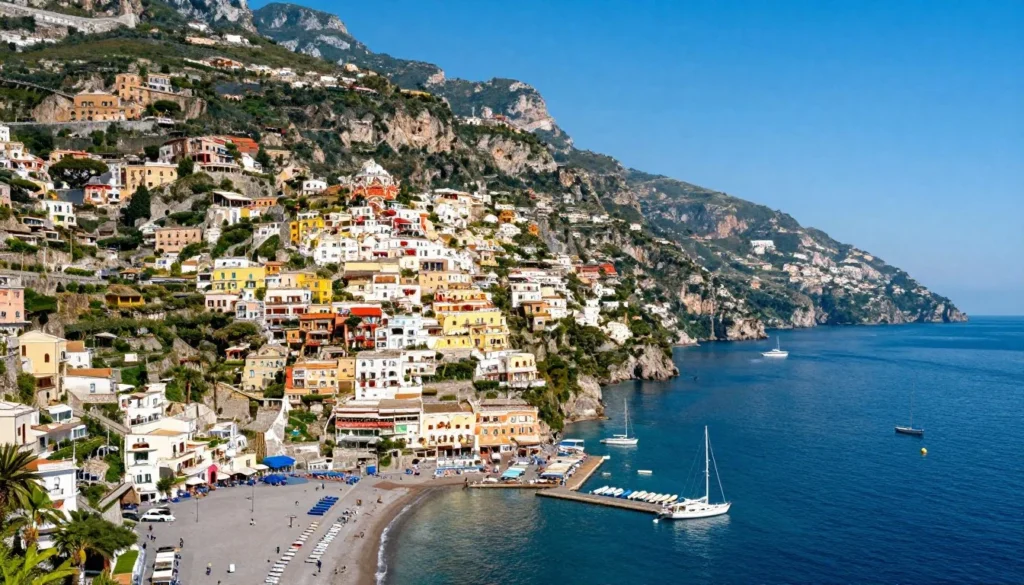
This spectacular coastline stretches 50 kilometers (31 miles) from Sorrento to Salerno. Colorful villages cling to dramatic cliffs rising from the Mediterranean. The coast represents one of Italy’s most photographed landscapes.
Positano, Amalfi, and Ravello serve as the main towns. Each offers distinct character. Positano attracts luxury travelers with upscale hotels and boutiques. Amalfi provides historical significance with its maritime republic heritage. Ravello sits high above the coast, famous for gardens and classical music festivals.
Driving the Amalfi Coast road requires confidence navigating narrow, winding mountain routes with constant tour buses. Many visitors prefer ferries connecting coastal towns or organized bus tours. The SITA bus service runs the entire coast affordably though crowded in summer.
Sorrento
This clifftop town overlooks the Bay of Naples. Sorrento serves as an excellent base for exploring the region. The town produces limoncello liqueur from massive local lemons. Historic center streets fill with shops, cafes, and restaurants. Swimming, boat trips to Capri, and sunset views make Sorrento a well-rounded destination.
Island of Capri
Ferries from Sorrento or Naples reach this glamorous island in 20-40 minutes. Capri attracts international jet-setters with luxury hotels, designer shopping, and stunning natural beauty. The Blue Grotto sea cave displays ethereal blue light. Chairlift rides to Monte Solaro provide panoramic views across the Bay of Naples.
Paestum
Greek temples from the 6th century BC stand remarkably intact 85 kilometers (53 miles) south of Pompeii. These Doric structures rank among the best-preserved Greek architecture anywhere. The archaeological site includes temples, city walls, and an excellent museum. Buffalo mozzarella from Paestum is famous throughout Italy.
Multi-Day Itinerary Suggestions
A comprehensive Campania region trip requires 5-7 days minimum. Day one covers Pompeii and Herculaneum. Day two explores Naples including the Archaeological Museum. Days three and four discover the Amalfi Coast. Day five allows a Capri day trip. Additional days enable deeper exploration or relaxation.
Alternatively, base yourself in Sorrento for easy access to all major sites. This eliminates hotel changes while maintaining good connections via train, bus, and ferry. Sorrento’s resort atmosphere provides comfortable evening returns after day trips.
Practical Travel Tips
These final suggestions help ensure smooth, enjoyable Pompeii experiences based on common visitor questions and frequent traveler mistakes.
What to Bring
- Sturdy, comfortable walking shoes with good ankle support and non-slip soles
- Sun protection including hat, sunglasses, and SPF 50+ sunscreen
- Refillable water bottle (minimum 1 liter capacity per person)
- Light backpack or day pack for supplies
- Portable phone charger for photos and audio guide apps
- Small first aid kit with blister treatment and pain reliever
- Cash for small purchases as not all vendors accept cards
Ticket and Entry Information
Pompeii opens at 9 AM daily. Closing times vary by season, ranging from 3:30 PM in winter to 7:30 PM in summer. Last entry occurs 90 minutes before closing time. Check current hours before your visit as they change monthly.
Standard adult admission costs €18. This covers the entire archaeological park but not special exhibitions or the Villa of the Mysteries during certain periods. Audio guides rent for €8 additional. Licensed guide services cost €15-25 per person for group tours.
Three main entrances serve the park. Porta Marina (west entrance) provides the most services and closest train station access. Piazza Anfiteatro (east entrance) offers easier parking. Piazza Esedra (north entrance) sees lighter crowds but farther from major sites.
Language Considerations
English appears on most signage throughout the park. Staff at ticket offices and information points speak basic English. However, learning a few Italian phrases enhances interactions with locals outside the tourist areas.
Download a translation app before arrival. Offline mode allows usage without international data charges. Italian restaurants in smaller towns often lack English menus, making translation tools helpful.
Photography Guidelines
Photography for personal use is permitted throughout Pompeii. Flash photography damages frescoes and should be avoided in buildings with wall paintings. Tripods and professional equipment require special permission obtained in advance.
Drones are strictly prohibited over the archaeological park. Violators face confiscation and legal penalties. Regular cameras and smartphones work fine for capturing memories.
Best photography light occurs early morning or late afternoon. Harsh midday sun creates unflattering shadows and washed-out colors. The golden hour before sunset produces beautiful warm tones on ancient stone.
Weather Preparation
Hot Weather Strategy
Summer temperatures regularly exceed 32°C (90°F). Start your visit at opening time to complete several hours before peak heat. Take breaks in shaded areas. Wet a bandana or hat to cool your neck. Recognize heat exhaustion symptoms and rest immediately if feeling unwell.
Rain Preparation
Winter brings occasional rain. Ancient pavement becomes slippery when wet. Wear shoes with excellent traction. Bring a compact umbrella or waterproof jacket. Some buildings provide shelter during passing showers. Heavy rain may close certain areas temporarily for safety.
Accessibility Resources
Visitors requiring wheelchair access should contact the park in advance at +39 081 857 5347. Staff can arrange free wheelchair loans and provide detailed accessible route information. About 30% of the site follows wheelchair-friendly paths, though ancient streets prevent full access.
Accessible restrooms exist at the main entrance and near the amphitheater. Service animals are permitted throughout the park. Visitors with disabilities receive free admission with proper documentation.
Luggage and Lockers
Large bags and suitcases cannot enter the archaeological park. Free luggage storage is available at the entrance for items too large to carry comfortably. Small day packs and purses are permitted.
If visiting Pompeii between accommodation changes, store luggage at Naples train station before taking the Circumvesuviana. Station lockers cost €4-6 for 24 hours. This avoids carrying bags to Pompeii and back.
Your Journey Through Frozen Time Awaits
Pompeii offers something no other destination can match. This ancient Roman city provides an unfiltered glimpse into daily life two thousand years ago. Walking streets where merchants sold goods, families gathered, and communities thrived creates profound connections across the centuries.
The catastrophe that destroyed Pompeii paradoxically preserved it better than any intentional effort could achieve. Volcanic ash protected buildings, art, and even the final moments of residents caught in the eruption. What began as tragedy became humanity’s most valuable window into the ancient world.
Plan your visit thoughtfully. Arrive early to beat crowds and heat. Wear comfortable shoes for walking on uneven ancient stone. Bring water and sun protection. Consider an audio guide or licensed tour for historical context that transforms ruins into vivid stories.
Whether you spend three focused hours seeing highlights or devote an entire day to thorough exploration, Pompeii will exceed your expectations. The site inspires wonder, teaches history, and reminds us of human resilience across time. Your journey through these frozen streets awaits.
✓ Check 30,000+ Local Sightseeing Tours Worldwide