

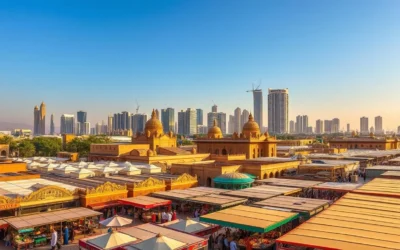
Did you know that Kuwait City is home to the fifth tallest telecommunications tower in the world? The Liberation Tower stands at an impressive 372 meters (1,220 feet) and was built to symbolize Kuwait’s liberation from Iraqi occupation. This architectural marvel is just one of many fascinating attractions in this vibrant Middle Eastern capital that blends traditional Arabic culture with ultramodern development. From gleaming skyscrapers to historic souqs, Kuwait City offers visitors a unique glimpse into a country where oil wealth has transformed a once-simple fishing village into a global metropolis.
Getting There & Planning Your Journey
Kuwait International Airport (KWI) serves as the main gateway to Kuwait City, with direct flights available from major cities across Europe, Asia, and the Middle East. Airlines such as Kuwait Airways, Emirates, and British Airways offer regular service to Kuwait. to find the best deals for your travel dates.
Most visitors to Kuwait require a visa. However, citizens from many Western countries can obtain a visa on arrival, which allows for a stay of up to 90 days. It’s always best to check the latest visa requirements with your local Kuwaiti embassy or consulate before traveling.
When planning your trip, consider that Kuwait uses the Kuwaiti Dinar (KWD) as its currency, which is one of the highest-valued currencies in the world. Credit cards are widely accepted in hotels, restaurants, and shopping malls, but it’s advisable to carry some cash for smaller establishments and souqs.
Best Time to Visit & Weather Tips
Kuwait experiences extreme temperature variations throughout the year, making the timing of your visit crucial for comfort. The best time to visit Kuwait City is between November and March when temperatures are pleasant, ranging from 15°C to 25°C (59°F to 77°F). This period offers ideal conditions for exploring outdoor attractions and walking through the city.
Recommended Months to Visit Kuwait City:
- November to March: Mild temperatures, occasional rainfall, perfect for sightseeing
- April and October: Shoulder seasons with warmer temperatures but still manageable
Months to Avoid:
- June to August: Extreme heat with temperatures regularly exceeding 45°C (113°F)
- May and September: Still very hot with temperatures around 35-40°C (95-104°F)
If you do visit during summer months, plan indoor activities during the day and venture outdoors in the early morning or evening. Many locals leave the country during peak summer, and some smaller businesses may close or operate with reduced hours.
Also consider that Ramadan, the Islamic holy month of fasting, affects daily rhythms in Kuwait. During this time, eating and drinking in public during daylight hours is prohibited, and many restaurants and cafes are closed until sunset.
Getting Around Locally
Kuwait City is spread out, making transportation an important consideration for visitors. Here are the best ways to get around:
Taxis and Ride-Sharing
Taxis are the most convenient way to travel around Kuwait City. You can hail them on the street or find them at designated taxi stands. Most taxis are metered, but it’s always good to confirm the fare before starting your journey. Careem, the Middle Eastern equivalent of Uber, is also available and often preferred by tourists for its fixed pricing and convenience.
Rental Cars
If you prefer independence, is a good option. Roads in Kuwait are well-maintained, and signage is in both Arabic and English. International driving licenses are recognized, and driving is on the right-hand side. However, be prepared for some aggressive driving styles and heavy traffic during rush hours.
Public Buses
Kuwait’s public bus system, operated by Kuwait Public Transport Company (KPTC) and CityBus, offers an affordable way to get around. However, routes and schedules can be confusing for visitors, and buses are not always the most time-efficient option. They’re best used for longer journeys if you’re on a budget.
Walking
Walking is feasible in certain areas like the Corniche waterfront and within specific neighborhoods, but Kuwait City is not particularly pedestrian-friendly due to its layout and the extreme heat during summer months. Always carry water and use sunscreen if exploring on foot.
Where to Stay

Kuwait City offers a range of accommodation options, primarily focusing on mid-range to luxury properties. Here’s a breakdown of where to stay based on your preferences and budget:
Luxury Options
Kuwait City boasts several world-class luxury hotels, many with stunning views of the Arabian Gulf. The Sheraton Kuwait, Four Seasons Hotel Kuwait at Burj Alshaya, and JW Marriott Hotel Kuwait City offer exceptional service, multiple dining options, and amenities like spas and swimming pools. Expect to pay upwards of 100 KWD (330 USD) per night.
Mid-Range Accommodations
For more moderate budgets, hotels like the Courtyard Kuwait City, Residence Inn Kuwait City, and Ibis Kuwait Salmiya provide comfortable stays with good amenities at prices ranging from 50-90 KWD (165-300 USD) per night. These hotels typically offer reliable service, clean rooms, and convenient locations.
Budget-Friendly Choices
True budget accommodations are limited in Kuwait City, but some options like the Ramada Encore Kuwait Downtown and certain local hotels offer more affordable rates, typically starting around 30-45 KWD (100-150 USD) per night.
Best Areas to Stay
- Kuwait City Center: Ideal for business travelers and those wanting to be close to major attractions
- Salmiya: Popular residential area with good shopping and dining options
- Al Bidaa: Coastal area with beach access and upscale hotels
- Hawally: Central location with more local atmosphere and shopping
Dining & Local Cuisine

Kuwait’s culinary scene reflects its history as a trading port, with influences from Persian, Indian, and Mediterranean cuisines blending with traditional Arabian flavors. Here are some must-try dishes and dining experiences:
Traditional Kuwaiti Dishes
- Machboos: The national dish consisting of seasoned rice with meat (usually lamb, chicken, or fish), flavored with spices like saffron, cinnamon, and cardamom
- Tashreeb: A hearty stew of meat and vegetables poured over flatbread
- Harees: A porridge-like dish made from wheat and meat, popular during Ramadan
- Murabyan: Shrimp or fish served with rice and local spices
- Lugaimat: Sweet dumplings drizzled with date syrup, a popular dessert
Where to Eat in Kuwait City
Kuwait City offers dining options ranging from street food to fine dining experiences:
Souq Al-Mubarakiya
This traditional market is one of the best places to sample authentic Kuwaiti cuisine at reasonable prices. Small restaurants and food stalls offer local specialties in a vibrant atmosphere. Don’t miss the traditional Kuwaiti tea served with mint.
Seafront Restaurants
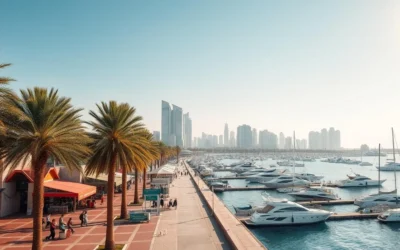
The restaurants along the Gulf Road and Marina Crescent offer fresh seafood with beautiful views of the Arabian Gulf. Many feature outdoor seating during the cooler months.
International Cuisine
Kuwait City has embraced global dining trends, with excellent restaurants serving Lebanese, Indian, Japanese, and Western cuisines. The Avenues Mall and 360 Mall house many upscale international restaurant chains.
Dining Etiquette
When dining in Kuwait, be mindful of local customs. During Ramadan, eating in public during daylight hours is prohibited. In traditional settings, it’s common to eat with your right hand. Alcohol is prohibited in Kuwait, so restaurants do not serve alcoholic beverages.
Attractions, Sightseeing & Activities

Kuwait Towers
The iconic Kuwait Towers are the most recognizable landmark in the country. Built in 1979, these distinctive blue-green spheres on tall spindles house a two-level revolving observation deck offering panoramic views of the city and coastline. The main tower stands 187 meters (614 feet) tall and includes a restaurant where you can enjoy a meal with spectacular views. The entrance fee is approximately 3 KWD (10 USD).
Grand Mosque
Kuwait’s Grand Mosque (Al-Masjid Al-Kabir) is the largest official mosque in the country, covering an area of 45,000 square meters. The mosque features stunning Islamic architecture with intricate details, beautiful woodwork, and engravings. Non-Muslims can take guided tours Sunday through Thursday, but remember to dress modestly with women required to cover their hair.
Souq Al-Mubarakiya
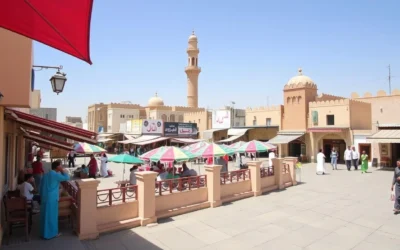
Step back in time at Souq Al-Mubarakiya, Kuwait’s oldest market dating back 200 years. This traditional Arabian marketplace offers everything from spices, perfumes, and traditional clothing to gold jewelry and antiques. The souq also features small restaurants serving authentic Kuwaiti cuisine. It’s a perfect place to experience local culture and pick up unique souvenirs.
Liberation Tower
Standing at 372 meters (1,220 feet), the Liberation Tower symbolizes Kuwait’s freedom following the Iraqi invasion. While primarily serving as a telecommunications tower, visitors can book tours to access the viewing deck and restaurant, offering spectacular city views. Advance booking is recommended as visitor numbers are limited.
Museums, Cultural Spots & Festivals

Sheikh Jaber Al Ahmad Cultural Centre
Often called the “Kuwait Opera House,” this impressive cultural complex features four buildings covered with geometric patterns inspired by Islamic architecture. The center hosts world-class performances, concerts, and theatrical productions. Even if you don’t attend a show, the stunning architecture and dancing fountains make it worth a visit, especially in the evening when it’s beautifully illuminated.
Tareq Rajab Museum
This private museum houses an impressive collection of over 30,000 items related to Islamic art, including manuscripts, ceramics, jewelry, costumes, and musical instruments from across the Islamic world. The collection is thoughtfully organized by country, offering insights into the rich diversity of Islamic cultures.
Kuwait National Museum
Though partially damaged during the Iraqi invasion, the Kuwait National Museum has been restored and houses important archaeological finds and exhibits on Kuwait’s history. The Heritage Museum section showcases traditional Kuwaiti lifestyles before the oil boom, with reconstructions of old Kuwait houses and displays of Bedouin crafts.
Sadu House
Located in a beautifully restored traditional Kuwaiti house, Sadu House preserves the traditional Bedouin craft of weaving. Visitors can watch demonstrations of the weaving techniques and purchase handmade textiles. The museum offers workshops where you can learn about this important cultural heritage.
Major Cultural Festivals
- Hala February Festival: A month-long shopping festival with discounts, entertainment, and cultural events
- Kuwait International Book Fair: Held annually in November, featuring publishers from across the Arab world
- Qout Market: A popular farmers’ market held monthly during the cooler season, showcasing local products and crafts
- Pearl Diving Festival: A summer event celebrating Kuwait’s pearl diving heritage with traditional boat races and diving demonstrations
Sports, Nature & Outdoor Experiences

Al Shaheed Park
As the largest urban park in Kuwait, Al Shaheed Park offers a welcome green oasis in the city. Spanning 200,000 square meters, the park features botanical gardens, walking paths, two museums, and an amphitheater for cultural events. The park’s name means “Martyr’s Park,” honoring those who sacrificed their lives for Kuwait, and includes memorial monuments.
Green Island
This artificial island connected to the mainland is a popular recreational area covering 785,000 square meters. Green Island features swimming pools, beaches, playgrounds, and restaurants. The island offers beautiful views of the Kuwait City skyline and is particularly popular with families on weekends.
Kuwait Corniche
The Corniche is a 10-kilometer waterfront promenade stretching along Kuwait Bay. It’s perfect for walking, jogging, or simply enjoying the sea breeze. The path connects many of Kuwait City’s landmarks, including the Kuwait Towers, Souq Sharq shopping mall, and the Scientific Center.
Desert Experiences
Just outside Kuwait City, the desert offers adventure opportunities like dune bashing, sandboarding, and camel riding. The Kazmah Desert features dramatic cliffs with panoramic views of Kuwait Bay. Desert camps provide a taste of traditional Bedouin hospitality with music, food, and entertainment under the stars.
Failaka Island
Located 20 kilometers off Kuwait’s coast, Failaka Island has a fascinating history dating back to ancient times, with ruins from the Bronze Age and Greek periods. The island was abandoned after the Gulf War but is being developed as a tourist destination with beaches, water sports, and historical sites. Ferries to the island depart from Marina Crescent and Ras Al Salmiya.
Safety, Etiquette & Local Customs

Safety
Kuwait is generally a very safe country with low crime rates. Standard precautions that you would take in any major city apply here as well. The most common concerns for visitors are related to traffic accidents and extreme heat during summer months. Emergency services can be reached by dialing 112.
Dress Code
Kuwait is a conservative Muslim country, and visitors should dress modestly out of respect for local customs. For women, this means covering shoulders and knees, and avoiding tight or revealing clothing. Men should wear long pants in most public places. At private beach resorts and hotel pools, Western-style swimwear is acceptable.
Religious Customs
Islam plays a central role in Kuwaiti society. During the holy month of Ramadan, eating, drinking, and smoking in public during daylight hours is prohibited for everyone, including non-Muslims. Prayer times may affect business hours, with shops and attractions often closing briefly during prayer times.
Social Etiquette
- Always use your right hand for eating, greeting, or passing items, as the left hand is considered unclean
- Public displays of affection should be avoided, though married couples may hold hands
- It’s polite to accept offers of Arabic coffee or tea when visiting someone’s home or office
- Photography restrictions apply at government buildings, military installations, and sometimes at ports or industrial facilities
- Always ask permission before photographing local people, especially women
Alcohol and Substances
Kuwait has a strict no-alcohol policy. The importation, sale, and consumption of alcohol are illegal. There are no bars or nightclubs serving alcohol, and penalties for violating these laws can be severe. Similarly, drugs of any kind are strictly prohibited.
Practical Travel Tips

Currency and Money
The Kuwaiti Dinar (KWD) is one of the highest-valued currencies in the world. ATMs are widely available, and credit cards are accepted at most establishments. It’s advisable to carry some cash for small purchases and taxis. Tipping (around 10%) is appreciated for good service in restaurants and hotels, though not mandatory.
Language
Arabic is the official language, but English is widely spoken, especially in business, tourism, and healthcare sectors. Signs are typically in both Arabic and English. Learning a few basic Arabic phrases like “Shukran” (thank you) and “As-salaam alaikum” (peace be upon you, used as a greeting) is appreciated by locals.
Internet and Connectivity
Kuwait has excellent internet coverage and high-speed connections. Most hotels, cafes, and shopping malls offer free Wi-Fi. For mobile connectivity, you can purchase a local SIM card from providers like Zain, Ooredoo, or STC. Bring your passport for registration when buying a SIM card.
Business Hours
The workweek in Kuwait runs from Sunday to Thursday, with Friday and Saturday being the weekend. Government offices typically operate from 7:00 AM to 2:00 PM. Shopping malls generally open around 10:00 AM and close between 10:00 PM and midnight, with some variations during Ramadan.
Electricity
Kuwait uses 240V, 50Hz electricity with Type C and Type G sockets. Travelers from the US will need both a voltage converter and a plug adapter, while those from the UK will only need a plug adapter for Type C outlets.
Health and Medical
Kuwait has excellent healthcare facilities. No specific vaccinations are required for entry, but it’s always good to be up-to-date on routine vaccinations. Tap water is generally safe but bottled water is widely available and recommended for visitors. Medical insurance is highly recommended as healthcare can be expensive for non-residents.
Conclusion

Kuwait City offers visitors a fascinating blend of traditional Arabian culture and modern luxury. From the iconic Kuwait Towers to the historic Souq Al-Mubarakiya, the city presents a unique Middle Eastern experience that goes beyond what many travelers might expect. While it may not be as well-known as some of its Gulf neighbors, Kuwait rewards curious travelers with authentic cultural experiences, world-class museums, beautiful coastal areas, and warm hospitality.
The best approach to experiencing Kuwait City is to embrace both its traditional and contemporary sides. Spend your mornings exploring historical sites and museums, your afternoons relaxing in modern malls or seaside parks, and your evenings enjoying the excellent cuisine and stunning city lights. With proper planning and respect for local customs, a trip to Kuwait City can be an enriching journey into a country that perfectly embodies the rapid transformation of the Gulf region while maintaining its cultural identity.


0 Comments