
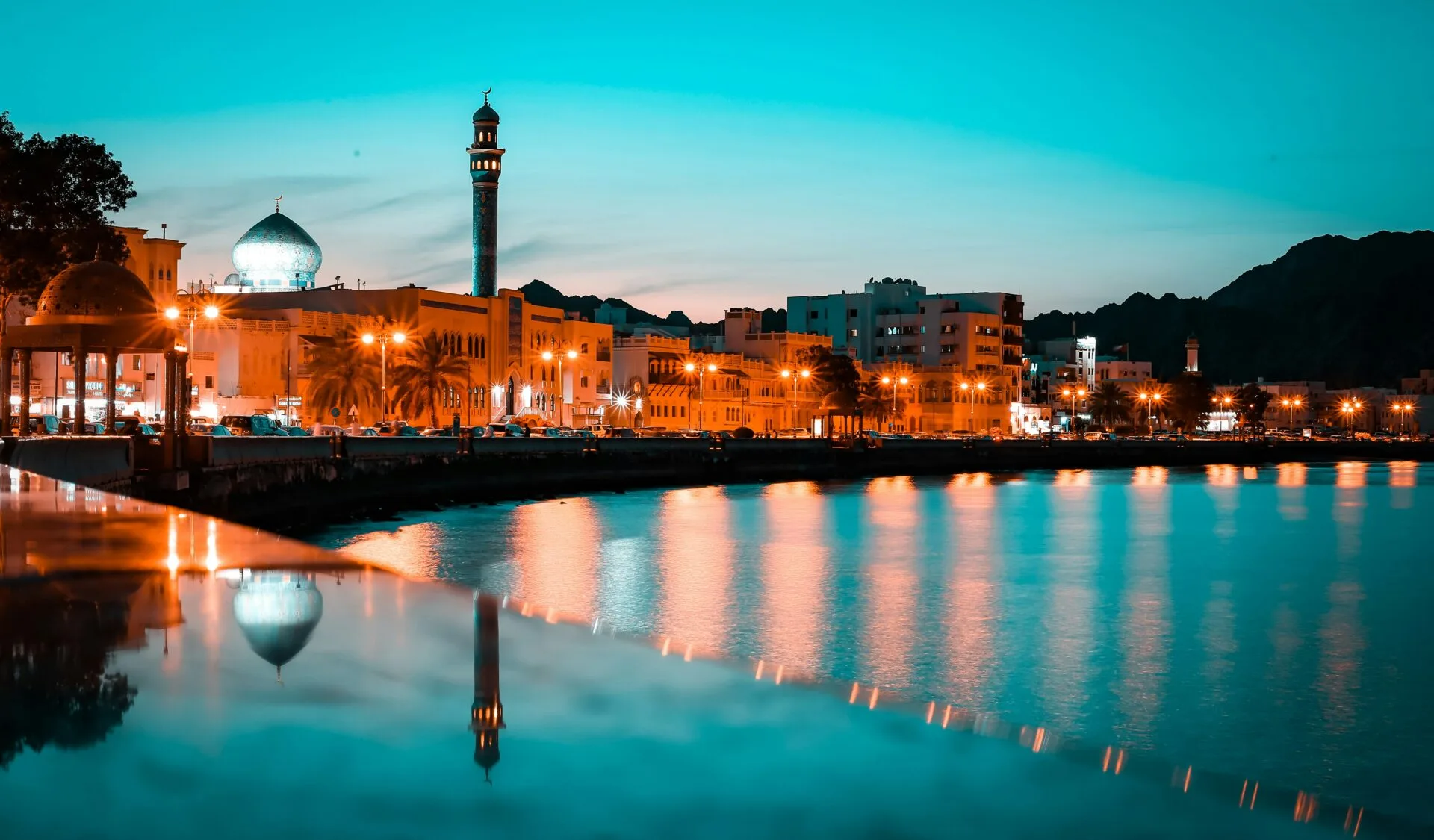
Did you know Oman is home to the world’s largest hand-woven carpet? The Sultan Qaboos Grand Mosque in Muscat houses this 70 x 60-meter masterpiece, woven by 600 women over four years. This stunning fact is just one glimpse into the rich cultural tapestry of Oman, a country where ancient traditions blend seamlessly with breathtaking landscapes. From turquoise wadis to endless deserts and historic forts, Oman offers travelers an authentic Arabian experience without the crowds of its more famous neighbors.
Getting to Oman
Muscat International Airport is the main gateway to Oman
Most international travelers arrive at Muscat International Airport, Oman’s primary gateway. The airport serves numerous international carriers with direct flights from major cities in Europe, Asia, and the Middle East. Gulf carriers like Oman Air, Emirates, and Qatar Airways offer excellent connections to Muscat from their respective hubs.
If you’re coming from the UAE, you can also enter Oman by road through several border crossings. The most popular route is from Dubai to Muscat, which takes approximately 4-5 hours depending on border procedures.
Before traveling, check visa requirements as many nationalities can obtain an e-visa online through the Royal Oman Police website. Tourist visas typically allow stays of up to 30 days.
Planning Your Journey
Oman rewards travelers who plan ahead. The country is larger than you might expect, with diverse regions that offer distinctly different experiences. Most visitors spend at least 7-10 days exploring Oman to get a good taste of what the country has to offer.
Suggested Itineraries
7-Day Highlights Tour
- Days 1-2: Muscat (Sultan Qaboos Grand Mosque, Mutrah Souq)
- Day 3: Nizwa (Fort, Souq, and surrounding mountain villages)
- Day 4: Jebel Shams and Bahla
- Day 5: Wahiba Sands desert experience
- Day 6: Wadi Shab and Bimmah Sinkhole
- Day 7: Return to Muscat
14-Day Complete Oman
- Days 1-3: Muscat and surroundings
- Days 4-6: Nizwa, Jebel Akhdar, and Jebel Shams
- Days 7-8: Wahiba Sands and coastal wadis
- Days 9-10: Sur and Ras al Jinz (turtle watching)
- Days 11-13: Salalah and Dhofar region
- Day 14: Return to Muscat
Travel Documents
Ensure your passport is valid for at least six months beyond your planned departure date. Most visitors require a visa, which can be obtained online through the e-visa system. Check the latest requirements on the official Royal Oman Police website.
Best Time to Visit Oman
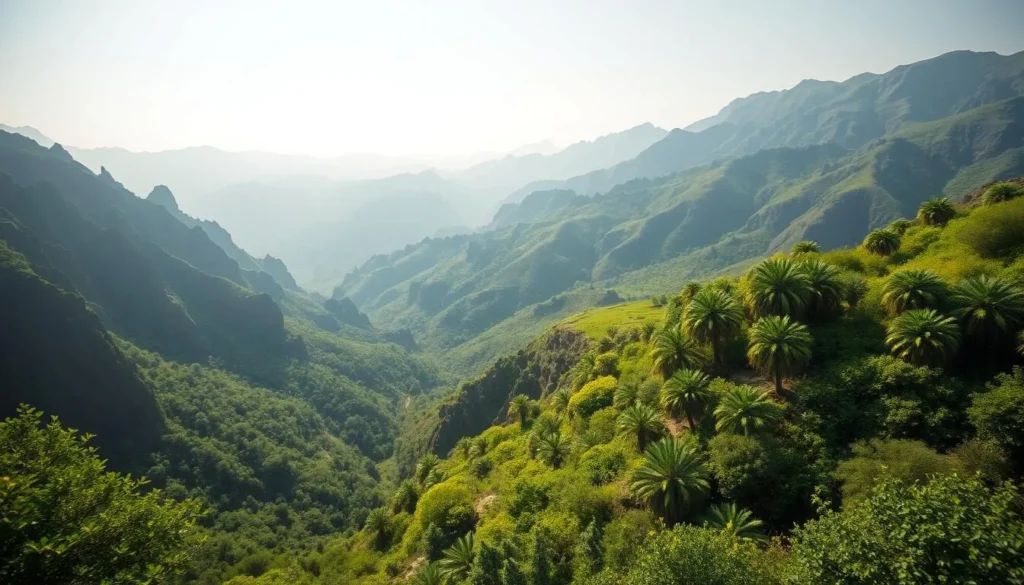
Salalah transforms into a green paradise during the Khareef season
The ideal time to visit most of Oman is between October and April when temperatures are pleasant, ranging from 25-30°C (77-86°F) during the day. Summer months (May to September) can be extremely hot in most regions, with temperatures often exceeding 40°C (104°F).
However, the southern Dhofar region around Salalah experiences a unique monsoon season called Khareef from late June to early September. During this period, the landscape transforms into a lush green paradise with misty mountains and flowing waterfalls, making it a popular summer destination for Gulf residents seeking relief from the heat.
| Season | Months | Temperature | Best For |
| Winter | November to February | 20-25°C (68-77°F) | Desert camping, mountain hiking, city exploration |
| Spring | March to April | 25-35°C (77-95°F) | Wadis, beaches, rose terraces in Jebel Akhdar |
| Summer | May to September | 35-45°C (95-113°F) | Salalah (during Khareef), diving, early morning activities |
| Autumn | October | 25-35°C (77-95°F) | All-around good time to visit most regions |
Getting Around Oman
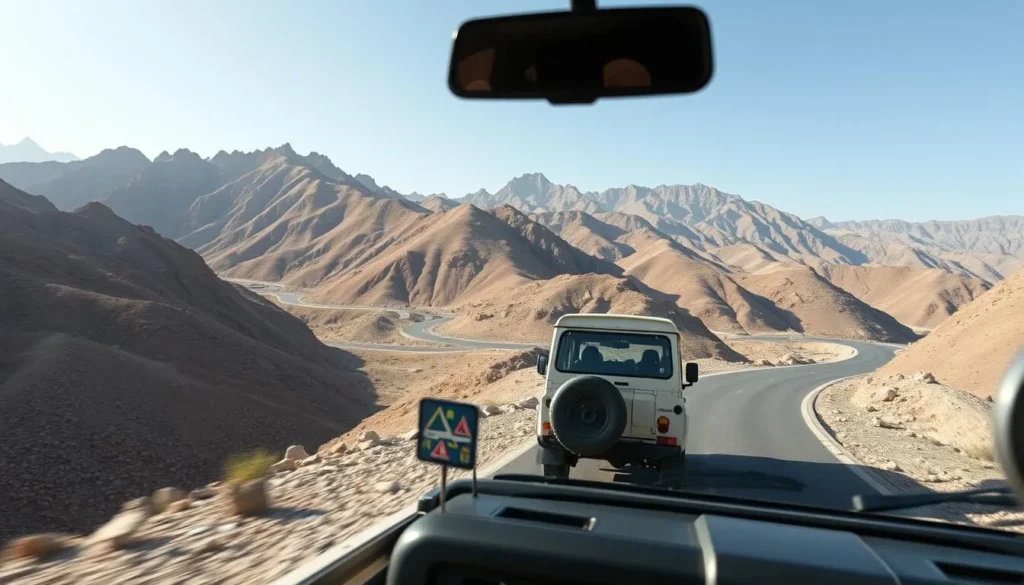
A 4×4 vehicle is essential for exploring Oman’s mountain regions
Oman is a country best explored by car. The road infrastructure is excellent, with well-maintained highways connecting major cities. However, many of Oman’s most spectacular attractions require off-road driving, making a 4×4 vehicle essential for a comprehensive exploration.
Rental Cars
Renting a car gives you the freedom to explore at your own pace. International and local rental agencies are available at airports and major cities. For mountain areas like Jebel Akhdar and Jebel Shams, a 4×4 is mandatory – police checkpoints at the base of these mountains will turn away vehicles without four-wheel drive.
Guided Tours
If you prefer not to drive, numerous tour operators offer day trips and multi-day excursions from Muscat and other major cities. This option is particularly useful for desert excursions and mountain adventures where local knowledge is valuable.
Public Transportation
Public buses connect major cities but have limited schedules and don’t reach many tourist attractions. Taxis are available in cities but can be expensive for long-distance travel.
Where to Stay in Oman
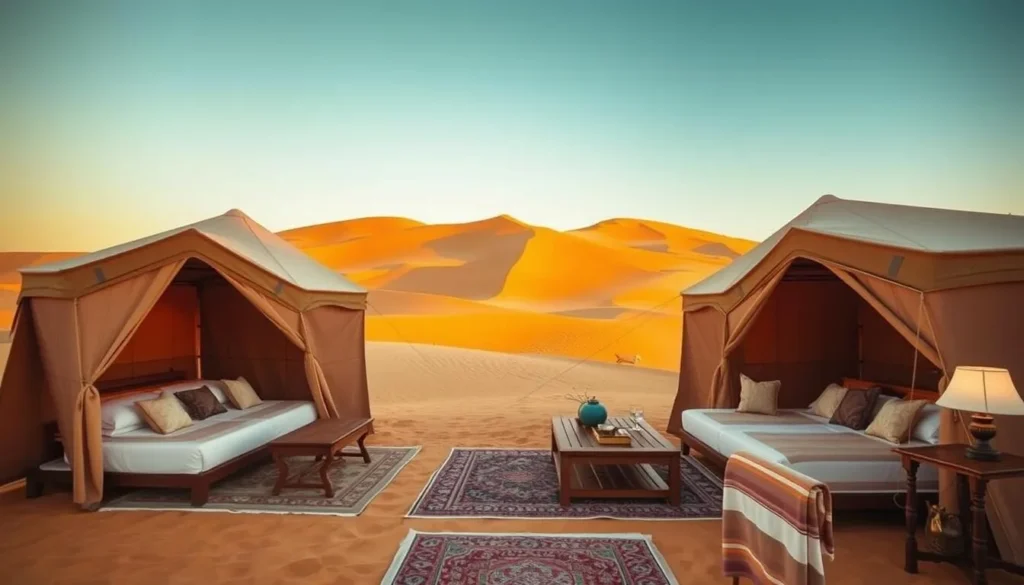
Desert camps in Wahiba Sands offer a unique overnight experience
Oman offers accommodations ranging from international luxury hotels to authentic desert camps. Here’s a breakdown of where to stay in the main tourist regions:
Muscat
As the capital, Muscat has the widest range of accommodations. Luxury resorts line the beaches of Al Qurum and Al Mouj, while mid-range hotels and apartments are available in Ruwi and Al Khuwair districts. Budget options are limited but can be found in older parts of the city.
Nizwa & Mountain Regions
The historic city of Nizwa offers several mid-range hotels. For a truly special experience, consider staying at one of the luxury resorts perched on the mountainside in Jebel Akhdar, offering spectacular views and cool temperatures.
Wahiba Sands
Desert camps range from basic to luxurious, with options for private or shared accommodations. Most include dinner and breakfast, plus activities like camel rides and dune bashing.
Salalah
Salalah’s hotel scene has expanded in recent years, with several beach resorts and city hotels. During the Khareef season (June-September), prices rise and advance booking is essential.
Top Attractions & Best Things to Do in Oman
1. Explore the Wadis
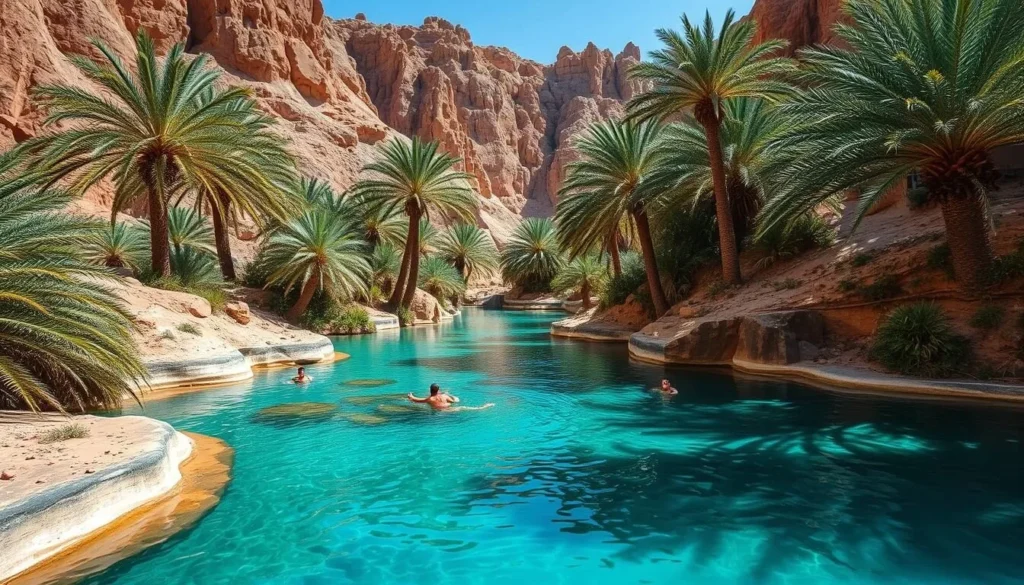
The stunning turquoise pools of Wadi Bani Khalid
Oman’s wadis (valleys with seasonal water flow) are among the country’s most spectacular natural attractions. These desert oases feature crystal-clear turquoise pools perfect for swimming and relaxation.
Wadi Bani Khalid is one of the most accessible and popular wadis, featuring large pools suitable for swimming year-round. Its accessibility makes it perfect for families and those who prefer not to hike extensively.
Wadi Shab requires more effort but rewards visitors with a magical experience. After a short boat ride and a 45-minute hike, you’ll reach beautiful swimming pools. The highlight is swimming through a narrow passage to a hidden cave with a waterfall inside.
Wadi Tiwi, often overlooked in favor of its more famous neighbor Wadi Shab, offers a quieter experience with emerald pools and traditional villages.
Practical Tip: Visit wadis early in the morning to avoid crowds. Bring water shoes, sunscreen, and plenty of drinking water. Always check weather forecasts as flash floods can occur during rainy seasons.
2. Visit the Sultan Qaboos Grand Mosque
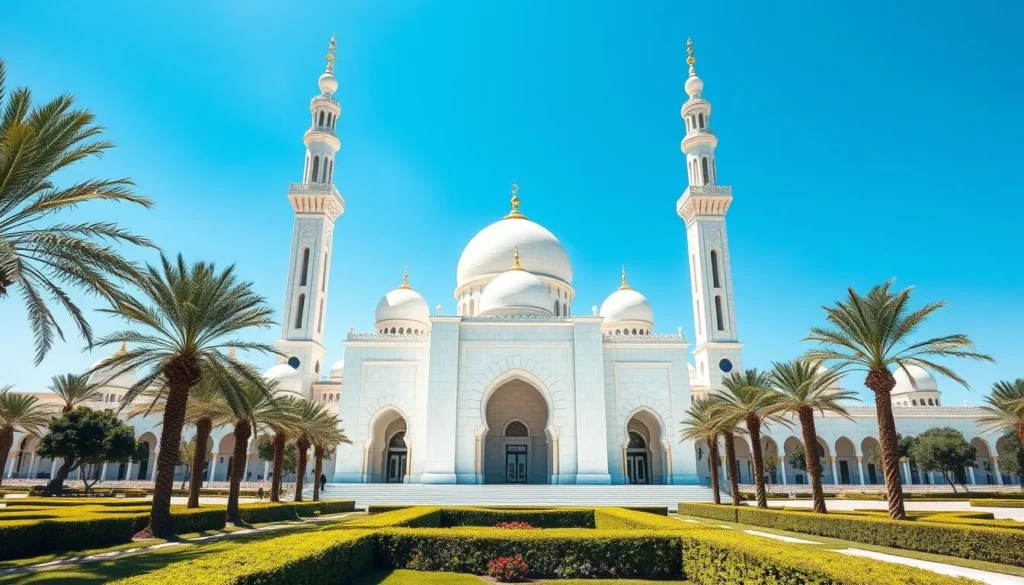
The magnificent Sultan Qaboos Grand Mosque in Muscat
The Sultan Qaboos Grand Mosque in Muscat is a masterpiece of modern Islamic architecture. Completed in 2001, it features a blend of various Islamic architectural styles and can accommodate up to 20,000 worshippers.
The main prayer hall houses the aforementioned enormous hand-woven carpet and a spectacular 14-meter-tall Swarovski crystal chandelier. The mosque’s interior is adorned with intricate mosaics, marble panels, and beautiful calligraphy.
Practical Tip: The mosque is open to non-Muslim visitors from 8:00 AM to 11:00 AM, Saturday through Thursday. Dress modestly – women must cover their hair, arms, and legs, while men should wear long trousers and shirts with sleeves. Abayas and headscarves are available to borrow at the entrance if needed.
3. Experience the Wahiba Sands Desert
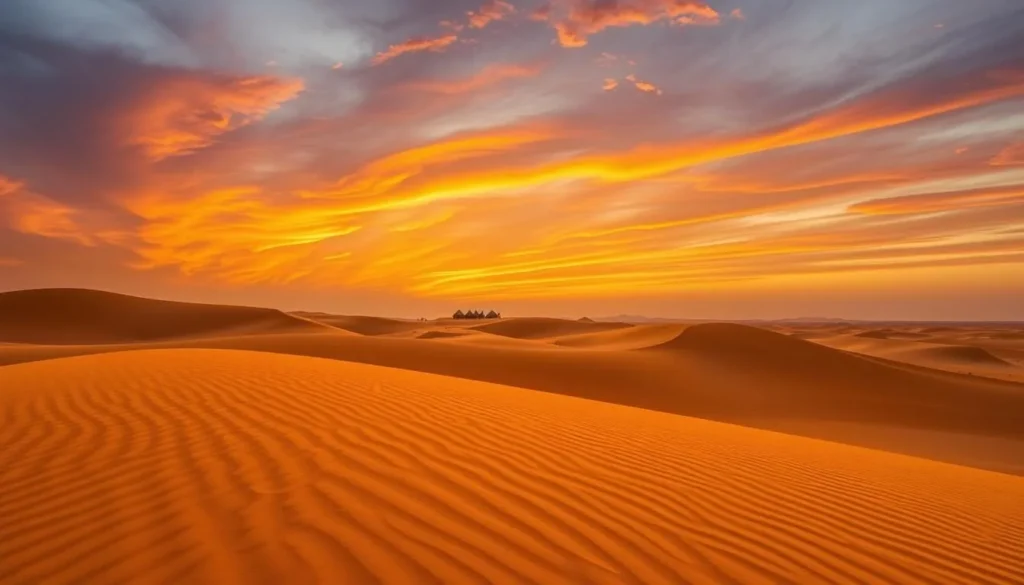
The golden dunes of Wahiba Sands at sunset
Also known as Sharqiya Sands, this vast desert of undulating orange and golden dunes offers one of Oman’s most memorable experiences. Spending a night in a desert camp under the stars is a highlight for many visitors.
Activities in the desert include dune bashing (off-road driving on sand dunes), sandboarding, camel rides, and meeting Bedouin families who have inhabited this harsh environment for generations.
Practical Tip: A 4×4 vehicle is essential for desert driving. If you’re not experienced with sand driving, hire a local guide or book a tour. Most desert camps offer pickup services from designated meeting points if you don’t want to drive in the sand yourself.
4. Discover Nizwa Fort and Souq
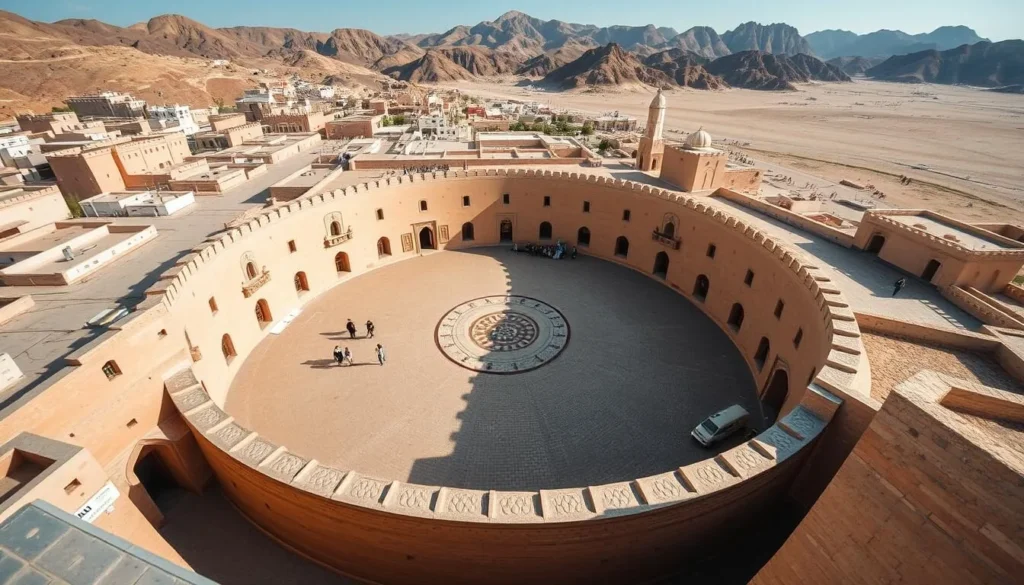
The impressive circular tower of Nizwa Fort
Nizwa, once the capital of Oman, is home to one of the country’s most impressive forts. Built in the 17th century, Nizwa Fort is known for its massive circular tower, strategic location, and ingenious defense mechanisms including honey traps and murder holes.
Adjacent to the fort is Nizwa Souq, a traditional market where you can shop for silver jewelry, pottery, spices, dates, and handicrafts. On Friday mornings, don’t miss the famous goat market where locals trade livestock in a traditional auction.
Practical Tip: Visit the fort early in the morning to avoid the heat and crowds. If possible, plan your visit to include a Friday morning to witness the unique goat market (starting around 7:00 AM).
5. Explore Jebel Shams, Oman’s Grand Canyon
Jebel Shams (Mountain of Sun) is Oman’s highest peak and home to Wadi Ghul, often called “Oman’s Grand Canyon.” The spectacular views from the rim of this massive canyon are breathtaking, with depths reaching over 1,000 meters.
The famous “Balcony Walk” is a moderate hiking trail that follows the rim of the canyon to the abandoned village of As Sab. This relatively flat trail offers incredible views throughout and is suitable for reasonably fit hikers.
Practical Tip: A 4×4 vehicle is required to reach Jebel Shams. Start hikes early in the morning, especially during warmer months, and bring plenty of water. The temperature at the summit can be significantly cooler than in the valleys below, so pack a light jacket even in summer.
6. Visit the Coastal City of Sur
The coastal city of Sur has a rich maritime history and was once a major center for dhow building (traditional wooden boats). Today, you can still visit the dhow shipyard to see these vessels being crafted using traditional methods passed down through generations.
Sur’s corniche offers pleasant walks with views of the harbor and the distinctive lighthouse. Nearby attractions include the turtle reserve at Ras Al Jinz, where you can watch endangered green turtles nesting and hatching (best between April and August).
Practical Tip: Combine a visit to Sur with an overnight stay at Ras Al Jinz Turtle Reserve. Book the turtle viewing tours in advance, especially during peak nesting season.
7. Marvel at Bimmah Sinkhole
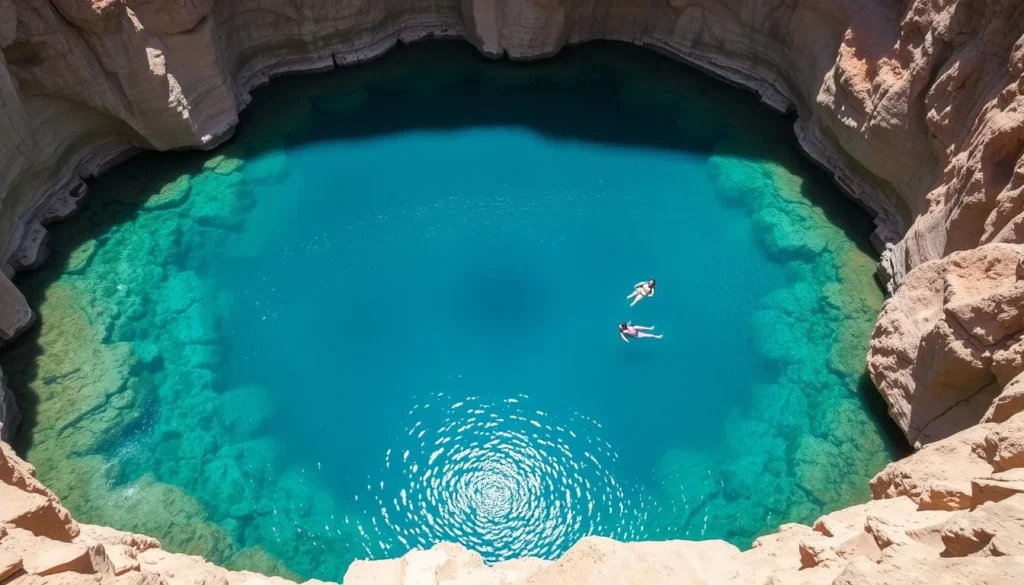
The stunning turquoise waters of Bimmah Sinkhole
Located between Muscat and Sur, Bimmah Sinkhole is a natural depression filled with turquoise water. Local legend claims it was created by a meteorite (hence its Arabic name “Hawiyat Najm” meaning “The Falling Star”), but scientists believe it formed when a limestone cave collapsed.
The sinkhole is approximately 50 meters by 70 meters across and 20 meters deep. Steps lead down to the water’s edge, where visitors can swim in the refreshing water. Tiny fish in the water offer a natural “fish spa” experience, nibbling gently at swimmers’ feet.
Practical Tip: The sinkhole is part of a park with facilities including toilets and shaded areas. There’s no entrance fee. Visit on weekdays to avoid crowds, and bring water shoes if you have sensitive feet.
8. Experience Salalah and the Khareef Season
Salalah, the capital of Dhofar province in southern Oman, offers a completely different landscape and climate from the rest of the country. During the Khareef (monsoon) season from June to September, the region transforms into a lush green paradise with flowing waterfalls and misty mountains.
The area is also famous for its frankincense trees. Visit the UNESCO-listed Land of Frankincense sites, including the ancient port of Khor Rori and the frankincense trees of Wadi Dawkah, to learn about this precious resin that was once more valuable than gold.
Practical Tip: If visiting during Khareef, book accommodations well in advance as this is peak season for domestic tourism. Outside the Khareef season, Salalah offers beautiful beaches and a more typical desert landscape.
Local Cuisine & Dining
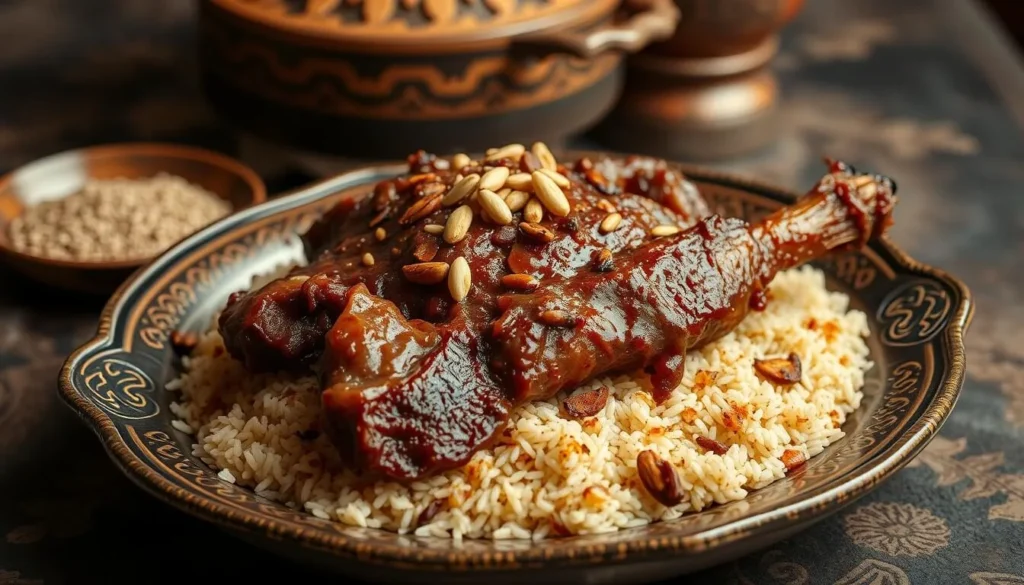
Shuwa, a traditional Omani dish of slow-cooked marinated meat
Omani cuisine reflects the country’s trading history, with influences from India, Persia, East Africa, and the Arabian Peninsula. Here are some dishes to try during your visit:
Must-Try Omani Dishes
- Shuwa – Marinated meat (usually lamb or goat) wrapped in banana leaves and slow-cooked in an underground sand oven for up to 48 hours. This celebratory dish is often served on special occasions.
- Majboos – A flavorful rice dish cooked with spices and meat, similar to biryani but with distinct Omani flavors.
- Mashuai – Grilled kingfish served with lemon rice, a specialty in coastal regions.
- Harees – A porridge-like dish made from wheat and meat, slow-cooked until creamy.
- Omani Halwa – A sticky, gelatinous sweet made with sugar, eggs, ghee, and flavored with saffron, cardamom, and nuts. It’s traditionally served with Omani coffee (qahwa).
Dining Experiences
From high-end restaurants in luxury hotels to simple local eateries, Oman offers diverse dining options. For an authentic experience, try these:
- Kargeen Café in Muscat – A beautifully decorated restaurant serving traditional Omani and Middle Eastern dishes in a garden setting.
- Bin Ateeq in Muscat – A popular local restaurant where you can dine traditionally, sitting on floor cushions.
- Fish restaurants in Sur – Enjoy freshly caught seafood prepared simply and deliciously.
- Desert camps – Most offer traditional Omani dinners under the stars.
Practical Tip: Alcohol is only available in licensed hotel restaurants and bars. Outside these venues, expect to drink fruit juices, soft drinks, or the ubiquitous Omani coffee served with dates.
Cultural Etiquette & Safety Tips
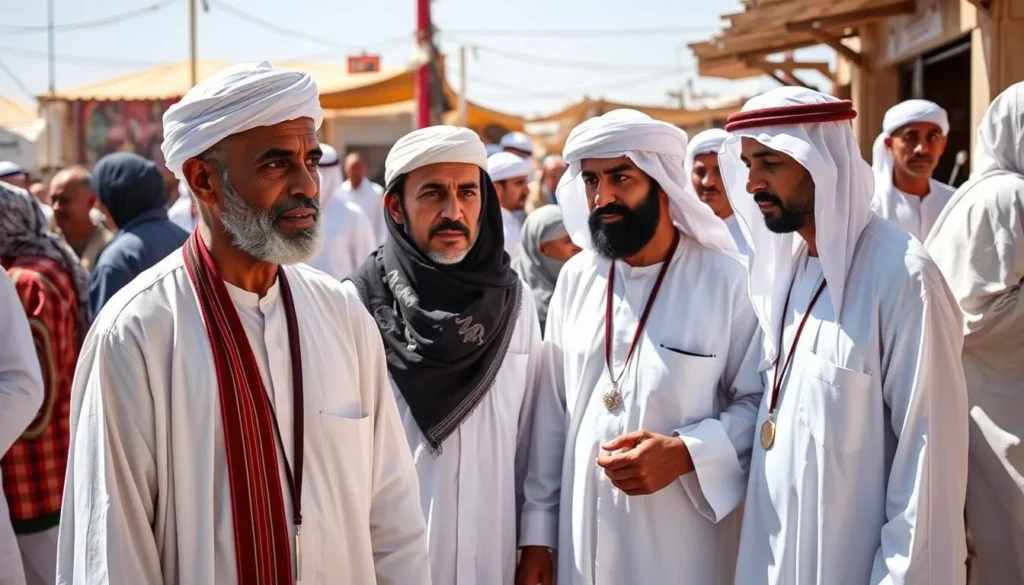
Omani men in traditional dishdasha and kumma headwear
Cultural Respect
Oman is a conservative Muslim country with strong traditions. Respecting local customs will enhance your experience and interactions with Omanis, who are known for their hospitality and friendliness.
- Dress modestly – Both men and women should cover shoulders and knees in public. Women should avoid tight or revealing clothing. In more conservative areas, women may want to cover their arms as well.
- Public behavior – Public displays of affection should be avoided. During Ramadan, refrain from eating, drinking, or smoking in public during daylight hours.
- Photography – Ask permission before photographing local people, especially women. Avoid photographing government buildings, military installations, and airports.
- Greetings – Greet people with “As-salaam alaikum” (peace be upon you). The traditional response is “Wa alaikum as-salaam” (and upon you be peace).
Safety Information
Oman is one of the safest countries in the world for travelers, with low crime rates and political stability. However, standard travel precautions still apply:
- Desert and mountain safety – Always carry plenty of water, inform someone of your plans, and use a 4×4 vehicle for off-road driving.
- Wadi safety – Check weather forecasts before visiting wadis, as flash floods can occur even when there’s no rain in the immediate area.
- Road safety – Drive defensively and be aware that some local driving habits may differ from what you’re used to. Off-road driving requires experience.
- Health – Tap water in major cities is generally safe, but bottled water is widely available. Medical facilities in Muscat are excellent, but may be limited in rural areas.
Practical Travel Tips
Money Matters
The Omani Rial (OMR) is one of the world’s highest-valued currencies. ATMs are widely available in cities and towns, and credit cards are accepted at hotels, larger restaurants, and shopping centers. Keep some cash for smaller establishments, souqs, and rural areas.
Communication
Arabic is the official language, but English is widely spoken in tourist areas, hotels, and restaurants. Learning a few Arabic phrases will be appreciated by locals. SIM cards with data packages are available at the airport and in mobile shops (passport required for registration).
Electricity
Oman uses 220-240V with British-style three-pin sockets (type G). Bring an adapter if needed.
Shopping Tips
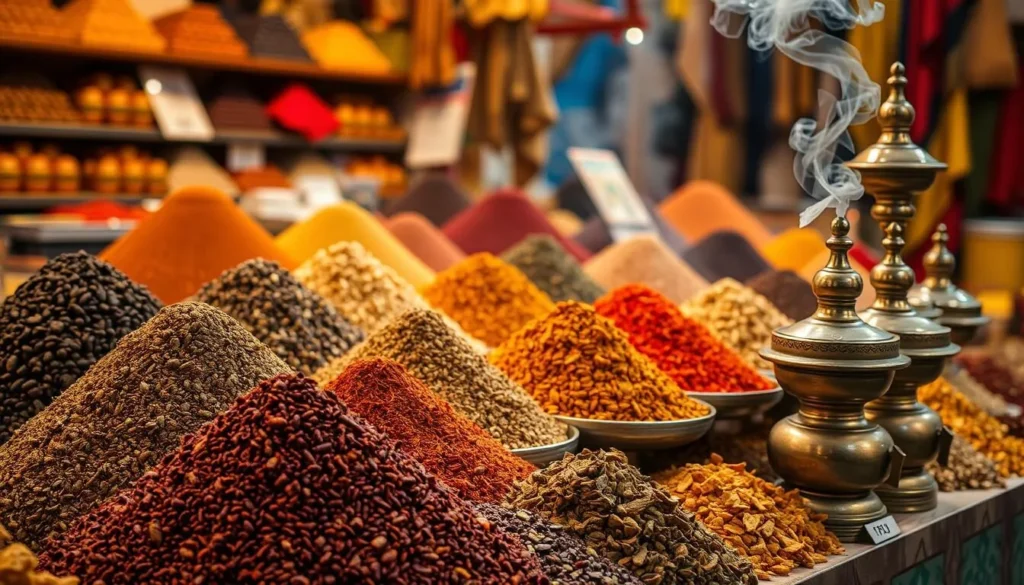
Colorful spices and frankincense at Mutrah Souq in Muscat
Oman offers excellent shopping opportunities, particularly for traditional crafts. Consider these souvenirs:
- Frankincense – Oman produces some of the world’s finest frankincense, particularly from the Dhofar region.
- Silver jewelry – Nizwa is famous for its silverwork, including the khanjar (traditional dagger).
- Pottery – Bahla is known for its distinctive pottery.
- Omani halwa – This traditional sweet comes in decorative boxes and makes a great gift.
- Dates – Oman produces excellent dates in various varieties.
Bargaining Tip: Gentle bargaining is expected in souqs, but not in fixed-price shops. Start by offering about 60-70% of the asking price and work toward a mutually acceptable figure.
Ready for Your Omani Adventure?
Oman offers a rare blend of authentic Arabian culture, breathtaking landscapes, and warm hospitality that makes it one of the Middle East’s most rewarding destinations. From swimming in turquoise wadis to camping under desert stars, from exploring ancient forts to wandering through vibrant souqs, Oman rewards travelers with experiences that feel both exotic and accessible.
Unlike some of its more developed neighbors, Oman has preserved its cultural identity while carefully embracing modernization, creating a travel experience that feels genuine and unspoiled. Whether you’re seeking adventure, relaxation, cultural immersion, or a bit of everything, Oman’s diverse attractions promise an unforgettable journey through one of the Arabian Peninsula’s most welcoming countries.
The above is subject to change.
Check back often to TRAVEL.COM for the latest travel tips and deals.


0 Comments