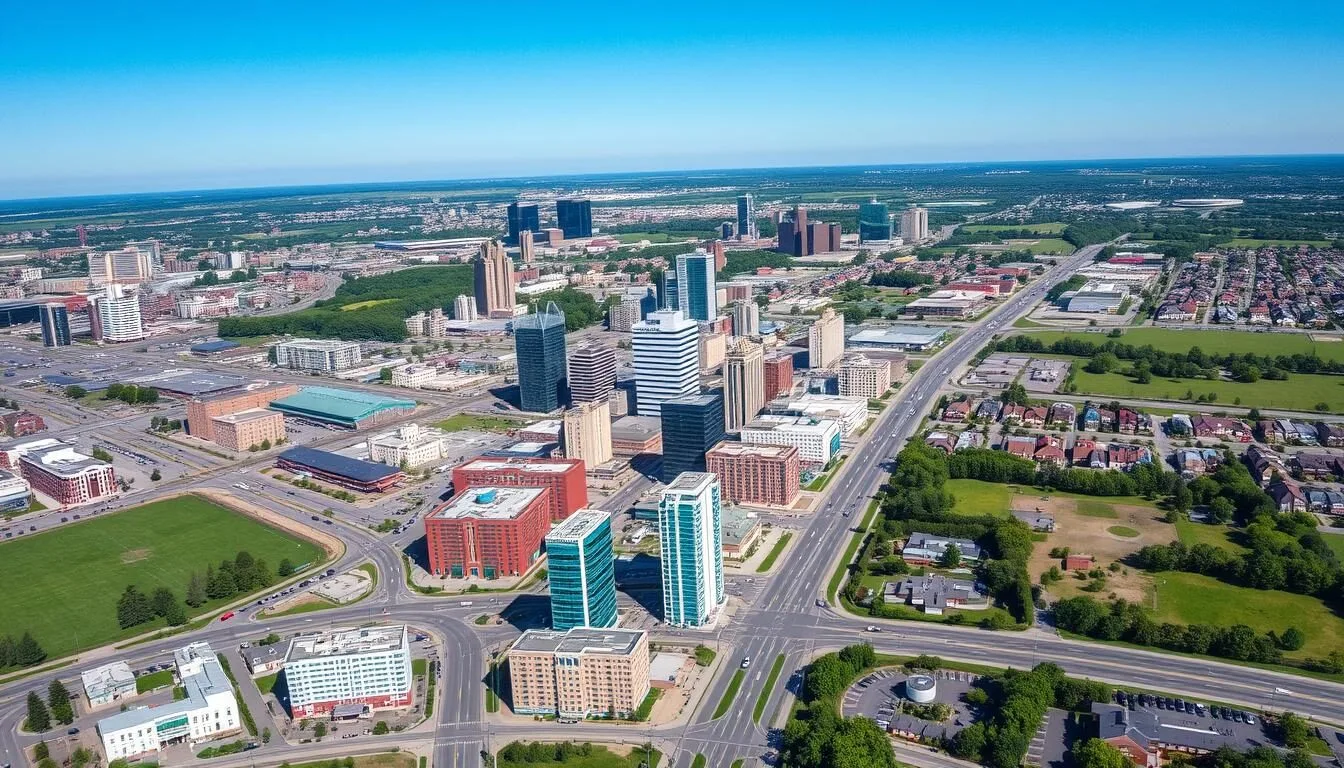
1. Toronto – ~3,273,119
Canada’s largest city and provincial capital, global finance and arts hub.
2. Ottawa – ~1,153,843
Canada’s national capital, bilingual government and tech centre.
3. Brampton – ~791,486
Rapidly growing Peel Region city; diverse and vibrant community.
4. Mississauga – ~780,747
Major Toronto suburb with business district and international airport.
5. Hamilton – ~632,111
Port and steel city in Niagara Peninsula, now diversifying into healthcare & arts.
6. London – ~488,640
Southwestern Ontario regional centre for education and health services.
7. Markham – ~368,110
Tech and business hub in York Region with high cultural diversity.
8. Vaughan – ~353,648
Northern GTA city with theme parks and residential growth.
9. Kitchener – ~320,360
Tech hub forming part of the Waterloo‑Kitchener‑Cambridge region.
10. Windsor – ~266,309
Border city facing Detroit, known for automotive and riverfront parks.
11. Burlington – ~162,988
Halton city on Lake Ontario balancing residential growth and arts.
12. Greater Sudbury – ~158,036
Northern mining city with dynamic university and outdoor economy.
13. Guelph – ~143,740
University town with strong agricultural research and community culture.
14. Oshawa – ~133,383
Historic auto‑manufacturing city now shifting to education and services.
15. Milton – ~132,979
Fastest-growing town in Halton Region, popular with young families.
16. Cambridge – ~129,920
Part of K-W region; manufacturing and innovation presence.
17. Peterborough – ~128,624
Kawartha Lakes city with canals, Trent University, and cottage country gateway.
18. Whitby – ~128,377
Durham Region town with lakeshore parks and commuter lifestyle.
19. St. Catharines – ~128,372
Niagara Regional city; known for wine, canals, and heritage downtown.
20. Barrie – ~126,904
Lake Simcoe city with rapid growth and commuter appeal.
21. Ajax – ~126,666
Durham Region town on Lake Ontario with waterfront and family communities.
22. Kingston – ~122,584
Historic lakefront city with Queens University and penitentiary heritage.
23. Waterloo – ~121,436
Home to major tech companies, universities, and innovation districts.
24. Thunder Bay – ~108,843
Lake Superior port city in Northwestern Ontario, forestry and regional services centre.
25. Brantford – ~104,688
City on the Grand River, birthplace of Wayne Gretzky, with emerging tech sector.
26. Clarington – ~101,427
Durham Region municipality with industrial and commuter development.
27. Pickering – ~91,771
Lakeside GTA city with commuter base and growing parks.
28. Niagara Falls – ~88,071
Tourist city with world-renowned waterfall and hospitality sector.
29. Newmarket – ~84,224
York Region town blending historic character with retail and commuter growth.
30. Kawartha Lakes – ~75,000 (approx)
City-region known for cottage country and recreational lakes.
31. Sault Ste. Marie – ~72,500 (approx)
Steel city on Lake Superior bordering Michigan with outdoor access.
32. Sarnia – ~71,594
Lake Huron city known for petrochemical and refinery industry.
33. Caledon – ~66,502
Rural-urban mix town in Peel Region with rapid suburban spread.
34. North Bay – ~65,000 (approx)
Northern city on Lake Nipissing with tourism and transportation focus.
35. Norfolk County – ~64,044
Large rural municipality on Lake Erie with agriculture and crafts heritage.
36. Halton Hills – ~61,161
Town in Halton Region with growing communities and historic villages.
37. Aurora – ~55,445
York Region town with historic downtown and suburban expansion.
38. Welland – ~52,293
Niagara City on the Welland Canal with manufacturing and waterfront revitalization.
39. Stratford – ~35,000 (Medium urban centre)
Known for Stratford Festival and Victorian architecture.
40. Orangeville – ~35,000 (Medium town)
Southwestern Ontario commuter town with arts scene and historic downtown.