
Hotels by Trip.com
Flights by Trip.com
Did you know that Chichen Itza receives over 2.5 million visitors annually, making it the most visited archaeological site in Mexico? Yet remarkably, scientists estimate that only 30% of this ancient Mayan city has been excavated and restored. The rest remains hidden beneath centuries of jungle growth, with countless secrets still waiting to be discovered. This blend of magnificent restoration and ongoing mystery is what makes Chichen Itza such a captivating destination for travelers worldwide.
Getting There & Planning Your Journey
Chichen Itza is located in Mexico’s Yucatan Peninsula, approximately 200 km (124 miles) west of Cancun and 120 km (75 miles) east of Merida. The site’s strategic location makes it accessible from several popular tourist destinations in the region.
Closest Airports
The two main airports serving visitors to Chichen Itza are:
- Cancun International Airport (CUN) – The busiest airport in the region, located about 2.5 hours by car from Chichen Itza.
- Merida International Airport (MID) – A smaller airport but closer to the ruins, approximately 1.5 hours away by car.
Transportation Options
You have several options for reaching Chichen Itza:
Rental Car
Renting a car gives you the most flexibility. The roads connecting major cities to Chichen Itza are well-maintained, particularly Highway 180D, which is a toll road. Current toll costs are approximately 129 pesos (about $7 USD) from Merida and 380 pesos (about $18 USD) from Cancun. Make sure to carry sufficient cash in pesos for tolls.
Public Bus
ADO buses operate between major cities and Chichen Itza. From Cancun, tickets cost around 400 pesos ($22 USD) each way, with morning departures between 5:00-8:00 AM and return trips at 4:00 PM. From Merida, buses cost approximately 145 pesos ($8 USD) each way with three daily departures in each direction.
Guided Tours
Numerous tour operators offer day trips to Chichen Itza from Cancun, Playa del Carmen, Tulum, and Merida. These typically include transportation, entrance fees, a guide, and sometimes lunch and stops at cenotes or colonial towns like Valladolid.
Colectivos (Shared Vans)
These local shared taxis are a budget-friendly option, particularly from Valladolid (about 37 pesos or $2 USD). They depart when full and offer a more authentic local experience, though they may require some patience.
Best Time to Visit Chichen Itza
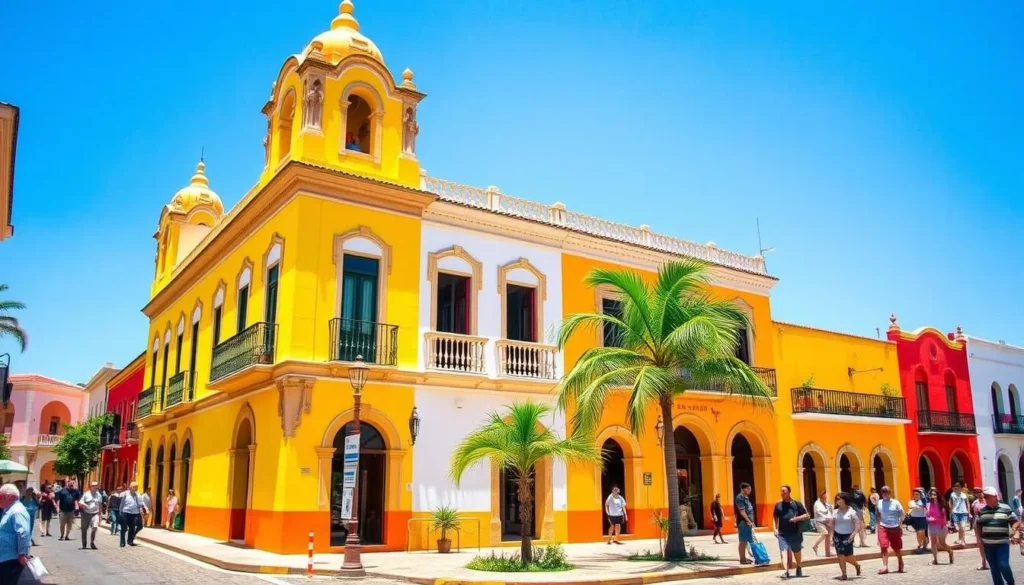
Timing your visit to Chichen Itza can significantly impact your experience. The site is open year-round from 8:00 AM to 5:00 PM, with last entry at 4:00 PM.
Recommended Seasons
Best Months
- November to April – The dry season offers pleasant temperatures between 22-28°C (72-82°F) and minimal rainfall, making it ideal for exploring the ruins.
- Early November and late April – These shoulder season periods offer good weather with fewer crowds than peak season.
Months to Avoid
- May to October – The rainy season brings afternoon showers and higher humidity, with temperatures often exceeding 32°C (90°F).
- June – Particularly rainy with frequent afternoon downpours.
- March to April – Spring break period brings the heaviest crowds.
Time of Day Tips
- Early Morning (8:00-10:00 AM) – Arrive when gates open to beat both the crowds and midday heat. Tour buses from coastal resorts typically arrive after 10:00 AM.
- Late Afternoon (3:00-5:00 PM) – Another good option as many tour groups have departed, though the heat may still be intense.
- Avoid Sundays – Mexican citizens receive free entry, making this the busiest day of the week.
Special Events
If you’re interested in witnessing a unique natural phenomenon, consider visiting during the spring or autumn equinoxes (around March 21 and September 22). On these days, the afternoon sun creates a shadow pattern on El Castillo that resembles a serpent descending the pyramid. However, be prepared for enormous crowds during these special events.
Getting Around Locally
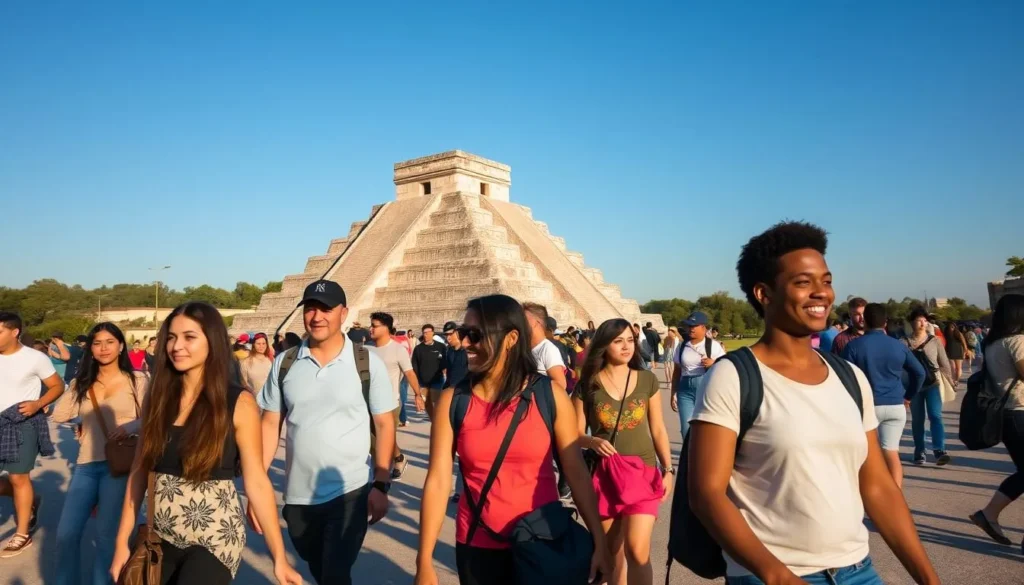
Chichen Itza covers approximately 4 square kilometers (1.9 square miles), with the main attractions concentrated in a central area. Getting around the site is straightforward, but there are a few things to know.
Site Navigation
- Walking – The entire site is explored on foot. The main attractions are connected by well-maintained pathways.
- Site Map – Pick up a map at the entrance or from your hotel. The site is divided into two main sections: Old Chichen and New Chichen.
- Guided Tours – On-site guides are available for hire (600-1000 pesos for 2-3 hours) and provide valuable historical context.
- Self-Guided – Information boards in English, Spanish, and Maya are placed throughout the site.
Local Transportation
If you’re staying in the Chichen Itza area:
- Taxis – Available at most hotels and at the site entrance.
- Hotel Shuttles – Many nearby hotels offer shuttle services to and from the ruins.
- Walking – If staying at hotels like Mayaland or Villas Arqueologicas, you can walk directly to a private entrance.

Where to Stay
While many visitors experience Chichen Itza as a day trip, staying nearby allows you to visit the ruins early in the morning before the crowds arrive or attend the evening light show. Here are accommodation options at various price points:
Check 30,000+ Local Sightseeing Tours Worldwide
✓ Numerous languages and currencies are available
Lodging at Chichen Itza
Luxury
- Hacienda Chichen Resort and Yaxkin Spa – A historic hacienda with beautiful gardens, an excellent restaurant, and a spa specializing in Mayan treatments. Rooms from $90-150 USD.
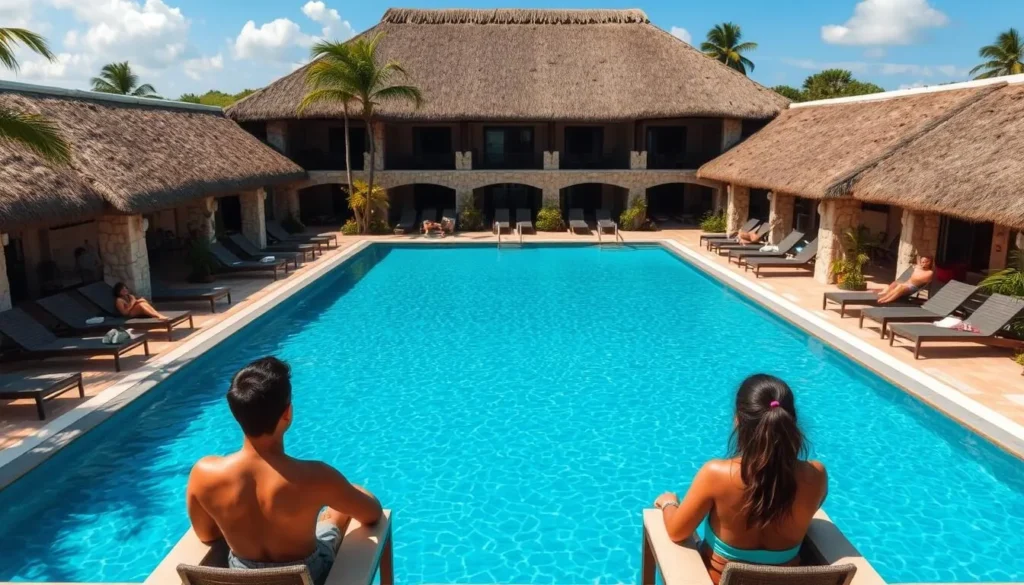
- The Lodge at Chichen Itza – Upscale bungalows with private terraces and a large pool area. Some rooms have views of the observatory. Rooms from $120-200 USD.
Mid-Range
- Hotel Villas Arqueologicas Chichen Itza – Located within walking distance of the ruins with a private entrance. Features a pool and restaurant. Rooms from $70-100 USD.
- Hotel Doralba Inn – Located near Ik Kil cenote with comfortable rooms and a small pool. Rooms from $50-80 USD.
Budget
- La Casa de Las Lunas – Simple but clean accommodations in nearby Piste with a small pool. Rooms from $30-50 USD.
- Hotel Piramide Inn – Basic rooms with air conditioning in Piste. Rooms from $25-40 USD.
Nearby Towns
If you prefer to stay in a more lively area with additional dining and shopping options:
- Valladolid – A charming colonial town 45 minutes from Chichen Itza with numerous hotels, restaurants, and its own attractions.
- Piste – The closest town to the ruins (2.5 km away) with basic accommodations and local restaurants.
Dining & Local Cuisine
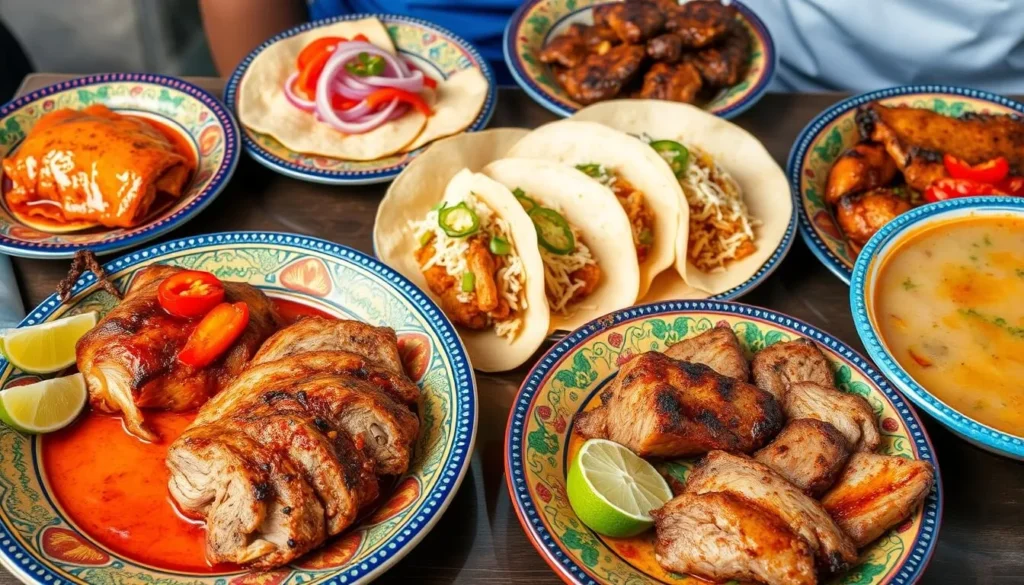
The Yucatan Peninsula has a distinctive culinary tradition that differs from what many visitors think of as “Mexican food.” Mayan influences, unique ingredients, and cooking techniques create a memorable dining experience.
Must-Try Yucatecan Dishes
- Cochinita Pibil – Slow-roasted pork marinated in achiote and sour orange juice, traditionally cooked in an underground pit.
- Sopa de Lima – A tangy chicken soup flavored with local lime.
- Papadzules – Corn tortillas filled with hard-boiled eggs and covered in pumpkin seed sauce.
- Poc Chuc – Grilled pork marinated in sour orange juice and served with pickled onions.
- Panuchos and Salbutes – Fried tortillas topped with turkey or chicken, lettuce, avocado, and pickled onions.
Where to Eat
At Chichen Itza
There are several restaurants within the archaeological zone, but they tend to be expensive with mediocre food. Consider these better options:
- Restaurant Oxtun – Located at the Mayaland Hotel with views of the ruins.
- La Casona de Valladolid – Inside the site but offering better quality than most on-site options.
Nearby Options
For more authentic and affordable meals:
- La Gran Chaya – Located in Piste across from the church, serving excellent cochinita pibil at local prices.
- Pueblo Maya Restaurant – On the road to Chichen Itza, offering traditional Yucatecan dishes.
- Restaurante Ik Kil – Near the Ik Kil cenote with decent food and beautiful surroundings.
Dining Tips
- Bring water and snacks to the ruins, as food inside is overpriced.
- Many tours include lunch at nearby restaurants, which can be convenient but may not offer the most authentic experience.
- For the best value and most authentic food, eat where locals eat in Piste or Valladolid.
Attractions, Sightseeing & Activities
Chichen Itza is one of the New Seven Wonders of the World and a UNESCO World Heritage site for good reason. The archaeological zone contains numerous structures that showcase the architectural and astronomical knowledge of the Maya civilization.
Must-See Structures
El Castillo (Temple of Kukulkan)
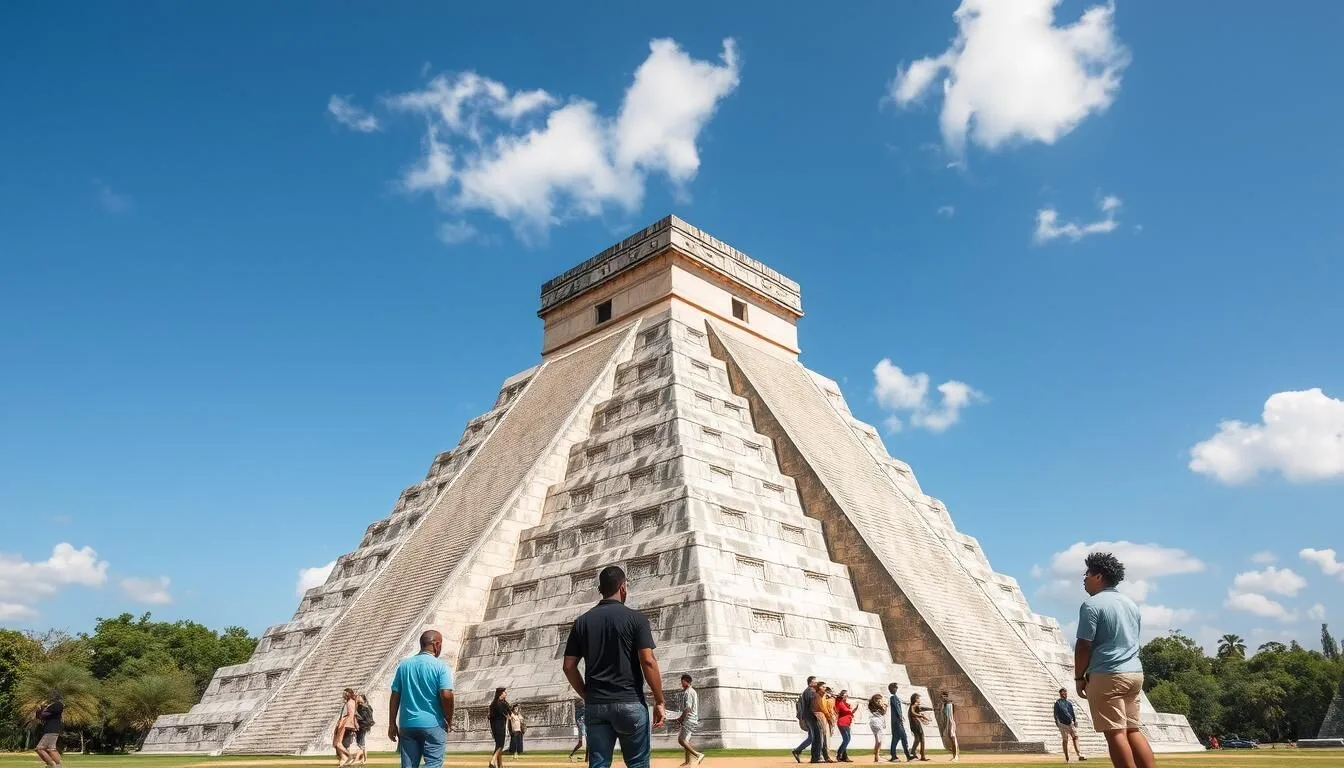
The iconic 30 m (98 ft) tall step pyramid at the center of the site. This masterpiece of Mayan engineering features 91 steps on each of its four sides, plus the top platform, totaling 365 steps—one for each day of the year. During the spring and autumn equinoxes, the afternoon sun creates a shadow pattern resembling a serpent descending the northern staircase.
Great Ball Court
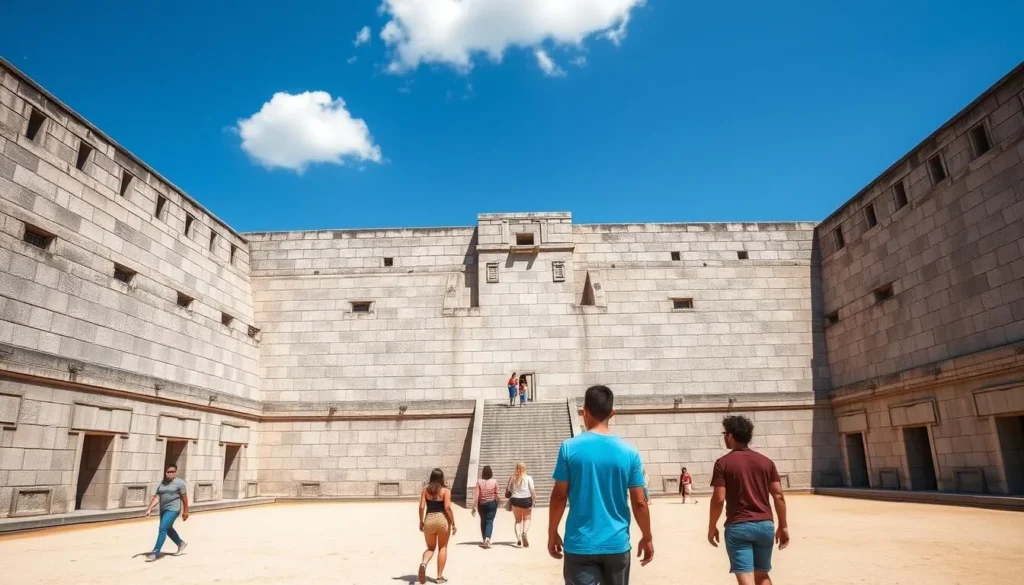
The largest ball court in ancient Mesoamerica at 168 m (551 ft) long and 70 m (230 ft) wide. Players had to pass a rubber ball through stone hoops placed 6 m (20 ft) high using only their hips, shoulders, and elbows. The court’s acoustics are remarkable—a whisper at one end can be heard clearly at the other, 135 m (443 ft) away.
Temple of the Warriors
A large stepped pyramid surrounded by hundreds of carved columns depicting warriors. At the top sits a Chacmool statue—a reclining figure that once held offerings to the gods.
Sacred Cenote
A large natural sinkhole that was a place of pilgrimage and sacrifice. Archaeologists have recovered gold, jade, pottery, and human remains from its depths, confirming historical accounts of offerings to the rain god Chaac.
El Caracol (The Observatory)
A unique rounded structure that served as an astronomical observatory. Its windows align with important celestial events, including the movements of Venus, which was highly significant to Maya religion.
Tzompantli (Skull Rack)
A platform decorated with carvings of human skulls, likely representing sacrificial victims or defeated enemies. The carvings depict skulls impaled on wooden stakes, a common Mesoamerican practice.
Other Activities
- Kukulkan Nights Light Show – An evening sound and light show projected onto El Castillo, telling the story of the Maya civilization. Shows begin at 7:00 PM, with tickets (600 pesos) available from 3:00 PM the same day.
- Cenote Swimming – After exploring the ruins, cool off at nearby cenotes like Ik Kil (6 km from Chichen Itza) or Cenote X’Canche.
- Valladolid Exploration – Visit this colonial city with its beautiful cathedral, cenotes, and traditional markets.
Museums, Cultural Spots & Festivals
While Chichen Itza itself is the main attraction, there are several museums and cultural experiences that can enhance your understanding of Maya civilization and the region’s heritage.
Museums
- Chichen Itza Site Museum – Located near the site entrance, this small museum displays artifacts found during excavations, including jade carvings, pottery, and stone sculptures.
- Museo Maya de Cancun – If you’re based in Cancun, this excellent museum houses one of the most important archaeological collections in Mexico.
- Gran Museo del Mundo Maya – Located in Merida, this world-class museum offers comprehensive exhibits on Maya history, culture, and achievements.
Cultural Experiences
- Mayan Villages – Several traditional Maya communities near Chichen Itza welcome visitors. These provide insight into how ancient traditions continue in modern life.
- Cooking Classes – Learn to prepare traditional Yucatecan dishes in Valladolid or nearby communities.
- Artisan Workshops – Observe local craftspeople creating traditional textiles, pottery, and wood carvings.
Festivals and Events
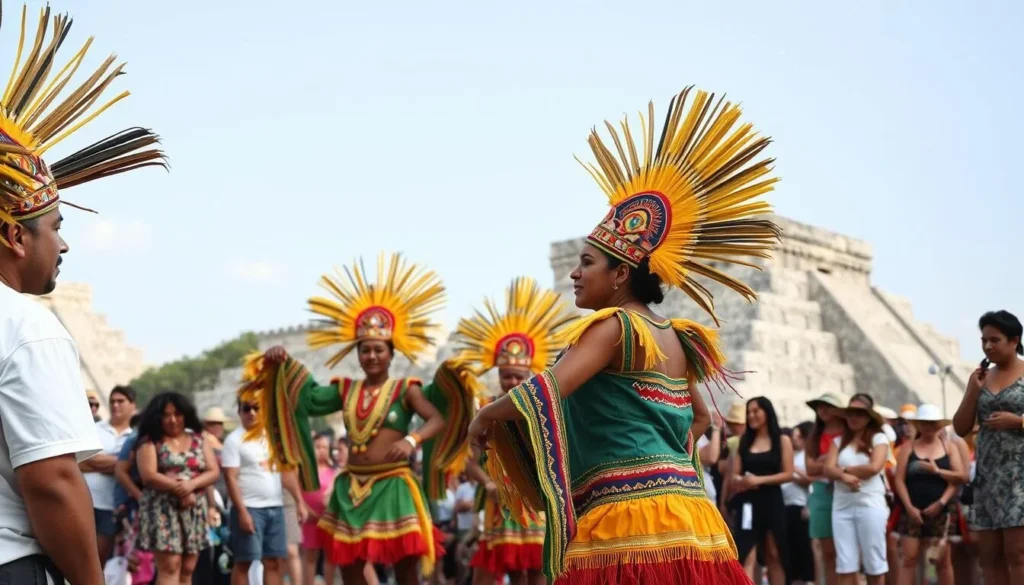
- Spring and Autumn Equinox – Thousands gather to witness the serpent shadow effect on El Castillo (around March 21 and September 22).
- Hanal Pixan – The Maya version of Day of the Dead, celebrated in late October and early November throughout the Yucatan.
- Festival de las Ánimas – Held in Merida during the last week of October, featuring traditional food, altars, and processions.
Sports, Nature & Outdoor Experiences
The Yucatan Peninsula offers numerous natural attractions and outdoor activities that complement a visit to Chichen Itza.
Cenotes
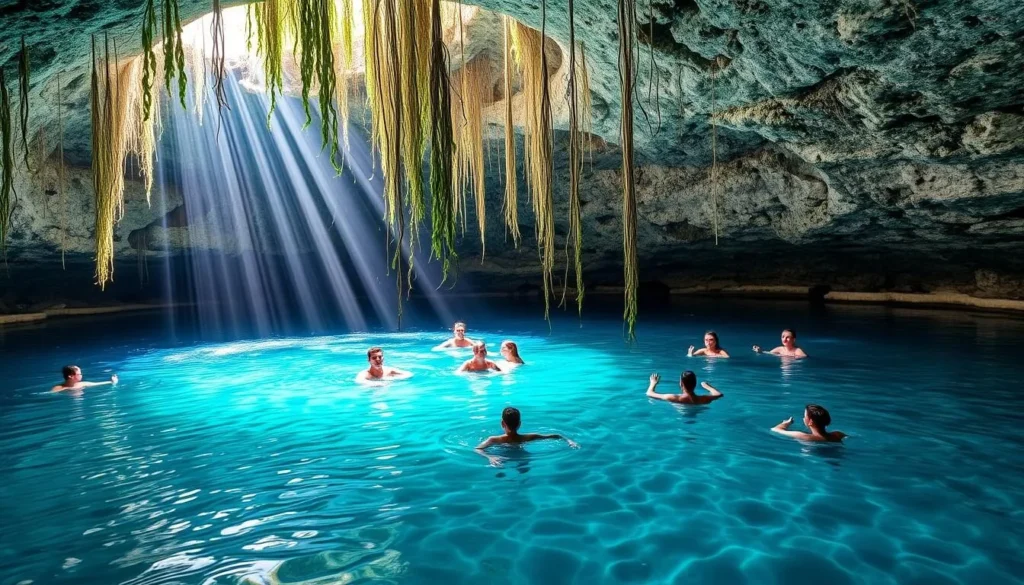
These natural sinkholes were sacred to the Maya and now offer unique swimming experiences. Notable cenotes near Chichen Itza include:
- Cenote Ik Kil – Just 6 km from Chichen Itza, this 40 m (131 ft) deep open cenote features hanging vines and crystal-clear water. Entrance fee: 80 pesos.
- Cenote X’Canche – Located near the ruins of Ek Balam, this less-crowded cenote offers swimming, zip-lining, and kayaking.
- Cenote Suytun – Famous for its stone platform in the center of the cenote, illuminated by a natural skylight.
- Cenotes X’keken and Samula – Two cenotes near Valladolid, one with a dramatic light beam and the other with impressive stalactites.
Nature Reserves
- Río Lagartos Biosphere Reserve – About 2 hours from Chichen Itza, this coastal reserve is home to thousands of flamingos and other bird species.
- Celestún Biosphere Reserve – Famous for its large flamingo population, mangroves, and boat tours.
Adventure Activities
- Cycling – Rent bicycles in Valladolid to explore the town and nearby cenotes.
- Kayaking – Several cenotes and lagoons offer kayaking opportunities.
- Zip-lining – Available at adventure parks and some cenotes in the region.
Safety, Etiquette & Local Customs
Understanding local customs and safety considerations will help ensure a smooth and respectful visit to Chichen Itza and the surrounding region.
Safety Tips
- Sun Protection – The Yucatan sun is intense. Wear a hat, sunglasses, and apply sunscreen regularly. The site has limited shade.
- Hydration – Bring plenty of water. While bottles are available for purchase on-site, they’re expensive.
- Health Precautions – Carry basic medications for stomach issues, insect repellent, and a basic first-aid kit.
- Valuables – Keep valuables to a minimum and secure. While the tourist areas are generally safe, petty theft can occur.
- Road Safety – If driving, be aware of “topes” (speed bumps) which are often unmarked and can damage vehicles if hit at speed.
Etiquette & Customs
- Respect the Ruins – Climbing on structures is prohibited to preserve them. Stay on designated paths.
- Photography – Photography is permitted throughout the site, but drones are prohibited without special permission.
- Dress Code – There’s no official dress code, but modest clothing is appropriate for both comfort and respect.
- Tipping – If you hire a guide, a tip of 10-15% is customary for good service.
- Bargaining – When shopping for souvenirs, polite bargaining is expected, but be respectful of artisans’ work.
Cultural Awareness
- Maya Culture – The Maya civilization didn’t “disappear”—over 6 million Maya people still live in Mexico and Central America, maintaining many traditions.
- Language – While Spanish is the official language, many locals in the Yucatan also speak Mayan. Learning a few basic Spanish phrases is appreciated.
- Sacred Sites – Chichen Itza and cenotes were sacred to the Maya. Approach these places with respect.
Visitor Comments About Chichen Itza
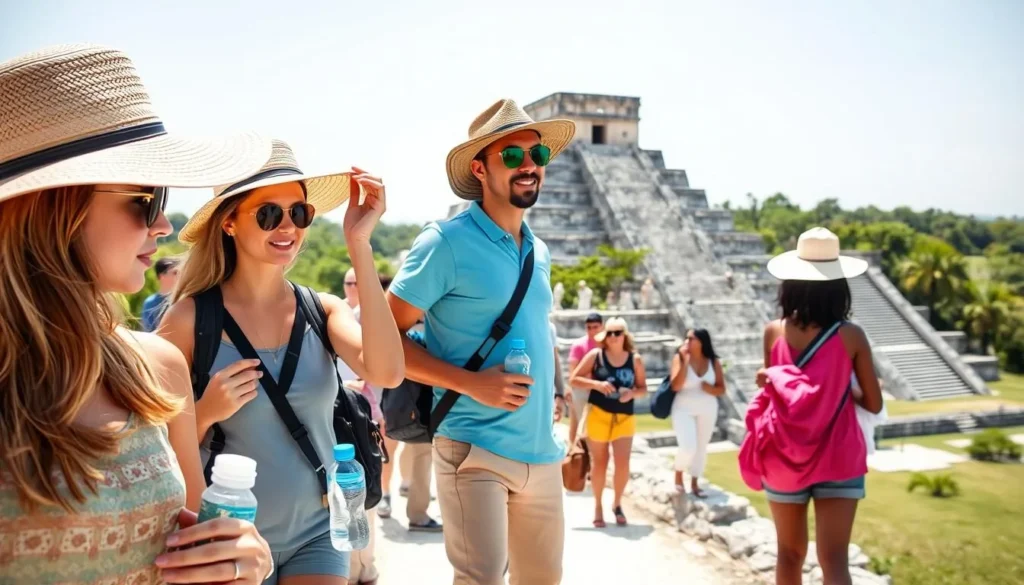
“Visiting Chichen Itza was the highlight of our Mexico trip. The sheer scale of El Castillo took my breath away! My tip: arrive when it opens at 8 AM. We had almost an hour to explore before the tour buses arrived, allowing for amazing photos without crowds. Don’t miss the sound demonstration at the Ball Court—clap once and listen to the incredible echo.”
“We made the mistake of visiting midday in April—the heat was unbearable! Despite this, the architectural precision of the ruins was fascinating. The way the buildings align with celestial events shows how advanced the Maya were. After Chichen Itza, cool off at Cenote Ik Kil nearby. The refreshing swim was perfect after hours in the sun.”
“I recommend hiring a guide at the entrance—ours transformed what would have been just impressive buildings into a rich historical narrative. Understanding the symbolism and astronomical significance made everything more meaningful. The vendors inside can be persistent, but they offer beautiful handicrafts. I found the prices better here than in Cancun for authentic souvenirs.”
Practical Travel Tips
Entrance Information
- Admission Fee – 533 pesos (approximately $30 USD) for international visitors. This includes both the federal fee and state tax.
- Opening Hours – 8:00 AM to 5:00 PM daily, with last entry at 4:00 PM.
- Payment – Bring cash in pesos, as credit card machines are often unreliable. There are ATMs at the entrance, but they may not always work.
- Two-Ticket System – You’ll receive two separate tickets (one federal, one state) that will both be checked at entry.
What to Pack
- Sun Protection – Hat, sunglasses, and high-SPF sunscreen.
- Water – Bring at least 1-2 liters per person.
- Comfortable Shoes – You’ll be walking on uneven surfaces for several hours.
- Light Clothing – Breathable fabrics suitable for hot weather.
- Cash – Sufficient pesos for entrance fees, food, and souvenirs.
- Camera – No additional fee is required for cameras.
Time Management
- Duration – Allow 2-4 hours to properly explore the site.
- Guided Tours – Typically last about 2 hours, leaving time for independent exploration.
- Cenotes – If planning to visit cenotes afterward, allow an additional 2-3 hours.
Money-Saving Tips
- Compare tour prices if booking a guided excursion—prices vary significantly.
- Consider staying in Valladolid rather than at hotels adjacent to Chichen Itza for better value.
- Bring your own food and water to avoid high prices at the site.
- When bargaining for souvenirs, start at about one-third of the initial asking price.
Your Journey Through Time Awaits
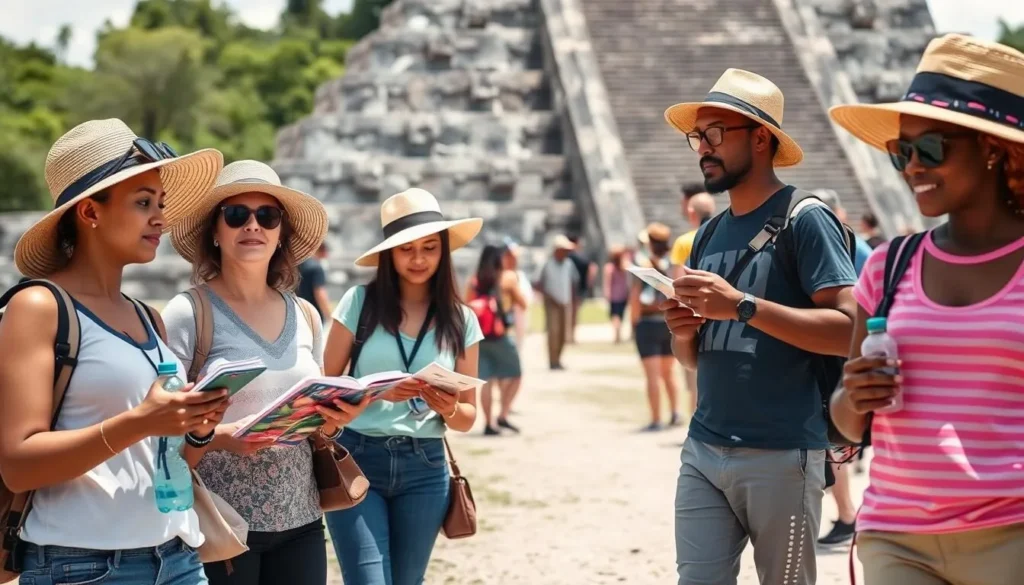
Chichen Itza stands as a testament to the ingenuity, astronomical knowledge, and artistic vision of the ancient Maya civilization. As you walk among these magnificent structures, you’re not just visiting a tourist attraction—you’re experiencing a pivotal chapter in human history. From the mathematical precision of El Castillo to the haunting acoustics of the Great Ball Court, every element of this ancient city tells a story of a sophisticated society that thrived over a thousand years ago.
Whether you’re watching the serpent shadow descend El Castillo during equinox, cooling off in a sacred cenote, or simply standing in awe before these architectural masterpieces, Chichen Itza offers an experience that transcends time. As you plan your visit, remember that the best experiences come with thoughtful preparation—arriving early, bringing water, and taking the time to understand the cultural context of what you’re seeing.
The ancient Maya believed in cyclical time, where the past, present, and future were interconnected. Perhaps that’s why visiting Chichen Itza feels so profound—for a moment, we step into that cycle, connecting with those who came before us and those who will visit long after we’re gone. Your journey to this wonder of the world awaits, ready to inspire, educate, and amaze.
Related Posts
Tulum, Mexico: Best Things to Do – Top Picks

Puerto Vallarta, Mexico: Best Things to Do – Top Picks

Puerto Escondido, Mexico: Best Things to Do – Top Picks
Sayulita, Mexico: Best Things to Do – Top Picks

Valle de Guadalupe, Mexico: Best Things to Do – Top Picks
Playa del Carmen, Mexico: Best Things to Do – Top Picks
Coming Soon: Clickable Maps