

Hidden deep within Death Valley National Park lies one of America’s most remote and rewarding natural treasures. Saline Valley Hot Springs is an otherworldly desert oasis where palm trees rise from barren earth, wild burros roam freely, and pristine hot springs offer perfect soaking temperatures year-round. Despite being part of a national park since 1994, this remarkable destination doesn’t appear on official park maps, and rangers rarely direct visitors here—making it one of California’s best-kept secrets with fewer than 10,000 visitors annually.
Getting There & Planning Your Journey
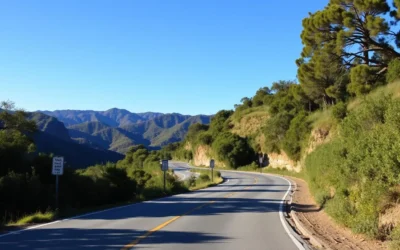
Reaching Saline Valley Hot Springs requires serious preparation and a true spirit of adventure. This remote destination sits approximately 50 km (31 miles) from the nearest paved road, accessible only via rough dirt roads that demand high-clearance 4WD vehicles.
The closest airports are Bishop Airport (BIH) about 129 km (80 miles) away, and McCarran International Airport in Las Vegas, approximately 322 km (200 miles) away. From either location, you’ll need to rent a suitable 4WD vehicle.
There are three main routes to access the springs:
- North Pass from Big Pine (most common route, 64 km/40 miles of dirt road)
- South Pass from Highway 190 (rougher terrain, experienced off-roaders only)
- Steele Pass from the east (extremely challenging, technical 4WD skills required)
Essential preparation includes bringing at least 4 liters (1 gallon) of water per person per day, enough food for your entire stay plus extra, a full tank of gas, at least one full-sized spare tire, basic vehicle repair tools, and emergency supplies. Cell service is non-existent, so consider bringing a satellite communication device.
Best Time to Visit & Weather Tips
The extreme desert climate of Saline Valley makes timing your visit crucial for both comfort and safety.

Recommended Seasons:
- October to November: Perfect temperatures ranging from 21-27°C (70-80°F) during the day and 7-13°C (45-55°F) at night
- March to April: Pleasant spring conditions with possible wildflower blooms, similar temperature ranges to fall
- Winter (December-February): Comfortable daytime temperatures around 15-21°C (60-70°F), but cold nights that can drop below freezing
Seasons to Avoid:
- Summer (May-September): Extremely dangerous heat with daytime temperatures regularly exceeding 43°C (110°F), sometimes reaching 49°C (120°F)
Weather can change rapidly in the desert. Winter visitors should prepare for potential freezing temperatures at night, while those visiting in shoulder seasons should be aware that sudden storms can make roads impassable. Always check weather forecasts and road conditions before departing.
Getting Around Locally
Once you’ve arrived at Saline Valley Hot Springs, getting around is primarily done on foot. The three main hot spring areas (Lower, Middle, and Upper Springs) are spread out across several kilometers.
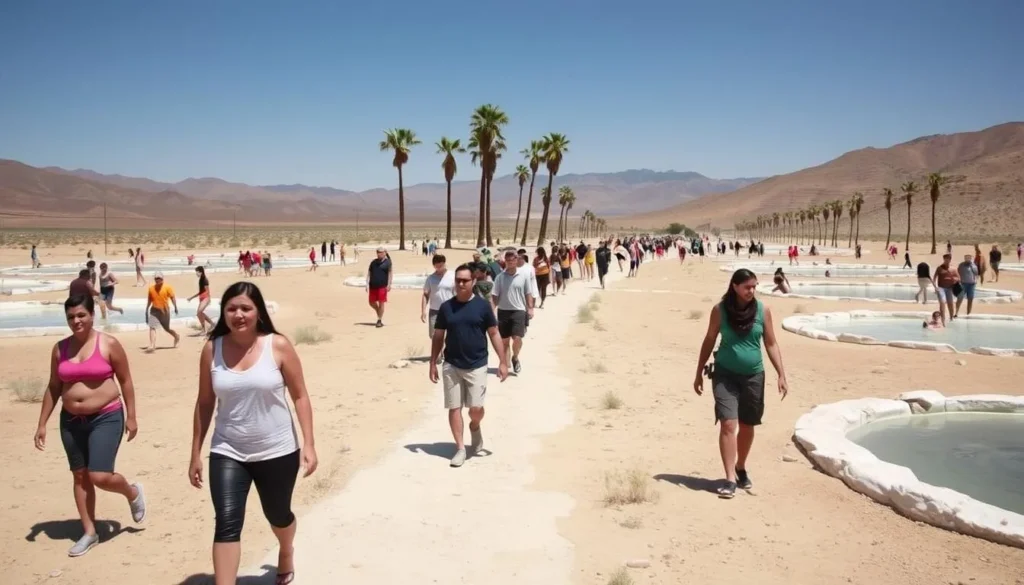
- Lower Springs: The most developed area with multiple soaking pools, grass areas, and communal spaces
- Middle Springs: Located about 1.6 km (1 mile) from Lower Springs, less developed but still with nice soaking options
- Upper Springs: The most remote and least visited of the three areas
While you can drive between the spring areas, many visitors prefer to camp at one location and walk to explore others. The terrain between springs is flat desert, making walking relatively easy in cooler months. Bringing a bicycle can be helpful for getting around the area more efficiently.
Be mindful that the springs are clothing-optional, and there’s a strong community ethos of respecting others’ space and privacy as you move between areas.
Where to Stay
Saline Valley Hot Springs offers primitive camping only, with no formal facilities, reservations, or fees. This is true wilderness camping that requires complete self-sufficiency.

Camping Options:
- Lower Springs Camping: The most popular area with some shade from palm trees and the most developed springs
- Middle Springs Camping: Less crowded with more privacy but fewer amenities
- Dispersed Desert Camping: For those seeking solitude, camping is permitted anywhere in the valley
There are no designated campsites or facilities like picnic tables or fire rings. Pit toilets are available near the main spring areas, maintained by volunteers. The maximum stay limit is 30 days.
For those not prepared to camp, the nearest accommodations are in Big Pine or Lone Pine, both about a 3-4 hour drive from the springs.
Important: Bring everything you need and pack out everything you bring in. There are no trash services, no water sources (except non-potable spring water), and no electricity. Practice strict Leave No Trace principles.
Dining & Local Cuisine
There are no dining establishments, stores, or vendors of any kind at Saline Valley Hot Springs. All food must be brought with you and properly stored to prevent wildlife encounters.

Food Planning Tips:
- Pack non-perishable foods that can withstand heat
- Bring a reliable cooler with plenty of ice for any perishable items
- Plan for at least one extra day of food in case of unexpected delays
- Store all food securely to prevent access by wild burros and other animals
- Bring a camp stove with sufficient fuel (open fires are often prohibited)
The nearest grocery stores are in Big Pine and Lone Pine, both about 3-4 hours away by 4WD. The small town of Darwin, while closer as the crow flies, offers no services.
Many regular visitors to the springs participate in community potlucks, especially during holiday periods. These informal gatherings are a great way to meet fellow adventurers, but don’t rely on them for sustenance.
Attractions, Sightseeing & Activities
While the hot springs are the main attraction, Saline Valley offers several other remarkable experiences for the adventurous traveler.
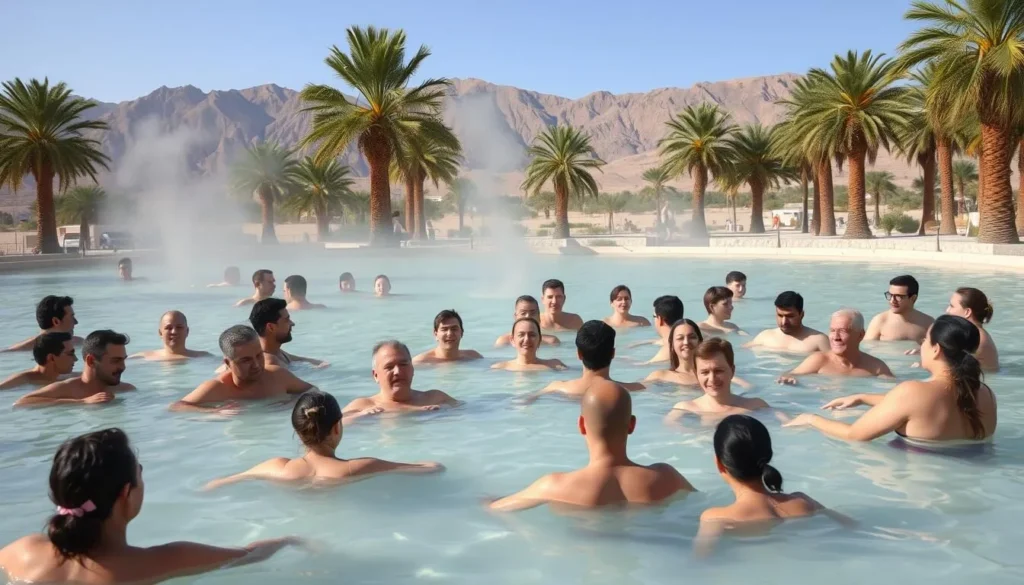
Hot Springs:
- Lower Springs: Features multiple concrete and stone pools at different temperatures, including the historic “bathtub” (the original CCC water tank from the 1930s)
- Crystal Pool: The largest pool, perfect for relaxed soaking
- Sunrise Pool: Offers beautiful morning views
- Middle Springs: Less developed but equally enjoyable soaking options
- Upper Springs: The most remote and natural of the springs
Other Activities:
- Wildlife Viewing: Wild burros, desert bighorn sheep, and numerous bird species
- Stargazing: Some of the darkest skies in the country offer spectacular views of the Milky Way
- Photography: Dramatic landscapes, unique desert flora, and the contrast of palm oasis against barren mountains
- Hiking: Informal trails throughout the valley and surrounding mountains
- Salt Flats: Explore the vast dry lake bed at the valley’s center
Military jets from nearby bases often conduct training flights through the valley, providing unexpected but impressive aerial displays during weekdays.
Cultural Spots & History
Saline Valley has a rich and diverse history that spans from ancient indigenous peoples to mining booms and counterculture communities.
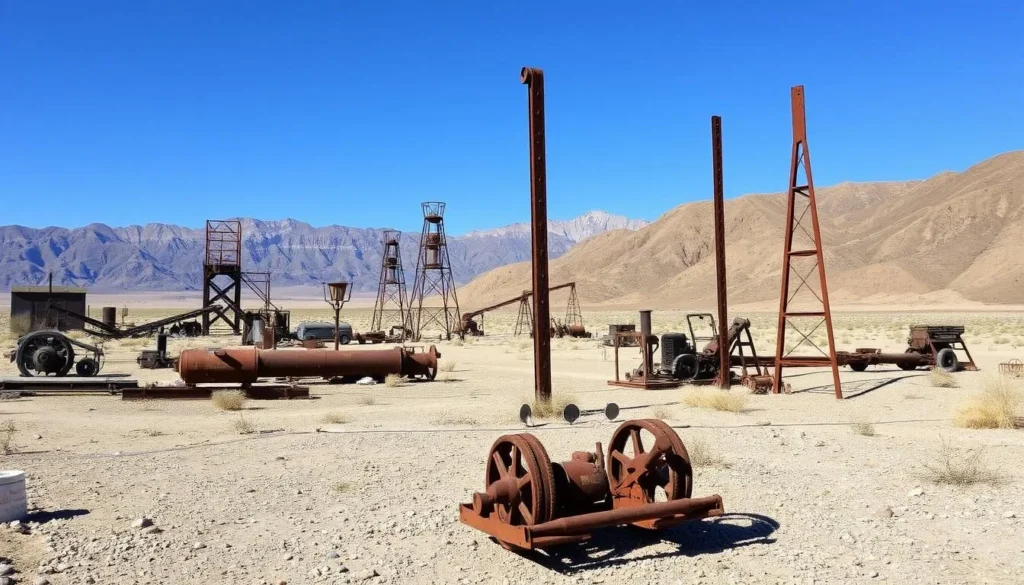
Historical Points of Interest:
- Indigenous History: The area was used by Timbisha Shoshone and Paiute peoples for thousands of years
- Mining Relics: Abandoned salt tram (once the steepest in North America) and other mining infrastructure from the early 20th century
- Peace Sign: A large peace sign created on a cinder cone south of the Lower Springs in 1968
- Hippie History: Since the 1960s, the springs have been developed and maintained by a community of visitors, creating a unique cultural legacy
The springs themselves have an interesting evolution. The original “bathtub” was placed by the Civilian Conservation Corps in the 1930s. Additional pools were built in the 1960s and 70s by regular visitors. When the area became part of Death Valley National Park in 1994, the National Park Service took a hands-off approach, allowing the community to continue maintaining the springs.
The caretaker tradition continues today, with volunteers (most notably a character known as “Lizard” Lee) maintaining the springs, cleaning the pools regularly, and preserving the unique culture of the place.
Nature & Outdoor Experiences
Saline Valley represents one of the most dramatic examples of desert extremes in North America, with an elevation range from 305 m (1,000 ft) at the valley floor to over 3,048 m (10,000 ft) in the surrounding mountains.

Natural Features:
- Palm Oases: Lush clusters of palm trees surrounding the natural springs
- Salt Flats: Vast white expanses covering much of the valley floor
- Inyo Mountains: Towering eastern boundary rising over 3,048 m (10,000 ft)
- Nelson Range: Western boundary with stunning geological formations
- Desert Ecology: Despite harsh conditions, the valley supports diverse plant and animal life
The springs themselves are fed by water that falls as rain or snow in the high mountains, then percolates through rock layers, heating up along geothermal gradients before emerging at perfect soaking temperatures of 38-42°C (100-107°F).
Night skies here are classified as Bortle Class 1 (the darkest possible), offering unparalleled stargazing opportunities. On moonless nights, the Milky Way casts visible shadows, and meteor showers are spectacular.
Safety, Etiquette & Local Customs
Visiting Saline Valley Hot Springs comes with significant responsibilities both for personal safety and for preserving this unique place for future visitors.

Safety Considerations:
- Water: Bring all drinking water you’ll need (minimum 4 liters/1 gallon per person per day)
- Vehicle Preparation: Ensure your 4WD is in excellent condition with spare tires and parts
- Heat Safety: Avoid summer visits; in other seasons, stay hydrated and limit sun exposure
- Wildlife: Store food securely to prevent encounters with wild burros and other animals
- Communication: No cell service exists; bring satellite communication for emergencies
Etiquette & Customs:
- Clothing Optional: Most visitors soak nude; this is accepted practice but not required
- Photography: Always ask permission before photographing people
- Pool Etiquette: Shower before entering pools; avoid using soaps or oils in the water
- Community Contribution: Regular visitors often help with pool cleaning and maintenance
- Respect Privacy: Some visitors seek solitude; be mindful of noise and space
The springs operate on a principle of mutual respect and shared stewardship. Visitors are expected to leave no trace, pack out all trash, and contribute to maintaining the springs when possible.
Visitor Comments About Saline Valley Hot Springs
“After 30 years of exploring hot springs across the western states, Saline Valley remains the most magical. The journey there is challenging, but that’s what keeps it special. The community of regulars who maintain the springs deserve tremendous credit—I’ve never seen such pristine pools in such a remote location.”
“The drive in nearly broke us—and our truck! But once we arrived, it was like discovering paradise. We planned to stay two nights and ended up staying five. The stargazing alone was worth the journey, but the warm community of fellow travelers made this place unforgettable.”
“As an international traveler who has visited hot springs in Japan, Iceland, and New Zealand, I can say that Saline Valley offers something truly unique. The contrast between harsh desert and soothing waters creates a profound experience. Just be prepared—this is true wilderness requiring serious preparation.”
Practical Travel Tips

Essential Packing List:
- High-clearance 4WD vehicle with full tank and spare tires
- Water (minimum 4 liters/1 gallon per person per day)
- Food (plus extra for unexpected delays)
- First aid kit and prescription medications
- Navigation tools (GPS, paper maps)
- Emergency communication device (satellite phone/messenger)
- Sun protection (hat, sunscreen, long-sleeved clothing)
- Camping equipment suitable for extreme temperatures
- Towels and flip-flops for the springs
- Trash bags (pack out everything you bring in)
Additional Tips:
- Tell someone your itinerary before departing
- Consider traveling with another vehicle for safety
- Bring cash for emergencies (no services accept cards)
- Check road conditions with Death Valley National Park before departing
- Respect wildlife—never feed the wild burros despite their friendly appearance
- Bring a small gift for the community (cleaning supplies, toilet paper, etc.)
Remember that Saline Valley Hot Springs exists in its current form because generations of visitors have respected and cared for it. Your visit should leave no trace except perhaps cleaner pools than you found.
The Desert’s Hidden Treasure Awaits
Saline Valley Hot Springs represents a rare combination of natural wonder, cultural history, and community spirit that’s increasingly hard to find in our modern world. The challenging journey to reach this remote oasis serves as both gatekeeper and reward—filtering out casual tourists while ensuring that those who make the effort find something truly extraordinary. For the properly prepared traveler seeking authentic wilderness and unique experiences, these springs offer a profound connection to both nature and a remarkable community of stewards. The memories you create here—soaking beneath star-filled skies, surrounded by palm trees in the midst of harsh desert—will remain with you long after the dust of Saline Valley Road has been washed away.
The above is subject to change.
Check back often to TRAVEL.COM for the latest travel tips and deals.



0 Comments