

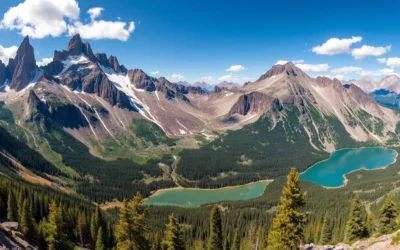
Did you know that despite containing over 50 peaks exceeding 3,660 m (12,000 ft), the Gore Range remains one of Colorado’s least-visited mountain ranges? This pristine wilderness area stretches 97 km (60 miles) through Summit and Eagle counties, offering spectacular alpine scenery without the crowds that flock to Colorado’s more famous destinations. Home to jagged peaks, crystal-clear alpine lakes, and abundant wildlife including mountain goats, the Gore Range rewards adventurous travelers with solitude and natural beauty that rivals any in the Rocky Mountains.
Getting There & Planning Your Journey
The Gore Range is conveniently located between Silverthorne and Vail in north-central Colorado, making it accessible from several directions. The two closest airports are Eagle County Regional Airport (EGE), approximately 56 km (35 miles) west, and Denver International Airport (DEN), about 145 km (90 miles) east.
From Denver, take I-70 west toward Silverthorne. For eastern access points to the Gore Range, exit at Silverthorne and follow Highway 9. For western access, continue on I-70 to Vail. Multiple trailheads provide entry to the wilderness area, with the most popular being:
Eastern Access Points
- Rock Creek Trailhead
- Boulder Creek Trailhead
- Cataract Creek Trailhead
- Willow Creek Trailhead
Western Access Points
- Gore Creek Trailhead
- Booth Creek Trailhead
- Pitkin Creek Trailhead
- Deluge Creek Trailhead
Most of the Gore Range is protected within Eagles Nest Wilderness, which requires visitors to follow wilderness regulations. Self-issue permits are available at trailheads for overnight stays, and group sizes are limited to 15 people maximum.
Best Time to Visit & Weather Tips

The prime season for exploring the Gore Range is from mid-June through September when trails are generally free of snow and alpine wildflowers are in bloom. July and August offer the most reliable weather, with daytime temperatures typically ranging from 18-24°C (65-75°F) at lower elevations and 10-18°C (50-65°F) at higher elevations.
Recommended Months
- Late June: Wildflowers begin blooming, some snow at higher elevations
- July: Peak wildflower season, ideal hiking conditions
- August: Warm days, cool nights, berry season
- Early September: Fall colors begin, fewer crowds
Months to Avoid
- November-April: Heavy snow, avalanche danger
- May: Snowmelt creates muddy trails and high creek crossings
- Late October: Unpredictable early snowstorms possible
Weather Safety: Mountain weather can change rapidly! Always check the forecast before heading out and pack layers regardless of season. Afternoon thunderstorms are common in summer months, so plan to be below treeline by early afternoon to avoid lightning danger.
Getting Around Locally

Once you arrive in the Gore Range area, your primary mode of transportation will be your own two feet. The Eagles Nest Wilderness designation prohibits motorized and mechanized vehicles, including bicycles. Here’s how to navigate the area:
Transportation Options
- Personal vehicle to trailheads (limited parking available)
- Summit Stage free bus service connects Silverthorne to some eastern trailheads
- Taxi services available from Silverthorne and Vail
- Rideshare services operate in the area but may have limited availability
Trailhead Access Tips
- Many trailheads have limited parking that fills early during peak season
- Arrive before 8:00 AM to secure a spot on weekends
- Consider carpooling to reduce parking pressure
- Some forest roads to trailheads require high-clearance vehicles
The Gore Range Trail forms the backbone of the wilderness area, running north-south along the eastern side of the Gore Range. This 72 km (45-mile) trail provides access to numerous alpine lakes and connecting trails, making it perfect for day hikes or multi-day backpacking trips.
Where to Stay

While there are no developed campgrounds within Eagles Nest Wilderness itself, dispersed camping is permitted throughout the wilderness area with some restrictions. For those preferring more comfortable accommodations, the surrounding towns offer plenty of options.
Wilderness Camping
- Dispersed camping allowed (no designated sites)
- Camp at least 100 feet from trails, lakes, and streams
- No campfires within 0.4 km (0.25 miles) of any lake
- Self-issue permits required at trailheads
- Practice Leave No Trace principles
Nearby Towns
- Silverthorne: Hotels, motels, vacation rentals (10-15 minutes)
- Dillon: Lakeside lodging options (15-20 minutes)
- Vail: Luxury resorts and condos (20-30 minutes)
- Frisco: Charming mountain town lodging (20 minutes)
- Breckenridge: Full range of accommodations (30 minutes)
Recommended Lodging
- The Pad Silverthorne: Eco-friendly hostel/hotel hybrid
- Comfort Inn Silverthorne: Affordable option near trailheads
- Hotel Frisco: Historic boutique hotel
- Tenderfoot Lodge: Condo-style accommodations
- Wilderness Campsites: Upper Cataract Lake area
Dining & Local Cuisine

While you’ll need to pack your own food for wilderness adventures, the surrounding towns offer excellent dining options before and after your Gore Range explorations.
Silverthorne Dining
- Sauce on the Blue: Italian cuisine with creek-side dining
- Angry James Brewing: Craft beer and food trucks
- Sunshine Café: Hearty breakfast options
- Timberline Craft Kitchen: Local ingredients and craft cocktails
Frisco & Dillon Options
- Butterhorn Bakery: Breakfast and lunch favorites
- Pug Ryan’s Brewery: Pub fare and house-brewed beers
- Bread + Salt: Artisanal breakfast and lunch
- Dillon Dam Brewery: Extensive menu and craft beers
Trail Food Tips
- Stock up at Natural Grocers or City Market in Silverthorne
- Pack lightweight, high-energy foods for trails
- Bring water filtration for refilling from streams
- Pack out all trash (no garbage services in wilderness)
For those planning multi-day backpacking trips, Silverthorne and Frisco offer several outdoor gear shops where you can purchase freeze-dried meals, energy bars, and other trail-friendly foods. Remember that proper food storage is essential in bear country – use bear canisters or hang food properly when camping.
Top Attractions & Activities in Gore Range

The Gore Range offers a wealth of natural attractions and outdoor activities. Here are the must-see destinations and experiences that showcase the best this wilderness area has to offer:
Lily Pad Lake

A family-friendly 5.6 km (3.5-mile) round trip hike leading to a charming alpine lake dotted with lily pads. The trail offers beautiful forest scenery and mountain views with moderate elevation gain, making it perfect for hikers of all skill levels.
Upper Cataract Lake

This stunning alpine lake sits beneath the dramatic Gore Range peaks. The 10.5 km (6.5-mile) round trip hike features a waterfall, wildflower meadows, and excellent fishing opportunities. The moderate difficulty trail rewards hikers with some of the most spectacular scenery in the wilderness.
Buffalo Mountain

This iconic 3,894 m (12,777 ft) peak is visible from I-70 and offers a challenging 8 km (5-mile) round trip hike with 914 m (3,000 ft) of elevation gain. The summit provides panoramic views of the Gore Range, Dillon Reservoir, and surrounding mountains.
Willow Lakes

A challenging 14.5 km (9-mile) round trip hike leads to a series of alpine lakes nestled beneath the dramatic peaks of Red Peak and Mount Silverthorne. The trail features waterfalls, wildflower meadows, and excellent fishing opportunities for cutthroat trout.
Boulder Lake

This picturesque alpine lake is accessible via a moderate 8 km (5-mile) round trip hike. The trail follows Boulder Creek through forests and meadows before reaching the lake, which offers excellent fishing and camping opportunities with views of Keller Mountain.
Gore Range Trail

This 72 km (45-mile) trail forms the backbone of the wilderness area, running north-south along the eastern side of the Gore Range. Hikers can access numerous alpine lakes and connecting trails, making it perfect for day hikes or multi-day backpacking trips.
Museums, Cultural Spots & Festivals

While the Gore Range itself is primarily a wilderness destination, the surrounding communities offer cultural attractions that provide context for the area’s rich mining and settlement history.
Frisco Historic Park & Museum
This free outdoor museum features well-restored early pioneer mining cabins moved here from the surrounding area. Indoor exhibits showcase the history of mining, railroads, and early settlement in Summit County. Located in downtown Frisco, it’s a perfect stop before or after your Gore Range adventures.
Dillon Farmers Market
Held every Friday during summer months (June-September), this vibrant market features local produce, crafts, and live music with Dillon Reservoir and the Gore Range as a backdrop. It’s an excellent place to stock up on snacks for your hikes or to unwind after a day in the mountains.
Silverthorne First Fridays
On the first Friday of each month, Silverthorne hosts community celebrations with art displays, live music, food vendors, and activities. These events showcase local culture and provide a fun way to connect with the community closest to the Gore Range.
For a deeper dive into local history, the Summit Historical Society offers guided tours of historic sites throughout Summit County during summer months. These tours provide fascinating insights into the mining boom that first brought settlers to the areas surrounding the Gore Range.
Wildlife & Nature Experiences

Eagles Nest Wilderness is home to diverse wildlife and plant communities. The area’s varied ecosystems support numerous species that visitors may encounter while exploring the trails and lakes of the Gore Range.
Common Wildlife
- Mountain Goats: Frequently seen on rocky slopes above treeline, especially near Buffalo Mountain and Upper Cataract Lake
- Elk and Mule Deer: Most active at dawn and dusk in meadows and forest edges
- Black Bears: Present throughout forested areas; proper food storage is essential
- Marmots and Pikas: Common in rocky areas, listen for their distinctive calls
- Moose: Occasionally seen in wetland areas and near lakes
- Ptarmigan: Well-camouflaged alpine birds that change color seasonally
Plant Life
- Alpine Wildflowers: Peak bloom in July with columbine, Indian paintbrush, and alpine sunflowers
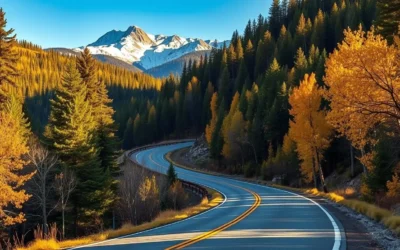
- Aspen Groves: Spectacular fall colors in September, especially on lower elevation trails
- Lodgepole and Ponderosa Pine: Dominant forest trees throughout the range
- Alpine Tundra: Delicate ecosystem above treeline with specialized plants
- Wild Berries: Raspberries and huckleberries ripen in August at middle elevations
- Riparian Vegetation: Willows and diverse plant life along streams and lakes
Wildlife Safety: Never approach or feed wildlife. Keep a minimum distance of 30 meters (100 feet) from large mammals and 100 meters (300 feet) from bears. Store food properly when camping to avoid attracting bears and other animals.
Safety, Etiquette & Local Customs

Staying safe in the Gore Range requires preparation and respect for the environment. Follow these guidelines to ensure a positive experience for yourself and future visitors:
Safety Tips
- Carry the Ten Essentials (navigation, sun protection, insulation, illumination, first-aid, fire starter, repair tools, nutrition, hydration, emergency shelter)
- Check weather forecasts before departing
- Be off mountain peaks by noon to avoid afternoon thunderstorms
- Filter or treat all water before drinking
- Let someone know your itinerary and expected return
- Carry bear spray in accessible location
Leave No Trace
- Pack out all trash (including food scraps)
- Use established campsites when possible
- Camp at least 100 feet from water sources
- No campfires within 0.4 km (0.25 miles) of lakes
- Use camp stoves for cooking instead of fires
- Properly dispose of human waste (bury 15-20 cm/6-8 inches deep)
Wilderness Regulations
- Group size limited to 15 people maximum
- Self-issue permits required for overnight stays
- No motorized or mechanized equipment (including bicycles)
- Dogs must be under control at all times
- No drones allowed in wilderness areas
- Hunting and fishing require proper Colorado licenses
The Gore Range and Eagles Nest Wilderness are managed by the U.S. Forest Service. For the most current information on regulations and conditions, contact the Dillon Ranger District at 680 Blue River Parkway, Silverthorne, CO, or call (970) 468-5400 before your trip.
Visitor Comments About Gore Range
“The Gore Range Trail exceeded all my expectations. We spent 4 days backpacking from Cataract Creek to Rock Creek and encountered only a handful of other hikers despite perfect weather. The alpine lakes and rugged peaks reminded me of the Swiss Alps, but without the crowds. Upper Cataract Lake was the highlight – we even spotted mountain goats at dawn!”
“Buffalo Mountain was the highlight of our Colorado trip. The trail was challenging but well worth the effort. The 360-degree views from the summit were breathtaking. We spotted mountain goats near the top and wildflowers were abundant along the lower sections of the trail. I’d recommend starting early to avoid afternoon storms.”
“Lily Pad Lake is perfect for families. My children (ages 8 and 10) managed the hike easily and were thrilled to see the actual lily pads floating on the lake. We even spotted a moose at dusk! The trail was well-maintained and not too crowded even on a Saturday in July. A perfect introduction to the Gore Range.”
Additional Nearby Destinations

While the Gore Range offers enough adventure for multiple visits, the surrounding area features additional attractions worth exploring:
Dillon Reservoir
Just 10 minutes from Silverthorne, this 1,308-hectare (3,233-acre) reservoir offers boating, fishing, and a scenic 29 km (18-mile) shoreline trail. The Dillon Marina rents pontoon boats, kayaks, and paddleboards during summer months, providing a relaxing contrast to mountain hiking.
Holy Cross Wilderness
Located south of Eagles Nest, this wilderness area features Mount of the Holy Cross (4,267 m/14,005 ft) and numerous alpine lakes. The Missouri Lakes trail offers a spectacular day hike or overnight backpacking destination with less traffic than more famous Colorado wilderness areas.
Tenmile Range
Just east of the Gore Range, the Tenmile Range includes popular peaks like Quandary (4,348 m/14,265 ft) and offers excellent hiking and climbing opportunities. The range is accessible from Breckenridge and Frisco, making it easy to combine with a Gore Range trip.
Gore Range, Colorado and surrounding areas
Practical Travel Tips

What to Pack
- Layers of clothing (weather changes quickly)
- Rain jacket (regardless of forecast)
- Sturdy hiking boots with ankle support
- Sun protection (hat, sunglasses, sunscreen)
- Insect repellent (mosquitoes are prevalent near lakes)
- Detailed topographic map and compass
- Water filter or purification tablets
- First aid kit with blister treatment
Local Resources
- Dillon Ranger District: 680 Blue River Parkway, Silverthorne, (970) 468-5400
- Mountain Sports Outlet: Gear and maps in Silverthorne
- Summit County Search & Rescue: Emergency number 911
- Colorado Trail Foundation: Trail information
- Weather forecasts: National Weather Service, Silverthorne
- Summit County Library: Free WiFi and local resources
Local Etiquette
- Yield to uphill hikers on trails
- Greet fellow hikers (customary in wilderness areas)
- Keep voices down to preserve wilderness experience
- Support local businesses in gateway communities
- Respect private property when accessing trailheads
- Follow all fire restrictions (often in place during summer)
Discover the Untamed Beauty of the Gore Range
The Gore Range represents Colorado’s natural beauty at its most pristine and untamed. Far from the crowds of the state’s more famous destinations, these rugged mountains, crystal-clear lakes, and serene forests offer a genuine wilderness experience for those willing to venture beyond the beaten path. Whether you’re seeking a challenging summit climb, a peaceful fishing spot, or simply a moment of connection with nature, the Gore Range rewards visitors with memories that will last a lifetime. As you plan your adventure, remember that the true value of this special place lies not just in its spectacular scenery, but in the sense of discovery and wonder that comes from exploring one of Colorado’s best-kept secrets.
The above is subject to change.
Check back often to TRAVEL.COM for the latest travel tips and deals.
0 Comments