

Bell Smith Springs Recreation Area Illinois is home to over 700 species of flowering plants, ferns, and lichens – representing an astonishing 20% of all plant species found in the entire state of Illinois. This National Natural Landmark nestled in the Shawnee National Forest offers visitors a rare glimpse into one of the most biologically diverse ecosystems in the Midwest, with crystal-clear streams carving through ancient sandstone formations that date back millions of years.
Getting There & Planning Your Journey
Bell Smith Springs Recreation Area is tucked away in the heart of the Shawnee National Forest in southern Illinois. The closest major airports are Barkley Regional Airport (PAH) in Paducah, Kentucky (80 km/50 miles away) and Williamson County Regional Airport (MWA) in Marion, Illinois (64 km/40 miles away). For those flying from further distances, to these regional airports is recommended.
To reach Bell Smith Springs by car, take IL-145 and turn east onto Water Tower Road. After 4.2 km (2.6 miles), continue onto Ozark Road for another 1.8 km (1.1 miles). Then turn left toward Bell Smith Springs Road and take the first left onto Bell Smith Springs Road. The recreation area is well-marked, though GPS signals can be spotty in this rural area, so having offline directions is advisable.
If you’re visiting from out of state, is essential as there’s no public transportation to the recreation area. The drive through the winding forest roads is part of the experience, offering glimpses of the natural beauty that awaits.
Best Time to Visit & Weather Tips

Recommended Seasons
- Spring (April-May): Wildflowers bloom, waterfalls flow at peak volume
- Early Summer (June): Pleasant temperatures before peak heat
- Fall (September-October): Spectacular foliage, comfortable hiking weather
Seasons to Avoid
- Late Summer (July-August): Hot and humid, some streams may dry up
- Winter (December-February): Cold temperatures, icy trails can be dangerous
Spring brings average temperatures of 15-21°C (59-70°F) and showcases Bell Smith Springs at its most vibrant, with wildflowers carpeting the forest floor and waterfalls flowing vigorously after spring rains. Fall offers comfortable hiking temperatures of 13-24°C (55-75°F) with stunning foliage transforming the landscape into a photographer’s paradise.
Summer temperatures can reach 32°C (90°F) with high humidity, making hiking strenuous. If visiting during summer, start early in the morning and bring plenty of water. Winter can see temperatures drop below freezing, and the stone steps and rock formations can become treacherously slippery when icy.
Local Tip: The best time for photography is during the “golden hour” – shortly after sunrise or before sunset – when the light beautifully illuminates the sandstone formations and creates magical reflections in the streams.
Getting Around Locally
Bell Smith Springs Recreation Area is best explored on foot. The area features 13 km (8 miles) of interconnected hiking trails marked with colored diamonds:
White Trail
1.5 miles (2.4 km)
Leads to popular swimming areas and Devil’s Backbone rock formation
Yellow Trail
1.5 miles (2.4 km)
Takes you to the Natural Bridge, the largest natural arch in the forest
Blue Trail
3 miles (4.8 km)
Follows scenic Bay Creek with impressive bluff views
The iconic stone staircase built by the Civilian Conservation Corps in the 1930s serves as the main access point to the canyon floor. Trails range from moderate to difficult in some areas, so proper hiking footwear is essential. The natural terrain includes exposed roots, rocky surfaces, and occasional stream crossings.
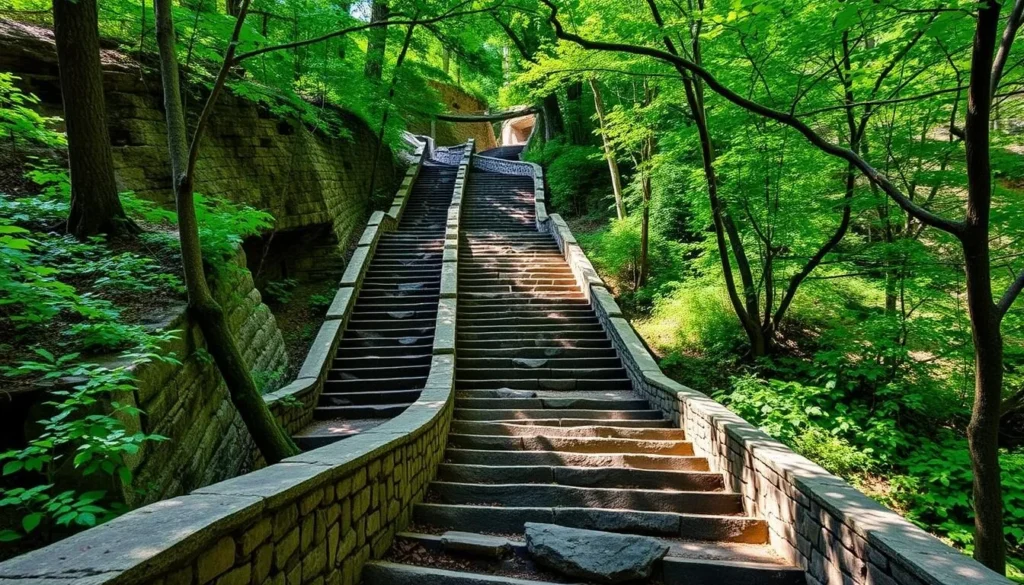
For those with mobility concerns, the upper observation areas are more accessible than the canyon floor. There are no paved paths in the recreation area, and the terrain requires reasonable physical fitness to navigate safely.
Where to Stay

While Bell Smith Springs itself doesn’t offer overnight accommodations, there are several options nearby to suit different preferences and budgets. will enhance your experience of this natural wonder.
Camping
The Bell Smith Springs campground offers primitive camping with no electricity or running water. For more amenities, nearby Lake Glendale Recreation Area provides developed campsites with showers and electrical hookups, located just 16 km (10 miles) away.
Cabins
Shawnee Forest Cabins and Woodland Cabins offer comfortable accommodations with modern amenities including hot tubs, kitchens, and Wi-Fi, all while maintaining a rustic charm that complements the natural surroundings.
Hotels & B&Bs
The towns of Eddyville and Golconda (both within 24 km/15 miles) offer bed and breakfasts with local charm. For conventional hotels, Harrisburg and Marion (about 48 km/30 miles away) provide chain hotel options.
Dining & Local Cuisine

The area around Bell Smith Springs offers limited dining options, so planning ahead is essential. The nearby town of Eddyville has the Shawnee Restaurant and Lounge, a local favorite serving hearty American fare and regional specialties. For more dining choices, head to Harrisburg or Marion, where you’ll find a wider selection of restaurants.
Southern Illinois cuisine features influences from both Midwestern and Southern cooking traditions. Local specialties to try include:
- Burgoo – a thick stew with multiple meats and vegetables
- Fried catfish – often served with hushpuppies and coleslaw
- Persimmon pudding – a regional dessert made from native persimmons
- Pawpaw fruit – when in season, this native “prairie banana” is a rare treat
For picnics at Bell Smith Springs, stock up on supplies in Harrisburg or Marion before heading to the recreation area. The picnic areas near the parking lot provide a perfect spot to enjoy a meal surrounded by nature.
Attractions, Sightseeing & Activities

Bell Smith Springs offers numerous natural attractions that showcase the unique geology and ecology of southern Illinois. Here are the must-see highlights:
Natural Bridge
The most impressive feature at Bell Smith Springs is the Natural Bridge, spanning 38 m (125 feet) and rising 9 m (30 feet) above the canyon floor. This massive sandstone arch is the largest natural bridge in the Shawnee National Forest and offers spectacular photo opportunities. Follow the yellow-marked trail to reach this geological wonder.
Devil’s Backbone
This unique rock formation creates the illusion of a giant spine spanning across the creek bed. The large boulders provide a natural playground for careful exploration and offer excellent spots for nature photography. The white-marked trail will lead you to this distinctive feature.
Boulder Falls
Located along the blue-marked Sentry Bluff Trail, this picturesque waterfall is most impressive after spring rains or following heavy precipitation. The cascade tumbles over ancient sandstone, creating a serene spot perfect for contemplation and photography.

For those seeking activities beyond sightseeing, Bell Smith Springs offers:
Swimming
During summer months, the natural pools formed by the clear streams provide refreshing swimming opportunities. The most popular swimming spot is near Devil’s Backbone, where the water depth is suitable for a cooling dip. Always check water conditions and never swim alone.
Photography
The diverse landscapes of Bell Smith Springs create endless photography opportunities. From macro shots of rare wildflowers to sweeping vistas of the canyon, photographers will find inspiration around every bend in the trail.
Cultural & Historical Significance
Bell Smith Springs carries rich historical significance that adds depth to its natural beauty:

Civilian Conservation Corps Legacy
The iconic stone staircase leading into the canyon was hand-built by the Civilian Conservation Corps (CCC) in the early 1930s during the Great Depression. These skilled workers, part of President Franklin D. Roosevelt’s New Deal program, created lasting infrastructure that visitors still enjoy today. The craftsmanship of these stone structures represents an important chapter in American conservation history.
Native American Heritage
The area around Bell Smith Springs was once inhabited by indigenous peoples who utilized the natural springs and sheltered bluffs. While no major archaeological sites are open to the public within the recreation area itself, nearby Millstone Bluff Archaeological Area showcases Native American rock art and settlement remains.
Pioneer History
Bell Smith Springs was named after Bell Smith, an early settler who owned the land containing the springs. The Old Grist Mill Dam along Mill Branch Trail is the last remaining structure from the historic community of Hartsville, offering a glimpse into the area’s pioneer past.
Nature & Outdoor Experiences

Hiking Trails
The 13 km (8 miles) of interconnected trails at Bell Smith Springs offer varied terrain and difficulty levels:
| Trail Name | Distance | Difficulty | Highlights |
| White Trail (General Area) | 2.4 km (1.5 miles) | Moderate | Devil’s Backbone, swimming areas |
| Yellow Trail (Natural Bridge) | 2.4 km (1.5 miles) | Moderate to Difficult | Natural Bridge, ladder to bluff top |
| Blue Trail (Sentry Bluff) | 4.8 km (3 miles) | Moderate | Boulder Falls, scenic Bay Creek views |
| Red Trail (Mill Branch) | 3.2 km (2 miles) | Moderate | Old Grist Mill Dam, Mill Branch Creek |
Wildlife Watching
Bell Smith Springs is a designated National Natural Landmark due to its exceptional biodiversity. Birdwatchers will be delighted by the opportunity to spot:
- Pileated woodpeckers drumming on trees
- Scarlet and summer tanagers flashing brilliant colors
- Eastern phoebes nesting on cliff ledges
- Various species of vireos singing in the canopy
The area is also home to white-tailed deer, eastern box turtles, and a variety of salamanders that thrive in the moist canyon environment.
Plant Life
The unique microclimate of Bell Smith Springs supports an astonishing variety of plant life, including:

- Rare ferns clinging to moist sandstone walls
- Spring ephemeral wildflowers like trillium and bloodroot
- Unusual lichens in vibrant colors decorating rock surfaces
- Native orchids hidden among the forest understory
The diversity of plant life makes Bell Smith Springs a paradise for botany enthusiasts, with different species showcased throughout the growing season.
Safety, Etiquette & Local Customs
Important Safety Information: Cell phone coverage is limited or non-existent in many parts of Bell Smith Springs. Download offline maps and inform someone of your hiking plans before setting out.
Trail Safety
- Wear appropriate footwear with good traction for slippery rocks
- Bring sufficient water (at least 1 liter per person for short hikes)
- Pack basic first aid supplies, including treatment for insect stings
- Stay on designated trails to protect fragile ecosystems and avoid getting lost
- Be cautious on wet rocks, especially around waterfalls and creek crossings
Environmental Etiquette
Bell Smith Springs is a protected natural area that relies on visitors’ responsible behavior:
- Pack out all trash – there are no garbage cans within the recreation area
- Glass containers are prohibited by law
- Do not disturb or collect plants, rocks, or wildlife
- Keep dogs leashed and clean up after them
- Respect quiet hours at the campground (10 PM to 6 AM)
The area has experienced issues with litter in the past, particularly around popular swimming spots. Join the local tradition of carrying out more trash than you bring in to help preserve this natural treasure for future generations.
Visitor Comments About Bell Smith Springs
“Bell Smith Springs was the highlight of our Illinois road trip. The natural bridge took my breath away, and the crystal-clear streams were perfect for cooling off after hiking. Don’t miss the blue trail – it feels like you’re in another world entirely!”
“As an avid photographer, I found Bell Smith Springs to be a hidden gem. The light filtering through the trees onto the sandstone formations created magical scenes, especially in the early morning. Plan to spend a full day if you want to explore all the trails properly.”
“We visited with our teenage children who initially complained about ‘another hike,’ but they were soon scrambling over rocks and wading in streams with huge smiles. The Devil’s Backbone was their favorite spot. Bring water shoes if you plan to explore the creek beds!”
Practical Travel Tips

What to Bring
- Sturdy hiking shoes with good traction
- Water shoes for creek exploration (summer)
- Insect repellent (especially April-October)
- Sunscreen and hat
- Plenty of water and snacks
- Basic first aid kit
- Camera with extra batteries
- Printed map (don’t rely on cell service)
Know Before You Go
- No entrance fee is required
- Restrooms are available only at the parking area
- No trash cans – pack out all waste
- Campfires allowed only in designated fire rings
- Nearest gas station is in Eddyville (8 km/5 miles)
- Trails are not wheelchair accessible
- Pets must be leashed at all times
For families with children, the white trail offers the most accessible hiking experience, though supervision is essential around water features and rock formations. The picnic area near the parking lot provides a convenient spot for meals before or after exploring the trails.
Local Resource: The Shawnee National Forest Headquarters in Harrisburg (35 km/22 miles from Bell Smith Springs) offers detailed maps, guidebooks, and up-to-date trail information. Consider stopping there before your visit, especially if you’re new to the area.
Nearby Attractions Worth Exploring

While Bell Smith Springs is a destination in itself, several other natural wonders in the Shawnee National Forest are worth including in your itinerary:
Garden of the Gods
Just 32 km (20 miles) from Bell Smith Springs, this wilderness area features spectacular rock formations and panoramic views. The Observation Trail offers an accessible 0.4 km (0.25-mile) path to see the most impressive formations.
Burden Falls
Located along Ozark Road, this waterfall is especially impressive after rainfall. A short hike leads to both the upper and lower falls, with the latter dropping approximately 24 m (80 feet) during peak flow.
Jackson Falls
Popular with rock climbers, Jackson Falls offers both natural beauty and technical climbing routes. Even non-climbers will appreciate the scenic canyon and waterfall views accessible via a moderate hiking trail.
Other nearby points of interest include Millstone Bluff Archaeological Area with its Native American rock art, and Sand Cave, a large rock shelter with unusual sand deposits inside. All of these attractions can be visited as day trips while using Bell Smith Springs as your base for exploration.
Embrace the Timeless Beauty of Bell Smith Springs
Bell Smith Springs Recreation Area stands as a testament to the enduring power of nature to inspire and rejuvenate. From the ancient sandstone formations shaped by millions of years of flowing water to the diverse ecosystems that thrive in this protected sanctuary, every visit offers new discoveries and lasting memories. Whether you’re capturing the perfect photograph of morning light filtering through the forest canopy, cooling off in a crystal-clear stream on a summer afternoon, or simply sitting in contemplative silence amid the natural splendor, Bell Smith Springs invites you to connect with something larger than yourself. As you plan your journey to this hidden gem in the heart of southern Illinois, remember that the true magic of Bell Smith Springs lies not just in its remarkable features, but in the personal experience of discovery that awaits each visitor who ventures down those historic stone steps.
The above is subject to change.
Check back often to TRAVEL.COM for the latest travel tips and deals.


0 Comments