
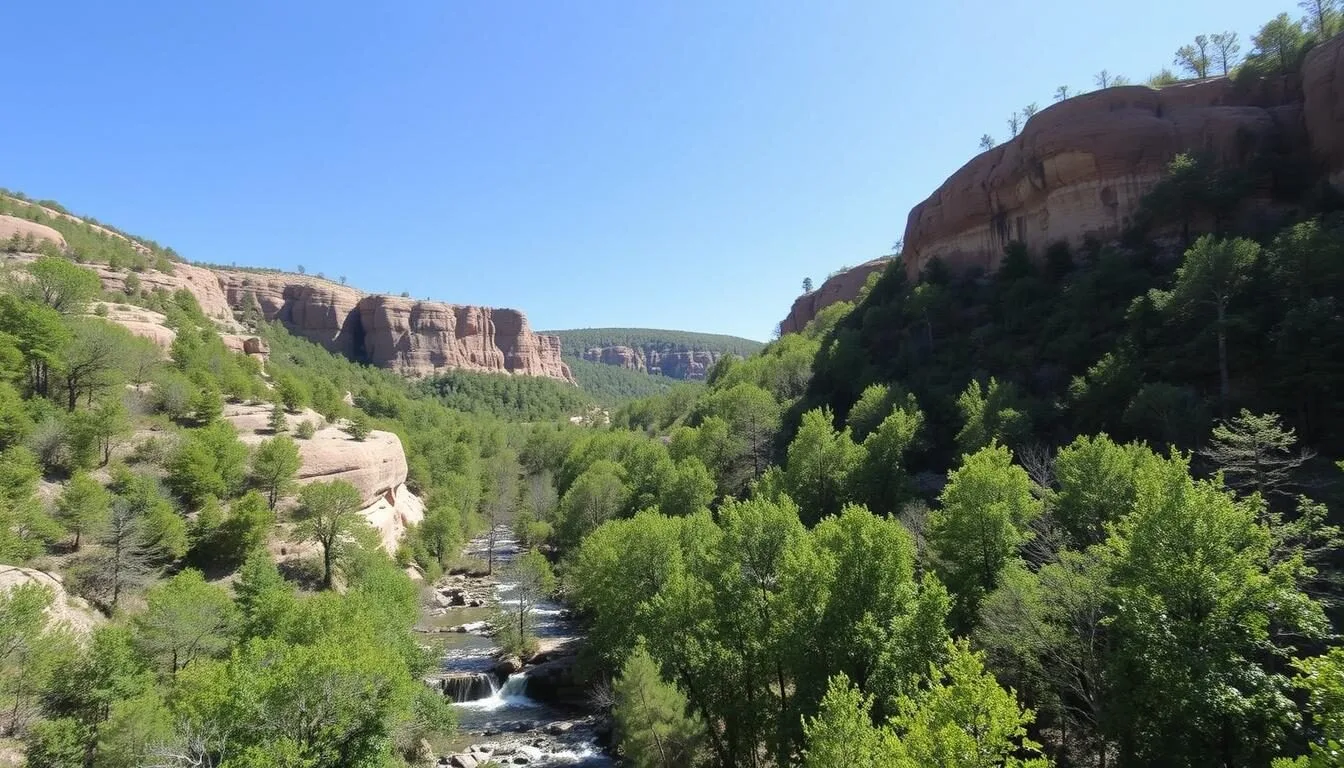
Hidden among the farmlands of southern Illinois lies a remarkable natural and historical treasure that few visitors know about. Piney Creek Ravine Nature Preserve houses the largest collection of prehistoric Native American rock art in Illinois, with nearly 200 designs dating back to 500-1550 AD. This secluded 100-acre oasis of dramatic sandstone bluffs, trickling waterfalls, and rare shortleaf pine groves offers a glimpse into both ancient human history and the natural landscape that once covered much of Illinois before agricultural development.
Getting There & Planning Your Journey
Piney Creek Ravine Nature Preserve is located near Ava, Illinois, approximately 153 km (95 miles) southeast of St. Louis. The preserve sits northwest of the Shawnee National Forest boundaries, nestled among farmlands that make it surprisingly easy to miss if you’re not paying attention.
The closest major airports are St. Louis Lambert International Airport (approximately 145 km/90 miles away) and Southern Illinois Airport near Carbondale (about 48 km/30 miles away). From either location, you’ll need to rent a car to reach the preserve, as there is no public transportation to this remote area.

For GPS navigation, use the address: 2248 Piney Creek Road, Ava, IL 62907. The small gravel parking area can be easy to miss—look for it on the east side of Piney Creek Road after the road turns to gravel. There’s a small turnout with a gate, sign, and trash can marking the trailhead.
When planning your journey, allow at least 3-4 hours to fully explore the preserve, including time to hike the full loop trail and appreciate the rock art. Pack plenty of water, snacks, and wear sturdy hiking shoes, as the trail includes creek crossings and potentially slippery surfaces.
Best Time to Visit & Weather Tips
Piney Creek Ravine Nature Preserve is open year-round from sunrise to sunset, but certain seasons offer distinct advantages for visitors seeking specific experiences.
Recommended Seasons:
- Late Fall (October-November): Cooler temperatures make hiking comfortable, and the fall colors add dramatic beauty to the landscape.
- Winter (December-February): For viewing the rock art, late January to early February is ideal when leaves are off the trees and cloudy days provide the best visibility of the petroglyphs.
- Spring (March-May): Waterfalls are typically at their most impressive after spring rains, and wildflowers begin to bloom.
Seasons to Avoid:
- Summer (June-August): High temperatures, humidity, and increased poison ivy growth can make hiking uncomfortable.
- Heavy Rain Periods: Creek crossings become difficult or impossible during and after heavy rainfall.
- Hunting Seasons: While the preserve itself doesn’t allow hunting, be aware of hunting seasons in nearby areas when planning your visit.
Average temperatures range from 0°C (32°F) in winter to 32°C (90°F) in summer. Spring and fall typically see temperatures between 10-24°C (50-75°F), making these seasons ideal for comfortable hiking.

Getting Around Locally
Piney Creek Ravine Nature Preserve features a single marked trail that forms a 2.25-mile (3.6 km) loop with a short out-and-back section at the beginning. The trail is moderately rugged with several elevation changes, creek crossings, and potentially slippery surfaces.
No public transportation serves the preserve area. The closest towns with services are Ava and Chester, both requiring a car to reach. If staying in the area for multiple days, consider basing yourself in one of these towns and driving to the preserve and other nearby attractions.
Within the preserve itself, all exploration is on foot. The main trail is well-maintained but can be challenging in spots with steep sections and creek crossings. Sturdy hiking boots with good traction are strongly recommended, especially if visiting after rain when rocks become extremely slippery.

Where to Stay
While there are no accommodations directly at Piney Creek Ravine Nature Preserve, several options exist within a 30-40 minute drive:
Hotels & Motels
- Chester – Several chain hotels and local motels offer basic accommodations
- Murphysboro – More lodging options with additional amenities
- Carbondale – Full range of hotels, approximately 48 km (30 miles) away
Camping
- Turkey Bayou Campground – Primitive camping in Shawnee National Forest
- Lake Murphysboro State Park – Developed campground with facilities
- Kinkaid Lake Campground – Lakeside camping with boat access
Vacation Rentals
- Cabins near Shawnee National Forest
- Farm stays in the surrounding countryside
- Private homes and cottages in nearby communities
For visitors planning to explore multiple natural areas in southern Illinois, consider staying in Carbondale or Murphysboro, which offer more dining and shopping options while still providing reasonable access to Piney Creek Ravine and other attractions.
Dining & Local Cuisine
There are no dining facilities at Piney Creek Ravine Nature Preserve, so visitors should pack water and snacks for their hike. The nearest food options are in surrounding towns:

In Ava and Chester (both within 20-30 minutes of the preserve), you’ll find small family restaurants serving hearty Midwestern fare. For more dining variety, head to Murphysboro or Carbondale, where options range from casual diners to more upscale establishments.
Southern Illinois cuisine features influences from both Midwestern and Southern cooking traditions. Local specialties to try include:
- Burgoo – A thick stew made with multiple meats and vegetables
- Fried catfish – A regional favorite, often served with hushpuppies
- Barbecue – Southern Illinois has its own distinctive style
- Fruit pies – Made with locally grown peaches, apples, and berries
For a truly local experience, look for restaurants serving produce, meats, and dairy from nearby farms. The region also has a growing wine industry, with several wineries located within an hour’s drive of Piney Creek Ravine.
Attractions, Sightseeing & Activities
Piney Creek Ravine Nature Preserve offers several remarkable attractions that make it worth the journey to this hidden gem:

Prehistoric Rock Art
The preserve’s main attraction is Illinois’ largest collection of Native American rock art, with nearly 200 designs dating from 500-1550 AD. These petroglyphs (carved) and pictographs (painted) feature human figures, animals, and abstract symbols. The main concentration is found on a clearly marked wall along the trail. Visit on a cloudy day for the best visibility of these ancient artworks.
Dramatic Waterfalls
Several waterfalls cascade through the ravine, especially impressive after spring rains or wet periods. The most notable include a tall waterfall near the beginning of the trail and another impressive cascade near the eastern creek crossing. These waterfalls flow over sandstone ledges, creating picturesque scenes framed by the surrounding forest.

Unique Forest Ecosystem
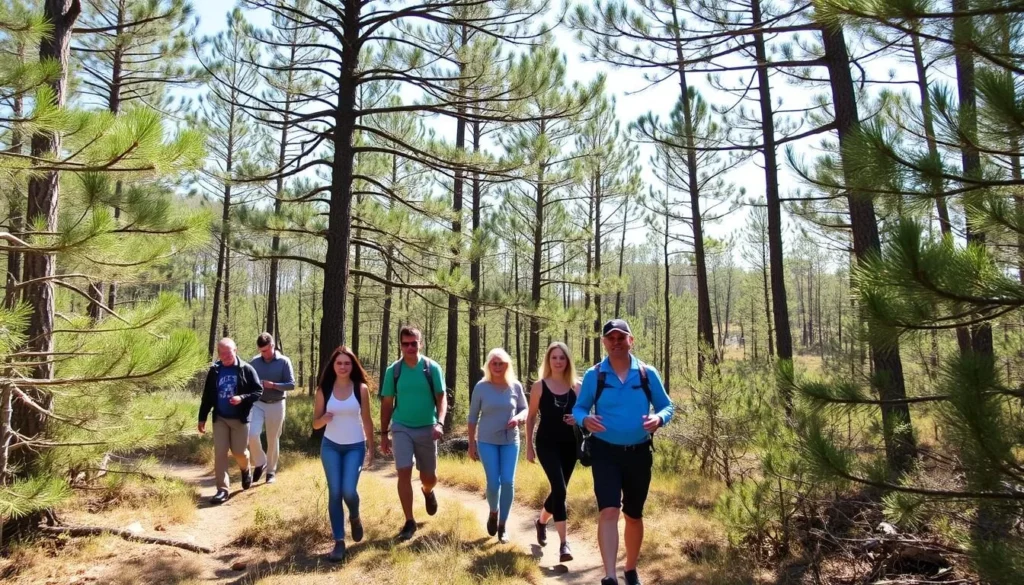
The preserve features one of only two locations in Illinois where native shortleaf pine trees grow naturally. These towering evergreens create a distinctive forest environment unlike most of Illinois’ hardwood-dominated landscapes. The mixed pine-hardwood forest provides habitat for diverse plant and animal species.
Creek Exploration
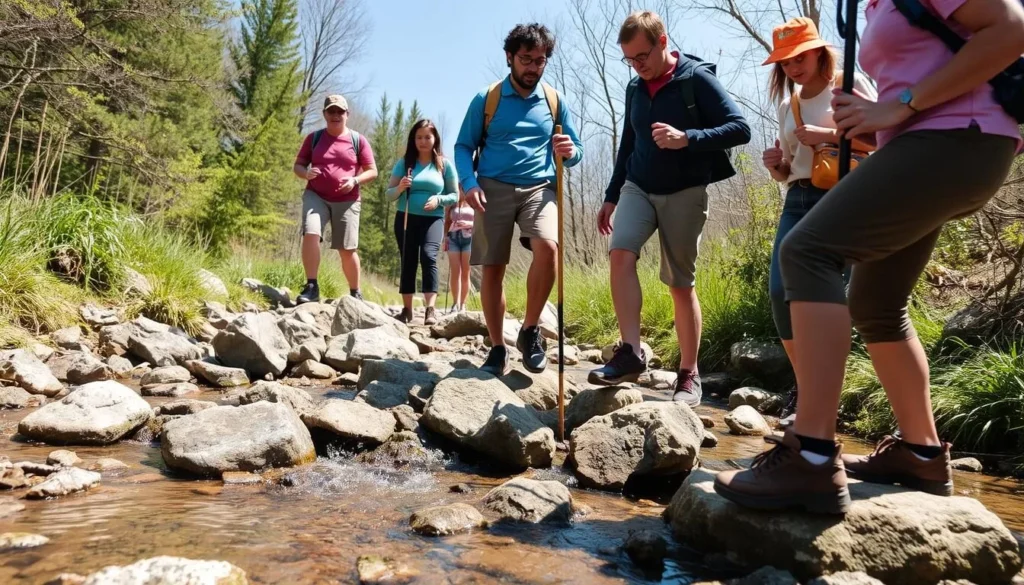
Piney Creek itself offers opportunities for exploration, with interesting rock formations, small pools, and scenic views of the surrounding bluffs. While staying on marked trails is recommended for conservation purposes, the creek crossings provide access points to appreciate the waterway’s natural beauty.
Museums, Cultural Spots & Festivals
While Piney Creek Ravine itself doesn’t host formal cultural events, the surrounding region offers several opportunities to deepen your understanding of local history and culture:
Nearby Cultural Attractions
- Fort Kaskaskia State Historic Site: Located near Chester, this preserved fort site offers insights into early European settlement of the region.
- Pierre Menard Home: A beautifully preserved French Colonial home near Chester that housed Illinois’ first Lieutenant Governor.
- Popeye Statue and Character Trail: Chester is the hometown of Popeye creator Elzie Segar, and the town celebrates with statues and a character trail.
- Mary’s River Covered Bridge: A historic covered bridge near Chester (currently closed for repairs, expected to reopen in late 2024).
Regional Museums
- Southern Illinois University Museum: Features exhibits on regional history and Native American artifacts.
- Science Center of Southern Illinois: Interactive exhibits for families in Carbondale.
- Cahokia Mounds State Historic Site: Though further away (about 1.5 hours), this UNESCO World Heritage Site features remains of the largest pre-Columbian settlement north of Mexico.

Throughout the year, nearby communities host festivals celebrating local heritage, agriculture, and culture. Check event calendars for Chester, Murphysboro, and Carbondale when planning your visit to potentially combine your Piney Creek exploration with a local cultural event.
Sports, Nature & Outdoor Experiences
Piney Creek Ravine Nature Preserve offers several outdoor activities for nature enthusiasts:
Hiking
The 2.25-mile (3.6 km) loop trail offers a moderately challenging hike with several elevation changes. The trail takes you through diverse ecosystems, from creek bottoms to ridge tops, providing varied scenery throughout. Allow 1.5-2 hours to complete the loop at a leisurely pace with stops to enjoy the views and rock art.
Photography
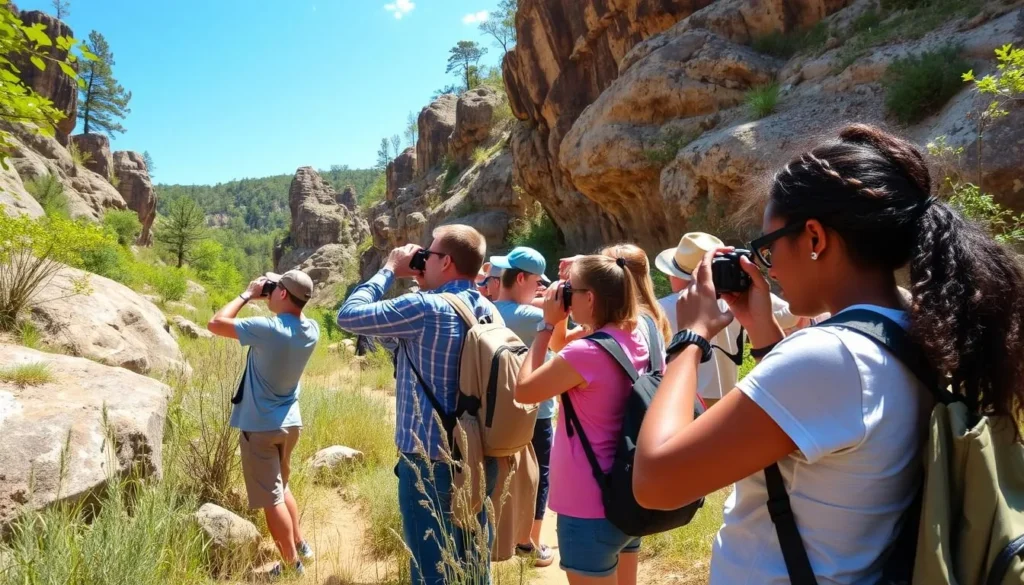
The preserve offers exceptional photography opportunities, from ancient rock art to dramatic waterfalls and unique forest scenes. Morning light often works best for capturing the waterfalls, while overcast days provide optimal conditions for photographing the petroglyphs.
Birdwatching
The diverse habitat supports numerous bird species. Bring binoculars to spot woodland birds including woodpeckers, warblers, and hawks. The unique pine forest sections attract species not commonly found elsewhere in Illinois.
Nature Study
The preserve showcases a remarkable cross-section of southern Illinois ecosystems. Botanists will appreciate the diverse plant communities, from moisture-loving species near the creek to drought-tolerant plants on the ridges. Spring brings wildflowers, while fall offers colorful foliage.
For those seeking additional outdoor experiences, the surrounding region offers abundant opportunities including fishing at nearby lakes, paddling on the Mississippi River, and exploring the extensive trail network of Shawnee National Forest.
Safety, Etiquette & Local Customs
When visiting Piney Creek Ravine Nature Preserve, observe these important safety guidelines and etiquette considerations:
Safety Precautions
- Creek Crossings: Rocks at creek crossings are extremely slippery. Use caution and consider using a hiking stick for balance.
- Cliff Edges: Several areas have steep drop-offs. Stay on marked trails and keep children close.
- Wildlife: Watch for venomous copperhead snakes, especially in warmer months. Give them space if encountered.
- Poison Ivy: Abundant throughout the preserve. Learn to identify and avoid this three-leafed plant.
- Weather: Check forecasts before visiting. Trails become more dangerous during and after rain.
- Cell Service: Coverage is limited or non-existent. Consider bringing a paper map and telling someone your plans.
Preservation Etiquette
- Rock Art: Never touch, trace, or otherwise disturb the ancient petroglyphs and pictographs. They are irreplaceable cultural treasures.
- Stay on Trail: Remain on marked paths to protect sensitive ecosystems and archaeological sites.
- Pack Out Trash: No trash services exist. Carry out everything you bring in.
- No Collection: Taking plants, rocks, artifacts, or any natural or cultural items is prohibited and may be subject to penalties.
- No Graffiti: The area is monitored by surveillance cameras to prevent vandalism of the rock art.
- Quiet Enjoyment: Keep noise levels down to respect wildlife and other visitors.
The preserve is managed by the Illinois Department of Natural Resources and is designated as a nature preserve and National Historic Landmark due to its archaeological significance. Respect these designations by treading lightly and helping preserve the site for future generations.
Visitor Comments About Piney Creek Ravine
“I’ve hiked throughout the Midwest, but Piney Creek Ravine offered something truly special. The ancient rock art gave me goosebumps—thinking about the people who created these images thousands of years ago. The waterfalls after a spring rain were spectacular too. Just be prepared for slippery creek crossings!”
K.B., Bamako
“As an amateur photographer, I found Piney Creek Ravine to be a hidden gem. The light filtering through the pine trees created magical scenes, and the rock formations along the creek offered endless compositional possibilities. I recommend visiting on a slightly overcast day to best capture the petroglyphs.”
W.J., Berlin
“We almost missed this place! The parking area is tiny and easy to drive past. But I’m so glad we found it. My family loved exploring the creek and seeing the ancient rock art. The kids were fascinated by the idea of people drawing on rocks so long ago. Definitely wear good shoes—those creek crossings are super slick!”
H.H., Elk Grove
Additional Nearby Destinations
While visiting Piney Creek Ravine, consider exploring these nearby attractions to make the most of your trip to southern Illinois:

Shawnee National Forest
Just a short drive from Piney Creek, the Shawnee National Forest offers extensive hiking opportunities, including the famous Garden of the Gods with its distinctive rock formations. The forest encompasses over 107,000 hectares (265,000 acres) of natural beauty.
Kinkaid Lake
Located approximately 20 km (12 miles) from Piney Creek, this 1,113-hectare (2,750-acre) lake offers fishing, boating, and swimming opportunities. The surrounding recreation area features additional hiking trails and picnic facilities.
Giant City State Park
About 48 km (30 miles) east of Piney Creek, this park features unique “streets” formed by massive sandstone bluffs, a historic lodge, and numerous hiking trails. The park is named for rock formations that resemble the streets and buildings of a giant city.
Other worthwhile destinations within an hour’s drive include Little Grand Canyon, Trail of Tears State Forest, and several wineries along the Shawnee Hills Wine Trail. With so many natural and cultural attractions nearby, Piney Creek Ravine can serve as an excellent starting point for exploring the diverse landscapes of southern Illinois.
Practical Travel Tips
- Navigation: GPS signals can be unreliable in this rural area. Download offline maps before your trip and consider bringing printed directions.
- Supplies: Pack plenty of water, snacks, insect repellent, and a basic first aid kit. There are no services at the preserve.
- Footwear: Sturdy hiking boots with good traction are essential, especially for navigating slippery creek crossings.
- Timing: Allow at least 3-4 hours to fully explore the preserve, including time to appreciate the rock art and natural features.
- Photography: Overcast days provide the best lighting for photographing the rock art. Morning light works well for waterfall photography.
- Seasonal Awareness: Spring brings muddy conditions but impressive waterfalls. Summer has dense vegetation and more poison ivy. Fall offers beautiful colors. Winter provides the clearest views of rock formations.
- Accessibility: The trail is not wheelchair accessible and includes steep sections and creek crossings that require good mobility.
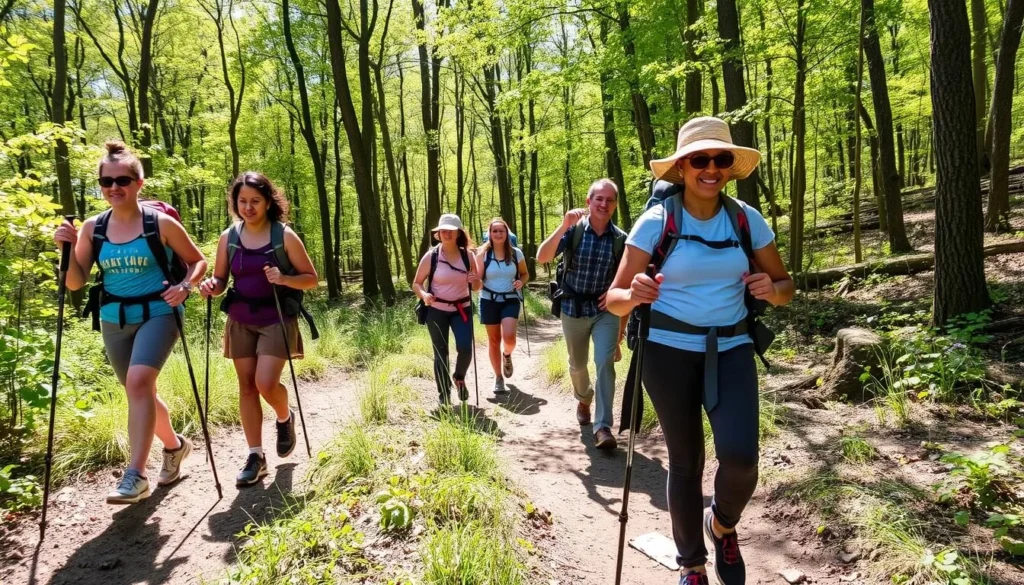
Your Journey Through Time Awaits
Piney Creek Ravine Nature Preserve offers a rare opportunity to connect with both natural history and human heritage in a setting of surprising beauty. As you stand before rock art created by hands over a thousand years ago, surrounded by the same sandstone bluffs and flowing waters that inspired these ancient artists, you’ll experience a profound connection to the past that few other destinations can provide. This hidden gem may require some effort to reach, but those who make the journey are rewarded with memories of a truly special place where nature and human creativity have intertwined for millennia.
The above is subject to change.
Check back often to TRAVEL.COM for the latest travel tips and deals.


0 Comments