

Hotels by Trip.com
Flights by Trip.com
Few visitors realize that Trail of Tears State Forest spans over 2,100 hectares (5,190 acres) of diverse ecosystems, making it one of Illinois’ largest and most ecologically significant state forests. Nestled in the Shawnee Hills of southern Illinois, this hidden gem offers a perfect blend of natural beauty, outdoor recreation, and profound historical significance that many travelers overlook when planning their Illinois adventures.
Getting There & Planning Your Journey
Trail of Tears State Forest is located in Union County, approximately 13 km (8 miles) northwest of Jonesboro, Illinois. The forest is accessible via Illinois Route 127, with clear signage directing visitors to the main entrance.
Closest Airports
- Southern Illinois Airport (MDH) in Carbondale – 32 km (20 miles)
- Williamson County Regional Airport (MWA) in Marion – 56 km (35 miles)
- Cape Girardeau Regional Airport (CGI) in Missouri – 64 km (40 miles)
- Lambert-St. Louis International Airport (STL) – 177 km (110 miles)
- Nashville International Airport (BNA) – 257 km (160 miles)
For those driving from major cities, Trail of Tears State Forest is approximately 2.5 hours from St. Louis, 3.5 hours from Nashville, and 5.5 hours from Chicago. The forest is situated within the larger Shawnee National Forest region, making it an excellent addition to a broader southern Illinois exploration.
Contact Information: Trail of Tears State Forest Headquarters – (618) 833-4910
Best Time to Visit & Weather Tips
Recommended Seasons
Spring (April-May)
Wildflowers bloom throughout the forest, and temperatures range from 10-24°C (50-75°F). Spring offers lush greenery and moderate rainfall, making it ideal for photography and hiking.
Summer (June-August)
Temperatures typically range from 21-32°C (70-90°F) with higher humidity. The dense forest canopy provides welcome shade for hiking, though early morning starts are recommended to avoid afternoon heat.
Fall (September-November)
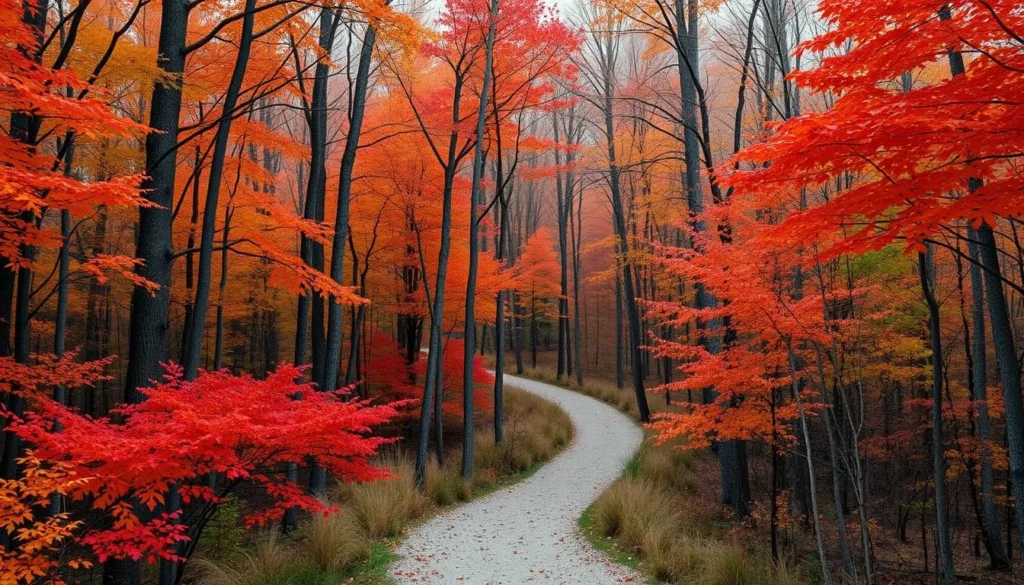
The most popular season to visit, with spectacular foliage colors peaking in mid-October. Temperatures range from 7-24°C (45-75°F), and the forest comes alive with vibrant reds, oranges, and yellows.
Winter (December-February)
For those seeking solitude, winter offers quiet trails and unique perspectives. Temperatures range from -7 to 7°C (20-45°F), occasionally dropping lower. Some facilities have reduced hours.
Seasons to Avoid
Late summer can be uncomfortably hot and humid, while heavy spring rains (particularly March-April) can make trails muddy and less accessible. If visiting during these times, come prepared with appropriate gear and check trail conditions in advance.
Weather Tip: Southern Illinois weather can change rapidly. Pack layers regardless of season, and always check the forecast before setting out. The forest office can provide up-to-date trail conditions at (618) 833-4910.
✓ Check 30,000+ Local Sightseeing Tours Worldwide
Getting Around Locally
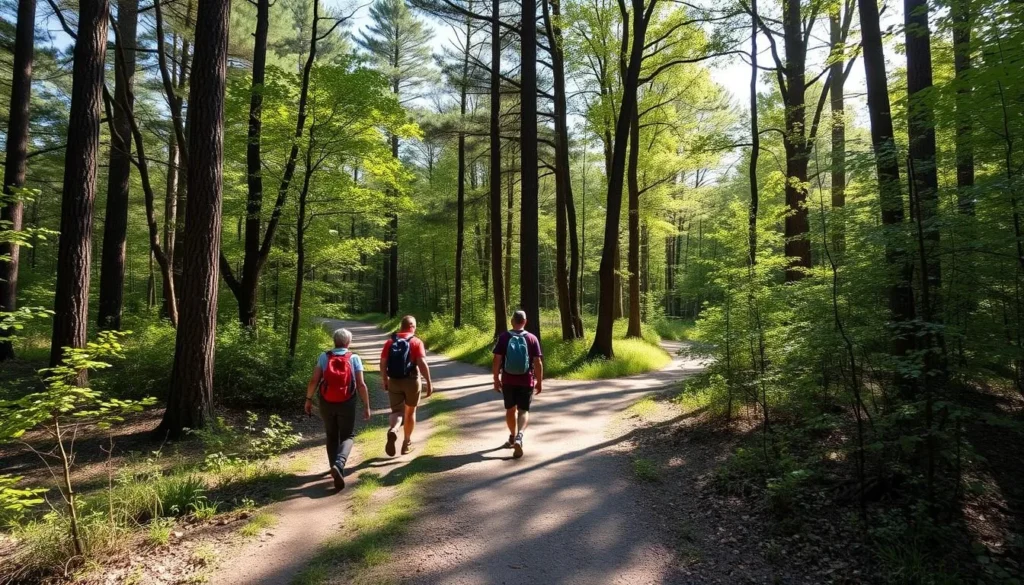
Trail of Tears State Forest is best explored on foot, though several options exist for navigating the area:
Within the Forest
- Hiking: The primary way to explore, with over 16 km (10 miles) of marked trails ranging from easy to moderate difficulty.
- Horseback Riding: Several designated equestrian trails wind through the forest. Visitors must bring their own horses as there are no rental facilities within the forest.
- Forest Roads: Some sections are accessible by vehicle, though many roads are unpaved and may require high-clearance vehicles, especially after rainfall.
Surrounding Area
- Personal Vehicle: Essential for exploring the broader region, as public transportation is limited.
- Bicycle: The surrounding country roads offer scenic cycling, though be prepared for hilly terrain.
- Local Shuttles: Some nearby accommodations offer shuttle services to trailheads by arrangement.
The forest headquarters provides detailed maps of trails and roads. It’s advisable to download offline maps before your visit, as cell service can be spotty throughout the forest.
Where to Stay
While accommodations within Trail of Tears State Forest itself are limited to camping, the surrounding area offers various lodging options to suit different preferences and budgets:
Camping in the Forest
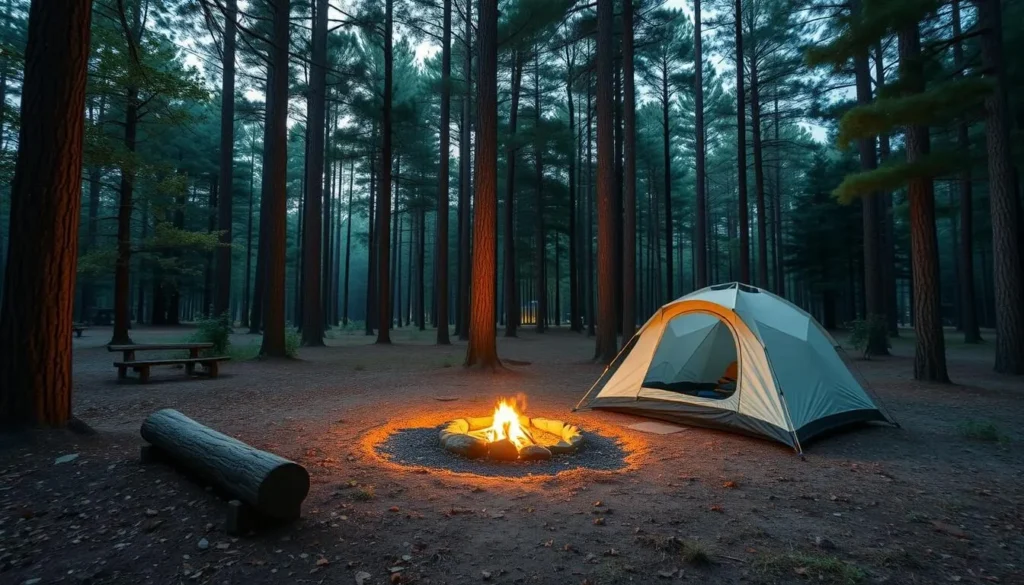
Trail of Tears State Forest offers primitive camping with basic amenities. Sites are available on a first-come, first-served basis for a nominal fee. Facilities include:
- Designated camping areas with fire rings
- Pit toilets (no showers)
- Drinking water (seasonal availability)
- Picnic tables at select sites
Nearby Accommodations
Hotels & Motels
- Jonesboro Inn – Basic accommodations 13 km (8 miles) from the forest
- Davie School Inn – Boutique hotel in Anna in a historic schoolhouse
- Carbondale Hotels – More options available 32 km (20 miles) north
Cabins & Vacation Rentals
- Shawnee Forest Cabins – Rustic cabins with modern amenities
- Blue Sky Vineyard Suites – Upscale accommodations on a vineyard
- Various VRBO/Airbnb options – Private homes and cabins throughout the region
For longer stays, consider splitting your time between different accommodations to experience various parts of the Shawnee National Forest region. Reservations are strongly recommended during fall foliage season and summer weekends.
Dining & Local Cuisine

While there are no dining facilities within Trail of Tears State Forest itself, the surrounding communities offer a taste of authentic Southern Illinois cuisine:
Nearby Dining Options
Jonesboro & Anna (13 km/8 miles)
- The Old Feed Store – Local favorite for sandwiches and homestyle cooking
- Davis Pastry – Famous for their sweet treats and donuts
- El Jalapeno – Mexican cuisine with generous portions
Carbondale (32 km/20 miles)
- 17th Street BBQ – Award-winning Southern Illinois barbecue
- Quatro’s Deep Pan Pizza – Local institution for pizza
- Global Gourmet – International cuisine with vegetarian options
Local Specialties
Southern Illinois cuisine reflects both Midwestern and Southern influences. Look for these regional specialties:
- Burgoo – A thick stew traditionally made with multiple meats and vegetables
- Fried Chicken – Southern Illinois style, often served with mashed potatoes and gravy
- Persimmon Pudding – A fall dessert made from native persimmons
- Local Wines – The Shawnee Hills Wine Trail features numerous vineyards producing award-winning wines
Picnic Tip: Local grocery stores in Anna and Jonesboro offer deli items perfect for trail picnics. The forest has several designated picnic areas with tables and grills.
Attractions, Sightseeing & Activities
Top Hiking Trails
Main Forest Trail
A moderate 5 km (3.1 mile) loop that showcases the forest’s diverse ecosystems, including hardwood ridges and bottomland forests. The trail features interpretive signs about the forest’s ecology and history.
River-to-River Trail Section
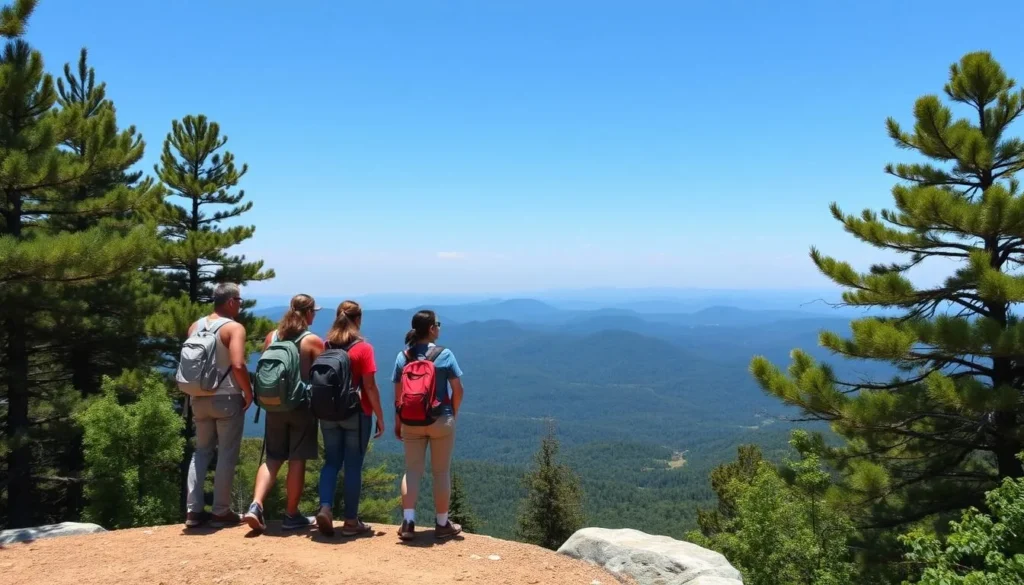
Part of the 257 km (160 mile) trail that crosses southern Illinois. The Trail of Tears section offers challenging terrain with significant elevation changes and rewarding vistas.
Waterfall Trail
A 1.6 km (1 mile) out-and-back trail leading to a seasonal waterfall. Best visited in spring or after heavy rains when the cascade is most impressive.
Cross-Country Running Trail
A well-maintained 3.2 km (2 mile) trail popular with runners and fitness enthusiasts, offering a moderate workout through varied terrain.
Historical Sites
The forest derives its name from the tragic Trail of Tears, the forced relocation of Native American tribes in the 1830s. Several sites within the forest commemorate this history:
- Historical Marker – Located near the forest entrance, providing context about the Trail of Tears passage through the area
- Native American Heritage Trail – A 1 km (0.6 mile) interpretive trail with information about indigenous peoples who once inhabited the region
- Old Barn Visitor Center – A restored historic structure housing exhibits on both natural and cultural history
Recreational Activities
- Wildlife Viewing – The forest is home to white-tailed deer, wild turkey, numerous bird species, and occasional bobcat sightings
- Photography – Abundant opportunities for nature photography, particularly during spring wildflower season and fall foliage
- Horseback Riding – Designated equestrian trails throughout the forest (bring your own horse)
- Hunting – Seasonal hunting with proper permits (check regulations with forest headquarters)
- Picnicking – Several developed picnic areas with tables and grills
Museums, Cultural Spots & Festivals

Museums & Cultural Sites
While the forest itself has limited formal cultural facilities, the surrounding area offers several opportunities to learn about the region’s rich history:
- Trail of Tears State Forest Visitor Center – Located in a historic barn, featuring exhibits on forest ecology and cultural history
- Union County Historical Society – In Jonesboro, housing artifacts and information about local history including the Trail of Tears
- Southern Illinois University Museum – In Carbondale, with exhibits on regional archaeology and Native American history
- Shawnee National Forest Headquarters – In Harrisburg, offering interpretive displays about the broader forest region
Annual Events & Festivals
Spring & Summer
- Wildflower Walks (April-May) – Guided tours highlighting the forest’s diverse flora
- Summer Night Sky Programs (June-August) – Occasional astronomy events taking advantage of the forest’s dark skies
Fall & Winter
- Fall Colors Festival (October) – Celebrating autumn foliage with guided hikes and educational programs
- Trail of Tears Remembrance Walk (December) – A solemn event commemorating the historic tragedy
Cultural Significance
The forest serves as an important reminder of the Trail of Tears, the forced relocation of Cherokee and other Native American tribes from their homelands to territories west of the Mississippi River in the 1830s. Thousands died during this journey, with many passing through southern Illinois along routes that now comprise parts of the forest.
Visitors are encouraged to approach this aspect of the forest with appropriate respect and to take time to learn about this significant chapter in American history through the interpretive materials available.
Nature & Outdoor Experiences

Unique Ecosystems
Trail of Tears State Forest encompasses several distinct ecological zones, making it a paradise for nature enthusiasts:
- Upland Oak-Hickory Forest – Dominated by white oak, black oak, and various hickory species, especially beautiful during fall foliage
- Mesic Ravines – Sheltered, moist areas harboring unique plant communities including rare ferns and wildflowers
- Bottomland Hardwood Forest – Along creek bottoms, featuring sycamore, sweet gum, and pawpaw trees
- Limestone Outcrops – Supporting specialized plant communities adapted to thin soils and exposed rock
Flora & Fauna
Notable Plants
- Spring wildflowers: trillium, bloodroot, and wild geranium
- Native orchids: showy orchis and lady’s slipper (rare)
- Pawpaw trees – producing North America’s largest native fruit
- American beech – reaching the western edge of their range here
Wildlife Viewing
- White-tailed deer and wild turkey (common)
- Over 200 bird species, including pileated woodpeckers and scarlet tanagers
- Box turtles and five-lined skinks
- Bobcats and red foxes (less frequently seen)
Seasonal Natural Highlights
- Spring: Wildflower explosion from April-May, with new species blooming weekly
- Summer: Lush green canopy providing habitat for numerous bird species
- Fall: Spectacular foliage typically peaking mid-October
- Winter: Improved visibility through leafless trees, making wildlife spotting easier
Photography Tip: The “golden hours” shortly after sunrise and before sunset offer the best lighting for forest photography. The forest opens at sunrise and closes at sunset.
Trail of Tears State Forest Map
Safety, Etiquette & Local Customs

Safety Considerations
- Wildlife: While dangerous encounters are rare, be aware of potential hazards including venomous snakes (copperheads and timber rattlesnakes) and poison ivy
- Weather: Storms can develop quickly. Check forecasts and be prepared to seek shelter
- Navigation: Cell service is unreliable. Carry physical maps and inform someone of your planned route and return time
- Water: Bring sufficient water as natural sources require treatment before drinking
- Terrain: Some trails feature steep sections and uneven ground. Appropriate footwear is essential
Trail Etiquette
General Guidelines
- Stay on marked trails to protect sensitive ecosystems
- Pack out all trash (no garbage services on trails)
- Keep noise levels reasonable to avoid disturbing wildlife and other visitors
- Yield to horses on shared trails
Cultural Considerations
- Respect the solemn history of the Trail of Tears
- Do not disturb or remove any historical artifacts
- Photography is welcome, but commercial photography requires permits
- Hunting is permitted only in designated seasons with proper licenses
Emergency Information
Cell service is limited throughout the forest. In case of emergency:
- Forest Headquarters: (618) 833-4910 (during business hours)
- Union County Sheriff: (618) 833-5500
- Emergency Services: 911 (note your location as precisely as possible)
Fire Safety: Campfires are permitted only in designated fire rings. During dry periods, fire bans may be implemented. Always fully extinguish fires before leaving your site or retiring for the night.
Visitor Comments About Trail of Tears State Forest

“We discovered Trail of Tears State Forest during our cross-country road trip and were amazed by its beauty and tranquility. The hiking trails offered the perfect mix of challenge and accessibility, and we spotted so much wildlife including deer and a red fox! The historical significance added another dimension to our visit that we hadn’t expected.”
“As a visitor from Germany, I found Trail of Tears State Forest to be a hidden gem that showed me a side of America rarely seen in international media. The forest’s diverse ecosystems reminded me of European woodlands, yet with distinctly American species. The historical interpretation was thoughtful and educational. I particularly enjoyed the peaceful camping experience away from crowds.”
“Having visited many state and national parks across the US, I was pleasantly surprised by Trail of Tears State Forest. The fall colors were spectacular, rivaling those of New England but without the crowds. The trails were well-maintained yet felt wonderfully wild. I appreciated the balance between recreation and preservation, and the staff were incredibly knowledgeable about both the natural and cultural history.”
Additional Nearby Destinations

Trail of Tears State Forest serves as an excellent base for exploring other attractions in southern Illinois:
Within 30 Minutes
- Giant City State Park (24 km/15 miles) – Famous for its unique sandstone formations and excellent rock climbing opportunities
- Blue Sky Vineyard (29 km/18 miles) – Part of the Shawnee Hills Wine Trail, offering tastings and scenic views
- Pomona Natural Bridge (16 km/10 miles) – A 27 m (90 ft) natural sandstone bridge formation
Within 1 Hour
Natural Attractions
- Garden of the Gods – Spectacular rock formations and panoramic views
- Cache River State Natural Area – Ancient cypress-tupelo swamps with kayaking opportunities
- Little Grand Canyon – Dramatic sandstone canyon with challenging hiking
Cultural & Historical Sites
- Carbondale – University town with museums and cultural attractions
- Fort Massac State Park – Historic fort on the Ohio River
- Shawnee Hills Wine Trail – 11 wineries along a scenic route
Multi-Day Excursions
- River to River Trail – 257 km (160 mile) hiking trail crossing southern Illinois
- Ohio River Scenic Byway – Historic route following the Ohio River
- Land Between the Lakes (Kentucky/Tennessee) – Large recreation area approximately 1.5 hours away
Many visitors combine Trail of Tears State Forest with other destinations in the Shawnee National Forest for a comprehensive southern Illinois experience.
Practical Travel Tips
What to Pack
Year-Round Essentials
- Sturdy hiking boots or shoes
- Daypack with water (at least 2 liters per person)
- Trail map (available at forest headquarters)
- First aid kit and insect repellent
- Sunscreen and hat
Seasonal Additions
- Spring/Fall: Layered clothing for variable temperatures
- Summer: Lightweight, breathable clothing and extra water
- Winter: Insulated clothing, gloves, and traction devices for boots
Practical Information
- Hours: The forest is generally open from sunrise to sunset daily
- Fees: No entrance fee; camping fees are nominal ($10-15 per night)
- Permits: Required for hunting and group activities of more than 25 people
- Accessibility: Limited accessible facilities; contact headquarters for current information
- Pets: Allowed on leashes no longer than 3 m (10 ft)
Local Resources
- Trail of Tears State Forest Headquarters: (618) 833-4910
- Shawnee National Forest Visitor Center: (618) 253-7114
- Union County Tourism: (800) 248-4373
- Illinois Department of Natural Resources: (618) 435-8138
Planning Tip: The forest has limited staff, so calling ahead is recommended if you have specific questions or needs. The headquarters is typically staffed Monday through Friday, 8:00 AM to 4:00 PM.
Your Illinois Wilderness Adventure Awaits
Trail of Tears State Forest offers a perfect blend of natural beauty, outdoor recreation, and historical significance that makes it a must-visit destination in southern Illinois. Whether you’re seeking challenging hikes through diverse ecosystems, a peaceful camping experience under towering hardwoods, or a deeper connection to an important chapter in American history, this forest delivers experiences that will linger in your memory long after your visit.
As you plan your journey to this hidden gem, remember that its true value lies not just in its recreational opportunities, but in the stories it tells about our relationship with the land and its complex history. Take time to listen to the forest, to learn from it, and to appreciate both its natural wonders and the human experiences that have shaped it. Your adventure in Trail of Tears State Forest awaits, promising discovery, reflection, and connection in equal measure.
Related Posts

Frank Holten State Park, Illinois: Best Things to Do – Top Picks

World Shooting and Recreational Complex State Park, Illinois: Best Things to Do – Top Picks
Woodford State Park, Illinois: Best Things to Do – Top Picks

Wolf Road Prairie Nature Preserve, Illinois: Best Things to Do – Top Picks
Wolf Creek State Park, Illinois: Best Things to Do – Top Picks
White Pines Forest State Park, Illinois: Best Things to Do – Top Picks
Coming Soon: Clickable Maps