

Hotels by Trip.com
Flights by Trip.com
Did you know that Trail of Tears State Forest in Illinois contains over 5,000 acres of some of the most rugged and diverse terrain in the state, with 620 species of flowering plants and ferns documented within its boundaries? This hidden gem in southern Illinois offers visitors a unique glimpse into both natural wonders and poignant American history, making it one of the most underrated destinations in the region.
Getting There & Planning Your Journey
Trail of Tears State Forest is located in Union County in southern Illinois, approximately 5 miles northwest of Jonesboro and 20 miles south of Murphysboro. The forest is accessible from Illinois Route 127 (from the east) and Route 3 (from the west).
The closest major airports are:
- Cape Girardeau Regional Airport (CGI) – approximately 32 minutes away
- Williamson County Regional Airport (MWA) – approximately 45 minutes away
- St. Louis Lambert International Airport (STL) – approximately 2 hours away
- Nashville International Airport (BNA) – approximately 3 hours away
For assistance with directions or general information, contact the site superintendent at 618-833-4910. The forest’s address is 3240 State Forest Road, Jonesboro, Illinois 62952.
Best Time to Visit & Weather Tips
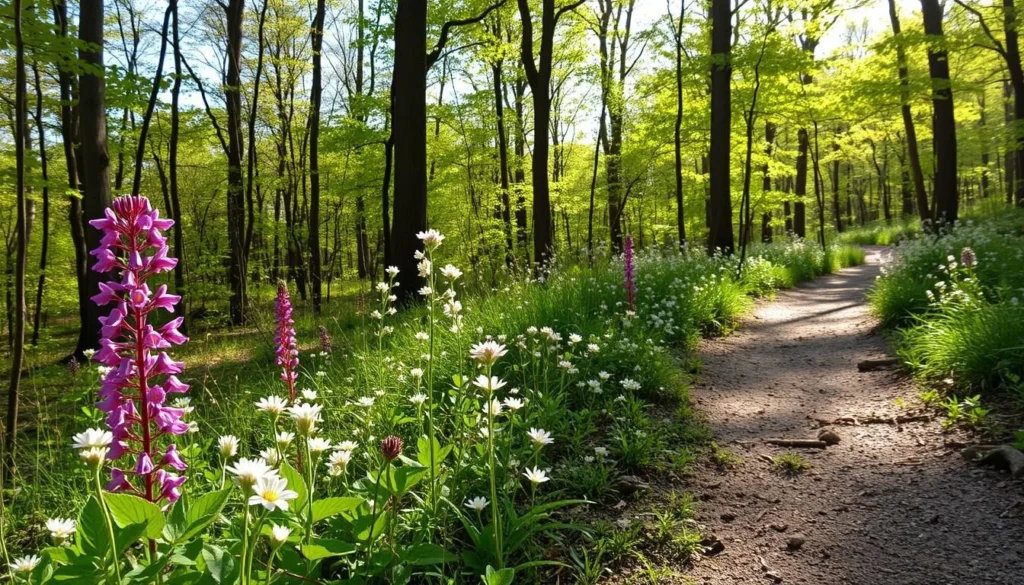
The ideal time to visit Trail of Tears State Forest is during spring (April-May) and fall (September-October). Spring brings a spectacular display of woodland wildflowers across the forest floor, while fall transforms the landscape with vibrant autumn colors.
Summer (June-August) can be quite hot and humid with temperatures often reaching 32°C (90°F), though the forest’s canopy provides welcome shade. Winter (December-February) sees temperatures dropping to around -6°C (20°F), and while the forest remains open, many facilities are closed.
The Class C camping sites (with vehicle access) are closed from December 24 to the second week of May, though Class D (backpacking only) sites remain open year-round. The forest’s gravel roads are closed to vehicles during this winter-spring period.
Months to avoid: If you’re planning to camp with vehicle access, avoid December through early May. Additionally, the summer months can be uncomfortably hot and humid for extended hiking.
Getting Around Locally

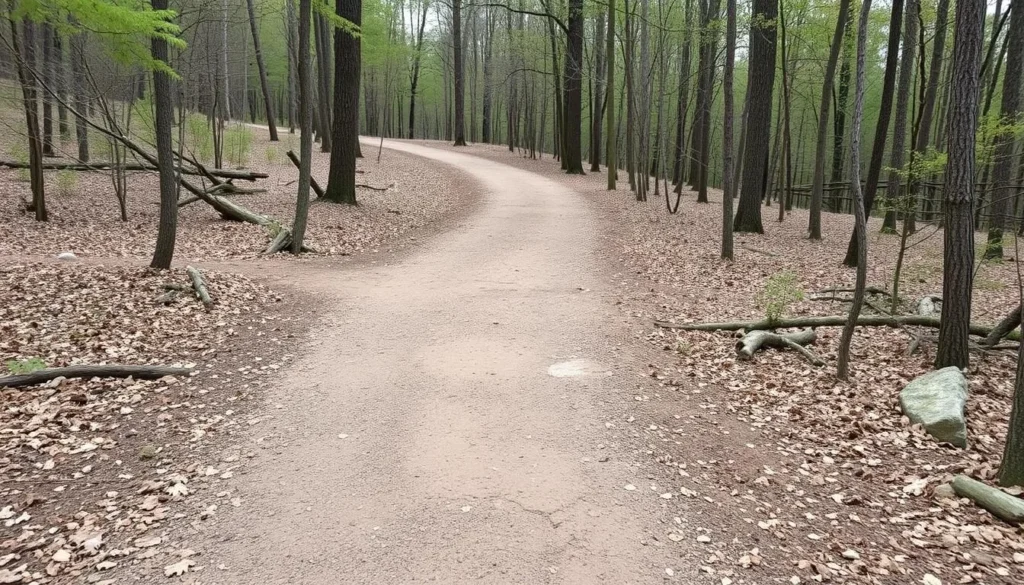
The forest features a network of gravel roads that provide access to various areas, including camping sites and trailheads. These roads are one-way in many sections and can have steep sides, so drive carefully. During winter and early spring (December 24 through mid-May), the gravel roads are closed to vehicles.
Hiking is the primary way to explore the forest’s interior. The fire trails are open year-round for hiking, with trails ranging from easy walks to more challenging routes through the rolling hills. For equestrians, designated horse trails are available from May 1 to mid-November (first firearm deer hunting season), with trailer parking at the equestrian trailhead along the county blacktop road.
Mountain biking and gravel riding are permitted on non-gated gravel roads and paved roads within the forest. However, bikes are not allowed on fire trails that are gated or in nature preserves.
Where to Stay
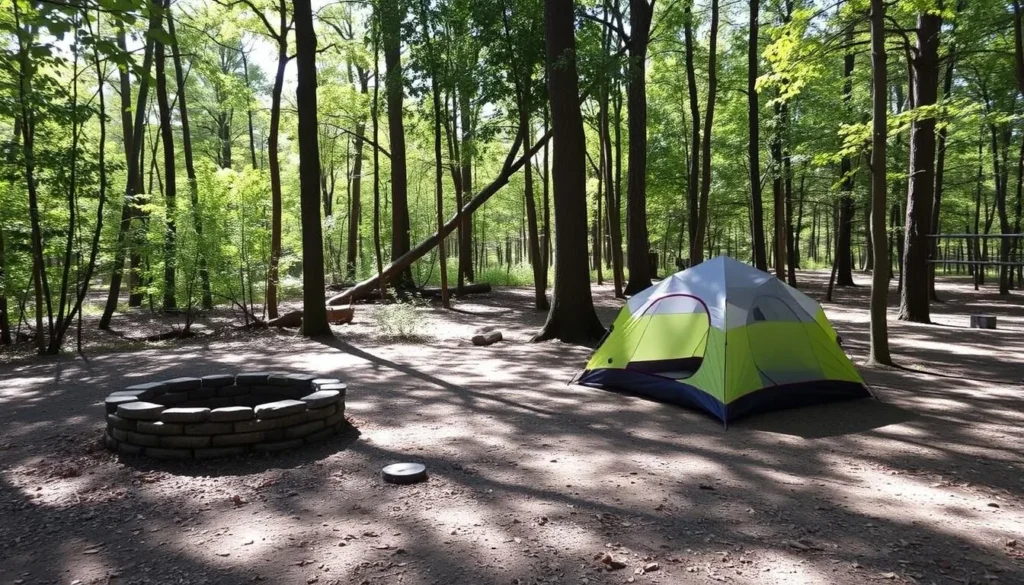
Trail of Tears State Forest offers both Class C (tent camping with vehicle access) and Class D (backpack) camping sites. The camping fee is $8.00 per night, making it one of the most affordable camping options in southern Illinois.
Some camping locations feature rustic log shelters with adjacent privies. The sites are generously spaced apart, providing privacy from other campers. Each site typically includes a picnic table, fire pit, and access to basic restroom facilities. There is no water or electricity available at the campsites.
✓ Check 30,000+ Local Sightseeing Tours Worldwide
For camping reservations, call 618-833-4910 or register on-site at the white barn using the self-registration system. Group camping is available at select sites.
If you prefer more comfortable accommodations, several cabins are available near the forest:
- Doc’s Lakeside Cabin (Jonesboro) – 4 miles from the forest
- Cedar Sunset Cabin (Buncombe) – 12.6 miles from the forest
- Pinnon Lake Cabins (Buncombe) – 12.8 miles from the forest
For those seeking hotel accommodations, the nearby towns of Cape Girardeau (32 minutes away) and Carbondale (30 minutes away) offer various options ranging from budget to mid-range hotels.
Dining & Local Cuisine

There are no dining facilities within Trail of Tears State Forest itself, so visitors should plan to bring their own food. The forest features several picnic areas with tables and grills, making it perfect for outdoor meals. The main picnic area includes two large shelters ideal for group gatherings, plus two smaller rustic log shelters for smaller groups.
For local dining options, the nearby towns offer several choices:
- Jonesboro (5 miles away) – Features small local restaurants serving American comfort food
- Anna (7 miles away) – Offers additional dining options including family restaurants and fast food
- Cape Girardeau (32 minutes away) – Provides a wider range of restaurants, including some featuring regional specialties
Southern Illinois cuisine features influences from both the Midwest and the South. Local specialties to try in the region include burgoo (a thick stew), fried catfish, and regional barbecue. The area is also part of the Shawnee Hills Wine Trail, with several wineries within driving distance offering tastings and food pairings.
Attractions, Sightseeing & Activities

Trail of Tears State Forest offers a variety of attractions and activities for nature lovers and history enthusiasts:
- CCC Heritage Trail – Visit one of the old fire watch towers that were once used to spot wildfires. While visitors can’t climb the tower, it’s an interesting historical feature.
- Stonework Stabilization Walls – Admire the impressive stonework constructed by the Civilian Conservation Corps (CCC) in the 1930s.
- Log Stone Shelters – These rustic shelters within the picnic area showcase historical construction techniques.
- Union State Nursery – One of Illinois’ two plant propagation centers occupies 120 acres of the forest, producing up to 3 million seedlings annually.
- Rock Hounding – The numerous creeks in the area feature unique rocks similar to those found in the Missouri Ozarks.
- Wildlife Viewing – Watch for woodland creatures including whitetailed deer, fox and grey squirrels, flying squirrels, and even the elusive bobcat.
The forest is divided into 27 management compartments where different timber harvest techniques are studied, making it an interesting destination for those interested in forestry practices.
Museums, Cultural Spots & Festivals
The forest’s name memorializes the tragic “Trail of Tears,” the forced relocation of Native American nations in 1838-39. While the forest itself doesn’t contain extensive museum facilities, it serves as a living memorial to this historical event. The Cherokee, Creek, and Chickasaw nations were forced to move from the southeast to reservations in Oklahoma Territory, with makeshift camps established just 4 miles south of the forest’s southern boundary.
For those interested in learning more about the region’s history and culture, several nearby attractions offer additional context:
- Union County Historical Society (Jonesboro) – Features exhibits on local history including Native American artifacts.
- Cape Girardeau Conservation Nature Center (Cape Girardeau) – Offers exhibits on regional natural history and ecology.
- Shawnee Hills Wine Trail – Showcases the region’s viticultural heritage with 11 wineries spanning a 40-mile corridor.
The area hosts several seasonal festivals and events, including the Shawnee Hills Wine Trail events throughout the year and the Union County Fair in August. Check with the local tourism offices for current event schedules during your planned visit.
Nature & Outdoor Experiences
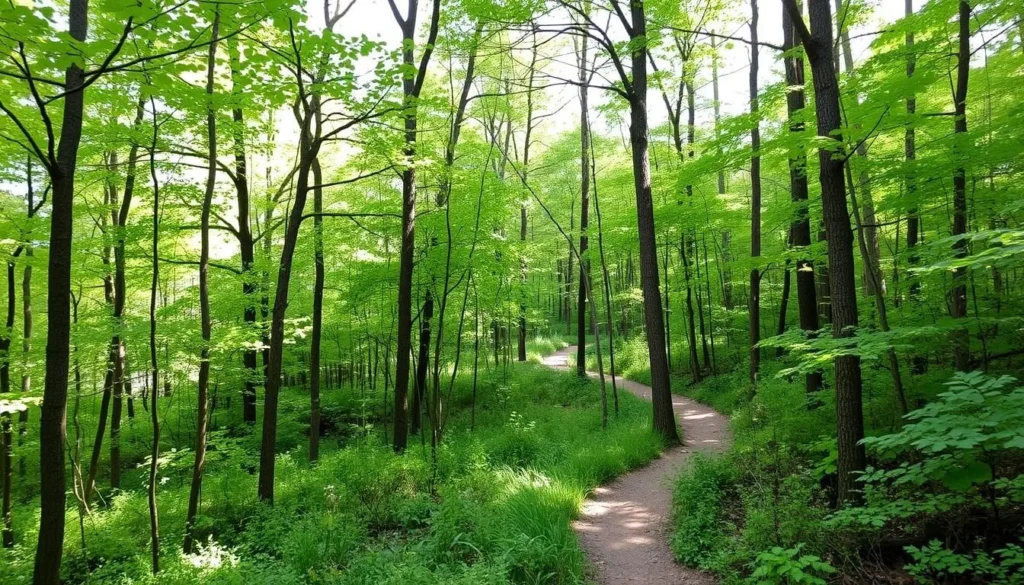
Trail of Tears State Forest lies within the southern section of the Ozark Hills, featuring some of Illinois’ most rugged landscapes. The forest encompasses diverse ecosystems with ridge tops that are narrow, rocky, and dry, contrasted by clear streams with gravel bottoms in the narrow forested valleys.
The varied terrain creates distinct plant communities throughout the forest:
- Dry ridgetops and south-facing slopes host black oaks, white oaks, and hickories
- Extremely dry sites contain prairie-like openings with gnarled open-grown trees and shrubs like wild azalea and low-bush blueberry
- Shaded north-facing slopes support American beech, tuliptree, and sugar maple
- Stream valleys feature American elm, sweetgum, tuliptree, sycamore, and thickets of wild cane (bamboo)
Hiking trails traverse these diverse habitats, offering excellent opportunities for nature photography, birdwatching, and wildlife observation. The forest is home to many species of songbirds, including those restricted to large woodland tracts. Mammals such as whitetailed deer, fox and grey squirrels, chipmunks, flying squirrels, opossums, and even bobcats inhabit the forest.
Note that timber rattlesnakes and northern copperheads occur in the forest. While they pose no danger to cautious visitors, be aware of your surroundings when hiking, especially in rocky areas.
Safety, Etiquette & Local Customs
When visiting Trail of Tears State Forest, keep these safety guidelines and etiquette in mind:
- Day-use hours are from 6:00 AM to 10:00 PM. Trail users must be off trails by dusk.
- Quiet hours in the campground are from 10:00 PM to 7:00 AM.
- All pets must be kept on a leash.
- An adult must accompany all minors.
- Groups of 25 or more must register with the state before using the area.
- Venomous snakes (copperheads and timber rattlesnakes) are present in the forest. It is unlawful to handle, collect, or harm these snakes. If you see them, leave them alone.
- Poison ivy is common, especially off-trail. Learn to identify and avoid it.
- Stay on designated trails to avoid getting lost and to protect sensitive habitats.
- Hunting occurs during designated seasons. Wear bright colors during these periods.
- In case of emergency, call 911. Cell service may be limited in the forest.
- Bring plenty of water when hiking, as the trails feature rolling hills and steep terrain.
- When encountering horseback riders on multi-use trails, yield to them and speak so their horses know you’re not a threat.
The Illinois Department of Natural Resources manages Trail of Tears State Forest. Conservation Law Enforcement officers patrol the area and enforce regulations.
Visitor Comments About Trail of Tears State Park
“Trail of Tears State Forest is my favorite camping spot in southern Illinois. The sites are incredibly private and well-maintained. The half-shelters with built-in fireplaces are unique features I haven’t seen elsewhere. The hiking trails offer challenging terrain with beautiful views of the forest. Definitely worth the trip for anyone who enjoys rustic camping.”
“We were surprised by how uncrowded this forest was even during peak season. The camping fee of just $8 per night is an incredible value. The forest roads are steep in places but make for excellent gravel biking. Be sure to bring your own water as there’s none available at the campsites. A true hidden gem for those seeking solitude in nature.”
“As an international visitor, I found Trail of Tears State Forest to be a fascinating glimpse into American wilderness. The historical significance of the area adds depth to the experience. The forest’s diverse plant life was impressive, especially in spring when wildflowers carpet the forest floor. Just be prepared for limited facilities – this is a place for true nature lovers.”
Additional Nearby Destinations

While exploring Trail of Tears State Forest, consider visiting these nearby attractions:
- Shawnee National Forest – Just a short drive away, offering additional hiking trails, scenic drives, and outdoor recreation opportunities.
- Giant City State Park – Located about 25 minutes away, featuring unique rock formations, hiking trails, and a historic lodge.
- Union County State Fish & Wildlife Area – Nearby conservation area with fishing and wildlife viewing opportunities.
- Shawnee Hills Wine Trail – A collection of 11 wineries spanning a 40-mile corridor through the region.
- Cache River State Natural Area – About 30 minutes away, featuring cypress-tupelo swamps and wetlands with boardwalk trails.
- Mississippi River – Approximately 30 minutes west, offering scenic views, river towns, and recreational opportunities.
- Crab Orchard National Wildlife Refuge – About 40 minutes northeast, providing excellent wildlife viewing and photography opportunities.
The region’s rolling hills, forests, and waterways offer diverse experiences for nature lovers, history buffs, and outdoor enthusiasts alike.
Practical Travel Tips

Make the most of your visit to Trail of Tears State Forest with these practical tips:
- Cell service is limited or non-existent in many parts of the forest. Download maps and information before your visit.
- There is no potable water at the campsites. Bring plenty of water or a reliable water filtration system.
- The nearest supplies are in Jonesboro or Anna, so stock up before heading to the forest.
- Ticks and mosquitoes can be prevalent, especially in warmer months. Bring insect repellent and check for ticks regularly.
- Weather can change quickly. Pack layers and rain gear even if the forecast looks clear.
- The one-way gravel roads can be confusing. Pick up a forest map at the site superintendent headquarters or download one before your visit.
- If camping, arrive early to secure one of the coveted sites with half-shelters and fireplaces.
- Bring a field guide to identify the diverse plant and animal species in the forest.
- For horseback riders, call ahead (618-833-4910) to check trail conditions, as they may be closed after heavy rains.
For additional information or to address specific concerns, contact the site superintendent at 618-833-4910 or visit the headquarters at the white barn within the forest.
Embrace the Wilderness: Your Journey Awaits
Trail of Tears State Forest stands as a testament to both natural beauty and historical significance in southern Illinois. With its diverse ecosystems, rich history, and abundant recreational opportunities, this hidden gem offers visitors a chance to connect with nature in a profound way. Whether you’re setting up camp under the forest canopy, hiking the rolling hills, or simply enjoying a peaceful picnic amid the sounds of the woodland, the forest provides a respite from the modern world that’s increasingly hard to find. As you plan your visit, remember that the true value of Trail of Tears State Forest lies not just in its activities, but in the opportunity to step back, breathe deeply, and immerse yourself in one of Illinois’ most pristine natural environments.
Related Posts

Frank Holten State Park, Illinois: Best Things to Do – Top Picks

World Shooting and Recreational Complex State Park, Illinois: Best Things to Do – Top Picks
Woodford State Park, Illinois: Best Things to Do – Top Picks

Wolf Road Prairie Nature Preserve, Illinois: Best Things to Do – Top Picks
Wolf Creek State Park, Illinois: Best Things to Do – Top Picks
White Pines Forest State Park, Illinois: Best Things to Do – Top Picks
Coming Soon: Clickable Maps