
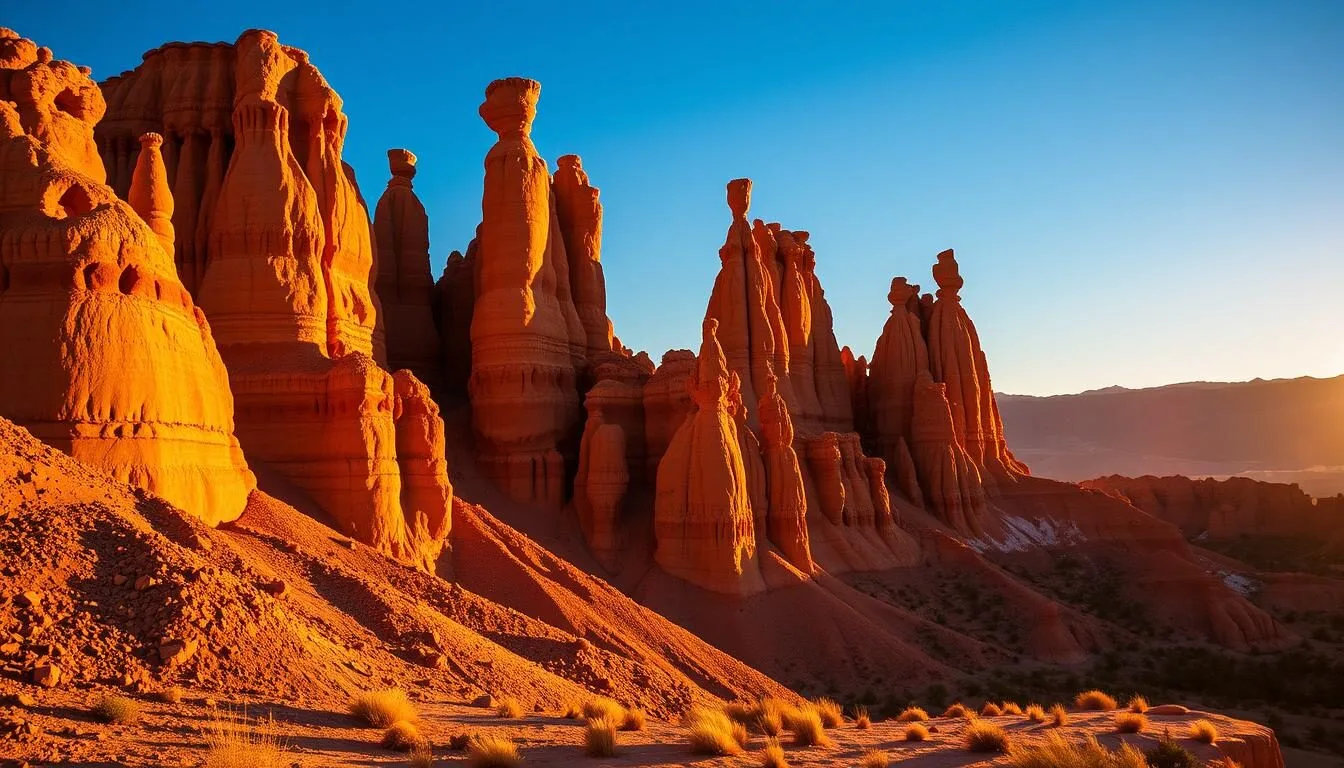
Did you know that Cathedral Gorge State Park’s otherworldly formations were created when a massive freshwater lake drained thousands of years ago, leaving behind soft bentonite clay that continues to be sculpted by erosion with every rainfall? This geological wonder in eastern Nevada offers some of the most unique slot canyon experiences in the American Southwest, with narrow passages so tight you’ll sometimes need to squeeze, crawl, and climb to navigate them.
Getting There & Planning Your Journey
Cathedral Gorge State Park is located in eastern Nevada, approximately 165 km (102 miles) north of Las Vegas. The closest major airports are McCarran International Airport in Las Vegas (2.5-hour drive) and Cedar City Regional Airport in Utah (1.5-hour drive).
From Las Vegas, take I-15 North and then Highway 93 North. From Cedar City, Utah, head west on Highway 56, which becomes Highway 319 when you cross into Nevada, then connect to Highway 93. The park has two entrances off Highway 93: the northern entrance via Miller Point Road and the southern entrance via Cathedral Gorge State Park Road, which are 3.4 km (2.1 miles) apart.
The backcountry access roads within and around Cathedral Gorge vary in condition. The main park roads are paved and accessible to all vehicles, while some of the more remote areas require high-clearance vehicles, especially after rain when the bentonite clay becomes extremely slippery.

Best Time to Visit & Weather Tips
Spring (March to May) and fall (September to October) are ideal times to visit Cathedral Gorge State Park and explore its backcountry access roads. During these seasons, daytime temperatures typically range from 15-26°C (60-80°F), perfect for hiking and exploring the slot canyons.
Recommended Seasons
- Spring (March-May): Mild temperatures, occasional wildflower blooms, and fewer visitors
- Fall (September-October): Pleasant temperatures, stable weather, and beautiful golden light for photography
- Winter (November-February): Occasionally stunning with light snow dusting the formations, but can be quite cold
Seasons to Avoid
- Summer (June-August): Daytime temperatures regularly exceed 35°C (95°F), making hiking uncomfortable and potentially dangerous
- Rainy periods (regardless of season): The clay becomes extremely slippery and backcountry roads may become impassable
For photographers, early morning and late afternoon provide the most dramatic lighting when the formations cast deep shadows and are bathed in golden light. The park is also known for its exceptionally dark skies, making it an excellent destination for stargazing and night photography.

Getting Around Locally
Navigating Cathedral Gorge State Park and its backcountry access roads requires some planning. The main park road is paved and accessible to all vehicles, connecting the visitor center, campground, and primary trailheads.
For exploring beyond the main areas, here’s what you need to know about the backcountry access roads:
- Miller Point Road: A well-maintained gravel road accessible to most vehicles that leads to the spectacular Miller Point Overlook
- Juniper Draw Access: Mostly unpaved but generally passable in standard vehicles when dry
- Eagle Point Trail Access: Requires careful driving but accessible to most vehicles
- Remote Backcountry Areas: Some of the more distant formations require high-clearance vehicles or hiking in from designated parking areas
All visitors should check road conditions at the visitor center before venturing onto backcountry roads, especially after rain when the bentonite clay becomes extremely slippery and roads can quickly become impassable even for 4WD vehicles.

Where to Stay
Accommodation options in and around Cathedral Gorge State Park range from camping under star-filled skies to comfortable lodging in nearby towns.
Camping in Cathedral Gorge
The park features 22 developed campsites available on a first-come, first-served basis (though a reservation system is being implemented). Each site includes:
- Picnic table and fire ring
- Shade ramadas
- Access to restrooms with flush toilets and hot showers
- Water and electric hookups
- Fee: Approximately $30 per night (as of 2023)
Nearby Accommodations
If camping isn’t your preference, consider these nearby options:
- Pioche (25 minutes north): Historic mining town with several motels and B&Bs
- Caliente (30 minutes south): Small town with basic motels and amenities
- Panaca (5 minutes south): Limited accommodation but closest to the park
- Cedar City, UT (80 minutes east): Larger city with full range of hotels and services
For the full Cathedral Gorge experience, camping within the park is highly recommended. The exceptionally dark night skies offer spectacular stargazing opportunities, and staying in the park allows you to explore the formations during the magical early morning and late evening hours when the light is most dramatic.

Dining & Local Cuisine
Cathedral Gorge State Park is located in a remote area of Nevada, so dining options are limited but authentic. There are no food services within the park itself, so you’ll need to plan accordingly.
Nearby Dining Options
- Pioche (25 minutes north): Several small restaurants including the Historic Silver Cafe offering classic American fare and local specialties
- Panaca (5 minutes south): Limited options but has a small general store for basic supplies
- Caliente (30 minutes south): A few family restaurants and cafes serving hearty meals
Local Specialties
Eastern Nevada cuisine reflects its ranching heritage and includes:
- Nevada-raised beef dishes
- Hearty breakfast platters
- Homemade pies and desserts
- Simple but satisfying American comfort food
Most visitors to Cathedral Gorge bring picnic supplies or cooking equipment if camping. The park has several picnic areas with tables and shade ramadas, including a historic picnic area built by the Civilian Conservation Corps in the 1930s near the Cathedral Caves.

Attractions, Sightseeing & Activities
Cathedral Gorge State Park offers a variety of unique attractions and activities centered around its spectacular geological formations. Here are the must-see spots and experiences when exploring the park’s backcountry access roads:
Slot Canyons & Caves
The park’s most distinctive features are its narrow slot canyons locally known as “caves” (though they’re not true caves). Don’t miss:
- Moon Caves: The first formation you’ll encounter, featuring an amphitheater-like curve of eroded spires
- Canyon Caves: Similar to Moon Caves but with different passageways to explore
- Cathedral Caves: Located near the picnic area, these narrow slots sometimes require crawling and squeezing to navigate
Scenic Viewpoints
- Miller Point Overlook: The most photographed location in the park, offering panoramic views of the formations
- Eagle Point: Provides expansive views of the valley and surrounding landscape
- CCC Water Tower: A historic structure built in the 1930s with views of the surrounding area

Hiking Trails
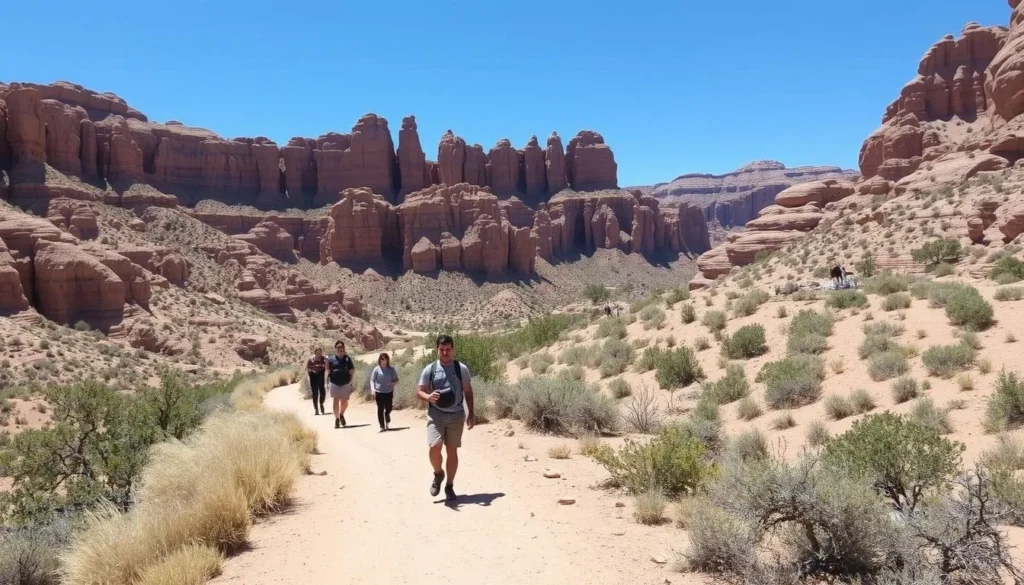
Several well-marked trails allow you to explore different aspects of the park:
- Miller Point Trail: 0.8 km (0.5 miles) one-way, moderate difficulty with stairs, leading to spectacular views
- Juniper Draw Loop: 4.5 km (2.8 miles) loop, easy difficulty, traversing the valley floor and formations
- Nature Loop: 0.8 km (0.5 miles) loop, easy difficulty, with interpretive signs about local ecology
- Eagle Point Trail: 1.6 km (1 mile) out-and-back, easy difficulty, offering panoramic views
For those interested in backcountry exploration, the park’s access roads lead to less-visited areas where you can discover formations and perspectives away from the main trails. Always check conditions before venturing onto unpaved roads.
Museums, Cultural Spots & Festivals
While Cathedral Gorge State Park is primarily known for its natural features, the area offers several cultural and historical points of interest that enhance your visit.
Within the Park
- Visitor Center: Features exhibits on the park’s geology, ecology, and human history
- CCC Structures: The picnic area, water tower, and other facilities built by the Civilian Conservation Corps in the 1930s offer a glimpse into Depression-era public works
- Interpretive Displays: Located throughout the park, these provide insights into the area’s natural and cultural history
Nearby Cultural Attractions
- Pioche: Historic mining town with preserved 19th-century buildings and the Lincoln County Museum
- Thompson Opera House: Built in 1873, this historic venue in Pioche occasionally hosts events
- Million Dollar Courthouse: Famous historical building in Pioche that ended up costing far more than planned
- Boot Hill Cemetery: Historic graveyard in Pioche dating from the town’s wild mining days
Annual Events
- Cathedral Gorge Star Party (Spring): Organized by the Las Vegas Astronomical Society, offering guided stargazing
- Labor Day Celebration (September): Community events in nearby Pioche and Caliente
- Nevada State Parks Week (June): Special programs and activities throughout the park
The park’s rich history includes its use by nomadic Native Americans for seasonal hunting and gathering for over 10,000 years, followed by European settlement in the late 19th century. The area was named “Cathedral Gulch” in the 1890s by Mrs. Earl Godbe, who noted the resemblance of the formations to cathedrals.
Nature & Outdoor Experiences
Cathedral Gorge State Park offers exceptional natural experiences beyond its famous geological formations. The park’s diverse ecosystem and dramatic landscape provide numerous opportunities for nature enthusiasts.
Wildlife Viewing
The park is home to a variety of desert wildlife. Keep an eye out for:
- Mammals: Black-tailed jackrabbits, cottontail rabbits, kit foxes, coyotes, and kangaroo rats
- Birds: Ravens, kestrels, roadrunners, black-throated sparrows, and during migration, tanagers, warblers, and hummingbirds
- Reptiles: Various lizard and snake species adapted to the desert environment
Plant Life
Despite the arid conditions, the park supports diverse desert vegetation:
- Juniper trees dotting the landscape
- Sagebrush and rabbitbrush
- Desert wildflowers that bloom briefly after rain
- Various cacti and yucca plants

Photography
Cathedral Gorge is a photographer’s paradise, offering unique opportunities:
- Golden hour lighting that creates dramatic shadows among the formations
- Slot canyons with interesting light patterns
- Night sky photography in one of Nevada’s darkest areas
- Macro opportunities with desert plants and wildlife
Geology Exploration
The park’s fascinating geology tells the story of ancient volcanic activity and erosion:
- Bentonite clay formations that continue to change with each rainfall
- Evidence of the ancient lake that once filled the valley
- Volcanic ash layers visible in the canyon walls
- Ongoing erosion processes that you can observe in real-time during rare rain events
For the most rewarding nature experiences, explore the backcountry access roads early in the morning when wildlife is most active and the light is soft. The park’s remote location and minimal light pollution also make it an exceptional place for stargazing and observing the Milky Way on clear nights.

Safety, Etiquette & Local Customs
Visiting Cathedral Gorge State Park safely requires preparation and awareness of the unique desert environment. Follow these guidelines to ensure a safe and respectful experience:
Safety Considerations
- Water: Bring at least 4 liters (1 gallon) per person per day; potable water is available only at the campground
- Sun Protection: Wear sunscreen, hat, sunglasses, and lightweight, long-sleeved clothing
- Flash Floods: Never enter slot canyons if rain is in the forecast, even miles away
- Navigation: Cell service is limited; bring physical maps and inform someone of your plans
- Vehicle Preparedness: Carry extra water, food, and emergency supplies when exploring backcountry roads
- Wildlife: Watch for rattlesnakes and scorpions, especially in warm weather
Park Etiquette
- Stay on designated trails and roads to protect the fragile desert ecosystem
- Do not climb on or damage the soft bentonite clay formations
- Pack out all trash and follow Leave No Trace principles
- Keep pets on leashes no longer than 2 meters (6 feet) and clean up after them
- Respect quiet hours in the campground (typically 10 PM to 6 AM)
- Drones are not permitted within the park
Local Customs
The communities surrounding Cathedral Gorge are small, rural Nevada towns with a strong sense of self-reliance and western heritage:
- Greet locals you encounter; a friendly wave is customary when passing on rural roads
- Support local businesses in Pioche, Panaca, and Caliente
- Respect private property; much of the land surrounding the park is privately owned
- Be prepared for limited services; gas stations and stores close early
The park entrance fee is $5 for Nevada residents and $10 for non-residents. Annual passes are available for frequent visitors. These fees help maintain the park’s facilities and protect its natural resources.

Visitor Comments About Cathedral Gorge
“Cathedral Gorge’s backcountry roads led us to some of the most photogenic slot canyons I’ve ever seen. The Miller Point Trail at sunset was absolutely magical – the way the light hit those spires created shadows and textures that made my photographs look almost three-dimensional. Don’t miss exploring the ‘caves’ early in the morning when you’ll likely have them all to yourself.”
“We visited Cathedral Gorge on our American Southwest road trip and were blown away by how uncrowded it was compared to the national parks. The backcountry access roads were well-maintained enough for our rental car, and we spent hours exploring the slot canyons. The campground was peaceful with amazing stargazing. Just be prepared for the heat if you visit outside spring or fall!”
“As a geology enthusiast, Cathedral Gorge was a dream destination. The formations tell such a clear story of the area’s volcanic past and subsequent erosion. We took the Juniper Draw Loop and were constantly stopping to examine different features. The visitor center staff provided excellent information about which backcountry roads were accessible in our vehicle. Highly recommend for anyone interested in unique geological landscapes.”
Additional Nearby Destinations
Cathedral Gorge State Park makes an excellent base for exploring other remarkable destinations in eastern Nevada and southwestern Utah. Consider adding these nearby attractions to your itinerary:
Within 50 km (30 miles)
- Kershaw-Ryan State Park: Lush canyon oasis with hiking trails and picnic areas
- Echo Canyon State Park: Reservoir for fishing and boating, plus hiking opportunities
- Pioche Historic District: Well-preserved mining town with museums and historic buildings
- Rainbow Canyon: Scenic drive with colorful rock formations and petroglyphs
Within 160 km (100 miles)
- Great Basin National Park: Ancient bristlecone pines, Lehman Caves, and Wheeler Peak
- Valley of Fire State Park: Spectacular red sandstone formations and petroglyphs
- Cedar Breaks National Monument: Natural amphitheater with colorful spires and hoodoos
- Beaver Dam State Park: Remote wilderness area with streams and hiking
Many visitors combine Cathedral Gorge with a larger tour of Nevada’s state parks or as part of a regional road trip through the Great Basin Desert. The relatively close proximity to destinations in southwestern Utah also makes it easy to include in a multi-state exploration of the American Southwest.

Practical Travel Tips
Make the most of your visit to Cathedral Gorge and its backcountry access roads with these essential tips:
Before You Go
- Download offline maps as cell service is limited in the area
- Check the weather forecast and road conditions, especially if planning to use backcountry roads
- Fill your gas tank before heading to the park; the nearest reliable gas stations are in Pioche and Caliente
- Pack plenty of water, snacks, and a first aid kit
- Bring cash for park entrance fees as credit card systems may be unavailable
Photography Tips
- Plan shoots for early morning or late afternoon when light and shadows are most dramatic
- Bring a tripod for low-light conditions in slot canyons
- Wide-angle lenses work well for capturing the narrow slot canyons
- Consider bringing a polarizing filter to enhance the blue sky against the tan formations
- For night photography, bring a sturdy tripod and headlamp with red light mode
With Pets
- Dogs are allowed on leashes throughout the park
- Bring booties to protect paws from hot sand and sharp plants
- Carry extra water specifically for your pet
- Be aware that some narrow slots may be difficult for larger dogs to navigate
- Watch for spiny plants that can injure paws
Cathedral Gorge Visitor Center: +1 (775) 728-4460. Open daily from 9 AM to 4:30 PM, with reduced hours during winter months. Staff can provide current information about backcountry road conditions and recommended routes based on your vehicle type and interests.

Discover Your Own Cathedral Gorge Adventure
Cathedral Gorge State Park’s backcountry access roads lead to some of Nevada’s most extraordinary landscapes – places where time and erosion have sculpted a masterpiece of nature’s artistry. From squeezing through narrow slot canyons to watching the sunset paint the spires in golden hues from Miller Point, this hidden gem offers experiences that rival its more famous neighbors. Whether you’re a photographer chasing perfect light, a geology enthusiast reading the earth’s history in rock layers, or simply a traveler seeking solitude in a spectacular setting, Cathedral Gorge rewards those who venture off the beaten path. Pack your sense of adventure, respect the fragile desert environment, and prepare to be amazed by this remarkable corner of the Silver State.
The above is subject to change.
Check back often to TRAVEL.COM for the latest travel tips and deals.




0 Comments