

Nestled in the vast Nevada desert just 40 km (25 miles) east of Fallon lies one of the Silver State’s best-kept secrets: the Dead Camel Mountains. Despite their somewhat morbid name, these mountains are teeming with life and adventure. What many visitors don’t realize is that this remote mountain range sits atop one of Nevada’s largest untapped geothermal fields, with underground temperatures reaching a scorching 200°C (392°F). This hidden gem attracts fewer than 5,000 visitors annually, offering a pristine wilderness experience far from the crowds of more famous Nevada destinations.
Getting There & Planning Your Journey
The Dead Camel Mountains are remote but accessible with proper planning. Most visitors approach from Fallon, Nevada, which serves as the gateway to this wilderness area.
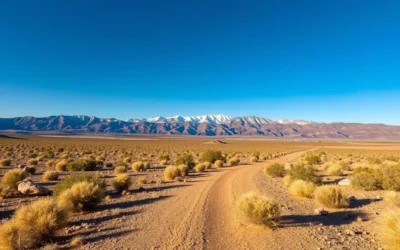
The approach road to Dead Camel Mountains offers stunning desert vistas
Closest Airports
- Reno-Tahoe International Airport (RNO) – 125 km (78 miles) west, approximately 1.5-hour drive
- Las Vegas McCarran International Airport (LAS) – 580 km (360 miles) southeast, approximately 6-hour drive
- Salt Lake City International Airport (SLC) – 680 km (423 miles) northeast, approximately 7-hour drive
Main Access Routes
The Dead Camel Mountains are accessible primarily via Highway 50 (known as “The Loneliest Road in America”) and several unpaved roads:
- From Reno: Take I-80 East to Fernley, then US-50 East to Fallon. From Fallon, head east on US-50 for approximately 24 km (15 miles), then turn north onto Sand Springs Road.
- From Las Vegas: Take US-95 North to Fallon, then follow directions as above.
- From Salt Lake City: Take I-80 West to Fernley, then US-50 East to Fallon, following directions as above.
The final approach requires driving on unpaved roads for 8-16 km (5-10 miles). While most of these roads are passable in a standard vehicle during dry conditions, a high-clearance vehicle is strongly recommended, and 4WD is necessary after rain or during winter months.
Best Time to Visit & Weather Tips
The Dead Camel Mountains experience extreme desert conditions, with dramatic temperature variations between seasons and even between day and night. Planning your visit during the right season is crucial for both comfort and safety.
Best Time to Visit Dead Camel Mountains
Recommended Seasons
- Spring (March-May) – Mild temperatures between 15-26°C (59-79°F), potential wildflower blooms after winter rains
- Fall (September-November) – Pleasant temperatures between 10-24°C (50-75°F), clear skies, and stunning sunset colors
- Winter (December-February) – For experienced desert travelers only; daytime temperatures 4-10°C (39-50°F), but nights can drop below freezing
Seasons to Avoid
- Summer (June-August) – Extreme heat with temperatures regularly exceeding 38°C (100°F), dangerous conditions with limited shade and water
- July – The hottest month with average highs of 40°C (104°F) and potential for dangerous heat waves
- Rainy periods – Flash floods can occur after heavy rain, making roads impassable and hiking dangerous

Spring brings a surprising array of wildflowers to the Dead Camel Mountains
Seasonal Weather Overview
| Season | Temperature Range | Conditions | Visitor Level |
| Spring (Mar-May) | 15-26°C (59-79°F) day 2-10°C (36-50°F) night |
Mild days, cool nights, possible wildflowers, occasional rain | Moderate |
| Summer (Jun-Aug) | 32-40°C (90-104°F) day 15-21°C (59-70°F) night |
Extremely hot, dry, dangerous conditions, rare thunderstorms | Very low |
| Fall (Sep-Nov) | 10-24°C (50-75°F) day 0-10°C (32-50°F) night |
Pleasant days, cool nights, clear skies, stable weather | Moderate to high |
| Winter (Dec-Feb) | 4-10°C (39-50°F) day -7-0°C (19-32°F) night |
Cold days, freezing nights, occasional snow at higher elevations | Low |
Weather Tip: The Dead Camel Mountains can experience temperature variations of up to 20°C (36°F) between day and night. Always pack layers, even in warmer months. Check weather forecasts before your trip, as desert conditions can change rapidly.
Getting Around Locally
The Dead Camel Mountains cover approximately 100 square km (39 square miles) of rugged terrain. Navigating this remote area requires preparation and the right vehicle.
By Vehicle
A personal vehicle is essential for exploring the Dead Camel Mountains area. There is no public transportation or shuttle service available.
Standard Vehicle
With a regular car, you can access:
- Main access roads during dry conditions
- Sand Springs Road parking area
- Grimes Point Archaeological Site nearby
- Highway 50 viewpoints
4WD High-Clearance Vehicle
For exploring deeper into the mountains, you’ll need:
- Dead Camel Trail
- Hidden Valley access roads
- Salt Wells Basin routes
- Carson Sink overlooks
- Old mining roads throughout the range
Important: Always check road conditions before venturing onto unpaved roads. Flash floods can quickly change road conditions, and summer heat can cause vehicle breakdowns. Carry extra water, food, and emergency supplies. Cell service is extremely limited in the area.
On Foot
The best way to experience the Dead Camel Mountains is on foot. Several unmarked trails wind through the range, offering access to viewpoints, geological features, and wildlife viewing opportunities.

Exploring the narrow canyons of Dead Camel Mountains reveals hidden geological wonders
Key hiking considerations:
- Trail Marking: Most trails are not officially marked. Bring GPS, maps, and compass.
- Distances: Plan shorter hikes than you might elsewhere due to rough terrain and heat.
- Water: There are no reliable water sources in the mountains. Carry at least 4 liters (1 gallon) per person per day.
- Navigation: Landmarks can look similar; take photos or notes of your route as you go.
Where to Stay
The Dead Camel Mountains are in a remote area with limited accommodation options nearby. Most visitors either camp in the area or stay in Fallon, the closest town with services.
Camping Options
There are no developed campgrounds within the Dead Camel Mountains themselves, but dispersed camping is permitted on the surrounding Bureau of Land Management (BLM) lands with some restrictions:
- Dispersed Camping: Free camping is allowed on most BLM land surrounding the mountains. Practice Leave No Trace principles.
- Sand Springs Recreation Area: Located near the mountains, this area offers primitive camping with no facilities.
- Cold Springs Station: Historic site about 30 km (19 miles) east with primitive camping areas.

Camping near the Dead Camel Mountains offers spectacular sunset views
Camping Tip: There is no water available in the camping areas. Bring all the water you’ll need plus extra for emergencies. Summer temperatures make camping uncomfortable and potentially dangerous. Spring and fall offer the best camping conditions.
Nearby Accommodations
For those preferring indoor accommodations, Fallon (40 km/25 miles west) is the best option:
Hotels in Fallon
- Holiday Inn Express & Suites Fallon – Modern accommodations with pool and breakfast
- Best Western Fallon Inn & Suites – Comfortable rooms with amenities
- Comfort Inn Fallon – Mid-range option with good reviews
- Motel 6 Fallon – Budget-friendly option
Alternative Options
- Vacation Rentals – Several private homes and cabins available in Fallon area
- Middlegate Station – Historic motel and restaurant 45 km (28 miles) east on Highway 50
- Fernley – Additional accommodation options 77 km (48 miles) west
Dining & Local Cuisine
There are no dining establishments within the Dead Camel Mountains area. Visitors should plan to bring all food and water needed during their exploration. The nearest restaurants and grocery stores are in Fallon.
Dining in Fallon
Fallon offers a variety of dining options, from fast food to sit-down restaurants:
- The Slanted Porch – Farm-to-table cuisine featuring locally sourced ingredients
- Courtyard Cafe & Bakery – Breakfast and lunch spot with homemade pastries
- The Wok – Chinese cuisine with generous portions
- Jerry’s Restaurant – Classic American diner fare
- Maine Street Cafe – Comfort food in a casual setting
- La Fiesta – Mexican restaurant with authentic dishes
Grocery and Supplies
Stock up on supplies in Fallon before heading to the Dead Camel Mountains:
- Walmart Supercenter – Large selection of groceries and camping supplies
- Safeway – Full-service grocery store
- Fallon Food Hub – Local produce and specialty items
- Big 5 Sporting Goods – Outdoor equipment and supplies

Packing a picnic lunch allows you to enjoy meals with spectacular mountain views
Water
The most critical “food” item for your Dead Camel Mountains trip is water. There are no reliable water sources in the mountains, and the arid climate causes rapid dehydration.
Water Requirements: Experts recommend carrying at least 4 liters (1 gallon) of water per person per day for desert hiking. Double this amount if you’re camping or hiking during warmer months. Consider bringing electrolyte supplements to replace salts lost through sweating.
Attractions, Sightseeing & Activities
Despite their remote location, the Dead Camel Mountains offer numerous attractions for outdoor enthusiasts, photographers, and nature lovers.
Top Attractions in Dead Camel Mountains

The panoramic views from Dead Camel Mountains extend for miles across the Nevada desert
Camel’s Hump Peak
The highest point in the range at 1,525 m (5,003 ft), offering spectacular 360-degree views of the surrounding desert. On clear days, you can see all the way to the Sierra Nevada mountains to the west. The hike to the summit is challenging but rewarding.
Don’t Miss: Sunrise from the peak creates dramatic shadows across the desert floor.
Hidden Canyon
A narrow slot canyon with fascinating rock formations and evidence of ancient water flow. The canyon walls display interesting erosion patterns and occasionally host desert wildflowers after spring rains.
Don’t Miss: Look for the natural arch formation about halfway through the canyon.
Geothermal Features
The mountains sit atop a significant geothermal field, with several areas showing evidence of this underground heat. Small steam vents, mineral deposits, and unusually warm ground can be found in the southern section of the range.
Don’t Miss: The colorful mineral deposits near Steam Valley create a rainbow effect on the rocks.
Ancient Petroglyphs
Several rock art sites can be found throughout the range, with the highest concentration on the western slopes. These petroglyphs were created by indigenous peoples hundreds or even thousands of years ago.
Don’t Miss: The “Camel Panel” featuring what appears to be camel-like figures, possibly dating back to when camels roamed North America.
Hiking Trails
While there are no officially maintained trails in the Dead Camel Mountains, several established routes are followed by regular visitors:
| Trail | Difficulty | Distance (Round Trip) | Description |
| Camel’s Hump Summit | Difficult | 8 km (5 miles) | Steep climb to the highest point with spectacular views |
| Hidden Canyon Loop | Moderate | 5 km (3.1 miles) | Scenic route through a narrow canyon with interesting rock formations |
| Petroglyph Ridge | Moderate | 6.5 km (4 miles) | Trail passing several ancient rock art sites on the western slopes |
| Desert Wash Trail | Easy to Moderate | 4 km (2.5 miles) | Follows a dry wash with minimal elevation gain, good for wildlife spotting |
| Geothermal Loop | Moderate | 7 km (4.3 miles) | Passes several geothermal features and colorful mineral deposits |

Ancient petroglyphs throughout the range offer glimpses into the area’s prehistoric human inhabitants
Museums, Cultural Spots & Festivals
While the Dead Camel Mountains themselves don’t have formal museums or cultural facilities, the surrounding area offers several opportunities to learn about the region’s rich history and culture.
Nearby Museums and Cultural Sites
- Churchill County Museum (Fallon) – Comprehensive exhibits on local history, including Native American artifacts, pioneer settlements, and natural history displays. The museum offers insights into the geological formation of the Dead Camel Mountains and the indigenous peoples who once inhabited the area.
- Grimes Point Archaeological Site – Located just 16 km (10 miles) west of the Dead Camel Mountains, this significant archaeological site features hundreds of petroglyphs dating back 8,000 years. A self-guided interpretive trail explains the site’s importance.
- Hidden Cave – Near Grimes Point, this prehistoric site was used for storage by Native Americans. Tours are offered twice monthly by the Bureau of Land Management.
- Stillwater National Wildlife Refuge – While primarily a nature preserve, this refuge also showcases the cultural history of the Paiute and Shoshone peoples who utilized the wetlands for thousands of years.
Learn about the fascinating geological history of the region at the Churchill County Museum
Cultural History
The Dead Camel Mountains have a rich cultural history spanning thousands of years:
Indigenous Heritage
The mountains and surrounding areas were traditionally used by Northern Paiute people, who left behind petroglyphs and other archaeological evidence. These indigenous peoples had deep knowledge of desert survival and utilized the area’s limited resources with remarkable ingenuity.
Mining History
During the late 19th century, prospectors explored the Dead Camel Mountains looking for valuable minerals. While no major strikes occurred here, several small mining operations left behind remnants that can still be seen today, including abandoned shafts and primitive roads.
Local Events and Festivals
While no events take place within the mountains themselves, nearby Fallon hosts several annual events that celebrate the region’s culture and heritage:
- Hearts of Gold Cantaloupe Festival (August) – Celebrating Fallon’s famous cantaloupes, this festival includes food, music, and cultural displays.
- Fallon Lights Up the Night (December) – Holiday celebration with parade and community events.
- Churchill County Fair (July/August) – Traditional county fair with agricultural exhibits and entertainment.
- Lattin Farms Fall Festival (October) – Seasonal celebration with pumpkin patch, corn maze, and harvest activities.
Nature & Outdoor Experiences
The Dead Camel Mountains offer a pristine desert wilderness experience with diverse ecosystems and unique geological features.

Spring rains transform the desert landscape with vibrant wildflower blooms
Wildlife Viewing
Despite the harsh desert conditions, the Dead Camel Mountains support a surprising variety of wildlife. The best times for wildlife viewing are early morning and late afternoon when temperatures are cooler and animals are more active.
Common Wildlife
- Desert Bighorn Sheep – Occasionally spotted on higher rocky slopes
- Coyotes – Common throughout the range
- Kit Foxes – Small nocturnal foxes adapted to desert life
- Jackrabbits – Abundant in the lower elevations
- Kangaroo Rats – Nocturnal rodents that rarely need to drink water
- Desert Tortoises – Protected species occasionally seen in spring
Bird Species
- Golden Eagles – Soaring above the mountains
- Prairie Falcons – Nesting in cliff faces
- Chukar Partridges – Introduced game birds now common
- Great Horned Owls – Resident in rocky areas
- Sage Thrashers – Known for their varied songs
- Loggerhead Shrikes – Distinctive black mask marking
Geology
The Dead Camel Mountains showcase fascinating geological features formed over millions of years:
- Volcanic Origins – The range was formed primarily through volcanic activity approximately 25 million years ago.
- Mineral Deposits – Unique mineral concentrations create colorful striations in the rock faces.
- Erosion Features – Wind and water erosion have carved interesting formations, including natural arches and balanced rocks.
- Geothermal Activity – The mountains sit atop a significant geothermal field, with evidence visible in several locations.
Photography
The Dead Camel Mountains offer exceptional photography opportunities in all seasons. The landscape is particularly photogenic during the golden hours around sunrise and sunset when the low-angle light creates dramatic shadows and brings out the rich colors of the desert.

Sunset transforms the mountains with a spectacular display of colors
Photography Hotspots:
- Camel’s Hump Summit – Panoramic views, especially at sunrise
- Hidden Canyon – Dramatic light and shadow play in early morning or late afternoon
- Mineral Deposits – Colorful formations best photographed in soft light
- Desert Wildflowers – Spectacular macro opportunities after spring rains
- Night Sky – Minimal light pollution makes this an excellent location for astrophotography
Photography Tip: The clear desert air can be deceptive when judging distances. Use a polarizing filter to reduce haze and bring out the rich colors of the landscape. For night photography, bring a sturdy tripod and remote shutter release.
Safety, Etiquette & Local Customs
The remote and rugged nature of the Dead Camel Mountains requires visitors to be well-prepared and respectful of both the environment and local customs.
Safety Considerations
Desert Safety
- Carry at least 4 liters (1 gallon) of water per person per day
- Avoid hiking between 10 AM and 4 PM in summer
- Wear light-colored, loose-fitting clothing and a wide-brimmed hat
- Apply sunscreen regularly, even on cloudy days
- Know the signs of heat illness: headache, dizziness, nausea, confusion
- Tell someone your itinerary before venturing into remote areas
Vehicle Safety
- Ensure your vehicle is in good condition before entering the area
- Carry extra water, food, and emergency supplies
- Stay on designated roads and trails
- Check weather forecasts for flash flood warnings
- Carry a spare tire and know how to change it
- Have paper maps as backup (don’t rely solely on GPS)

Staying hydrated is crucial when exploring the Dead Camel Mountains
Environmental Etiquette
Help preserve the Dead Camel Mountains for future generations by following these guidelines:
- Leave No Trace – Pack out all trash, including food scraps and toilet paper
- Stay on Existing Paths – Desert soils and plants are fragile; avoid creating new trails
- Respect Wildlife – Observe animals from a distance and never feed them
- Protect Cultural Sites – Do not touch or disturb petroglyphs, artifacts, or historic structures
- Minimize Campfire Impact – Use a camp stove instead of building fires when possible
- Respect Other Visitors – Preserve the quiet and solitude of the wilderness experience
Cell Service and Communication
Cell service is extremely limited within the Dead Camel Mountains. Coverage exists occasionally at higher elevations, but most of the area has no service. Plan accordingly:
- Download offline maps before your visit
- Bring physical maps as backup
- Consider renting a satellite phone or emergency beacon for remote trips
- Tell someone your itinerary and expected return time
Emergency Contact: In case of emergency, contact the Churchill County Sheriff’s Office at +1 (775) 423-3116 or call 911 (though reception may be limited). For non-emergencies, the Bureau of Land Management Carson City District Office can be reached at +1 (775) 885-6000.
Visitor Comments About Dead Camel Mountains
“We visited the Dead Camel Mountains during our road trip across Nevada and were amazed by how untouched this area feels. The hike to Camel’s Hump Peak was challenging but worth every step – the views stretched for miles in every direction! We had the entire mountain range to ourselves for most of the day, which is increasingly rare in popular outdoor destinations. Just make sure to bring plenty of water and start your hikes early to avoid the midday heat.”
“As an amateur photographer, I found the Dead Camel Mountains to be a hidden gem. The light at sunrise and sunset creates the most incredible colors on the rock formations. The petroglyphs were fascinating to photograph, and I even spotted a desert bighorn sheep on the higher slopes! The lack of light pollution made for spectacular night sky photography as well. If you’re visiting, I’d recommend spending at least two days to fully appreciate the diverse landscapes and changing light conditions.”
“We camped near the Dead Camel Mountains in early April and were treated to an unexpected wildflower display after some spring rains. The contrast of colorful flowers against the rugged desert backdrop was stunning. Hidden Canyon was our favorite spot – the narrow passages and interesting rock formations made for a fun exploration. The nights were still quite cold, so bring warm layers if you’re camping in spring. Overall, this is a perfect destination for those looking to escape crowds and experience Nevada’s wild desert landscapes.”
Additional Nearby Destinations
The Dead Camel Mountains’ remote location places it within driving distance of several other remarkable destinations that can easily be combined into a longer Nevada road trip.
Sand Mountain Recreation Area
Just 24 km (15 miles) east of the Dead Camel Mountains, this 2-mile-long sand dune rises 180 m (600 ft) above the desert floor. Popular for off-highway vehicle recreation, sandboarding, and photography.
Distance: 24 km (15 miles) east
Travel Time: 30 minutes
Stillwater National Wildlife Refuge
A wetland oasis in the desert, this refuge protects critical habitat for migratory birds. Over 280 bird species have been recorded here, making it a paradise for birdwatchers.
Distance: 48 km (30 miles) northeast
Travel Time: 45 minutes
Grimes Point Archaeological Site
One of Nevada’s most accessible petroglyph sites, featuring hundreds of ancient rock carvings along a short interpretive trail. The nearby Hidden Cave can be visited on guided tours.
Distance: 16 km (10 miles) west
Travel Time: 20 minutes
Lake Lahontan
A reservoir offering water recreation opportunities including boating, fishing, and swimming. The lake covers 10,000 hectares (24,700 acres) when full and features several campgrounds.
Distance: 56 km (35 miles) northwest
Travel Time: 50 minutes
Other Nearby Attractions
- Fallon Naval Air Station – Home of the TOPGUN fighter pilot training school, with occasional air shows open to the public
- Middlegate Station – Historic Pony Express stop and home of the famous “Monster Burger” challenge
- Dixie Valley Hot Springs – Natural hot springs for soaking (primitive, undeveloped)
- Fallon Hearts of Gold Cantaloupe District – Famous for producing some of the sweetest cantaloupes in the world
- Highway 50 – “The Loneliest Road in America” – Historic route passing through stunning landscapes and small towns

The massive dunes at nearby Sand Mountain Recreation Area rise 180 m (600 ft) above the desert floor
Practical Travel Tips
Essential Packing List
Year-Round Essentials
- Reusable water bottles or hydration system
- Wide-brimmed hat
- Sunglasses with UV protection
- High-SPF sunscreen
- Lip balm with SPF
- First aid kit
- Flashlight or headlamp with extra batteries
- Paper maps (don’t rely on digital)
- Snacks and emergency food
- Multi-tool or knife
Seasonal Items
- Spring/Fall: Layers for variable temperatures, light jacket for mornings/evenings
- Summer: Lightweight, light-colored clothing, cooling towels, electrolyte supplements
- Winter: Warm jacket, gloves, hat, thermal layers, hand warmers

Proper preparation with essential gear is crucial for a safe desert adventure
Planning Your Itinerary
One-Day Visit
Focus on the most accessible highlights:
- Hidden Canyon (morning)
- Petroglyph Ridge (midday)
- Desert Wash Trail (afternoon)
Two-Day Visit
Add these locations to your itinerary:
- Camel’s Hump Summit (early morning)
- Geothermal features (afternoon)
- Stargazing (evening)
- Additional nearby attractions
Accessibility Information
The Dead Camel Mountains present significant challenges for visitors with mobility limitations due to the rugged terrain and lack of developed facilities. However, some experiences are more accessible than others:
- Several viewpoints can be reached by vehicle on improved dirt roads
- The lower portion of Desert Wash Trail has relatively flat terrain
- Nearby Grimes Point Archaeological Site has an accessible interpretive trail
BLM Contact: For the most current information about area conditions, road closures, and accessibility, contact the Bureau of Land Management Carson City District Office at +1 (775) 885-6000 before your visit.
Desert Whispers: The Timeless Allure of Dead Camel Mountains
As the sun sets behind the jagged silhouette of the Dead Camel Mountains, painting the sky in fiery oranges and deep purples, visitors often find themselves reflecting on the profound silence and stark beauty of this hidden corner of Nevada. Far from the neon lights and bustling crowds of Las Vegas, these mountains offer something increasingly rare in our modern world: genuine solitude and connection with an untamed landscape.
The Dead Camel Mountains may not boast the fame of Death Valley or the grandeur of the Grand Canyon, but therein lies their special charm. Here, you can still discover unmarked trails, encounter wildlife that rarely sees humans, and stand atop viewpoints where you might be the only visitor that day. The ancient petroglyphs remind us that humans have found meaning in this seemingly harsh environment for thousands of years, while the resilient desert plants and animals demonstrate nature’s remarkable adaptability.
Whether you come for the challenging hikes, the photography opportunities, or simply to experience the healing power of desert silence, the Dead Camel Mountains offer a genuine adventure in an increasingly packaged world. As you plan your journey to this remarkable destination, remember that its very remoteness is both its challenge and its greatest gift. Come prepared, tread lightly, and allow yourself to be transformed by the timeless rhythms of the Nevada desert.
The above is subject to change.
Check back often to TRAVEL.COM for the latest travel tips and deals.




0 Comments