

Did you know that Bosque del Apache hosts over 100,000 migratory birds during peak season, creating one of North America’s most spectacular wildlife spectacles? This 57,331-acre refuge along the Rio Grande transforms each winter into a breathtaking avian paradise where visitors can witness thousands of sandhill cranes and snow geese fill the skies in synchronized flight.
Established in 1939, this natural sanctuary offers much more than just bird watching. From hiking trails and photography opportunities to educational programs and seasonal festivals, Bosque del Apache provides a unique window into the natural world that captivates visitors of all ages.
Getting There & Planning Your Journey

Located approximately 120 km (75 miles) south of Albuquerque, Bosque del Apache is easily accessible by car. The closest major airport is Albuquerque International Sunport, offering numerous car rental options for your journey south.
To reach the refuge, take Interstate 25 south from Albuquerque toward Socorro. From Socorro, continue south on NM-1 for about 15 km (9 miles) to the refuge entrance. The drive from Albuquerque typically takes about 1.5 hours, offering scenic views of the Rio Grande Valley along the way.
The refuge entrance fee is $5 per vehicle, and an annual pass is available for $25. These fees help maintain the refuge and support conservation efforts. The refuge is open daily from one hour before sunrise until one hour after sunset, giving you plenty of time to explore its natural wonders.
Best Time to Visit & Weather Tips
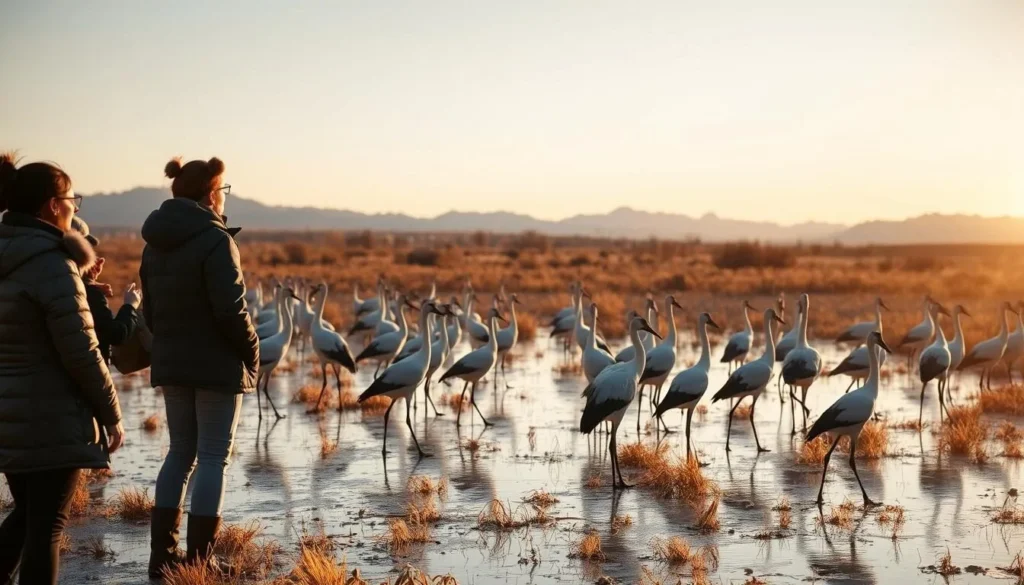
The prime time to visit Bosque del Apache is from mid-November through February, when the refuge hosts thousands of migratory birds. December and January offer the peak experience, with the highest concentration of sandhill cranes and snow geese creating spectacular morning fly-outs and evening fly-ins.
Spring (March-May) brings wildflower blooms and returning songbirds, making it another excellent time for nature enthusiasts. Summer (June-August) temperatures can soar above 35°C (95°F), making early morning visits advisable. Fall (September-October) sees the gradual return of migratory birds and pleasant temperatures around 21°C (70°F).
Winter mornings can be quite cold, often below freezing at 0°C (32°F), warming to about 10-15°C (50-59°F) during the day. Dress in layers, as temperatures can vary significantly throughout the day. Bring a hat, gloves, and warm jacket for dawn and dusk viewing when wildlife activity peaks.
Monthly Weather Overview
| Month | Average High | Average Low | Wildlife Activity | Recommendation |
| November | 17°C (63°F) | 0°C (32°F) | High – Bird migration begins | Excellent time to visit |
| December | 12°C (54°F) | -4°C (25°F) | Peak – Festival of Cranes | Highly recommended |
| January | 13°C (55°F) | -5°C (23°F) | Peak – Maximum bird numbers | Highly recommended |
| February | 16°C (61°F) | -2°C (28°F) | High – Birds begin departing | Very good |
| July | 35°C (95°F) | 17°C (63°F) | Low – Resident species only | Not recommended |
Getting Around Locally

The best way to explore Bosque del Apache is via the 12-mile Auto Tour Loop, which offers excellent wildlife viewing opportunities. The loop is divided into a “Farm Loop” and a “Marsh Loop,” each providing unique habitats and wildlife sightings. Pull-offs and observation platforms along the route allow for extended viewing and photography.
For those who prefer a more active experience, the refuge features 12 hiking trails ranging from easy boardwalks to more challenging paths. The Marsh Overlook Trail (0.5 miles) and the Rio Viejo Trail (1.5 miles) are particularly popular for their scenic views and wildlife spotting opportunities.
Bicycling is permitted on the refuge’s gravel roads, with the Low Flow Conveyance Channel East Service Road offering nearly 11 miles of relaxed riding with minimal vehicle traffic. Remember that pets have seasonal restrictions, so check current rules before bringing your furry companions.
Where to Stay

While there’s no lodging within the refuge itself, nearby Socorro (15 minutes north) offers several accommodation options. Budget-conscious travelers can choose from national chain hotels like Best Western, Days Inn, and Super 8, while those seeking local charm might prefer the historic Val Verde Hotel in downtown Socorro.
For a more immersive experience, consider San Antonio, just 8 km (5 miles) north of the refuge. The Owl Bar & Cafe offers simple rooms above their famous restaurant, placing you minutes from the morning fly-out spectacle.
RV enthusiasts and campers can find sites at Bosque Birdwatchers RV Park in San Antonio or the more developed KOA campground in Socorro. For a rustic experience, BLM land south of the refuge offers primitive camping options with no facilities.
Dining & Local Cuisine

The small town of San Antonio, just north of the refuge, is home to the world-famous Owl Bar & Cafe, renowned for its green chile cheeseburgers that have attracted visitors for generations. This historic establishment offers authentic New Mexican cuisine in a rustic setting.
In Socorro, you’ll find a wider range of dining options, from local favorites like Sofia’s Kitchen and El Camino Restaurant serving New Mexican specialties to familiar chains for those seeking comfort food. Don’t miss the opportunity to try local specialties featuring red and green chile – the official state question is “Red or green?” referring to your chile preference.
For early risers heading to catch the morning fly-out, pack breakfast or stop at the Buckhorn Tavern in San Antonio, which opens early during peak season. The refuge itself has no food services, so bringing water and snacks is essential for a day of exploration.
Attractions, Sightseeing & Activities

Auto Tour Route
The 12-mile Auto Tour Loop is the refuge’s main attraction, offering excellent wildlife viewing from the comfort of your vehicle. The one-way gravel roads wind through wetlands, fields, and desert landscapes, with numerous pull-offs for observation and photography. The loop is accessible year-round from one hour before sunrise to one hour after sunset.
Wildlife Watching
Bosque del Apache is home to nearly 400 bird species throughout the year. Winter brings the spectacular sight of thousands of sandhill cranes and snow geese, while spring and summer offer opportunities to spot nesting birds, mammals like mule deer and coyotes, and reptiles basking in the sun. The Flight Deck near the visitor center is an excellent spot for observing the morning fly-out and evening fly-in of large bird flocks.
Photography
The refuge is a photographer’s paradise, offering stunning opportunities to capture wildlife in their natural habitat. The golden light of early morning and late afternoon creates magical conditions for photography. Popular spots include the Flight Deck, Farm Loop ponds, and the Marsh Loop observation platforms.
Hiking
Twelve nature trails ranging from easy boardwalks to moderate hikes allow visitors to explore different habitats. The Marsh Overlook Trail offers excellent wetland views, while the Canyon National Recreation Trail provides a more challenging 2.2-mile hike through desert terrain with panoramic vistas.
Birding
With nearly 400 species recorded, the refuge is a premier birding destination. Winter brings sandhill cranes and snow geese, while spring migration brings shorebirds and warblers. Summer residents include roadrunners and various raptors.
Fishing
Seasonal fishing is permitted from April 1 to September 30 in designated areas, including a 30-hectare (74-acre) wetland with a universally accessible boardwalk. Catfish, white bass, and carp are common catches.
Educational Programs
The refuge offers ranger-led programs, including Wildlife Trek tours that provide in-depth exploration with knowledgeable naturalists. These 3-hour tours have limited space, so advance registration is recommended.
Museums, Cultural Spots & Festivals

Festival of the Cranes
The annual Festival of the Cranes in December is the refuge’s signature event, drawing nature enthusiasts from around the world. This four-day celebration includes guided tours, photography workshops, bird identification classes, and lectures by wildlife experts. The festival offers unique opportunities to learn about conservation efforts and experience the refuge with knowledgeable guides.
Visitor Center
The refuge’s Visitor Center features educational exhibits about the area’s wildlife, ecology, and history. Interactive displays help visitors understand water management practices that create ideal habitats for migratory birds. The Nature Store offers field guides, wildlife-themed gifts, and educational materials. The center is open daily from 8:00 am to 4:00 pm.
Nearby Cultural Attractions
Socorro’s historic plaza features the San Miguel Mission, dating back to 1821. The Hammel Museum showcases the history of the Illinois Brewing Company, while the Socorro County Historical Society Museum offers insights into the area’s mining and ranching heritage. The nearby Very Large Array radio astronomy observatory provides tours that complement a nature-focused visit to the region.
Sports, Nature & Outdoor Experiences
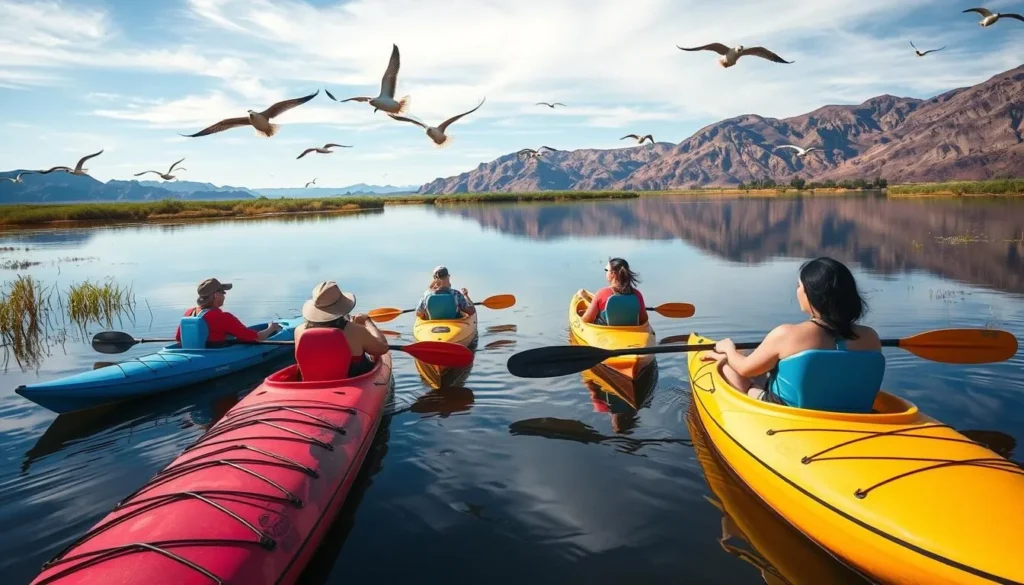
Beyond wildlife observation, Bosque del Apache offers numerous outdoor activities for nature enthusiasts. Seasonal kayaking on the refuge’s waterways provides a unique perspective on wetland habitats. With a maximum of five watercraft permitted in sensitive areas, these peaceful paddling experiences offer intimate wildlife encounters away from crowds.
Hiking enthusiasts can explore the refuge’s diverse ecosystems on foot. The Canyon National Recreation Trail traverses desert terrain with spectacular views of the Rio Grande Valley, while the seasonal Seasonal Marsh Trail offers close-up wetland experiences. For accessibility, the Boardwalk Trail provides a 0.5-mile universally accessible path through marsh habitats.
Photographers find endless inspiration throughout the refuge, with the changing light and seasons creating new opportunities year-round. The Flight Deck observation area is particularly popular for capturing the dramatic morning fly-out, when thousands of birds take to the skies in a choreographed spectacle.
Seasonal Outdoor Activities:
- Spring: Wildflower photography, migratory songbird watching, hiking
- Summer: Early morning nature walks, reptile observation, fishing (April-September)
- Fall: Biking the service roads, photography workshops, initial crane arrivals
- Winter: Dawn fly-out viewing, guided wildlife tours, Festival of the Cranes
Safety, Etiquette & Local Customs

When visiting Bosque del Apache, respecting wildlife and their habitat is paramount. Maintain a safe distance from all animals and never feed wildlife. Stay on designated trails and roads to protect sensitive habitats and minimize disturbance to the animals that call the refuge home.
Weather conditions can change rapidly, so dress in layers and bring sun protection, water, and snacks. Cell phone coverage can be spotty within the refuge, so download maps or bring physical copies. During winter months, roads may be icy in the early morning, so drive cautiously.
Photography etiquette is especially important at popular viewing areas. Avoid using flash photography around wildlife, keep voices low, and be mindful of other visitors trying to enjoy the experience. Tripods should be set up to avoid blocking pathways or others’ views.
The refuge has seasonal regulations regarding pets. From October through March, pets must remain inside vehicles while on the Auto Tour Route and are not permitted on trails. During other months, leashed pets are allowed in some areas. Always check current rules at the Visitor Center.
Practical Travel Tips
What to Bring
- Binoculars and camera with telephoto lens
- Layered clothing for variable temperatures
- Hat, sunscreen, and sunglasses
- Water bottle and snacks
- Field guide to birds of New Mexico
- Cash for entrance fee ($5 per vehicle)
Planning Advice
- Arrive before sunrise for the morning fly-out
- Allow at least 3-4 hours to explore the Auto Tour Loop
- Visit on weekdays during peak season to avoid crowds
- Book accommodations in advance during Festival of Cranes
- Download the refuge map before arriving
- Check seasonal road closures on the refuge website
Your Unforgettable Wildlife Adventure Awaits
Bosque del Apache National Wildlife Refuge offers a rare window into the natural rhythms of migration and wildlife that have played out for millennia along the Rio Grande. Whether you’re witnessing the breathtaking spectacle of thousands of birds taking flight at dawn, hiking through diverse ecosystems, or simply enjoying the peaceful desert landscape, this remarkable sanctuary provides experiences that connect visitors to the natural world in profound ways.
Each season brings its own magic to the refuge, from winter’s dramatic bird concentrations to spring’s renewal and summer’s desert blooms. By planning your visit with the tips and information provided in this guide, you’ll be well-prepared to make the most of your time at this extraordinary destination.
As you leave Bosque del Apache, you’ll carry with you not just photographs and memories, but a deeper appreciation for the delicate balance of nature and the importance of preserving these special places for generations to come.
The above is subject to change.
Check back often to TRAVEL.COM for the latest travel tips and deals.


Visitor Comments About Bosque del Apache
“I’ve visited wildlife refuges across the country, but nothing compares to the morning fly-out at Bosque del Apache. Thousands of snow geese erupting into flight at sunrise while sandhill cranes call overhead created a memory I’ll never forget. The Auto Tour Loop made it easy to see different habitats throughout the day.”
“As an international visitor, I was amazed by the accessibility of this natural wonder. The visitor center staff provided excellent guidance for maximizing our experience. We spent three days exploring different trails and viewing areas. The Festival of the Cranes was educational and inspiring – worth planning your trip around!”
“Living just an hour away, I visit Bosque throughout the year and each season offers something special. Winter brings the spectacular crane and geese migrations, spring has nesting birds and wildflowers, summer mornings are peaceful with resident wildlife, and fall brings the excitement of returning migrants. Don’t miss the Canyon Trail for desert views!”