Hotels by Trip.com
Flights by Trip.com
Did you know the Great River Road stretches 4,827 kilometers (3,000 miles) from the headwaters of Lake Itasca in Minnesota all the way to the Gulf of Mexico, making it one of the longest scenic byways in the nation? This remarkable route follows the Mississippi River through ten states, and Tennessee’s portion offers some of the most captivating experiences along the entire parkway.
The Great River Road takes its name from the mighty Mississippi River, which has served as the lifeblood of American commerce and culture for centuries. Along the route, green pilot wheel markers guide travelers along this National Scenic Byway, ensuring you never lose your way as you explore the region’s rich heritage.
Tennessee’s section of the Great River Road showcases a unique blend of civil rights history, musical heritage, and natural beauty. From the vibrant streets of Memphis to the historic grounds of Fort Pillow State Park, this journey along the Mississippi River Parkway reveals stories of struggle, triumph, and the enduring spirit of the American South.
Whether you’re drawn to the soulful sounds echoing from Beale Street, the sobering lessons at the National Civil Rights Museum, or the serene beauty of Mud Island River Park, the Great River Road in Tennessee promises unforgettable experiences. This comprehensive guide will help you discover the best things to do, practical travel tips, and insider knowledge to make your Mississippi River journey truly remarkable.
Getting There & Planning Your Journey
Memphis serves as the primary gateway for exploring the Great River Road in Tennessee. The city is exceptionally well-connected, making it easy for travelers from across the nation and around the world to begin their Mississippi River adventure.
Memphis International Airport (MEM) is your closest major airport, located just 11 kilometers (7 miles) southeast of downtown. This busy hub offers direct flights from most major American cities and several international destinations. The airport provides rental car services from all major companies, making it simple to start your road trip immediately upon arrival.
For travelers coming from neighboring states, Nashville International Airport (BNA) sits approximately 338 kilometers (210 miles) east, offering an alternative entry point with a scenic drive across Tennessee. Little Rock’s Bill and Hillary Clinton National Airport (LIT) in Arkansas is another option, located about 217 kilometers (135 miles) west.
If you prefer ground transportation, Memphis sits at the crossroads of several major interstate highways. Interstate 40 runs east-west through the city, while Interstate 55 follows the Mississippi River corridor north-south. These major roads connect seamlessly with the Great River Road, which uses a combination of state highways and local roads to hug the riverbank.
Planning your route along the Great River Road requires understanding that the parkway doesn’t follow a single highway number. Instead, green pilot wheel signs mark the official route as it winds through Tennessee. The Mississippi River Parkway Commission maintains detailed maps showing the exact route through each region.
Essential Planning Tips
- Allow at least three to five days to properly explore Tennessee’s portion of the Great River Road
- Download offline maps before departing, as cell service can be spotty in rural areas along the river
- Fill your gas tank when passing through larger towns, as service stations become sparse along some stretches
- Book accommodations in advance during peak tourist seasons and major festival dates
- Consider purchasing a Tennessee State Parks pass if planning to visit multiple park locations
The Great River Road follows the Mississippi River’s eastern bank through Tennessee, passing through Shelby, Tipton, and Lauderdale counties. The route covers approximately 193 kilometers (120 miles) of scenic riverside territory, each mile revealing new perspectives on this historic waterway.
Best Time to Visit & Weather Tips
Timing your visit to the Great River Road in Tennessee significantly impacts your experience. The region experiences four distinct seasons, each offering unique advantages and considerations for travelers exploring this Mississippi River corridor.
Best Time to Visit Great River Road, Tennessee
Spring (March through May) and fall (September through November) represent the ideal seasons for exploring the Great River Road. These shoulder seasons bring comfortable temperatures, lower humidity, and stunning natural displays along the route.
Spring transforms the landscape as dogwoods, redbuds, and wildflowers bloom throughout the region. Temperatures range from 13°C to 24°C (55°F to 75°F), perfect for outdoor exploration. However, spring also brings increased rainfall, so pack waterproof gear and check forecasts regularly.
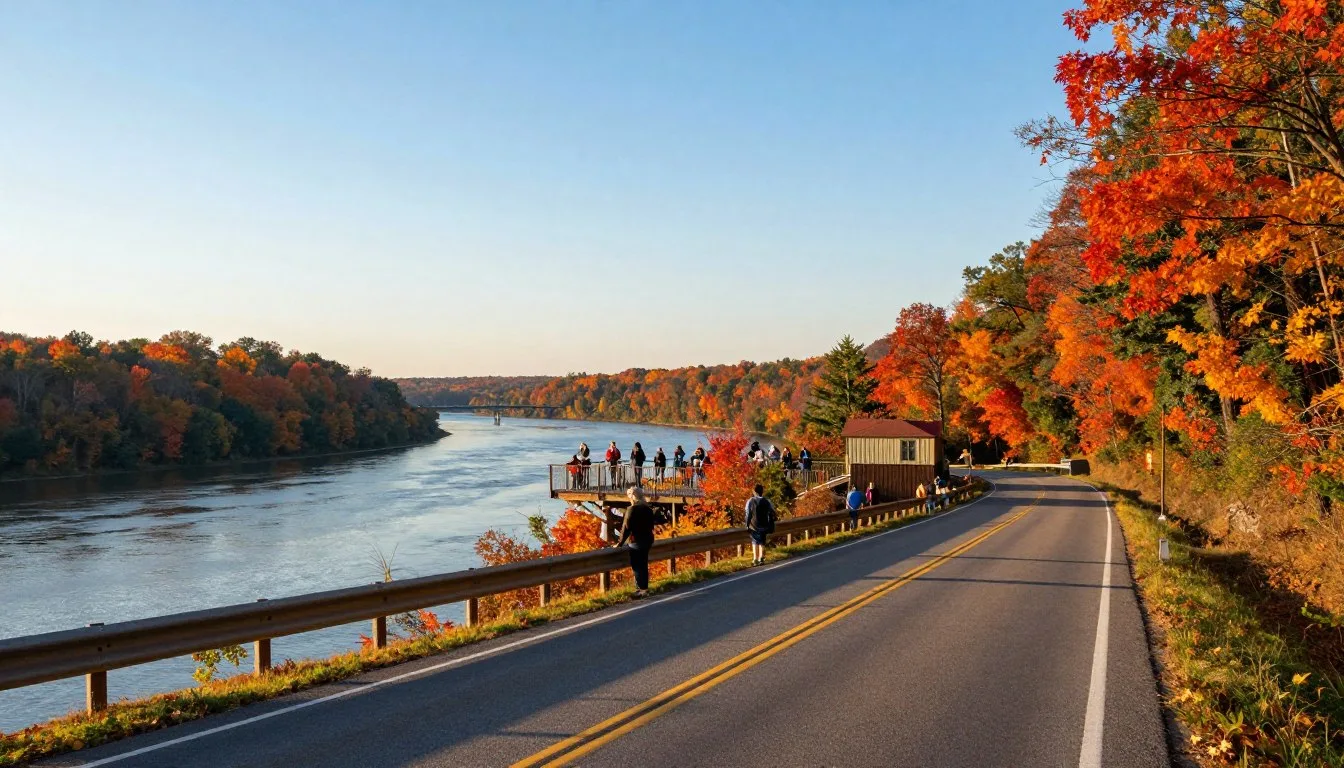
Fall delivers spectacular foliage as trees along the Mississippi River bluffs turn brilliant shades of orange, red, and gold. September through early November offers the most pleasant weather, with temperatures between 15°C and 26°C (59°F and 79°F). This season sees less precipitation than spring, making it particularly favorable for road trips and outdoor activities.
Summer (June through August) brings hot, humid conditions throughout the region. Temperatures frequently climb above 32°C (90°F), with high humidity making it feel even warmer. If visiting during summer, plan outdoor activities for early morning or evening hours. This season does offer longer daylight hours and numerous festivals celebrating river culture.
Winter (December through February) presents the least favorable conditions for exploring the Great River Road. While temperatures rarely drop below freezing, averaging 4°C to 13°C (40°F to 55°F), the season brings gray skies, bare trees, and occasional ice storms that can make driving treacherous along the route.
Monthly Weather Considerations
March – May
Spring renewal brings comfortable conditions and blooming landscapes along the Mississippi River.
- Average temperatures: 13°C to 24°C (55°F to 75°F)
- Higher rainfall probability
- Wildflower season peaks in April
- Easter weekend can be crowded
June – August
Hot summer weather dominates, requiring heat precautions during outdoor exploration.
- Average temperatures: 24°C to 33°C (75°F to 92°F)
- High humidity levels throughout
- Afternoon thunderstorms common
- Peak tourist season in Memphis
September – November
Autumn excellence makes this the premier season for Great River Road travel.
- Average temperatures: 15°C to 26°C (59°F to 79°F)
- Lower humidity returns
- Fall foliage peaks in October
- Harvest festivals throughout region
December – February
Winter brings cool temperatures and occasional inclement weather to avoid if possible.
- Average temperatures: 4°C to 13°C (40°F to 55°F)
- Bare landscapes reduce scenic appeal
- Occasional ice storms possible
- Many attractions have reduced hours
Weather Preparation Tips
- Pack layers regardless of season, as river breezes can create temperature variations
- Bring sunscreen and sunglasses year-round, as glare off the Mississippi River intensifies UV exposure
- Check river levels before visiting, as flooding can occasionally close portions of the route
- Download weather apps for real-time updates, especially during spring and summer storm seasons
- Keep rain gear accessible in your vehicle throughout spring and summer months
Notable Annual Festivals

The Great River Road region in Tennessee celebrates its Mississippi River heritage and cultural richness through numerous annual festivals. These events showcase the area’s music, food, history, and river traditions throughout the year.
Memphis in May International Festival
This month-long celebration transforms Memphis into a global cultural showcase every May. The festival features the Beale Street Music Festival, which launches the festivities with three days of performances by over 60 artists across multiple stages. The World Championship Barbecue Cooking Contest draws teams from around the globe, competing for supremacy in the art of Southern barbecue.
The festival also spotlights a different country each year through cultural exhibits, cuisine, and performances. Events take place at Tom Lee Park along the Mississippi River and throughout downtown Memphis. Contact: Memphis in May, (901) 525-4611.
Sunset on the Mississippi
Running from May through August, this free summer concert series takes place at Tom Lee Park along the Great River Road. Every Thursday evening, families gather to enjoy live music while watching the sun set over the Mississippi River. The series showcases regional talent across multiple genres, from blues and soul to country and rock.
Food trucks and local vendors create a festival atmosphere each week. Bring blankets or lawn chairs and arrive early to secure prime riverside spots. Contact: Riverfront Development Corporation, (901) 526-0880.
River Arts Fest
Held annually in October at Mud Island River Park, this juried arts festival brings together over 100 artists from across the nation. The event celebrates visual arts with a focus on pieces inspired by river culture and Southern heritage. Live music performances complement the art exhibitions throughout the weekend.
The timing coincides with peak fall foliage along the Great River Road, making this festival particularly scenic. Admission fees support local arts programs. Contact: Memphis River Parks Partnership, (901) 312-1759.
Big River Crossing Festival
This September celebration honors the unique Big River Crossing pedestrian bridge connecting Tennessee and Arkansas across the Mississippi River. The festival features a 5K run, live music, and activities highlighting the engineering marvel of this converted railway bridge.
Special guided walks explore the bridge’s history and provide spectacular river views from 18 meters (60 feet) above the water. The event typically occurs during the third weekend of September. Contact: Memphis Tourism, (901) 543-5300.
Fort Pillow Heritage Days
Each April, Fort Pillow State Park hosts this living history event commemorating the Civil War battle fought at this strategic Mississippi River location. Re-enactors portray Union and Confederate soldiers, demonstrating camp life, military drills, and period crafts.
Educational programs explore the battle’s significance in civil rights history. The event includes guided tours of the earthwork fortifications overlooking the river. Contact: Fort Pillow State Park, (731) 738-5581.
Germantown Charity Horse Show
Running for a week each June, this premier equestrian event takes place just south of Memphis along the Great River Road corridor. The show attracts top riders from across the nation competing in multiple disciplines. While not river-themed, it represents significant regional culture.
Proceeds benefit local charities, and the event welcomes spectators throughout the week. Contact: Germantown Charity Horse Show, (901) 754-0009.
Getting Around Locally
Navigating the Great River Road in Tennessee requires understanding that this scenic route combines multiple highways and local roads. Personal transportation provides the most flexibility for exploring the Mississippi River corridor at your own pace.
A rental car represents the most practical option for most travelers. All major rental companies operate at Memphis International Airport and throughout downtown Memphis. Choose a vehicle with good fuel efficiency, as you’ll cover significant distances along the route. GPS navigation helps, but don’t rely solely on technology, as some rural sections have limited cell coverage.
The green pilot wheel signs marking the official Great River Road route appear regularly along Tennessee’s portion. These distinctive markers ensure you stay on the designated scenic byway. The route primarily follows state highways, including portions of Highway 51, Highway 87, and various county roads that hug the Mississippi River more closely.
Driving conditions along the Great River Road vary considerably. Main highways maintain excellent pavement and clear signage. However, some portions follow older roads with narrower lanes and less frequent services. Plan fuel stops in larger towns like Memphis, Millington, or Ripley.
Public Transportation Options
Memphis Area Transit Authority (MATA) operates bus and trolley services within Memphis proper. The Main Street Trolley connects many downtown attractions, including stops near Beale Street and Mud Island. However, MATA services don’t extend to most Great River Road attractions outside the city limits.
For exploring downtown Memphis specifically, the trolley system provides convenient access to major sites. The Madison Avenue Trolley runs east-west, while the Main Street line covers north-south routes. Rides cost just a few dollars, and day passes offer unlimited travel.
Alternative Transportation
- Bicycle touring appeals to adventurous travelers, though traffic and limited shoulders make some sections challenging
- Motorcycle rentals in Memphis offer an exciting way to experience the scenic river road
- Rideshare services operate in Memphis but become scarce in rural areas along the route
- Guided tour companies offer packages exploring Great River Road highlights with professional drivers
- RV rentals suit travelers wanting overnight flexibility at campgrounds along the Mississippi River
Parking rarely presents problems outside downtown Memphis. Most state parks, historic sites, and scenic overlooks provide ample free parking. In Memphis, street parking downtown requires payment, and popular areas like Beale Street have paid lots and garages.
Plan driving times realistically. While Tennessee’s Great River Road section covers only 193 kilometers (120 miles), frequent stops to enjoy overlooks, historic sites, and natural areas mean you’ll need several days to truly experience the route. Rushing defeats the purpose of this scenic byway designed for leisurely exploration.
Where to Stay

Accommodation options along Tennessee’s Great River Road range from historic downtown hotels to rustic riverside campgrounds. Memphis serves as the primary lodging hub, offering the widest selection of hotels, inns, and vacation rentals.
Downtown Memphis Hotels
Downtown Memphis provides convenient access to Beale Street, the National Civil Rights Museum, and the Mississippi River waterfront. Luxury hotels occupy renovated historic buildings, offering modern amenities with Southern charm. Mid-range chains cluster around the medical district and along Union Avenue.
The Peabody Memphis stands as the city’s most iconic hotel, famous for its resident ducks that march through the lobby daily. Boutique properties near Main Street offer intimate experiences with local character. Book downtown accommodations well in advance during major festivals and events.
Midtown and East Memphis
These areas offer more affordable options slightly removed from downtown attractions. Midtown features eclectic neighborhoods with bed-and-breakfast inns housed in Victorian mansions. East Memphis contains numerous chain hotels and extended-stay properties convenient for longer visits.
These locations require driving or rideshare services to reach Great River Road attractions but provide better value for budget-conscious travelers. Family-friendly hotels with pools and complimentary breakfast concentrate in these districts.
Riverside Camping and RV Parks
Fort Pillow State Park offers primitive camping and RV sites directly overlooking the Mississippi River. These sites provide incredible sunset views and immediate access to hiking trails and historic earthworks. Reservations are essential during peak seasons.
T.O. Fuller State Park, located in southwest Memphis, features a campground with electrical hookups, hot showers, and dump stations. The park sits along the Chickasaw Bluffs, offering elevated views of the surrounding landscape. Sites accommodate tents and RVs up to 15 meters (50 feet).
Meeman-Shelby Forest State Park, north of Memphis, provides secluded camping amid bottomland hardwood forests near the Mississippi River. The park offers both developed campsites with amenities and backcountry camping for a more primitive experience.
Small Town Lodging
Towns along the Great River Road north of Memphis, including Millington, Covington, and Ripley, feature local motels and bed-and-breakfast establishments. These provide authentic small-town experiences and often cost significantly less than Memphis accommodations.
Historic inns in these communities sometimes occupy antebellum homes or restored commercial buildings. While amenities may be simpler, hospitality tends to be exceptional, with owners offering personal recommendations for exploring the region.
Lodging Selection Tips
- Book Memphis hotels near Beale Street for walkable nightlife but expect higher rates and noise
- Consider suburban locations for family-friendly amenities and easier parking
- Reserve state park campsites months ahead for summer weekends and holiday periods
- Check cancellation policies carefully, as weather can impact travel plans along the river
- Ask about river view rooms specifically, as not all riverfront hotels offer Mississippi views from every room
- Investigate vacation rental options in historic neighborhoods for longer stays and local experiences
Dining & Local Cuisine

Tennessee’s Great River Road region centers around Memphis, a city whose culinary identity revolves around barbecue, soul food, and Mississippi Delta-inspired cuisine. The food culture reflects centuries of African American, Southern, and river commerce influences.
Memphis Barbecue Tradition
Barbecue defines Memphis cuisine more than any other food tradition. The city’s signature style features pork ribs, either “wet” with tangy tomato-based sauce or “dry” rubbed with a special blend of spices. Pulled pork sandwiches topped with coleslaw represent another Memphis staple.
Historic barbecue establishments cluster throughout the city, many operating for generations using closely guarded family recipes. The technique involves slow-smoking meat over hickory wood for hours, creating tender results with distinctive flavor. Most restaurants serve barbecue with traditional sides including baked beans, coleslaw, potato salad, and white bread.
Beale Street hosts several barbecue joints where you can enjoy authentic Memphis-style ribs while soaking in the musical atmosphere. For a true local experience, venture to family-run spots in residential neighborhoods where competition for “best barbecue” creates passionate loyalty among residents.
Soul Food and Southern Cooking
Soul food restaurants throughout the region serve comfort classics perfected over generations. Expect fried chicken, catfish, mac and cheese, collard greens, black-eyed peas, and cornbread. These hearty dishes reflect agricultural traditions and the resourcefulness of Southern cooks.
Many soul food establishments operate as modest, family-run businesses where recipes pass down through generations. Sunday lunch represents peak dining times at these restaurants, when families gather after church services. Portions tend to be generous, and sweet tea flows freely.
Mississippi River Catfish
Fresh catfish from the Mississippi River appears on menus throughout the region, typically fried in cornmeal batter and served with hushpuppies and tartar sauce. Some restaurants offer grilled or blackened preparations as lighter alternatives.
Delta-style tamales represent another river region specialty. These differ from Mexican tamales, featuring a coarser corn masa and spicier filling, usually served in their corn husks with hot sauce.
Dining Districts Along the Route
Beale Street offers concentrated dining and entertainment options, though prices skew higher in this tourist district. Main Street and South Main feature more diverse options, from upscale farm-to-table restaurants to casual lunch counters.
Cooper-Young neighborhood showcases eclectic dining with international options alongside Southern traditions. Broad Avenue Arts District hosts trendy eateries in renovated industrial spaces. Overton Square provides upscale casual dining with patio options.
Budget-Friendly Eating Tips
- Visit barbecue restaurants at lunch for the same quality at lower prices than dinner service
- Explore neighborhood diners and meat-and-three establishments for authentic, affordable Southern meals
- Check for early-bird specials at soul food restaurants, typically before 6 PM
- Pack snacks and drinks for driving portions of the Great River Road where restaurants are scarce
- Ask locals for recommendations away from tourist areas for better value and authenticity
Attractions, Sightseeing & Activities
The Great River Road in Tennessee offers diverse attractions celebrating the region’s music heritage, civil rights history, and Mississippi River culture. Memphis anchors the route with world-famous sites, while smaller communities and state parks provide quieter exploration opportunities.
Beale Street Historic District
This legendary three-block stretch represents the heart of Memphis music culture. Blues clubs, restaurants, and shops occupy historic buildings where musical legends once performed. Live music pours from venues every night, creating an energetic atmosphere that captures Memphis’s soul.
W.C. Handy, known as the “Father of the Blues,” made Beale Street famous in the early 1900s. Today, bronze notes embedded in the sidewalk honor music legends connected to this iconic street. Free outdoor concerts occur during warm months, and the New Year’s Eve guitar drop attracts thousands.
Many establishments welcome visitors during daytime hours for tours and history exhibits. Evening brings the street to life with performance and celebration. While touristy, Beale Street remains authentically connected to Memphis music traditions.
Mud Island River Park
This unique park sits on an island in the Mississippi River, connected to downtown by pedestrian bridge and monorail. The park’s signature feature, the Riverwalk, presents a scale model of the lower Mississippi River covering 2.1 hectares (5 acres). Water flows through the model, allowing visitors to wade from Minnesota’s headwaters to the Gulf of Mexico.
The Mississippi River Museum occupies the park’s main building, featuring exhibits on river ecology, commerce, and culture. Galleries explore paddlewheel steamboat history, the Civil War’s river campaigns, and modern barge traffic. A full-scale replica steamboat serves as an exhibit space.
The park offers excellent views of the Mississippi River and Memphis skyline. Outdoor amphitheater concerts occur during summer months. Admission fees apply for museum access, though the Riverwalk itself is free to explore.
Big River Crossing
This remarkable pedestrian bridge allows visitors to walk across the Mississippi River between Tennessee and Arkansas. The converted railroad bridge features a cantilevered pathway extending from the historic Harahan Bridge, creating a 1.6-kilometer (1 mile) crossing high above the water.
Views from the bridge are spectacular, particularly at sunset when Memphis skyline glows in fading light. The crossing is free and open daily from dawn to dusk. LED lighting illuminates the bridge at night, creating a colorful landmark visible for miles along the Great River Road.
Arkansas side offers a small park with river views before you return to Tennessee. The crossing attracts joggers, cyclists, and sightseers year-round. Spring and fall provide the most comfortable conditions for the approximately 30-minute round trip walk.
Tom Lee Park
Stretching along the Mississippi River downtown, this linear park provides green space for recreation and events. The park honors Tom Lee, an African American river worker who saved 32 people from a sinking steamboat in 1925 despite being unable to swim himself.
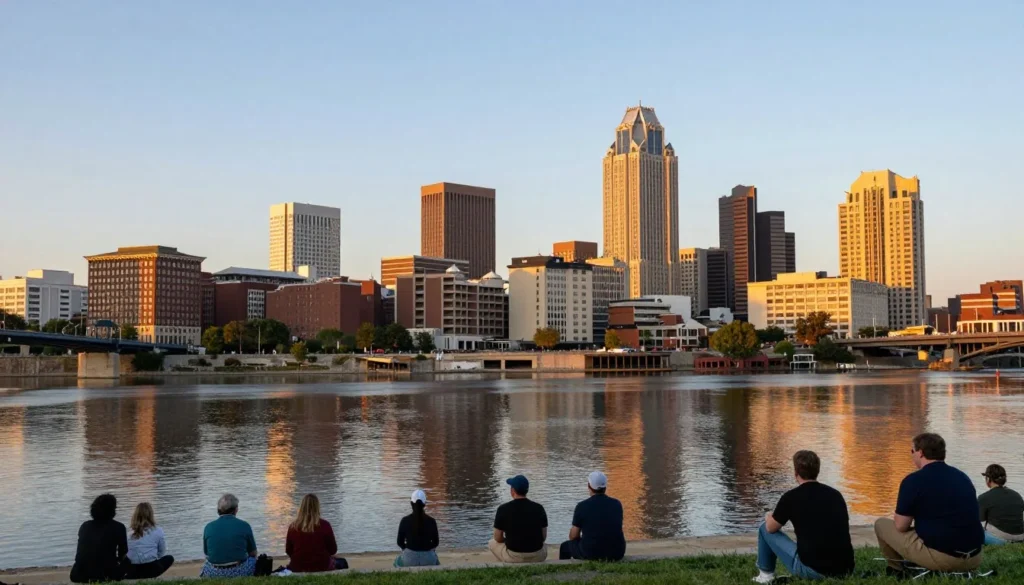
The park hosts major festivals including Memphis in May events. On typical days, it offers peaceful river watching, walking paths, and picnic areas. Sunset views across the water are magnificent, with the Arkansas shore visible in the distance.
Elmwood Cemetery
This historic cemetery, established in 1852, serves as an outdoor museum of Memphis history. Ornate Victorian monuments, Civil War graves, and the final resting places of yellow fever epidemic victims tell the city’s story through elaborate memorials.
Guided tours explore the grounds, highlighting notable burials and architectural features. The cemetery’s landscaping includes century-old trees and gardens. Many people connected to Mississippi River commerce and Memphis’s musical heritage rest here.
Chucalissa Archaeological Site
This Mississippian-era village site preserves a Native American settlement that thrived along the river bluffs from 1000 to 1500 AD. Reconstructed dwellings show how indigenous people lived before European contact. The site museum displays artifacts excavated from the location.
Interpretive programs explain how the Mississippi River shaped the lives of these early inhabitants. The elevated location offers views across the river valley that helped make this strategic site valuable for centuries.
Museums, Cultural Spots & Festivals
National Civil Rights Museum
Built around the Lorraine Motel where Dr. Martin Luther King Jr. was assassinated in 1968, this powerful museum chronicles the American civil rights movement from slavery through present day. Exhibits explore the Montgomery Bus Boycott, Freedom Riders, lunch counter sit-ins, and the Memphis Sanitation Workers’ Strike that brought King to the city.
The museum preserves Dr. King’s motel room exactly as it appeared on April 4, 1968. Interactive exhibits encourage reflection on civil rights struggles and ongoing work toward equality. Audio narratives from movement participants add personal dimensions to historical events.
Across the street, the museum complex includes the boarding house from which James Earl Ray fired the fatal shot. This portion explores the assassination investigation and conspiracy theories. Plan at least three hours to properly experience the comprehensive exhibits. Admission fees support the museum’s educational mission.
Stax Museum of American Soul Music
This museum celebrates the legendary Stax Records and its role in creating Southern soul music. Otis Redding, Isaac Hayes, Booker T. and the MGs, and many other artists recorded here during the 1960s and early 1970s. The museum occupies a replica of the original studio on the actual site.
Exhibits feature stage costumes, instruments, and the original studio equipment where countless hits were recorded. Isaac Hayes’s peacock-blue and gold-trimmed Cadillac Eldorado showcases the era’s flamboyant style. Video presentations explain how Stax’s integrated approach to music production broke racial barriers during segregation.
The museum offers a more intimate experience than larger Memphis music attractions. Many artifacts belonged to the artists themselves, donated by families to preserve their legacies. The attached music academy continues Stax’s mission of nurturing young talent.
Sun Studio
Known as the birthplace of rock and roll, this unassuming studio hosted recording sessions by Elvis Presley, Johnny Cash, Jerry Lee Lewis, and other pioneers. Daily guided tours explain the studio’s historic significance and demonstrate the primitive recording equipment that captured revolutionary sounds.
The studio still operates for recording sessions, maintaining much of its original character. Guides share stories about the million-dollar quartet session when Elvis, Cash, Lewis, and Carl Perkins spontaneously jammed together. Visitors can stand where Elvis recorded his first single.
Evening sessions sometimes allow visitors to record their own music using vintage equipment. The gift shop sells rare recordings and memorabilia. Tours last about 90 minutes and occur throughout the day.
Pink Palace Museum
This natural and cultural history museum houses diverse collections exploring Memphis and Mid-South heritage. Exhibits cover everything from prehistoric geology to 1950s culture. The planetarium presents astronomy shows, while the IMAX theater screens educational films.
A full-scale replica of the original Piggly Wiggly grocery store commemorates Memphis’s role in creating the self-service shopping concept. Medical history exhibits examine yellow fever epidemics that devastated Memphis in the 1870s. Native American artifacts showcase pre-Columbian cultures along the Mississippi River.
The mansion’s original rooms display period furnishings showing how wealthy Memphis families lived during the early 20th century. Rotating exhibits address regional topics from music to civil rights to agricultural heritage.
Slave Haven Underground Railroad Museum
This modest home, known as the Burkle Estate, allegedly served as a stop on the Underground Railroad helping enslaved people escape to freedom. While historians debate some claims about the house, the museum provides important context about slavery in Memphis and resistance to the institution.
Tours examine the harsh realities of slavery and the courage required for escape attempts. The proximity to the Mississippi River made Memphis a crucial point in underground railroad networks. Hidden spaces in the home suggest its possible use in clandestine operations.
The museum sparks important conversations about this difficult chapter of American history. Guides provide detailed information about slavery’s impact on Memphis and Tennessee’s complex role during the Civil War era.
Nature & Outdoor Experiences
Fort Pillow State Park
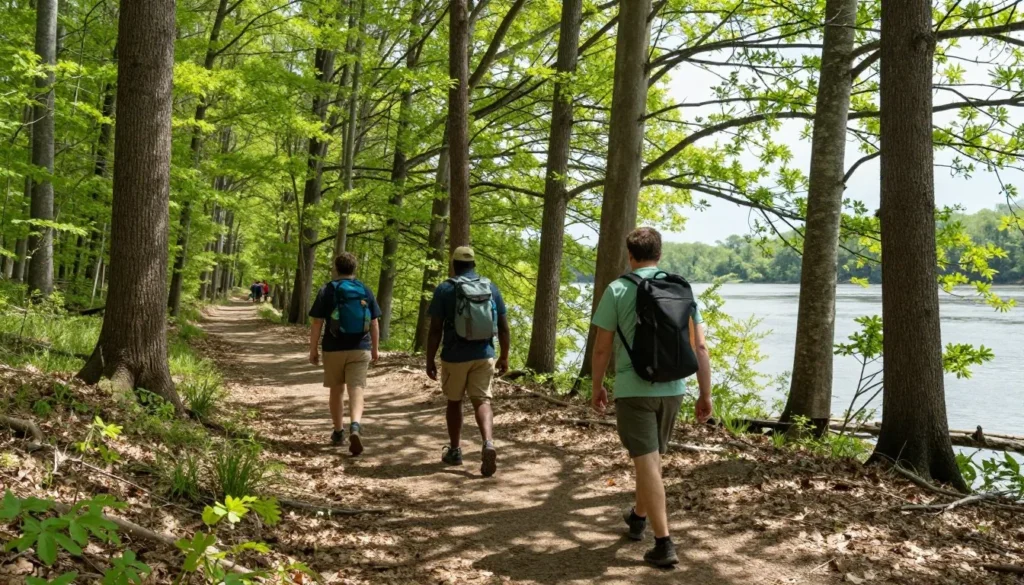
Located 64 kilometers (40 miles) north of Memphis along the Mississippi River, Fort Pillow State Park preserves Civil War earthworks on bluffs overlooking the river. The Confederate fort occupying this strategic location became the site of a controversial 1864 battle where Union troops, many African American, suffered heavy casualties after the fort’s capture.
Today, visitors can walk the preserved earthworks and visit interpretive exhibits explaining the battle’s significance. The park covers 682 hectares (1,686 acres) of bottomland hardwood forest and river bluffs. Hiking trails wind through diverse habitats, offering excellent birdwatching opportunities.
Fishing is permitted in park lakes and along the Mississippi River shoreline. Bass, crappie, and catfish populate the waters. The park’s campground provides riverside sites with beautiful sunset views. Spring wildflowers and fall foliage make seasonal visits particularly rewarding.
Meeman-Shelby Forest State Park
This 5,307-hectare (13,107-acre) park protects one of the largest remaining bottomland hardwood forests in Tennessee. Located along the Mississippi River north of Memphis, the park offers extensive hiking and horseback riding trails through ancient cypress swamps and hardwood forests.
Two lakes within the park provide fishing, kayaking, and canoe opportunities. Poplar Tree Lake covers 51 hectares (125 acres), while smaller Piersol Lake offers quieter paddling. Rental boats are available seasonally. The Mississippi River forms the park’s western boundary, though access points are limited.
The nature center features educational exhibits about bottomland forest ecology and the Mississippi River ecosystem. Programs explain how seasonal flooding shapes these unique habitats. Wildlife viewing opportunities include white-tailed deer, wild turkeys, and numerous bird species.
The park maintains a developed campground with electrical hookups and a primitive backcountry camping area for those seeking solitude. Cabins with modern amenities offer comfortable overnight options surrounded by nature.
T.O. Fuller State Park
Situated in southwest Memphis, this park provides urban nature access while preserving significant African American history. T.O. Fuller was Tennessee’s first state park open to African Americans when segregation laws governed public spaces. Today, the park welcomes all visitors to its 384 hectares (949 acres) of forest and recreational facilities.
Hiking trails explore the Chickasaw Bluffs ecosystem, offering elevated views across the landscape. The park’s pool operates during summer months, providing family-friendly recreation. A golf course, picnic areas, and playgrounds round out amenities.
The Chucalissa Archaeological Site within park boundaries preserves a prehistoric Native American village. This cultural layer adds depth to outdoor experiences, connecting natural and human history along the Mississippi River corridor.
Mississippi River Greenbelt Park
This linear park stretches along the river in downtown Memphis, connecting multiple green spaces and attractions. Paved trails accommodate walkers, runners, and cyclists enjoying river views. The park links Tom Lee Park, Mud Island, and other riverfront amenities.
Observation points along the trail allow close-up views of barge traffic and riverboat cruises. Interpretive signs explain river ecology, commerce, and engineering. The park serves as Memphis’s front porch on the Mississippi, where residents and visitors gather to watch the great river flow.
Bird Watching Along the Great River Road
The Mississippi River corridor serves as a major migration route for countless bird species. Spring and fall migrations bring spectacular diversity as species travel between northern breeding grounds and southern wintering areas. The bottomland forests and river islands provide crucial habitat.
Bald eagles winter along the river from November through March, fishing in open water below dams and locks. Several viewing areas along the Great River Road offer opportunities to observe these majestic birds. Wading birds including egrets and herons hunt in shallow backwaters throughout warmer months.
Meeman-Shelby Forest State Park maintains bird checklists noting over 200 species recorded within park boundaries. Spring warbler migration peaks in April and May, painting the forest canopy with color and song. Serious birders should explore the park’s diverse habitats from dawn when activity peaks.
Travel With Children

The Great River Road in Tennessee offers numerous family-friendly attractions and activities that engage children while providing educational value. Memphis serves as the hub for kid-oriented experiences, with several attractions specifically designed for young visitors.
Memphis Zoo
One of the nation’s top-rated zoos houses over 3,500 animals representing 500 species across 28 hectares (70 acres). Giant pandas long served as star attractions, though the zoo now focuses on other conservation priorities. Exhibits recreate natural habitats from around the world.
The Teton Trek area features grizzly bears, elk, and wolves in a Yellowstone-inspired environment. Zambezi River Hippo Camp allows underwater viewing of hippos. The zoo’s splash park provides cooling relief during hot Tennessee summers.
Plan at least four hours to see major exhibits without rushing. Stroller rentals are available, and numerous shaded rest areas accommodate tired families. The zoo operates year-round with extended summer hours.
Children’s Museum of Memphis
This hands-on museum encourages learning through play across multiple themed areas. Kids can explore a kid-sized city, experiment with water dynamics, create art projects, and discover how things work through interactive exhibits.
The museum’s skywalk offers views of the Mississippi River while teaching about river commerce and ecology. Outdoor areas include gardens and play structures. Daily programs and demonstrations keep content fresh for repeat visits.
The museum targets children under 12, with exhibits scaled to different age groups. Birthday party facilities and summer camps extend the museum’s role in childhood education and entertainment.
Mud Island River Park Riverwalk
Children love walking along the flowing water of this scale model Mississippi River. The ability to wade through the “river” from its headwaters to the Gulf creates a tactile geography lesson. Educational markers explain river features and historical events at corresponding locations.
The park’s splash pads operate during summer, providing water play opportunities. Wide open spaces allow running and exploring. The monorail ride to the island excites young riders with views over the river.
Family-Friendly Nature Experiences
State parks along the Great River Road provide outdoor adventures suitable for families. Easy hiking trails at T.O. Fuller State Park introduce children to forest environments without demanding difficulty. The park’s swimming pool and playgrounds offer familiar recreation in a natural setting.
Meeman-Shelby Forest State Park’s nature center presents exhibits at child-appropriate levels. Rangers lead family programs during peak seasons, including guided walks and campfire programs. Fishing from park lakes teaches patience and outdoor skills.
Fort Pillow State Park’s historic earthworks create an outdoor classroom where children can learn Civil War history while climbing and exploring the fortifications. The bluff overlooks provide impressive Mississippi River views that capture young imaginations.
Tips for Traveling With Children
- Schedule outdoor activities during morning hours before afternoon heat becomes oppressive
- Pack plenty of water, snacks, and sun protection for driving portions of the Great River Road
- Many museums offer reduced or free admission for young children
- Plan rest time at hotels with pools where kids can burn energy
- Beale Street’s evening scene is not appropriate for young children, but daytime visits work well
- Car games and audio books help pass time during longer driving segments between attractions
Money Saving Tips
Exploring the Great River Road in Tennessee can accommodate various budgets with smart planning and local knowledge. These strategies help maximize experiences while minimizing expenses.
Free Attractions and Activities
Many Great River Road highlights cost nothing to experience. Walking or cycling across the Big River Crossing provides spectacular views without admission fees. The Mississippi River Greenbelt Park offers miles of paved trails and river overlooks completely free.
Tom Lee Park hosts free concerts during summer months through the Sunset on the Mississippi series. Beale Street itself is free to explore during daytime hours, though club admission fees apply for evening entertainment. Window shopping and people-watching cost nothing while soaking in the historic atmosphere.
State parks charge minimal day-use fees, typically under ten dollars per vehicle. This grants access to hiking trails, picnic areas, and scenic overlooks for the entire day. Fort Pillow State Park’s Civil War earthworks can be explored without any admission cost.
Discount Passes and Combination Tickets
Memphis Tourism offers multi-attraction passes providing significant savings when visiting several paid sites. These passes typically include the National Civil Rights Museum, Sun Studio, Stax Museum, and other popular attractions at reduced combined prices.
Tennessee State Parks annual passes make sense for visitors planning to explore multiple parks along the route. The pass covers day-use fees at all state parks statewide, paying for itself after just a few visits.
Affordable Dining Strategies
Memphis’s legendary barbecue costs far less at neighborhood joints than tourist-district locations. Local favorites often charge half the price of Beale Street establishments while serving equally delicious food. Lunch specials at most restaurants offer the same quality as dinner at lower prices.
Meat-and-three diners throughout the region serve generous portions of home-cooked Southern food for remarkably low prices. These cafeteria-style restaurants charge by the plate, allowing you to sample multiple dishes affordably. Sweet tea and cornbread typically come free with meals.
Grocery stores and farmers markets provide picnic supplies for dining at scenic state park overlooks. This approach saves money while creating memorable meals with Mississippi River views.
Accommodation Savings
State park campgrounds offer the most budget-friendly overnight options, with sites costing a fraction of hotel rates. Primitive camping costs even less than developed campgrounds with amenities. Meeman-Shelby Forest and Fort Pillow state parks provide beautiful riverside camping.
Booking accommodations in suburban Memphis rather than downtown typically reduces costs by 30 to 50 percent. Areas like Cordova or Bartlett offer major hotel chains at lower rates, though you’ll need transportation to reach Great River Road attractions.
Mid-week stays cost significantly less than weekends at most hotels. If schedule flexibility exists, plan Memphis visits for Tuesday through Thursday when both room rates and attraction crowds decrease.
Transportation Cost Reduction
Fuel represents a major expense for Great River Road travel. Plan efficient routes to minimize backtracking. Group multiple attractions in the same area into single days rather than crisscrossing the region unnecessarily.
Downtown Memphis parking fees add up quickly. Use the free Main Street Trolley to move between attractions once parked rather than moving your vehicle repeatedly. Some hotels offer free parking, worth considering when comparing rates.
Seasonal Timing for Best Value
Visiting during shoulder seasons (March-April and September-November) provides better accommodation rates than peak summer months. Attractions remain open with full services but charge the same admission on less crowded days.
Many festivals along the Great River Road are free to attend, offering exceptional entertainment value. Check event calendars to time your visit around these celebrations for added experiences without added costs.
Safety & Local Customs
Understanding local customs and safety considerations ensures comfortable, respectful travel along Tennessee’s Great River Road. The region’s Southern hospitality creates a welcoming environment for visitors who approach the area with cultural awareness.
Personal Safety Considerations
Memphis, like any major city, requires normal urban safety awareness. Stay alert in downtown areas, especially after dark. Keep valuables secured and out of sight in parked vehicles. Well-lit, populated areas along Beale Street and the riverfront remain generally safe, but exercise caution in unfamiliar neighborhoods.
Rural portions of the Great River Road present different safety considerations. Cell phone coverage becomes spotty in some areas, so download offline maps before departing. Keep your vehicle maintained and fuel tank above half-full, as service stations space out considerably between towns.
Weather-related safety deserves attention, particularly during spring and summer. Severe thunderstorms can develop quickly, bringing heavy rain, lightning, and occasionally tornadoes. Monitor weather forecasts and seek substantial shelter if warnings are issued. Flash flooding can make low-lying roads impassable after heavy rain.
Mississippi River Safety
The Mississippi River appears calm but harbors strong currents, hidden debris, and significant barge traffic. Swimming in the river is strongly discouraged due to these hazards. Designated swimming areas at state parks provide safer water recreation options.
If boating or kayaking in river backwaters, wear life jackets at all times. Stay clear of the main navigation channel where commercial barges create dangerous conditions for small craft. Sudden water level changes occur when dams release water upstream.
Health Precautions
Tennessee summers bring intense heat and humidity. Heat exhaustion and heat stroke pose real risks during outdoor activities. Drink plenty of water, take frequent breaks in shade or air conditioning, and limit strenuous activity during peak afternoon heat.
Insect protection is essential, particularly in wooded and riverside areas. Mosquitoes thrive in bottomland forests, and ticks can transmit diseases. Use insect repellent and check for ticks after hiking. Poison ivy grows abundantly throughout the region, so learn to identify and avoid its distinctive three-leafed clusters.
Southern Customs and Etiquette
Southern hospitality isn’t just a saying but a genuine cultural practice. Strangers often greet each other with “hello” or “how are you?” Even brief interactions typically include pleasantries before getting to business matters. This isn’t superficial but reflects genuine friendliness.
Patience with slower-paced service is appreciated. Rushing servers or showing impatience is considered rude. “Ma’am” and “sir” remain common respectful forms of address across generations. Using these terms, especially with older residents, demonstrates cultural awareness.
Religious faith plays a significant role in regional culture. Sunday morning is church time for many residents, and some businesses close or operate limited hours. Respectful acknowledgment of faith traditions, even if you don’t share them, helps build rapport with locals.
Tipping Customs
Standard tipping practices apply throughout the region. Restaurant servers expect 15 to 20 percent of the pre-tax bill for adequate service. Bartenders receive one to two dollars per drink. Hotel housekeeping appreciates two to five dollars per night left in the room.
Musicians performing on Beale Street work largely for tips. If you enjoy a performance, contributing a few dollars shows appreciation for their artistry and helps sustain Memphis’s musical heritage.
Respectful Heritage Tourism
Many Great River Road sites address difficult historical topics including slavery, Civil War battles, and civil rights struggles. Approach these locations with appropriate seriousness. Photography is generally permitted but should be done respectfully, avoiding casual selfies at sites memorializing tragedy.
The National Civil Rights Museum particularly deserves thoughtful engagement with its content. Allow sufficient time to absorb the exhibits’ emotional and educational impact rather than rushing through for superficial photos.
Visitor Comments About Great River Road, Tennessee
“The Great River Road exceeded every expectation. Driving along the Mississippi River through Tennessee felt like traveling through American history. Fort Pillow State Park provided incredible views and moving Civil War history lessons. Memphis itself overwhelmed us with music, food, and genuine hospitality. The barbecue alone justified the entire trip, but Beale Street’s energy and the National Civil Rights Museum’s powerful exhibits created memories we’ll treasure forever.”
“We spent four days exploring the Great River Road region with our two children. Mud Island’s Riverwalk captivated the kids, who loved wading through the scale model Mississippi. The Memphis Zoo impressed us all, and even our teenagers enjoyed the interactive exhibits at the Children’s Museum. State parks along the route offered peaceful camping under stars, a welcome contrast to Memphis’s urban excitement. The green pilot wheel markers made navigation simple, and we discovered charming small towns we never would have found otherwise.”
“As a solo traveler interested in American music history, the Great River Road in Tennessee delivered beyond imagination. Sun Studio’s tour gave me chills standing where Elvis recorded. Stax Museum taught me about soul music’s deep roots in this community. Walking across the Big River Crossing at sunset, watching the Mississippi flow beneath, created a spiritual moment I didn’t expect. The route itself, marked by those distinctive green signs, led me to overlooks and historic sites that deepened my appreciation for this mighty river’s role in shaping America.”
Additional Nearby Destinations
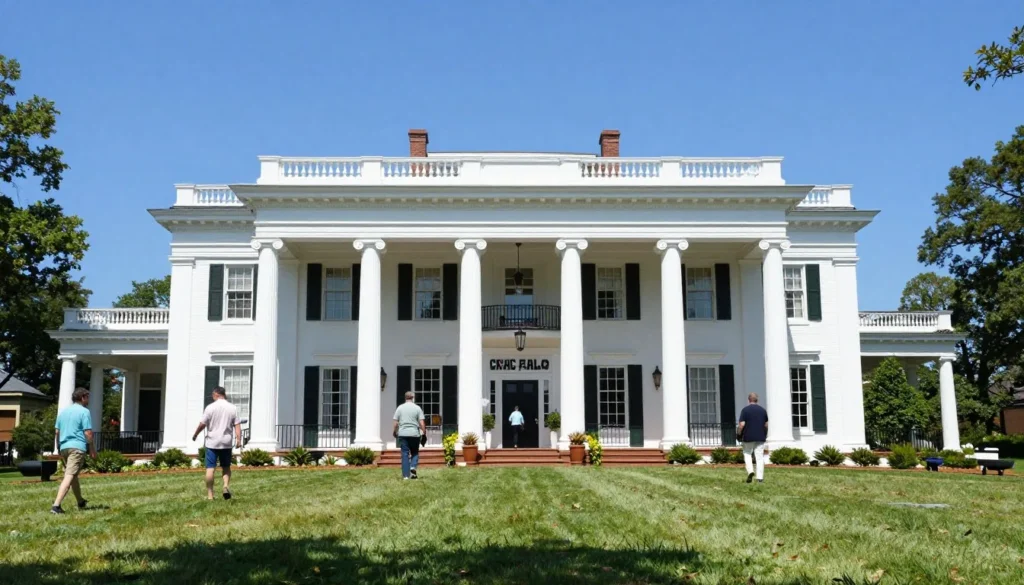
The Great River Road region provides access to several noteworthy destinations that complement your Mississippi River journey. These nearby attractions extend your Tennessee exploration beyond the riverfront corridor.
Graceland
Elvis Presley’s legendary home sits just south of Memphis, a short drive from the Great River Road route. The mansion tour explores the King’s private residence, showcasing 1970s decor preserved exactly as Elvis knew it. Trophy rooms display gold records, stage costumes, and career memorabilia spanning his revolutionary music career.
The complex includes Elvis’s automobile collection, featuring his famous pink Cadillac and other customized vehicles. Two of his private jets are open for tours. The meditation garden where Elvis and family members are buried attracts pilgrims from around the world.
Plan several hours for the full Graceland experience. Various ticket levels grant access to different portions of the estate. The site represents one of America’s most visited private homes, attracting hundreds of thousands annually.
Shiloh National Military Park
Located 169 kilometers (105 miles) east of Memphis, this Civil War battlefield preserves the site of one of the war’s bloodiest early battles. More than 23,000 casualties resulted from the April 1862 fighting that helped determine control of the Mississippi River valley.
The park’s driving tour covers key battle locations with interpretive markers explaining tactical movements. The national cemetery contains graves of thousands who fell during the battle. The visitor center museum provides historical context through artifacts, films, and exhibits.
Spring visits coincide with anniversary commemorative events featuring living history demonstrations. The park’s 4,000 hectares (10,000 acres) include forests, fields, and ravines that appear much as they did during the battle.
Alex Haley Museum and Interpretive Center
About 97 kilometers (60 miles) north of Memphis in Henning, Tennessee, this museum occupies the childhood home of author Alex Haley. His groundbreaking book “Roots” traced his family’s journey from Africa through slavery to freedom, profoundly impacting American understanding of African American heritage.
Tours of the modest home explain Haley’s upbringing and the family stories that later became his famous work. The museum explores genealogy research methods and the importance of preserving family histories. Haley’s grave on the property honors his contribution to American literature and civil rights awareness.
Reelfoot Lake State Park
This unique natural area in northwest Tennessee, formed by earthquakes in 1811-1812, creates a shallow lake covering 6,070 hectares (15,000 acres). Bald cypress trees rising from the water create an otherworldly landscape popular with photographers and nature enthusiasts.
Winter brings spectacular bald eagle populations, with hundreds roosting in lakeside trees. Guided boat tours explore the lake’s ecology and wildlife. Fishing for crappie and bass draws anglers year-round. The lake sits about 145 kilometers (90 miles) north of Memphis, extending your Great River Road exploration into Tennessee’s northwest corner.
Natchez Trace Parkway
While not directly connected to the Great River Road, the northern terminus of this historic route sits just outside Memphis. The 715-kilometer (444-mile) Natchez Trace Parkway follows an ancient path connecting Nashville with Natchez, Mississippi, along the Mississippi River.
The scenic parkway prohibits commercial traffic, creating peaceful driving through forests, fields, and historic sites. Native American burial mounds, Civil War battlefields, and natural areas line the route. Many travelers combine Great River Road and Natchez Trace experiences for comprehensive regional exploration.
Practical Travel Tips
These practical considerations help smooth your Great River Road adventure in Tennessee, addressing common questions and logistical details that enhance your journey.
Currency and Payment
The United States dollar serves as the only accepted currency. Credit and debit cards are widely accepted at hotels, restaurants, and attractions throughout Memphis and along the Great River Road. However, some small-town establishments and rural attractions may prefer or require cash.
ATMs are readily available in Memphis and larger towns but become scarce in rural areas. Withdraw sufficient cash before departing on longer driving segments. Gas stations, state parks, and some country stores may not accept credit cards or charge fees for card transactions.
Communication and Connectivity
Cell phone coverage is excellent in Memphis but becomes unreliable in rural areas along the river. Major carriers maintain service along main highways, but signal strength weakens on county roads and in bottomland forests. Download maps, directions, and any needed information before leaving urban areas.
Most hotels and many restaurants offer free WiFi. State parks generally lack reliable internet access, creating opportunities to disconnect from digital distractions and immerse yourself in natural surroundings.
Language Considerations
English is the primary language, spoken with distinctive Southern accents that may initially challenge international visitors. Locals typically speak more slowly than in other American regions and use regional expressions. Don’t hesitate to ask for clarification if you don’t understand something.
Spanish-language services exist in Memphis but are limited in rural areas. Most tourist attractions provide English-only interpretation, though major sites increasingly offer translation apps or printed materials in multiple languages.
Electrical Standards
The United States uses 120-volt electrical current with Type A and B outlets (flat parallel prongs or flat parallel prongs with grounding pin). International visitors need appropriate adapters and voltage converters for electronic devices not compatible with American standards.
Measurement Systems
Americans use the Imperial measurement system rather than metric. Road signs display distances in miles, fuel sells by the gallon, and temperatures are reported in Fahrenheit. Weather forecasts use Fahrenheit exclusively, so familiarize yourself with approximate conversions if accustomed to Celsius.
Driving Regulations
Tennessee requires drivers to carry a valid license, vehicle registration, and proof of insurance. International visitors can use foreign licenses for up to one year but may want to carry an International Driving Permit for easier communication with authorities if needed.
Right-hand traffic rules apply. Speed limits are posted in miles per hour, typically 89 kph (55 mph) on rural highways and 105 kph (65 mph) on interstates. School zones require reduced speeds when children are present. Tennessee law prohibits texting while driving and requires seat belt use for all occupants.
Emergency Services
Dial 911 for emergency medical, fire, or police assistance anywhere in Tennessee. This free call works from any phone, including cell phones without active service. Provide your exact location, as GPS tracking isn’t always accurate in rural areas.
Major hospitals in Memphis provide emergency services 24/7. Smaller towns along the Great River Road have clinics for minor medical needs but may require transport to Memphis for serious conditions. Travel insurance covering medical expenses is strongly recommended for international visitors.
Accessibility Information
Major Memphis attractions comply with Americans with Disabilities Act standards, providing wheelchair access, accessible restrooms, and accommodations for various disabilities. State parks vary in accessibility, with newer facilities generally offering better accommodations than historic sites.
Contact specific attractions before visiting if you have particular accessibility needs. Many sites provide assistive listening devices, wheelchair loans, and other accommodations but may require advance notice.
Great River Road Tennessee Location
Great River Road follows the Mississippi River through western Tennessee, connecting Memphis with historic sites and natural areas along this National Scenic Byway.
Your Journey of Discovery Awaits
The Great River Road through Tennessee weaves together threads of American history, musical heritage, and natural beauty into an unforgettable tapestry. From the moment you spot your first green pilot wheel marker to the last sunset over the Mississippi River, this journey reveals layers of culture and landscape that have shaped our nation.
Memphis serves as your gateway to experiences ranging from the solemn power of the National Civil Rights Museum to the joyful energy of Beale Street’s blues clubs. Beyond the city, state parks preserve Civil War battlefields and pristine bottomland forests where the river’s influence remains unchanged by centuries.
The Mississippi River itself flows as the constant companion throughout your travels. Whether viewed from Mud Island’s Riverwalk, crossed via the Big River Crossing, or contemplated from Fort Pillow’s bluffs, the river reminds us of the powerful natural forces and human stories that converge along its banks.
Your Great River Road adventure awaits, promising discoveries both grand and intimate. The route invites you to slow down, explore deeply, and connect with the rich heritage of this remarkable region. Pack your curiosity along with your camera, and prepare for a journey that will stay with you long after you’ve returned home.