
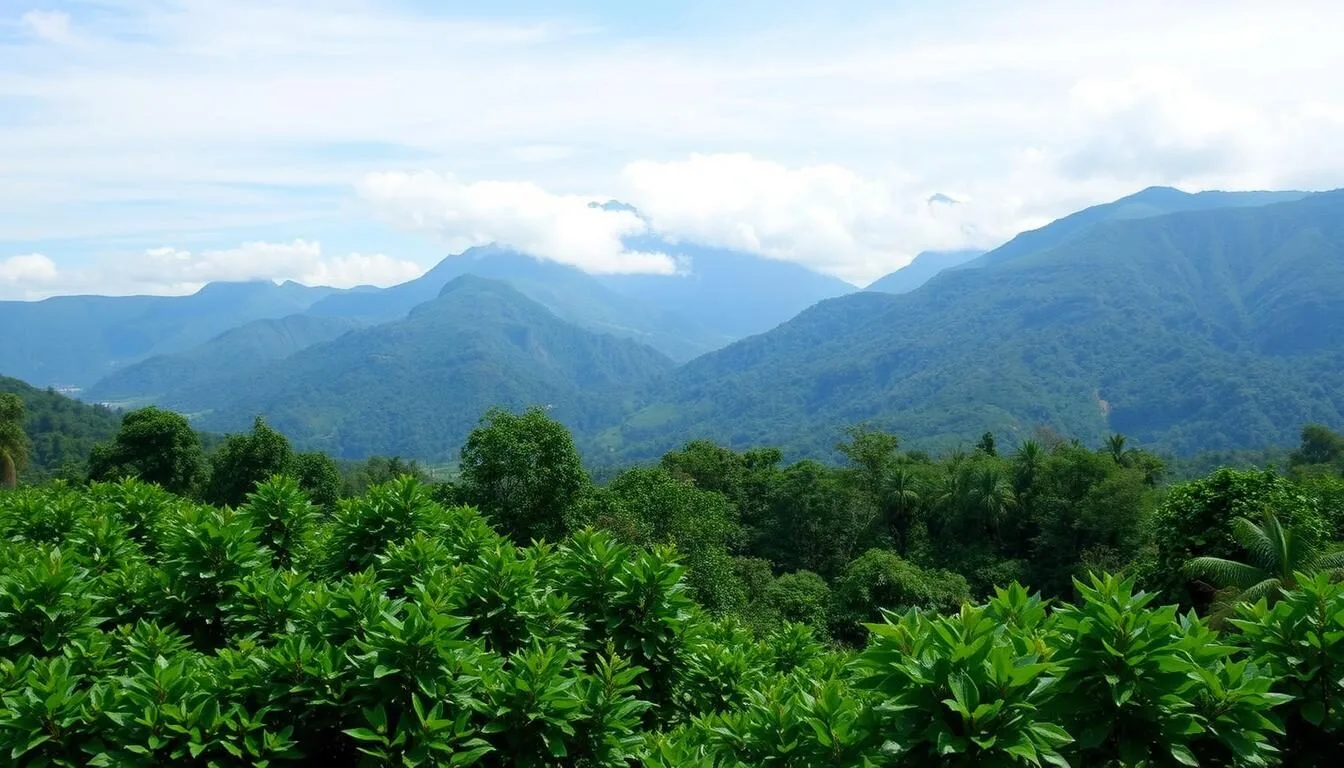
Hotels by Trip.com
Flights by Trip.com
Did you know that the Rwenzori Mountains receive fewer than 2,000 visitors annually, compared to Mount Kilimanjaro’s 50,000, despite being home to Africa’s third-highest peak and some of the continent’s last remaining glaciers? Often called the “Mountains of the Moon,” this UNESCO World Heritage site offers an otherworldly landscape where tropical rainforests give way to bamboo zones, heather-draped valleys, and snow-capped peaks—all within sight of the equator. For adventurous travelers seeking Africa’s best-kept mountain secret, the Rwenzori Mountains National Park delivers an unforgettable journey through some of the world’s most unique alpine environments.
Getting There & Planning Your Journey
The closest international gateway to the Rwenzori Mountains is Entebbe International Airport (EBB), located near Uganda’s capital, Kampala. From there, you have several options to reach the mountains:
- By Air: Daily flights connect Entebbe to Kasese Airport (about 1 hour), the nearest town to Rwenzori Mountains National Park.
- Private Transfer: A 6-8 hour drive from Entebbe to Kasese, which can be arranged through tour operators.
- Public Transportation: Buses depart hourly from Kampala to Kasese (journey time: 6-8 hours).
From Kasese, you’ll need to reach either Nyakalengija (Central Circuit trailhead) or Kilembe (Southern Circuit trailhead), about 12 km from Kasese. Most visitors arrange transportation through their tour operators or accommodations.
All trekking in the Rwenzori Mountains requires permits and guides. It’s highly recommended to book through a reputable tour operator who can handle logistics, permits, and provide experienced guides familiar with the challenging terrain.
Best Time to Visit & Weather Tips
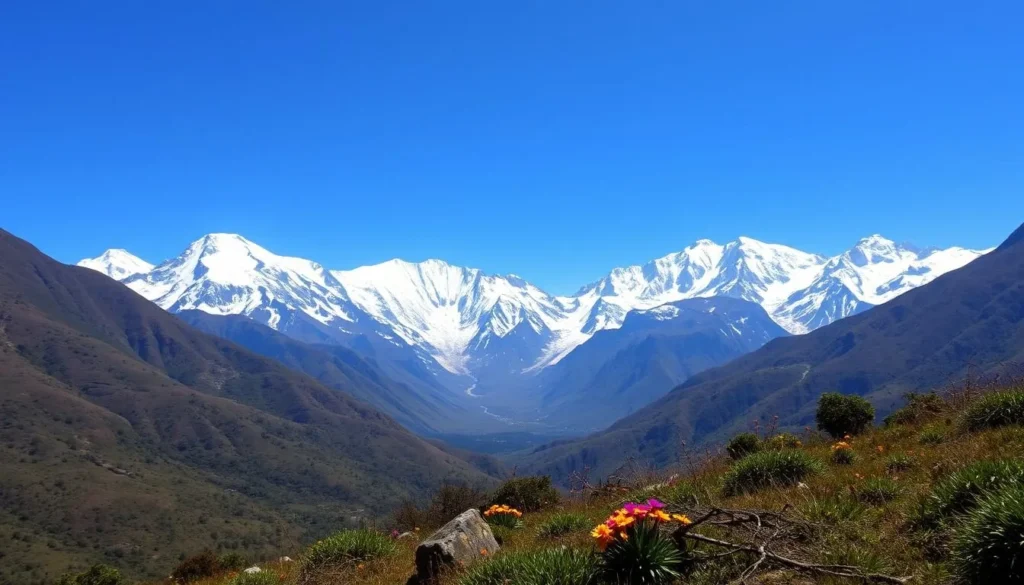
The Rwenzori Mountains experience a tropical climate modified by altitude, with two distinct dry seasons that offer the best trekking conditions:
Best Time to Visit Rwenzori Mountains National Park
Recommended Months
- December to February: Less rainfall, relatively stable weather conditions, and good visibility for mountain views.
- June to August: Another dry period with favorable trekking conditions and clearer skies.
Months to Avoid
- March to May: Long rainy season with heavy downpours, muddy trails, and poor visibility.
- September to November: Short rainy season with unpredictable weather patterns.
Even during the dry seasons, be prepared for rain at any time, as the Rwenzori Mountains create their own weather systems. Temperatures vary dramatically with altitude:
- Lower elevations (1,800-2,500 m): 15-20°C (59-68°F) during the day
- Mid elevations (3,000-4,000 m): 10-15°C (50-59°F) during the day, 2-6°C (36-43°F) at night
- Higher elevations (above 4,000 m): -5 to 5°C (23-41°F), with freezing temperatures common
Pro Tip: The Rwenzori Mountains receive over 3 meters of rainfall annually. Even during the dry season, come prepared with quality waterproof gear and multiple layers to adapt to rapidly changing conditions.
Getting Around Locally
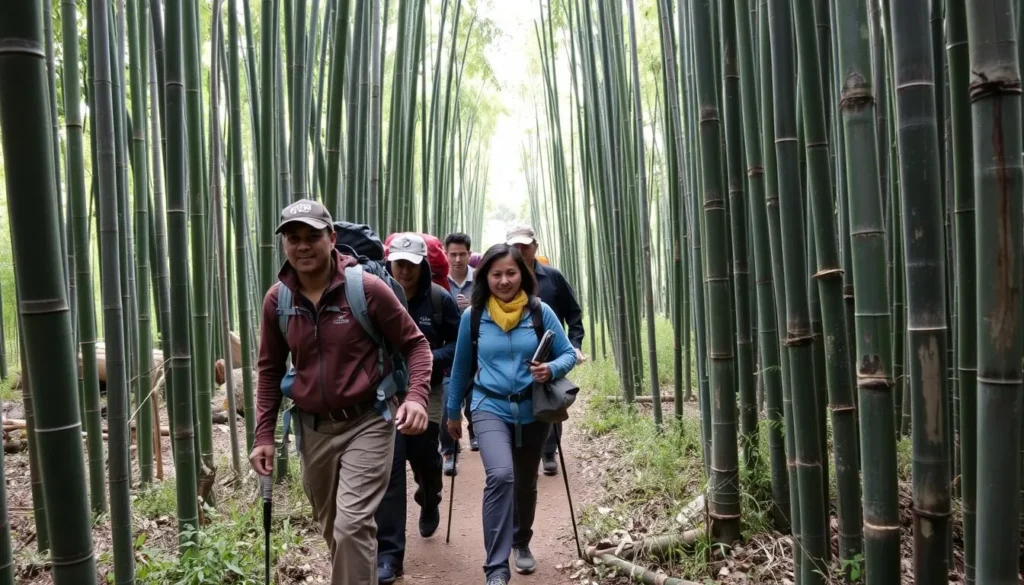
Once you arrive in the Rwenzori region, your options for getting around include:
- Private transfers: The most reliable option, usually arranged through your tour operator.
- Local taxis: Available in Kasese town for short distances.
- Boda bodas (motorcycle taxis): Common but not recommended for safety reasons, especially with luggage.
- Walking: Within the national park, all exploration is done on foot with guides.
For exploring the Rwenzori Mountains, you’ll be trekking on established trails with guides. The Southern Circuit (Kilembe Trail) is generally recommended as it offers more dramatic scenery and better acclimatization opportunities compared to the Central Circuit.
Where to Stay
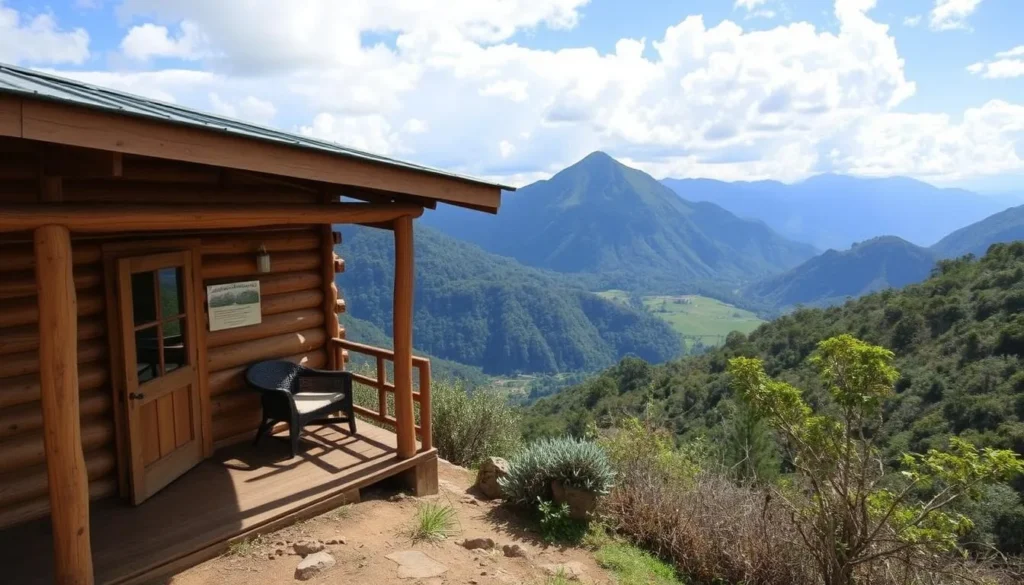
Accommodation options for your Rwenzori Mountains adventure fall into two categories: places to stay before/after your trek and accommodation during the trek itself.
Pre/Post-Trek Accommodation
Kasese Town
The gateway city to the Rwenzoris offers several comfortable hotels:
- Sandton Hotel Kasese
- Margherita Hotel
- Rwenzori International Hotel
Kilembe
Closest to the Southern Circuit trailhead:
- Rwenzori Trekkers Hostel
- Rwenzori Backpackers Hostel
Fort Portal
A larger town with more upscale options:
Check 30,000+ Local Sightseeing Tours Worldwide
✓ Numerous languages and currencies are available
- Kyaninga Lodge
- Mountains of the Moon Hotel
Accommodation During the Trek
While trekking in the Rwenzori Mountains, you’ll stay in basic wooden huts along the trail. These include:
- Sine Hut (2,596 m): First hut on the Kilembe Trail with dormitory-style bunk beds
- Kalalama Camp (3,134 m): Located in the heather zone with solar charging
- Mutinda Camp (3,588 m): Three cabins with bunk beds in the Afro-Alpine zone
- Kiharo Camp (3,460 m): Features solar power and views of the Nyamwamba Valley
- Bugata Camp (4,062 m): Higher elevation camp with views of glacial lakes
- Butawu Camp (3,974 m): Offers views of Mount Luigi di Savoia
Note: Mountain huts are basic with dormitory-style bunk beds, outside toilets, and limited facilities. Bring a good quality 4-season sleeping bag as temperatures drop significantly at night.
Dining & Local Cuisine
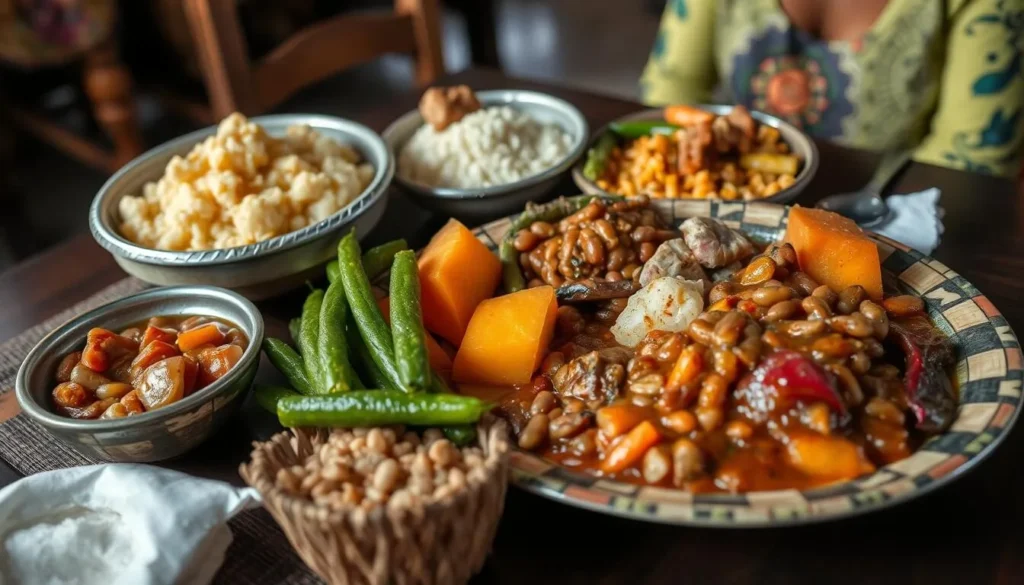
The culinary experience during your Rwenzori Mountains adventure will vary depending on whether you’re in town or on the mountain:
Local Cuisine in Kasese and Surrounding Areas
Before and after your trek, you can enjoy traditional Ugandan dishes at local restaurants:
- Matoke: Mashed green plantains, a staple food in Uganda
- Posho: A thick maize flour porridge
- Luwombo: Meat or groundnuts steamed in banana leaves
- Ugandan chapati: Flatbread often served with beans or meat stew
- Fresh tropical fruits: Pineapples, mangoes, and passion fruits
Mountain Meals During the Trek
While trekking, meals are prepared by cooks who accompany your expedition. The food is designed to be nutritious and energy-rich:
Breakfast
- Porridge (oat, millet, or rice)
- Eggs and toast
- Pancakes with syrup
- Tea, coffee, or hot chocolate
Dinner
- Rice or potatoes with vegetables
- Pasta with sauce
- Soups (mushroom, onion, tomato)
- Occasionally meat or chicken dishes
Lunches typically consist of sandwiches, chapati with jam, or other portable foods that can be eaten on the trail.
Pro Tip: Bring some of your favorite high-energy snacks to supplement meals during the trek. Energy bars, dried fruits, nuts, and chocolate are excellent for quick energy boosts between meals.
Attractions, Sightseeing & Activities
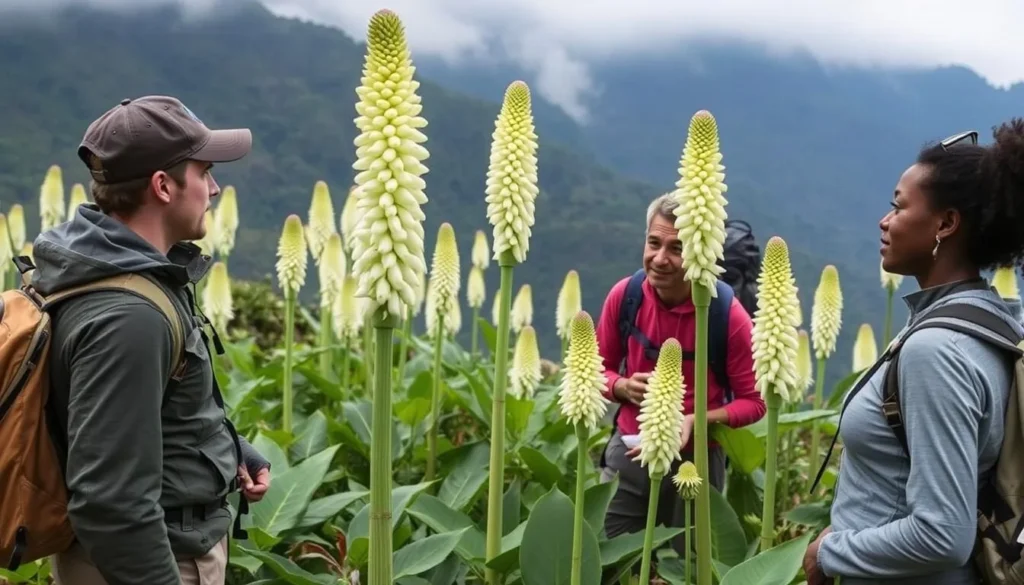
The Rwenzori Mountains National Park offers a wealth of natural attractions and activities for adventurous travelers:
Key Attractions in Rwenzori Mountains National Park
- Margherita Peak (5,109 m): Uganda’s highest point on Mount Stanley, offering panoramic views across Uganda and into the Democratic Republic of Congo
- Glacial Lakes: Several beautiful alpine lakes formed by glacial activity, including Lake Bujuku and the Kitandara Lakes
- Unique Vegetation Zones: Experience five distinct ecological zones as you ascend, from montane forest to the otherworldly Afro-Alpine zone with giant lobelias and groundsels
- Waterfalls: Numerous cascades throughout the mountains, especially in the lower regions
Popular Activities
Trekking
The primary activity in the Rwenzori Mountains, with routes ranging from 2-12 days depending on your goals and fitness level.
Photography
Capture the otherworldly landscapes, unique flora, and dramatic mountain scenery that make the Rwenzoris so special.
Wildlife Spotting
Look for endemic bird species, primates like black-and-white colobus monkeys, and small mammals throughout your journey.
Recommended Trekking Routes
To experience the Rwenzori Mountains National Park, you have several options:
- 2-3 Day Trek: Perfect for those with limited time, reaching Sine Hut (2,596 m) and exploring the montane forest zone
- 5-Day Weismann’s Peak Trek: Reaches 4,620 m and offers spectacular views without technical climbing
- 7-Day Mount Baker Trek: A challenging but non-technical trek to 4,842 m
- 8-10 Day Margherita Peak Trek: The most comprehensive trek that includes technical climbing to reach Uganda’s highest point at 5,109 m
Museums, Cultural Spots & Festivals
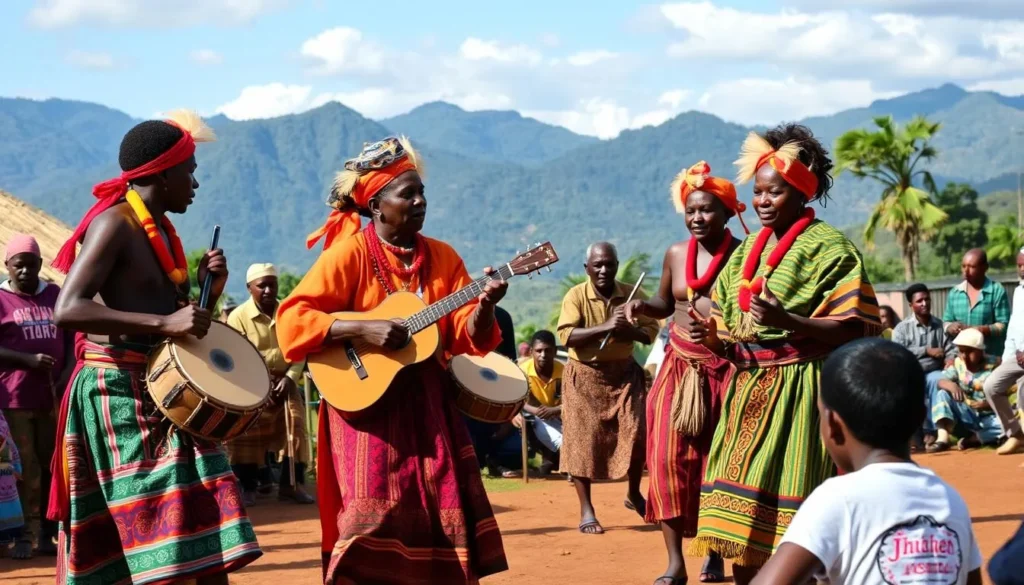
While the Rwenzori Mountains National Park is primarily a natural attraction, the surrounding region offers rich cultural experiences:
Cultural Experiences
- Bakonzo Community Visits: The indigenous people of the Rwenzori Mountains have lived in harmony with the mountains for centuries
- Ruboni Cultural Village: Located near the park entrance, offering demonstrations of traditional crafts, music, and dance
- Kasese Cultural Museum: Small museum displaying artifacts and information about local tribes
Local Traditions
The Bakonzo people consider the Rwenzori Mountains sacred, calling them “Rwenjura” (Rain Maker) in their local language. Their traditional beliefs and practices are deeply connected to the mountains:
- Traditional Healing: Local healers use plants from the mountains for medicinal purposes
- Blacksmithing: Traditional craft demonstrations in villages near the park
- Basket Weaving: Intricate patterns with cultural significance
Festivals
If your visit coincides with local celebrations, you might experience:
- Rwenzori Cultural Festival: Annual celebration of Bakonzo culture, usually held in December
- Independence Day (October 9): National celebrations throughout Uganda
- Empango (Coronation) Festival: Celebrating the Rwenzururu Kingdom’s heritage
Taking time to engage with local communities before or after your trek adds depth to your Rwenzori Mountains experience and contributes to the local economy.
Sports, Nature & Outdoor Experiences

The Rwenzori Mountains National Park offers some of Africa’s most unique outdoor experiences:
Flora & Fauna
As you ascend the Rwenzori Mountains, you’ll pass through five distinct vegetation zones, each with its own characteristic plants and animals:
Montane Forest (1,800-2,600 m)
Lush forests with primates, forest elephants, and numerous bird species including the colorful Rwenzori Turaco.
Bamboo Zone (2,600-3,000 m)
Dense bamboo stands mixed with forest, home to duikers and various bird species like the Handsome Francolin.
Heather Zone (3,000-3,800 m)
Giant heathers draped with moss and lichen create an otherworldly landscape that feels like walking through a fantasy novel.
Afro-Alpine Zone (3,800-4,500 m)
Giant lobelias, groundsels, and everlasting flowers dominate this lunar-like landscape that’s unique to high mountains in East Africa.
Glacial Zone (above 4,500 m)
Mostly rock and ice with minimal vegetation except for moss and lichen, offering spectacular views of the surrounding landscape.
Wildlife Highlights
Look for three-horned chameleons, black-and-white colobus monkeys, blue monkeys, and the 217 bird species that call the park home.
Photography Opportunities
The Rwenzori Mountains National Park offers exceptional photography opportunities:
- Sunrise/Sunset: Dramatic lighting on the mountains and valleys
- Macro Photography: Unique alpine flowers and insects
- Landscape Photography: Sweeping vistas from various viewpoints
Photography Tip: Protect your camera equipment from moisture with waterproof bags. The humid conditions can damage electronics, so bring extra batteries and keep them warm in cold temperatures.
Other Outdoor Activities
If you have extra time in the region, consider these additional activities:
- Day Hikes: Shorter trails like the Mahoma Trail or Ruboni Nature Walk
- Birding: The Rwenzori Mountains are home to 217 bird species, including 19 Albertine Rift endemics
- Cultural Walks: Guided tours of local villages to learn about traditional lifestyles
Safety, Etiquette & Local Customs
Safety Considerations
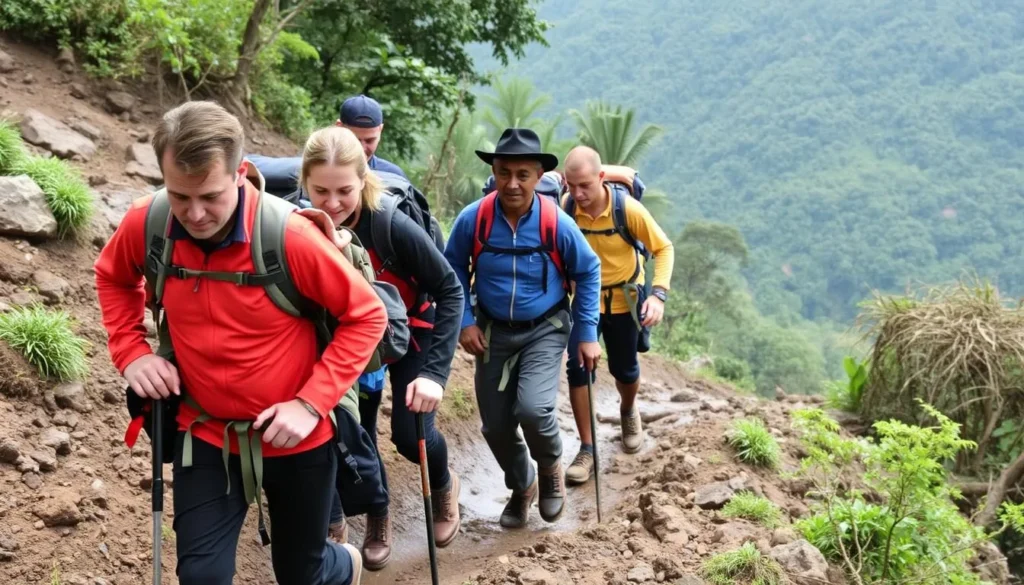
Trekking in the Rwenzori Mountains National Park presents several challenges that require careful preparation:
- Altitude Sickness: Acclimatize properly by choosing longer routes and ascending slowly
- Weather Conditions: Be prepared for sudden changes in weather, including heavy rain and cold temperatures
- Trail Conditions: Trails can be muddy, slippery, and challenging, requiring proper footwear and trekking poles
- Physical Fitness: Ensure you’re in good physical condition before attempting the trek
Important: Never trek alone in the Rwenzori Mountains. Always hire an official guide and follow their instructions. Guides are not only mandatory but essential for safety and navigation.
Cultural Etiquette
When interacting with local communities around the Rwenzori Mountains:
- Ask permission before taking photographs of people
- Dress modestly when visiting villages (cover shoulders and knees)
- Learn a few basic greetings in the local language (Lukonzo)
- Support local businesses by purchasing handicrafts and using local services
Environmental Responsibility
Help preserve the fragile ecosystem of the Rwenzori Mountains National Park:
- Follow the “Leave No Trace” principles
- Stay on designated trails to prevent erosion
- Never pick plants or disturb wildlife
- Carry out all trash, including biodegradable items
The Rwenzori Mountains National Park is a UNESCO World Heritage Site, and your responsible behavior helps ensure it remains pristine for future generations.
Visitor Comments About Rwenzori Mountains National Park
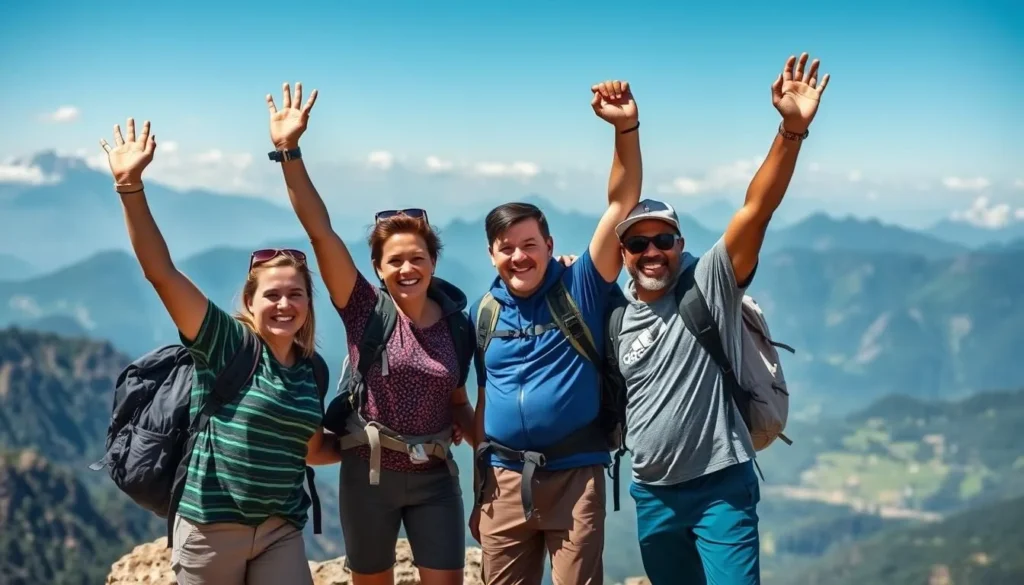
“The trek through Rwenzori Mountains National Park was the highlight of my Uganda trip. The landscapes are unlike anything I’ve seen elsewhere in Africa—from lush forests to the alien-like vegetation in the alpine zone. Our guide was incredibly knowledgeable about the flora and fauna. The mountain huts were basic but comfortable enough, and the views were absolutely worth every challenging step. If you’re considering this trek, definitely opt for the longer route to properly acclimatize and soak in the incredible scenery.”
“What struck me most about the Rwenzori Mountains was the solitude. Unlike Kilimanjaro, we barely saw other trekkers during our 8-day journey. The biodiversity is incredible—our guide pointed out endemic birds and plants I’d never heard of. Be prepared for rain and mud, even in the dry season! But the challenge makes reaching the viewpoints all the more rewarding. The local Bakonzo guides shared fascinating cultural insights that enriched the whole experience.”
“I’ve trekked in the Himalayas and the Andes, but the Rwenzori Mountains offered something completely different. The giant lobelias and heathers make you feel like you’re on another planet. The trails were tough and muddy, but our porters and guides were amazing. The mountain huts provide a welcome respite after long days of hiking. My advice: take it slow, bring plenty of waterproof gear, and don’t miss the chance to interact with the local communities. This is truly one of Africa’s best-kept secrets.”
Practical Travel Tips
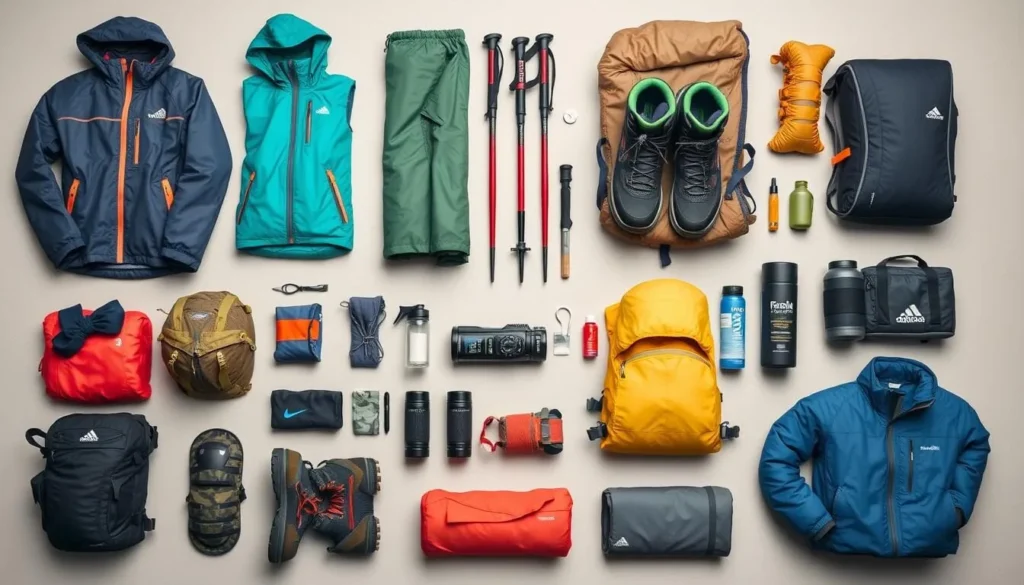
Essential Packing List
Clothing
- Waterproof jacket and pants
- Multiple layers (base layers, fleece, down jacket)
- Warm hat and gloves
- Hiking boots (well broken-in)
- Gaiters (for mud protection)
- Multiple pairs of wool socks
Equipment
- 4-season sleeping bag
- Trekking poles
- Headlamp with extra batteries
- Water purification tablets
- Daypack and waterproof cover
- Camera in waterproof case
Health & Medical
- Consult your doctor about altitude medication (Diamox)
- Bring a basic first aid kit including blister treatment
- Get vaccinations recommended for Uganda
- Consider malaria prophylaxis for lower elevations
- Bring high-SPF sunscreen (UV radiation is intense at altitude)
Money & Communications
- Bring cash (USD or Ugandan Shillings) for tips and small purchases
- There’s no cell service in the mountains
- Inform family/friends of your itinerary before departing
- Consider travel insurance that covers mountain rescue
Tipping Guide: It’s customary to tip your mountain crew at the end of your trek. Budget approximately $10-15 per day for guides, $8-10 per day for cooks, and $5-8 per day for porters, to be divided among the team.
Your Rwenzori Adventure Awaits
The Rwenzori Mountains National Park offers an extraordinary adventure for those willing to venture beyond the typical African safari experience. From the lush montane forests to the otherworldly alpine zones and the challenging but rewarding trek, this hidden gem provides memories that will last a lifetime.
What makes this mountain special isn’t just its dramatic landscapes or unique flora, but the sense of discovery and accomplishment that comes from exploring one of Africa’s least-visited mountain ranges. As climate change threatens the remaining glaciers of the Rwenzoris, there’s never been a more important time to witness this natural wonder.
Whether you’re an experienced mountaineer or an adventurous traveler seeking something truly different, the Rwenzori Mountains National Park promises an unforgettable journey through what early explorers aptly named the “Mountains of the Moon.”
Related Posts
Ziwa Rhino Sanctuary, Uganda: Best Things to Do – Top Picks

Ssese Islands (Lake Victoria), Uganda: Best Things to Do – Top Picks
Source of the Nile (Jinja), Uganda: Best Things to Do – Top Picks
Sipi Falls, Uganda: Best Things to Do – Top Picks
Semuliki National Park, Uganda: Best Things to Do – Top Picks
Sezibwa Falls, Uganda: Best Things to Do – Top Picks
Coming Soon: Clickable Maps