

Did you know Indonesia is home to over 700 languages, making it the second most linguistically diverse nation in the world after Papua New Guinea? Yet amid this incredible diversity, one phrase unites the entire archipelago: “Selamat datang!” (Welcome!). This linguistic tapestry is just one of the many fascinating aspects that make Indonesia an extraordinary destination for travelers seeking cultural immersion.
The Linguistic Landscape of Indonesia
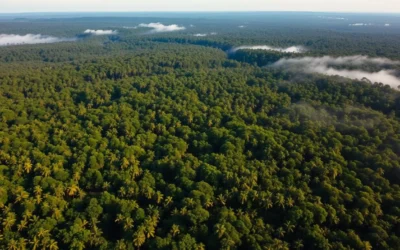
Indonesia’s rich linguistic diversity spans across 17,000+ islands
Indonesia’s official language is Bahasa Indonesia, a standardized form of Malay that serves as the national lingua franca. Adopted during the nationalist movement of the 1940s, it unites the nation’s 270+ million people across 17,000+ islands. What makes Indonesia truly remarkable is that alongside this official language, hundreds of regional languages continue to thrive in daily use.
For travelers, understanding this linguistic diversity not only enhances your journey but also shows respect for local cultures. While you can certainly get by with English in tourist areas, learning even basic Bahasa Indonesia will open doors to more authentic experiences and warmer welcomes from locals.
“Bahasa Indonesia belongs to the Austronesian language family and was deliberately chosen as a unifying language that wasn’t tied to any single dominant ethnic group—a remarkable example of language planning that helped forge national identity.”
Bahasa Indonesia: The Official National Language
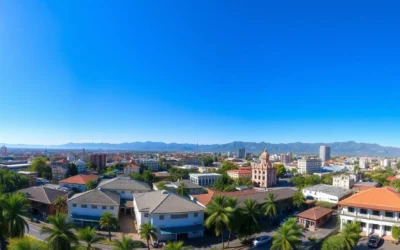
Bilingual street signs in Jakarta demonstrate the official status of Bahasa Indonesia
Bahasa Indonesia serves as the official language of government, education, national media, and business throughout the archipelago. Remarkably, it’s a second language for most Indonesians, who typically grow up speaking their regional mother tongue at home. The language uses Latin script and is known for its relatively straightforward pronunciation and grammar structure.
For travelers, learning some basic Bahasa Indonesia phrases can significantly enhance your experience. Unlike many Asian languages, it doesn’t use tones, and most words are pronounced exactly as they’re spelled. The language also doesn’t use grammatical gender or complicated verb conjugations, making it one of the more accessible languages for English speakers to learn.
Essential Bahasa Indonesia Phrases for Travelers
- Selamat pagi/siang/malam – Good morning/afternoon/evening
- Terima kasih – Thank you
- Permisi – Excuse me
- Berapa harganya? – How much does it cost?
- Di mana toilet? – Where is the toilet?
- Saya tidak mengerti – I don’t understand
- Tolong – Please/Help
Major Regional Languages of Indonesia

Traditional Javanese script (aksara Jawa) represents Indonesia’s second-largest language
While Bahasa Indonesia unifies the nation, the country’s cultural soul lives in its regional languages. These languages aren’t merely different dialects but distinct languages with their own scripts, literature, and cultural traditions. Here are the five most widely spoken regional languages you might encounter during your travels:
| Language | Speakers | Primary Regions | Notable Features |
| Javanese | 68+ million | Central & East Java | Complex speech levels based on social hierarchy |
| Sundanese | 32+ million | West Java | Two politeness levels (respectful and familiar) |
| Madurese | 7.7+ million | Madura Island, East Java | More similar to Balinese than Javanese |
| Bugis | 4.3+ million | South Sulawesi | Used by seafaring Bugis people with rich maritime history |
| Minangkabau | 4.2+ million | West Sumatra | Related to Malay but with distinct vocabulary and pronunciation |
When traveling through different regions of Indonesia, you’ll notice how language shapes local identity. In Java, for instance, the Javanese language has elaborate speech levels that reflect the island’s complex social hierarchies. Meanwhile, in Bali, the local language incorporates elements of Hindu philosophy and ritual that are central to Balinese culture.
Foreign Languages in Indonesia

International schools in major Indonesian cities offer multilingual education
Beyond indigenous languages, several foreign languages have significant roles in Indonesian society due to historical influences and modern globalization:
English
English functions as the primary foreign language in Indonesia, especially in tourism, international business, and higher education. In tourist areas like Bali, Jakarta, and Yogyakarta, you’ll find many Indonesians with conversational English skills. Road signs in major cities and tourist destinations are often bilingual in Bahasa Indonesia and English.
English proficiency varies widely across the country, with younger Indonesians and those in urban areas generally having better English skills. While not officially recognized as a second language, English is taught in schools from elementary levels onward.
Other Significant Foreign Languages
- Arabic: Widely studied for religious purposes, as Indonesia has the world’s largest Muslim population
- Mandarin: Growing in importance due to economic ties with China and the significant Chinese-Indonesian community
- Dutch: Still found in legal documents and among older generations due to colonial history
- Japanese: Popular for business and cultural reasons, with many Indonesians working in Japanese companies
- Korean: Increasing popularity due to K-pop and Korean drama influence
Language Tips for Travelers to Indonesia

Translation apps can bridge communication gaps in local markets
Language Advantages
- Bahasa Indonesia uses Latin alphabet, making signs readable
- English is widely understood in tourist areas
- Indonesians appreciate even basic attempts at their language
- Pronunciation is generally phonetic and straightforward
- Translation apps work well with Indonesian
Language Challenges
- Regional languages may dominate in rural areas
- English proficiency decreases outside tourist zones
- Some concepts don’t translate directly
- Indonesian has different formal/informal speech
- Pronunciation of certain sounds (like ‘c’ = ‘ch’)
Recommended Language Resources
Apps
- Google Translate (offline Indonesian pack)
- Duolingo
- Babbel
- Drops
Phrasebooks
- Lonely Planet Indonesian Phrasebook
- Tuttle Concise Indonesian Dictionary
- Pocket Indonesian Dictionary
Online Resources
- IndonesianPod101
- Learning Indonesian YouTube channels
- Indonesia Expat forums
Language Guide by Popular Destinations

Cultural performances often provide explanations in multiple languages
Bali
Primary languages: Balinese, Bahasa Indonesia
Tourist language: English widely spoken in tourist areas
Unique feature: Balinese has its own script and vocabulary heavily influenced by Sanskrit due to Hindu traditions
Useful phrase: “Om swastiastu” (Hello/Greetings with peace)
Jakarta
Primary languages: Bahasa Indonesia, Betawi (Jakarta dialect)
Tourist language: English common in business districts and malls
Unique feature: Betawi dialect incorporates Chinese, Arabic and Dutch influences
Useful phrase: “Gue dari mana nih?” (Where am I from? – in Betawi dialect)
Yogyakarta
Primary languages: Javanese, Bahasa Indonesia
Tourist language: English spoken at major attractions
Unique feature: Javanese has three politeness levels based on social hierarchy
Useful phrase: “Monggo” (Please/After you – polite Javanese)
Major language regions across the Indonesian archipelago
Endangered Languages and Preservation Efforts

Cultural preservation efforts aim to document and revitalize endangered languages
Of Indonesia’s 700+ languages, 63 are classified as endangered according to Ethnologue, with many more at risk. Urbanization, media influence, and the dominance of Bahasa Indonesia have contributed to this linguistic vulnerability. For travelers interested in linguistic preservation, several regions offer opportunities to learn about conservation efforts:
Notable Language Preservation Projects
- Sulawesi Language Alliance: Working to document and preserve minority languages in Sulawesi
- Papuan Languages Project: Recording and archiving endangered languages in Papua
- Balinese Language Center: Promoting Balinese language use among younger generations
- Jakarta Field Station: Linguistics research center documenting urban language evolution
Visiting cultural centers and museums across Indonesia often provides insight into language preservation efforts. In regions like Papua and Maluku, where linguistic diversity is highest but also most threatened, community-based tourism initiatives sometimes include language workshops where visitors can learn about preservation challenges.
Planning Your Language-Focused Journey to Indonesia

Language schools in Bali offer immersive Bahasa Indonesia courses for travelers
For travelers interested in Indonesia’s linguistic diversity, consider these planning tips to enhance your cultural experience:
Before You Go
- Learn basic Bahasa Indonesia phrases
- Download offline translation apps
- Research regional languages of your destinations
- Consider a short online language course
- Pack a pocket phrasebook
Language Learning Options
- Language schools in Bali and Yogyakarta
- Homestay programs with language components
- University cultural exchange programs
- Language exchange meetups in major cities
- Cultural centers offering workshops
Language-Focused Experiences
- Traditional puppet shows (wayang)
- Local markets with language guides
- Cooking classes teaching food vocabulary
- Cultural performances with narration
- Guided tours in multiple languages
Travel Tip: Language Etiquette
In Indonesia, language use is tied to respect. When addressing elders or officials, using formal language is important. In Javanese-speaking regions, using the wrong speech level can be considered rude. When in doubt, use Bahasa Indonesia with polite terms like “Bapak” (Sir) and “Ibu” (Madam) before names.
Embracing Indonesia’s Linguistic Tapestry
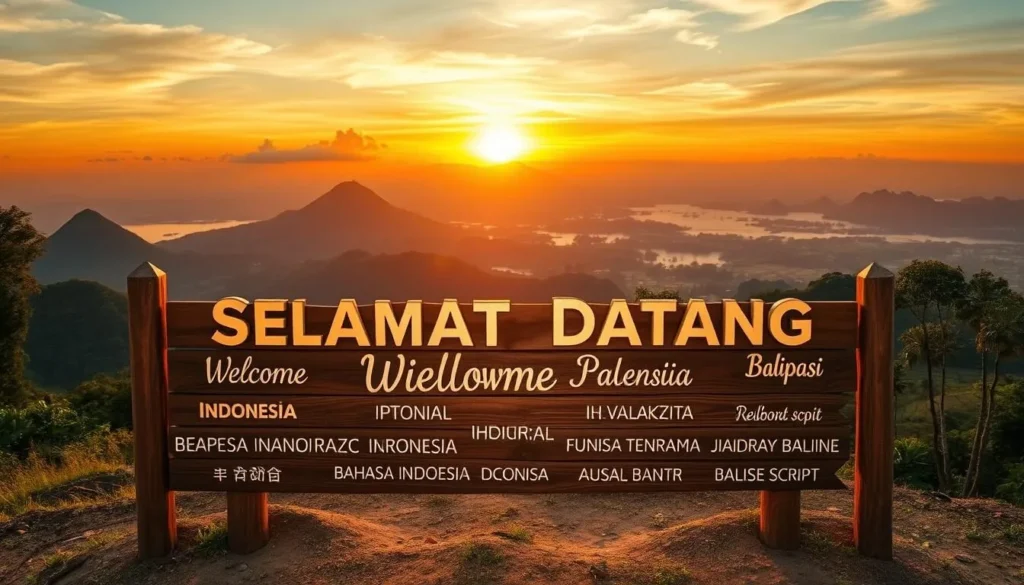
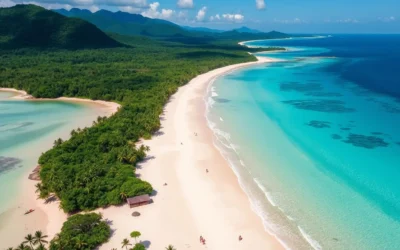
Indonesia welcomes visitors with “Selamat Datang” across its diverse linguistic landscape
Indonesia’s linguistic diversity reflects its rich cultural tapestry, with each language telling the story of the archipelago’s complex history and vibrant present. From the official Bahasa Indonesia that unites the nation to the hundreds of regional languages that preserve local identities, language is an essential part of the Indonesian experience.
As you travel through this remarkable country, each attempt to speak the local language—whether it’s basic Bahasa Indonesia or a few words in a regional tongue—will be met with genuine appreciation and often open doors to deeper cultural connections. The phrase “Bahasa menunjukkan bangsa” (Language reflects the nation) rings true throughout Indonesia, where linguistic heritage remains a source of pride and identity.
Ready to say “Sampai jumpa lagi” (See you again) to ordinary vacations and experience the extraordinary linguistic journey that Indonesia offers? The archipelago’s warm hospitality awaits, regardless of which of its 700+ languages you encounter.
0 Comments