Did you know that Dingle Peninsula harbors over two thousand ancient archaeological sites within its compact 50 km (31 mi) stretch? This remarkable density makes it one of the richest historical landscapes in all of Europe. Tucked away on Ireland’s southwest coast, this finger of land pointing into the wild Atlantic has captivated travelers for generations.
The peninsula takes its name from Dingle town, whose Irish name “Daingean Uí Chúis” means “fort of Ó Chúis,” referring to a local chieftain who once ruled these lands. Today, this magical corner of County Kerry draws visitors with its dramatic coastline, vibrant Gaelic culture, and an authenticity that feels increasingly rare.
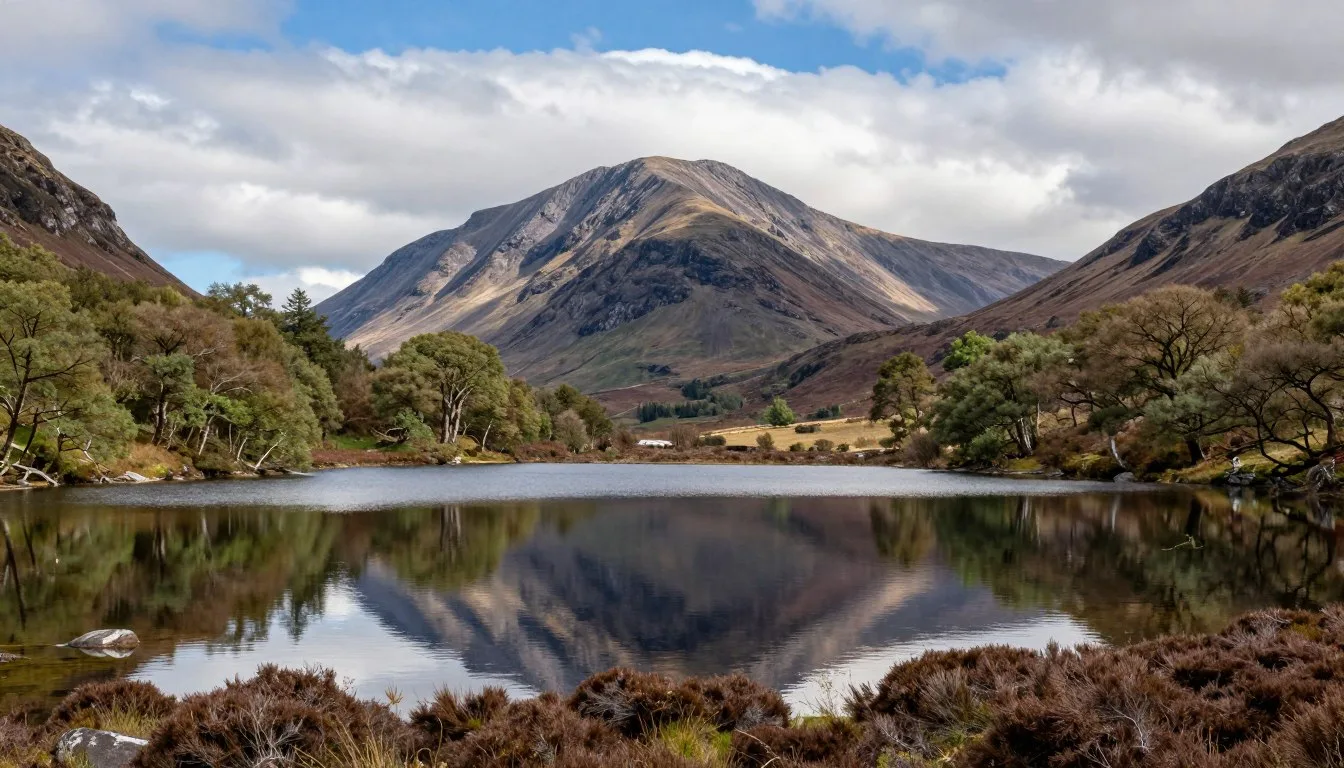
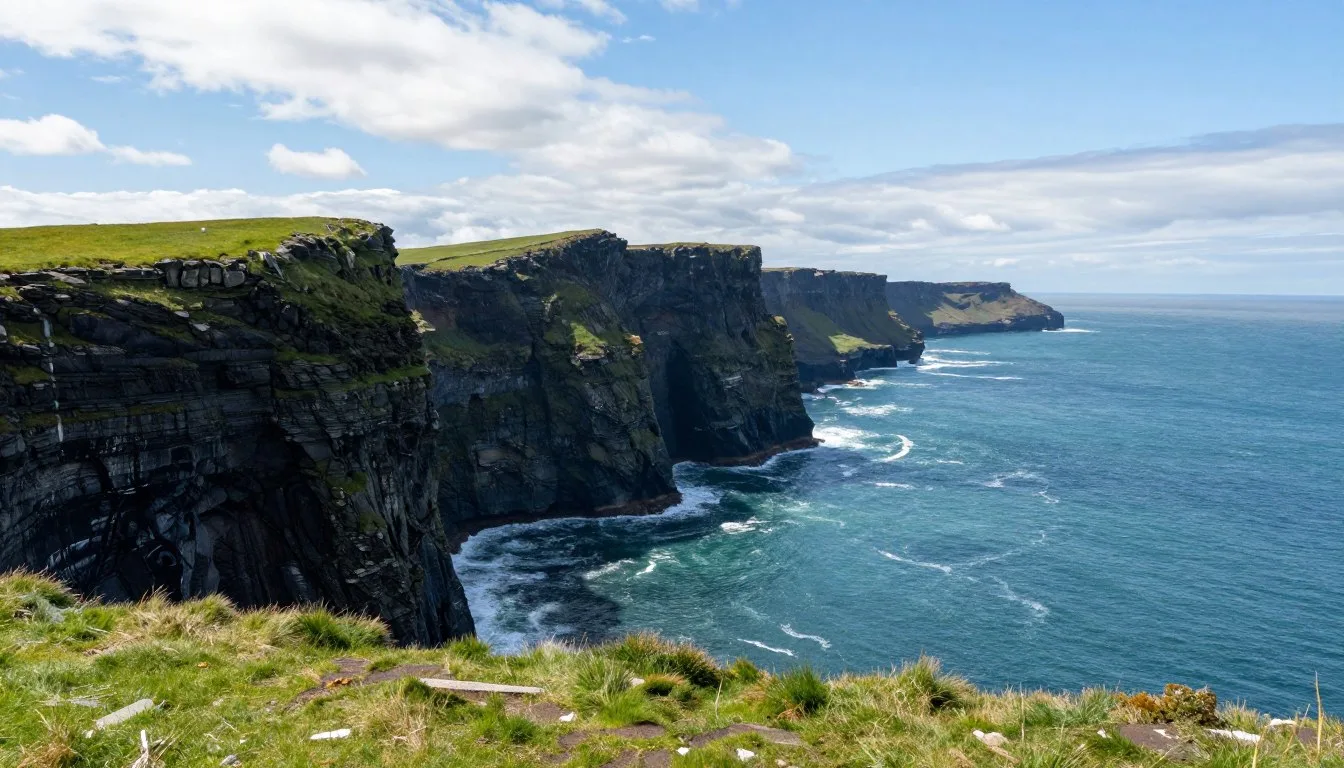
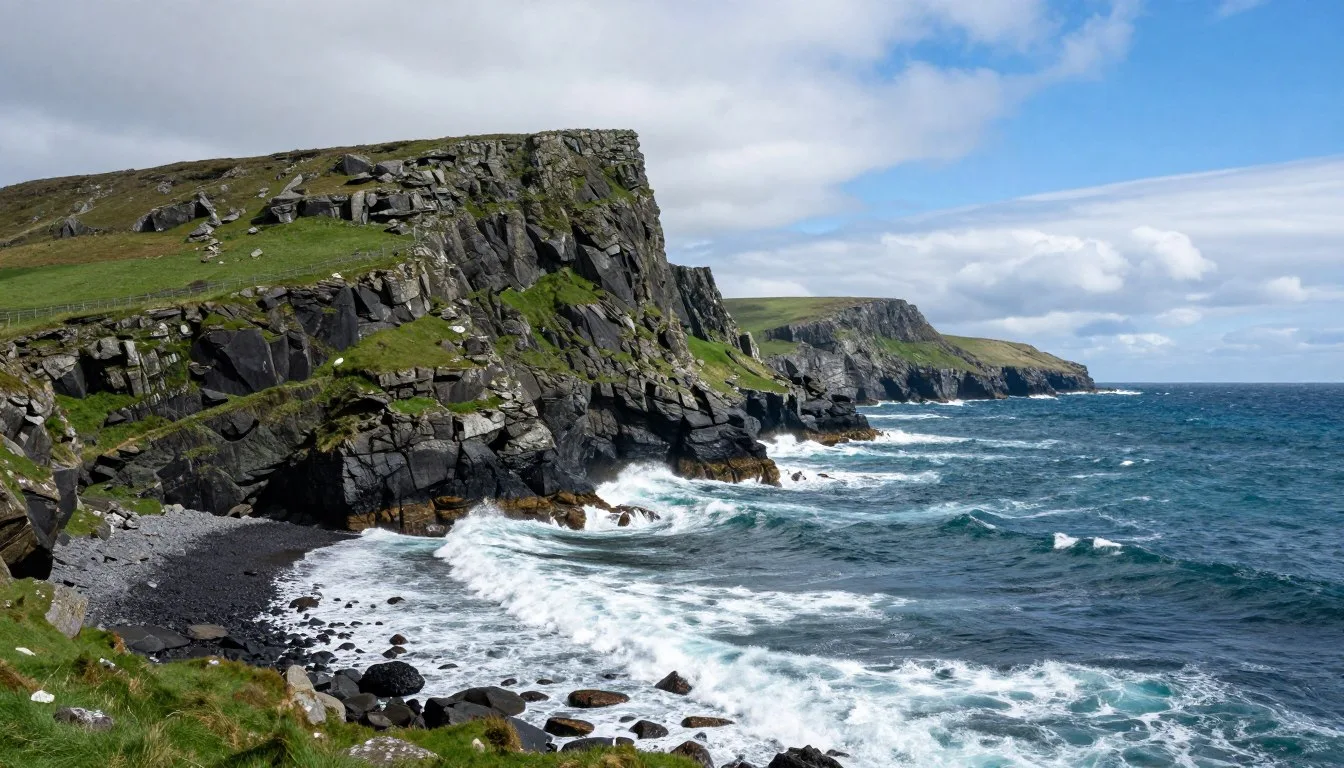
Beyond the statistics and history lies something more profound. The Dingle Peninsula Ireland experience combines rugged natural beauty with warm Irish hospitality. Ancient beehive huts dot green hillsides. Traditional pubs ring with music each evening. The Wild Atlantic Way carves past cliffs where seabirds wheel and dive.
This guide unpacks everything you need to plan your Dingle Peninsula adventure. From the best months to visit to hidden beaches locals cherish, you will find practical advice mixed with insider tips. Whether you are drawn by history, outdoor adventures, or simply the promise of a perfect pint in a centuries-old pub, this corner of Ireland delivers.
Getting There & Planning Your Journey
Reaching Dingle Peninsula requires a bit of planning, but the journey forms part of the adventure. The peninsula sits in County Kerry on Ireland’s southwest coast. Most travelers arrive through one of two major airports before completing the journey by road.
Kerry Airport, located just 45 km (28 mi) from Dingle town, serves as the closest option. This smaller airport receives flights from Dublin, London, and several European cities during peak season. The drive from Kerry Airport takes roughly 50 minutes through scenic countryside.
Cork Airport represents the second nearest option, positioned 145 km (90 mi) from the peninsula. As Ireland’s second-busiest airport, Cork offers more international connections year-round. The drive takes approximately two hours through charming Irish villages and rolling green farmland.
Shannon Airport, though further at 110 km (68 mi), provides another viable entry point with strong transatlantic connections. The journey to Dingle takes about 90 minutes. Many travelers combine Shannon with visits to the Cliffs of Moher and the Burren.
Car rental makes the most sense for exploring the peninsula. Public transport exists but runs infrequently. Having your own vehicle allows freedom to stop at viewpoints, explore hidden beaches, and travel at your own pace. Book vehicles in advance during summer months when demand peaks.
The drive from Dublin takes four to five hours covering 360 km (224 mi). Many visitors break the journey with overnight stops in Killarney or Kenmare. This approach turns travel time into sightseeing opportunity.
Journey Planning Tips
- Book accommodation at least three months ahead for summer visits
- Allow extra driving time for narrow roads and frequent photo stops
- Download offline maps as mobile signal can be spotty in remote areas
- Fill fuel tanks before exploring remote coastal routes
Essential Items to Pack
- Waterproof jacket regardless of season
- Comfortable walking shoes with good grip
- Layers for changeable weather conditions
- Camera with extra batteries for countless photo opportunities
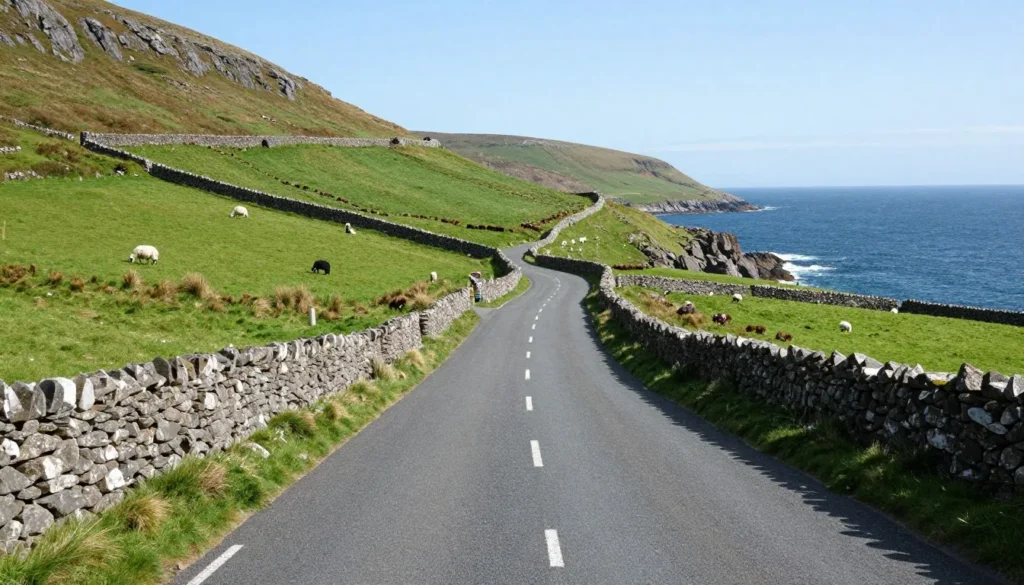
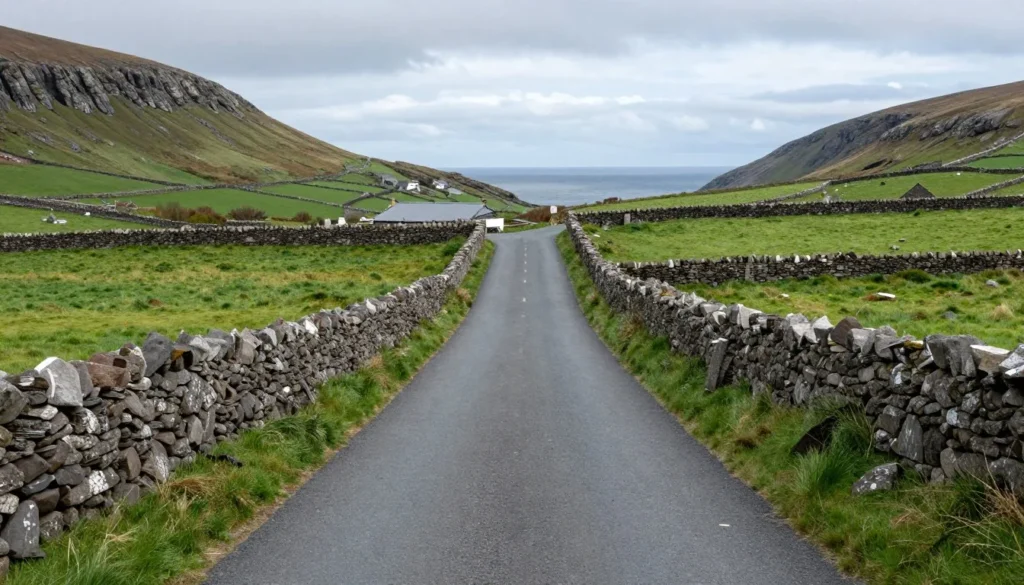
International visitors should remember that Ireland drives on the left side of the road. Roads on the peninsula can be narrow and winding. Stone walls line many routes, leaving little margin for error. Take your time and enjoy the stunning views that unfold around each corner.
Best Time to Visit & Weather Tips
Best Time to Visit Dingle Peninsula
Timing your visit to Dingle Peninsula significantly impacts your experience. Each season brings distinct advantages and challenges. Understanding weather patterns and crowd levels helps you choose the perfect window for your trip.
Late spring through early autumn, specifically May through September, represents peak season. These months deliver the longest days, warmest temperatures, and most reliable weather. July and August see temperatures averaging 15-18°C (59-64°F), perfect for coastal walks and outdoor activities.
May and June offer exceptional value. Wildflowers blanket hillsides in color. Tourist numbers remain manageable. Days stretch long with sunset arriving after 21:00. The landscape glows green after spring rains. Temperatures hover around 12-15°C (54-59°F), comfortable for hiking and exploration.
September delivers another sweet spot. Summer crowds thin but weather often holds pleasant. Water temperatures reach their annual peak, ideal for brave swimmers. Early autumn light bathes landscapes in golden hues perfect for photography. Expect temperatures similar to late spring.
Weather Reality Check: Irish weather changes quickly. Morning sunshine can give way to afternoon showers within minutes. Pack layers and waterproof gear regardless of forecast. Locals say if you don’t like the weather, wait twenty minutes.
Winter months from November through February bring challenges. Days shrink to eight hours of daylight. Storms roll in from the Atlantic with impressive force. Many tourist facilities close or reduce hours. However, winter reveals a different beauty. Dramatic waves crash against cliffs. Cozy pubs glow warmly. Prices drop significantly.
March and April mark shoulder season. Weather proves unpredictable but improving. Easter brings the first surge of visitors. These months suit travelers seeking solitude and authentic local experiences. Temperatures range from 8-12°C (46-54°F).
Recommended Months
- May: Perfect balance of weather and crowds
- June: Long days, wildflowers, warm temperatures
- September: Pleasant weather, fewer tourists, beautiful light
- October: Crisp days, autumn colors, lower prices
Months to Reconsider
- January-February: Short days, frequent storms, many closures
- August: Peak crowds, highest prices, advance bookings essential
- November: Unpredictable weather, limited daylight hours
- December: Winter storms, holiday closures, dark afternoons
Rainfall occurs year-round but peaks from October through January. The peninsula receives approximately 1,400 mm (55 in) annually. Showers typically pass quickly. Rarely does rain persist all day. The ever-changing weather contributes to the dramatic landscapes and vibrant green countryside.
Wind presents another consideration. Atlantic gales can reach impressive speeds, particularly along exposed coastal sections. Strong winds make outdoor activities challenging in winter. They also create spectacular wave displays that photographers cherish.
Notable Annual Festivals
Dingle Peninsula pulses with cultural energy throughout the year. Traditional festivals celebrate music, film, food, and Irish heritage. These events offer windows into authentic local life and Gaelic traditions that thrive here.
The Dingle Food Festival transforms the town each October. For three days, chefs, producers, and food lovers gather to celebrate Kerry’s culinary traditions. Cooking demonstrations, farmers’ markets, and restaurant specials showcase local ingredients. Seafood features prominently, harvested fresh from Atlantic waters. The festival typically runs during the first weekend of October.
Dingle Food Festival Enquiries
Féile na Bealtaine marks the arrival of summer each May. This traditional Celtic festival celebrates the end of winter with bonfires, music sessions, and dancing. Ancient rituals blend with modern celebrations. The festival centers on May Day but events spread across the long weekend.
Other Voices music festival brings intimate performances to Dingle each December. International and Irish musicians play in the beautiful St. James Church. The festival has grown into one of Ireland’s most respected music events. Tickets sell quickly when released each autumn.
The Dingle Regatta harks back to 1866, making it one of Ireland’s oldest maritime festivals. Racing boats compete in the harbor each August. The weekend includes street entertainment, traditional boat displays, and lively pub sessions. The regatta showcases the peninsula’s deep connection to the sea.
St. Patrick’s Festival envelops the entire peninsula each March. While centered on March 17th, celebrations extend across several days. Parades wind through Dingle town. Traditional music fills pubs from morning until night. Green dominates every view as locals and visitors celebrate Ireland’s patron saint.
Spring & Summer Events
- Féile na Bealtaine (May Day weekend)
- Dingle Walking Festival (late May)
- Dingle Races (various dates, summer months)
- Dingle Regatta (mid-August)
Autumn & Winter Events
- Dingle Food Festival (early October)
- Samhain Celtic Festival (late October)
- Other Voices Music Festival (early December)
- St. Stephen’s Day Hunt (December 26th)
These festivals represent just a sampling of events that animate the peninsula throughout the year. Smaller gatherings happen regularly. Traditional music sessions occur nightly in many pubs, no special occasion needed. The peninsula maintains living traditions rather than staging performances for tourists.
Getting Around Locally
Navigating Dingle Peninsula requires understanding its road network and transportation options. The peninsula measures roughly 50 km (31 mi) from east to west and 15 km (9 mi) north to south at its widest point. While compact, the winding coastal roads mean journeys take longer than distance suggests.
The main route, designated R559, forms a scenic loop called Slea Head Drive. This 47 km (29 mi) circuit ranks among Ireland’s most spectacular coastal roads. Plan at least three hours to complete the loop with stops for photographs and short walks. Many travelers spend an entire day savoring the views and exploring points of interest.
Driving your own car provides maximum flexibility. Roads vary from modern two-lane highways to narrow single-track lanes with passing places. Stone walls border many routes, requiring careful attention. Rental cars come in manual transmission as standard, so request automatic specifically if needed.
Road Etiquette: On narrow roads, the vehicle nearest a passing place should pull in. Flash headlights or raise a hand to thank other drivers. Allow agricultural vehicles plenty of room. Sheep often occupy roads, so drive slowly and patiently wait for them to move.
Parking in Dingle town can challenge visitors during peak season. Public car parks sit near the marina and on John Street. Arrive early in summer months to secure spaces. Most attractions outside town offer adequate parking.
Bus Éireann operates limited service connecting Dingle town with Tralee and other Kerry destinations. Services run two to four times daily depending on season. Buses prove useful for reaching the peninsula but lack frequency for exploring it thoroughly.
Bicycle touring has gained popularity on the peninsula. The terrain presents challenges with steep hills, particularly approaching Conor Pass. Electric bikes make the journey more manageable. Several shops in Dingle town rent standard and electric bicycles. Book ahead during summer.
Organized tours provide transportation and expert commentary. Bus tours depart daily from Dingle town and Killarney. Smaller group tours in mini-coaches offer more personalized experiences. Private driver-guides cost more but allow customized itineraries.
Taxi services operate from Dingle town but cost adds up quickly for full-day exploration. Arrange rates in advance for longer journeys. Local drivers often share insider knowledge about the best viewpoints and hidden spots.
Walking forms the best way to experience many attractions. Short trails lead to beehive huts, beaches, and viewpoints. Serious hikers tackle the Dingle Way, a 179 km (111 mi) walking route circling the peninsula. The complete walk takes eight to nine days, though many people walk shorter sections.
Driving Distances from Dingle Town
- Slea Head: 16 km (10 mi), 25 minutes
- Dunmore Head: 18 km (11 mi), 30 minutes
- Gallarus Oratory: 12 km (7.5 mi), 18 minutes
- Conor Pass summit: 9 km (5.6 mi), 20 minutes
Transportation Tips
- Fill fuel tank before coastal drives
- Download offline maps for areas with poor signal
- Start Slea Head Drive in morning for best light
- Allow double the GPS time estimate for scenic routes
The Conor Pass road, climbing to 440 m (1,443 ft), represents the highest mountain pass in Ireland. The narrow, winding route features hairpin turns and steep gradients. Take it slowly and use passing places. The views from the summit are absolutely worth the careful driving required.
Where to Stay
Accommodation options span the spectrum from luxury hotels to cozy bed and breakfasts. Dingle town serves as the primary base, offering the widest selection of lodging, dining, and entertainment. Smaller villages and rural locations provide quieter alternatives.
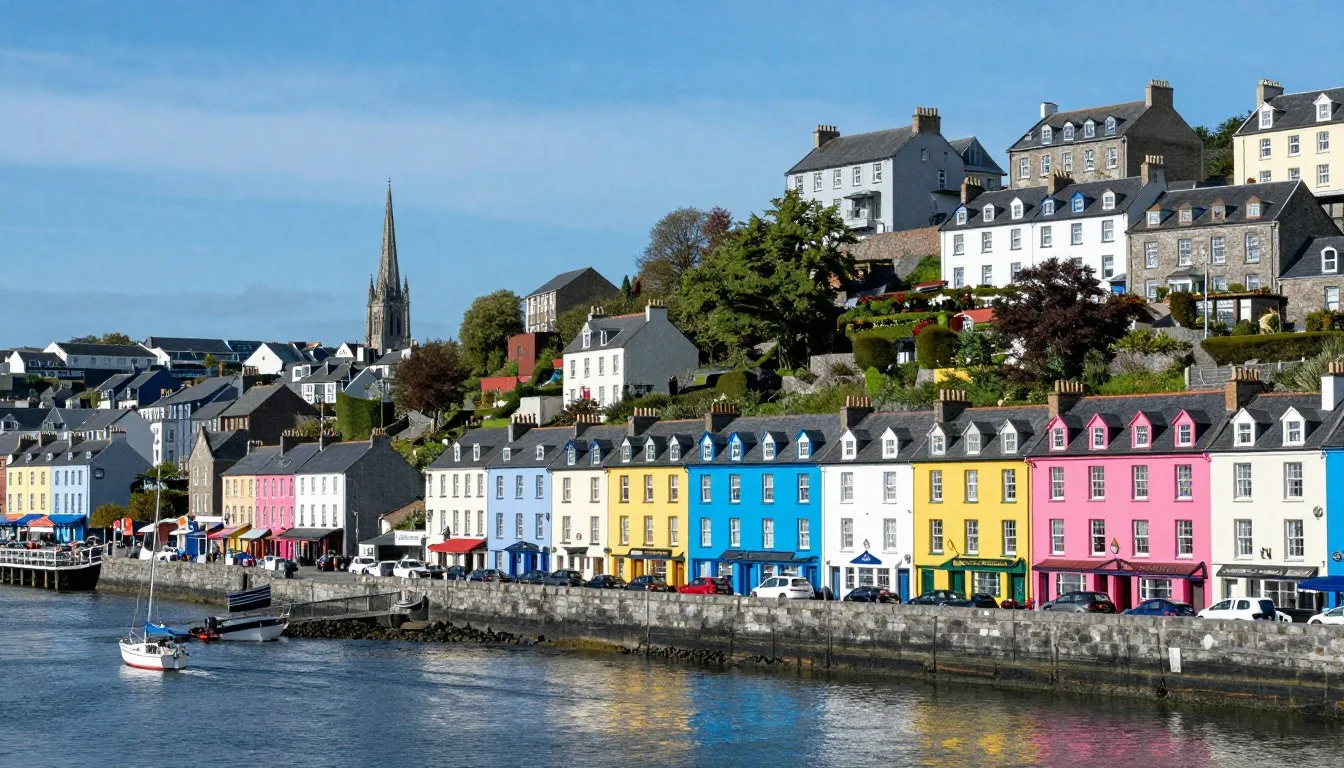
Dingle town accommodations put you steps from pubs, restaurants, and shops. The harbor location adds charm with colorful buildings and fishing boats. Hotels here range from modern boutique properties to historic coaching inns. Expect to pay premium rates during summer months and festival periods.
Bed and breakfasts represent quintessential Irish hospitality. Family-run establishments offer comfortable rooms and hearty breakfasts featuring local ingredients. Hosts frequently share insider tips about the area. B&Bs dot the entire peninsula, from Dingle town to remote coastal locations.
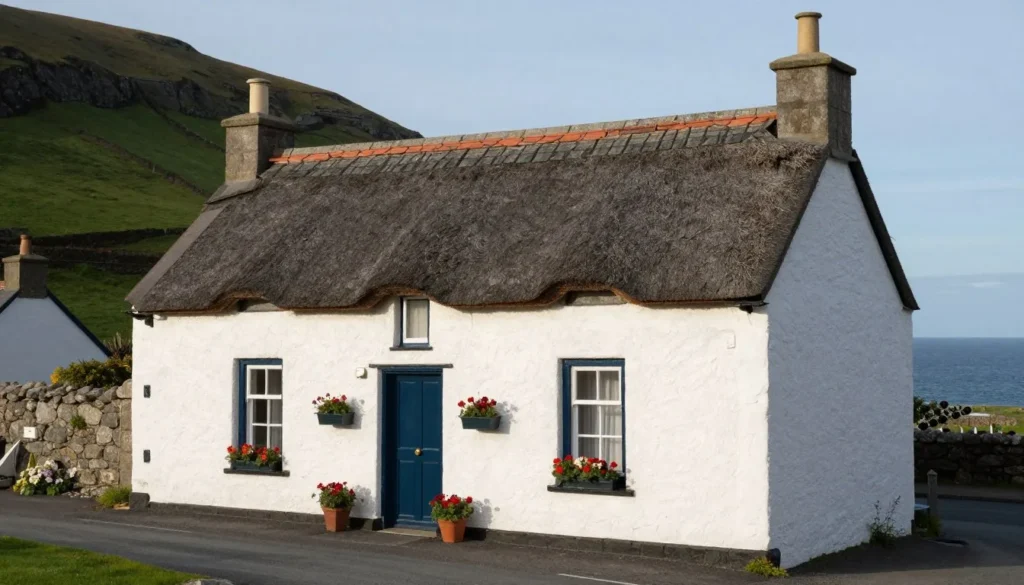
Self-catering cottages appeal to families and groups planning longer stays. Traditional stone cottages blend modern amenities with period character. Rural settings provide peace and stunning views. Weekly rentals prove economical for four or more people. Book well in advance for summer availability.
Guesthouses bridge the gap between hotels and B&Bs. These small properties typically offer six to twelve rooms with ensuite bathrooms. Some include restaurants or lounges. Guesthouses deliver hotel-like amenities with personal service that larger properties cannot match.
Hostel accommodation exists in Dingle town for budget-conscious travelers. Dormitory beds and private rooms cost considerably less than hotels. Hostels foster social atmospheres where travelers share experiences and tips. Some feature excellent locations in converted historic buildings.
Camping and glamping sites appeal to outdoor enthusiasts. Several campgrounds offer pitches for tents and caravans with basic facilities. Glamping options provide pre-erected tents or pods with comfortable furnishings. These outdoor stays connect visitors directly with the peninsula’s natural beauty.
Dingle Town Benefits
- Walking distance to restaurants and pubs
- Widest range of accommodation options
- Central location for exploring peninsula
- Evening entertainment and music sessions
Rural Location Benefits
- Peace and quiet, stunning views
- Lower rates than town center
- Immersive countryside experience
- Dark skies perfect for stargazing
Other villages worth considering include Ballyferriter, Dunquin, and Annascaul. These small settlements offer authentic local life away from tourist crowds. Accommodation is limited but often excellent value. You will need a car as amenities are sparse.
Advance booking becomes essential from June through August. Popular properties sell out months ahead. Easter week and bank holiday weekends also require early reservations. Shoulder season offers more flexibility, though the best places still fill up.
Price ranges vary significantly by season and accommodation type. Budget 80-120 euros per night for standard B&B doubles in summer. Hotel rooms start around 150 euros and climb steeply for luxury properties. Self-catering cottages run 600-1,500 euros weekly depending on size and location.
Minimum Stays: Many properties require two or three-night minimum stays during peak season and festivals. Single-night bookings may incur surcharges. Plan accordingly when mapping your Ireland itinerary.
Dining & Local Cuisine
Dingle Peninsula’s dining scene celebrates fresh seafood, artisan producers, and traditional Irish fare. The Atlantic provides abundant fish and shellfish. Local farms supply lamb, beef, and vegetables. Small food producers craft cheeses, chocolates, and preserves.
Seafood dominates menus throughout the peninsula. Fishing boats land catches daily in Dingle harbor. Restaurants serve lobster, crab, monkfish, and whatever else the boats bring in. Fish and chips shops fry fresh cod and haddock to golden perfection. Seafood chowder appears on nearly every menu, each pub claiming the best recipe.
Traditional pubs serve hearty meals alongside pints of Guinness. Irish stew, made with local lamb, warms visitors on cool days. Bacon and cabbage represents classic comfort food. Boxty, a potato pancake, features on many menus. Pubs also offer steaks from Kerry cattle and vegetarian options.

Fine dining restaurants showcase modern Irish cuisine. Talented chefs transform local ingredients into innovative dishes. Tasting menus might feature smoked salmon, Kerry lamb, foraged herbs, and artisan cheeses. These establishments require reservations, especially during summer months.
Cafes and bakeries provide excellent breakfast and lunch options. Many bake bread daily using traditional methods. Scones with jam and cream make perfect afternoon treats. Coffee culture has evolved, with skilled baristas crafting excellent espresso drinks.
The peninsula supports numerous artisan food producers. Farmhouse cheesemakers create distinctive varieties. Ice cream makers use local milk and creative flavors. Chocolate makers craft small-batch confections. Many producers welcome visitors, though advance contact is wise.
Must-Try Local Specialties
- Dingle Bay crab and lobster
- Locally smoked salmon
- Kerry lamb with root vegetables
- Artisan farmhouse cheeses
- Fresh soda bread
- Murphy’s ice cream in unique flavors
Dining Experiences
- Traditional music pubs with food service
- Harbor-side seafood restaurants
- Country house fine dining
- Farmers’ markets (Saturday mornings, Dingle town)
- Fish and chips by the water
- Cozy cafe lunches
Foxy John’s pub represents a uniquely Irish institution. This establishment combines a traditional bar with a working hardware shop. Visitors enjoy pints surrounded by farming implements and building supplies. The quirky atmosphere perfectly captures the peninsula’s unpretentious character.
Vegetarian and vegan options have expanded significantly. Most restaurants now offer plant-based choices beyond basic salads. Dingle town particularly caters to varied dietary needs. Rural establishments may have limited options, so check menus in advance.
Irish whiskey and craft beer complement meals beautifully. Local distilleries produce distinctive spirits. Several craft breweries operate on the peninsula. Pubs pour Guinness with the proper two-part pour that takes 119.5 seconds. A perfect pint truly tastes better in its homeland.
Dining Hours: Lunch typically runs 12:00-15:00. Dinner service begins around 18:00. Pubs serve food until 21:00 or later. During quiet winter months, some restaurants close Monday and Tuesday. Always check opening times before making plans.
Tipping practices in Ireland differ from American customs. Service charges sometimes appear on bills, particularly for large groups. If no service charge applies, 10-15 percent is appreciated for good service. Pub meals ordered at the bar do not require tips.
Attractions, Sightseeing & Activities
Dingle Peninsula packs remarkable diversity into its compact geography. Ancient ruins, dramatic coastal scenery, charming villages, and unique wildlife create endless exploration opportunities. This section highlights the top attractions that should feature on every itinerary.
Slea Head Drive
The Slea Head coastal route delivers the peninsula’s most spectacular scenery. This circular drive follows the Wild Atlantic Way around the western tip. Waves crash against cliffs hundreds of meters high. The Blasket Islands float on the horizon. Every turn reveals Instagram-worthy views.
The route takes three to four hours with photo stops. Many visitors spend an entire day exploring beaches, ruins, and viewpoints along the way. Start in Dingle town and travel counter-clockwise for optimal light throughout the day. Morning sun illuminates the island views beautifully.
Great Blasket Island
The Blasket Islands lie just off the western tip. Great Blasket, the largest island, supported a small community until 1953 when the last residents evacuated. Abandoned stone cottages overlook pristine beaches. Walking trails crisscross the uninhabited island.
Ferries depart from Dunquin harbor during summer months, weather permitting. The crossing takes twenty minutes. Allow three to four hours to explore the island properly. The visitor center on the mainland tells the poignant story of island life through exhibits and films.
Gallarus Oratory
This perfectly preserved early Christian church dates to sometime between the 6th and 9th centuries. Built entirely from dry stone without mortar, the structure remains completely watertight after more than a thousand years. The corbelled roof demonstrates remarkable engineering skill.
The small building measures just 4.5 m by 3 m (15 ft by 10 ft). Its boat-shaped design and tight construction have weathered Atlantic storms for over a millennium. A small doorway and window provide the only openings. The site includes a small visitor center with historical context.
Conor Pass
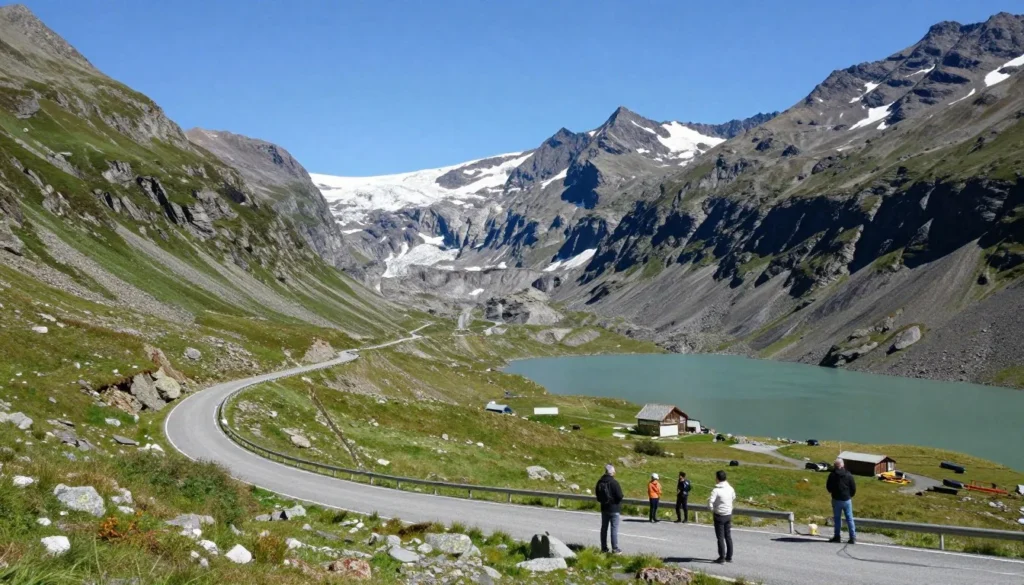
Ireland’s highest mountain pass climbs to 440 m (1,443 ft) between Dingle town and Brandon village. The narrow road twists through dramatic mountain terrain. Glacial lakes gleam far below. On clear days, views extend across Dingle Bay to the Ring of Kerry mountains.
The pass road closes during severe weather. Even in good conditions, drive carefully on the steep, narrow sections. Several viewpoints provide safe places to stop and admire the scenery. Hikers can climb higher into the mountains from roadside parking areas.
Dunmore Head
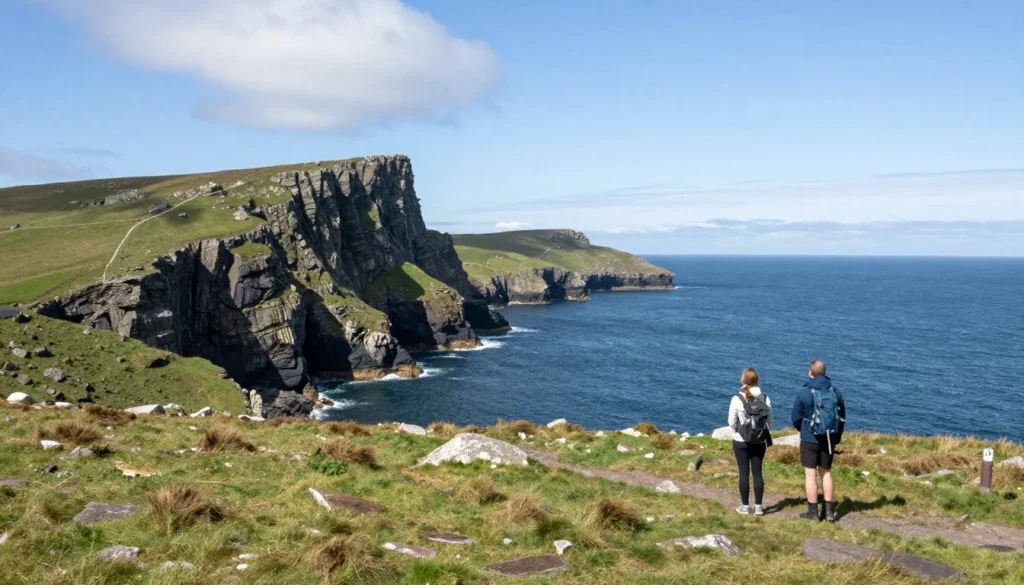
The westernmost point of mainland Ireland stands at Dunmore Head. This dramatic promontory juts into the Atlantic with nothing but ocean between here and North America. Seabirds nest on the cliffs. Waves explode against rocks far below.
A short walk from the car park leads to the viewpoint. The Blasket Islands dominate views to the north. On exceptionally clear days, the Skellig Islands appear to the south. The sense of standing at Europe’s edge creates a powerful experience.
Beehive Huts
Ancient stone beehive huts, called clochán in Irish, cluster on hillsides near Fahan. These drystone structures served as monastic cells or seasonal dwellings. Some date back over 1,000 years. The corbelled construction technique mirrors that used for Gallarus Oratory.
Several sites allow visitors to explore the huts for a small admission fee. The circular stone buildings stand remarkably intact. Crawling inside these ancient structures provides a tangible connection to the people who built them so long ago.
Coumeenoole Beach
This hidden gem nestles in a protected cove near Slea Head. Golden sand curves between rocky headlands. Turquoise waters lap the shore. The beach featured in the film Ryan’s Daughter, bringing it international fame.
Access requires a steep walk down from the cliff-top car park. The descent takes about ten minutes. Swimming is possible but currents can be strong. The beach makes a perfect picnic spot on calm days.
Top Historical Sites
- Gallarus Oratory (early Christian church)
- Beehive huts near Fahan
- Dunbeg Fort (Iron Age promontory fort)
- Kilmalkedar Church (12th century ruins)
- Reask Monastic Site
Top Natural Attractions
- Slea Head coastal drive
- Conor Pass mountain views
- Coumeenoole Beach
- Great Blasket Island
- Mount Brandon summit (952 m / 3,123 ft)
Dingle Town
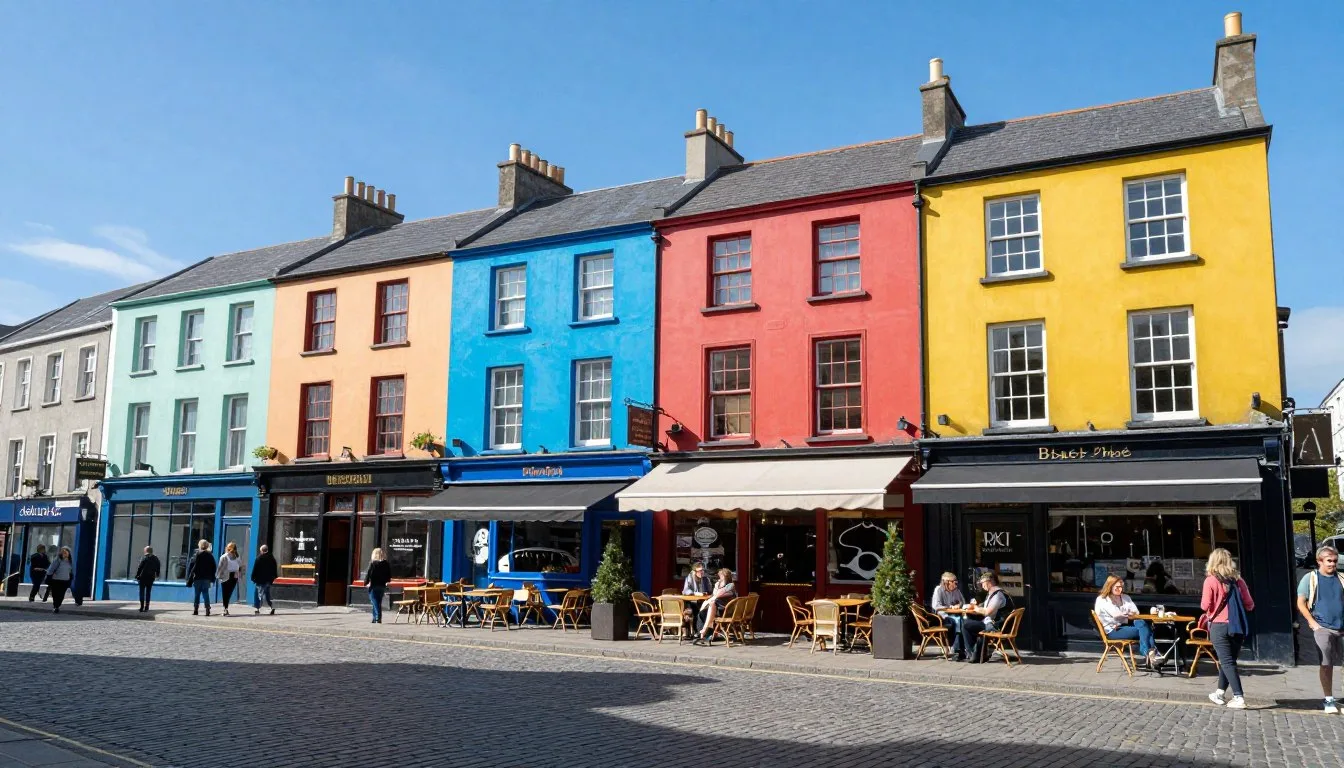
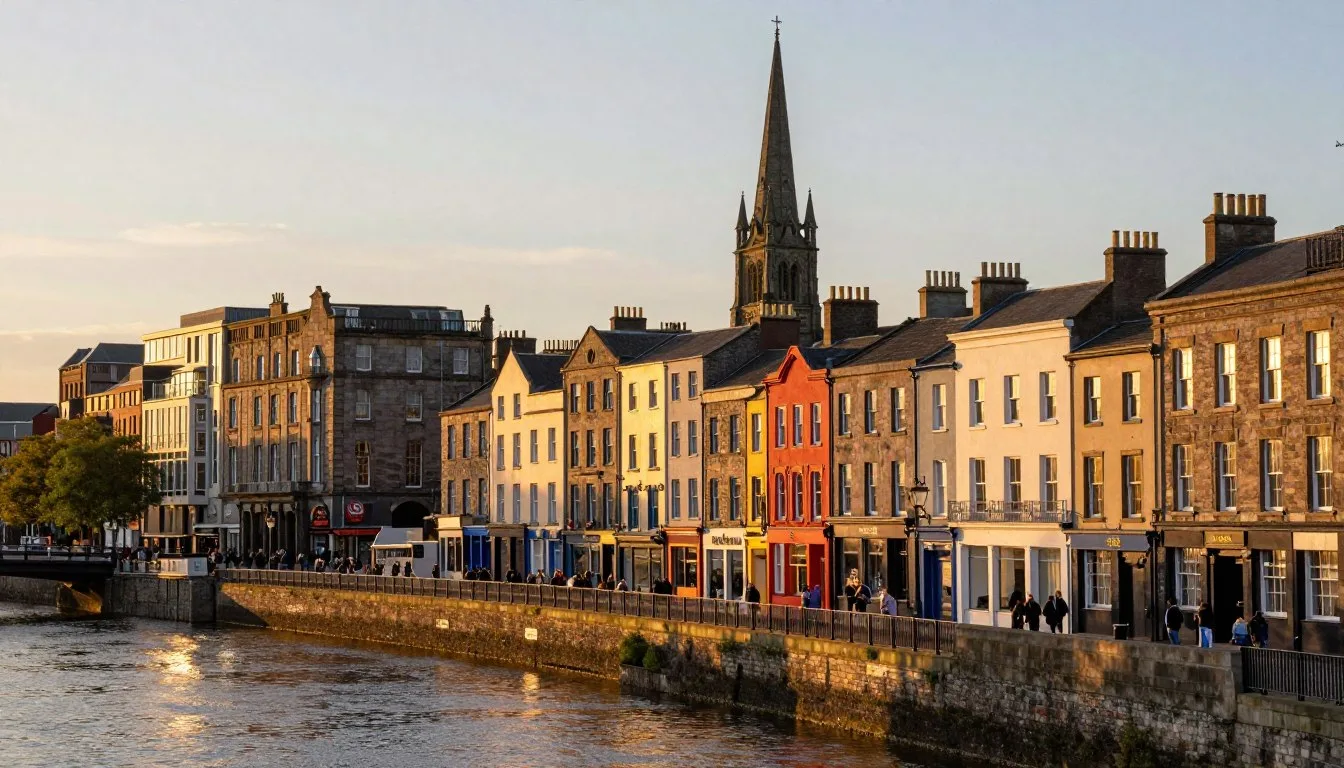
The peninsula’s principal town combines working harbor atmosphere with tourist amenities. Colorful shop fronts line narrow streets. Fishing boats unload catches at the pier. Pubs overflow with traditional music most evenings.
The town serves as an excellent base for exploration. You will find all necessary services including banks, pharmacies, and supermarkets. Art galleries, craft shops, and bookstores provide rainy-day entertainment. The harbor area remains particularly photogenic, especially in evening light.
Fungi the dolphin made Dingle town famous in the 1980s. This solitary bottlenose dolphin lived in the harbor for 37 years before disappearing in 2020. While Fungi no longer greets visitors, his legacy endures through statues and the community’s ongoing commitment to marine conservation.
Museums, Cultural Spots & Festivals
The Dingle Peninsula preserves Irish culture and traditions more authentically than many tourist destinations. Irish Gaelic remains a living language here. Traditional music thrives in pubs and concert halls. Museums and cultural centers tell the story of this unique corner of Ireland.
Blasket Centre
The Great Blasket Centre overlooks Blasket Sound near Dunquin. This excellent interpretive center chronicles life on the now-abandoned islands. Interactive exhibits bring island stories to life. Original photographs and artifacts illustrate the isolated but rich culture that flourished here.
Island writers including Tomás Ó Criomhthain and Peig Sayers documented traditional life in powerful memoirs. Their books offer windows into a vanished world. The center’s bookshop stocks their works alongside other Irish literature. A cafe provides refreshments with spectacular island views.
Díseart Institute of Education & Celtic Culture
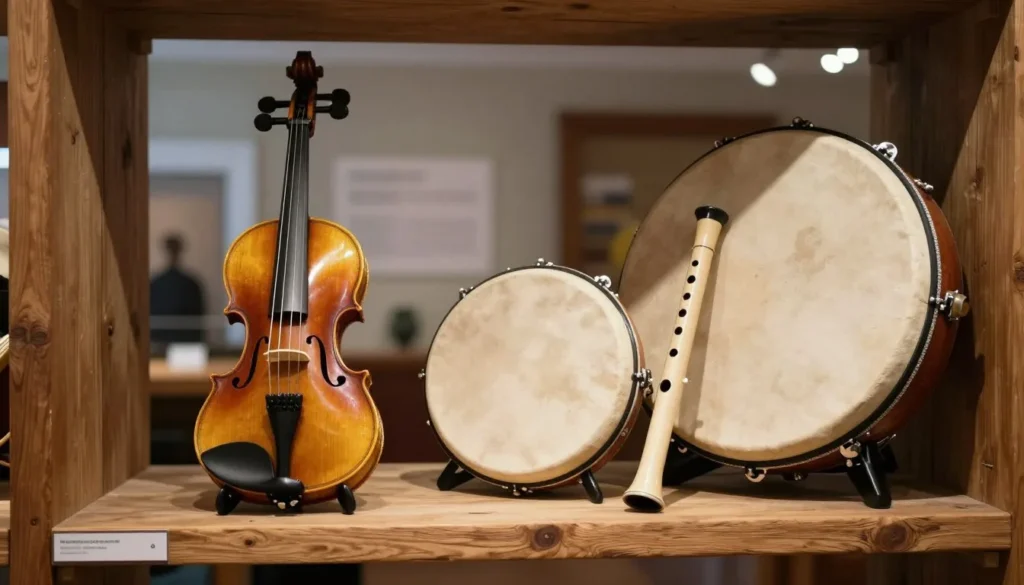
This cultural center in Dingle town occupies a former convent. Beautiful stained glass windows by artist Harry Clarke make the chapel worth visiting alone. The institute offers courses in Irish language, music, and dance. Exhibitions showcase local artists and craftspeople.
The building houses a genealogy center helping visitors trace Irish ancestry. Staff provide guidance on researching family history. The peaceful courtyard garden offers respite from busy streets. Admission fees support cultural preservation programs.
Traditional Music Scene
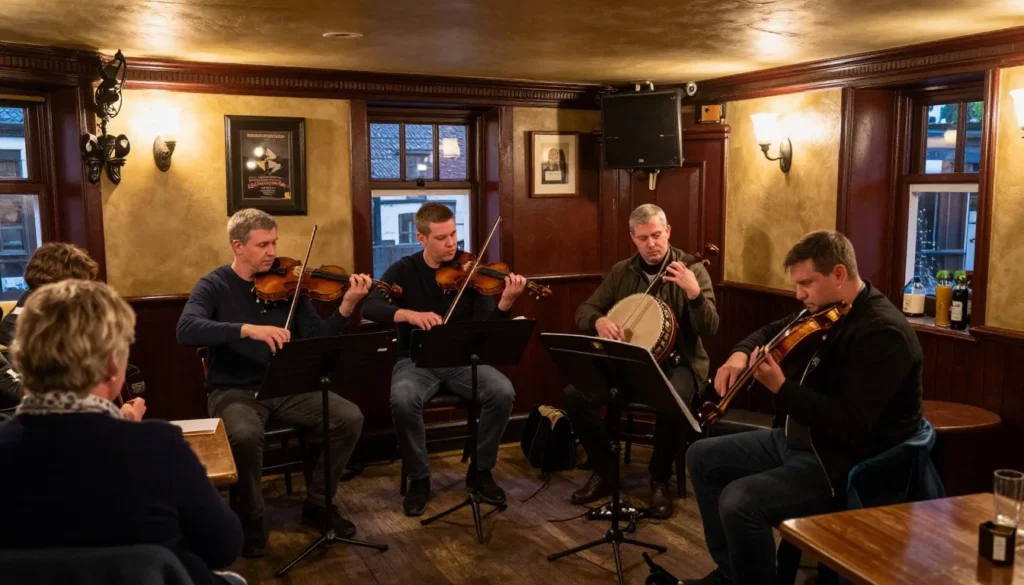
Live music forms the heartbeat of peninsula nightlife. Pubs host sessions most evenings, especially during summer months. Musicians gather informally to play traditional tunes. Visitors are welcome to listen or join if they have instruments and skills.
Some pubs feature professional musicians while others host spontaneous sessions. The quality remains consistently high. Irish music here serves the local community rather than performing for tourists. This authenticity creates magical evenings of genuine cultural exchange.
Cultural Venues
- Blasket Centre (island heritage)
- Díseart Centre (Celtic culture, Harry Clarke windows)
- Músaem Chorca Dhuibhne (local history museum)
- Sciuird Archaeological Tours (guided heritage walks)
Best Pubs for Traditional Music
- Various Dingle town establishments nightly
- Tigh Bhric in Ballyferriter
- Leo’s Tavern
- Check locally for current session schedules
Irish Language (Gaeilge)
The peninsula lies within the Gaeltacht, an Irish-speaking region. Road signs appear in Irish first, then English. Many locals speak Irish as their primary language. Visitors often hear melodic Gaelic conversations in shops and pubs.
This living language connection sets the peninsula apart. Irish language courses attract students worldwide. Summer colleges teach children and teenagers. The cultural importance of maintaining Gaelic traditions runs deep in this community.
Ancient Monuments
Over two thousand archaeological sites dot the landscape. Stone circles, standing stones, and ancient forts represent millennia of human occupation. Many sites receive little protection, allowing close examination of prehistoric stonework.
Dunbeg Fort perches dramatically on a cliff edge. This Iron Age promontory fort demonstrates sophisticated defensive design. Time and Atlantic storms have claimed portions of the structure. What remains tells stories of communities who lived here two thousand years ago.
Respecting Archaeological Sites: Many ancient monuments remain unprotected and vulnerable. Please respect these irreplaceable heritage sites. Do not climb on stones or remove anything. Take only photographs and leave only footprints.
Film Locations
Hollywood discovered the peninsula’s photogenic qualities decades ago. David Lean’s 1970 epic Ryan’s Daughter filmed extensively around Dunquin and Coumeenoole Beach. Star Wars: The Force Awakens and The Last Jedi featured scenes shot on Great Blasket Island and elsewhere on the peninsula.
These films introduced global audiences to the landscape’s dramatic beauty. Film tourism has grown steadily, though the peninsula retains authenticity despite its screen fame. Several tour operators offer film location excursions for dedicated fans.
Nature & Outdoor Experiences
The Dingle Peninsula offers exceptional outdoor opportunities. Dramatic coastline, rugged mountains, and pristine beaches create natural playgrounds for active travelers. Wildlife encounters add another dimension to outdoor adventures.
Hiking & Walking
The Dingle Way walking trail circumnavigates the peninsula over 179 km (111 mi). This long-distance route takes eight to nine days to complete. The trail traverses coastal paths, mountain tracks, and country lanes. Accommodation exists at regular intervals for multi-day hikers.
Many walkers tackle shorter sections as day hikes. The stretch from Dunquin to Dingle town ranks among the most scenic. Coastal sections offer consistently spectacular views. Mountain portions challenge fitness but reward effort with panoramic vistas.
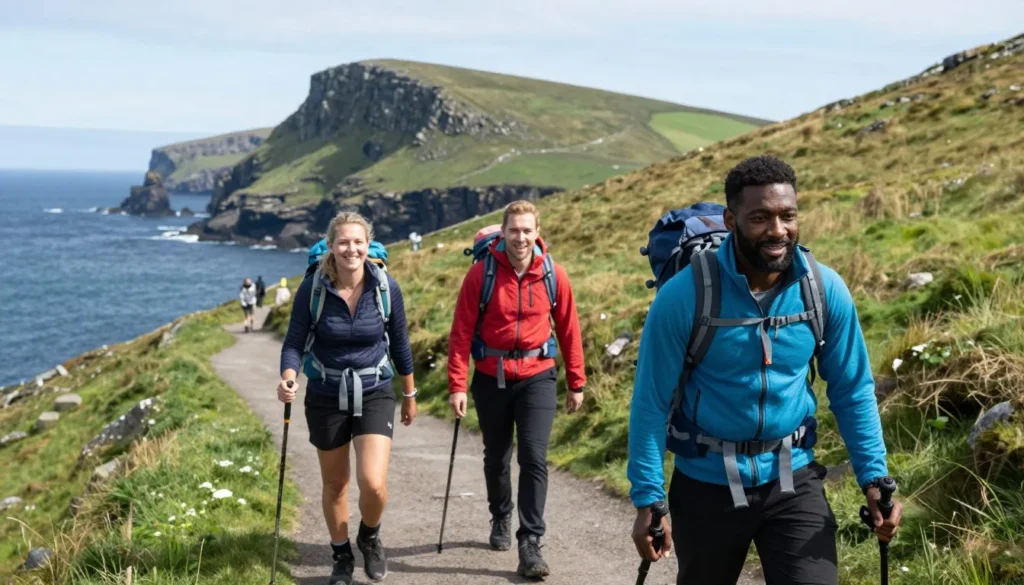
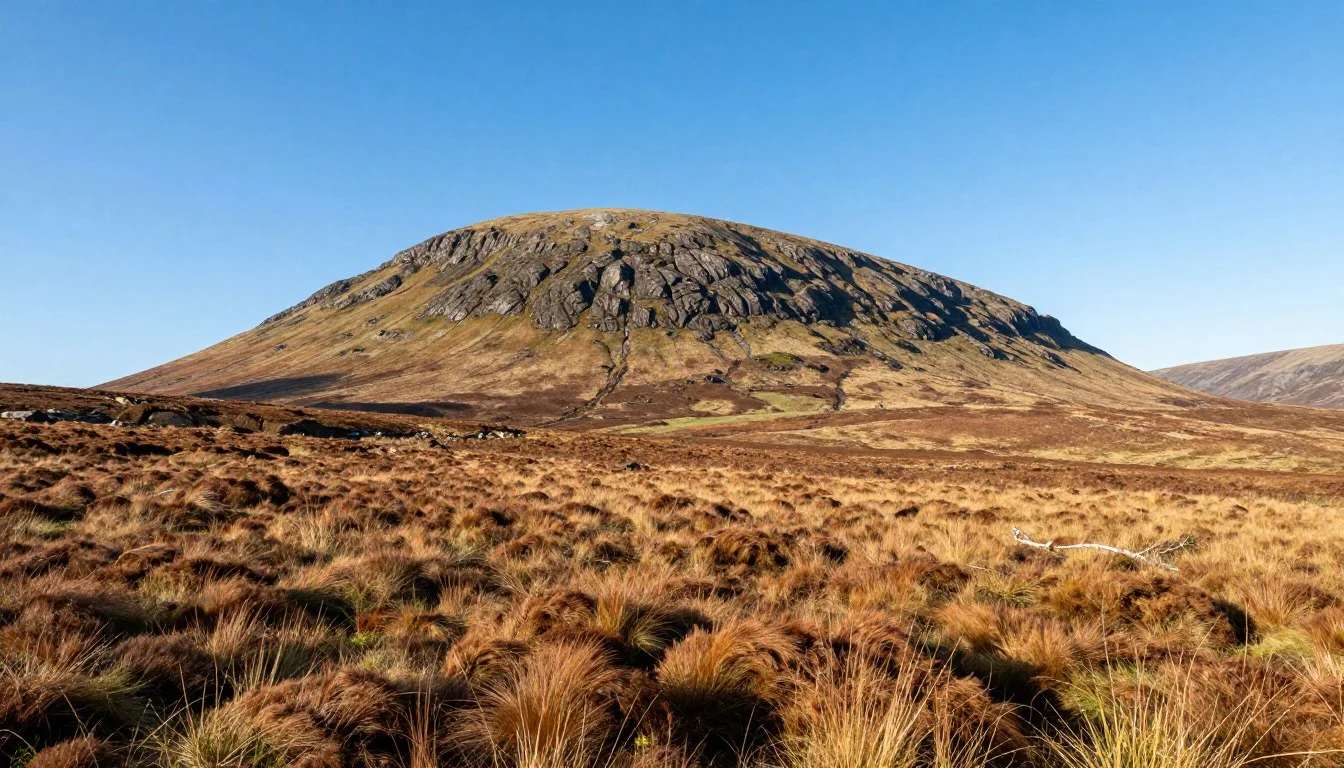
Mount Brandon, at 952 m (3,123 ft), stands as Ireland’s second-highest peak. Several routes ascend the mountain. The Saints’ Road follows an ancient pilgrimage path. The climb takes four to five hours return. Views from the summit extend across the peninsula and far out to sea.
Shorter walks lead to specific attractions. The hike to Coumeenoole Beach takes fifteen minutes down, slightly longer returning uphill. Trails around the beehive huts near Fahan allow close examination of ancient structures. Most walks require sturdy footwear and weather-appropriate clothing.
Beaches
Sandy beaches fringe much of the coastline. Some remain busy with families while others see few visitors. Water temperatures reach 15-16°C (59-61°F) in summer, brisk but swimmable for the hardy.
Inch Beach stretches for 5 km (3 mi) along a sandy spit. This Blue Flag beach offers safe swimming and consistent waves for surfing. The vast strand allows long walks even on busy days. Facilities include parking, toilets, and seasonal lifeguards.
Ventry Beach arcs around a protected bay. Calmer waters make this family favorite safer for children. The long curve of golden sand backs onto dunes. Water sports operators offer kayaking and stand-up paddleboarding during summer months.
Best Beaches for Swimming
- Ventry Beach (sheltered, family-friendly)
- Inch Beach (long, sandy, lifeguards in summer)
- Maharabeg Beach (quiet, scenic)
- Trabeg Beach (hidden gem, beautiful setting)
Best Beaches for Scenery
- Coumeenoole Beach (dramatic cliffs)
- Clogher Beach (golden sand, turquoise water)
- Wine Strand (Great Blasket Island)
- Smerwick Harbour beaches (historic setting)
Water Activities
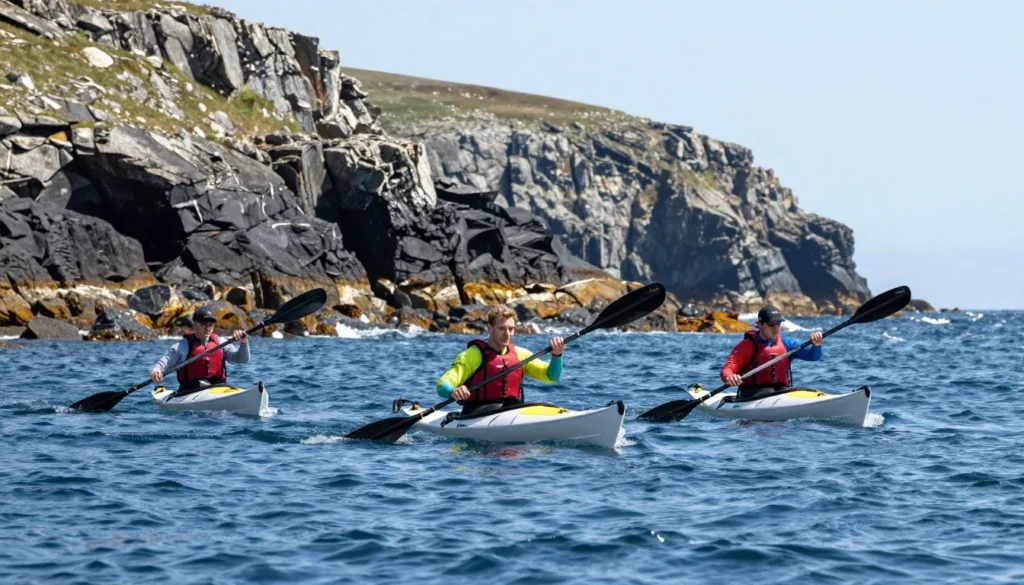
Kayaking along the coast reveals hidden coves and sea caves. Several operators offer guided trips suitable for beginners. Paddling near the Blasket Islands provides opportunities to spot seals and seabirds. Half-day and full-day excursions run from various launch points.
Surfing attracts wave riders to Inch Beach particularly. Consistent Atlantic swells create good conditions for learners and experienced surfers. Surf schools operate during summer offering lessons and equipment rental. Wetsuit rental is essential in Irish waters year-round.
Angling opportunities abound both from shore and boat. Deep-sea fishing trips depart Dingle harbor targeting various species. Shore fishing from rocks and beaches can be productive. Local tackle shops provide advice on best locations and techniques.
Wildlife Watching
Seabird colonies thrive on coastal cliffs. Puffins nest on the Blasket Islands from April through August. Gannets, razorbills, and guillemots occupy cliff ledges. Boat trips from Dingle harbor bring watchers close to nesting colonies during breeding season.
Harbor seals and grey seals frequent coastal waters. Patient observers often spot them hauled out on rocks or swimming near shore. The seals show curiosity toward kayakers, sometimes approaching close for mutual inspection.
Dolphins and porpoises swim in nearby waters. While Fungi’s era has ended, wild dolphins still visit the bay. Whale sightings occasionally occur, particularly during autumn migration periods. Minke whales and fin whales pass through Atlantic waters off the peninsula.
Wildlife Ethics: Observe marine mammals from respectful distances. Do not chase or attempt to touch wild animals. Responsible tour operators follow strict codes preventing disturbance. Your presence should not alter natural behavior.
Cycling
Road cycling attracts enthusiasts to challenging terrain. The Slea Head loop makes a superb day ride for fit cyclists. Traffic remains light on most routes. Steep gradients, especially approaching Conor Pass, demand low gears and determination.
Electric bikes open the peninsula to less experienced cyclists. Battery assistance tames the steepest climbs. Several rental shops stock e-bikes alongside traditional models. Book ahead during peak season.
Horseback Riding
Beach rides on horseback create memorable experiences. Several stables offer guided trail rides along beaches and through countryside. No previous experience required for gentle rides. More experienced riders can enjoy longer, faster-paced excursions.
Travel With Children
The Dingle Peninsula welcomes families with varied attractions suitable for young travelers. Beaches, easy walks, and hands-on experiences keep children entertained. Irish culture’s warmth toward families ensures youngsters receive genuine welcomes.
Beaches top the list of child-friendly activities. Building sandcastles, paddling in waves, and searching rock pools occupy happy hours. Ventry Beach offers shallow, relatively calm water. Inch Beach provides vast space for running and kite flying. Pack buckets, spades, and warm layers.
The Oceanworld Aquarium in Dingle town houses sharks, tropical fish, and local marine life. Touch pools allow children to handle starfish and crabs under supervision. Feeding times prove particularly popular. The aquarium makes an excellent rainy-day option.
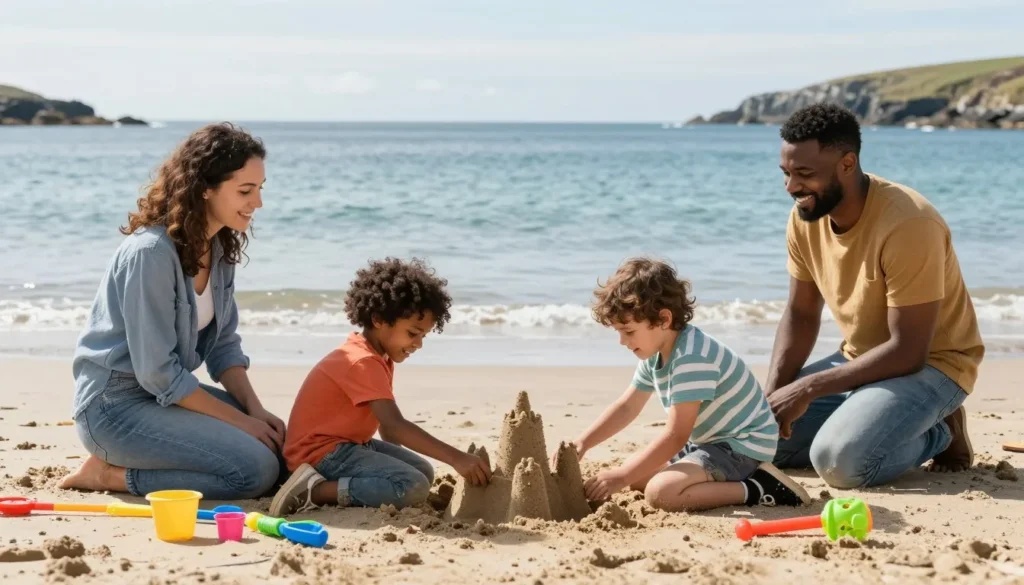
Easy walks introduce children to nature and history. The short hike to Coumeenoole Beach takes fifteen minutes downhill. Exploring beehive huts feels like discovering hobbit houses. Many archaeological sites allow close-up examination of ancient stones.
Farm visits let children meet animals and learn about agriculture. Some farms welcome visitors during lambing and calving seasons. Hands-on experiences like feeding lambs create lasting memories. Contact farms directly to arrange visits.
Best Activities for Young Children
- Beach play and paddling
- Oceanworld Aquarium visit
- Easy coastal walks with ice cream stops
- Playground in Dingle town center
- Farm animal encounters
- Seal watching from shore
Best Activities for Older Children
- Kayaking adventures
- Surfing lessons at Inch Beach
- Cycling quiet coastal roads
- Great Blasket Island exploration
- Moderate hiking trails
- Archaeological site treasure hunting
Most restaurants welcome children with dedicated menus. High chairs are standard in family-oriented establishments. Pubs serving food allow children until early evening. Some venues provide coloring materials and activities.
Accommodation options suit family needs. Self-catering cottages provide space and flexibility. Many B&Bs offer family rooms sleeping four. Hotels sometimes have connecting rooms or suites. Book accommodation explicitly stating your family size and children’s ages.
Practical considerations help trips run smoothly. Bring rain gear for everyone, even in summer. Pack layers as temperatures vary throughout the day. Sun protection remains essential during bright periods. Many beaches lack facilities, so bring snacks and drinks.
Safety Reminders: Supervise children closely near cliff edges and on beaches. Atlantic currents can be strong even on calm days. Teach children to respect ancient monuments by looking but not climbing. Sheep roam freely, remind children not to chase or startle them.
School holiday periods see more families visiting. Easter week, July, and August experience peak family traffic. Shoulder season offers quieter experiences with fewer children competing for attention at attractions. September often delivers pleasant weather with thinner crowds.
Money Saving Tips
Visiting Dingle Peninsula need not break the bank. Strategic planning and local knowledge help stretch budgets further. These practical tips reduce costs without sacrificing experience quality.
Travel during shoulder season for significant savings. May, June, and September offer pleasant weather with lower accommodation rates. October brings autumn colors and further price reductions. Avoid July and August when prices peak and crowds maximize.
Self-catering accommodation costs less for families and groups. Cooking breakfast and some dinners in your cottage or apartment reduces restaurant expenses considerably. Shop at Supervalu or other supermarkets in Dingle town for groceries. Local produce costs less than imported items.
Budget-Friendly Accommodation
- Book B&Bs directly for possible discounts
- Consider hostels for solo travelers
- Rent cottages weekly for longer stays
- Stay in smaller villages outside Dingle town
Dining & Food Savings
- Pack picnic lunches for beach days
- Enjoy early-bird dinner specials
- Try lunch menus instead of dinner prices
- Buy from farmers’ markets on Saturday mornings
Many top attractions cost nothing to visit. Beach access is free. Coastal drives and viewpoints cost only fuel. Ancient archaeological sites remain open and free to explore. Walking trails provide exceptional experiences without admission charges.
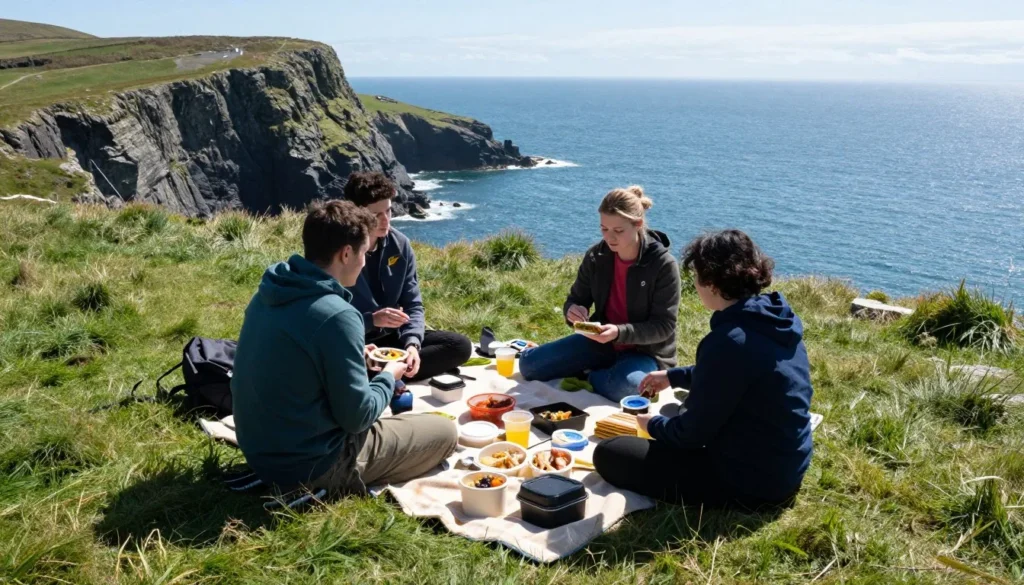
Pack picnic lunches for days exploring remote areas. Supermarkets sell fresh bread, local cheese, and other picnic essentials. Many scenic spots lack facilities anyway, making picnics practical as well as economical. Carry reusable water bottles to refill.
Limit alcohol consumption with meals to control restaurant bills. Irish beer and wine carry substantial markups in restaurants. Enjoy drinks in pubs where prices run lower. Some restaurants allow customers to bring wine with a small corkage fee.
Free entertainment abounds in traditional music sessions. While buying a drink supports venues hosting music, you can enjoy world-class performances for the price of a pint. Sessions happen most nights in summer, less frequently in winter.
Transport costs add up quickly. Renting a car for your entire Ireland trip costs more than needed if based in Dingle for several days. Consider renting only for days exploring the peninsula. Walk or cycle around Dingle town to save on parking and fuel.
Group or family tickets offer savings at paid attractions. Heritage cards provide discounts for visiting multiple sites. Senior citizens often receive reduced admission. Students should carry valid ID for possible concessions.
Free & Low-Cost Activities
- All beaches and coastal walks
- Most archaeological sites
- Dingle town harbor strolls
- Mountain viewpoints and passes
- Traditional music pub sessions
Worth Paying For
- Great Blasket Island ferry and visit
- Blasket Centre museum
- Guided kayaking tours
- Quality seafood dinner
- Oceanworld Aquarium for children
Book ferries and tours directly rather than through third parties. Middlemen add commission charges. Direct booking often allows you to ask about discounts for seniors, students, or families.
Fill fuel tanks in larger towns where prices run lower. Remote rural stations charge premiums. Dingle town has several stations with competitive pricing. Plan refueling stops rather than waiting until desperate.
Safety & Local Customs
Ireland ranks among Europe’s safest destinations. The Dingle Peninsula maintains particularly low crime rates. Visitors face few safety concerns beyond natural hazards. Understanding local customs ensures respectful, enriching interactions with residents.
Personal Safety
Violent crime remains extremely rare. Petty theft occasionally occurs in busy areas during peak tourist season. Take normal precautions securing valuables in locked cars and accommodation. Leave nothing visible in parked vehicles, even in remote areas.
Emergency services respond quickly throughout the peninsula. The universal emergency number 112 connects to police, ambulance, and fire services. Mobile phone coverage exists across most areas though some remote spots have weak signals.
Emergency Services
Road Safety
Narrow rural roads present the main safety challenge. Drive slowly and cautiously. Pull into passing places when meeting oncoming vehicles. Watch for sheep, cattle, and farm machinery on roads. Tractors and agricultural equipment have priority.
Irish drivers generally show patience and courtesy. Flash headlights or wave to thank other drivers. Using hazard lights briefly acknowledges courtesy from vehicles behind you. Never drink and drive – Irish laws impose severe penalties.
Coastal & Water Safety
Atlantic waters remain cold year-round. Strong currents and undertows affect many beaches. Swim only at beaches with lifeguard services during supervised hours. Red flags indicate dangerous conditions – obey all warning signs.
Cliff edges can crumble unexpectedly. Respect barriers and warning signs at viewing points. Keep children under close supervision near cliff edges. Strong winds can unbalance people unexpectedly, particularly at exposed headlands.
Weather Hazards: Weather changes rapidly. Fog can descend quickly, reducing visibility to meters. Mountain conditions deteriorate faster than lowlands. Always check forecasts before hiking. Turn back if conditions worsen. Hypothermia risks exist even in summer if caught in rain without proper clothing.
Healthcare
Dingle town has a medical center and pharmacy. Hospitals exist in Tralee and Killarney, roughly one hour away. European Health Insurance Cards cover EU citizens for emergency medical care. Non-EU visitors should carry comprehensive travel insurance.
Tap water throughout Ireland is safe to drink. No unusual health risks exist. Tick-borne diseases remain rare but take precautions after walking through long grass. Check for ticks and remove promptly if found.
Local Customs & Etiquette
Irish people value friendliness and humor. Greet people you encounter on walks and in shops. Small talk forms an important part of daily interactions. Rushing transactions appears rude – allow time for brief conversations.
Pubs serve as community centers rather than just drinking establishments. Buying rounds forms expected behavior when drinking with groups. Tipping bartenders for pints is unnecessary, though leaving change shows appreciation for good service.
Do’s
- Greet locals warmly
- Buy rounds when drinking in groups
- Respect private property and farmland
- Close gates after passing through
- Support local businesses
- Learn a few Irish phrases
Don’ts
- Litter – take all rubbish with you
- Damage ancient monuments
- Block narrow roads inconsiderately
- Disturb nesting birds or wildlife
- Make insensitive political comments
- Rush interactions – allow time for chat
Environmental Responsibility
Leave No Trace principles protect the peninsula’s fragile environment. Carry out all rubbish including organic waste. Stick to established paths to prevent erosion. Do not pick wildflowers or disturb wildlife.
Respect private property. Much scenic land belongs to working farms. Close gates after passing through. Do not climb stone walls – use stiles where provided. Ask permission before entering farmyards or non-public areas.
Cultural Sensitivity
Irish remains the first language for many residents. Road signs appear in Irish first. Respect this linguistic heritage rather than viewing it as inconvenience. Learning basic Irish greetings shows cultural appreciation locals notice and value.
The peninsula maintains strong Catholic traditions. Sunday mornings see churches busy with worshippers. Dress respectfully when visiting religious sites. Photography inside churches often requires permission – ask before photographing.
Irish history includes difficult periods. Avoid making jokes about the Troubles, the Famine, or British-Irish relations. These topics carry deep emotions. Similarly, stereotyping Irish people as perpetually drunk or fighting offends rather than amuses.
Visitor Comments About Dingle Peninsula
Real travelers share their experiences exploring this remarkable corner of Ireland. These authentic perspectives provide insights into what makes Dingle Peninsula so captivating.
E.F., Preston
“The Slea Head Drive exceeded every expectation. Each turn revealed views more spectacular than the last. We stopped countless times for photographs. The ancient beehive huts felt like portals to another time. Coumeenoole Beach was absolutely pristine despite featuring in famous films. Dingle town itself charmed us with wonderful seafood and the warmest pub atmosphere we experienced anywhere in Ireland. Three days felt too short – we will definitely return for longer next time.”
R.Y., Midland
“As a keen hiker, I found the Dingle Peninsula absolutely perfect. We walked sections of the Dingle Way each day from our base in town. The coastal paths offered consistently stunning ocean views. Mount Brandon presented a proper challenge with incredible summit panorama. What surprised me most was the density of archaeological sites. Everywhere we walked, ancient stones and ruins appeared. The combination of natural beauty and deep history makes this place truly special. Already planning our return visit.”
N.E., Dún Laoghaire
“Taking our two children to Dingle Peninsula proved brilliant. The beaches kept them entertained for hours. Inch Beach became their favorite with endless sand for castle building. The Oceanworld Aquarium made a great rainy day activity. Traditional music sessions in the pubs welcomed families early evening, giving the kids genuine Irish cultural experiences. Our cottage near Ventry provided perfect location and comfort. The week flew by far too quickly. The children still talk about Ireland and especially the Dingle Peninsula months later.”
Additional Nearby Destinations
The Dingle Peninsula anchors Kerry’s spectacular southwest coast. Several other remarkable destinations lie within easy reach. Extending your Ireland adventure to include these nearby attractions maximizes your journey.
Ring of Kerry
This famous 179 km (111 mi) scenic route circles the Iveragh Peninsula immediately east of Dingle. The drive takes five to six hours without stops, full day with sightseeing. Highlights include Killarney National Park, Skellig Ring coastal route, and charming villages like Kenmare and Sneem.
The Ring of Kerry sees heavier tourist traffic than Dingle. Tour buses travel counter-clockwise, so driving clockwise provides better viewing angles and fewer crowds. Spring and autumn offer the best balance of weather and manageable visitor numbers.
Killarney National Park
Ireland’s oldest national park lies just 80 km (50 mi) east of Dingle town. The 10,236-hectare (25,295-acre) park encompasses mountains, lakes, and native woodland. Muckross House and Gardens showcase Victorian elegance. Ross Castle provides medieval history. Hiking trails suit all fitness levels.
Killarney town serves as base for exploring the park. The town offers extensive accommodation and dining options. Jaunting cars – traditional horse-drawn carriages – provide leisurely tours through scenic routes. Allow one to two full days to experience the park properly.
Skellig Islands
These dramatic rocky islands rise from the Atlantic 12 km (7.5 mi) off the Kerry coast. Skellig Michael hosts remarkably preserved 6th-century monastery perched 180 m (590 ft) above sea level. UNESCO World Heritage status recognizes its outstanding cultural significance.
Boat trips depart from Portmagee and Ballinskelligs, roughly 90 km (56 mi) from Dingle. Landing permits limit daily visitors to 180 people. Book months in advance for summer trips. The crossing takes 90 minutes each way in open boats – not suitable for those prone to seasickness.
Cliffs of Moher
Ireland’s most visited natural attraction stands 200 km (124 mi) north of Dingle. These dramatic cliffs stretch 8 km (5 mi) along the Clare coast rising 214 m (702 ft) above the Atlantic. The visitor experience center provides excellent interpretive information.
The drive from Dingle takes three hours via Limerick or slightly longer through scenic coastal routes. Combine with visits to the Burren’s unique limestone landscape. Allow full day for round trip from Dingle Peninsula.
Within 100 km of Dingle
- Ring of Kerry circuit (adjacent peninsula)
- Killarney National Park (80 km / 50 mi)
- Skellig Islands (90 km / 56 mi to boat departure)
- Valentia Island (75 km / 47 mi)
- Gap of Dunloe (85 km / 53 mi)
100-200 km from Dingle
- Cliffs of Moher (200 km / 124 mi)
- The Burren (180 km / 112 mi)
- Bunratty Castle (140 km / 87 mi)
- Adare Village (120 km / 75 mi)
- Limerick City (110 km / 68 mi)
The Burren
This unique limestone landscape in County Clare creates an otherworldly environment. Arctic, Mediterranean, and Alpine plants grow side by side in this bizarre terrain. Ancient monuments include Poulnabrone Dolmen and numerous ring forts.
The Burren lies 180 km (112 mi) northeast of Dingle. Combine visits with the Cliffs of Moher as they sit close together. The Burren’s stark beauty contrasts dramatically with Kerry’s green lushness. Botanists and geology enthusiasts find particular fascination here.
Valentia Island
Connected to the mainland by bridge, Valentia Island offers quieter alternatives to busier Kerry attractions. The Skellig Experience center provides information about the islands for those unable to make boat crossings. Coastal scenery rivals anywhere on Dingle Peninsula.
The island lies 75 km (47 mi) from Dingle town. The drive takes 90 minutes. Valentia makes an excellent day trip or overnight stop when touring the Ring of Kerry. Tetrapod trackway – 385 million-year-old fossilized footprints – provides unique geological interest.
Practical Travel Tips
These final practical details help ensure smooth, enjoyable visits to Dingle Peninsula. Small preparations prevent frustrations and enhance overall experiences.
Money & Banking
Ireland uses the Euro currency. ATMs exist in Dingle town and larger villages. Credit cards are widely accepted though some small establishments prefer cash. Inform your bank of Ireland travel to prevent card blocks.
Tipping practices differ from American customs. Restaurants appreciate 10-15 percent for good service unless service charges appear on bills. Taxi drivers receive 10 percent. Pub bar service requires no tips though leaving change shows appreciation.
Mobile Phones & Internet
Mobile coverage reaches most areas though signal weakens in remote valleys and mountains. Irish networks include Vodafone, Three, and Eir. EU visitors use phones normally under roaming agreements. Others should check international rates or purchase Irish SIM cards.
WiFi is standard in accommodations, cafes, and restaurants. Speeds vary, particularly in rural areas. Download offline maps and information before venturing into remote areas. Public WiFi hotspots exist in Dingle town center.
Language
English and Irish are both official languages. Everyone speaks English. Road signs appear in Irish first then English. Learning basic Irish phrases – hello (Dia dhuit), thank you (Go raibh maith agat), goodbye (Slán) – earns warm appreciation from locals.
Shopping & Souvenirs
Dingle town offers excellent shopping for Irish crafts and souvenirs. Look for locally made woolens, pottery, jewelry, and artwork. Bookshops stock Irish literature and local history titles. Food shops sell artisan chocolates, cheeses, and preserves.
Best Authentic Souvenirs
- Hand-knitted Aran sweaters
- Local artisan cheese
- Irish whiskey from nearby distilleries
- Handcrafted pottery and ceramics
- Irish language books and music
- Locally designed jewelry
Shopping Tips
- Buy directly from craftspeople when possible
- Check for “Made in Ireland” labels
- Saturday farmers’ markets offer excellent local products
- Avoid mass-produced “Irish” items from Asia
- Ship larger purchases to avoid baggage fees
Electricity
Ireland uses 230V electricity with three-pin rectangular plugs (Type G). North American devices require voltage converters and plug adapters. UK devices need only plug adapters. Most accommodations provide hairdryers, reducing luggage needs.
What to Pack
Weather variability requires thoughtful packing. Layers work better than heavy coats. Waterproof jacket proves essential year-round. Comfortable walking shoes with good grip suit mixed terrain. Sunglasses and sun protection matter even on cloudy days – UV rays penetrate clouds.
Packing Checklist: Waterproof jacket and trousers, layers including fleece or sweater, comfortable walking shoes, hat and gloves (except high summer), sunglasses and sun cream, reusable water bottle, small daypack, camera with extra batteries, basic first aid supplies, any prescription medications.
Time Zone
Ireland observes Irish Standard Time (IST), equivalent to GMT/UTC. Daylight saving time runs from late March to late October when clocks advance one hour. Ireland sits one hour behind continental Europe and five hours ahead of US Eastern Time.
Opening Hours
Shops typically open 9:00-18:00 Monday through Saturday. Sunday hours run 12:00-18:00 though many small shops close. Pubs serve food 12:00-21:00 approximately. Restaurants typically offer dinner from 18:00. Many businesses reduce hours or close entirely November through March.
Sustainability Considerations
Overtourism threatens delicate environments and community life. Visit responsibly by supporting local businesses, respecting private property, and following Leave No Trace principles. Spread visits across shoulder seasons when possible. Walk lightly on this beautiful land so future generations can enjoy it equally.
Your Dingle Peninsula Adventure Awaits
The Dingle Peninsula Ireland experience weaves together dramatic landscapes, ancient history, vibrant culture, and genuine Irish warmth. From the moment Slea Head’s views take your breath away to your final pint in a music-filled pub, this corner of Kerry works its magic on every visitor.
The peninsula rewards both careful planning and spontaneous exploration. Whether you spend three days or three weeks, you will discover layers of beauty and culture that make return visits inevitable. The Wild Atlantic Way carves past cliffs where time seems suspended. Stone ruins whisper stories spanning millennia. Local voices keep Irish traditions alive and welcoming.
Pack your waterproof jacket, download this guide to your phone, and prepare for adventure. The Dingle Peninsula awaits with open arms and countless wonders. Your Irish journey begins the moment you round that first coastal corner and realize photographs could never capture what your eyes now behold. This is Ireland at its most authentic and unforgettable.