

Did you know that Split’s historic center is actually built within the walls of a 1,700-year-old Roman palace? Unlike other ancient ruins that sit as silent monuments to the past, Diocletian’s Palace in Split is a living, breathing historical site where locals still live, work, and socialize among structures dating back to 305 CE. This remarkable fusion of ancient history and modern life creates one of Europe’s most unique urban experiences and forms the heart of Split, Croatia’s second-largest city.
Whether you’re planning a dedicated stay in Split or using it as a gateway to Croatia’s famous islands, this vibrant coastal gem offers an irresistible blend of history, culture, cuisine, and natural beauty. From wandering through ancient Roman ruins to swimming in the crystal-clear Adriatic Sea, Split rewards visitors with unforgettable experiences around every corner.
Getting There & Planning Your Journey
Split is easily accessible by air, sea, and land, making it a convenient destination for travelers from around the world.
Airports Near Split
Split Airport (SPU) is the primary gateway, located about 24 km (15 miles) from the city center in Kaštela. During peak summer season (June-September), it welcomes direct flights from major European cities including London, Paris, Amsterdam, and Frankfurt. In the off-season, you may need to connect through Zagreb, Croatia’s capital.
Arriving by Ferry
Split serves as Croatia’s main ferry hub, with connections to numerous islands (Hvar, Brač, Vis) and coastal cities. Jadrolinija is the main ferry operator, with both car ferries and faster catamarans available. If you’re island-hopping, Split makes an excellent starting point.
By Bus or Train
Croatia has an extensive bus network connecting Split with Zagreb (4-5 hours), Dubrovnik (4 hours), and other major cities. Trains connect Split to Zagreb, though buses are generally faster and more frequent.
Best Time to Visit & Weather Tips
Split enjoys a Mediterranean climate with hot, dry summers and mild, wet winters. When you visit can dramatically impact your experience, both in terms of weather and crowds.
| Season | Temperature | Crowds | Recommendation |
| Spring (April-May) | 15-22°C (59-72°F) | Moderate | Excellent time to visit |
| Summer (June-August) | 25-30°C (77-86°F) | Very crowded | Best for beaches, avoid if you dislike crowds |
| Fall (September-October) | 18-25°C (64-77°F) | Moderate to low | Ideal balance of good weather and fewer tourists |
| Winter (November-March) | 8-14°C (46-57°F) | Very few tourists | For budget travelers who don’t mind cooler weather |
Recommended Months to Visit Split
The sweet spots for visiting Split are May, June, September, and early October. During these months, you’ll enjoy pleasant temperatures ideal for sightseeing and swimming, while avoiding the extreme crowds and prices of July and August.
Months to Avoid
If possible, avoid visiting in July and August when Split becomes extremely crowded with tourists. Prices soar, attractions have long lines, and the heat can be intense (often exceeding 30°C/86°F). December through February are the rainiest months, with many restaurants and attractions operating on reduced hours or closed entirely.
Weather Tip: The Adriatic Sea is warm enough for comfortable swimming from late May through early October, with water temperatures ranging from 20-26°C (68-79°F).
Getting Around Locally
Split’s compact size makes it easy to explore, with many attractions within walking distance of each other.
Walking
The historic center of Split, including Diocletian’s Palace and the surrounding old town, is a pedestrian zone where walking is not just practical but the best way to experience the city’s charm. Most major attractions are within a 20-minute walk of each other.

Public Transportation
Split has a reliable bus network operated by Promet Split. Single tickets cost around 11 kuna (€1.50) when purchased from the driver. If you’re staying outside the center or plan to visit attractions like Marjan Hill or the beaches, buses are convenient options.
Taxis and Ride-Sharing
Taxis are readily available but relatively expensive for the short distances within Split. Uber operates in Split and is often cheaper than traditional taxis. For budget-conscious travelers, the local ride-sharing app Bolt offers competitive rates.
Bicycles and Scooters
Split offers bicycle rentals (approximately €10-15 per day) and electric scooter sharing services, providing a fun way to explore the coastline and Marjan Hill. The seafront promenade (Riva) and Marjan Hill have dedicated cycling paths.
Local Tip: Download the Promet Split app for real-time bus information or use Google Maps, which accurately displays public transportation options in Split.
Where to Stay
Split offers accommodations for every budget and preference, from luxury hotels to budget-friendly hostels. Where you stay can significantly impact your experience of the city.
Old Town & Palace
Staying within Diocletian’s Palace or the surrounding old town puts you in the heart of Split’s history and nightlife. Expect charming, often centuries-old buildings converted into boutique accommodations.
Pros: Central location, historic atmosphere, walking distance to major attractions
Cons: Can be noisy at night, often lacks elevators, higher prices
Price Range: €80-300 per night
Varoš & Bačvice
These neighborhoods adjacent to the old town offer a more local experience while still being within easy walking distance of major attractions. Varoš features charming stone houses, while Bačvice is known for its popular beach.
Pros: Quieter than Old Town, more authentic local experience, still walkable
Cons: Uphill walks from the center (Varoš), can be busy near the beach (Bačvice)
Price Range: €60-200 per night
Meje & Marjan Hill
For those seeking tranquility and nature, the residential areas near Marjan Hill offer peaceful surroundings and often spectacular views of the Adriatic.
Pros: Quiet, natural setting, often with sea views
Cons: 20-30 minute walk to the center, fewer dining options nearby
Price Range: €70-250 per night

Dining & Local Cuisine
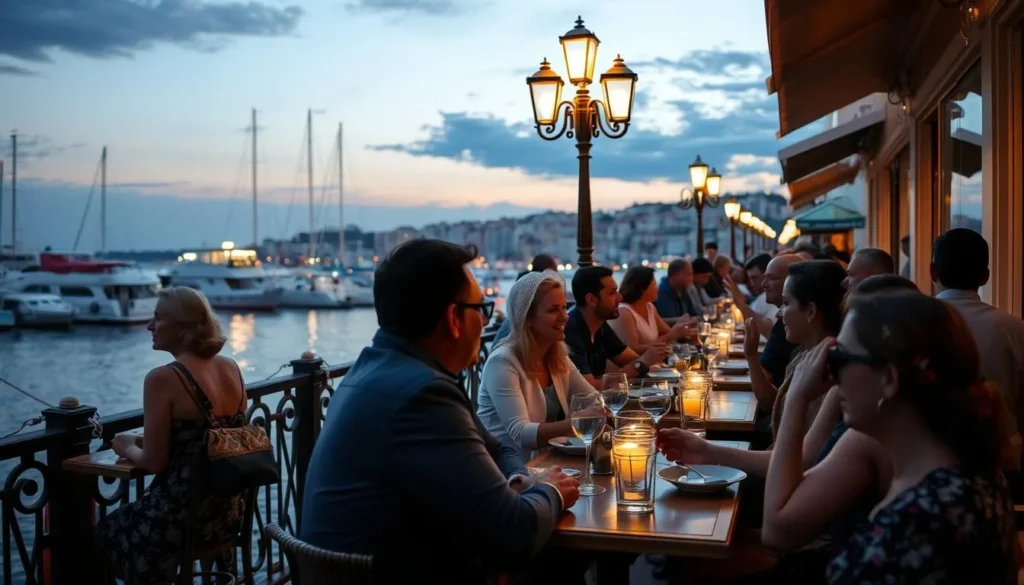
Split’s culinary scene blends Mediterranean and Balkan influences, with an emphasis on fresh seafood, olive oil, and locally grown produce. Dining here is as much about the atmosphere as it is about the food.
Must-Try Local Dishes
- Peka – Meat or octopus slow-cooked under an iron bell with potatoes and vegetables
- Crni Rižot – Black risotto colored with cuttlefish ink
- Pasticada – Slow-cooked beef in a sweet-savory sauce, typically served with gnocchi
- Soparnik – A traditional pie filled with Swiss chard, garlic, and olive oil
- Fresh Seafood – Grilled fish, shellfish, and octopus salad are staples

Where to Eat in Split
Budget-Friendly Options
- Buffet Fife – Local institution serving hearty Croatian dishes at reasonable prices
- Kantun Paulina – Famous for affordable ćevapi (grilled minced meat)
- To Je Tako – Excellent street food with Croatian and international options
Mid-Range Restaurants
- Konoba Fetivi – Family-run tavern with excellent seafood
- Villa Spiza – Tiny, popular spot with daily changing menu based on market finds
- Bokeria Kitchen & Wine Bar – Modern Mediterranean cuisine in a stylish setting
Fine Dining
- Zoi – Contemporary Mediterranean cuisine with stunning views of the palace
- Paradigma – Upscale restaurant with creative seafood dishes and panoramic views
- Dujkin Dvor – Traditional Dalmatian cuisine in an elegant setting
Local Drinks
Croatia produces excellent wines, particularly from native grape varieties. Don’t miss trying Plavac Mali (red) and Pošip (white) from nearby islands and coastal regions. For spirits, sample rakija, a fruit brandy that comes in various flavors, with travarica (herb-infused) being particularly popular in Dalmatia.
Attractions, Sightseeing & Activities
Split offers an impressive array of attractions, with a perfect balance of historical sites, natural beauty, and cultural experiences.
Diocletian’s Palace
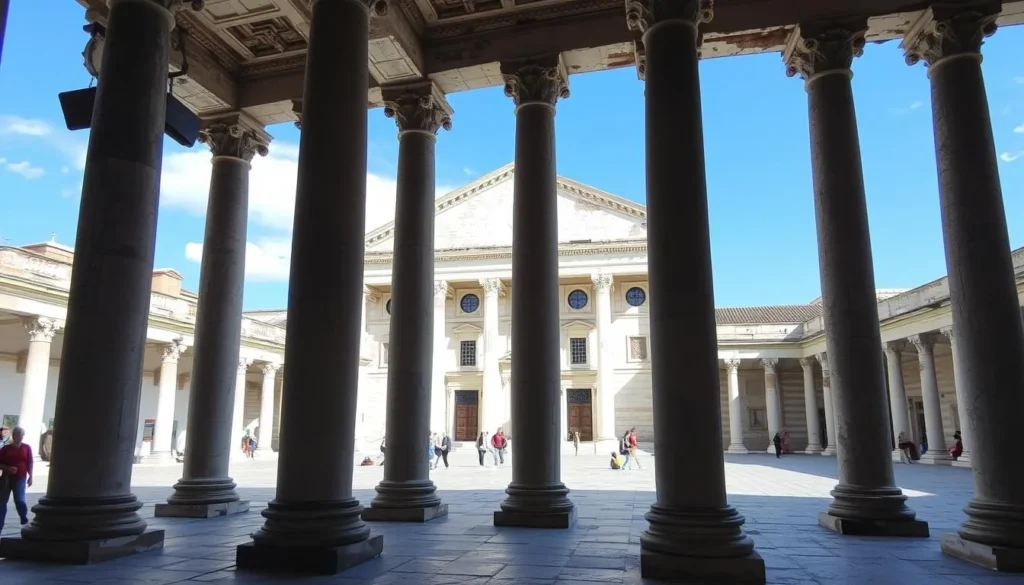
This UNESCO World Heritage site forms the heart of Split’s old town. Built in the 4th century as a retirement home for Roman Emperor Diocletian, it’s now a living monument where shops, restaurants, and homes exist within ancient Roman walls. Don’t miss the Peristyle (central square), the Cathedral of Saint Domnius, and the atmospheric underground cellars.
Riva Promenade
Split’s seafront promenade is lined with palm trees, cafes, and benches, making it perfect for people-watching or enjoying an ice cream while gazing at the harbor. It’s especially magical at sunset when locals participate in the traditional evening stroll known as “đir.”
Marjan Hill
This forested peninsula rising west of the city center offers hiking trails, lookout points with spectacular views, hidden medieval chapels, and secluded beaches. A climb to the Telegrin peak (178 m/584 ft) rewards you with panoramic vistas of Split and the surrounding islands.
Split Beaches
While not known primarily as a beach destination, Split offers several lovely spots to swim in the crystal-clear Adriatic:
- Bačvice Beach – Sandy beach close to the center, famous for the local game of “picigin”
- Kašjuni Beach – Pebble beach on the southern side of Marjan Hill with beautiful clear water
- Ježinac Beach – Family-friendly beach with facilities and shade from pine trees
Game of Thrones Filming Locations
Fans of the HBO series will recognize Diocletian’s Palace cellars as the setting where Daenerys kept her dragons in Meereen. Nearby Klis Fortress, just 12 km (7.5 miles) from Split, served as the city of Meereen in exterior shots.

Museums, Cultural Spots & Festivals
Split offers a rich cultural scene that extends beyond its ancient monuments, with excellent museums, galleries, and vibrant festivals throughout the year.
Top Museums
- Archaeological Museum – Croatia’s oldest museum houses artifacts from the Greek, Roman, early Christian, and medieval periods
- Meštrović Gallery – Dedicated to Croatia’s greatest sculptor, Ivan Meštrović, and set in his former seaside villa
- Ethnographic Museum – Located within Diocletian’s Palace, showcasing traditional Dalmatian life
- City Museum of Split – Housed in the Gothic Papalić Palace, telling the story of Split’s development
- Maritime Museum – Explores Split’s rich seafaring history

Cultural Experiences
For a deeper understanding of local culture, consider these experiences:
- Attend a performance at the Croatian National Theatre
- Visit the fish market (Peškarija) early in the morning to see locals in action
- Watch a game of Hajduk Split, the beloved local football club
- Take a Croatian cooking class to learn traditional Dalmatian recipes
Major Festivals in Split
| Festival | When | What to Expect |
| Split Summer Festival | Mid-July to mid-August | Opera, drama, and dance performances in historic venues |
| Ultra Europe | July | Massive electronic music festival attracting international DJs and fans |
| Days of Diocletian | Late August | Historical reenactments of Roman times throughout the palace |
| Split Film Festival | September | International festival of new film and video |
| Feast of St. Domnius | May 7 | Celebration of Split’s patron saint with processions and festivities |
Sports, Nature & Outdoor Experiences
Split’s spectacular location between mountains and sea creates endless opportunities for outdoor adventures and nature experiences.
Water Activities
The crystal-clear Adriatic Sea invites all manner of water sports:
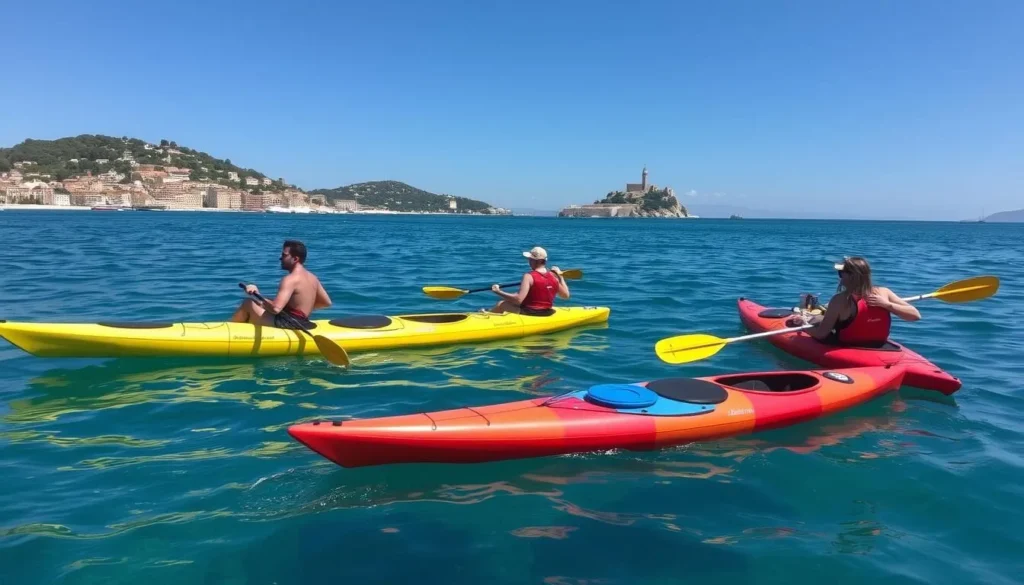
- Sea Kayaking – Paddle along Split’s coastline and around Marjan Hill
- Stand-Up Paddleboarding – Perfect for calm mornings on the Adriatic
- Sailing – Join a day trip or charter a boat to explore nearby islands and coves
- Scuba Diving – Discover underwater caves, reefs, and even ancient artifacts
- Swimming – Enjoy the clean, clear waters at Split’s many beaches
Hiking and Biking
The areas around Split offer excellent trails for both hikers and cyclists:
- Marjan Hill – Network of trails through pine forest with spectacular viewpoints
- Mosor Mountain – Challenging hikes just 30 minutes from Split with panoramic views
- Kozjak Mountain – Ridge trail with views of Split, the islands, and inland Dalmatia
- Cycling the Coast – Bike along the scenic coastal road toward Trogir or Omiš
Day Trips to National Parks
Split is ideally positioned for day trips to some of Croatia’s most stunning natural areas:
Krka National Park
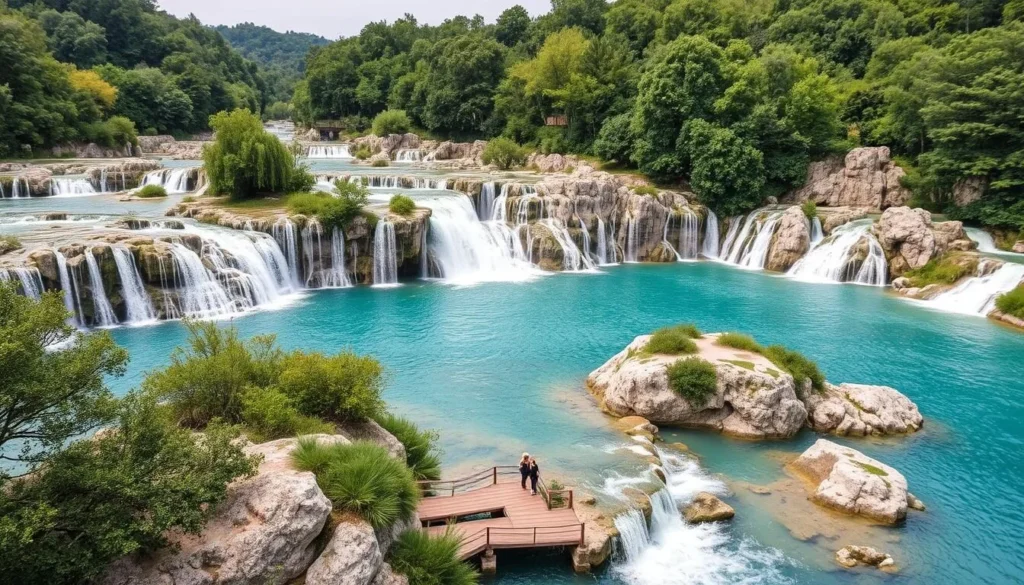
Just over an hour from Split, Krka features a series of seven stunning waterfalls cascading through lush forest. Unlike at Plitvice, swimming is permitted in designated areas at Krka.
Distance: 80 km (50 miles)
Travel Time: 1 hour by car
Plitvice Lakes National Park
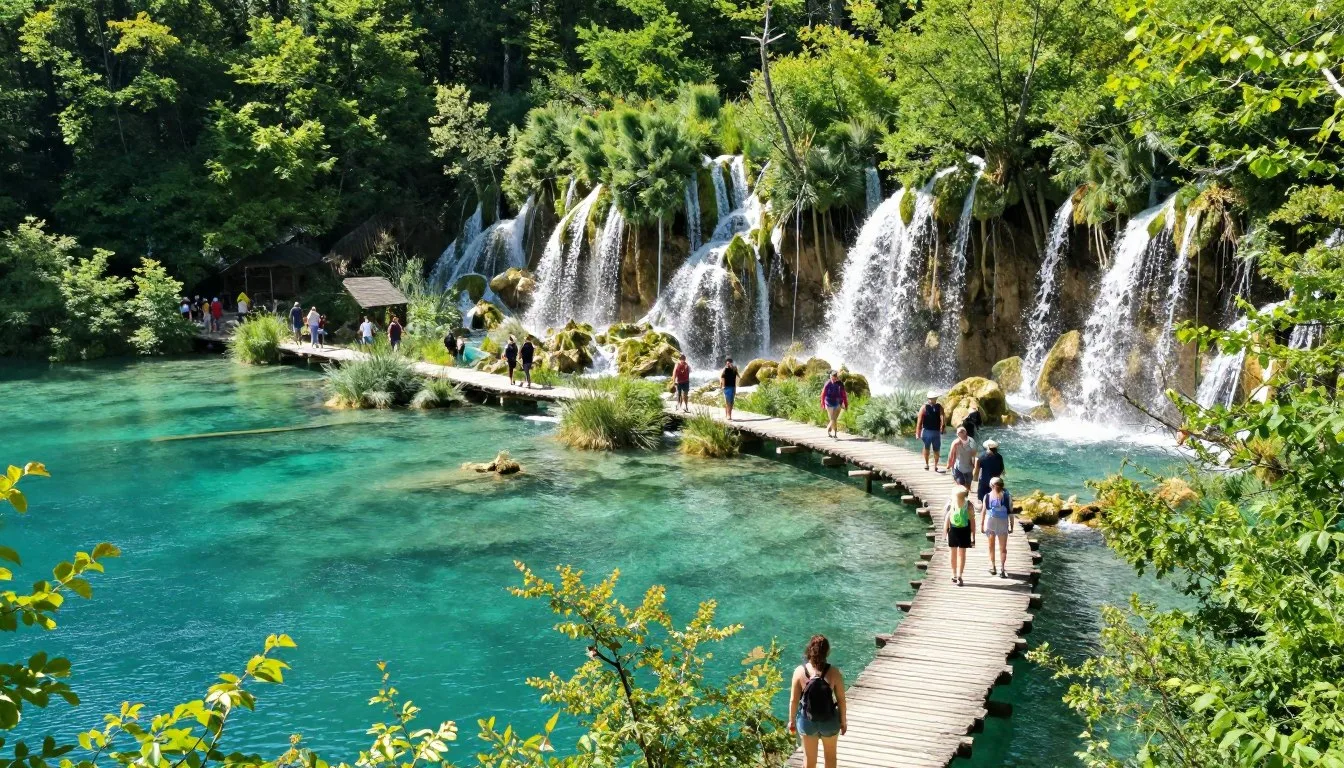
Croatia’s most famous national park showcases 16 terraced lakes connected by waterfalls. The wooden walkways take you right over the water for incredible views.
Distance: 260 km (162 miles)
Travel Time: 3 hours by car
Biokovo Nature Park
This dramatic mountain range rises directly from the coast, offering hiking trails and the Skywalk, a glass observation deck 1,228 m (4,029 ft) above the sea.
Distance: 90 km (56 miles)
Travel Time: 1.5 hours by car
Island Hopping from Split
One of Split’s greatest attractions is its position as a gateway to Croatia’s stunning islands. The central Dalmatian islands are easily accessible by ferry or tour boat, each offering its own unique character.
Popular Islands to Visit
Hvar
Known for its vibrant nightlife, historic Hvar Town, lavender fields, and beautiful beaches. The island blends sophisticated glamour with laid-back Mediterranean charm.
Getting There: 1 hour by catamaran, 2 hours by car ferry
Highlights: Hvar Town’s main square, Španjola Fortress, Stari Grad Plain (UNESCO site), Pakleni Islands
Brač
The closest major island to Split, famous for its radiant white stone (used in the White House) and the distinctive Zlatni Rat beach that changes shape with the currents.
Getting There: 50 minutes by catamaran, 1 hour by car ferry
Highlights: Zlatni Rat beach, Vidova Gora mountain, Blaca Hermitage, charming village of Bol
Vis
The most remote of the central Dalmatian islands, Vis offers an authentic experience with fewer tourists, excellent wine, and spectacular beaches.
Getting There: 2.5 hours by ferry
Highlights: Blue Cave on nearby Biševo, Stiniva Cove, military tunnels from Yugoslav era, Komiža fishing village

Island Hopping Options
- Independent Travel – Use public ferries to create your own itinerary (best for longer stays)
- Day Tours – Join organized boat tours visiting multiple islands in one day
- Private Boat Charter – For flexibility and access to secluded coves and beaches
- Sailing Trips – Multi-day sailing adventures departing from Split
Safety, Etiquette & Local Customs
Split is generally a very safe destination for travelers, with low crime rates and friendly locals. However, as with any tourist destination, it’s good to be aware of local customs and safety considerations.
Safety Tips
- Split has very low violent crime, but be aware of pickpockets in crowded tourist areas
- The narrow marble streets in the old town can be slippery, especially after rain – wear appropriate footwear
- When swimming, be cautious of sea urchins on rocky areas (water shoes are recommended)
- During summer, protect yourself from the strong sun and heat – wear sunscreen, stay hydrated
- Tap water is safe to drink throughout Croatia
Local Etiquette
Croatians are generally warm and welcoming, but appreciating these cultural norms will enhance your experience:
- Greetings are important – a simple “Dobar dan” (Good day) is appreciated when entering shops
- Croatians tend to dress well, especially for evening outings – beachwear is for beaches only
- Tipping is customary but not excessive – 10% is standard for good service
- Avoid discussing the Yugoslav wars or regional politics unless your local companion brings it up
- Croatians are proud of their country – showing genuine interest in local culture is appreciated
Religious Customs
Croatia is predominantly Catholic, and while Split is a modern city, showing respect when visiting religious sites is important:
- Dress modestly when visiting churches (shoulders and knees covered)
- Speak quietly and avoid flash photography during services
- Be aware that many businesses close on Sundays, especially outside tourist areas
Language Tip: While many Croatians in tourism speak excellent English, learning a few basic Croatian phrases is always appreciated: “Hvala” (Thank you), “Molim” (Please), “Doviđenja” (Goodbye).
Visitor Comments About Split
“Split completely surprised me with its perfect blend of ancient history and modern life. Walking through Diocletian’s Palace at sunset, with the stones glowing golden and cafés buzzing with conversation, was magical. Don’t miss the view from Marjan Hill – it’s worth every step of the climb!”
“We used Split as our base for exploring the islands, which worked perfectly. The ferry connections are excellent, and coming back to Split’s lively atmosphere each evening was wonderful. The food scene is incredible – try the black risotto at Konoba Fetivi and thank me later!”
“As a history buff, I was in heaven wandering through Split. But what made it special was how the ancient sites aren’t just museums – they’re part of everyday life. We stayed in an apartment with Roman walls and drank coffee in a café built into what was once Diocletian’s living quarters. Unforgettable!”
Practical Travel Tips
Money Matters
- Croatia adopted the Euro (€) as its currency in January 2023
- ATMs are widely available throughout Split
- Credit cards are accepted in most establishments, but carry some cash for small purchases
- Prices increase significantly during high season (July-August)
Connectivity
- Free Wi-Fi is available in most cafés, restaurants, and accommodations
- EU visitors can use their mobile plans without roaming charges
- Local SIM cards are inexpensive and available at newsstands and telecom shops
- The country code for Croatia is +385
Health & Accessibility
- EU citizens should bring their European Health Insurance Card
- Travel insurance is recommended for non-EU visitors
- Pharmacies (Ljekarna) are well-stocked and pharmacists often speak English
- Split’s historic center has many stairs and cobblestones, presenting challenges for those with mobility issues

Essential Packing Items
- Comfortable walking shoes with good grip for marble streets
- Water shoes for rocky beaches and protection from sea urchins
- Sun protection – hat, sunglasses, and high-SPF sunscreen
- Light, breathable clothing for summer; layers for spring and fall
- Adapter plug (Croatia uses the standard European two-pin socket, type C/F)
- Reusable water bottle – tap water is safe and you’ll save money and plastic
Your Adriatic Adventure Awaits
Split is a rare destination that truly offers something for everyone – history buffs can explore ancient Roman ruins, beach lovers can bask on pristine shores, foodies can savor fresh Mediterranean cuisine, and adventure seekers can hike, sail, and island-hop to their heart’s content. What makes Split truly special, though, is how these experiences blend together in a city that feels both timeless and vibrantly alive.
As you wander through the sun-dappled streets of Diocletian’s Palace, sip coffee along the palm-lined Riva, or watch the sunset paint the Adriatic gold from a Marjan Hill viewpoint, you’ll understand why visitors have been falling in love with this coastal gem for centuries. Split isn’t just a destination to check off your list – it’s a place that stays with you, calling you back to its warm stones and azure waters long after you’ve returned home.
Related Posts
Plitvice Lakes National Park, Croatia: Best Things to Do – Top Picks

Krk Island, Croatia: Best Things to Do – Top Picks
Trogir, Croatia: Best Things to Do – Top Picks

Ston, Croatia: Best Things to Do – Top Picks

Roinj, Croatia: Best Things to Do – Top Picks

Peljesac Peninsula, Croatia: Best Things to Do – Top Picks
Coming Soon: Clickable Maps