
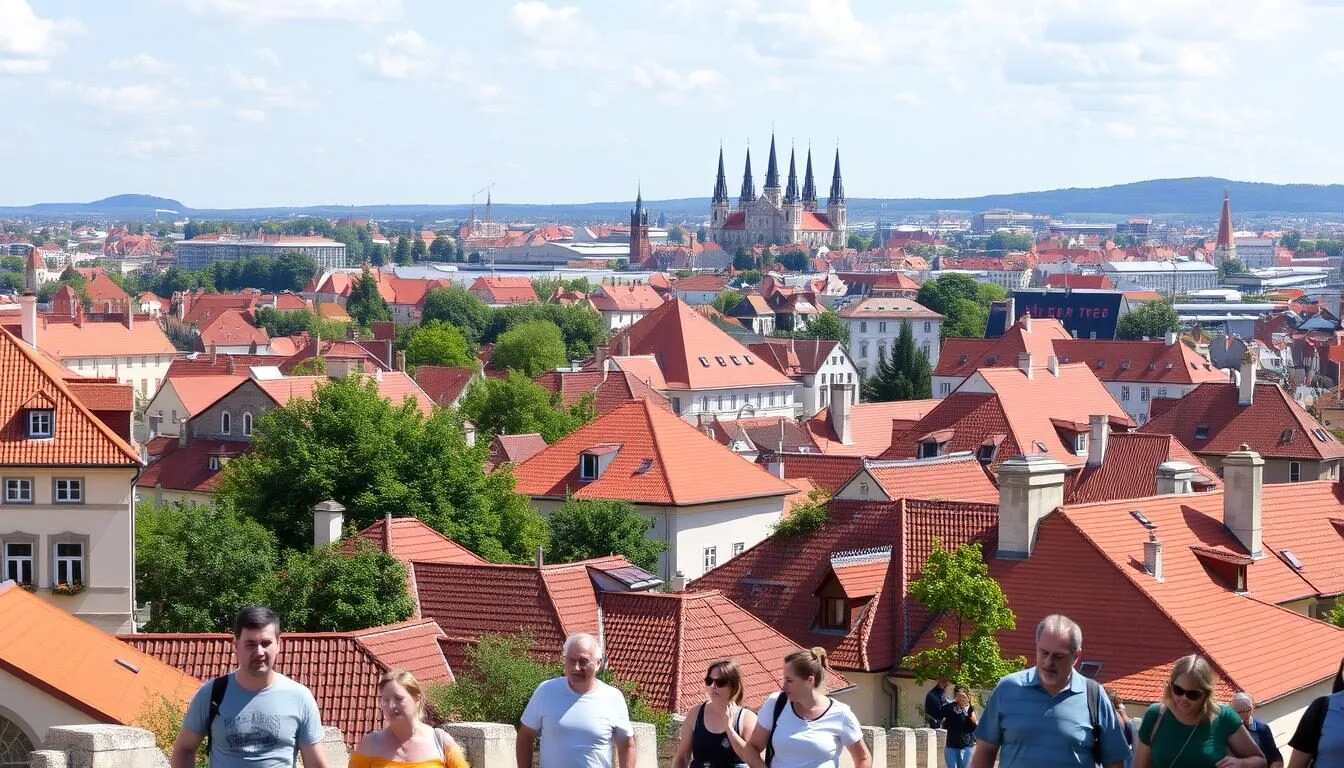
Did you know that Zagreb is home to the world’s shortest funicular railway? At just 66 meters long, this charming blue carriage has been connecting Zagreb’s Upper and Lower Towns since 1890, making it both the oldest public transport in the city and a quirky attraction in its own right. This blend of practical history and unique character perfectly encapsulates Zagreb’s appeal – a capital city that feels refreshingly authentic and unexplored compared to Croatia’s more famous coastal destinations.
Getting There & Planning Your Journey to Zagreb, Croatia: Best Things to Do – Top Picks
Zagreb is easily accessible by air, train, and bus, making it a convenient destination for travelers from across Europe and beyond. The city serves as Croatia’s main transportation hub, offering excellent connections to other parts of the country.
By Air
Franjo Tuđman Airport (ZAG) is Zagreb’s international airport, located about 15 km (9.3 miles) southeast of the city center. The airport serves numerous European destinations with direct flights from major cities like London, Paris, Amsterdam, and Frankfurt. Several airlines operate here, including Croatia Airlines, Lufthansa, British Airways, and various budget carriers.
Airport to City Center Transfer Options:
- Airport Shuttle Bus: Runs every 30 minutes between the airport and the main bus station. The journey takes approximately 30 minutes and costs around 45 HRK (6 EUR).
- Public Bus: Line 290 connects the airport to Kvaternik Square, from where you can take a tram to the city center.
- Taxi: Available outside the terminal with a journey time of 20-30 minutes depending on traffic. Expect to pay 150-200 HRK (20-27 EUR).
- Ride-sharing services: Uber and Bolt operate in Zagreb and often offer more competitive rates than traditional taxis.
By Train
Zagreb’s Main Railway Station (Glavni kolodvor) is centrally located and well-connected to European rail networks. Direct trains run from cities like Vienna, Budapest, Ljubljana, and Belgrade. The station is just a short walk from Ban Jelačić Square, the heart of Zagreb.
By Bus
The Zagreb Bus Station (Autobusni kolodvor) offers connections to numerous Croatian cities and international destinations. It’s located near the Main Railway Station and is connected to the city center by tram lines 2, 5, 6, 7, and 8.
Best Time to Visit & Weather Tips
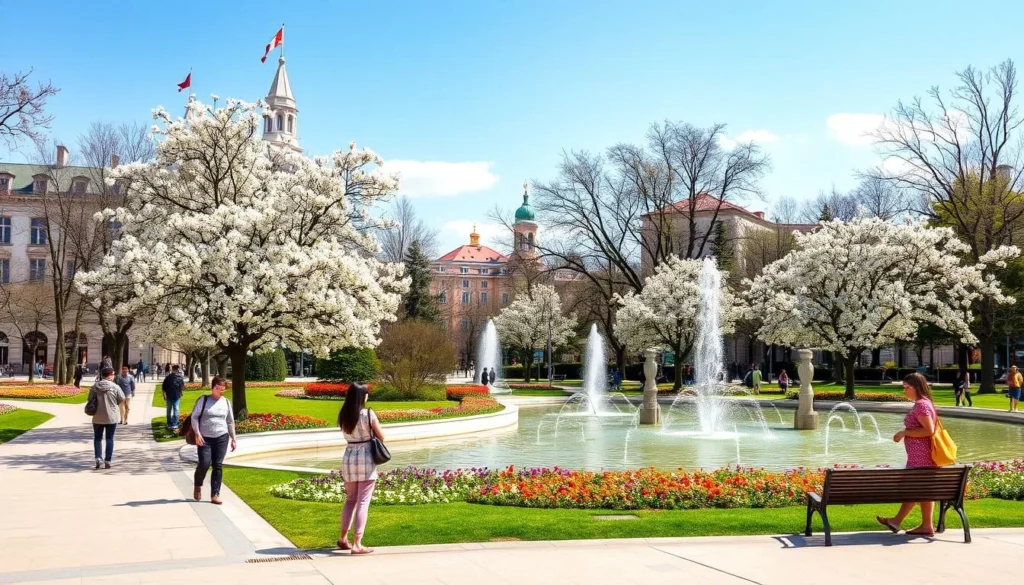
Zagreb experiences four distinct seasons, each offering a different perspective on the city. Unlike Croatia’s coastal regions that become overwhelmed with tourists in summer, Zagreb maintains a more balanced visitor flow throughout the year.
Best Time to Visit Zagreb
| Season | Months | Temperature | Advantages | Considerations |
| Spring | April-May | 15-25°C (59-77°F) | Pleasant weather, blooming parks, fewer tourists | Occasional rain showers |
| Summer | June-August | 25-30°C (77-86°F) | Outdoor festivals, café culture, longer days | Can be hot, locals often vacation elsewhere |
| Autumn | September-October | 15-25°C (59-77°F) | Beautiful foliage, harvest festivals, ideal temperatures | Increasing rainfall in late October |
| Winter | November-March | 0-10°C (32-50°F) | Christmas markets, fewer tourists, cozy atmosphere | Cold temperatures, shorter days |
Recommended Months
The ideal times to visit Zagreb are May-June and September-October when the weather is pleasant, the city is lively with locals, and outdoor activities are at their best. These shoulder seasons offer the perfect balance of good weather and manageable tourist numbers.
Months to Avoid
While Zagreb doesn’t have a “bad” time to visit, July and August can be uncomfortably hot with temperatures occasionally exceeding 30°C (86°F). Additionally, many locals leave the city for coastal vacations during this time. January and February are the coldest months, with occasional snow and temperatures hovering around freezing.
Getting Around Locally
Zagreb is a wonderfully walkable city, especially in the central areas. The compact nature of both the Upper and Lower Towns makes exploring on foot a pleasure. However, the city also offers excellent public transportation options for longer journeys.
Public Transportation
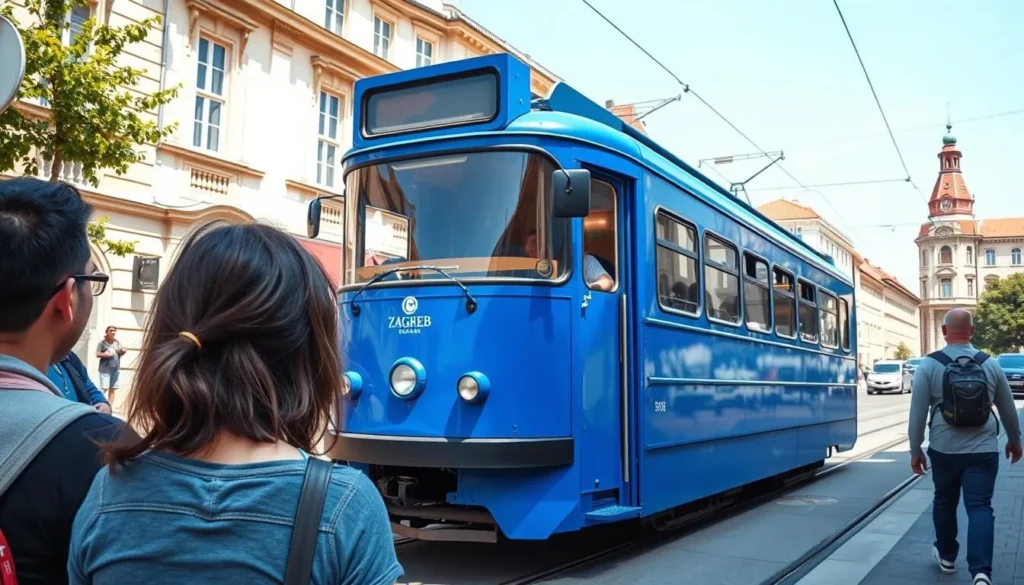
Zagreb’s public transportation system is operated by ZET (Zagrebački električni tramvaj) and includes trams, buses, and the funicular.
- Trams: The backbone of Zagreb’s public transport with 15 daytime and 4 night lines. Trams run frequently (every 5-10 minutes during peak hours) and connect all major parts of the city.
- Buses: Complement the tram network and reach areas outside the tram routes. Particularly useful for reaching Mirogoj Cemetery and Jarun Lake.
- Funicular: The historic funicular connects the Lower Town to the Upper Town. It runs every 10 minutes from 6:30 am to 10:00 pm and costs just 5 HRK (0.70 EUR) per ride.
Tickets and Passes
ZET tickets can be purchased at kiosks (tisak), from drivers (at a slightly higher price), or via the ZET mobile app. Options include:
- Single ride: Valid for 30 minutes (4 HRK/0.53 EUR), 60 minutes (7 HRK/0.93 EUR), or 90 minutes (10 HRK/1.33 EUR)
- Daily ticket: 30 HRK (4 EUR)
- 3-day ticket: 70 HRK (9.29 EUR)
- 7-day ticket: 150 HRK (20 EUR)
Remember to validate your ticket upon boarding. Inspectors regularly check tickets, and fines for riding without a valid ticket are substantial.
Taxis and Ride-Sharing
Taxis in Zagreb have become more affordable in recent years due to competition from ride-sharing services. Uber, Bolt, and local taxi companies like Radio Taxi Zagreb and Cammeo all operate in the city. A typical ride within the central area costs between 20-40 HRK (2.65-5.30 EUR).
Cycling
Zagreb is increasingly bicycle-friendly with dedicated bike lanes in many parts of the city. NextBike offers a public bike-sharing system with stations throughout Zagreb. Registration is required via their app, after which you can rent bikes for 5 HRK (0.66 EUR) per 30 minutes.
Where to Stay
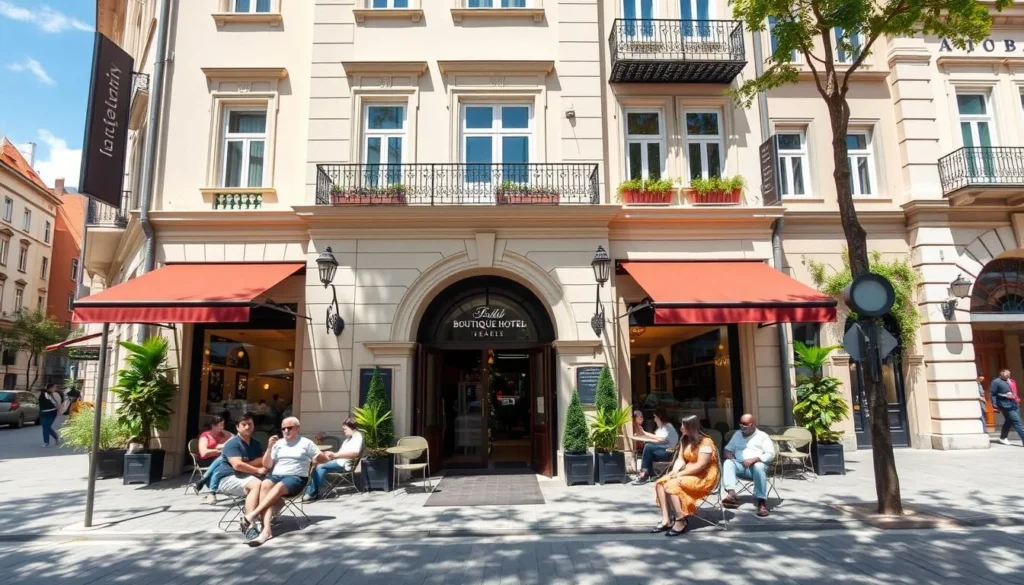
Zagreb offers accommodation options for every budget and preference, from luxury hotels housed in historic buildings to modern boutique properties and budget-friendly hostels. The city’s compact nature means that most accommodations are within walking distance of major attractions.
Best Areas to Stay
Lower Town (Donji Grad)
The heart of Zagreb’s commercial and cultural life, Lower Town offers excellent access to shopping, restaurants, and museums. It’s flat and easy to navigate, making it ideal for first-time visitors.
Perfect for: First-time visitors, shoppers, and those who prefer a central location with easy access to transportation.
Upper Town (Gornji Grad)
The historic center with cobblestone streets, medieval buildings, and most of Zagreb’s iconic landmarks. Staying here puts you in the most picturesque part of the city, though accommodations tend to be more expensive.
Perfect for: History enthusiasts, romantic getaways, and those seeking a charming atmosphere.
British Square Area
A residential neighborhood with a local feel, centered around Britanski trg (British Square). It’s quieter than the center but still within walking distance of major attractions and offers a glimpse into local life.
Perfect for: Travelers seeking a more authentic experience and those who prefer quieter surroundings.
Accommodation Types
- Luxury Hotels: The Esplanade Zagreb Hotel (historic luxury hotel built for Orient Express passengers), Hotel Dubrovnik (centrally located on Ban Jelačić Square), and Canopy by Hilton (modern luxury in a historic setting).
- Boutique Hotels: Hotel Jägerhorn (Zagreb’s oldest hotel dating from 1827), B&B Fotić (charming property near the main square), and Hotel 9 (modern design hotel).
- Apartments: Zagreb has numerous rental apartments offering more space and kitchen facilities. Areas like Tkalčićeva Street, Vlaška Street, and around Cvjetni trg (Flower Square) have many options.
- Hostels: Swanky Mint Hostel (award-winning design hostel), Main Square Hostel (central location), and Chillout Hostel (social atmosphere with organized activities).
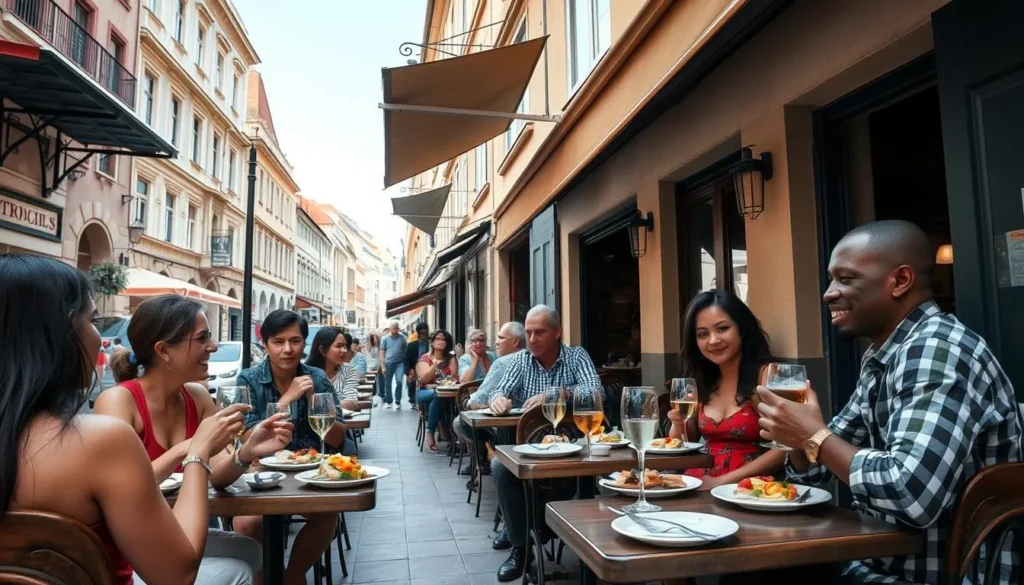
Dining & Local Cuisine
Zagreb’s culinary scene blends traditional Croatian dishes with contemporary influences, offering everything from hearty local specialties to international cuisine. The city has embraced the farm-to-table movement, with many restaurants sourcing ingredients from nearby farms and the Dolac Market.
Must-Try Local Dishes
- Štrukli: Perhaps Zagreb’s most famous dish, štrukli consists of dough filled with cottage cheese, then either boiled or baked. La Štruk restaurant specializes exclusively in this dish, offering both sweet and savory variations.
- Zagrebački odrezak: Zagreb’s take on Cordon Bleu – breaded veal or chicken stuffed with ham and cheese.
- Sir i vrhnje: A simple but delicious combination of fresh cottage cheese and sour cream, often eaten with bread.
- Purica s mlincima: Roasted turkey served with mlinci, a unique flatbread that’s briefly boiled and mixed with the roasting juices.
- Kremšnita: A cream cake that’s particularly famous in nearby Samobor but available throughout Zagreb.
Dining Experiences
Traditional Restaurants
For authentic Croatian cuisine, visit Vinodol (traditional dishes in a historic setting), Stari Fijaker (classic Zagreb specialties), or Okrugljak (upscale traditional dining in a beautiful setting).
Modern Bistros
Zagreb has embraced the bistro trend with spots like Bistroteka, Mali Bar, and Mundoaka Street Food offering creative, seasonal menus in casual settings.
Café Culture
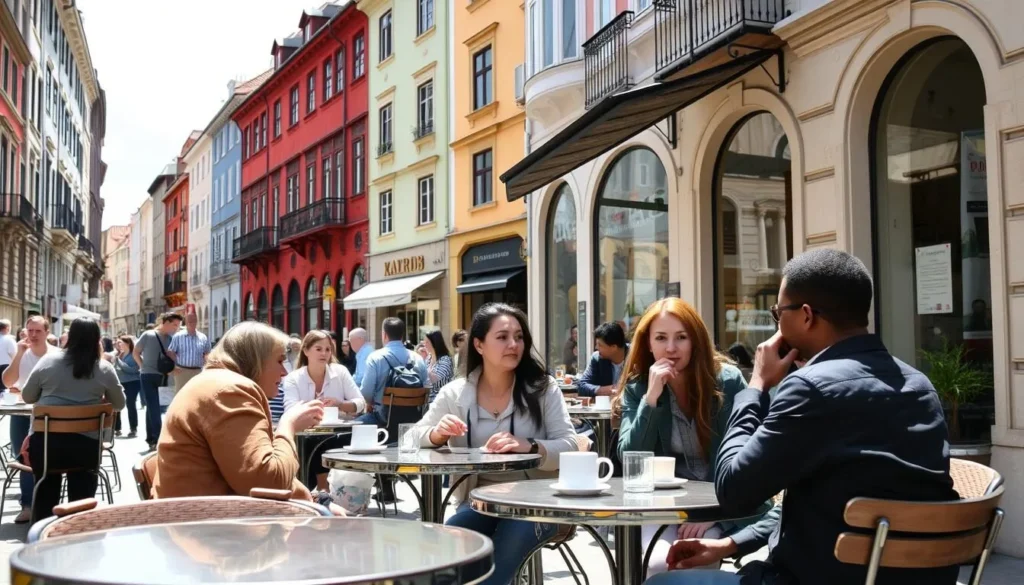
Coffee is serious business in Zagreb. Join locals at cafés like Velvet, Quahwa, or Program, where people linger for hours over a single cup, chatting and people-watching.
Dining Tips
Lunch is traditionally the main meal in Croatia, and many restaurants offer a “gablec” (workers’ lunch) special for around 6-8 EUR. This is an excellent way to try local dishes at reasonable prices.
Tipping in Zagreb restaurants is typically around 10% for good service, though it’s not mandatory. Some restaurants include a service charge, so check your bill.
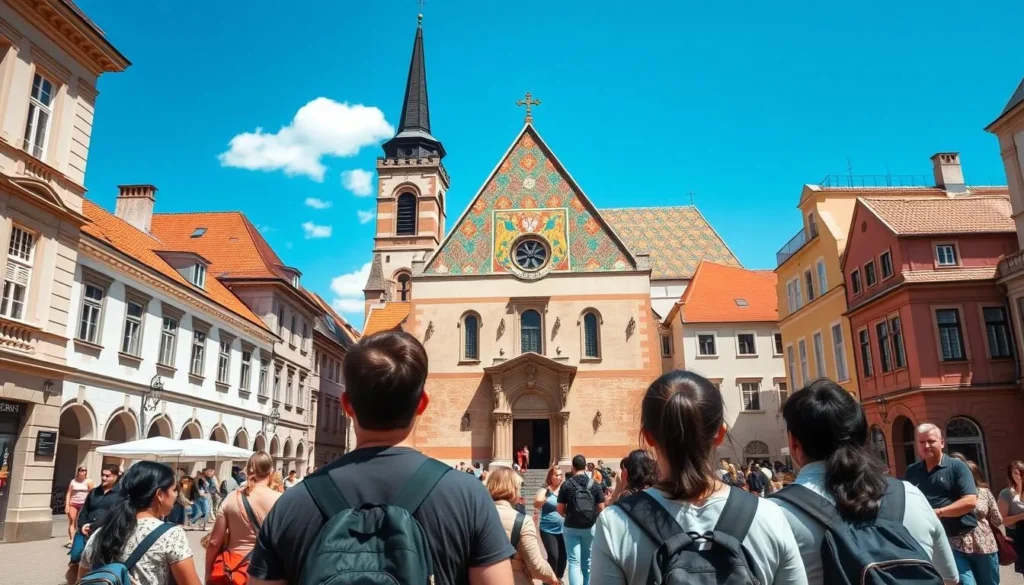
Attractions, Sightseeing & Activities: Zagreb, Croatia: Best Things to Do – Top Picks
Zagreb offers a perfect blend of historical landmarks, quirky attractions, and vibrant urban spaces. The city is divided into the medieval Upper Town (Gornji Grad) and the more modern Lower Town (Donji Grad), each with its own distinct character and attractions.
Upper Town Highlights
- St. Mark’s Church: Famous for its colorful tiled roof depicting the coat of arms of Zagreb and Croatia. The 13th-century church is located in St. Mark’s Square, also home to the Croatian Parliament and Presidential Palace.
- Lotrščak Tower: Climb for panoramic views and witness the daily firing of the Grič cannon at noon – a tradition since 1877. The cannon was originally fired to signal noon to church bell-ringers across the city.
- Stone Gate (Kamenita Vrata): The last remaining gate from the city’s medieval walls, now a shrine containing a painting of the Virgin Mary that miraculously survived a fire in 1731. Locals often stop to light candles and say prayers.
- Zagreb Cathedral: The tallest building in Croatia and a stunning example of Gothic architecture. The cathedral has undergone several reconstructions, most recently following earthquake damage in 2020.
- Strossmayer Promenade: A romantic walkway offering beautiful views over the Lower Town. In summer, it hosts “Summer on Stross,” a series of concerts and events.
Lower Town Must-Sees
- Ban Jelačić Square: The city’s central square and a popular meeting point, named after Count Josip Jelačić, whose statue dominates the square.
- Dolac Market: Zagreb’s vibrant open-air market, known as the “belly of the city.” The ground floor houses butchers and dairy vendors, while the upper level features fresh produce, flowers, and souvenirs.
- Tkalčićeva Street: Once a creek separating Kaptol and Gradec (now Upper Town), this pedestrian street is lined with cafés, restaurants, and boutiques. It’s the heart of Zagreb’s social scene.
- Lenuci’s Horseshoe: A U-shaped series of parks and squares in Lower Town, featuring beautiful 19th-century buildings, fountains, and the Croatian National Theatre.
- Funicular Railway: The world’s shortest public transport funicular connects the Lower and Upper Towns. The 66-meter journey takes just 55 seconds but saves a steep climb up the hill.
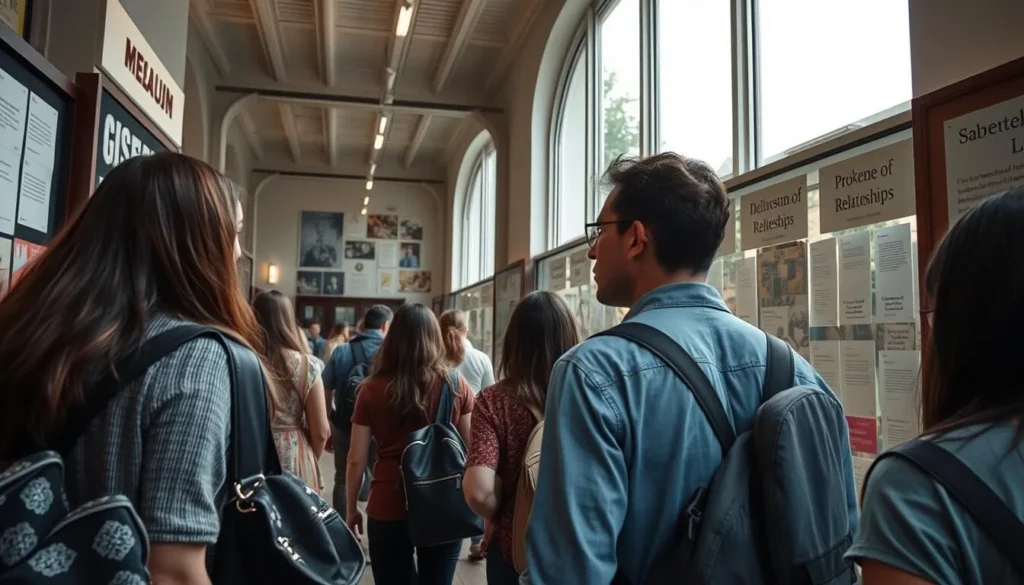
Museums, Cultural Spots & Festivals
Zagreb boasts an impressive array of museums and galleries, from traditional art collections to some of Europe’s most unusual and innovative museums. The city’s cultural calendar is packed year-round with festivals celebrating everything from film and music to food and street art.
Unique Museums
- Museum of Broken Relationships: Perhaps Zagreb’s most famous museum, this award-winning collection displays personal objects donated by people from around the world, each telling the story of a relationship’s end. The exhibits range from heartbreaking to hilarious.
- Museum of Illusions: Interactive exhibits that play with perception, optical illusions, and holograms. Perfect for visitors of all ages and especially popular with families.
- Croatian Museum of Naïve Art: Houses the world’s first permanent collection of naïve art, featuring works by untrained artists with a distinctive, primitive style.
- Zagreb 80s Museum: A nostalgic look at everyday life in Zagreb during the final decade of Yugoslavia, complete with period-accurate rooms you can explore.
- Technical Museum Nikola Tesla: Features exhibits on transportation, energy, and astronomy, with regular demonstrations of Tesla’s inventions.
Art Galleries
The National Museum of Modern Art showcases Croatian artists from the 19th and 20th centuries, while the Contemporary Art Museum features cutting-edge works in a striking modern building. For something different, visit the Meštrović Atelier, dedicated to Croatia’s most famous sculptor, Ivan Meštrović.
Major Festivals
| Festival | When | What to Expect |
| Advent in Zagreb | December | Award-winning Christmas market with festive stalls, ice skating, concerts, and food throughout the city center |
| INmusic Festival | Late June | Croatia’s largest open-air music festival, held on the shores of Lake Jarun |
| Zagreb Film Festival | November | International film festival showcasing independent productions and emerging filmmakers |
| Dvorišta (Courtyards) | July | A week-long event opening normally private Upper Town courtyards to the public, with music, food, and drinks |
| Animafest | June | One of the world’s oldest animation festivals, celebrating animated films since 1972 |
Cultural Etiquette
When visiting museums and galleries in Zagreb, photography is generally permitted without flash, but always check the specific rules of each institution. Many museums offer reduced prices or free entry on specific days of the month, so it’s worth checking their websites before visiting.
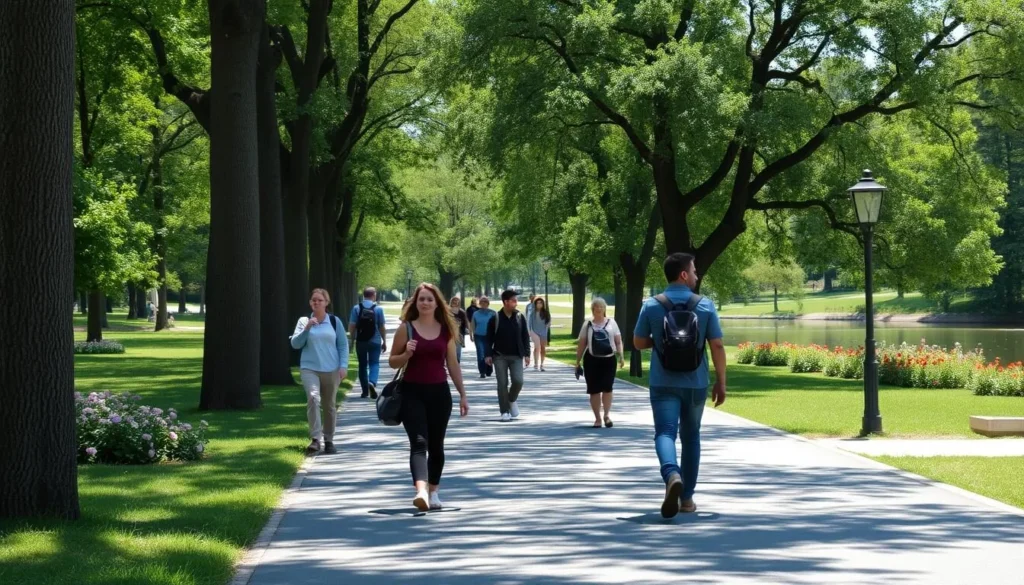
Sports, Nature & Outdoor Experiences
Despite being a capital city, Zagreb offers abundant green spaces and outdoor activities. From vast parks within the city limits to the mountain wilderness just a short drive away, nature lovers will find plenty to enjoy.
Parks and Green Spaces
- Maksimir Park: Zagreb’s oldest and largest public park (316 hectares/780 acres), established in 1794. Features five lakes, walking trails, and the city zoo. Perfect for picnics, jogging, or simply escaping the urban environment.
- Jarun Lake: A recreational area in the southwestern part of the city with beaches, rowing lanes, and jogging paths. In summer, locals come here to swim, while the surrounding area hosts numerous cafés and nightclubs.
- Bundek Park: A newer park with a lake, beaches, and barbecue areas. Hosts various events throughout the year, including the International Folklore Festival.
- Botanical Garden: Located within Lenuci’s Horseshoe, this beautiful garden houses over 10,000 plant species. Open April through October.
Medvednica Mountain
Rising behind Zagreb, Medvednica Nature Park offers a quick escape to nature. The highest peak, Sljeme (1,035 m/3,396 ft), is accessible by car, bus, or the recently reopened cable car. In winter, it becomes a popular ski resort, while summer brings hikers and mountain bikers to its numerous trails.
Don’t miss Medvedgrad, a 13th-century fortress on the southern slopes offering panoramic views of Zagreb. The mountain is also home to several mountain lodges serving traditional Croatian food – perfect after a hike.
Cycling
Zagreb has become increasingly bicycle-friendly with dedicated lanes throughout the city. The flat terrain of Lower Town makes for easy cycling, while more adventurous riders can tackle the hills of Upper Town or the trails of Medvednica.
NextBike offers a public bike-sharing system with stations throughout Zagreb, making it easy to explore on two wheels.
Sports Events
If you’re a sports fan, catch a football match at Maksimir Stadium (home to Dinamo Zagreb) or a basketball game at Dražen Petrović Basketball Center. Zagreb also hosts the Snow Queen Trophy, a World Cup skiing competition held on Sljeme in January.
Safety, Etiquette & Local Customs
Zagreb is generally a very safe city with low crime rates. However, as with any urban destination, it’s wise to take standard precautions to ensure a smooth and enjoyable visit.
Safety Tips
- Zagreb is considered one of the safest capital cities in Europe, with violent crime being rare.
- Be aware of pickpockets in crowded tourist areas, particularly around the main square and on public transportation.
- The city is safe to walk around at night, especially in the central areas that are well-lit and often busy with locals.
- Taxi scams targeting tourists have decreased with the rise of ride-sharing apps, but it’s still best to use official taxis or services like Uber and Bolt.
- Zagreb occasionally experiences earthquakes, as evidenced by the 2020 tremor. Familiarize yourself with basic earthquake safety procedures.
Local Etiquette
- Greetings: Croatians typically greet with a handshake. Close friends and family may exchange kisses on the cheek (typically three).
- Punctuality: While not as strict as in some Northern European countries, punctuality is appreciated for business meetings and formal occasions. For social gatherings, arriving 15 minutes late is generally acceptable.
- Dress Code: Zagreb residents tend to dress smartly, especially when dining out or attending cultural events. Casual but neat attire is appropriate for most situations.
- Tipping: Service is not typically included in restaurant bills. A tip of 10% is appreciated for good service, though not mandatory. Round up taxi fares to the nearest 10 HRK.
- Smoking: Despite recent regulations, smoking remains common in Croatia. Many cafés and restaurants have designated smoking areas, usually outdoors.
Cultural Sensitivities
The 1990s Yugoslav Wars remain a sensitive topic for many Croatians. While most people are open to discussing their history, approach such conversations with respect and sensitivity.
Religion plays an important role in Croatian culture, with the majority of the population being Roman Catholic. When visiting churches or religious sites, dress modestly (covering shoulders and knees) and maintain a respectful demeanor.
Visitor Comments About Zagreb, Croatia: Best Things to Do – Top Picks
“I was pleasantly surprised by Zagreb! After visiting Dubrovnik and Split, I expected Zagreb to be just another stop on our itinerary, but it ended up being my favorite Croatian city. The Museum of Broken Relationships was fascinating, and I loved the café culture. We spent hours just sitting at cafés, watching the world go by. The Upper Town’s cobblestone streets were so charming, especially at night when the gas lamps are lit by hand. Don’t miss the Dolac Market for fresh produce and local cheese!”
“Zagreb has the perfect blend of history and modern amenities. We stayed in the Lower Town and loved the architecture and parks. The funicular ride was short but fun, and the views from the Upper Town were spectacular. What really stood out was how friendly everyone was despite the language barrier. A local even helped us navigate the tram system when we looked confused! The food was incredible too – štrukli at La Štruk was a highlight. If you visit in December, the Christmas market is absolutely magical.”
“As an Austrian, I’ve visited Zagreb multiple times and it never disappoints. It reminds me a bit of Vienna with its Austro-Hungarian architecture, but has its own distinct Croatian character. The coffee culture is even stronger than in Vienna – people really take their time! Maksimir Park is perfect for morning jogs, and the Technical Museum is fascinating even for non-technical people. My tip: take a day trip to Samobor for the best kremšnita (cream cake) you’ll ever taste. Zagreb is severely underrated compared to Croatia’s coastal cities.”

Practical Travel Tips
These practical tips will help you navigate Zagreb with ease and make the most of your visit to Croatia’s capital city.
Money Matters
Croatia joined the Eurozone on January 1, 2023, replacing the Croatian Kuna (HRK) with the Euro (EUR). Credit cards are widely accepted in hotels, restaurants, and larger stores, but it’s advisable to carry some cash for smaller establishments, markets, and cafés.
ATMs are plentiful throughout Zagreb. For the best exchange rates, avoid exchanging money at airports or hotels and opt for banks or dedicated exchange offices in the city center.
Language
Croatian is the official language, but English is widely spoken, especially among younger generations and in tourist areas. Learning a few basic Croatian phrases will be appreciated:
- Hello – Bok (informal) or Dobar dan (formal)
- Thank you – Hvala
- Please – Molim
- Yes/No – Da/Ne
- Excuse me – Oprostite
- Cheers – Živjeli
Connectivity
Free Wi-Fi is available in many cafés, restaurants, and public spaces throughout Zagreb. If you need constant connectivity, consider purchasing a local SIM card from providers like T-Hrvatski Telekom, A1, or Telemach, available at their stores or at newsstands.
Opening Hours
Most shops in Zagreb are open Monday to Friday from 9:00 am to 8:00 pm, and Saturday from 9:00 am to 2:00 or 3:00 pm. Shopping malls have extended hours, typically 10:00 am to 9:00 pm daily. Many smaller shops and some museums are closed on Sundays.
Day Trips from Zagreb
- Plitvice Lakes National Park: Croatia’s most famous national park, featuring 16 terraced lakes connected by waterfalls. Located about 2 hours from Zagreb by car or bus.
- Samobor: A charming medieval town just 30 minutes from Zagreb, famous for its carnival celebrations and kremšnita cream cake.
- Varaždin: Often called “Little Vienna” for its baroque architecture, this historic city is about an hour from Zagreb.
- Ljubljana and Lake Bled: Slovenia’s capital and its famous alpine lake are close enough for a day trip, though an overnight stay would allow more exploration.
Embracing Zagreb’s Unhurried Charm
Unlike many European capitals that rush to impress with grand monuments and tourist spectacles, Zagreb reveals itself slowly to those willing to embrace its rhythm. The city invites you to linger over coffee, to wander without purpose through its historic streets, and to discover the small moments that make it special – the lamplighter illuminating Upper Town’s gas lamps at dusk, the animated conversations at market stalls in Dolac, or the impromptu concerts that spring up in hidden courtyards.
Zagreb doesn’t demand attention; it rewards curiosity. Its blend of Austro-Hungarian grandeur and Mediterranean ease creates a city that feels both familiar and refreshingly different. Whether you’re admiring the colorful roof of St. Mark’s Church, contemplating the poignant exhibits at the Museum of Broken Relationships, or simply watching the world go by from a café terrace, Zagreb offers a distinctly Croatian experience that complements the country’s more famous coastal destinations.
As you leave this understated capital, you’ll carry with you not just memories of sights seen, but of a city experienced – the taste of štrukli, the sound of the noon cannon, the feeling of cobblestones beneath your feet in the Upper Town. Zagreb may not have been the reason you came to Croatia, but it might just be the reason you return.
The above is subject to change.
Check back often to TRAVEL.COM for the latest travel tips and deals.


0 Comments