
Hotels by Trip.com
Flights by Trip.com
Did you know that in Chukotka, you can stand at the easternmost point of the entire Eurasian continent and actually see tomorrow? This remote Russian region sits directly across the International Date Line from Alaska, making it one of the few places on Earth where you can literally look into the next day. As Russia’s most northeastern territory, Chukotka offers travelers a rare glimpse into pristine Arctic landscapes, ancient indigenous cultures, and natural phenomena that few outsiders ever witness.
Getting There & Planning Your Journey
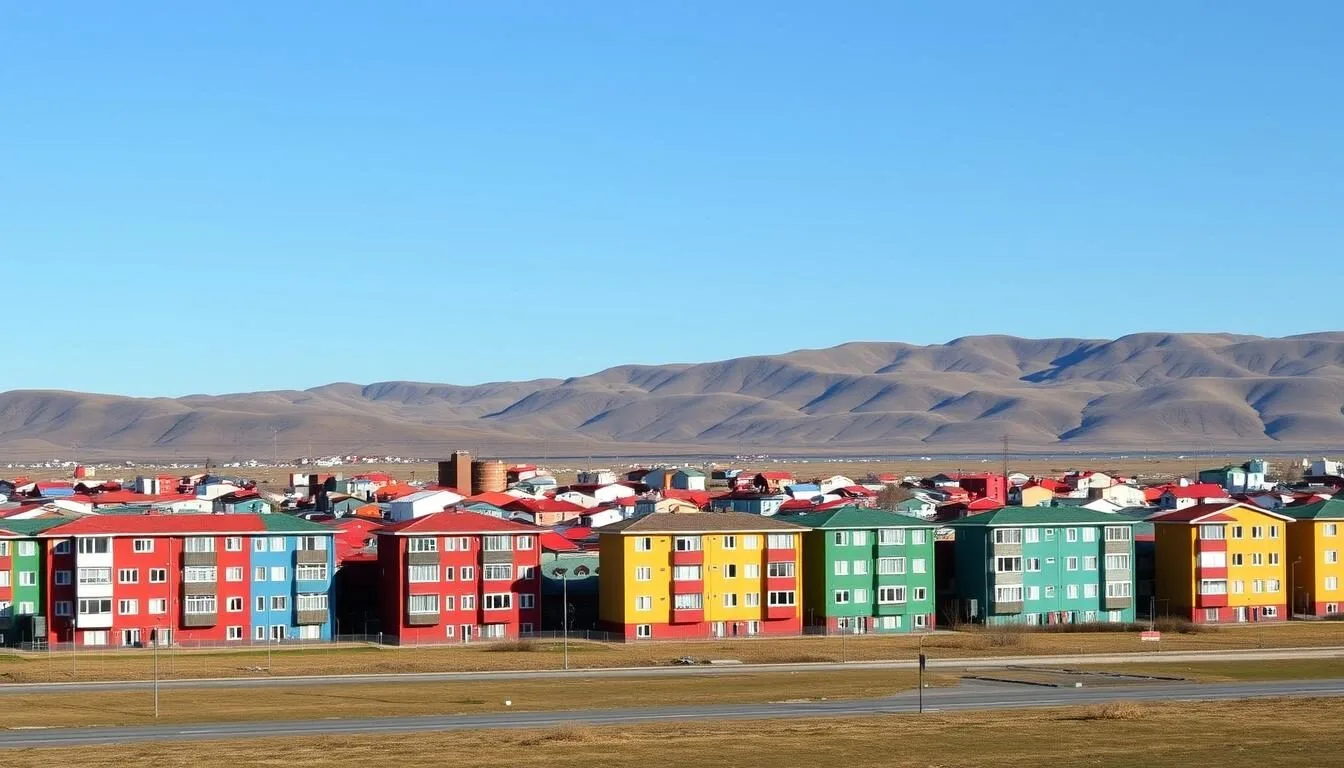
The colorful buildings of Anadyr, Chukotka’s administrative center
Reaching Chukotka requires advance planning due to its remote location. The primary gateway is through Anadyr Airport (DYR), which receives flights from Moscow. The flight takes approximately 8 hours from the Russian capital. For adventurous travelers, it’s also possible to reach Chukotka from Nome, Alaska via charter flights operated by Bering Air, though this requires obtaining special permits at least 60 days in advance.
Important travel documents include a Russian visa, which typically takes 4-10 business days to process. If entering from Alaska, you’ll also need a special “Chukotka Pass” (Entry Permission Document) since this is a closed region of Russia. This document requires an invitation from someone living in the region and takes about 60 business days to process.
Travel Tip: Begin your visa and permit application process at least three months before your planned trip to ensure all documentation is ready in time.
Best Time to Visit & Weather Tips

Chukotka’s tundra comes alive with wildflowers during the brief summer
Recommended Seasons
- Late June to early September: The brief summer offers milder temperatures (5-15°C/41-59°F), longer daylight hours, and better accessibility to remote areas.
- March: For winter enthusiasts seeking northern lights and traditional dog sledding experiences.
Seasons to Avoid
- November to February: Extreme cold (often below -30°C/-22°F), polar nights, and limited transportation options make winter travel challenging.
- May: Mud season during the spring thaw makes many areas impassable.
Chukotka’s weather is harsh and unpredictable year-round. Even in summer, temperatures can drop suddenly, and strong winds are common. The region experiences polar day (24-hour daylight) in summer and polar night (24-hour darkness) in winter. Pack layers regardless of when you visit, and always include waterproof and windproof outer layers.
Getting Around Locally
✓ Check 30,000+ Local Sightseeing Tours Worldwide
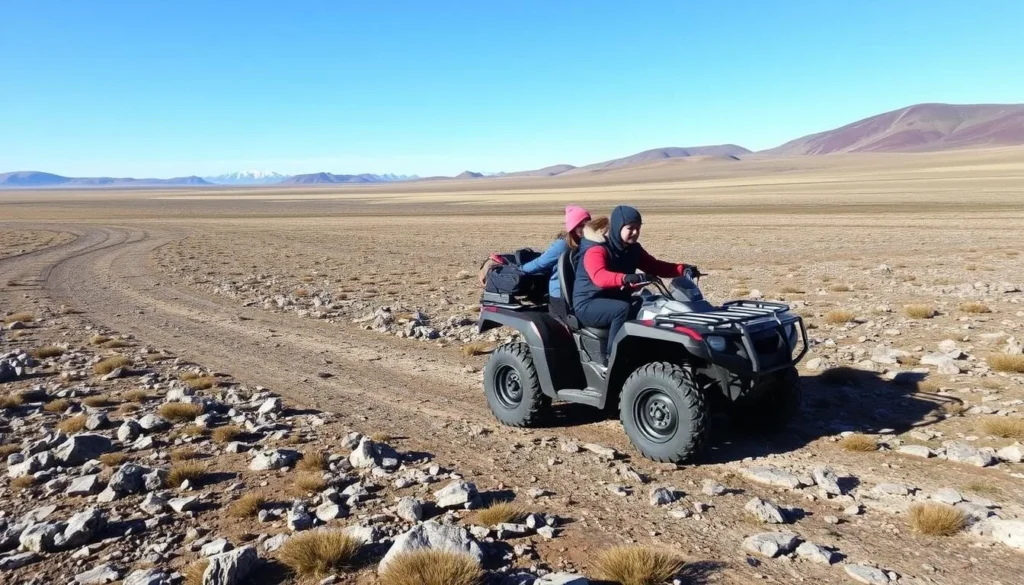
All-terrain vehicles are essential for navigating Chukotka’s roadless wilderness
Transportation within Chukotka is limited and challenging. There are no roads connecting most settlements, making air travel the primary mode of transportation between communities. Within Anadyr and other settlements, walking is often the best option as towns are relatively small.
“In Chukotka, the journey itself becomes the adventure. Sometimes the only way to reach a destination is by helicopter, boat, or all-terrain vehicle.”
For exploring beyond settlements, you’ll need to arrange transportation with local guides who have access to:
- Helicopters for reaching remote villages and natural attractions
- All-terrain vehicles for tundra exploration
- Boats for coastal areas and whale watching
- Dog sleds in winter (a traditional and authentic way to experience the region)
Due to the region’s isolation, transportation should be arranged well in advance through tour operators specializing in Chukotka travel.
Where to Stay
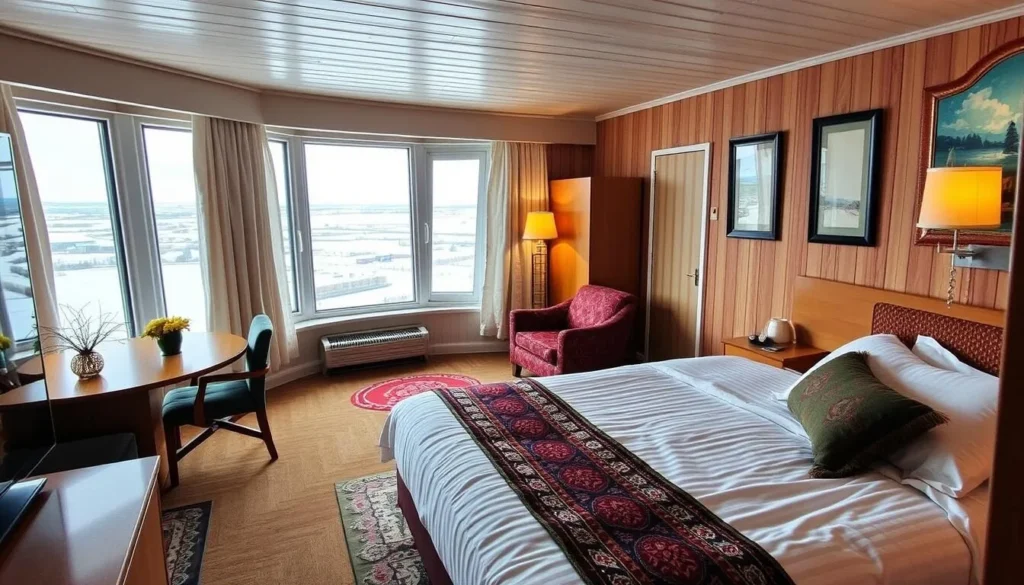
Accommodation in Chukotka often blends modern comforts with traditional elements
Accommodation options in Chukotka are limited but improving. Most visitors base themselves in Anadyr, where you’ll find the region’s best facilities.
Hotels
Anadyr offers several basic but comfortable hotels. The Hotel Chukotka and Anadyr Hotel provide clean rooms with private bathrooms, heating (essential year-round), and sometimes Wi-Fi. Expect functional rather than luxurious accommodations, with prices ranging from 5,000-8,000 rubles ($50-80 USD) per night.
Guesthouses
In smaller settlements like Lavrentiya and Lorino, family-run guesthouses provide basic accommodation with shared facilities. These offer a more authentic experience and opportunity to connect with locals. Advance booking is essential as options are very limited.
Traditional Stays
For the adventurous traveler, some tour operators can arrange stays in traditional yaranga (Chukchi tents) with reindeer herders or marine mammal hunters. These experiences provide unparalleled cultural immersion but come with very basic facilities.
Accommodation Tip: Book accommodations at least 3-6 months in advance, especially if traveling during the short summer season. Many properties don’t have online booking systems, so working with a specialized tour operator is often the best approach.
Dining & Local Cuisine
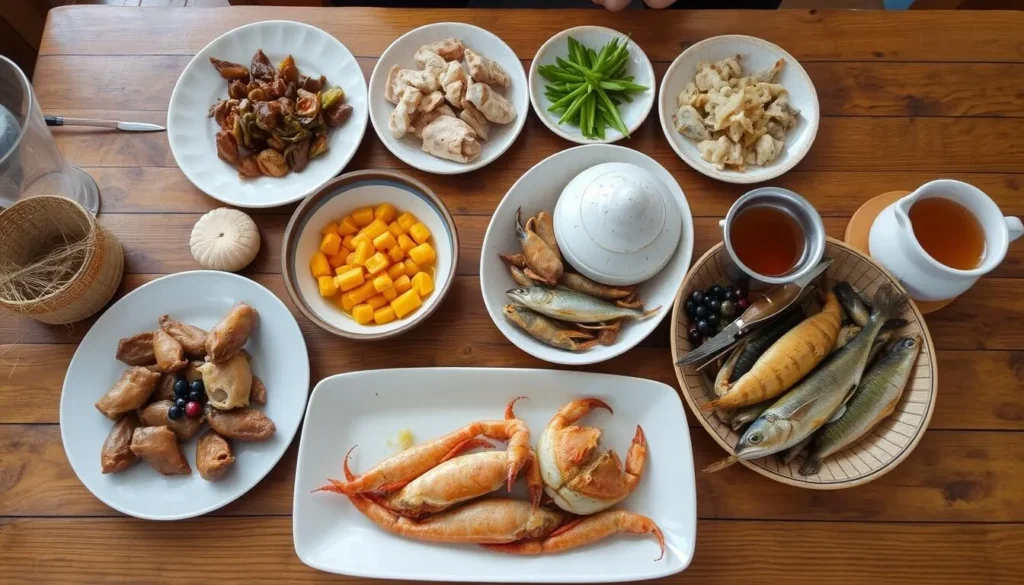
Traditional Chukchi cuisine features reindeer meat, wild berries, and seafood
Chukotka’s cuisine reflects its harsh climate and the traditional subsistence lifestyle of its indigenous peoples. The diet is rich in protein and fat – necessary for survival in Arctic conditions.
Local Specialties to Try
- Kopalkhen – fermented meat (usually walrus or seal) buried in the permafrost; a traditional delicacy
- Reindeer meat – prepared in various ways, from stews to thinly sliced frozen meat (stroganina)
- Whale meat – part of traditional subsistence hunting by indigenous communities
- Wild berries – cloudberries, blueberries, and crowberries gathered during the brief summer
- Arctic char and salmon – fresh local fish often served smoked or in soup
In Anadyr, you’ll find several cafes and restaurants serving both Russian and local cuisine. Outside the capital, dining options are limited to small cafes and homestay meals. Visitors with dietary restrictions should plan accordingly, as vegetarian options are limited in this meat-centric food culture.
“The food of Chukotka tells the story of survival in one of Earth’s harshest environments – every ingredient has purpose and nothing is wasted.”
Attractions, Sightseeing & Activities
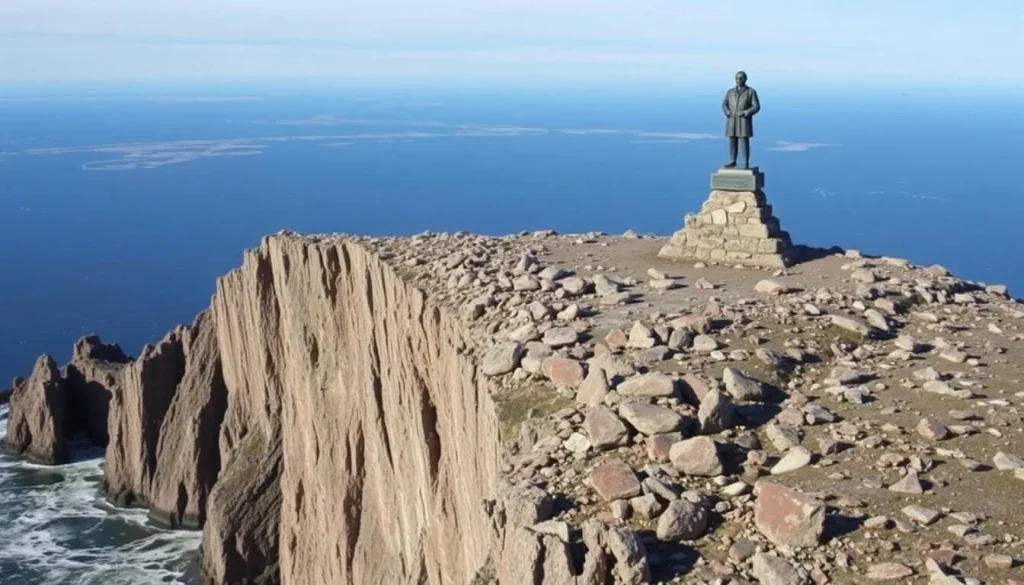
Cape Dezhnev, the easternmost point of mainland Eurasia
Top Natural Attractions
Cape Dezhnev
The easternmost mainland point of Eurasia, this dramatic rocky cliff plunges into the Bering Strait. Visit the lighthouse-monument to Semyon Dezhnev, whose expedition first reached this point in 1648. On clear days, you can see the Diomede Islands and even Alaska across the strait.
Wrangel Island
A UNESCO World Heritage site and nature reserve with the world’s largest concentration of polar bear dens. The island also hosts massive walrus rookeries, reindeer herds, and muskoxen. Access is strictly controlled and requires special permits.
Lorino Hot Springs
Natural hot springs in the permafrost, located about 15 km from Lorino village. The water temperature reaches 40-60°C (104-140°F), offering a surreal bathing experience in the Arctic. The springs contain radon, which locals believe has healing properties.
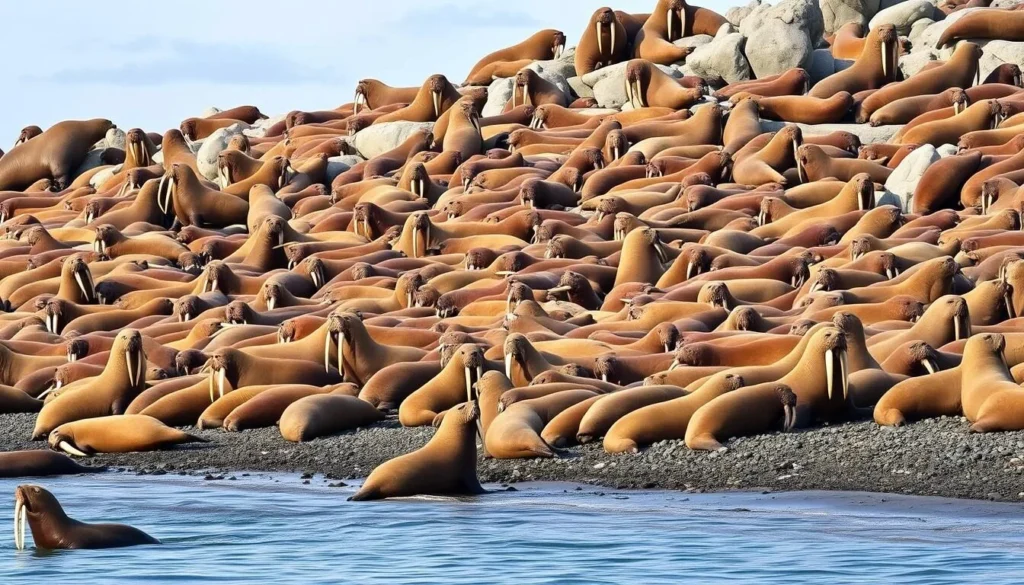
Walrus colony in Beringia National Park
Cultural Experiences
Naukan
The abandoned Eskimo settlement on Cape Dezhnev offers a haunting glimpse into the past. Explore stone ruins and see the massive whale jawbones once used to hang boats. This sacred site was inhabited until 1958 when residents were relocated due to its proximity to the U.S. border.
Uelen Village
Russia’s easternmost settlement is renowned for its bone carving traditions. Visit the workshop where artisans create intricate sculptures from walrus tusks and whale bones, continuing an artistic tradition that dates back centuries.
Lorino Village
The largest indigenous village in Chukotka where about 90% of the 1,500 residents are traditional sea hunters. Witness the unique blend of modern life and ancient traditions, especially during the summer Beringia festival featuring traditional kayak races.
Museums, Cultural Spots & Festivals
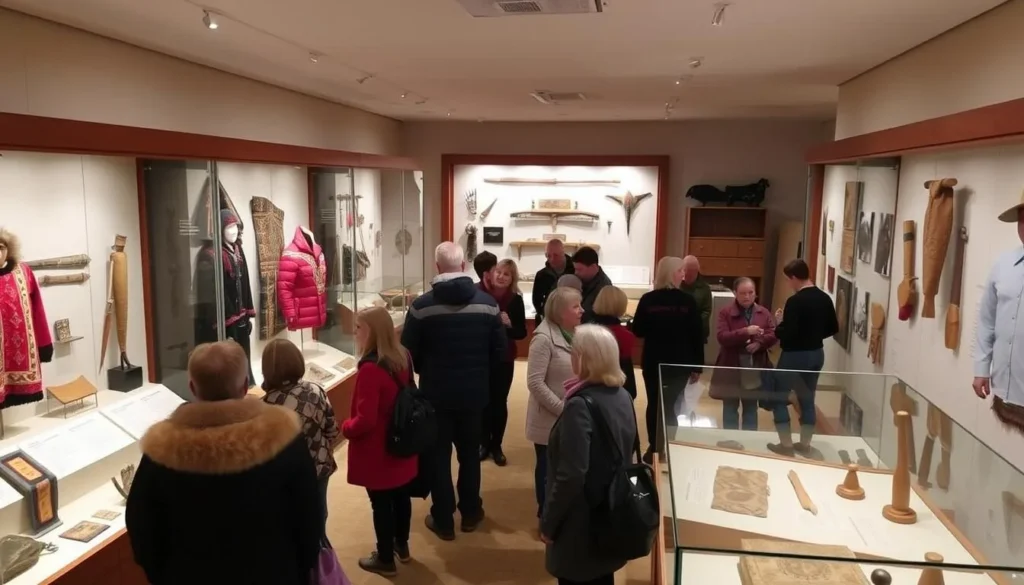
The Chukotka Regional Museum showcases the rich cultural heritage of the region
Museums
- Chukotka Regional Museum (Anadyr) – Comprehensive exhibits on indigenous cultures, natural history, and Soviet-era development
- Bone Carving Workshop Museum (Uelen) – Displays the evolution of this traditional art form with masterpieces from renowned local artists
- Museum of the Beringia National Park – Focuses on the unique ecosystem of the region and conservation efforts
Cultural Sites
- The 180th Meridian Monument – Located 60 km from Egvekinot, this concrete “Symbol of the Sun” marks where you can stand between “yesterday” and “today”
- Arctic Circle Arch – A metal arch installed in 1981 near Egvekinot marking the crossing of the Arctic Circle
- Orthodox Cathedral of the Holy Trinity (Anadyr) – The world’s northernmost wooden cathedral, painted in vibrant colors
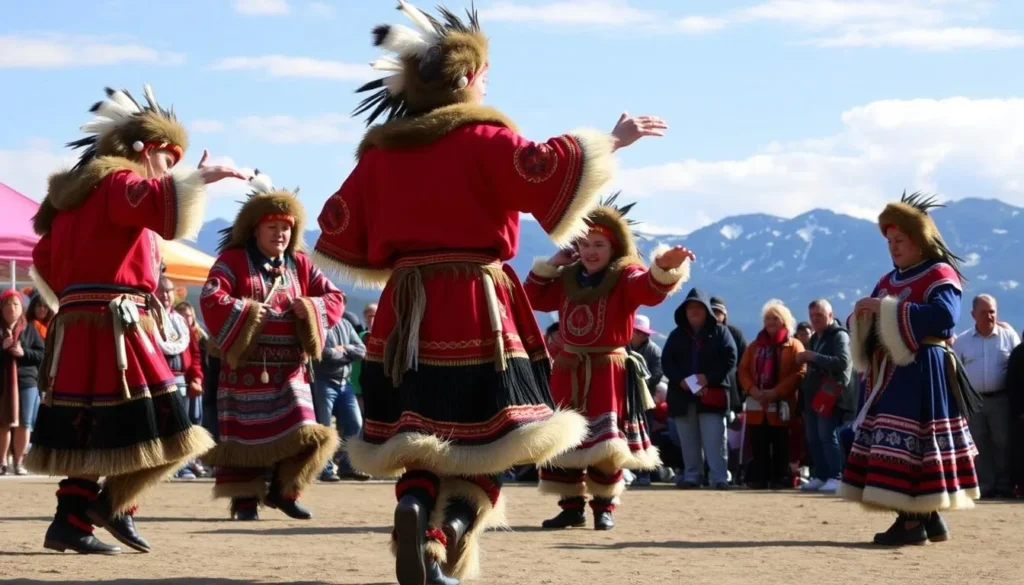
Traditional performances at the annual Beringia Festival
Festivals
- Beringia Festival (July-August) – The region’s largest cultural celebration featuring traditional sports, dancing, and kayak racing
- Whale Day (July) – Celebrated in coastal communities to honor the relationship between indigenous peoples and marine mammals
- Reindeer Herder’s Day (March) – Winter festival with reindeer races, traditional games, and competitions
Sports, Nature & Outdoor Experiences
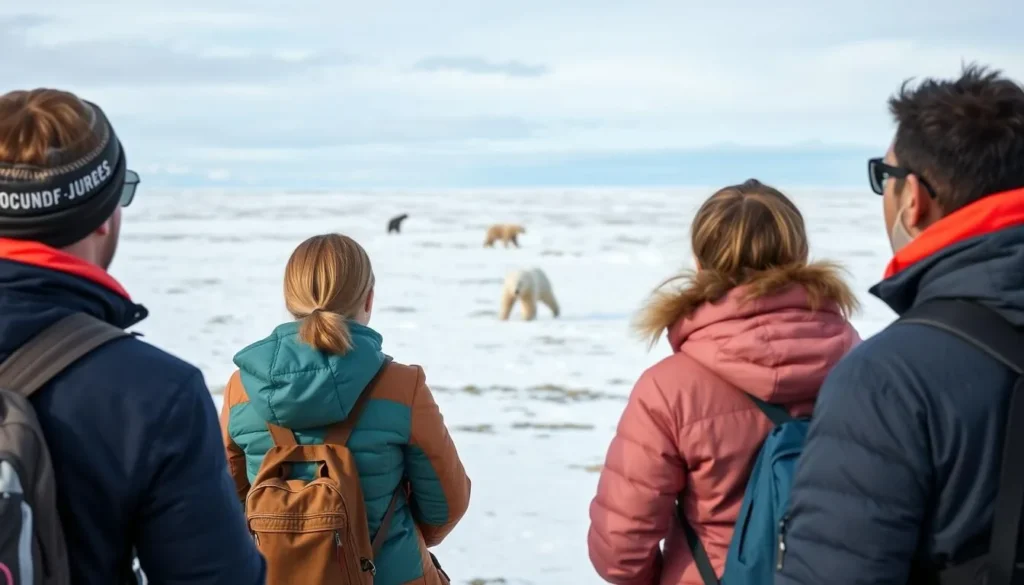
Wildlife viewing opportunities abound in Chukotka’s pristine wilderness
Wildlife Encounters
Chukotka offers some of the world’s most remarkable wildlife viewing opportunities:
- Whale watching – Observe gray, bowhead, and beluga whales in the Bering Strait
- Walrus colonies – Visit massive gatherings in Beringia National Park
- Bird watching – Over 220 species including puffins, guillemots, and snowy owls
- Polar bears – Primarily on Wrangel Island, known as the “polar bear maternity ward”
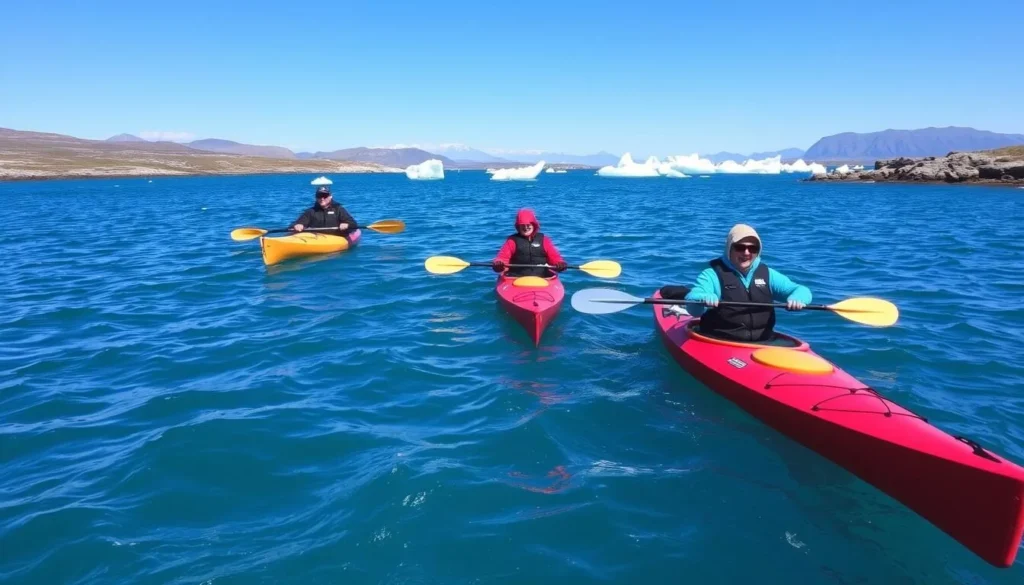
Sea kayaking along Chukotka’s dramatic coastline
Adventure Activities
- Tundra hiking – Explore the vast, open landscapes with their unique flora
- Sea kayaking – Paddle along the dramatic coastlines (summer only)
- Dog sledding – Experience traditional transportation in winter months
- Ice fishing – Try catching Arctic char through holes in frozen lakes
- Hot springs bathing – Soak in natural thermal waters surrounded by permafrost
Safety Note: All outdoor activities in Chukotka should be undertaken with experienced local guides. The remote nature of the region, unpredictable weather, and presence of potentially dangerous wildlife make proper preparation essential.
Safety, Etiquette & Local Customs
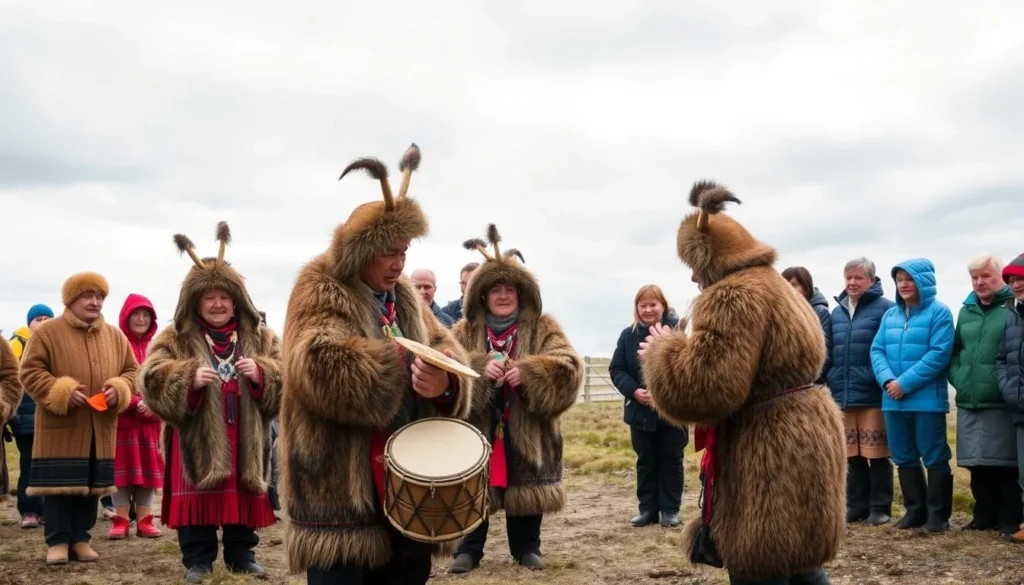
Respecting local traditions is essential when visiting indigenous communities
Safety Considerations
- Weather preparedness – Conditions can change rapidly; always carry extra layers and emergency supplies
- Wildlife awareness – Maintain safe distances from all wildlife, especially polar bears
- Communication – Cell service is limited; satellite phones are recommended for remote areas
- Medical facilities – Basic at best; bring all necessary medications and consider medical evacuation insurance
Cultural Etiquette
When visiting indigenous communities:
- Always ask permission before taking photographs of people
- Remove shoes when entering someone’s home
- Accept food offerings as refusal may be considered rude
- Bring small gifts (tea, coffee, or sweets) when visiting homes
- Speak softly at sacred sites like abandoned settlements or whale bone alley structures
Local Customs
Indigenous Chukchi and Yupik peoples maintain many traditional practices:
- Subsistence hunting of marine mammals is legally protected and culturally significant
- Traditional foods may be offered to visitors as a sign of respect
- Elders are highly respected and should be addressed first in group settings
- Many communities practice a blend of shamanic traditions and Russian Orthodox Christianity
Practical Travel Tips
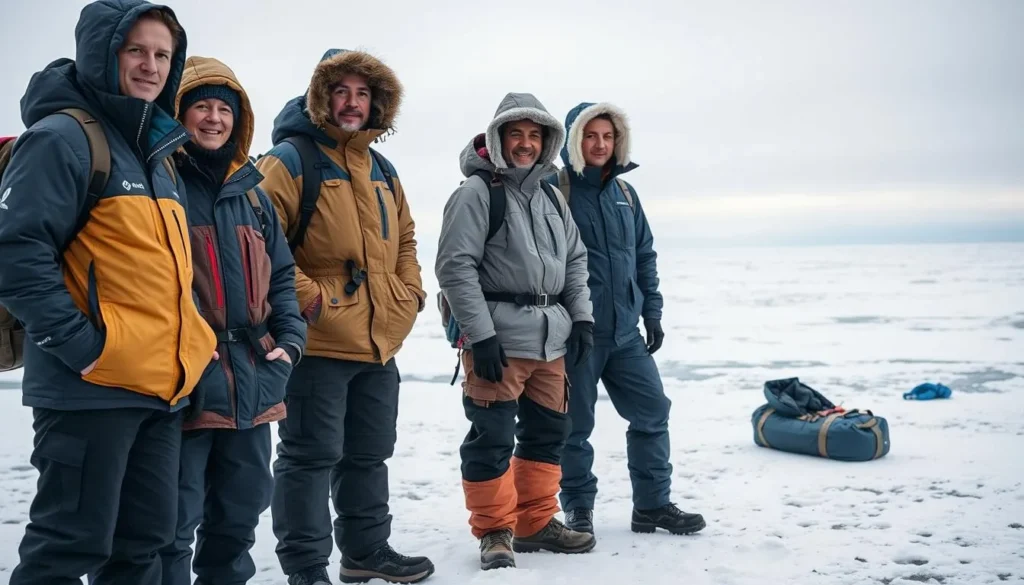
Proper clothing and gear are essential for comfort and safety in Chukotka
Packing Essentials
- Multiple layers of clothing (even in summer)
- Waterproof and windproof outer layers
- Sturdy hiking boots with good ankle support
- Insect repellent (summer months)
- Sunglasses and sunscreen (the Arctic sun is intense)
- Medications and first-aid supplies
- Power banks (electricity can be unreliable)
Money Matters
- Bring Russian rubles in cash – ATMs are scarce
- Credit cards are accepted only in larger hotels in Anadyr
- Budget for higher prices – everything is imported
- Tipping is not customary but appreciated for exceptional service
- Expect to pay 30-50% more for goods than in Moscow
Communication
- Learn basic Russian phrases – English is rarely spoken
- Download offline translation apps
- Internet access is limited and often slow
- Consider renting a satellite phone for remote areas
- Inform family of your itinerary as communication may be limited
Planning Tip: Working with a specialized tour operator is highly recommended for first-time visitors to Chukotka. They can handle the complex logistics, permits, and arrangements that would be difficult to navigate independently.
The Edge of the World Awaits
Chukotka represents travel in its purest form – a journey not just to a destination, but to a different way of seeing our world. In this remote corner of Russia, where the sun can shine at midnight and walruses gather by the thousands, you’ll find experiences that few travelers will ever know. The challenges of reaching and exploring this Arctic frontier are substantial, but those who make the effort are rewarded with pristine wilderness, authentic cultural encounters, and the profound sense of standing at the very edge of a continent. Chukotka isn’t just a place to visit; it’s a place to discover something new about our planet and perhaps yourself.
Related Posts
Saint Petersburg, Russia: Best Things to Do – Top Picks
Zabaykalsky Krai, Russia: Best Things to Do – Top Picks
Yamalo-Nenets Autonomous Okrug, Russia: Best Things to Do – Top Picks
Tver Oblast, Russia: Best Things to Do – Top Picks
Yaroslavl Oblast, Russia: Best Things to Do – Top Picks
Volgograd Oblast, Russia: Best Things to Do – Top Picks
Coming Soon: Clickable Maps
Visitor Comments About Chukotka
“Standing at Cape Dezhnev and looking across to Alaska was a profound moment. The remoteness of Chukotka is both its challenge and its greatest charm. Seeing indigenous hunters maintain their ancient traditions while adapting to modern life gave me a new perspective on resilience.”
E.G., Izmir
✓ Check 30,000+ Local Sightseeing Tours Worldwide
Click Here
“The wildlife viewing in Chukotka exceeded all expectations. We saw walruses, whales, and countless seabirds. What surprised me most was the vibrant colors of the tundra in summer – tiny flowers creating a carpet of purple, yellow, and red against the backdrop of the Arctic Ocean.”
S.B., Wuxian
“Visiting the hot springs near Lorino while surrounded by permafrost was surreal. The hospitality of the Chukchi people made this challenging journey worthwhile. They shared their food, stories, and even invited us to a traditional dance performance. Truly unforgettable.”
Y.N., Jeddah