Hotels by Trip.com
Flights by Trip.com
In 1907, this desert boomtown had electricity, running water, and 10,000 residents before Las Vegas was little more than a railroad stop. Within five years, Rhyolite became one of America’s most famous ghost towns. Today, its skeletal concrete buildings stand as monuments to ambition and the brutal reality of desert gold mining.
Rhyolite Ghost Town sits just outside Death Valley National Park in southern Nevada. The area attracts photographers, history enthusiasts, and curious travelers. Crumbling walls and empty doorways tell stories of fortunes won and lost.
This comprehensive guide covers everything you need to know. You’ll discover the best times to visit, what to see, and how to plan your journey to this remarkable desert destination.
Getting There & Planning Your Journey
Rhyolite Ghost Town Nevada sits approximately 193 km (120 miles) northwest of Las Vegas. The town lies near Beatty, Nevada, along Highway 374. Most visitors arrive by car, as public transportation doesn’t serve this remote area.
Closest Airports
Harry Reid International Airport in Las Vegas serves as the primary gateway. The airport offers rental cars and connects to major cities worldwide. From Las Vegas, the drive takes about two hours.
Reno-Tahoe International Airport provides an alternative entry point. This airport sits 451 km (280 miles) north of Rhyolite. The drive takes approximately four hours through scenic Nevada landscapes.
Driving Directions
From Las Vegas, take US-95 North toward Beatty. After passing through Amargosa Valley, continue to Beatty. Turn west on Highway 374 toward Death Valley. Rhyolite sits about 6.4 km (4 miles) west of Beatty.
The roads are well-maintained and suitable for standard vehicles. GPS coordinates for Rhyolite are 36.9056° N, 116.8253° W. Cell phone service becomes spotty outside Beatty, so download maps beforehand.
Important Note: Fill your gas tank in Beatty or Las Vegas. The nearest fuel station to Rhyolite is in Beatty. Summer temperatures exceed 38°C (100°F), so carry extra water in your vehicle.
For current road conditions and visitor information, contact the Beatty Chamber of Commerce at +1 (775) 553-2424.
Best Time to Visit & Weather Tips

Recommended Visiting Seasons
Spring (March through May) offers ideal conditions for exploring Rhyolite. Temperatures range from 15°C to 27°C (59°F to 80°F). Wildflowers bloom across the desert during wet years. The comfortable weather makes walking among ruins pleasant.
Fall (September through November) provides another excellent window. Daytime temperatures cool to comfortable levels. Morning light creates stunning photography conditions. Crowds thin compared to spring months.
Seasons to Approach with Caution
Summer (June through August) brings extreme heat. Temperatures regularly exceed 40°C (104°F). Early morning visits before 9 AM remain possible. Afternoon exploration becomes dangerous without proper preparation. The ghost town offers no shade.
Winter (December through February) sees cold temperatures and occasional snow. Daytime highs average 10°C to 15°C (50°F to 59°F). Nights drop below freezing. Strong winds sweep through the valley. Some dirt roads may become impassable after storms.
Weather Patterns
The desert climate means extreme temperature swings. Days warm quickly, nights cool rapidly. Humidity stays very low year-round. Rain rarely falls, averaging less than 10 cm (4 inches) annually. When storms arrive, flash floods can occur.
Wind picks up during afternoon hours, especially in spring. Dust storms occasionally reduce visibility. Check weather forecasts before departure. The National Weather Service office in Las Vegas provides accurate desert predictions.
Notable Annual Festivals

While Rhyolite itself hosts limited formal events due to its abandoned status, nearby Beatty organizes several annual gatherings that enhance any visit to the ghost town.
Beatty Days
Held each October, Beatty Days celebrates the area’s mining heritage. The festival features a parade, craft vendors, and historical presentations. Gold panning demonstrations and old-time music bring history to life. Many visitors combine this festival with Rhyolite exploration.
For specific dates and details, contact the Beatty Chamber of Commerce at +1 (775) 553-2424.
Death Valley 49ers Encampment
This November event takes place in nearby Death Valley National Park. The week-long celebration includes guided tours to lesser-known ghost towns in the district. Historical talks cover the gold rush era. The encampment draws history enthusiasts from across the country.
Art Installations at Goldwell Open Air Museum
While not a festival, the Goldwell Open Air Museum adjacent to Rhyolite hosts occasional artist talks and special viewings. The outdoor sculptures create year-round visual interest. Check locally for scheduled events during your visit.
Getting Around Locally
Exploring Rhyolite Ghost Town Nevada requires minimal navigation. The entire site covers less than 1.6 km (1 mile). Most visitors walk between buildings and ruins. Sturdy shoes help navigate uneven ground and broken concrete.
On-Site Transportation
Personal vehicles provide access to different areas of the ghost town. Dirt roads connect major structures. Park near the Cook Bank building and walk to other sites. The roads handle standard cars during dry conditions.
Bicycles work well for covering ground quickly. The flat terrain and short distances suit casual riders. Bring your own bike, as no rentals exist nearby.
Walking Routes
A self-guided walking tour connects all major ruins. Start at the impressive Cook Bank building. Move to the nearby jail and train station depot. The Bottle House stands as a unique attraction worth the short walk.
The entire walking circuit takes 45 minutes to two hours. Photography enthusiasts often spend three to four hours exploring different angles and lighting conditions. No marked trails exist, but paths between buildings are obvious.
Accessibility Note: The ghost town site has no paved paths or accessibility accommodations. Rough terrain and unstable structures make wheelchair access difficult. Many ruins can be viewed from vehicle windows if walking presents challenges.
Where to Stay

Rhyolite itself offers no accommodations. The nearby town of Beatty provides the closest lodging options. All facilities sit within 6.4 km (4 miles) of the ghost town.
Hotels and Motels in Beatty
The Exchange Club Motel offers basic, clean rooms. This locally-owned property features a pool and restaurant. Rates remain affordable, typically between $60-$90 per night. The desert-themed rooms provide comfortable rest after exploring.
Death Valley Inn & RV Park combines hotel rooms with RV spaces. The property includes a small casino and restaurant. Rooms start around $70 nightly. The convenient location makes early morning trips to Rhyolite easy.
Phoenix Inn sits on the main highway through Beatty. Standard amenities include air conditioning, WiFi, and parking. Budget-friendly rates attract road-trippers. The property serves continental breakfast.
Camping Options
Bureau of Land Management allows dispersed camping in areas surrounding Rhyolite. Free camping sites exist along dirt roads near the ghost town. These primitive sites offer no facilities. Pack out all trash and follow Leave No Trace principles.
Bailey’s Hot Springs, located 8 km (5 miles) north of Beatty, provides RV hookups and tent sites. Natural hot springs add appeal. The facility offers showers and basic amenities.
Nearby Alternatives
Pahrump, Nevada sits 64 km (40 miles) southeast. This larger town offers chain hotels and more dining options. The drive to Rhyolite takes about 50 minutes.
Death Valley National Park campgrounds provide another option. Furnace Creek, located 48 km (30 miles) west, offers both tent and RV camping. Reservations fill quickly during peak season.
Dining & Local Cuisine

Dining options near Rhyolite Ghost Town Nevada concentrate in Beatty. The small town offers several restaurants serving classic American fare. Expect hearty portions and reasonable prices.
Local Restaurants
Happy Burro Chili & Beer stands out as Beatty’s most popular spot. The restaurant serves award-winning chili, burgers, and craft beer. Outdoor seating provides desert views. Locals and tourists mix at communal tables. The casual atmosphere welcomes dusty explorers.
KC’s Outpost serves breakfast and lunch. Home-style cooking includes biscuits and gravy, hearty omelets, and sandwiches. The small diner fills quickly on weekend mornings. Service comes with small-town friendliness.
The Sourdough Saloon offers pizza, steaks, and bar food. The Old West-themed interior creates atmosphere. Full bar service includes local Nevada craft beers. Live music occasionally entertains guests on weekends.
Practical Dining Tips
Restaurant hours vary seasonally. Summer may see reduced schedules. Call ahead during off-season months. Most establishments close by 8 PM.
No restaurants operate at Rhyolite itself. Pack snacks and plenty of water for your ghost town exploration. The nearest convenience store sits in Beatty, stocking sandwiches, drinks, and basic supplies.
Water Warning: Desert heat causes rapid dehydration. Carry at least 2 liters (half gallon) of water per person during summer visits. The ghost town offers no water sources or facilities.
Attractions, Sightseeing & Activities

Rhyolite Ghost Town Nevada preserves remarkable ruins from its brief boom years. Each structure tells part of the town’s dramatic story. Photography, history exploration, and architectural study draw visitors year-round.
Cook Bank Building
The three-story Cook Bank building dominates Rhyolite’s landscape. Concrete walls stand intact, though the interior has long vanished. Built in 1908, this bank symbolized the town’s ambitions. The impressive facade featured ornate details now weathered by decades of desert wind.
Visitors can walk around the exterior. The building remains structurally unstable, so entry is prohibited. Photographers favor late afternoon light, which creates dramatic shadows through empty windows. The bank building appears in countless photographs and films.
Bottle House
Tom Kelly constructed this unique building in 1906 using approximately 50,000 beer and liquor bottles. The glass bottles, set in adobe mortar, created insulated walls. The structure served as both home and advertisement for the abundance of saloons in boom-time Rhyolite.
The Bottle House underwent restoration in the 1920s and again in recent years. Today, visitors can examine the construction up close. The building demonstrates the creative resourcefulness of early settlers who lacked traditional building materials.
Train Station and Depot
The Las Vegas and Tonopah Railroad built this depot in 1908. The train brought supplies, miners, and fortune-seekers to Rhyolite. When the mines failed, the rail service ceased. Today, foundation ruins and scattered railroad equipment mark the site.
A restored railroad caboose sits near the original depot location. The bright red car provides context for imagining the bustling station during peak years. Information panels explain the railroad’s crucial role in the town’s brief prosperity.

Old School Building
Stone walls outline where Rhyolite’s school once educated miners’ children. Built in 1909, the school served only two years before declining enrollment forced closure. The structure demonstrates the optimism of residents who believed their town would thrive for generations.
Little remains beyond foundation walls and scattered bricks. The school’s hilltop location offers panoramic views of the entire ghost town district. Many visitors pause here to appreciate the full scope of what once stood.
Post Office and Jail
Adjacent ruins mark the former post office and jail. These small buildings handled the administrative needs of 10,000 residents at the town’s peak. The jail, built of stone and concrete, shows more deterioration than larger structures.
Interpretive signs describe daily life in boom-time Rhyolite. Stories of gold strikes, business ventures, and eventual abandonment bring human dimension to the ruins.
Mining District Remnants
Hills surrounding Rhyolite contain numerous mine shafts and tunnels. The Montgomery-Shoshone Mine and other operations extracted gold worth millions in early 1900s dollars. Most mines lie on private property or pose safety hazards.
Visible from town, old mining roads scar hillsides. Tailings piles mark excavation sites. Hikers occasionally discover rusty equipment, though removing artifacts is illegal. The mines area offers context for understanding why Rhyolite existed.
Museums, Cultural Spots & Festivals
Goldwell Open Air Museum
The Goldwell Open Air Museum sits directly adjacent to Rhyolite Ghost Town Nevada. Belgian artist Albert Szukalski created the most famous installation in 1984. His “Last Supper” features seven ghostly figures draped in white plaster, arranged around a table in the desert.
The outdoor museum includes several other large-scale sculptures. These contemporary artworks contrast dramatically with historic ruins. The juxtaposition of old and new attracts art enthusiasts and photographers. Entry remains free and open year-round.
The museum receives no public funding. A small nonprofit maintains the sculptures and site. Donations support preservation efforts. The visitor center opens irregularly, depending on volunteer availability.
Beatty Museum and Historical Society
Located in downtown Beatty, this small museum preserves regional mining history. Exhibits include mining equipment, photographs from Rhyolite’s boom years, and personal artifacts from early residents. The collection provides context often missing at the ghost town itself.
Volunteer docents share stories passed down through local families. Many Beatty residents descend from original miners. Their personal connections add depth to historical displays. The museum operates limited hours, typically weekends during tourist season.
Admission by donation supports operations. The gift shop sells local history books and mining-themed souvenirs. A research library assists genealogists tracing family connections to the area’s gold rush era.
Death Valley National Park Cultural Sites
Death Valley National Park borders Rhyolite. The park contains numerous historic sites including Harmony Borax Works, Scotty’s Castle (currently closed for repairs), and several other mining camps. Park rangers lead interpretive programs explaining desert history and geology.
The park visitor center at Furnace Creek features extensive exhibits. Topics cover Native American history, mining era, and natural history. The bookstore offers specialized publications about Death Valley and surrounding ghost towns.
Nature & Outdoor Experiences

The desert landscape surrounding Rhyolite Ghost Town offers exceptional outdoor opportunities. Death Valley National Park, the Mojave Desert, and unique geological formations provide year-round exploration options.
Desert Hiking Trails
No formal trails exist at Rhyolite itself. However, old mining roads create informal hiking routes through surrounding hills. These dirt tracks lead to abandoned mine sites and offer panoramic desert views. Distances range from 0.8 km to 4.8 km (0.5 to 3 miles) roundtrip.
Experienced hikers explore the Bullfrog Hills east of town. This area requires navigation skills and desert hiking experience. Carry GPS devices and detailed maps. Tell someone your plans before venturing into backcountry areas.
Death Valley National Park
Death Valley National Park sits just 6.4 km (4 miles) west of Rhyolite. The park encompasses 1.37 million hectares (3.4 million acres) of desert wilderness. Popular spots include Badwater Basin at 86 m (282 feet) below sea level, Zabriskie Point for sunrise views, and Dante’s View overlooking the valley.
More than 563 km (350 miles) of roads access diverse landscapes. Hiking trails range from easy boardwalks to challenging backcountry routes. The Mesquite Flat Sand Dunes attract photographers and sunset watchers.

Wildlife Watching
Desert bighorn sheep occasionally appear in hills around Rhyolite. Early morning and late evening offer best viewing chances. Coyotes, kit foxes, and various lizard species inhabit the area. Birds include ravens, hawks, and seasonal migrants.
Spring brings desert wildflowers after wet winters. Purple lupine, golden desert marigold, and pink desert five-spot carpet the valley. Peak blooms typically occur in March and April, though exact timing depends on winter rainfall.
Stargazing
Minimal light pollution makes Rhyolite exceptional for stargazing. The Milky Way appears clearly on moonless nights. Death Valley holds International Dark Sky Park status, ensuring protection of night skies.
Bring binoculars or telescopes for enhanced viewing. Winter nights offer longest darkness periods, though cold temperatures require warm clothing. Summer nights stay comfortably warm but give fewer dark hours.
Photography Opportunities
Photographers flock to Rhyolite Ghost Town Nevada for its dramatic ruins and lighting. Golden hour (the first and last hour of sunlight) creates ideal conditions. The contrast between concrete structures and natural desert provides compelling compositions.
Sunrise shoots benefit from soft light on east-facing buildings. Sunset illuminates western structures with warm tones. Midday harsh light creates strong shadows useful for dramatic black-and-white images. Night photography captures star trails over ruins.
Travel With Children

Rhyolite Ghost Town Nevada offers educational value for families. Children enjoy exploring real ghost town ruins while learning history. The site works well for kids aged six and older who can walk independently and follow safety rules.
Child-Friendly Activities
The Bottle House fascinates children with its unique construction. Kids count bottles and examine the creative building method. The old railroad caboose provides a tangible connection to transportation history. Most children enjoy climbing around (safe) exterior ruins under supervision.
Goldwell Open Air Museum’s sculptures spark imagination. The “Last Supper” installation prompts questions and discussions. The open desert space allows children to run and explore safely away from unstable structures.
Create a scavenger hunt before visiting. List specific features for children to find: the Cook Bank building, remains of the jail, the Bottle House, old mining equipment, and desert plants. This engagement keeps kids interested throughout the visit.
Safety Considerations
Adult supervision remains essential. Unstable buildings and old mines pose real dangers. Establish clear boundaries about where children can explore. Many ruins contain broken glass, rusty metal, and unstable walls.
Desert heat affects children more quickly than adults. Schedule visits during cooler morning hours. Bring extra water and snacks. Apply sunscreen generously and reapply often. Wide-brimmed hats provide essential sun protection.
The remote location means no restrooms, water fountains, or emergency services on-site. Plan bathroom breaks in Beatty before arriving. Pack a first-aid kit for minor scrapes and cuts.
Educational Value
Rhyolite provides hands-on history lessons. Discuss the gold rush era, mining life, and why boom towns failed. Compare population figures from 1907 (10,000 residents) to today (zero). Talk about how people lived without modern conveniences.
Geology lessons emerge naturally. Point out different rock types, explain how mountains formed, and discuss desert ecology. The surrounding area shows clear examples of erosion, weathering, and geological processes.
Age Recommendations: Children under six may find the site less engaging and more challenging due to walking distances and heat. Ages 6-12 typically enjoy the adventure. Teenagers interested in history or photography find excellent subject matter.
Money Saving Tips

Visiting Rhyolite Ghost Town Nevada costs very little compared to many tourist destinations. Smart planning keeps expenses minimal while maximizing your experience.
Free Attractions
Rhyolite Ghost Town charges no admission fees. The entire site remains open to public exploration. Goldwell Open Air Museum also operates free of charge. These two attractions provide hours of entertainment without spending money.
Death Valley National Park charges entrance fees, but the park entrance lies beyond Rhyolite. You can visit the ghost town without entering the park. However, the park’s $30 weekly pass offers good value if you plan to explore Death Valley attractions.
Accommodation Savings
Free dispersed camping on Bureau of Land Management land surrounding Rhyolite eliminates lodging costs. These primitive campsites require no reservations or fees. Bring all necessary camping equipment and supplies.
Beatty motels cost less than Las Vegas hotels. Staying in Beatty saves both money and driving time. Mid-week rates often run $10-$20 lower than weekend prices. Call directly to negotiate better rates than online booking sites offer.
Food and Supplies
Pack picnic supplies from Las Vegas grocery stores before heading to Rhyolite. Beatty’s limited options mean higher prices. Bringing food, snacks, and drinks from larger cities significantly reduces daily costs.
Refill water bottles at Beatty motels or restaurants before driving to Rhyolite. Purchasing bottled water repeatedly adds up quickly. A reusable water bottle and ice chest keeps drinks cold throughout the day.
Fuel Economy
Gas prices in Beatty run higher than Las Vegas due to remote location and limited competition. Fill your tank in larger cities before the final leg to Rhyolite. The savings can reach $10-$15 per tank.
Plan efficient driving routes. Combining Rhyolite with nearby Death Valley attractions maximizes the value of your trip’s gas expenses. Clustering destinations reduces overall fuel costs.
Photography Equipment
Expensive camera gear isn’t necessary. Modern smartphones capture excellent images. The dramatic scenery and interesting ruins photograph well with any camera. Save money on equipment rentals unless you’re a serious photographer.
Budget-Friendly Aspects
- Free admission to Rhyolite and Goldwell Museum
- No guided tour costs required
- Free camping options available
- Self-paced exploration
- Affordable nearby lodging
Potential Expenses
- Gas for 193 km (120-mile) drive from Las Vegas
- Limited free camping amenities
- Higher food prices in Beatty
- Expensive gas in remote areas
- Death Valley park entrance if visiting
Safety, Etiquette & Local Customs

Essential Safety Guidelines
Desert environments pose unique hazards. Summer temperatures at Rhyolite Ghost Town Nevada frequently exceed 43°C (110°F). Heat exhaustion and dehydration occur rapidly. Carry at least 4 liters (1 gallon) of water per person during summer visits.
Watch for rattlesnakes from April through October. These venomous snakes hide in shady spots under rocks and building ruins. Wear sturdy boots and watch where you step. Never reach into dark spaces or under rubble without looking first.
Abandoned buildings contain multiple dangers. Weakened concrete walls can collapse. Floors may hide holes or unstable sections. Rusty nails, broken glass, and sharp metal edges cause injury. Admire structures from outside rather than entering dangerous ruins.
Emergency Contact: Cell phone service is unreliable near Rhyolite. The nearest medical facility is Nye Regional Medical Center in Tonopah, 144 km (90 miles) north. For emergencies, call 911. Be prepared to provide GPS coordinates of your location.
Mine Shaft Hazards
Old mine shafts surround Rhyolite. Many remain unmarked and unprotected. Vertical shafts drop hundreds of feet. Horizontal tunnels can collapse without warning. Toxic gases accumulate in underground spaces. Never enter mining areas or tunnels under any circumstances.
Children must stay close to adults in mining districts. What looks like firm ground may conceal shaft openings. Barriers around some mines have deteriorated. Teach children to stay on established paths.
Flash Flood Awareness
Desert storms create flash floods even when rain falls miles away. Dry washes become raging torrents within minutes. Never camp in wash bottoms or low areas. Check weather forecasts before visiting during late summer monsoon season.
If dark clouds appear or thunder sounds, move to higher ground immediately. Water depth can reach 3 m (10 feet) in narrow canyons. The desert’s hard-packed soil cannot absorb sudden rainfall, causing rapid runoff.
Etiquette and Preservation
Rhyolite represents irreplaceable history. All artifacts, including bottles, nails, and wood fragments, are protected by law. Removing items carries federal penalties. Photograph objects where they lie rather than collecting souvenirs.
Stay on established paths when possible. Desert vegetation grows slowly in harsh conditions. Stepping on plants causes decades of damage. Cryptobiotic soil crusts (living soil) require centuries to form. Boot prints destroy these fragile ecosystems.
Graffiti damages historic structures and detracts from other visitors’ experiences. Do not write on or carve into buildings. Modern vandalism appears in sharp contrast to century-old walls. Respect the site’s archaeological significance.
Local Customs
Beatty residents take pride in their ghost town neighbor. Locals appreciate visitors who treat Rhyolite respectfully. Many residents have family connections to original miners. They welcome genuine interest in history.
Small-town Nevada values self-reliance. Come prepared with water, food, and supplies. Don’t expect rescue services in remote areas. This independence reflects the frontier spirit that built Rhyolite.
Support local businesses when possible. Eating at Beatty restaurants and staying in local motels helps sustain the small community. Tourism income supplements mining and service industry jobs.
Visitor Comments About Rhyolite Ghost Town Nevada
“The Cook Bank building took my breath away. Standing three stories tall with those empty windows against the blue sky felt surreal. We spent nearly three hours just walking among the ruins and imagining life during the boom years. The Bottle House was quirky and fascinating. Best part was having the place almost to ourselves on a weekday morning.”
“As a photographer, Rhyolite exceeded expectations. The contrast between desert landscape and concrete ruins creates endless compositions. I visited during golden hour and captured some of my best work. The Goldwell sculptures added contemporary interest. Just wish I’d brought more water because I stayed much longer than planned. The heat is no joke.”
“Took our kids ages eight and eleven to Rhyolite during spring break. They loved exploring the old buildings and learning about mining history. The Bottle House especially caught their interest. We created a scavenger hunt beforehand which kept them engaged. Easy day trip from Las Vegas, though we stayed in Beatty to avoid the long drive twice. Educational and fun for the whole family.”
Additional Nearby Destinations
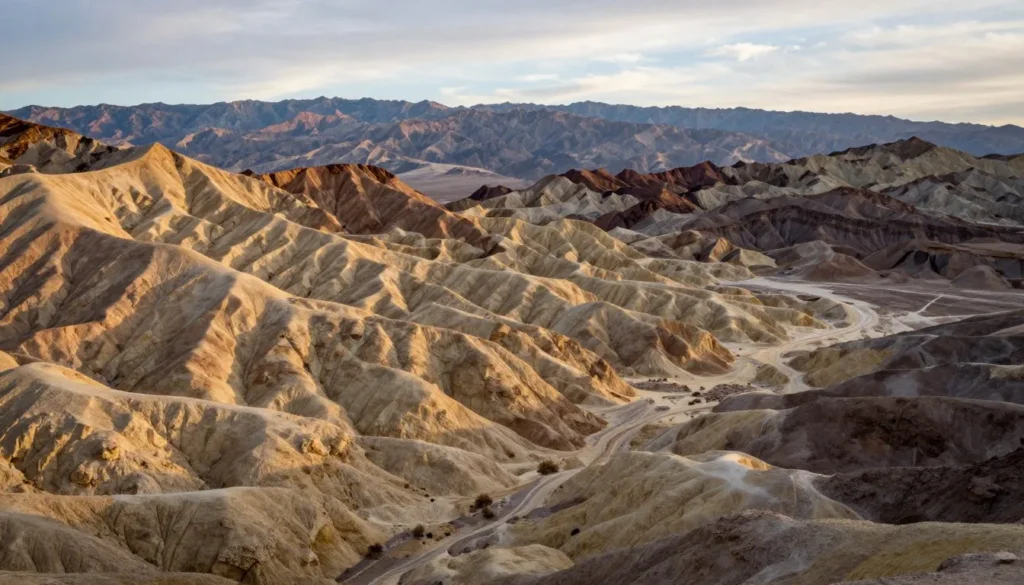
Rhyolite Ghost Town Nevada sits surrounded by fascinating destinations. Extend your trip to explore more of this unique desert region.
Death Valley National Park
Just 6.4 km (4 miles) west of Rhyolite, Death Valley offers world-class desert landscapes. Badwater Basin holds the lowest point in North America at 86 m (282 feet) below sea level. Zabriskie Point provides sunrise photography opportunities over golden badlands.
The park contains over 563 km (350 miles) of roads accessing diverse terrain. Mesquite Flat Sand Dunes invite exploration and photography. Artist’s Palette showcases multicolored volcanic and sedimentary rocks. Dante’s View offers panoramic vistas from 1,669 m (5,475 feet) elevation.
Plan at least two full days to appreciate Death Valley’s highlights. Spring and fall offer ideal visiting conditions. Summer temperatures regularly exceed 49°C (120°F).
Goldfield Ghost Town
Located 107 km (67 miles) north of Rhyolite, Goldfield once rivaled Rhyolite’s prosperity. Today, this partial ghost town maintains several operating businesses alongside abandoned structures. The Goldfield Hotel stands as Nevada’s most famous “haunted” building.
Historic buildings line Main Street. Some contain shops and restaurants serving visitors. The combination of active community and ghost town creates interesting contrast. Annual car shows and festivals draw crowds.
Tonopah
Tonopah sits 144 km (90 miles) north of Beatty along US-95. This living mining town preserves significant silver mining heritage. The Tonopah Historic Mining Park offers guided tours of original mine structures and equipment.
The town’s remote location creates exceptional stargazing opportunities. Tonopah Stargazing Park provides telescopes and dark-sky viewing. The Central Nevada Museum documents regional mining and railroad history.

Red Rock Canyon National Conservation Area
Located 32 km (20 miles) west of Las Vegas, Red Rock Canyon offers convenient access to dramatic desert scenery. The 21 km (13-mile) scenic loop showcases towering red sandstone cliffs. Rock climbing, hiking, and photography attract outdoor enthusiasts.
The visitor center provides exhibits about geology and desert ecology. Twenty-six trails range from easy nature walks to challenging peak ascents. Spring wildflowers bloom against red rock backgrounds. The area makes an excellent addition to Las Vegas-based trips.
Valley of Fire State Park
Nevada’s oldest state park sits 80 km (50 miles) northeast of Las Vegas. Ancient red Aztec sandstone formations create an otherworldly landscape. Petroglyphs left by prehistoric peoples appear throughout the park.
The seven hiking trails explore different geological features. Fire Wave, Rainbow Vista, and White Domes offer photography opportunities. Camping facilities allow overnight stays. The park combines well with Rhyolite visits for a longer desert exploration trip.
Ash Meadows National Wildlife Refuge
This desert oasis lies 64 km (40 miles) southeast of Rhyolite. Crystal-clear springs support unique fish and plant species found nowhere else on Earth. Boardwalk trails provide easy access to spring pools and wildlife viewing areas.
The refuge protects 24 endemic species. Desert pupfish swim in warm spring waters. Native vegetation creates green contrast against surrounding desert. The site offers peaceful respite from more crowded tourist attractions.
Practical Travel Tips

What to Bring
Water tops the essential items list. Bring more than you think necessary. Desert heat causes rapid dehydration even during cooler months. Plan for at least 2 liters (half gallon) per person for a two-hour visit. Summer requires double that amount.
Sun protection prevents miserable burns. Wide-brimmed hats shade face and neck. Sunglasses with UV protection safeguard eyes from intense desert glare. Sunscreen rated SPF 50 or higher should be applied generously and reapplied every two hours.
Sturdy closed-toe shoes protect feet from rocks, broken glass, and rusty metal. Hiking boots or substantial sneakers work well. Avoid sandals or flip-flops despite warm temperatures. Long pants prevent scratches from desert vegetation and provide sun protection.
Cameras and smartphones capture memories but batteries drain quickly in heat. Bring backup power banks and extra memory cards. Dust can damage electronics, so keep equipment in protective cases when not actively shooting.
Best Photography Times
Early morning light (6 AM to 9 AM) creates soft illumination ideal for capturing Rhyolite Ghost Town Nevada. Long shadows add drama to ruins. The air remains relatively cool, allowing comfortable exploration.
Late afternoon (4 PM to sunset) provides golden hour lighting. Warm tones enhance the desert atmosphere. West-facing structures glow in evening light. The Cook Bank building photographs particularly well during this period.
Midday harsh light challenges photographers but creates strong contrasts perfect for black-and-white images. Deep shadows emphasize architectural details. The intense illumination reveals texture in aged concrete and weathered wood.
Cell Phone and Internet
Cell phone coverage is unreliable at Rhyolite. Some carriers have signal in Beatty, but service disappears in remote areas. Download maps, directions, and information before leaving Las Vegas or other connected areas.
WiFi exists at some Beatty motels and restaurants. Speeds remain slow compared to urban areas. Plan to be disconnected during your ghost town visit. This digital detox often enhances the historical atmosphere.
Vehicle Considerations
Standard passenger cars handle the paved road to Rhyolite. Some dirt roads leading to specific ruins require higher clearance. Four-wheel drive isn’t necessary for main attractions but helps access remote areas.
Check your spare tire and carry basic tools. Cell service for roadside assistance doesn’t exist in many areas. Ensure adequate fuel before leaving Beatty. The nearest gas station after Beatty is 64 km (40 miles) away.
Time Planning
Most visitors spend one to three hours at Rhyolite. Casual explorers see main structures in 90 minutes. Photography enthusiasts often stay four hours. Add time for Goldwell Open Air Museum if visiting both sites.
Factor in the two-hour drive each way from Las Vegas. Total day trip requires minimum six hours. Starting early avoids afternoon heat and allows comfortable exploration.
Weather Preparedness
Check forecasts before departure but prepare for rapid changes. Desert weather shifts quickly. Morning calm can turn to afternoon windstorms. Clear skies may produce sudden thunderstorms during monsoon season.
Layer clothing for temperature swings. Early morning starts can be surprisingly cool. Midday heat requires light breathable fabrics. Evenings cool rapidly, especially in winter months. A light jacket handles temperature changes.
Altitude Consideration: Rhyolite sits at approximately 1,142 m (3,747 feet) elevation. Most visitors experience no issues, but those sensitive to altitude might notice mild effects. Stay hydrated and take breaks if feeling lightheaded.
Accessibility Notes
The ghost town has no paved paths or accessibility accommodations. Uneven ground, loose rocks, and sandy areas make wheelchair navigation difficult. Many structures can be viewed from vehicles for visitors with mobility limitations.
The Goldwell Open Air Museum sculptures sit on relatively flat ground accessible by car. Photography of the “Last Supper” installation requires minimal walking from parking areas.
Seasonal Considerations
Spring (March through May) brings variable weather. Warm days alternate with cool periods. Wildflowers bloom after wet winters. This season sees highest visitation numbers. Weekday visits avoid crowds.
Summer (June through August) demands early morning visits only. Heat becomes life-threatening by midday. Most tourists avoid summer entirely. Those who visit enjoy uncrowded conditions but must take extreme heat seriously.
Fall (September through November) offers comfortable conditions similar to spring. September retains summer heat while November approaches winter cold. October provides the most consistent pleasant weather.
Winter (December through February) brings cold temperatures and occasional snow. Daytime highs may not exceed 10°C (50°F). Night temperatures drop well below freezing. Strong winds create uncomfortable conditions. However, winter light produces excellent photography opportunities for cold-tolerant visitors.
Your Desert Time Machine Awaits

Rhyolite Ghost Town Nevada stands frozen in time, waiting for you to walk its dusty streets. The crumbling walls and empty windows speak of dreams, fortunes, and the harsh realities that built and destroyed a city in mere years. This isn’t a sanitized theme park or reconstructed museum. These are real ruins where real people lived, worked, and eventually departed.
The desert preserved what others abandoned. Each visit reveals new details, different light, and fresh perspectives on this remarkable place. Whether you’re capturing photographs, exploring history, or simply experiencing the haunting beauty of abandonment, Rhyolite delivers an authentic glimpse into Nevada’s boom-and-bust past.
The ghost town costs nothing to visit yet offers priceless memories. Its isolation creates connection rather than disconnection. Without commercialization distracting from the experience, you’ll find yourself imagining the sounds of trains, the bustle of 10,000 residents, and the hopes that drew people to this unforgiving desert.
Plan your visit during comfortable months. Bring plenty of water and respect for this irreplaceable historical site. Leave only footprints and take only photographs. Rhyolite Ghost Town Nevada has survived more than a century of abandonment. With mindful visitation, it will inspire travelers for generations to come.
The desert holds its secrets close. But for those willing to venture into its heart, Rhyolite reveals the timeless story of human ambition meeting nature’s immutable power. Your adventure to this diamond in the desert begins with a simple decision to explore beyond the ordinary. The ghost town waits silently, ready to share its stories with those who make the journey.
The above is subject to change.
Check back often to TRAVEL.COM for the latest travel tips and deals.