Hotels by Trip.com
Flights by Trip.com
Over 560,000 visitors each year journey to one of the most remote and undeveloped stretches of the Atlantic coast. Cape Lookout National Seashore remains accessible only by boat. This creates an authentic barrier island experience unlike any other on the Eastern Seaboard.
The seashore takes its name from Cape Lookout itself. This prominent point of land extends into the Atlantic Ocean where the cape has served as a crucial maritime landmark since the earliest days of coastal navigation.
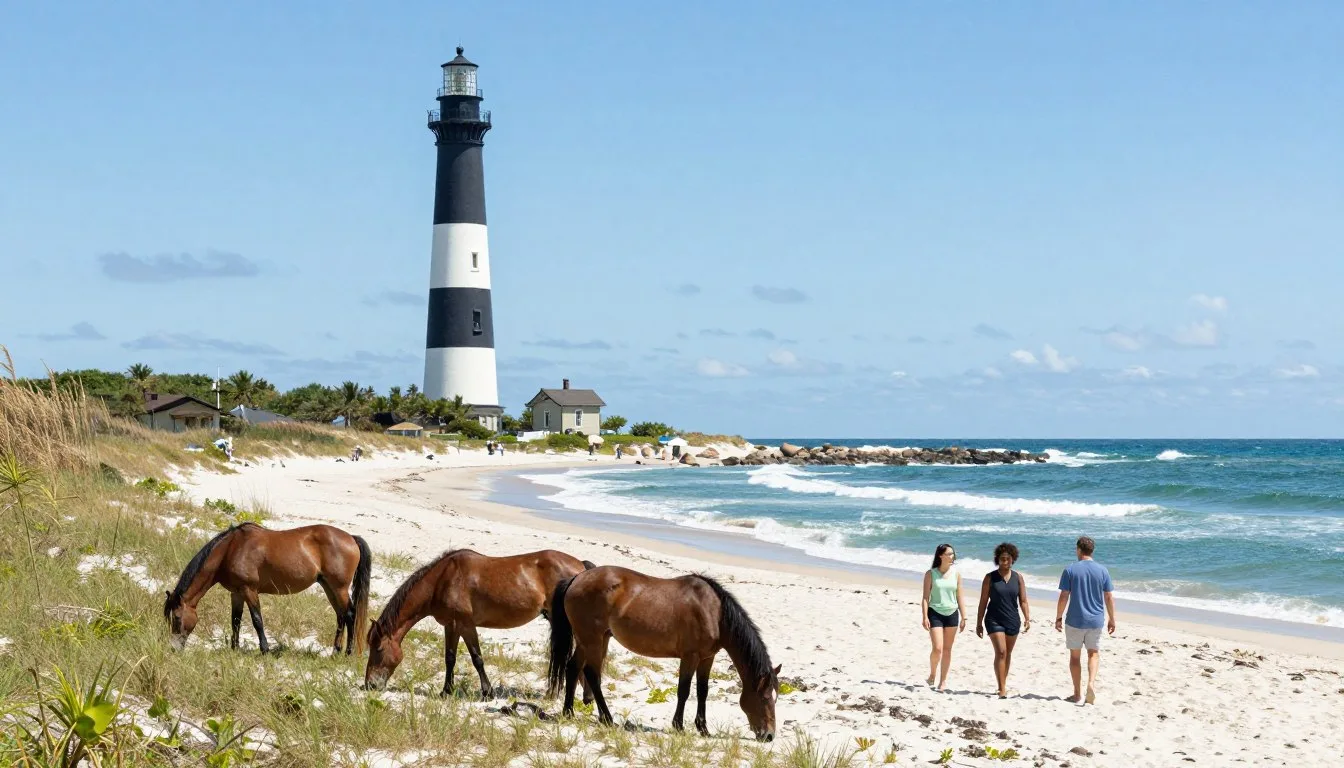
These 56 miles of pristine coastline stretch across three barrier islands. North Core Banks, South Core Banks, and Shackleford Banks form this protected paradise. Wild horses roam freely. Historic villages stand frozen in time. The iconic diamond-patterned lighthouse watches over it all.
Unlike developed beach destinations, Cape Lookout National Seashore offers no paved roads, no hotels, and no restaurants. Visitors discover something increasingly rare in modern America. They find solitude, natural beauty, and connection with maritime heritage that spans centuries.
Getting There & Planning Your Journey
Reaching Cape Lookout National Seashore requires advance planning. No bridges connect these barrier islands to the mainland. All visitors must arrive by passenger ferry or private boat.
Closest Airports
Coastal Carolina Regional Airport in New Bern sits 64 km (40 miles) from ferry departure points. This regional facility handles connecting flights from major hubs. Most visitors prefer driving to access points along the Crystal Coast.
Albert J. Ellis Airport near Jacksonville offers another option 80 km (50 miles) away. Raleigh-Durham International Airport provides the largest selection of flights at 217 km (135 miles) distance. This makes an excellent choice for international travelers or those seeking direct flights from major cities.
Ferry Access Points
Three primary ferry services transport visitors to Cape Lookout National Seashore. Each departs from different locations along the Crystal Coast. Your destination on the barrier islands determines which ferry to choose.
Harkers Island serves as the main gateway to Cape Lookout Lighthouse and South Core Banks. Several ferry operators run regular schedules during peak season. The crossing takes approximately 20 minutes across Back Sound.
Davis provides access to the south end of Core Banks. Atlantic offers ferry service to the north end of Core Banks near Portsmouth Village. Beaufort hosts ferry operators serving Shackleford Banks and its famous wild horses.
Important Ferry Information
Ferry reservations are strongly recommended during summer months from June through August. Capacity limits strictly apply to protect the fragile barrier island ecosystem.
Most ferries operate seasonally with reduced winter schedules. Weather conditions can cancel trips with little notice. Always confirm your departure 24 hours in advance.
✓ Check 30,000+ Local Sightseeing Tours Worldwide
Ferry Service Reservations & Information
Private Boat Access
Experienced boaters may navigate their own vessels to Cape Lookout National Seashore. Channels require knowledge of local waters and tide patterns. The National Park Service maintains several docking areas and designated anchoring zones.
Strong currents flow through inlets separating the barrier islands. Navigation charts and recent weather forecasts become essential planning tools. Many visitors hire local captains familiar with these challenging waters for their first visit.
Best Time to Visit & Weather Tips
Best Time to Visit Cape Lookout National Seashore
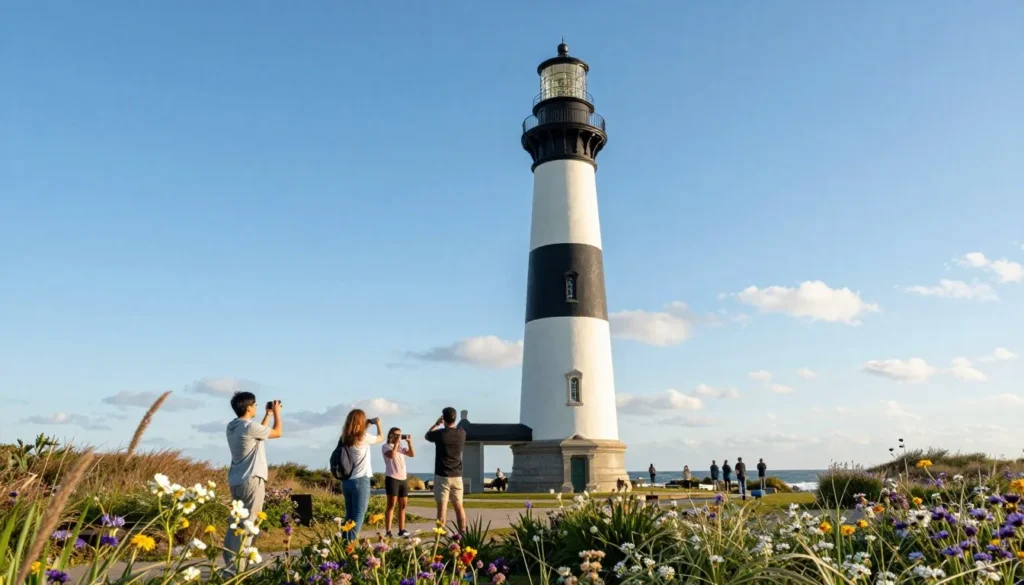
Spring months from April through May offer ideal conditions for exploring Cape Lookout National Seashore. Temperatures range from 18°C to 24°C (65°F to 75°F). Wildflowers bloom across the dunes. Mosquitoes remain minimal compared to summer months.
Fall provides equally pleasant conditions from September through October. Water temperatures stay warm enough for swimming. Crowds thin significantly after Labor Day weekend. The barrier islands take on golden hues as sea grasses change color.
Summer months see the highest visitor numbers. July and August bring hot, humid weather with temperatures reaching 32°C (90°F). Afternoon thunderstorms develop frequently. Biting insects can be intense, particularly in marshy areas away from ocean breezes.
Months to Avoid
Winter visits from December through February face unpredictable weather and limited services. Many ferry operators reduce schedules or close entirely. Strong winds and rough seas frequently prevent boat access. Temperatures can drop below freezing during cold snaps.
Hurricane season officially runs from June through November. September typically sees peak storm activity. The National Park Service closely monitors tropical systems and may close the national seashore with little notice for safety reasons.
Weather Considerations
Cape Lookout experiences coastal weather extremes. Summer heat combines with humidity creating heat index values above 38°C (100°F). Ocean breezes provide relief along the beach. Interior areas of the barrier islands offer less comfort.
Winter nor’easters can strike with surprising force. These powerful storms bring heavy rain, dangerous surf, and winds exceeding 80 km/h (50 mph). Beach erosion accelerates during these events. Access becomes impossible until conditions improve.
What to Pack for Weather
- Sun protection including SPF 50+ sunscreen
- Wide-brimmed hat and UV-protective clothing
- Insect repellent with DEET for summer visits
- Layered clothing for temperature changes
- Rain gear regardless of forecast
- Extra water beyond what you think necessary
Wind constantly shapes the barrier islands Cape Lookout National Seashore encompasses. Sustained breezes of 24 to 32 km/h (15 to 20 mph) occur regularly. Exposed areas near Long Point and Cape Point experience even stronger conditions. These winds provide natural air conditioning in summer but can create sandblasting discomfort.
Notable Annual Festivals
The Crystal Coast region surrounding Cape Lookout National Seashore celebrates its maritime heritage throughout the year. While the barrier islands themselves host no festivals due to their undeveloped nature, nearby mainland communities offer cultural events worth planning your visit around.
North Carolina Seafood Festival
Morehead City hosts this popular celebration each October. Over 150,000 visitors sample fresh-caught seafood prepared by local vendors. Live music, arts and crafts, and cooking demonstrations fill the waterfront for three days. The festival coincides with perfect fall weather for exploring Cape Lookout.
NC Seafood Festival Information
Beaufort Music Festival
Memorial Day weekend brings live performances to the historic waterfront town of Beaufort. Multiple stages feature regional and national acts across various genres. Many attendees combine festival days with barrier island explorations during this late May event.
Core Sound Waterfowl Museum Programs
Located on Harkers Island near the main ferry terminal, this museum presents seasonal events celebrating Down East culture. Decoy carving competitions, traditional boat building demonstrations, and local history programs occur throughout spring and fall months.
Core Sound Waterfowl Museum & Heritage Center
These mainland festivals provide cultural context for your Cape Lookout National Seashore adventure. They showcase the living traditions of communities whose histories intertwine deeply with these barrier islands.
Getting Around Locally
Transportation on Cape Lookout National Seashore differs dramatically from typical beach destinations. These undeveloped barrier islands have no paved roads, no shuttle services, and no rental car companies.
On the Barrier Islands
Walking remains the primary way to explore most of Cape Lookout National Seashore. Soft sand makes hiking challenging. A one-mile trek can take 30 minutes or longer depending on recent wind patterns and your load.
Four-wheel drive vehicles are permitted on designated beach routes. You must obtain a free permit from the National Park Service before driving. Vehicles frequently become stuck in soft sand. Recovery can be expensive and time-consuming.
Many visitors bring bicycles on the ferry. Fat tire bikes handle sand better than standard models. Riding becomes easier on packed sand near the water line during low tide. Interior trails through maritime forests offer more challenging terrain.
The Park Service operates no shuttle or tram services anywhere within Cape Lookout National Seashore. Whatever you bring to the islands must be carried or wheeled to your destination. This includes camping gear, coolers, beach equipment, and supplies.
Vehicle Regulations
Off-road vehicles must stay on designated routes marked by signs. Driving through dunes, vegetation, or turtle nesting areas results in substantial fines.
Speed limits of 24 km/h (15 mph) apply throughout. Vehicles must yield to pedestrians, horses, and nesting birds at all times.
Between Ferry Terminals and the Mainland
Personal vehicles provide the most flexibility for reaching ferry departure points. Parking areas at Harkers Island, Davis, Atlantic, and Beaufort terminals offer long-term spaces. Fees vary by location and season.
The Crystal Coast has limited public transportation. Taxi services operate in larger towns like Morehead City and Beaufort. Ride-sharing apps function in populated areas but availability decreases in smaller communities near ferry terminals.
Bicycle touring enthusiasts can ride to ferry terminals via North Carolina coastal bicycle routes. These designated paths connect major towns along the Crystal Coast. The relatively flat terrain suits cyclists of moderate fitness levels.
Where to Stay
Camping on the Barrier Islands
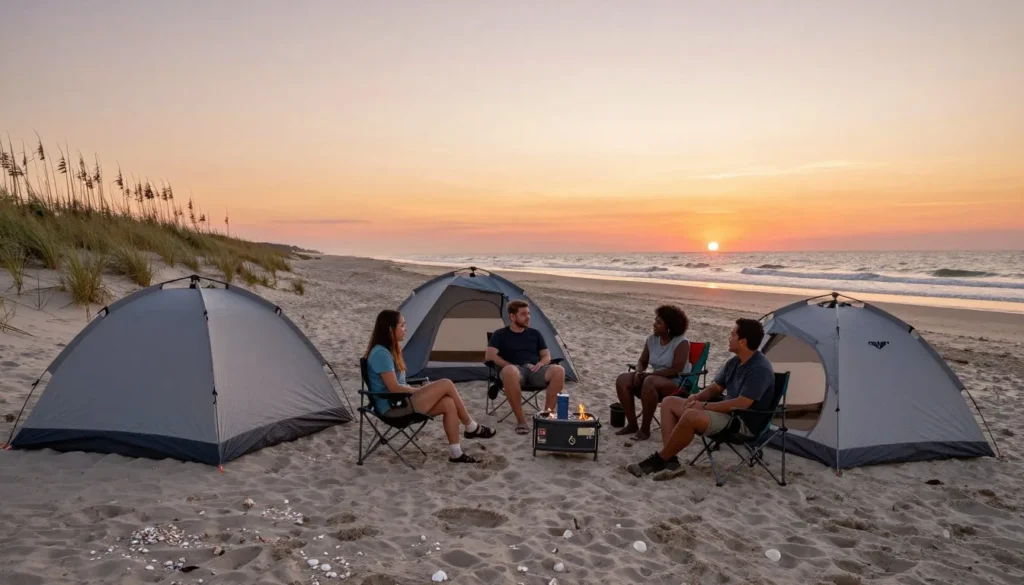
Primitive camping represents the only overnight option directly within Cape Lookout National Seashore. No developed campgrounds exist on these barrier islands. Visitors pitch tents anywhere outside designated closure areas protecting wildlife habitat.
This backcountry camping requires complete self-sufficiency. No facilities provide water, electricity, or waste disposal. Campers must bring everything they need and pack out all trash. Portable toilets or catholes buried below the high tide line handle human waste.
Reservations and permits are not required for most beach camping. You simply find an appropriate spot and set up your tent. The National Park Service recommends camping behind the primary dune line for protection from wind and high tides.
Camping Essentials
Successful barrier island camping demands proper preparation. Bring sufficient fresh water at 8 to 12 liters (2 to 3 gallons) per person daily. Shade structures provide crucial relief from intense sun. Sand stakes hold tents secure in persistent winds.
Historic Structures
Several historic keeper’s quarters near Cape Lookout Lighthouse can be reserved through a concessionaire. These rustic buildings offer shelter from weather but maintain their historic character. Basic bunks sleep groups up to 12 people. No running water or climate control exists.
Portsmouth Village on North Core Banks provides a unique lodging experience. The Morris House and other preserved structures accommodate visitors interested in maritime history. These rentals book months in advance for popular season months.
Mainland Accommodations
Most Cape Lookout visitors stay on the mainland and day-trip to the barrier islands. Harkers Island, Beaufort, and Morehead City offer hotels, motels, bed and breakfasts, and vacation rentals within 30 minutes of ferry terminals.
Beaufort provides the widest selection of accommodations. Historic inns occupy restored homes dating to the 1700s. Modern chain hotels serve budget-conscious travelers. Waterfront properties offer views across Taylor’s Creek toward Carrot Island’s wild horses.
Harkers Island features fewer lodging options but positions you closest to the Cape Lookout ferry. Small motels and vacation home rentals cater primarily to fishing groups and ferry passengers heading to South Core Banks.
Morehead City delivers variety from economy motels to upscale resorts. The larger town provides more restaurant choices and shopping for last-minute supplies. The trade-off comes in slightly longer drives to ferry departure points.
Davis and Atlantic remain tiny fishing communities with minimal commercial lodging. Private home rentals occasionally become available. These locations suit visitors planning extended stays focused on the north end of Core Banks.
Advanced booking becomes essential during peak summer months and fall fishing season. Many properties require minimum night stays on weekends and holidays. Off-season rates drop significantly from November through March when Cape Lookout sees fewer visitors.
Dining & Local Cuisine
Cape Lookout National Seashore contains no restaurants, snack bars, or concession stands. The barrier islands remain completely undeveloped. All visitors must bring their own food and beverages for the duration of their stay.
Preparing for Island Visits
Pack more food and water than you anticipate needing. The combination of sun, wind, and physical activity increases calorie and hydration requirements. Most experienced visitors bring 50 percent more supplies than their initial calculations suggest.
Coolers with ice keep perishables safe for day trips. Multi-day camping requires careful meal planning around non-refrigerated foods. Dehydrated camping meals work well. Energy bars, trail mix, and dried fruits provide convenient snacks while exploring.
No freshwater sources exist on the barrier islands. Every drop must arrive by boat. Budget at least 4 liters (1 gallon) per person daily for drinking alone. Additional water handles cooking, cleaning, and emergency reserves.
Portable camp stoves allow hot meal preparation while camping. Open fires are permitted only in designated areas and during approved seasons. Check current regulations before your visit as fire restrictions change based on drought conditions.
Food Storage Tips
- Keep all food in sealed containers to prevent insect attraction
- Never leave food unattended on the beach
- Pack out all food waste and packaging
- Store coolers in shaded areas when possible
- Bring extra trash bags for waste removal
✓ Check 30,000+ Local Sightseeing Tours Worldwide
Mainland Dining Options
Communities surrounding Cape Lookout National Seashore celebrate their seafood heritage. Fresh-caught fish, shrimp, oysters, and blue crabs dominate local menus. Many restaurants source directly from commercial fishing fleets that dock nearby.
Beaufort’s historic downtown offers concentrated dining choices. Waterfront restaurants serve she-crab soup, a regional specialty combining crab meat with cream and sherry. Fried flounder sandwiches appear on nearly every menu. Hush puppies accompany most seafood platters.
Harkers Island maintains its working waterfront character. No-frills seafood houses serve generous portions at reasonable prices. These family-run establishments have fed commercial fishermen for generations. Visitors experience authentic Down East cooking without tourist markup.
Morehead City claims more diverse options including Mexican, Italian, and Asian cuisines. Chain restaurants cluster along the highway corridor. Locally-owned establishments concentrate near the waterfront where Charter fishing boats unload their catches.
Local Specialties to Try
Calabash-style seafood describes a regional preparation method. Light batter coats shrimp, fish, and oysters before deep frying. The result produces exceptionally crispy exteriors while keeping seafood moist inside. This style originated south of Cape Lookout but appears throughout the Crystal Coast.
Steamed blue crabs require hands-on eating. Restaurants provide mallets and picks for extracting sweet meat from shells seasoned with Old Bay spice blend. Summer months bring peak crab season when locals consume these crustaceans by the dozen.
Fish stew represents traditional Down East comfort food. This tomato-based creation combines whatever fish came off the boats that day with potatoes, onions, and seasonings. Each family guards their unique recipe. Church fundraisers and community events feature competing versions.
Attractions, Sightseeing & Activities
Cape Lookout Lighthouse
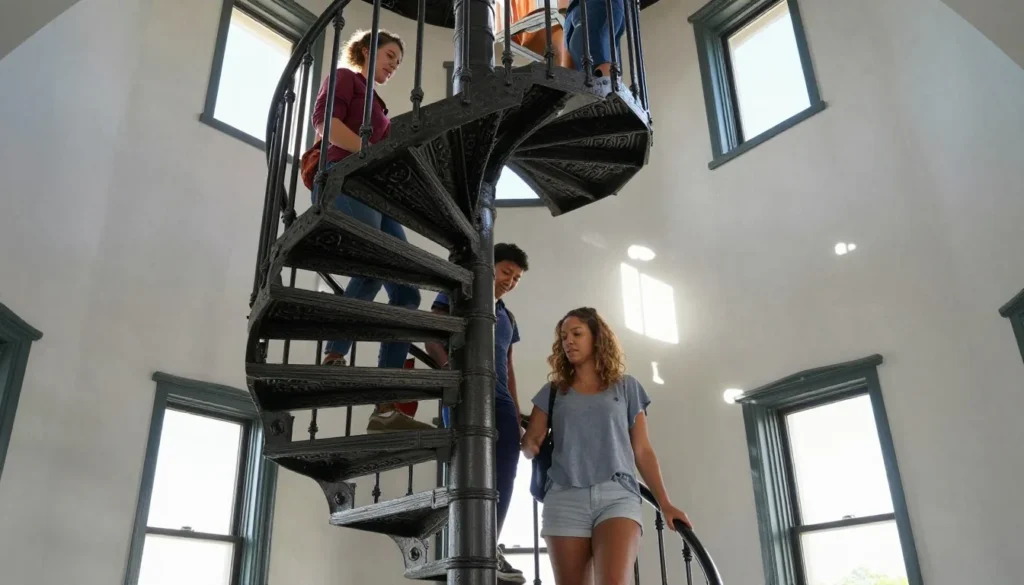
The iconic black and white diamond-patterned lighthouse dominates the South Core Banks landscape. Built in 1859, this 49-meter (161-foot) tower has guided mariners past the treacherous shoals of Cape Point for over 160 years. Its distinctive daymark pattern makes it recognizable from miles away.
Climbing the 207 steps to the gallery deck rewards visitors with panoramic views. The Atlantic Ocean stretches to the eastern horizon. Back Sound and the mainland appear to the west. Core Banks extends north and south like a ribbon of sand. On clear days, you can see Cape Hatteras lighthouse 88 km (55 miles) up the coast.
The lighthouse opens seasonally for tower climbs typically from mid-May through mid-September. Hours vary so confirm before planning your day around ascending. The climb challenges those uncomfortable with heights or narrow spiral staircases. Children must be at least 112 cm (44 inches) tall to climb.
Portsmouth Village
This abandoned village on North Core Banks preserves a vanished way of life. Portsmouth thrived as a shipping port from 1753 until the Civil War era. At its peak, 700 residents called this barrier island community home. The last two residents left in 1971.
Twenty structures survive in various states of preservation. The 1840s church still stands with its simple interior intact. The lifesaving station tells stories of heroic rescue attempts during shipwrecks. A cemetery holds graves dating back centuries. Interpretive signs explain how residents survived and prospered in this remote location.
Walking through Portsmouth Village feels like stepping back in time. No modern development mars the experience. Only wind, waves, and bird calls break the silence. Allow at least two hours to explore the site properly. Bring water as no facilities exist.
Shackleford Banks Wild Horses
A herd of wild horses roams Shackleford Banks, descendants of Spanish mustangs shipwrecked centuries ago. These compact, sturdy animals show genetic markers linking them to colonial-era Spanish stock. The National Park Service maintains the herd at sustainable population levels through a managed fertility program.
Approximately 100 horses live on the 14.5 km (9-mile) long island. They graze on marsh grasses and drink from freshwater pools. Despite their habituation to human presence, these remain wild animals. Regulations require maintaining 15-meter (50-foot) distance at all times.
The best horse viewing occurs early morning or late afternoon when animals emerge from maritime forests to feed. Patient observation often reveals complex social interactions within family bands. Foals typically arrive in spring adding to viewing excitement.
Shell Collecting
The barrier islands of Cape Lookout National Seashore produce exceptional shelling opportunities. Atlantic currents deposit diverse specimens from southern waters. Serious collectors consider these beaches among the best in North Carolina.
Common finds include whelks, olive shells, moon snails, and various clam species. After storms, rare specimens wash ashore including scotch bonnets, the North Carolina state shell. Early morning beachcombers following high tide lines find the choicest shells before other visitors arrive.
Shelling Ethics
Take only empty shells. Live mollusks must remain in their ocean habitat. Limit collections to personal enjoyment quantities. Commercial shell harvesting is prohibited throughout Cape Lookout National Seashore.
Fishing
Surf fishing attracts anglers from across the eastern United States to Cape Lookout National Seashore. The barrier islands provide access to productive waters holding multiple species. No fishing license is required for saltwater fishing from shore.
Fall months bring red drum, known locally as channel bass, within casting range. These powerful fish can exceed 22 kg (50 pounds). Spring runs of bluefish create exciting action. Summer offers flounder, Spanish mackerel, and pompano opportunities.
Point fishing at Cape Point where currents converge produces the most consistent results. Strong currents and deep channels require heavy tackle. Experienced anglers share techniques with newcomers creating a friendly atmosphere.
Museums, Cultural Spots & Festivals
While Cape Lookout National Seashore itself contains no museums, the surrounding Crystal Coast communities preserve and celebrate regional maritime heritage through several excellent institutions.
Core Sound Waterfowl Museum & Heritage Center
Located on Harkers Island directly adjacent to the main Cape Lookout ferry terminal, this museum documents Down East culture and traditions. Exhibits showcase decoy carving artistry for which the region gained international recognition. Traditional boat building displays explain construction techniques passed through generations.
The museum hosts workshops teaching traditional crafts. Decoy carving classes attract students from novice to advanced levels. Net making, crab pot construction, and other practical skills demonstrations occur regularly. A research library contains oral histories and genealogical records of barrier island families.
North Carolina Maritime Museum
Beaufort’s maritime museum explores coastal natural history and human interaction with the sea. The Blackbeard exhibit draws crowds with artifacts from the pirate’s flagship Queen Anne’s Revenge. The vessel wrecked near Beaufort Inlet in 1718. Ongoing archaeological recovery continues adding new items to the collection.
Boat building programs allow visitors to observe traditional wooden boat construction. The watercraft collection includes everything from dugout canoes to modern racing sailboats. Natural history exhibits explain barrier island formation and coastal ecology.
Historic Beaufort Site
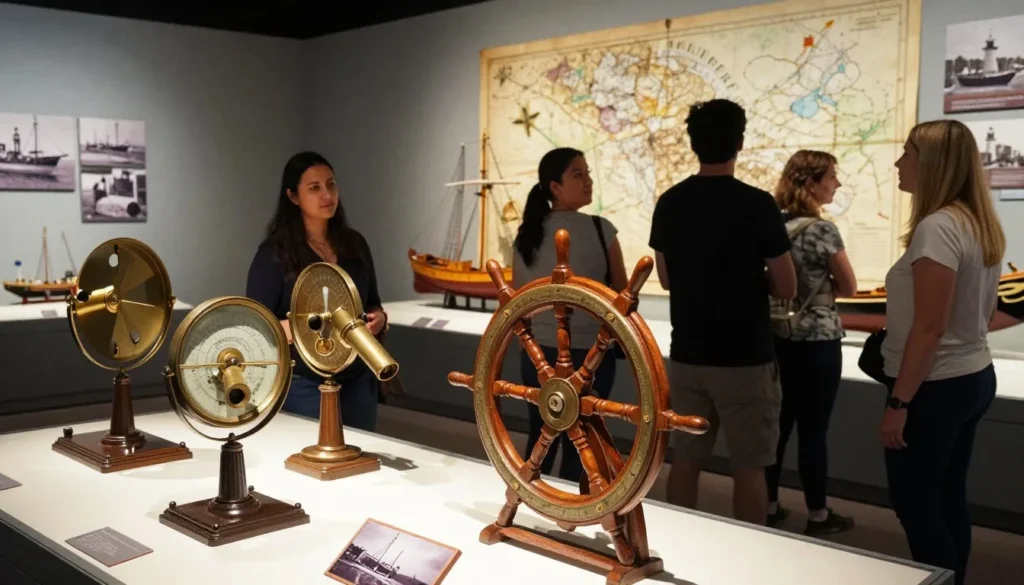
This outdoor museum complex preserves structures dating from 1767 through the Victorian era. Costumed interpreters demonstrate period activities from cooking to blacksmithing. The 1829 Old Burying Ground contains graves of sea captains, Revolutionary War soldiers, and the “Little Girl Buried in a Barrel of Rum” whose story captivates visitors.
Guided walking tours depart multiple times daily during tourist season. Self-guided options allow exploring at your own pace. Special programs around holidays feature period decorations and traditional celebrations.
Local Art Galleries
Beaufort and Morehead City support active arts communities. Galleries showcase coastal landscapes, wildlife, and maritime themes by regional artists. Many painters derive inspiration directly from Cape Lookout National Seashore’s natural beauty.
The Down East area claims a strong folk art tradition. Decoy carvers maintain their craft though hunting uses declined. Model boat builders create miniature replicas of traditional workboats with exceptional detail. These functional art pieces command serious collector interest.
Nature & Outdoor Experiences
Kayaking and Paddling
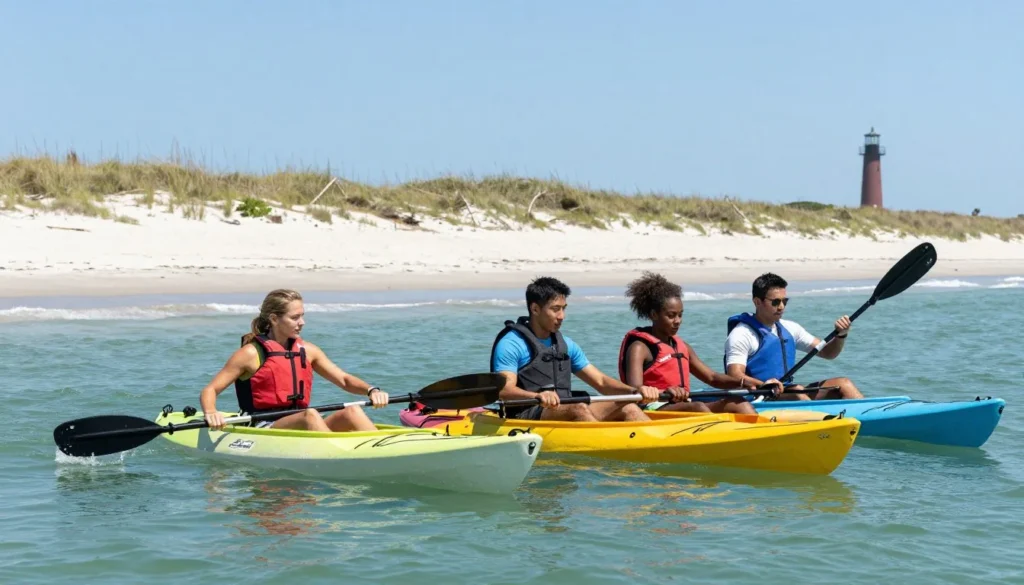
The calm waters of Back Sound between the barrier islands and mainland create ideal kayaking conditions. Beginners find protected paddling while learning basic skills. Experienced paddlers explore intricate marsh systems and tidal creeks threading through the coastal landscape.
Several outfitters near ferry terminals rent kayaks and stand-up paddleboards. Guided tours introduce visitors to the ecology of salt marshes and estuaries. These protected waters serve as nurseries for juvenile fish and feeding grounds for wading birds.
Open ocean paddling demands advanced skills and proper safety equipment. Strong currents, winds, and boat traffic create hazards for unprepared kayakers. The National Park Service recommends staying in Back Sound unless you possess significant experience and appropriate gear.
Swimming and Beach Activities
The 56 miles of Atlantic Ocean beachfront at Cape Lookout National Seashore offer swimming opportunities unlike crowded developed beaches. You may walk for miles without encountering another person. The solitude creates a rare connection with nature.
No lifeguards patrol these beaches. Strong currents and sudden drop-offs require caution. Rip currents form particularly near inlets and Cape Point. Never swim alone. Always inform someone of your plans and expected return time.
Water temperatures reach comfortable swimming levels from June through September. Peak warmth occurs in August when ocean temperatures touch 27°C (80°F). Spring and fall waters feel refreshing but comfortable for those acclimated to cooler temperatures.
Bird Watching
Cape Lookout National Seashore provides critical habitat for over 300 bird species. The barrier islands serve as stopover points during spring and fall migration. Massive flocks rest and feed before continuing their journeys along the Atlantic Flyway.
Summer brings nesting season for least terns, piping plovers, and American oystercatchers. The National Park Service closes sections of beach to protect these threatened and endangered species. Observation from marked boundaries still allows excellent viewing opportunities.
Brown pelicans, once endangered, now thrive along Cape Lookout’s shores. These large seabirds dive spectacularly for fish. Royal terns and black skimmers nest in colonies on sandy points. Their raucous calls fill the air during breeding season.
Marsh areas attract wading birds including great blue herons, snowy egrets, and white ibis. These elegant hunters stalk shallow waters for small fish and crustaceans. Patient observation reveals their remarkable hunting techniques.
Birding Hotspots
- Cape Point for ocean birds and migrants
- Portsmouth Village for songbirds and raptors
- Shackleford Banks for shorebirds and waterfowl
- Salt marshes behind dunes for wading birds
- Overwash areas for piping plovers
Photography
The natural beauty and isolation of Cape Lookout National Seashore create exceptional photography opportunities. Sunrise over the Atlantic paints the sky in vibrant colors. The lighthouse provides an iconic subject from countless angles. Wild horses on pristine beaches produce images impossible to capture elsewhere.
Protection from sand and salt spray becomes essential. Bring proper camera bags and lens cleaning supplies. The fine sand penetrates everything. A single grain inside a zoom mechanism can cause expensive damage.
Golden hour lighting one hour after sunrise and before sunset produces the most dramatic images. Midday harsh light challenges even experienced photographers. Overcast days work well for reducing contrast in beach scenes.
Wildlife Observation
Beyond wild horses and birds, the barrier islands support diverse wildlife. Ghost crabs scurry across beaches at night leaving distinctive tracks. Diamondback terrapins inhabit salt marshes. Dolphins frequently feed in nearshore waters, their dorsal fins cutting the surface.
Sea turtle nesting occurs from May through August. Loggerhead turtles crawl ashore under darkness to lay eggs above the high tide line. These endangered reptiles face numerous threats. Never approach nesting turtles or disturb nests marked by researchers.
Marine life visible from shore includes stingrays in shallow water, schools of baitfish fleeing predators, and occasional sharks cruising beyond the surf line. Respect all wildlife by maintaining appropriate distances and never feeding animals.
Travel With Children
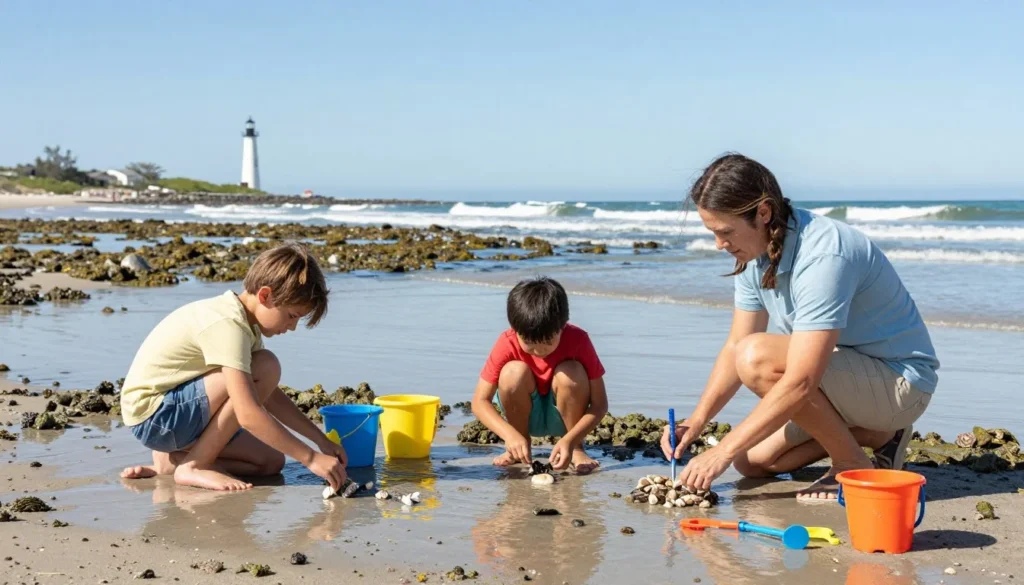
Cape Lookout National Seashore offers families opportunities to disconnect from technology and reconnect with nature. The barrier islands create adventure and learning experiences children remember for life. However, the remote, undeveloped environment requires careful planning when traveling with kids.
Age Considerations
Families with teenagers and older elementary school children adapt most easily to Cape Lookout’s rustic conditions. Younger children can enjoy day trips but overnight camping proves challenging with toddlers and preschoolers. The lack of facilities, constant sun exposure, and physical demands test patience and endurance.
Ferry rides typically delight children of all ages. The 20-minute crossing offers chances to spot dolphins, pelicans, and other marine life. Some kids experience motion sickness on choppy days. Bring appropriate medication if your child has a history of seasickness.
Safety Priorities
Sun protection becomes absolutely critical for children’s sensitive skin. Apply broad-spectrum sunscreen 30 minutes before sun exposure. Reapply every two hours and after swimming. Wide-brimmed hats and UV-protective rash guards provide additional defense against intense coastal sunshine.
Essential Child Safety Measures
- Establish clear boundaries for beach and water play
- Never leave children unsupervised near water
- Equip kids with whistles for emergencies
- Dress children in bright colors for visibility
- Bring more water than you think necessary
- Pack comprehensive first aid supplies
The absence of lifeguards, emergency services, and medical facilities means parents bear full responsibility for child safety. Cell phone coverage remains unreliable. In genuine emergencies, contacting help requires ferry return to the mainland.
Kid-Friendly Activities
Shell collecting captivates children for hours. Bring buckets and field guides for identifying finds. Many kids enjoy creating temporary sand art or shell mandalas on the beach. These impermanent creations teach lessons about tides and natural cycles.
Exploring tidal pools reveals hermit crabs, small fish, and other marine life. Teach children to observe gently without removing creatures from their habitat. This hands-on learning builds environmental awareness and appreciation.
Junior Ranger programs through the National Park Service engage children with age-appropriate activities. Kids complete workbook challenges while exploring the seashore. Rangers award certificates and badges upon completion. These free programs add educational structure to family visits.
Practical Family Tips
Pack entertainment for ferry rides and downtime. Waterproof playing cards, travel games, and nature journals keep kids occupied during quiet periods. Binoculars transform children into wildlife spotters actively engaged with their surroundings.
Bring far more snacks than normal daily consumption suggests. The combination of fresh air, physical activity, and excitement increases appetites dramatically. Easy-to-eat, non-perishable options work best in sandy conditions.
Consider day trips before attempting overnight camping with children. This allows families to gauge their comfort level with Cape Lookout’s primitive conditions. Success with shorter visits builds confidence for extended adventures.
Teenagers often appreciate the smartphone-free environment after initial adjustment. The barrier islands offer genuine adventure and independence within a relatively safe setting. Many families report improved communication and bonding during Cape Lookout visits.
Money Saving Tips
Visiting Cape Lookout National Seashore requires less money than typical beach vacations. The barrier islands charge no entrance fees. Camping costs nothing beyond transportation to reach the islands. Smart planning stretches budgets while maximizing experiences.
✓ Check 30,000+ Local Sightseeing Tours Worldwide
Free Activities
The National Park Service provides free access to 56 miles of pristine beaches. Swimming, shell collecting, beachcombing, and sunbathing cost nothing. Hiking the barrier islands requires no permits or fees. Wildlife watching and photography offer unlimited entertainment without expense.
Ranger programs during summer months provide free educational experiences. Evening programs at the lighthouse discuss maritime history, natural resources, and conservation. These presentations add value without adding costs to your visit.
Transportation Savings
Ferry costs represent the primary expense for Cape Lookout access. Prices vary by operator and destination but expect to pay between 15 to 25 US dollars per person for round-trip passage. Children often receive discounted rates.
Bringing your own kayak or small boat eliminates ferry fees entirely. Launch sites on the mainland provide free access to Back Sound. This option suits experienced paddlers with proper equipment and navigation skills.
Splitting ferry costs among larger groups reduces per-person expenses. Many operators offer group rates for parties of eight or more. Family reunions and club outings benefit from economies of scale.
Shoulder season visits in April, May, September, and October sometimes feature lower ferry rates. Weekday trips typically cost less than weekend service. Calling operators directly may reveal unpublicized specials.
Overnight camping eliminates daily round-trip ferry fees. One trip out, one trip back saves money compared to multiple day visits. The investment in camping gear pays dividends over time for frequent barrier island visitors.
Food and Supply Savings
Bringing all food and water from home costs far less than restaurant meals. Grocery shopping in larger towns like New Bern or Jacksonville before reaching the coast offers better prices than small community stores near ferry terminals.
Coolers packed with sandwich fixings, fresh fruit, and snacks feed families inexpensively for day trips. For camping trips, non-perishable items like pasta, rice, and canned goods reduce cooler space and ice requirements.
Refillable water bottles prevent buying expensive bottled water. Fill containers at your mainland accommodation before heading to the ferry. This simple step saves money and reduces plastic waste.
Accommodation Savings
Primitive camping on the barrier islands provides free overnight accommodation. Invest in quality camping gear that lasts multiple trips. Tents, sleeping bags, and cooking equipment prove economical over time compared to hotel costs.
Mainland accommodations cost less in Morehead City than in historic Beaufort. The trade-off involves slightly longer drives to ferry terminals. Vacation home rentals split among multiple families dramatically reduce per-family costs.
Booking accommodations well in advance secures better rates. Last-minute reservations during peak season command premium prices. Planning six months ahead opens access to early-booking discounts.
Equipment Savings
Borrowing or renting beach equipment costs less than buying items used once. Many coastal residents lend or rent umbrellas, chairs, coolers, and fishing gear. Ask at bait shops and marinas about rental options.
Thrift stores in coastal communities often stock beach gear at fraction of retail prices. Previous visitors donate or sell equipment they cannot transport home. Quality items appear regularly for patient shoppers.
Safety & Local Customs
Cape Lookout National Seashore’s remote, undeveloped nature creates unique safety considerations. No emergency services station on the barrier islands. Help arrives only after ferry transport to the mainland. Self-reliance and preparation prevent most problems.
Water Safety
Strong currents flow along Cape Lookout’s beaches, particularly near inlets and Cape Point. Rip currents form when offshore sandbars channel water seaward. These powerful currents pull swimmers away from shore faster than most people can swim against them.
If caught in a rip current, swim parallel to shore until free of the pull. Never fight directly against the current. Most rip currents extend less than 9 meters (30 feet) wide. Swimming sideways escapes the danger zone.
Critical Water Safety Rules
- Never swim alone on these remote beaches
- Avoid swimming near inlets where currents intensify
- Watch for sudden drop-offs beyond the surf zone
- Be aware of changing tide conditions
- Respect red flag warnings from ferry operators
Stingrays bury in sandy shallows near shore. Shuffle your feet while wading to alert rays of your presence. Most stingray injuries occur when swimmers step directly on hidden animals. The resulting sting causes intense pain but rarely proves life-threatening.
Sun and Heat Protection
The barrier islands offer minimal shade. Maritime forests cover only small portions of the landscape. Most visitors spend hours in direct sunlight reflecting off sand and water. This intense exposure causes sunburn, heat exhaustion, and dehydration without proper precautions.
Bring and use high-SPF sunscreen liberally. Reapply every two hours minimum. UV rays penetrate overcast skies. Cloudy days still cause sunburn. Wide-brimmed hats and UV-protective clothing provide crucial additional protection.
Dehydration develops quickly in hot, windy conditions. Drink water before feeling thirsty. By the time thirst registers, your body already needs fluids. Carry more water than you think necessary. Running out of water on the barrier islands creates dangerous situations.
Weather Awareness
Weather changes rapidly along the coast. Morning sunshine can give way to afternoon thunderstorms with little warning. Lightning poses serious danger on exposed beaches with no shelter available.
Monitor weather forecasts before departing for the islands. Ferry operators cancel service when conditions deteriorate. Being stranded overnight without preparation can happen. Always bring basic overnight supplies even on planned day trips.
Hurricane season runs from June through November with peak activity in September. The National Park Service closes Cape Lookout National Seashore when tropical systems threaten. Evacuating the barrier islands takes time. Never remain on the islands against official evacuation orders.
Wildlife Interaction Guidelines
The wild horses on Shackleford Banks attract visitors from around the world. These animals appear docile but remain wild and unpredictable. Federal law requires maintaining 15-meter (50-foot) minimum distance. Violators face substantial fines up to 500 US dollars.
Never feed wildlife. Human food harms animal digestive systems and creates dangerous habituation. Fed animals lose their natural fear of humans. This leads to aggressive behavior and potential injuries.
Observe nesting birds from respectful distances. The National Park Service posts closure areas protecting sensitive species. Entering closed areas disturbs nesting and triggers enforcement action. Use binoculars or telephoto lenses for close-up views without disturbance.
Leave No Trace Principles
Pack out everything you bring to the barrier islands. No trash collection exists. Leaving garbage harms wildlife and degrades the pristine environment other visitors come to experience. Bring extra bags for collecting trash you find left by others.
Human waste disposal requires planning. Bury waste in cat holes dug 15 to 20 centimeters (6 to 8 inches) deep below the high tide line. Pack out toilet paper in sealed bags. Alternatively, dispose waste above the high tide line where decomposition occurs faster.
Local Customs and Etiquette
Down East communities maintain strong traditions and local pride. Residents appreciate visitors who show genuine interest in maritime heritage and culture. Ask permission before photographing people, private property, or working boats.
Commercial fishing operations take priority at docks and ramps. Recreational boaters yield right-of-way to working watermen. This respect for local livelihoods maintains positive relationships between visitors and permanent residents.
Small communities like Harkers Island, Davis, and Atlantic value peace and quiet. Noise travels far in these tight-knit neighborhoods. Keep music volume low. Respect private property boundaries. Simple courtesy goes far in these close-knit communities.
Cape Lookout National Seashore Visitor Center – Current Conditions & Safety Information
Visitor Comments About Cape Lookout National Seashore
C.R., Winterthur
“Cape Lookout exceeded every expectation. The solitude and natural beauty transported us back to what beaches must have been like before development. Watching wild horses walk past our tent at sunrise created a memory our family will treasure forever. Yes, it requires more effort than typical beach trips, but the rewards make every bit of planning worthwhile.”
H.M., Huntington
“As an avid birder, Cape Lookout National Seashore ranks among the best coastal birding locations I have experienced. The barrier islands concentrate migrating species during spring and fall passage. I documented over 80 species during a three-day visit. The lack of crowds meant observing natural behaviors rarely seen at developed beaches. Bring quality optics and field guides for maximum enjoyment.”
P.T., Perth
“Cape Lookout challenged us physically and mentally, but in the best possible way. Primitive camping pushed us outside comfort zones. We learned self-reliance and gained confidence in our outdoor skills. The lighthouse climb offered breathtaking views worth the effort. Swimming in water where we were the only people for miles felt incredibly freeing. This unique destination deserves its protected status.”
Additional Nearby Destinations
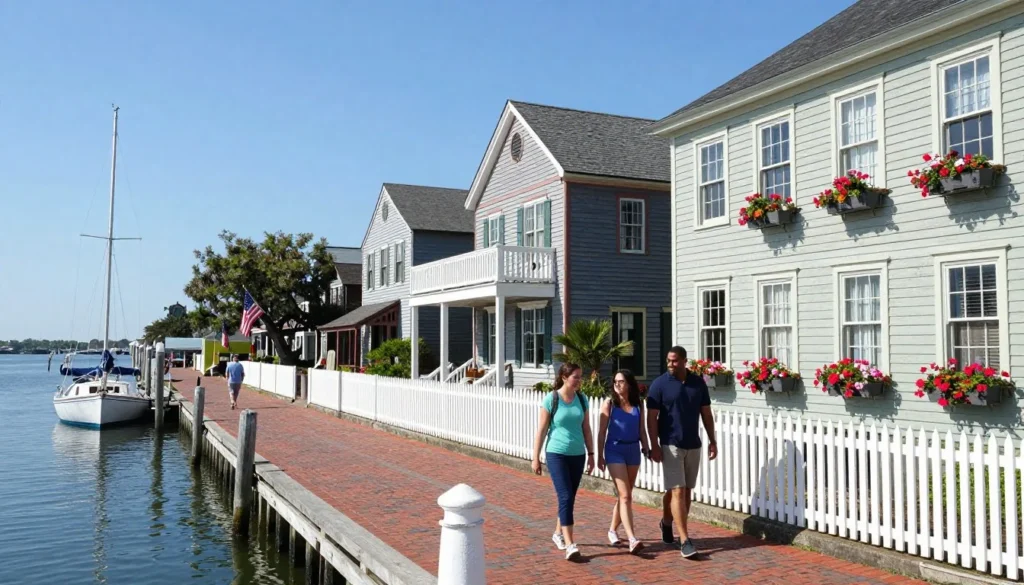
Cape Lookout National Seashore anchors North Carolina’s Crystal Coast region. Numerous other attractions within easy driving distance make the area worth extended exploration. Plan extra days to experience the full character of this historic maritime region.
Beaufort Historic District
This charming coastal town dates to 1709, making it North Carolina’s third-oldest settlement. Tree-lined streets feature over 100 historic structures. Many house antique shops, art galleries, and restaurants. The waterfront boardwalk overlooks Taylor’s Creek where wild horses on Carrot Island graze within view.
The Old Burying Ground cemetery tells fascinating stories through grave markers. Sea captains, Revolutionary War soldiers, and shipwreck victims rest in this historic site. Guided tours reveal tales of pirates, lost loves, and maritime adventures spanning three centuries.
Fort Macon State Park
This five-sided masonry fortification defended Beaufort Inlet from 1834 through the Civil War and both World Wars. The remarkably preserved structure allows self-guided exploration of gun emplacements, barracks, and defensive positions. Living history programs recreate soldier life during the Civil War era.
The fort sits on Bogue Banks barrier island offering excellent ocean and sound beaches. Swimming, fishing, and nature trails complement historical interpretation. Over 1.5 million visitors make Fort Macon one of North Carolina’s most popular state parks annually.
Rachel Carson Reserve
Named for the famous environmentalist, this 9.3 square kilometer (2,315-acre) estuarine reserve protects salt marshes, tidal flats, and maritime forests. Wild horses on Carrot Island can be observed from Beaufort’s waterfront or visited by private boat and kayak.
The reserve offers outstanding birding, paddling, and beachcombing opportunities. No facilities exist on the islands. Visitors must practice Leave No Trace principles. The North Carolina Coastal Reserve manages the site for research and low-impact recreation.
Atlantic Beach
This traditional beach town on Bogue Banks provides family-friendly developed beach experiences contrasting with Cape Lookout’s wilderness character. The boardwalk features arcades, ice cream shops, and souvenir stores. Lifeguarded beaches offer safer swimming for families with young children.
Atlantic Beach hosts the state’s largest fishing pier extending 305 meters (1,000 feet) into the ocean. The pier provides excellent fishing without boat ownership. Tackle shops, restaurants, and observation decks serve visitors throughout the tourist season.
Cedar Island National Wildlife Refuge
This 57 square kilometer (14,480-acre) refuge protects crucial salt marsh habitat along the mainland coast. Migratory waterfowl winter in these productive wetlands. Paddling trails wind through tidal creeks offering intimate wildlife observation opportunities.
The refuge provides primitive camping and fishing access. Wildlife photography opportunities rival any coastal location in North Carolina. Fall migrations bring spectacular concentrations of ducks, geese, and swans to the refuge.
Cape Hatteras National Seashore
Located 88 km (55 miles) north of Cape Lookout, this famous seashore protects 112 km (70 miles) of Outer Banks coastline. The tallest brick lighthouse in the United States stands 64 meters (210 feet) tall. Excellent surfing, fishing, and water sports attract active visitors.
Unlike Cape Lookout, Cape Hatteras features paved roads, developed campgrounds, and visitor amenities. The dramatic change in landscape where the barrier islands narrow creates unique conditions. Strong currents and powerful waves require respect from ocean users.
New Bern
North Carolina’s second-oldest town sits at the confluence of the Neuse and Trent Rivers 64 km (40 miles) inland from Cape Lookout. Tryon Palace, the colonial capital’s reconstructed governor’s residence, anchors the historic district. Gardens, period furnishings, and costumed interpreters recreate colonial life.
Downtown New Bern features restaurants, shops, and galleries in restored buildings. The Birthplace of Pepsi-Cola museum occupies the drugstore where the famous soft drink was invented. River walks and waterfront parks provide pleasant strolling.
Practical Travel Tips
Successful Cape Lookout National Seashore visits require more preparation than typical beach vacations. The remote, undeveloped nature of these barrier islands demands self-sufficiency. Smart planning ensures comfort and safety while maximizing enjoyment.
Essential Packing List
Beach and Sun Protection
- SPF 50+ waterproof sunscreen, multiple bottles
- UV-protective shirts and hats
- Sunglasses with UV protection
- Beach umbrella or sun shelter
- Lip balm with SPF rating
Water and Hydration
- One gallon (4 liters) water per person daily minimum
- Extra water for cooking and cleaning
- Insulated bottles to keep water cool
- Electrolyte replacement drinks or tablets
Food and Cooking
- All meals and snacks for entire stay
- Coolers with plenty of ice
- Camp stove and fuel (if camping)
- Eating utensils and cooking equipment
- Trash bags for waste removal
Safety and First Aid
- Comprehensive first aid kit
- Insect repellent with DEET
- Antihistamines for allergic reactions
- Pain relievers and anti-diarrhea medication
- Emergency whistle and signal mirror
Technology and Communication
Cell phone coverage on the barrier islands remains extremely limited. Verizon provides the most reliable service though signal strength varies. AT&T and T-Mobile coverage proves spotty to non-existent in most locations.
Download offline maps before departing the mainland. GPS devices work well for navigation. Bring backup batteries or solar chargers for electronic devices. Traditional paper maps serve as essential backups when electronics fail.
Marine VHF radios provide the most reliable communication on the barrier islands. Channel 16 serves as the emergency hailing frequency. Many experienced visitors carry handheld VHF radios for contacting ferries and emergency services if needed.
Permits and Regulations
No entry fees apply to Cape Lookout National Seashore. Camping requires no permits or reservations for most beach locations. However, regulations change periodically. Always check current rules before visiting.
Off-road vehicle permits must be obtained free from the National Park Service before driving on beaches. Fishing requires no freshwater license since all waters are saltwater. Collect shells freely but live specimens must remain undisturbed.
Visitor Center Information
The Harkers Island Visitor Center serves as the main information source for Cape Lookout National Seashore. Rangers provide current conditions, safety information, and answers to visitor questions. Exhibits explain natural and cultural history.
Operating hours vary seasonally. The center typically opens daily from 9:00 AM to 5:00 PM during peak season from Memorial Day through Labor Day. Winter hours reduce to weekends only or close entirely. Always call ahead to confirm current schedules before making special trips.
Harkers Island Visitor Center – Hours & Current Information
✓ Check 30,000+ Local Sightseeing Tours Worldwide
Banking and Money
No ATMs exist on the barrier islands. Bring sufficient cash from the mainland. Ferry operators accept credit cards but smaller vendors may prefer cash. The nearest ATMs to ferry terminals are in Beaufort and nearby communities.
Most businesses around Cape Lookout National Seashore accept major credit cards. Small family operations sometimes prefer cash or local checks. Carry small bills for convenience when purchasing ice, bait, or other incidentals from mom-and-pop stores.
Mail and Package Services
The United States Postal Service operates offices in Beaufort, Morehead City, Harkers Island, and other nearby communities. No postal services exist on the barrier islands. Visitors needing to send postcards or packages must wait until returning to the mainland.
Medical Services
Carteret General Hospital in Morehead City provides the closest full-service emergency room to Cape Lookout National Seashore. The facility sits approximately 32 km (20 miles) from Harkers Island ferry terminal. Urgent care clinics operate in Beaufort and Morehead City for non-emergency situations.
No medical services exist on the barrier islands. Emergencies require ferry transport to the mainland followed by ambulance to medical facilities. This delay can prove critical in serious situations. Visitors with medical conditions should consider these limitations carefully before visiting.
Pet Policies
Pets are welcome throughout most of Cape Lookout National Seashore. Dogs must remain on leashes no longer than 1.8 meters (6 feet). Seasonal restrictions protect nesting birds and sea turtles. Check current pet regulations before bringing animals to the barrier islands.
The remote environment challenges pet owners. No veterinary services exist on the islands. Heat, sand, and saltwater affect animals significantly. Bring plenty of fresh water for pets. Paw protection prevents burns from hot sand. Consider your animal’s welfare carefully before bringing them to this demanding environment.
Your Cape Lookout Adventure Awaits
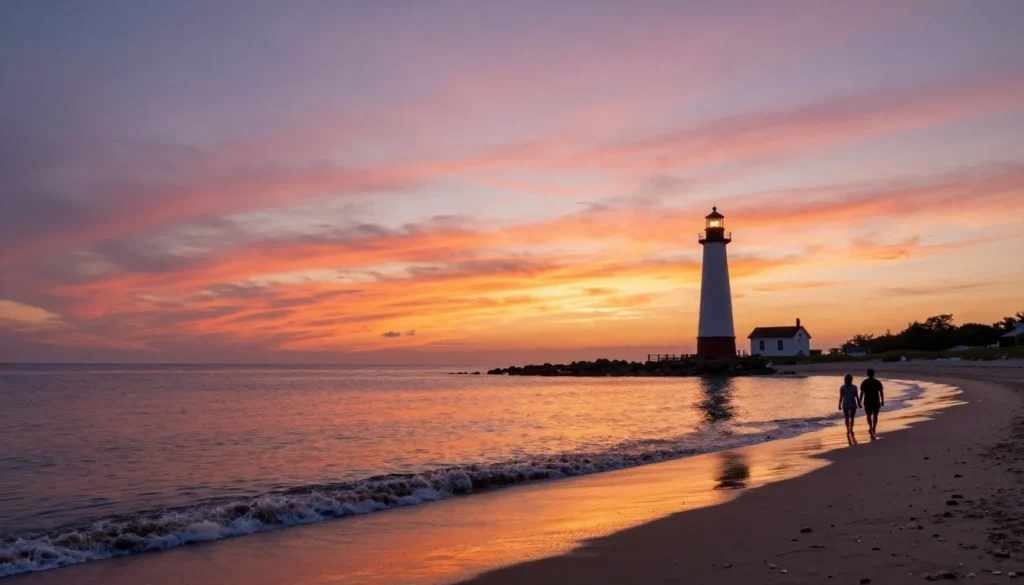
Cape Lookout National Seashore stands apart from ordinary beach destinations. These 56 miles of pristine coastline offer something increasingly rare in our connected world. Here you find genuine solitude, untouched natural beauty, and connection with maritime heritage spanning centuries.
The barrier islands challenge visitors to slow down and engage deeply with coastal wilderness. Wild horses grazing on windswept beaches create scenes unchanged for generations. The iconic lighthouse watches over it all, its diamond pattern visible for miles across the Atlantic.
Yes, reaching Cape Lookout requires more effort than driving to developed beaches. The rewards justify every bit of planning. Whether you spend a single afternoon or camp for a week, these barrier islands will change your perspective on what beaches can be.
Pack your sense of adventure along with sunscreen and supplies. The barrier islands await. Your Cape Lookout story begins the moment your ferry pulls away from the dock. What memories will you create on these timeless shores?